

Before we
start our
discussion,
let’s have
some pick –
up lines first
Pick up lines
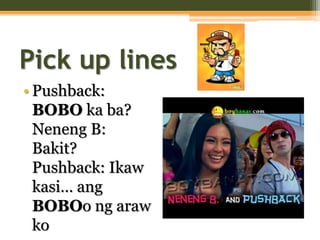
• Pushback:
BOBO ka ba?
Neneng B:
Bakit?
Pushback: Ikaw
kasi… ang
BOBOo ng araw
ko
Pick up lines
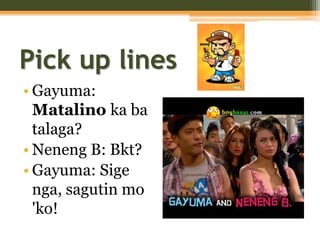
• Gayuma:
Matalino ka ba
talaga?
• Neneng B: Bkt?
• Gayuma: Sige
nga, sagutin mo
'ko!
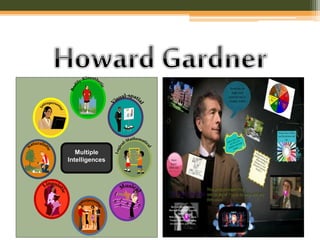
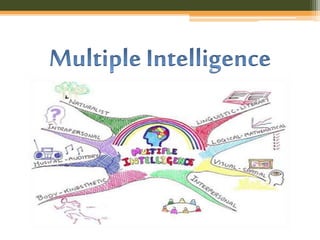
Multiple
Intelligences
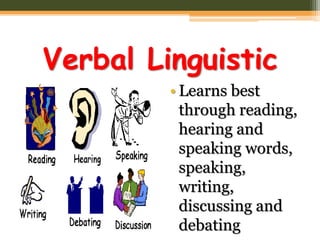
Verbal Linguistic
• Learns best
through reading,
hearing and
speaking words,
speaking,
writing,
discussing and
debating
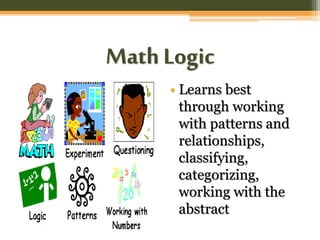
Math Logic
• Learns best
through working
with patterns and
relationships,
classifying,
categorizing,
working with the
abstract
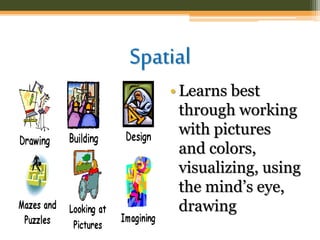
Spatial
• Learns best
through working
with pictures
and colors,
visualizing, using
the mind’s eye,
drawing
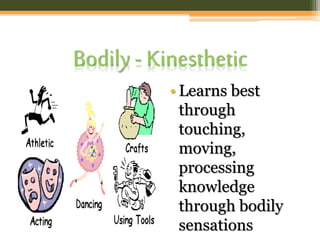
Bodily - Kinesthetic
• Learns best
through
touching,
moving,
processing
knowledge
through bodily
sensations
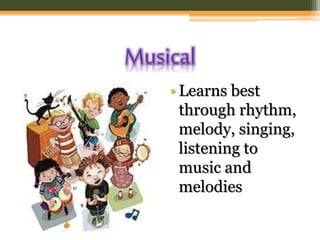
Musical
• Learns best
through rhythm,
melody, singing,
listening to
music and
melodies
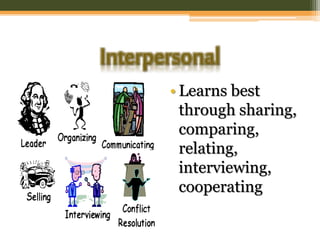
Interpersonal
• Learns best
through sharing,
comparing,
relating,
interviewing,
cooperating
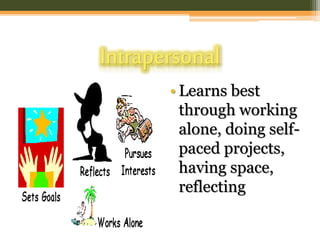
Intrapersonal
• Learns best
through working
alone, doing self-
paced projects,
having space,
reflecting
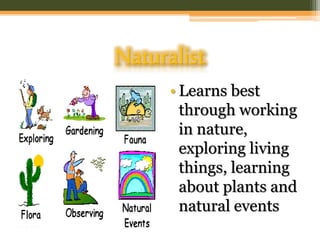
Naturalist
• Learns best
through working
in nature,
exploring living
things, learning
about plants and
natural events
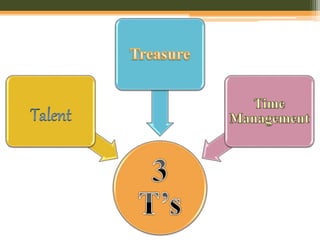
• refers to an individual’s intelligence,
abilities and skills.
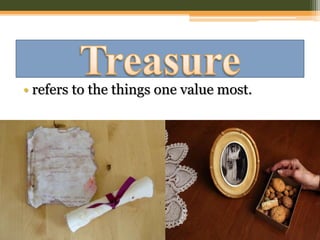
• refers to the things one value most.
• refers to the ways one uses his time in a
productive way.
Skills Vs. Talents
Skills Talents
• is something that
you acquire after
putting in a lot of
hard work; unlike
talent, it is not
inborn, but learnt.
• is something that
one is born with; it
is your natural
ability to do
something without
really thinking
about it.
Two types of Skills
Foundational Functional
• skills people bring
to a job, simply
transferable skills
• Example: reading,
writing, listening,
speaking and
creative writing
• skills specific to the
functions workers
perform doing the job
• Example: budgeting,
forecasting, managing
human resources,
materials and
facilities
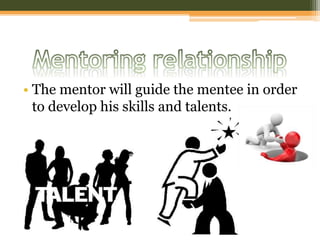
• The mentor will guide the mentee in order
to develop his skills and talents.
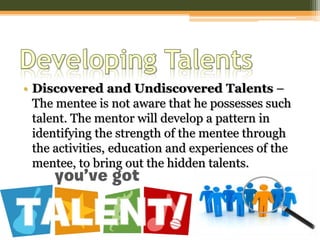
• Discovered and Undiscovered Talents –
The mentee is not aware that he possesses such
talent. The mentor will develop a pattern in
identifying the strength of the mentee through
the activities, education and experiences of the
mentee, to bring out the hidden talents.
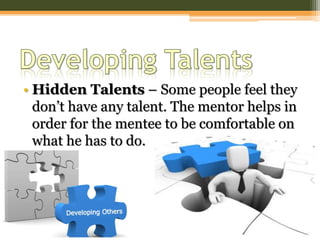
• Hidden Talents – Some people feel they
don’t have any talent. The mentor helps in
order for the mentee to be comfortable on
what he has to do.
Bibong Teacher – Sir Robin #bibongTeacher
Iamrobinthebibongteacher
greatteacherrobin@gmail.com
robin_mabeca@yahoo.com

Multiple intelligence, Skills and Talents

  • 1.
    Before we start our discussion, let’shave some pick – up lines first
  • 2.
    Pick up lines •Pushback: BOBO ka ba? Neneng B: Bakit? Pushback: Ikaw kasi… ang BOBOo ng araw ko
  • 3.
    Pick up lines •Gayuma: Matalino ka ba talaga? • Neneng B: Bkt? • Gayuma: Sige nga, sagutin mo 'ko!
  • 5.
  • 7.
    Verbal Linguistic • Learnsbest through reading, hearing and speaking words, speaking, writing, discussing and debating
  • 8.
    Math Logic • Learnsbest through working with patterns and relationships, classifying, categorizing, working with the abstract
  • 9.
    Spatial • Learns best throughworking with pictures and colors, visualizing, using the mind’s eye, drawing
  • 10.
    Bodily - Kinesthetic •Learns best through touching, moving, processing knowledge through bodily sensations
  • 11.
    Musical • Learns best throughrhythm, melody, singing, listening to music and melodies
  • 12.
    Interpersonal • Learns best throughsharing, comparing, relating, interviewing, cooperating
  • 13.
    Intrapersonal • Learns best throughworking alone, doing self- paced projects, having space, reflecting
  • 14.
    Naturalist • Learns best throughworking in nature, exploring living things, learning about plants and natural events
  • 16.
    • refers toan individual’s intelligence, abilities and skills.
  • 17.
    • refers tothe things one value most.
  • 18.
    • refers tothe ways one uses his time in a productive way.
  • 19.
    Skills Vs. Talents SkillsTalents • is something that you acquire after putting in a lot of hard work; unlike talent, it is not inborn, but learnt. • is something that one is born with; it is your natural ability to do something without really thinking about it.
  • 20.
    Two types ofSkills Foundational Functional • skills people bring to a job, simply transferable skills • Example: reading, writing, listening, speaking and creative writing • skills specific to the functions workers perform doing the job • Example: budgeting, forecasting, managing human resources, materials and facilities
  • 21.
    • The mentorwill guide the mentee in order to develop his skills and talents.
  • 22.
    • Discovered andUndiscovered Talents – The mentee is not aware that he possesses such talent. The mentor will develop a pattern in identifying the strength of the mentee through the activities, education and experiences of the mentee, to bring out the hidden talents.
  • 23.
    • Hidden Talents– Some people feel they don’t have any talent. The mentor helps in order for the mentee to be comfortable on what he has to do.
  • 25.
    Bibong Teacher –Sir Robin #bibongTeacher Iamrobinthebibongteacher greatteacherrobin@gmail.com robin_mabeca@yahoo.com