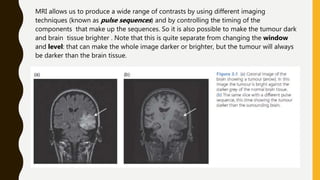
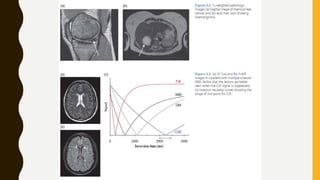
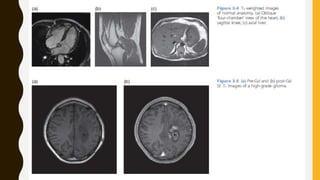
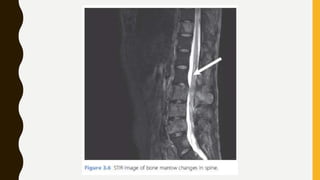
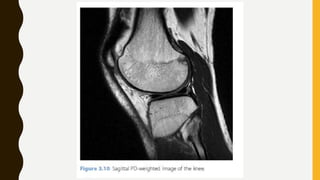
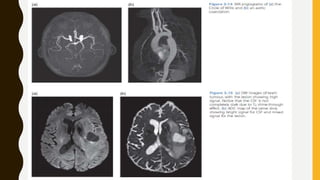
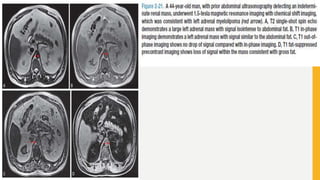
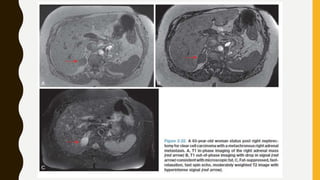
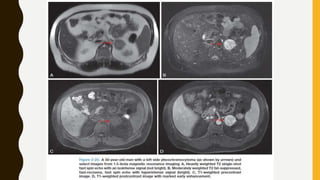
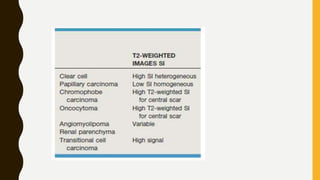
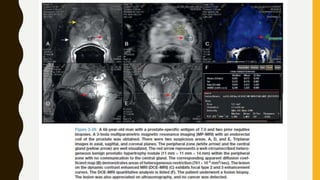
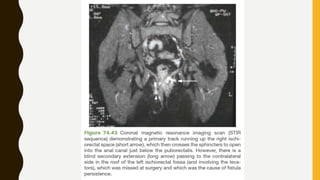
MRI uses strong magnetic fields and radio waves to produce images of the inside of the body. It provides excellent soft tissue contrast without needing ionizing radiation or intravenous contrast in some cases. During an MRI scan, protons in the body are aligned with the magnetic field and exposed to radio pulses that cause them to produce signals detectable by the MRI machine. Different pulse sequences produce T1-weighted, T2-weighted, or proton density weighted images depending on how tissues release energy. Contrast agents containing gadolinium can also be used to enhance images. MRI has advantages over other modalities due to lack of radiation exposure and ability to image pregnant patients or those with renal issues.