C.N.S.
Patterns of Enhancement in the Brain
Mohamed Zaitoun
Assistant Lecturer-Diagnostic Radiology
Department , Zagazig University Hospitals
Egypt
FINR (Fellowship of Interventional
Neuroradiology)-Switzerland
zaitoun82@gmail.com
Knowing as much as
possible about your enemy
precedes successful battle
and learning about the
disease process precedes
successful management
Patterns of Enhancement in the Brain
1-Periventricular Enhancement (Intra-axial)
2-Gyriform Enhancement (Intra-axial)
3-Nodular Subcortical Enhancement (Intra-axial)
4-Ring Enhancement (Intra-axial)
5-Pachymeningeal (Dural) Enhancement (Extra-
axial)
6-Leptomeningeal (Pia-arachnoid) Enhancement
(Extra-axial)
*Blood Brain Barrier (BBB) & Enhancement :
-Micro or macro disruption of the BBB produces a
parenchymal enhancement after contrast
administration, which may be secondary to
infection, inflammation, neoplasm, trauma and
vascular etiologies
-The BBB is formed by astrocyte foot processes of
brain capillary endothelial cells & prevents direct
communication between the systemic capillaries
& the protected extracellular fluid of the brain
-Several CNS regions don’t have a BBB and therefore
normally enhance :
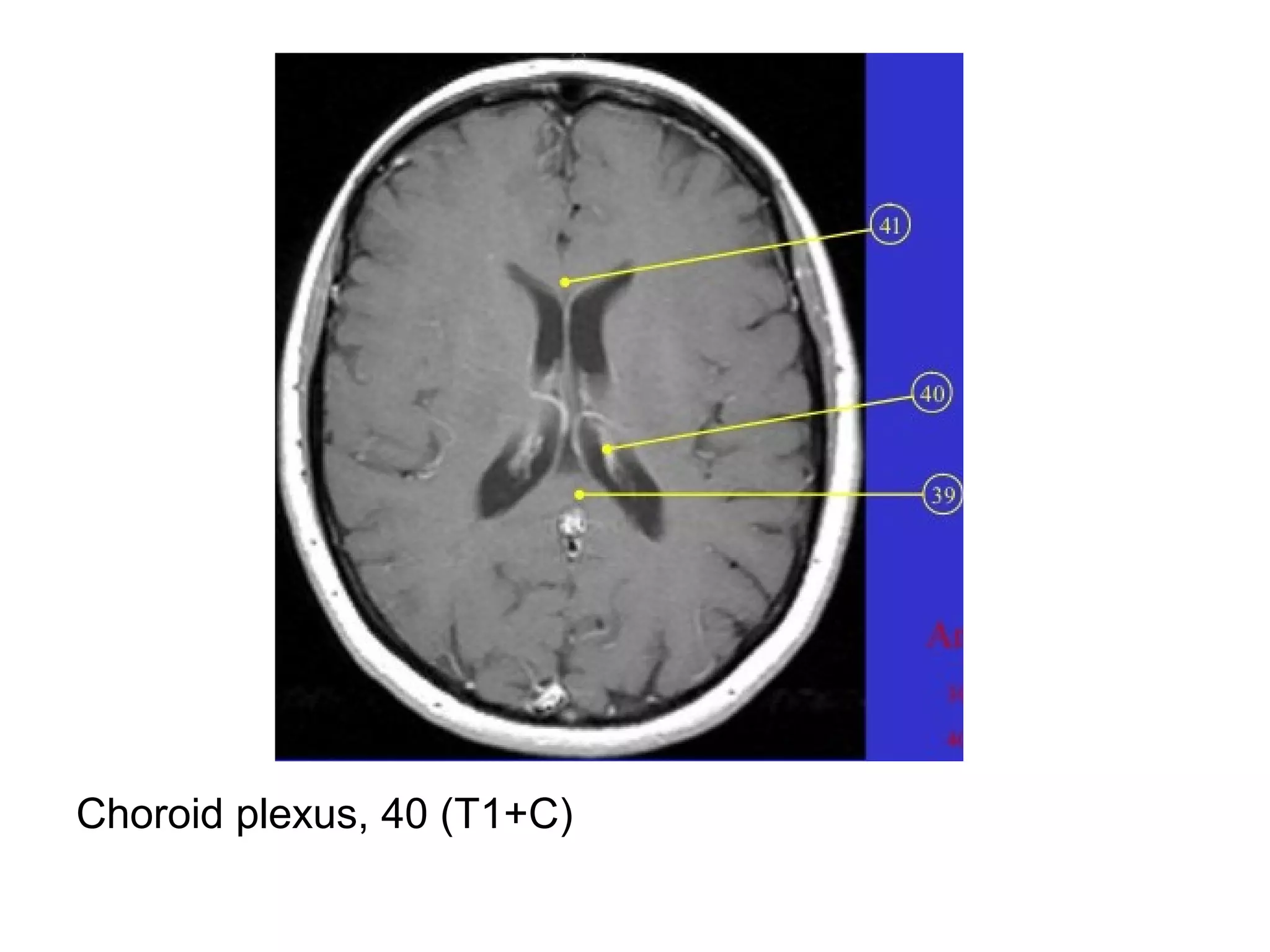
a) Choroid plexus
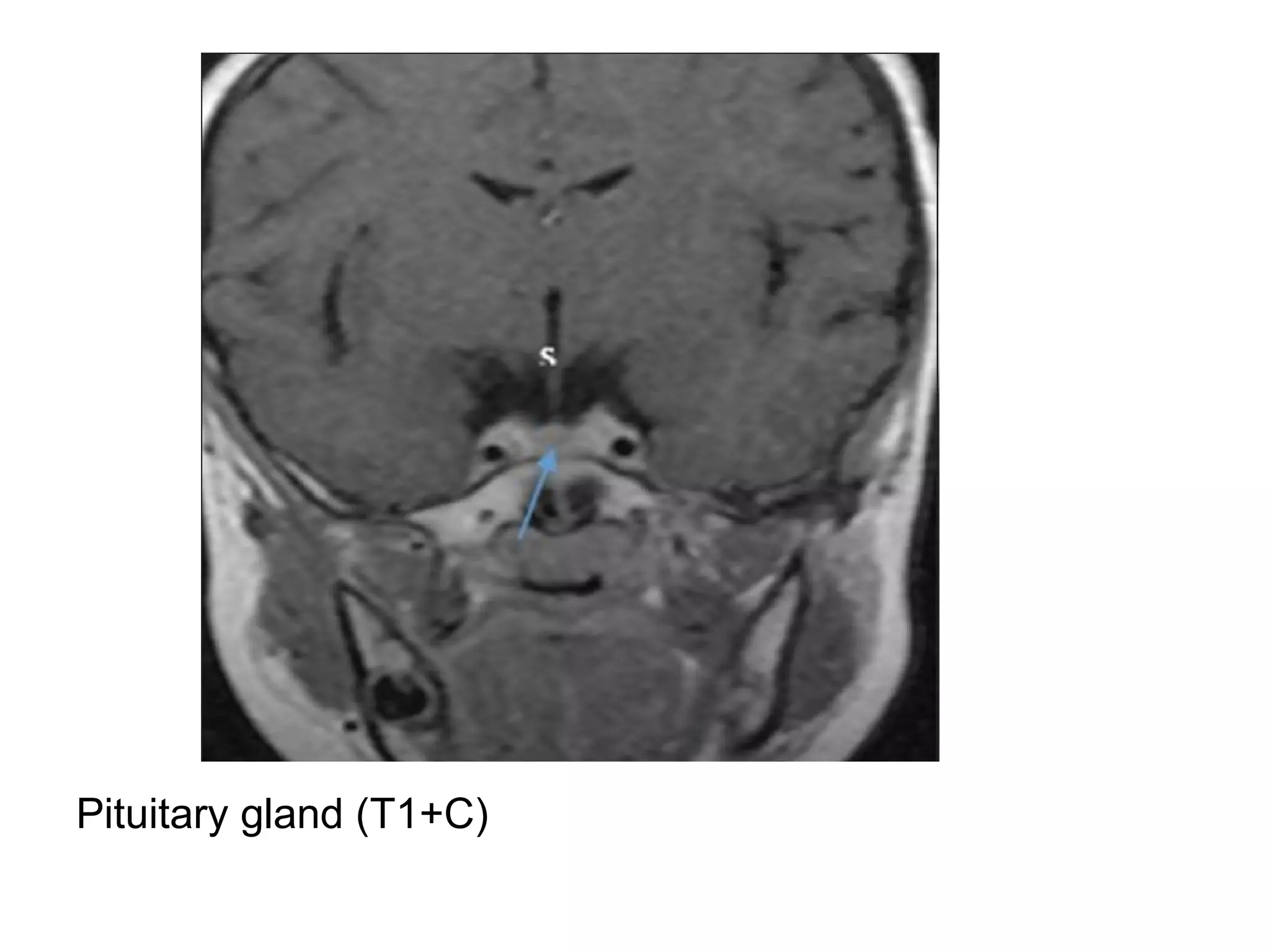
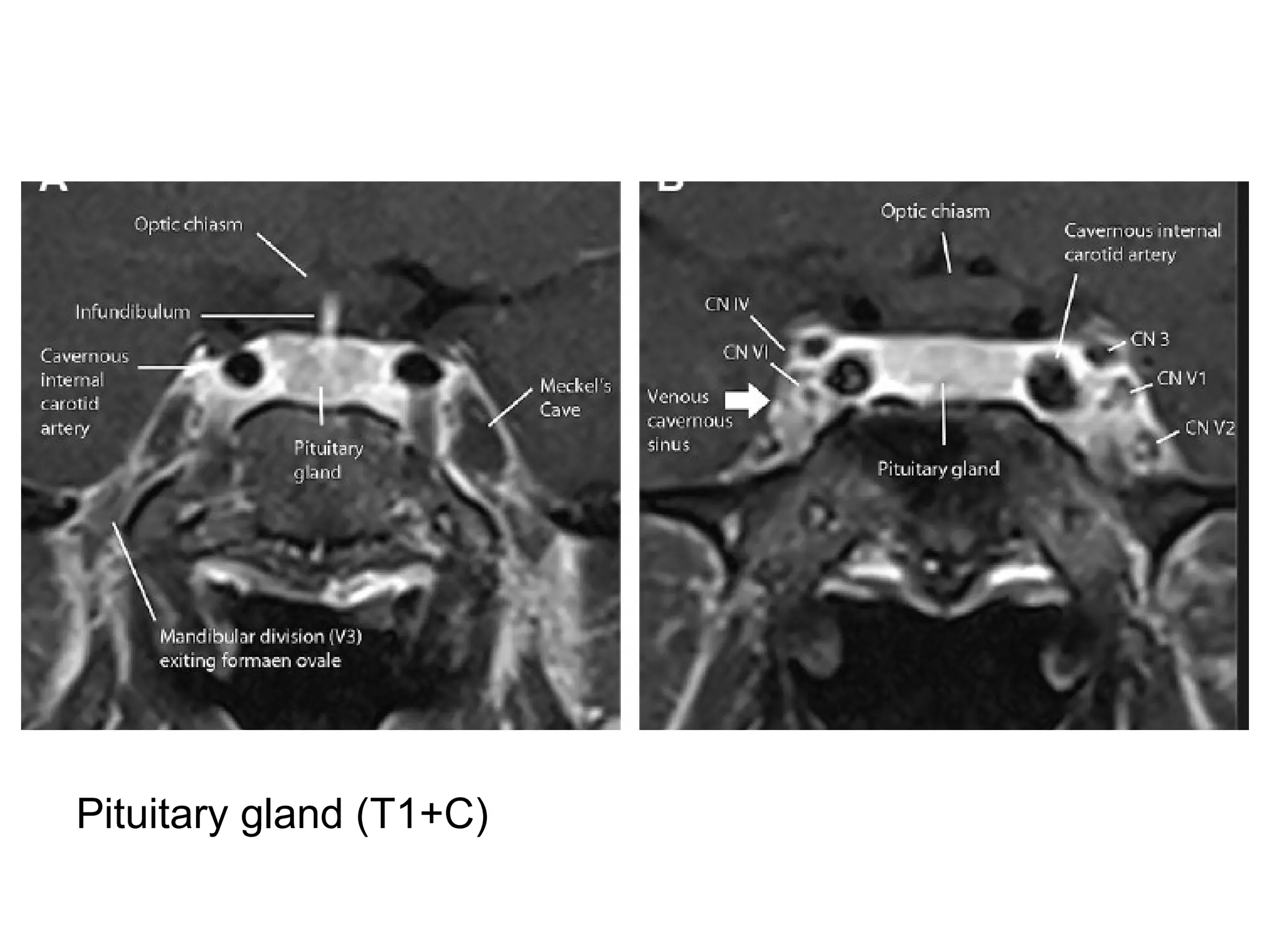
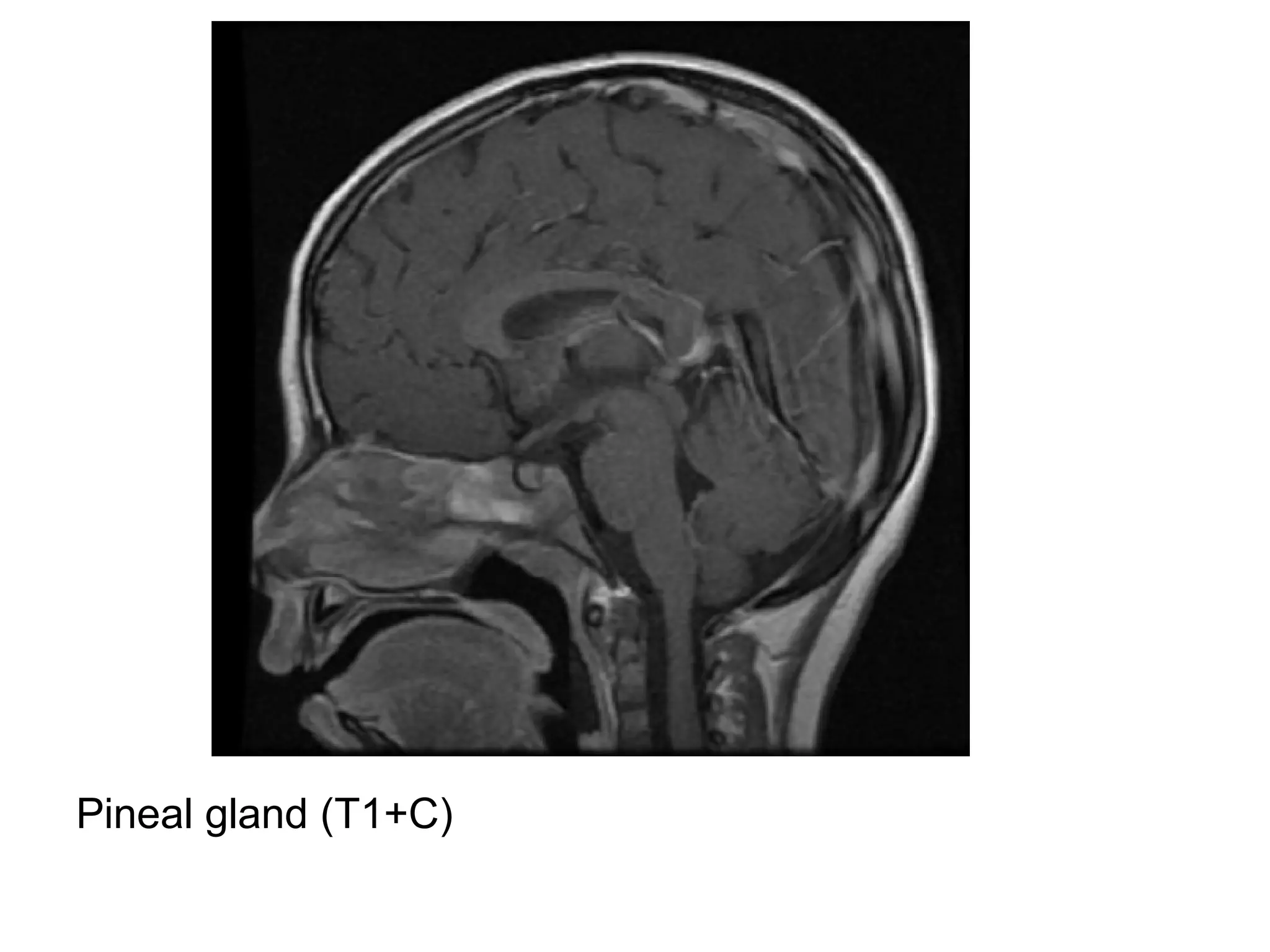
b) Pituitary & pineal glands
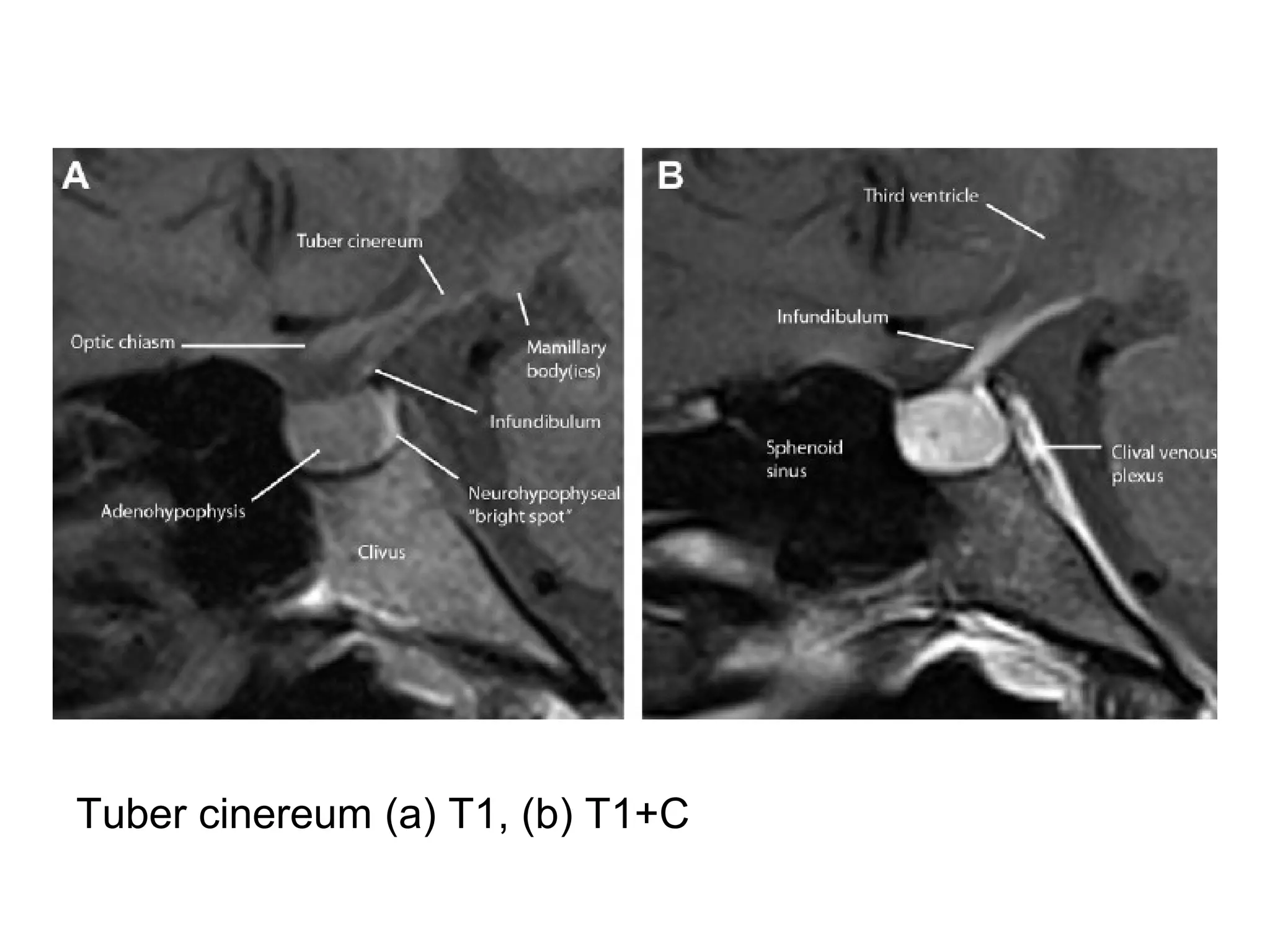
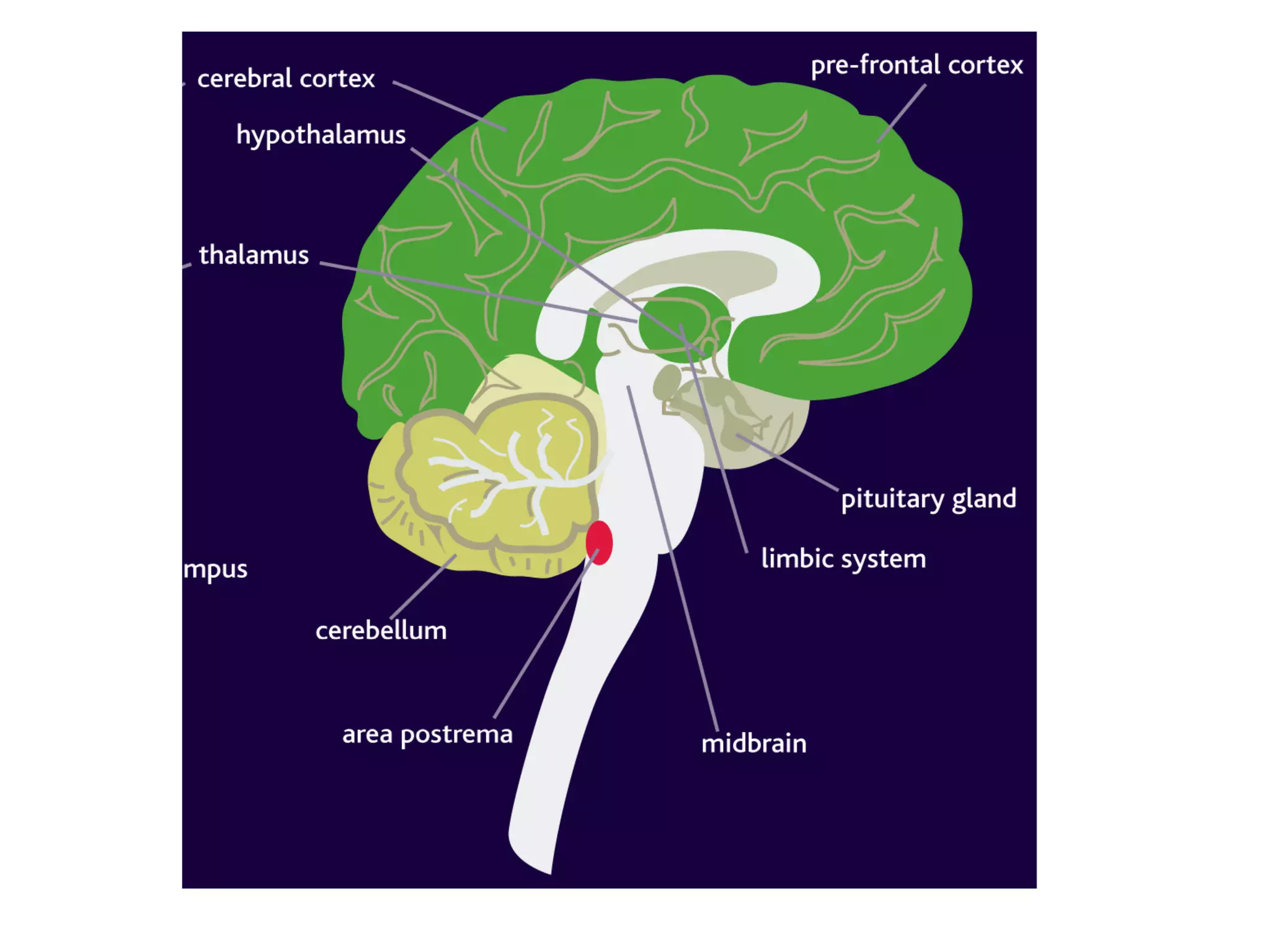
c) Tuber cinereum (controls circadian rhythm, located in the
inferior hypothalamus)
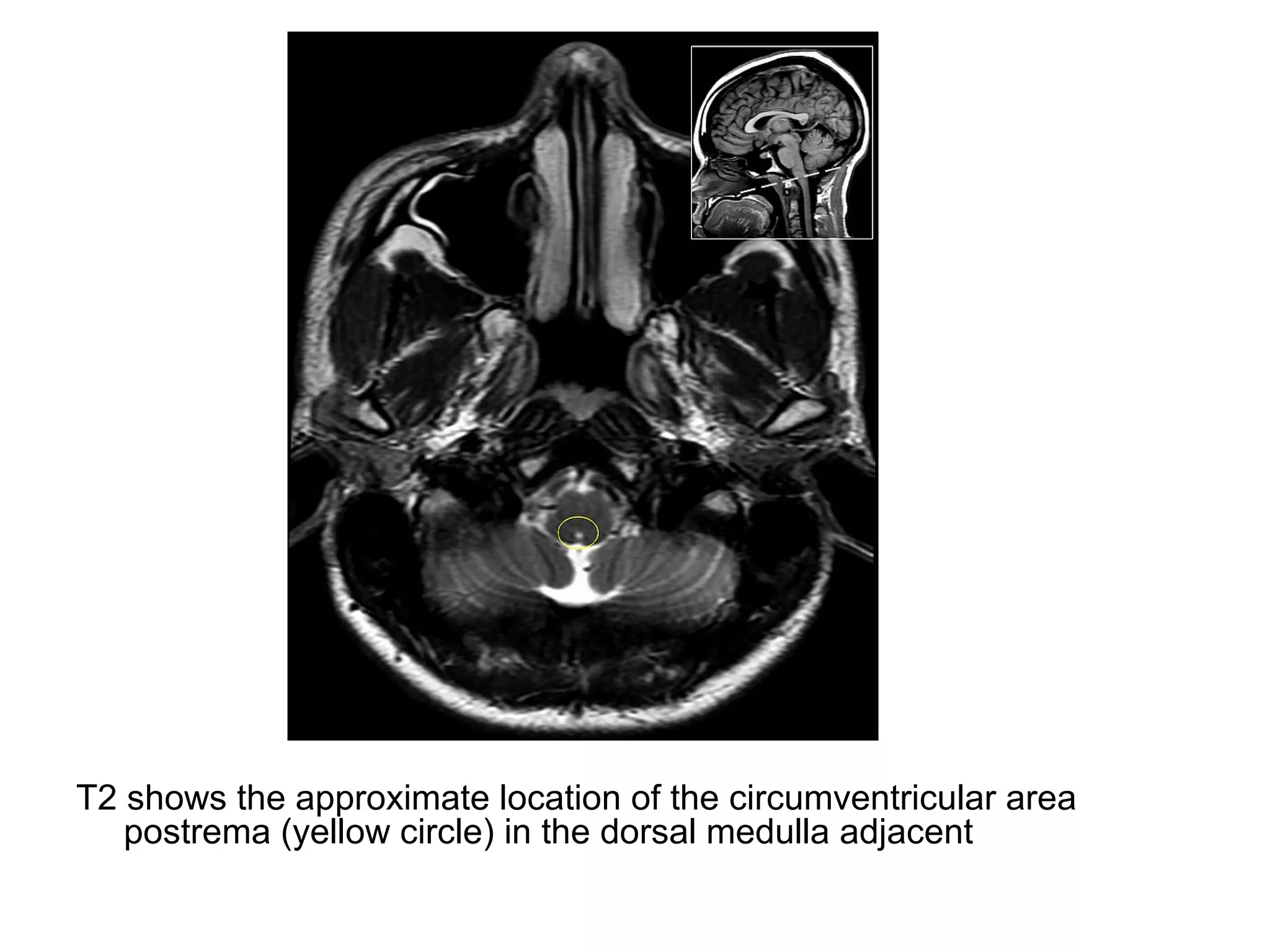
d) Area postrema (controls vomiting, located at inferior
aspect of the 4th
ventricle)
-The dura also lacks a BBB , but doesn’t normally enhance
-Intracranial enhancement may be intra or extra-axial,
extra-axial structures that may enhance in pathologic
conditions include the dura (pachymeninges) &
arachnoid (leptomeninges)
Choroid plexus, 40 (T1+C)
Pituitary gland (T1+C)
Pineal gland (T1+C)
Tuber cinereum (a) T1, (b) T1+C
T2 shows the approximate location of the circumventricular area
postrema (yellow circle) in the dorsal medulla adjacent
-Vascular enhancement is due to a localized increase in
blood flow, which may be secondary to vasodilatation,
hyperemia, neovascularity or arteriovenous shunting
-On CT, the arterial phase of contrast injection (for instance
CTA) mostly shows intravascular enhancement,
parenchymal enhancement, including the dural folds of
the falx and tentorium, is best seen several minutes after
the initial contrast bolus
-On MRI, routine contrast-enhanced sequences are
obtained in the parenchymal phase, several minutes
after injection, most intracranial vascular MRI imaging is
performed with a non-contrast time of flight (TOF)
technique
1-Periventricular Enhancement (Intra-axial) :
-Enhancement of the subependymal surface can
be either neoplastic, infections or demyelinating
in etiology
-Causes :
1-Primary CNS lymphoma (presentations include
periventricular enhancement, solitary brain mass
or multiple brain masses)
2-Infectious ependymitis (most commonly by CMV)
3-Primary glial tumor (high grade astrocytoma)
4-M.S.
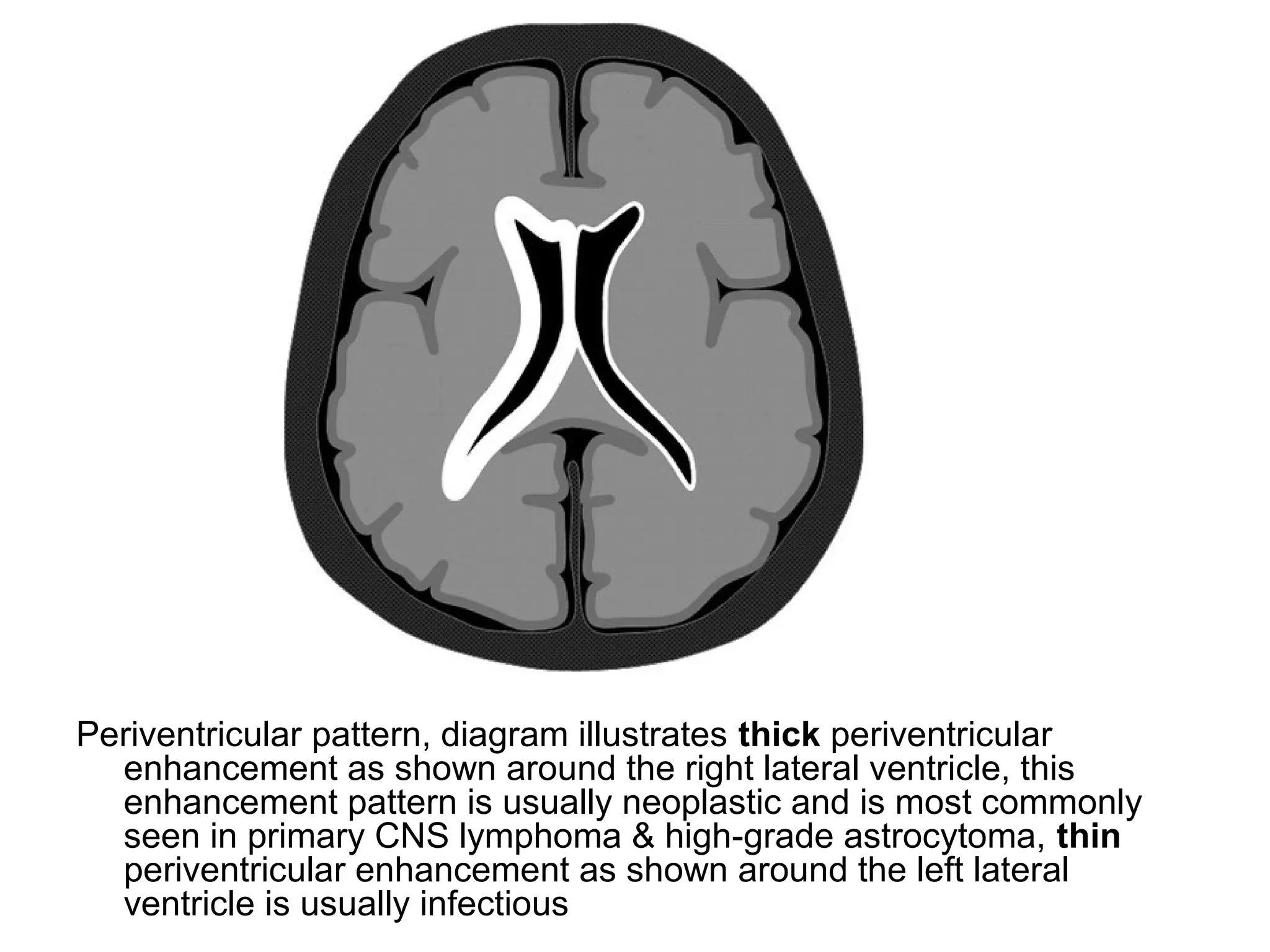
Periventricular pattern, diagram illustrates thick periventricular
enhancement as shown around the right lateral ventricle, this
enhancement pattern is usually neoplastic and is most commonly
seen in primary CNS lymphoma & high-grade astrocytoma, thin
periventricular enhancement as shown around the left lateral
ventricle is usually infectious
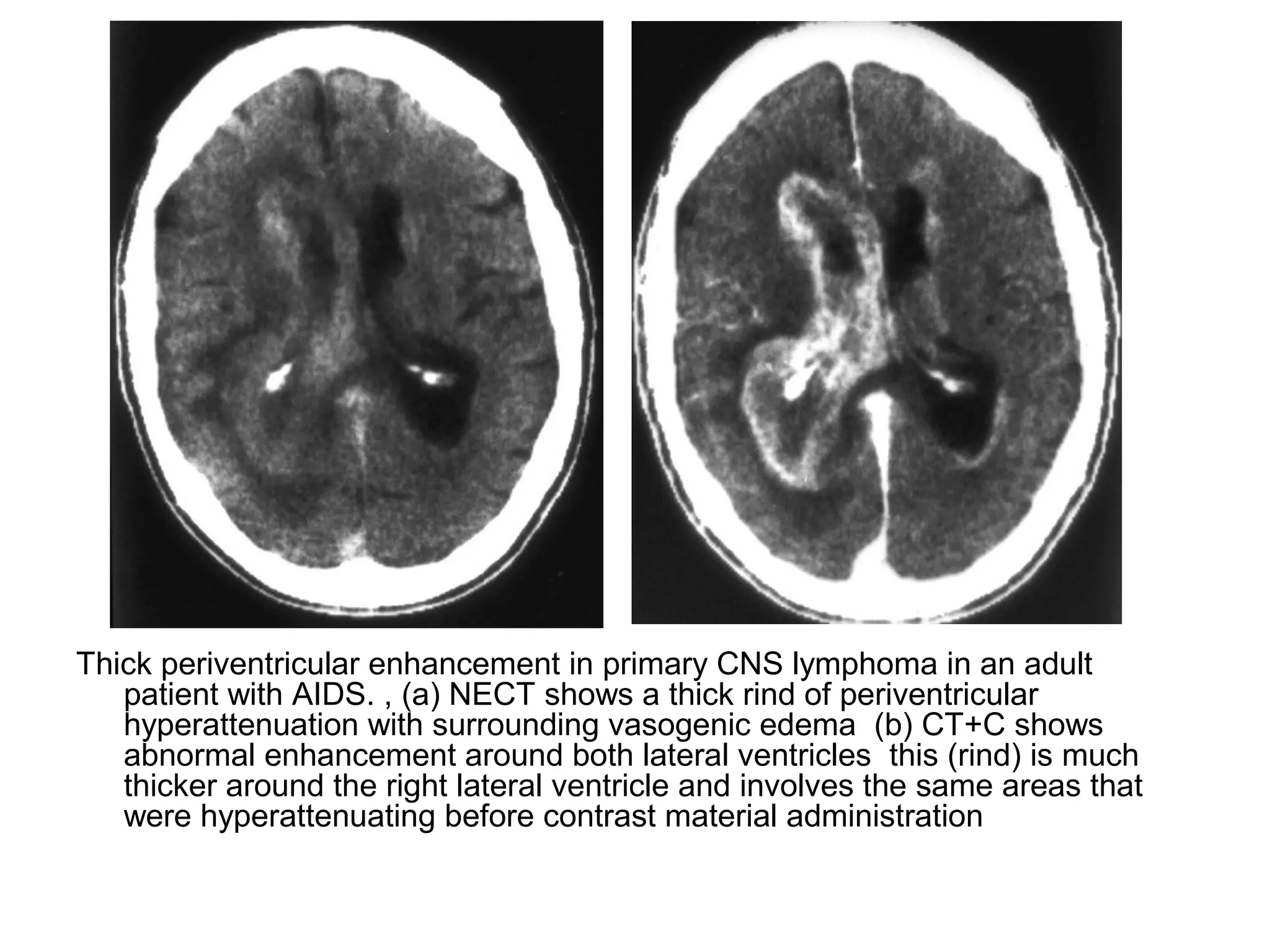
Thick periventricular enhancement in primary CNS lymphoma in an adult
patient with AIDS. , (a) NECT shows a thick rind of periventricular
hyperattenuation with surrounding vasogenic edema (b) CT+C shows
abnormal enhancement around both lateral ventricles this (rind) is much
thicker around the right lateral ventricle and involves the same areas that
were hyperattenuating before contrast material administration
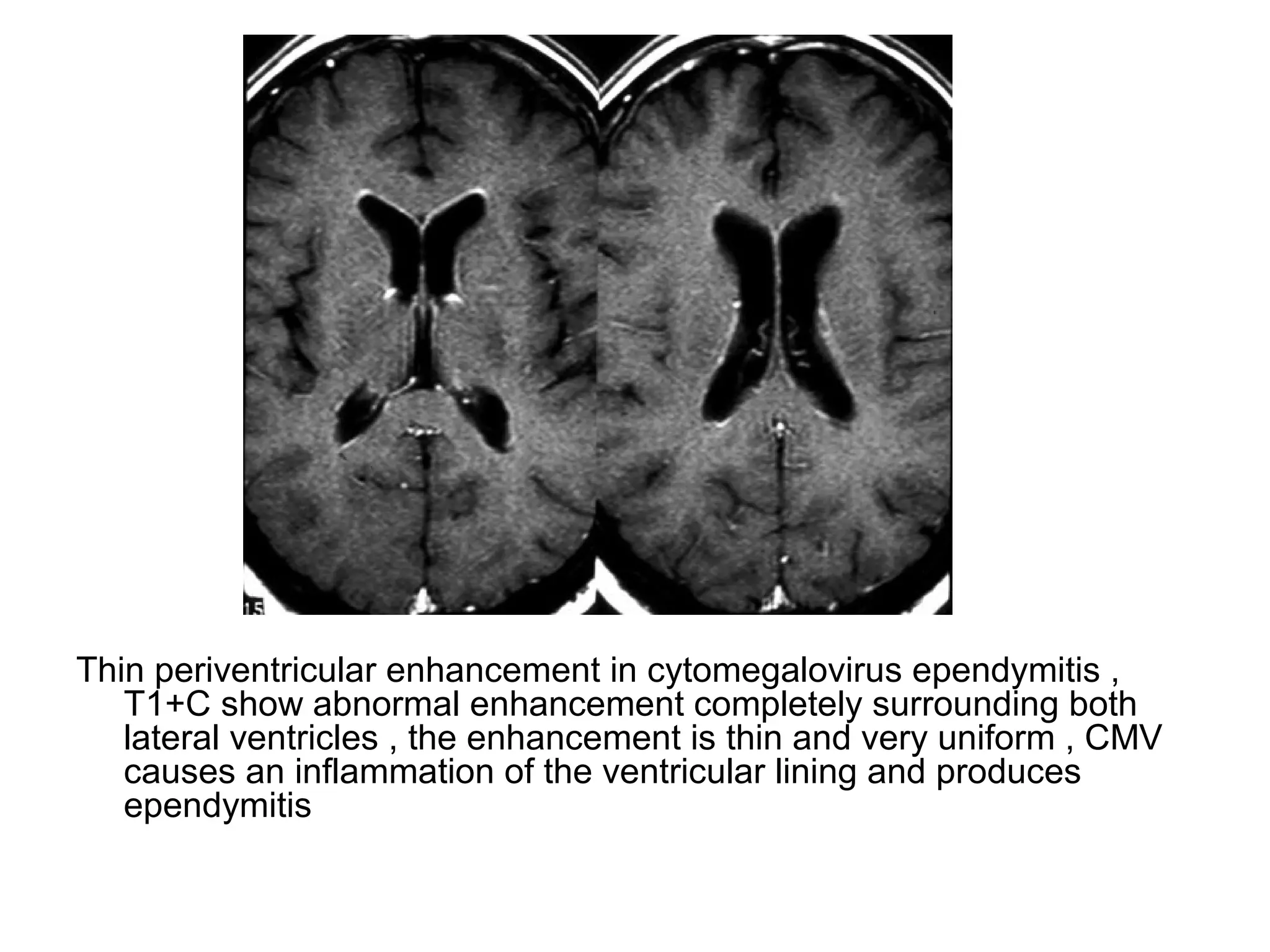
Thin periventricular enhancement in cytomegalovirus ependymitis ,
T1+C show abnormal enhancement completely surrounding both
lateral ventricles , the enhancement is thin and very uniform , CMV
causes an inflammation of the ventricular lining and produces
ependymitis
2-Gyriform Enhancement (Intra-axial) :
-Causes :
1-Herpes encephalitis
2-Subacute Infarct (can show gyriform
enhancement, lasting 6 days to 6 weeks after
the initial ischemic event, in contrast to gyriform
enhancement of subacute infarct, an acute
infarct may show vascular enhancement due to
reactive collateral vasodilatation and resultant
hyperemia
3-PRES
4-Meningitis (may cause gyral enhancement in
addition to the more typical leptomeningeal
enhancement)
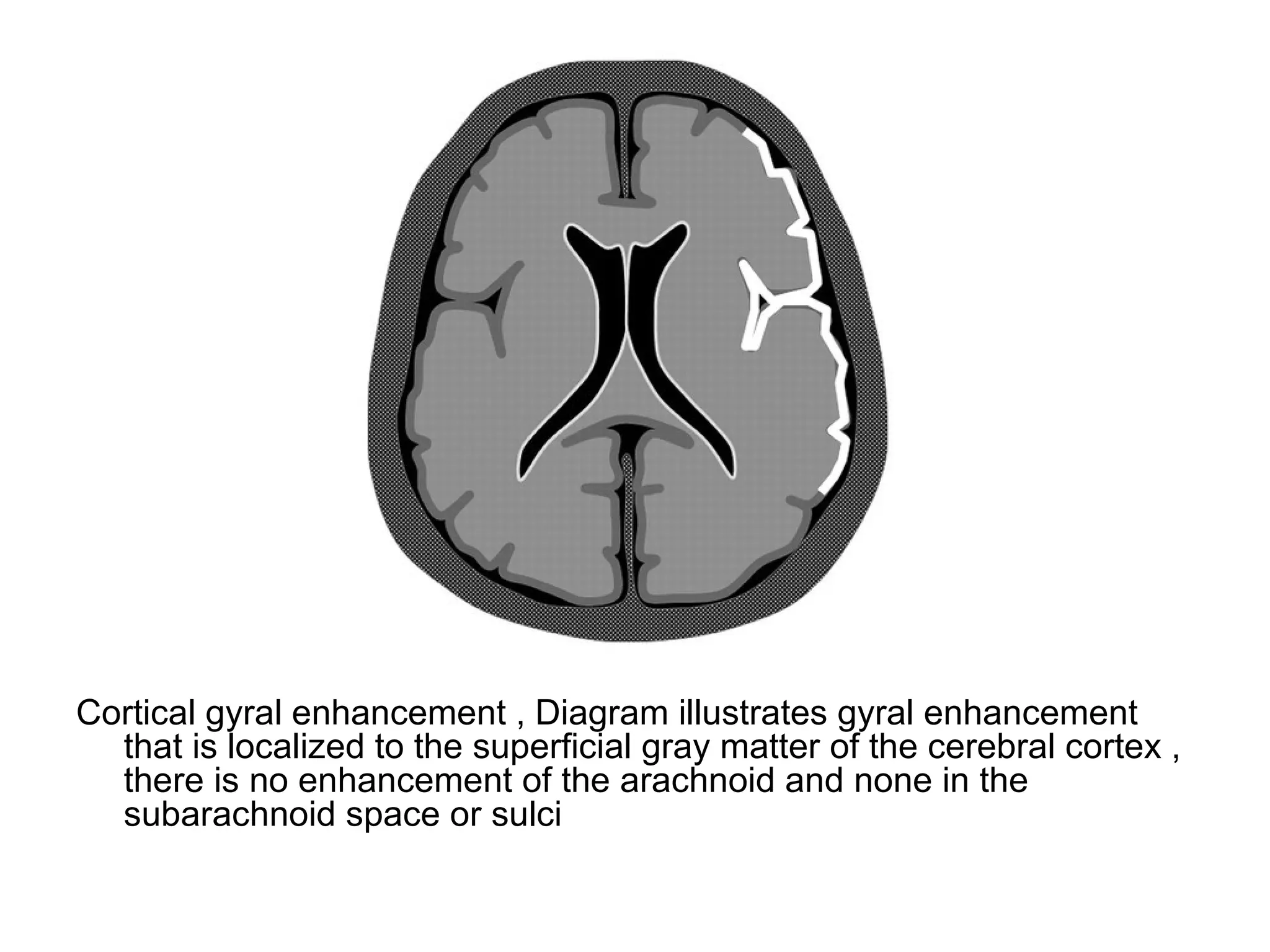
Cortical gyral enhancement , Diagram illustrates gyral enhancement
that is localized to the superficial gray matter of the cerebral cortex ,
there is no enhancement of the arachnoid and none in the
subarachnoid space or sulci
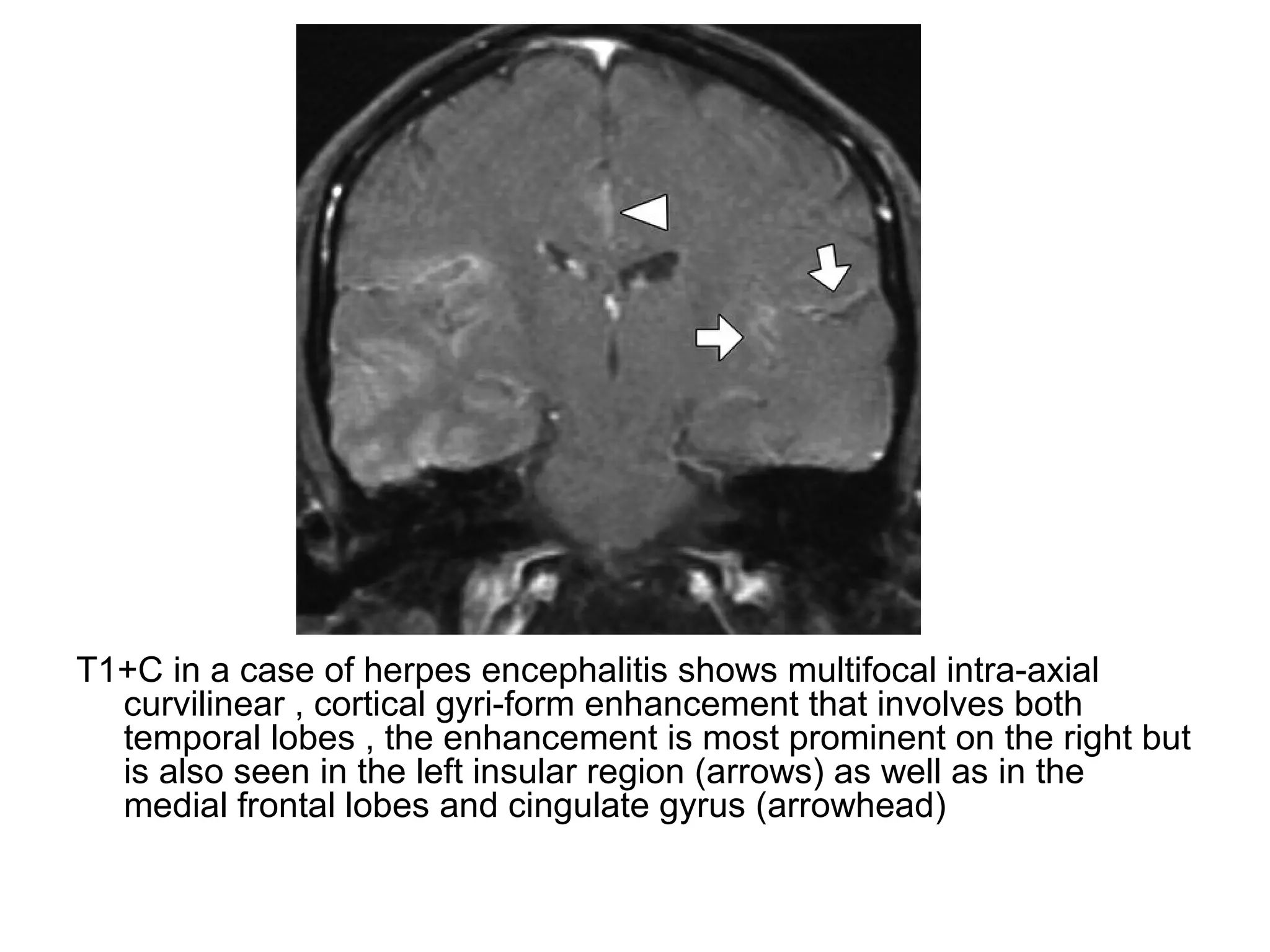
T1+C in a case of herpes encephalitis shows multifocal intra-axial
curvilinear , cortical gyri-form enhancement that involves both
temporal lobes , the enhancement is most prominent on the right but
is also seen in the left insular region (arrows) as well as in the
medial frontal lobes and cingulate gyrus (arrowhead)
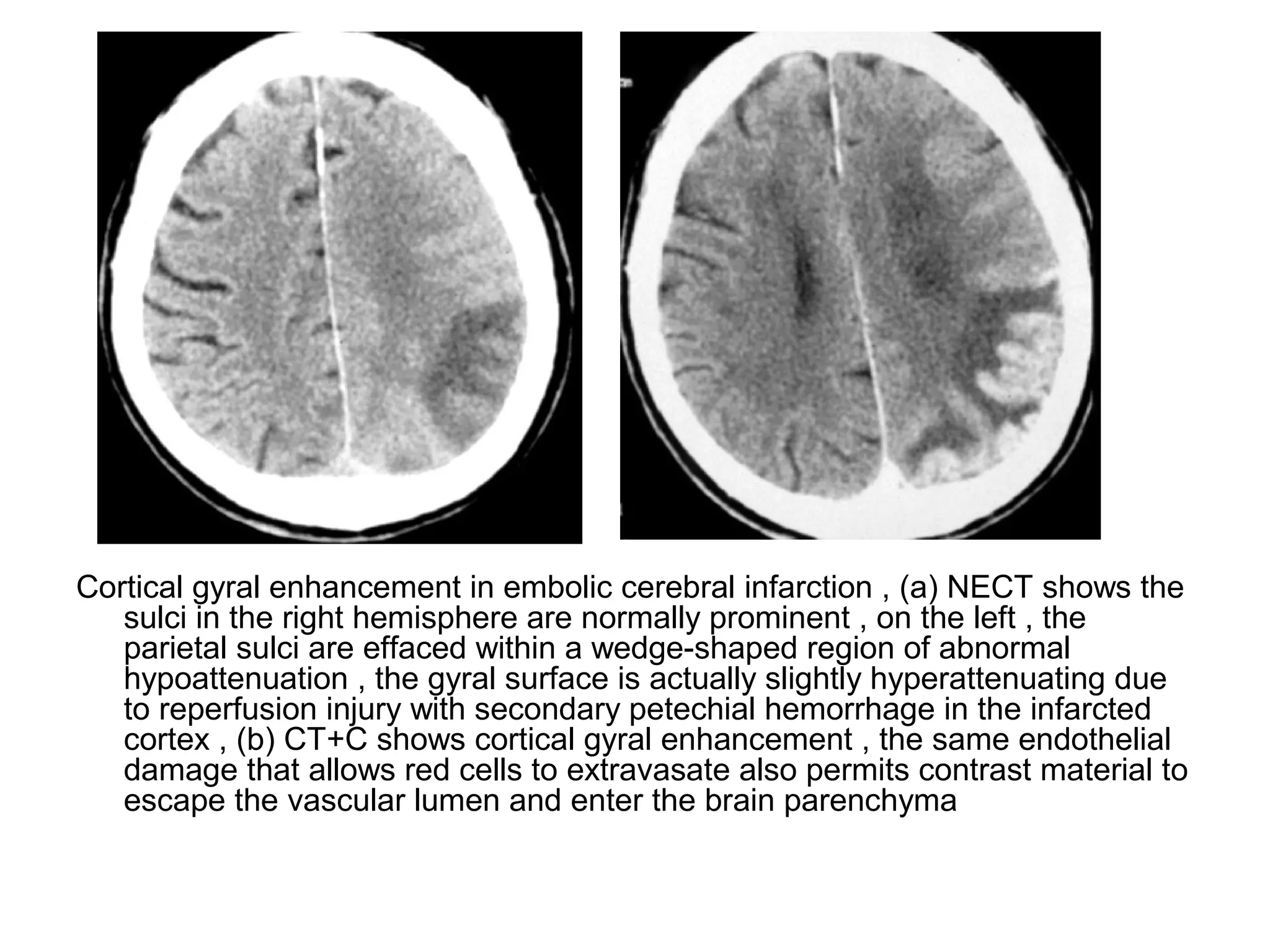
Cortical gyral enhancement in embolic cerebral infarction , (a) NECT shows the
sulci in the right hemisphere are normally prominent , on the left , the
parietal sulci are effaced within a wedge-shaped region of abnormal
hypoattenuation , the gyral surface is actually slightly hyperattenuating due
to reperfusion injury with secondary petechial hemorrhage in the infarcted
cortex , (b) CT+C shows cortical gyral enhancement , the same endothelial
damage that allows red cells to extravasate also permits contrast material to
escape the vascular lumen and enter the brain parenchyma
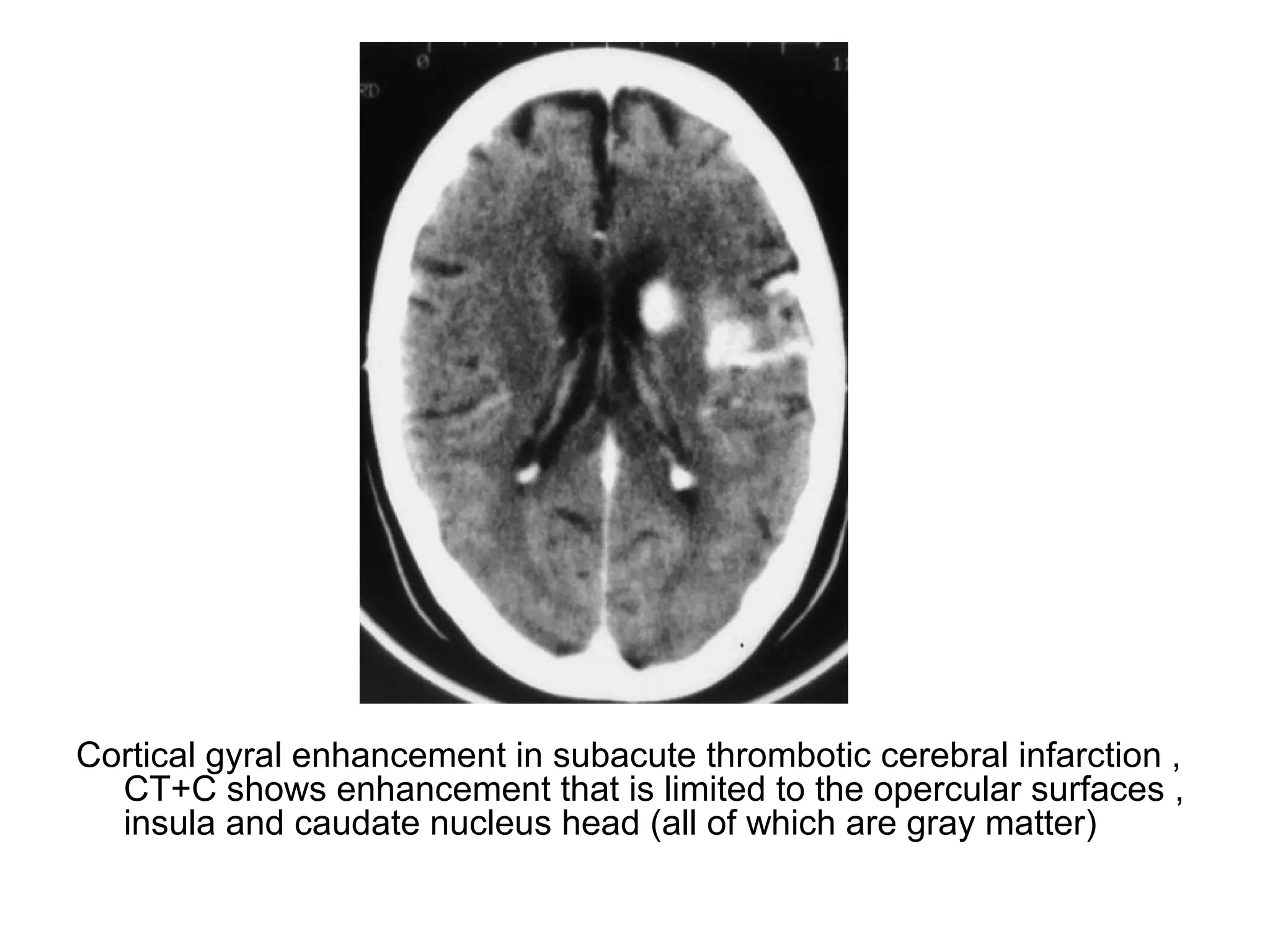
Cortical gyral enhancement in subacute thrombotic cerebral infarction ,
CT+C shows enhancement that is limited to the opercular surfaces ,
insula and caudate nucleus head (all of which are gray matter)
3-Nodular Subcortical Enhancement (Intra-axial) :
-Nodular intra-axial enhancement is most commonly due to
metastatic disease
-Hematogenously disseminated metastatic disease is small
(<2 cm) circumscribed lesions, commonly found
subcortical, in or near the gray matter-white matter
(corticomedullary) junction, whereas primary tumors are
usually deeper
-Metastatic disease usually travels into the brain through
the arteries and less commonly via the venous system
-CNS metastases are distributed by blood flow and the
majority are supratentorial in the cerebral hemispheres,
most often in the territory of the middle cerebral artery
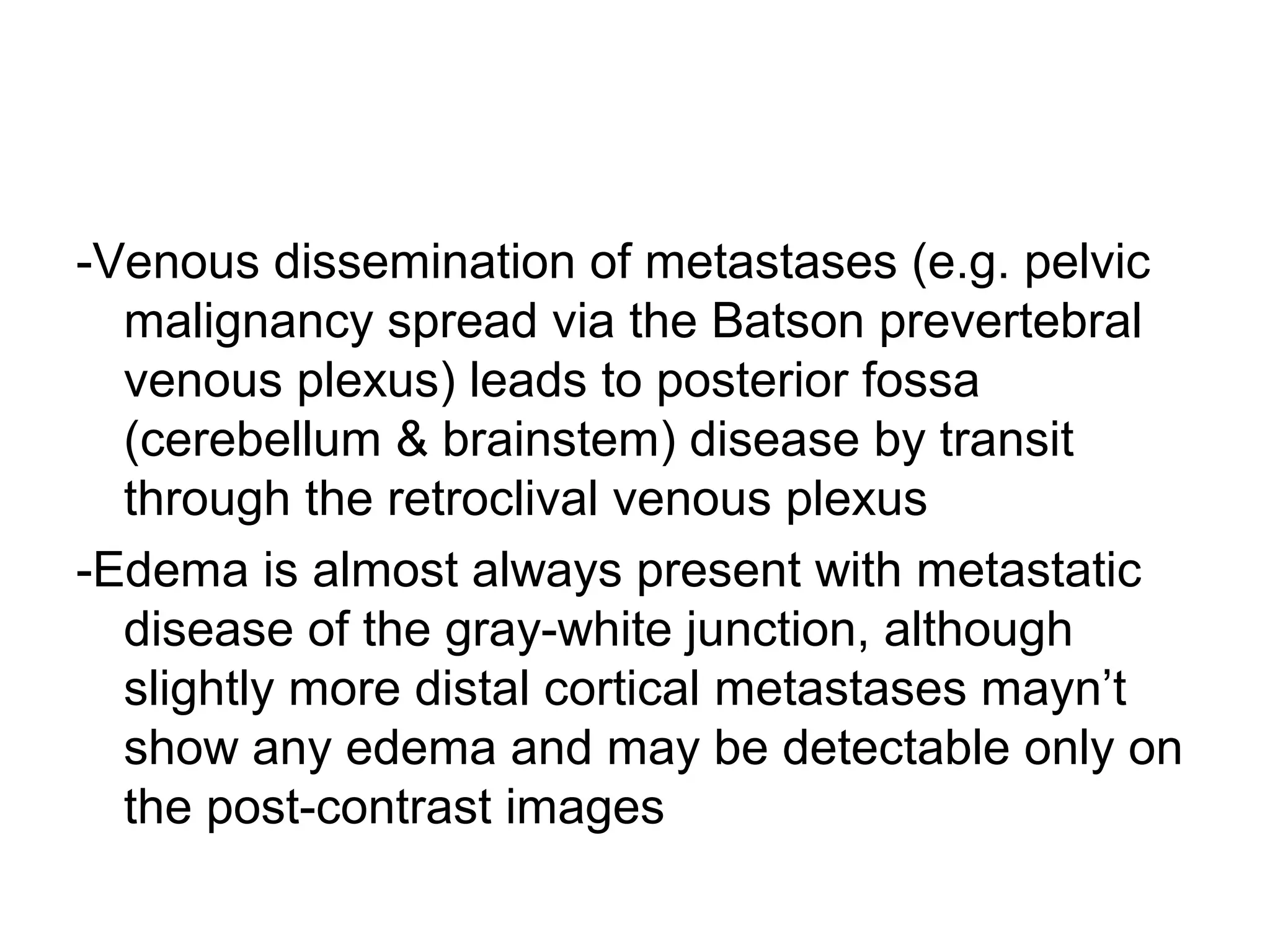
-Venous dissemination of metastases (e.g. pelvic
malignancy spread via the Batson prevertebral
venous plexus) leads to posterior fossa
(cerebellum & brainstem) disease by transit
through the retroclival venous plexus
-Edema is almost always present with metastatic
disease of the gray-white junction, although
slightly more distal cortical metastases mayn’t
show any edema and may be detectable only on
the post-contrast images
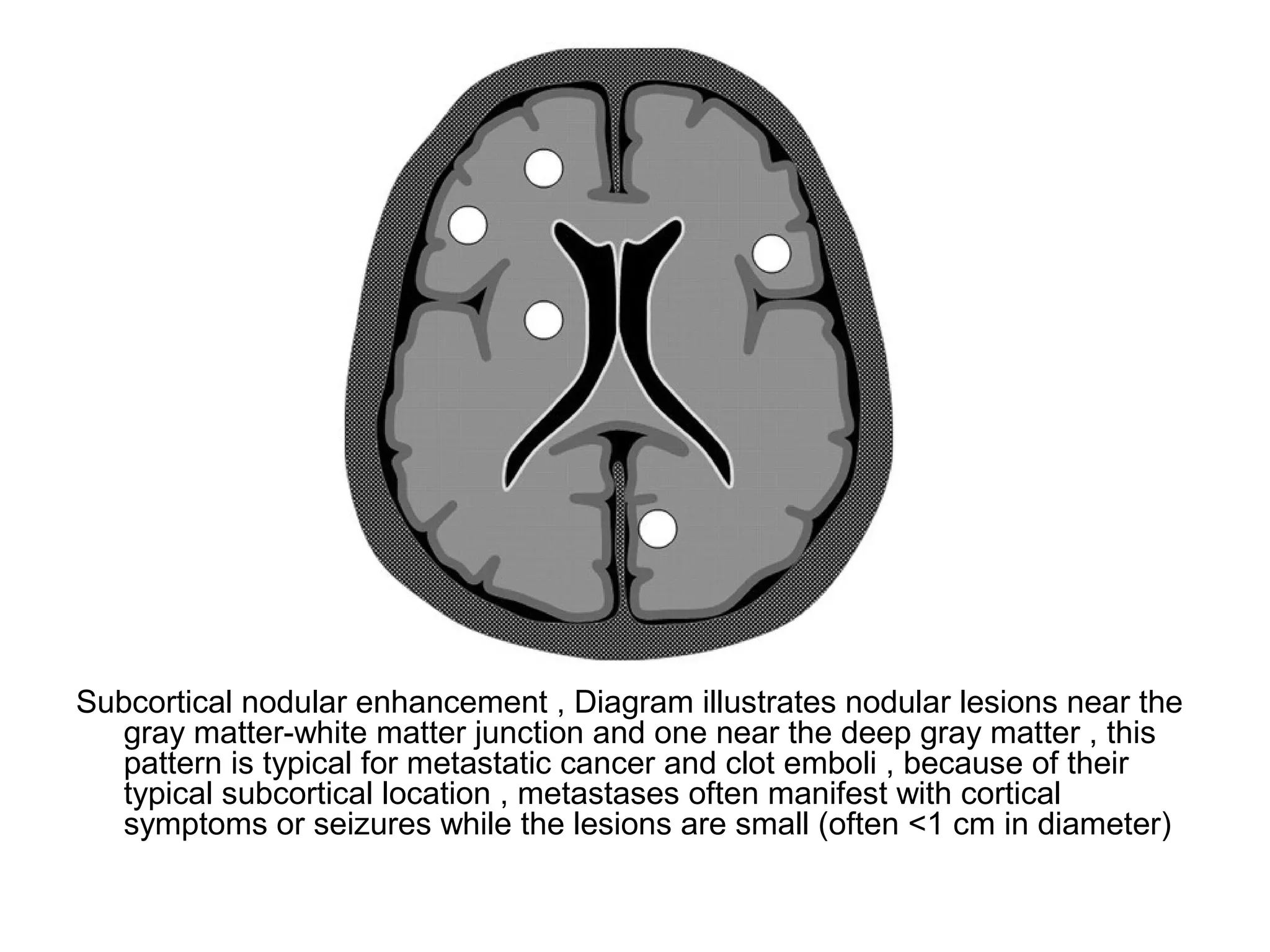
Subcortical nodular enhancement , Diagram illustrates nodular lesions near the
gray matter-white matter junction and one near the deep gray matter , this
pattern is typical for metastatic cancer and clot emboli , because of their
typical subcortical location , metastases often manifest with cortical
symptoms or seizures while the lesions are small (often <1 cm in diameter)
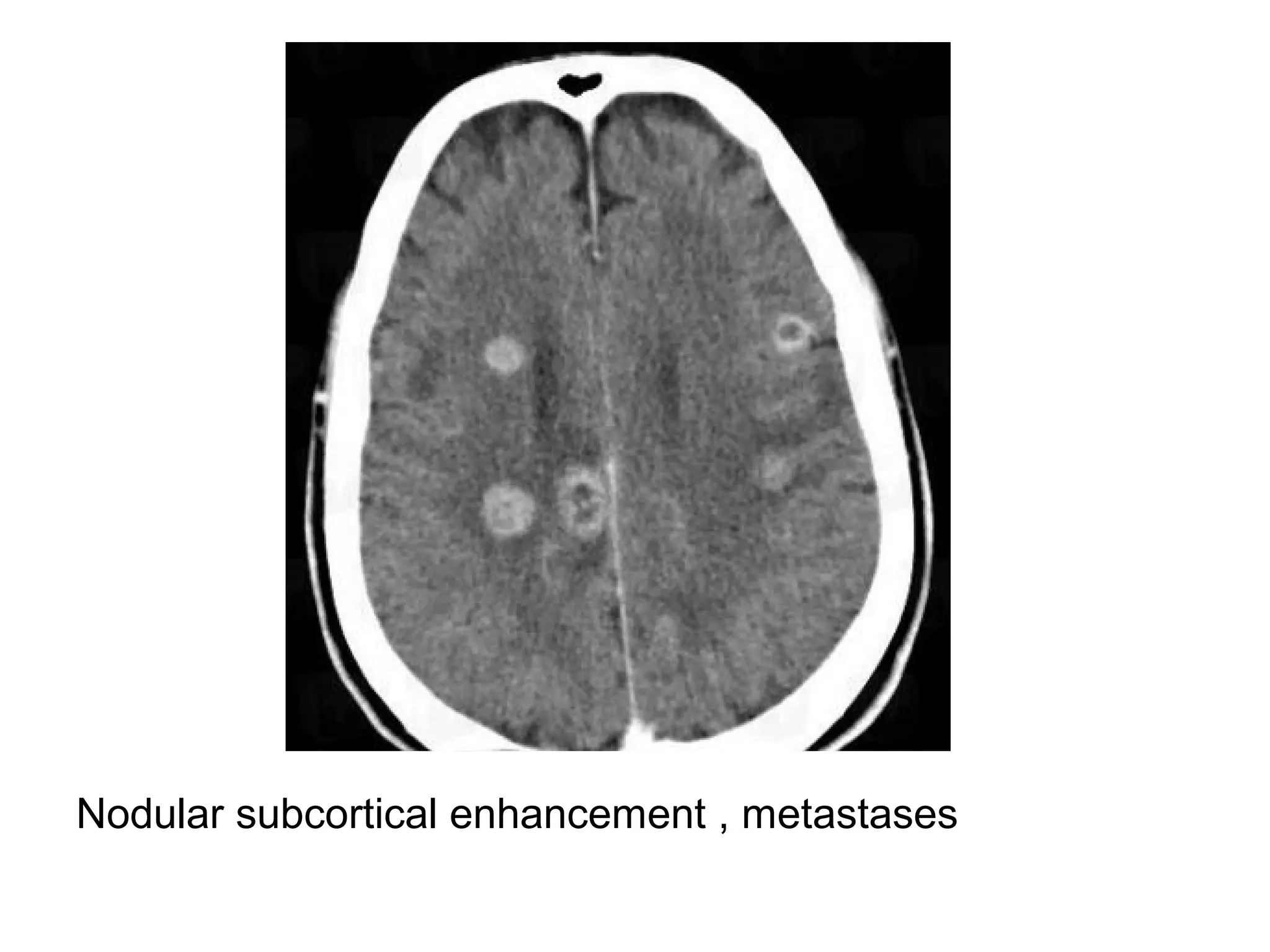
Nodular subcortical enhancement , metastases
4-Ring Enhancement (Intra-axial) :
-The two most common causes are high-grade
neoplasm & cerebral abscess
-The mnemonic (MAGIC DR) :
1-Metastases (hematogenous metastases are
typically at the subcortical gray-white junction,
metastases are often multiple, but smaller
lesions mayn’t be ring-enhancing
2-Abscess (the key finding is reduced diffusivity,
bright on DWI & dark on ADC, caused by high
viscosity of central necrosis & a characteristic
smooth, hypointense rim on T2)
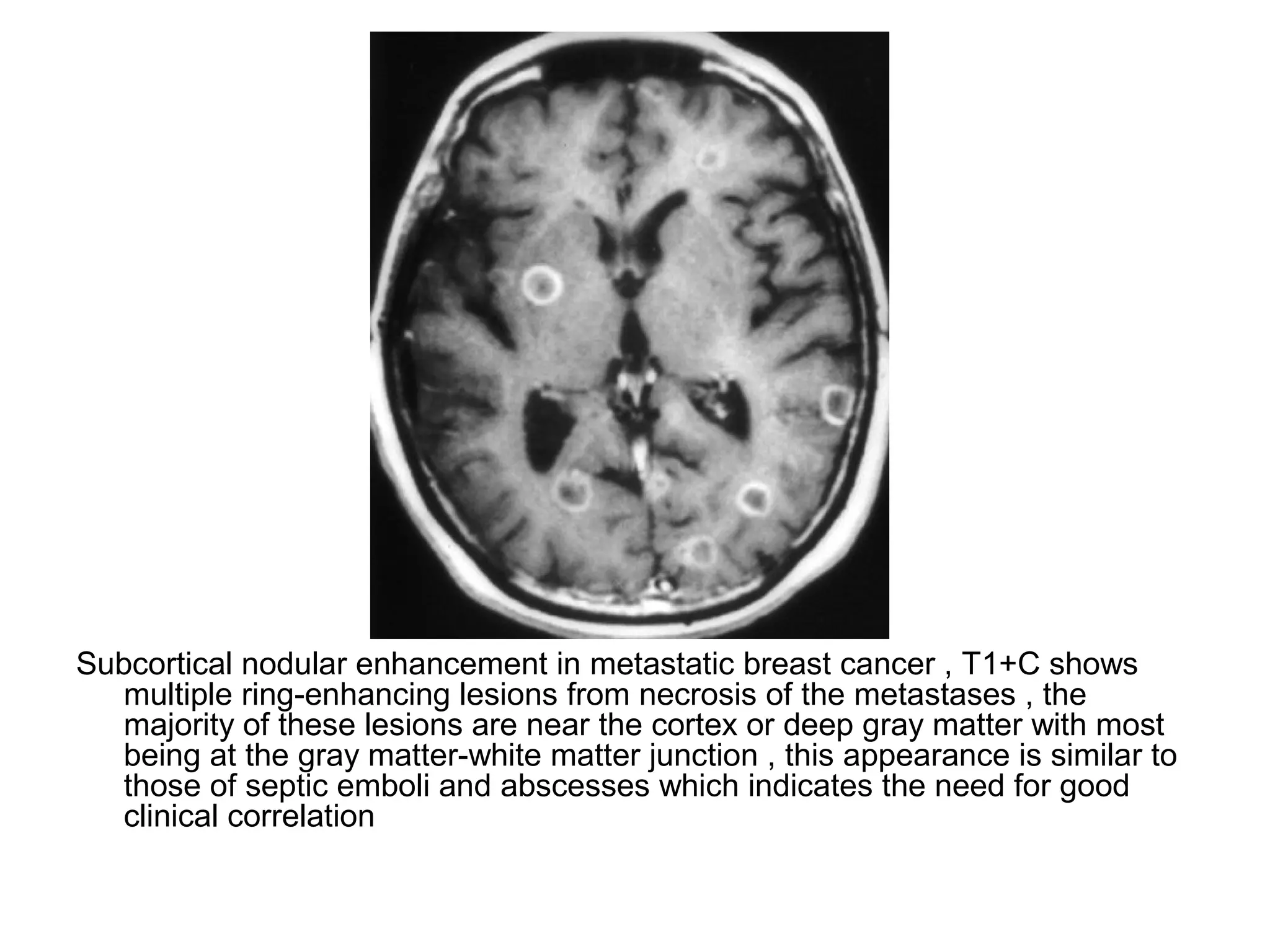
Subcortical nodular enhancement in metastatic breast cancer , T1+C shows
multiple ring-enhancing lesions from necrosis of the metastases , the
majority of these lesions are near the cortex or deep gray matter with most
being at the gray matter-white matter junction , this appearance is similar to
those of septic emboli and abscesses which indicates the need for good
clinical correlation
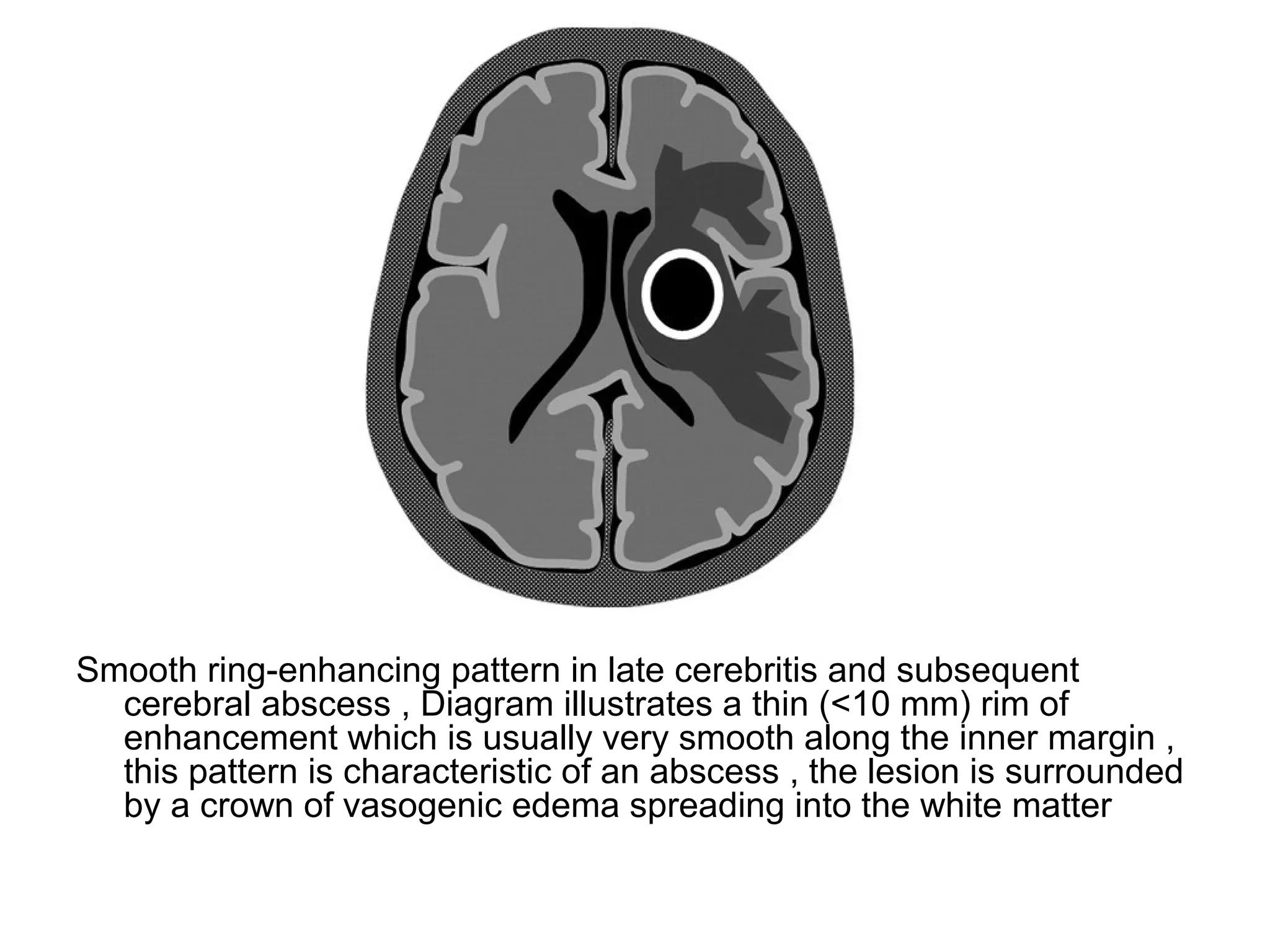
Smooth ring-enhancing pattern in late cerebritis and subsequent
cerebral abscess , Diagram illustrates a thin (<10 mm) rim of
enhancement which is usually very smooth along the inner margin ,
this pattern is characteristic of an abscess , the lesion is surrounded
by a crown of vasogenic edema spreading into the white matter
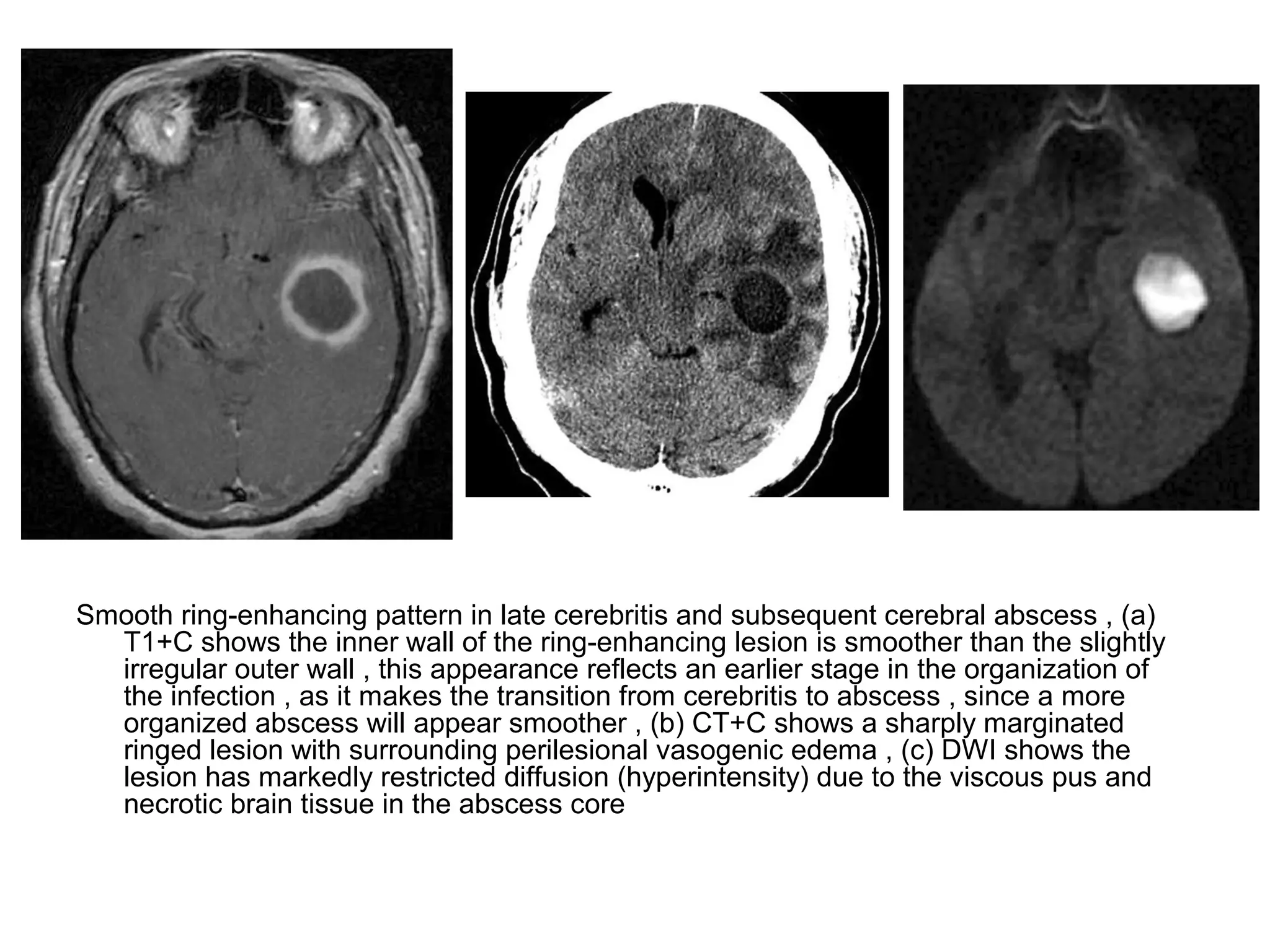
Smooth ring-enhancing pattern in late cerebritis and subsequent cerebral abscess , (a)
T1+C shows the inner wall of the ring-enhancing lesion is smoother than the slightly
irregular outer wall , this appearance reflects an earlier stage in the organization of
the infection , as it makes the transition from cerebritis to abscess , since a more
organized abscess will appear smoother , (b) CT+C shows a sharply marginated
ringed lesion with surrounding perilesional vasogenic edema , (c) DWI shows the
lesion has markedly restricted diffusion (hyperintensity) due to the viscous pus and
necrotic brain tissue in the abscess core
3-Glioma (high grade tumors such as GBM typically have a
thick & irregular wall), MRS will be abnormal outside the
margin of an enhancing high grade glial neoplasm
secondary to nonenhancing infiltrative tumor, this is in
contrast to a demyelinating lesion, abscess and
metastases, where the spectral pattern returns to normal
at the margin of the lesion, MRI perfusion shows
elevated perfusion in a high grade glioma
4-Infarct (although subacute cortical infarcts often show
gyral enhancement, ring enhancement can be seen in
subacute basal ganglia infarcts, in contrast to neoplasm
& infection, a subacute infarct doesn’t have significant
mass effect)
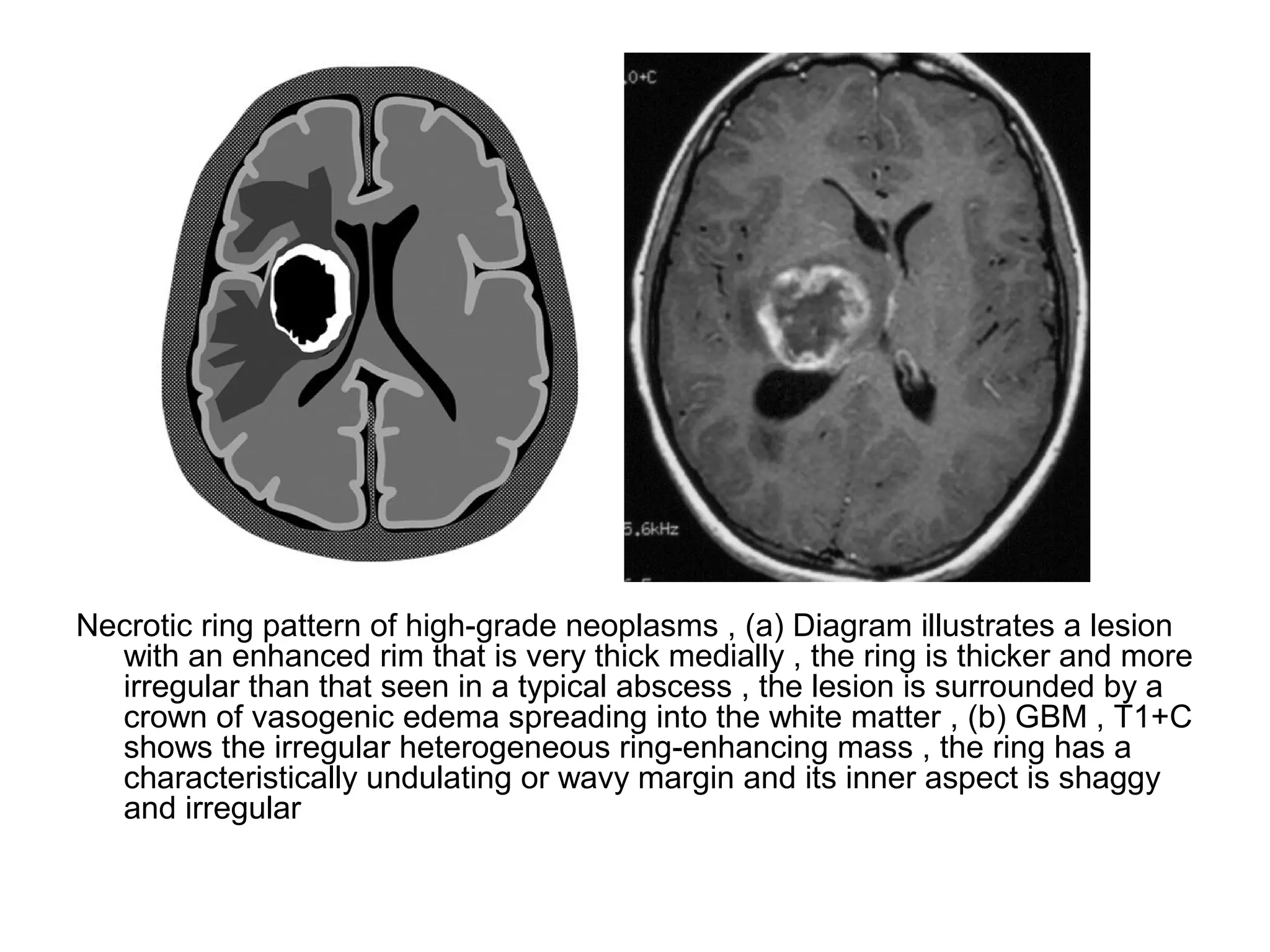
Necrotic ring pattern of high-grade neoplasms , (a) Diagram illustrates a lesion
with an enhanced rim that is very thick medially , the ring is thicker and more
irregular than that seen in a typical abscess , the lesion is surrounded by a
crown of vasogenic edema spreading into the white matter , (b) GBM , T1+C
shows the irregular heterogeneous ring-enhancing mass , the ring has a
characteristically undulating or wavy margin and its inner aspect is shaggy
and irregular
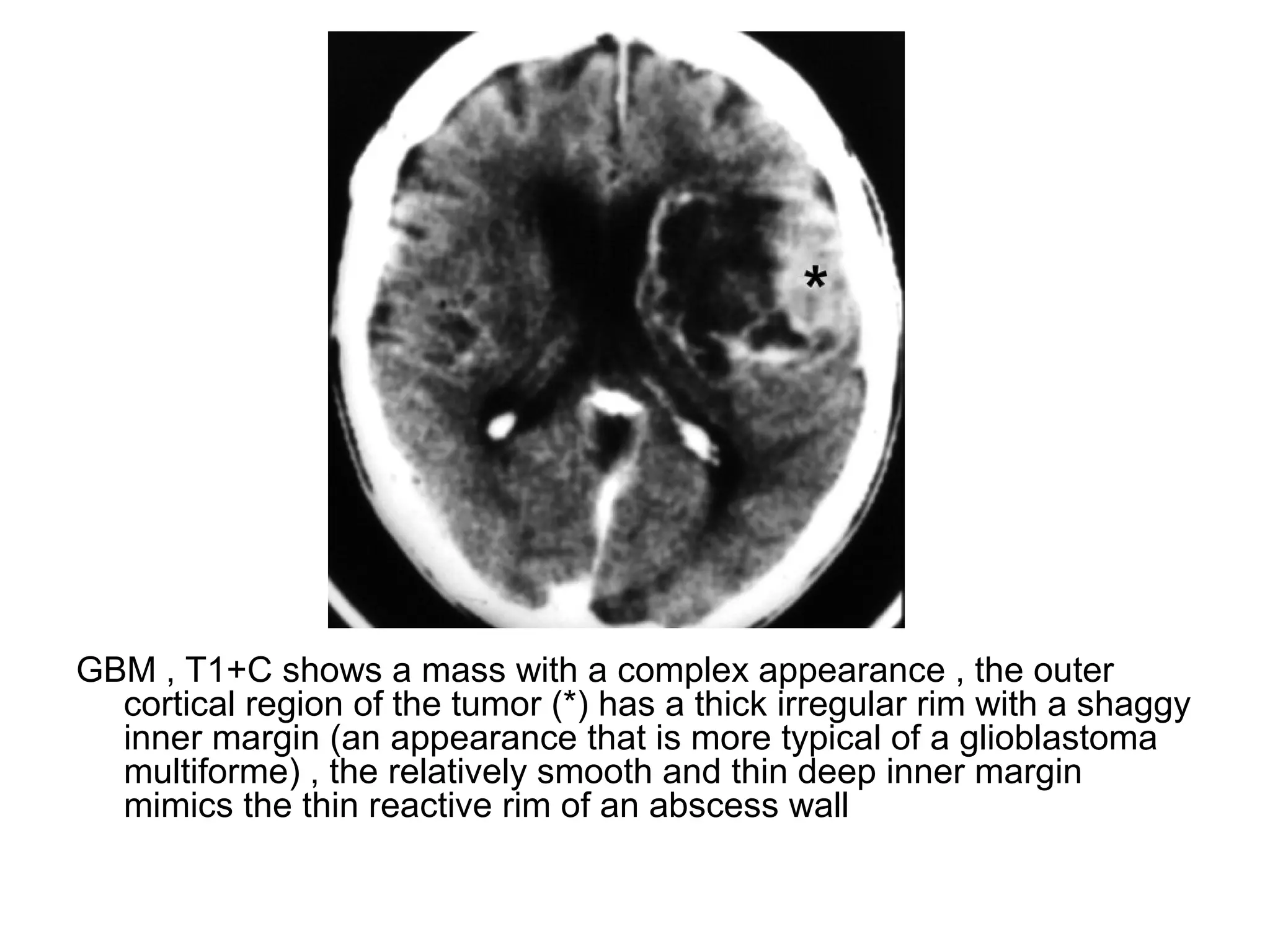
GBM , T1+C shows a mass with a complex appearance , the outer
cortical region of the tumor (*) has a thick irregular rim with a shaggy
inner margin (an appearance that is more typical of a glioblastoma
multiforme) , the relatively smooth and thin deep inner margin
mimics the thin reactive rim of an abscess wall
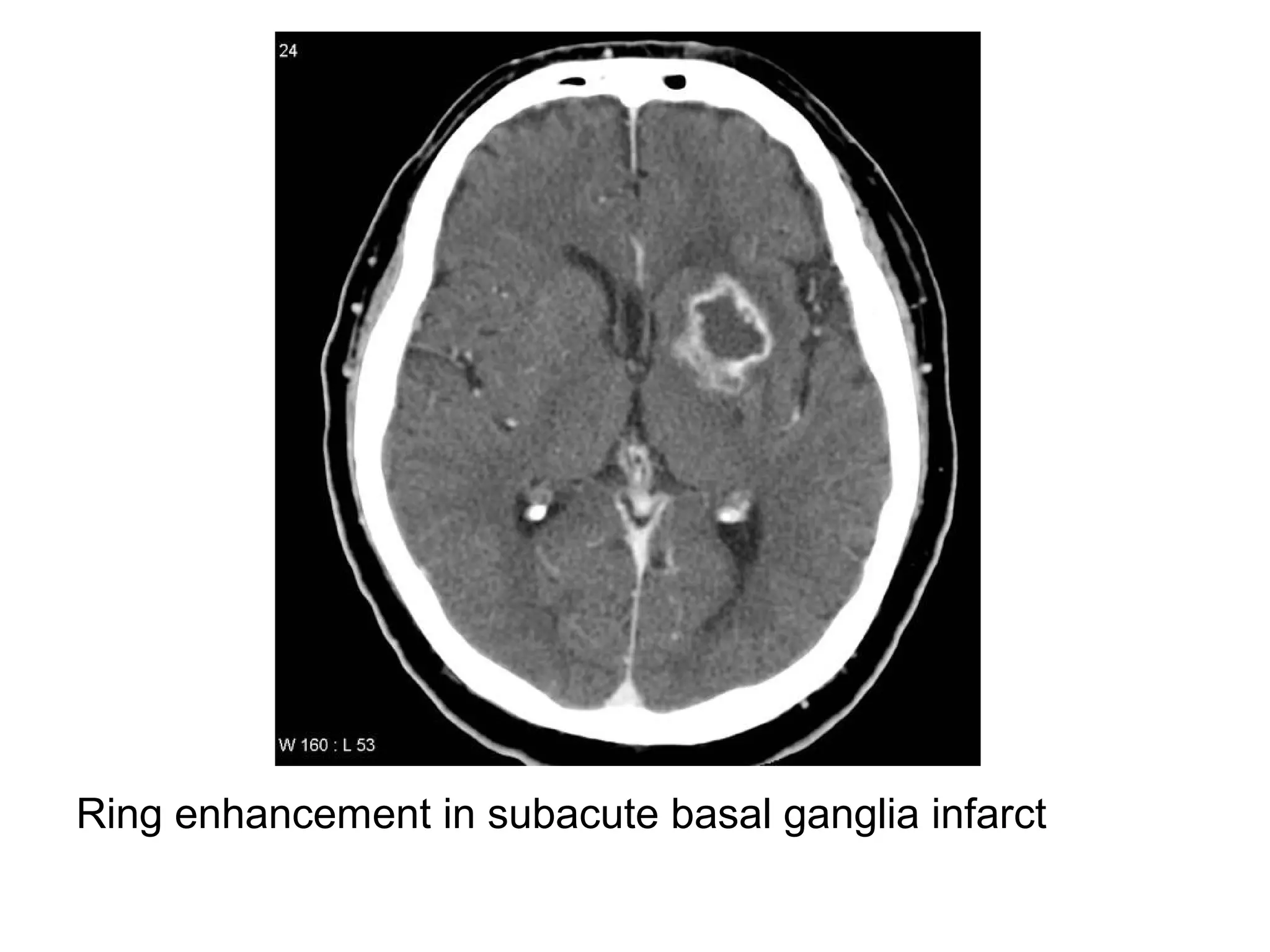
Ring enhancement in subacute basal ganglia infarct
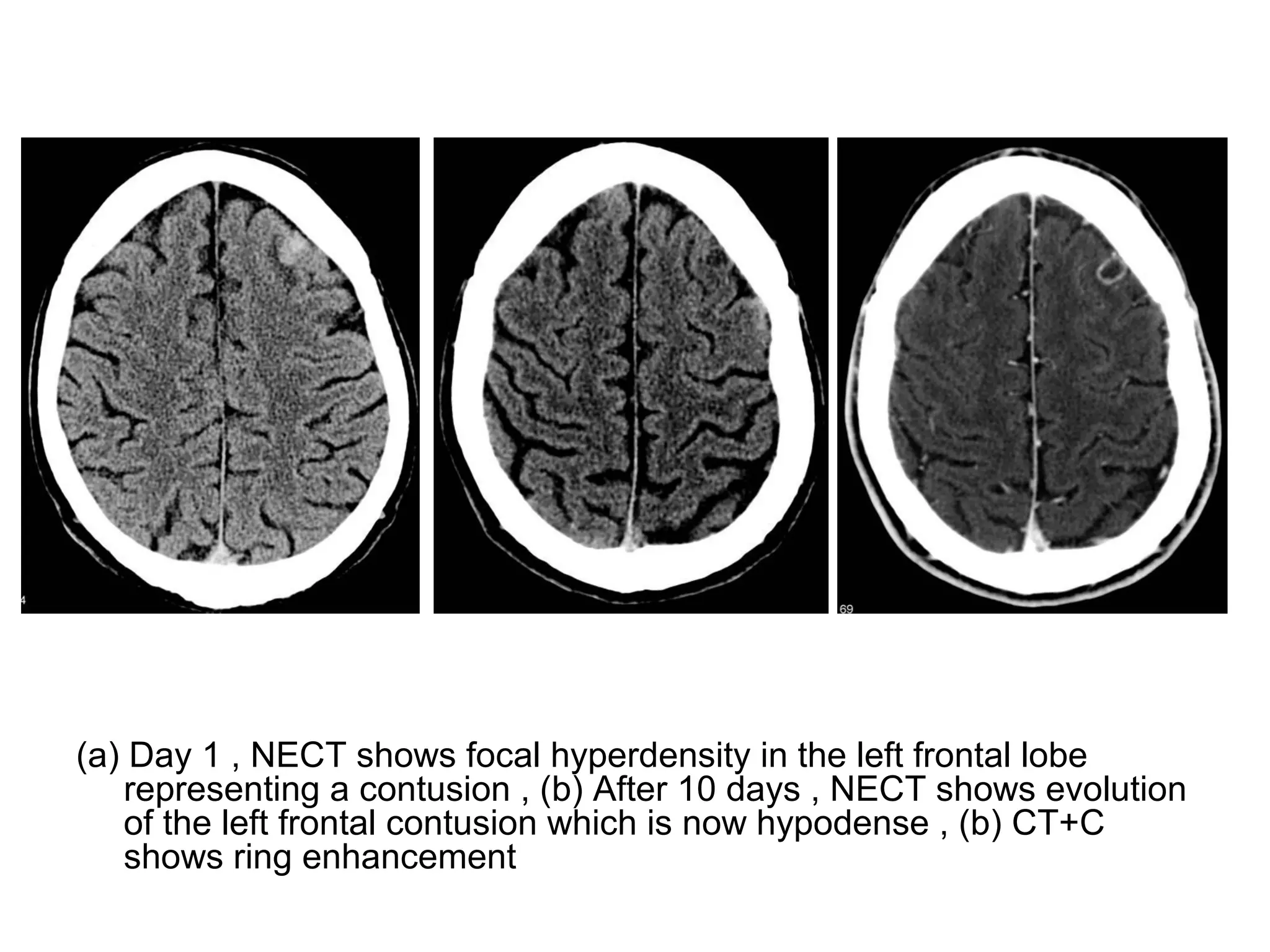
5-Contusion (both traumatic & nontraumatic
intraparenchymal hemorrhage can show ring
enhancement in the subacute to chronic stage)
6-Demyelinating disease (the key finding in ring-
enhancing demyelinating disease is lack of
significant mass effect, the “ring” of
enhancement is often incomplete & “C” shaped),
MS is the most common demyelinating disease,
enhancement suggests active disease, although
the typical finding is an incomplete rim of
enhancement, tumefactive demyelinating
disease can look identical to a high-grade tumor
(a) Day 1 , NECT shows focal hyperdensity in the left frontal lobe
representing a contusion , (b) After 10 days , NECT shows evolution
of the left frontal contusion which is now hypodense , (b) CT+C
shows ring enhancement
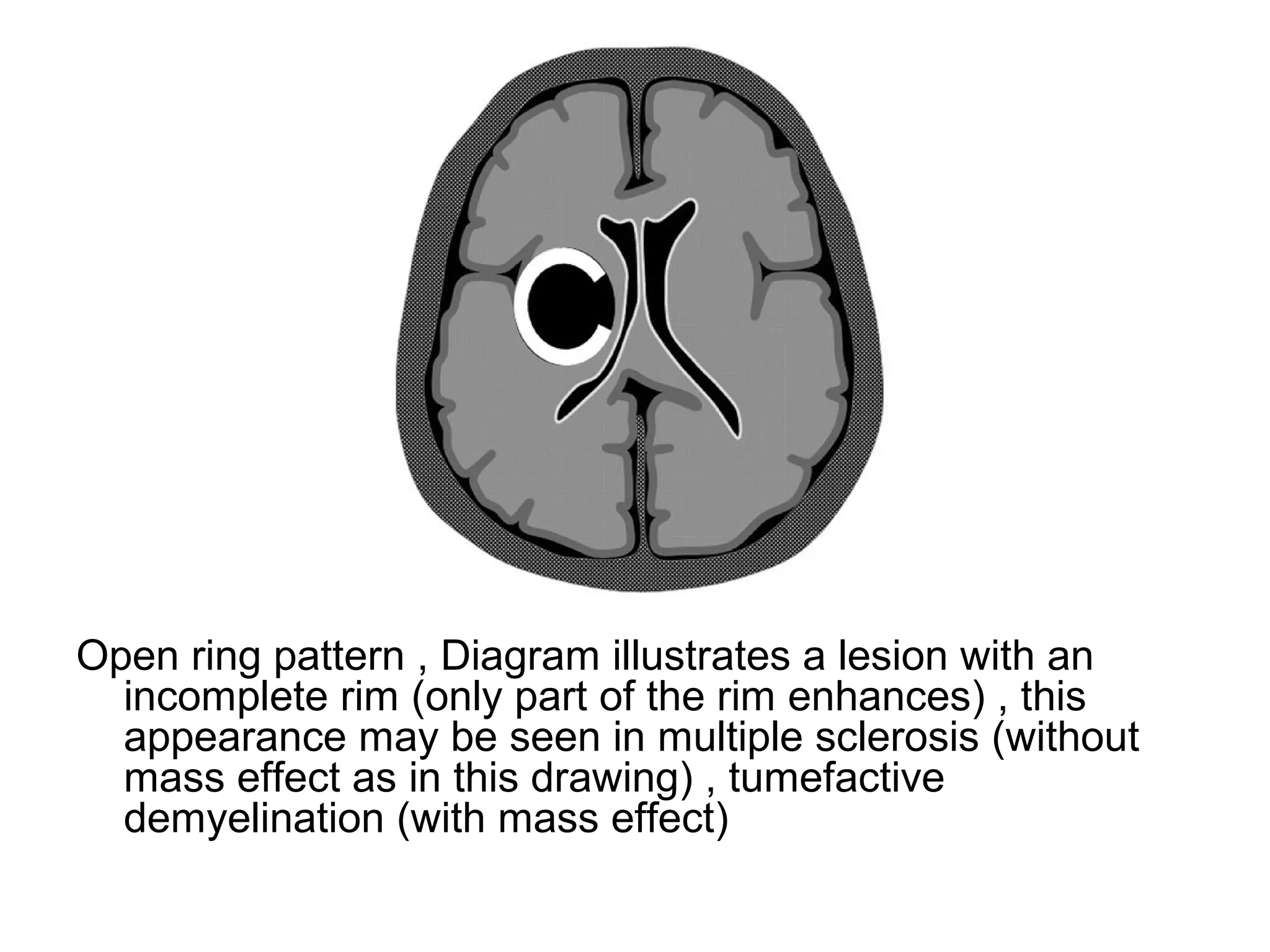
Open ring pattern , Diagram illustrates a lesion with an
incomplete rim (only part of the rim enhances) , this
appearance may be seen in multiple sclerosis (without
mass effect as in this drawing) , tumefactive
demyelination (with mass effect)
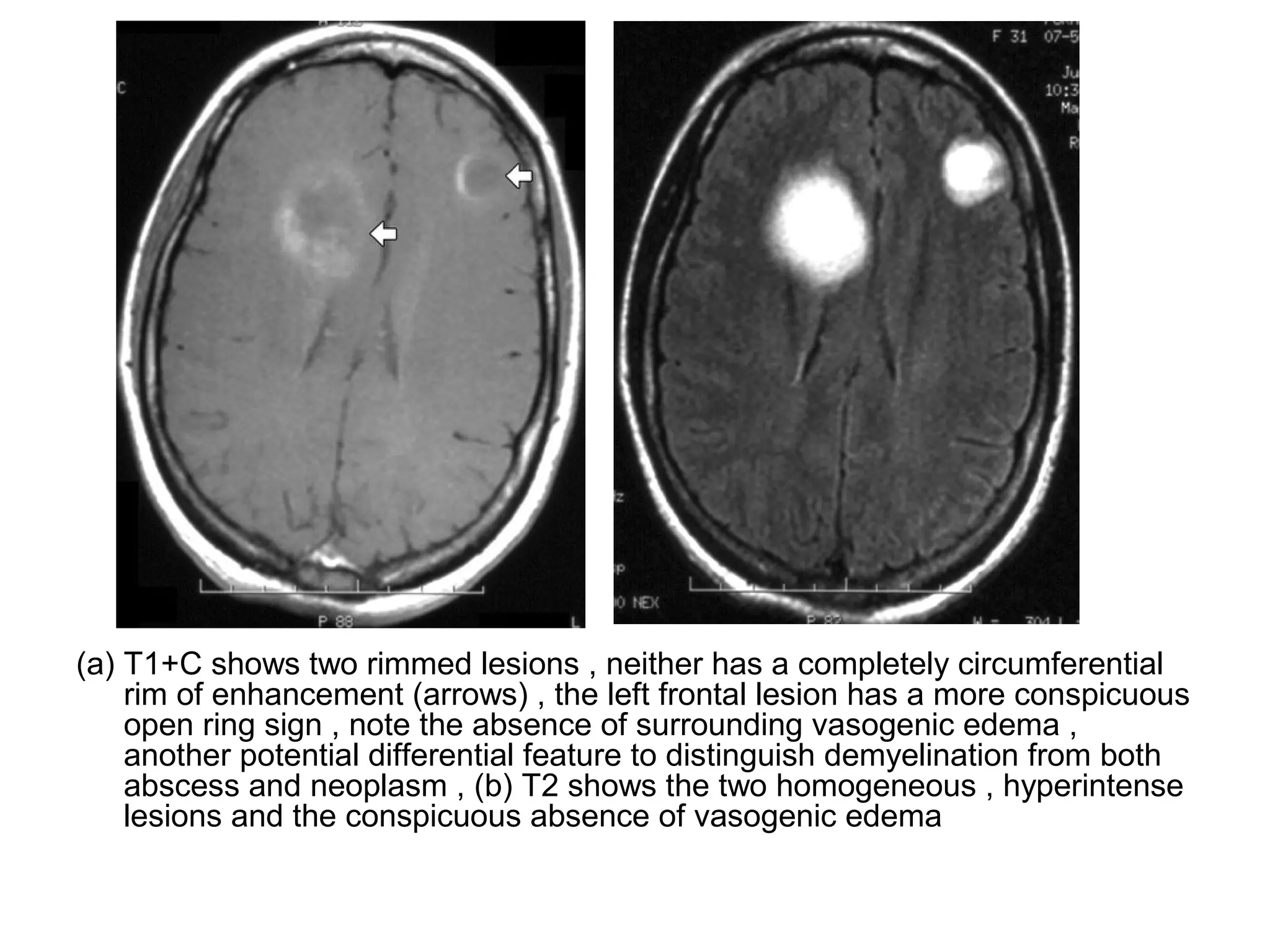
(a) T1+C shows two rimmed lesions , neither has a completely circumferential
rim of enhancement (arrows) , the left frontal lesion has a more conspicuous
open ring sign , note the absence of surrounding vasogenic edema ,
another potential differential feature to distinguish demyelination from both
abscess and neoplasm , (b) T2 shows the two homogeneous , hyperintense
lesions and the conspicuous absence of vasogenic edema
7-Radiation Necrosis (may look identical to
a high-grade tumor, on perfusion, cerebral
blood volume is generally low in radiation
necrosis and typically increased in a high
grade glioma)
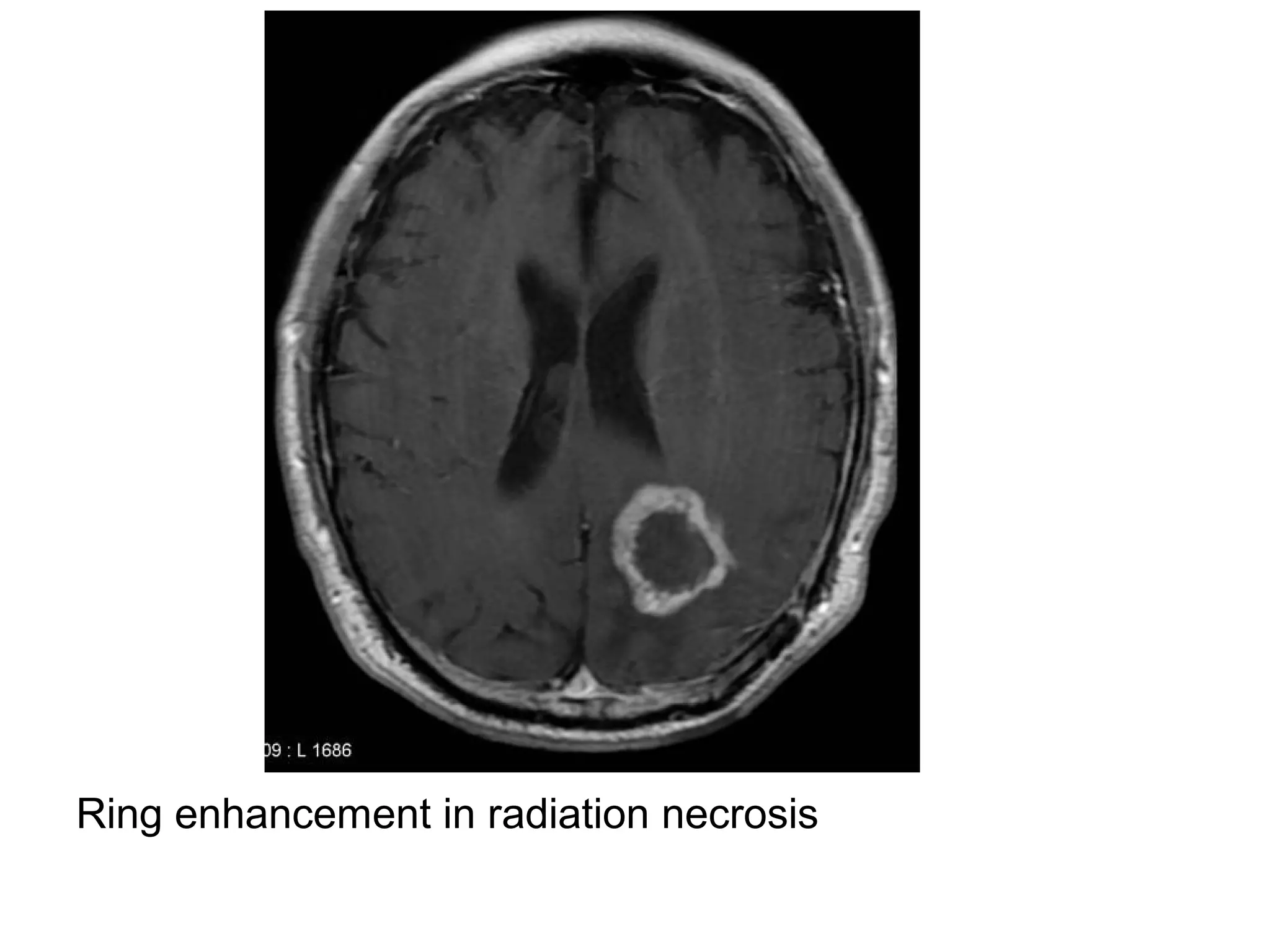
Ring enhancement in radiation necrosis
5-Pachymeningeal (Dural) Enhancement (Extra-
axial) :
-The pachymeninges (pachy means thick, a thick-
skinned elephant is a pachyderm, refers to the
dura matter)
-In addition to surrounding the surface of the brain,
the dura forms several reflections, including the
falx, tentorium & cavernous sinus
-The dura doesn’t have a BBB, although contrast
molecules normally diffuse into the dura on
enhanced CT or MRI, dural enhancement is
never visualized on CT & is only visualized on
MRI in pathologic situations
-Dural enhancement isn’t seen on CT because
both the skull & adjacent enhancing dura appear
white
-Enhancement of normal dura isn’t visible on MRI
because MRI visualization of enhancement
requires both water protons & gadolinium,
although gadolinium is present in the dura, there
are normally very few water protons, however,
dural pathology often causes dural edema,
which provides enough water protons to make
the gadolinium visible, therefore, dural
enhancement on MRI is an indication of edema
rather than BBB breakdown
-Causes :
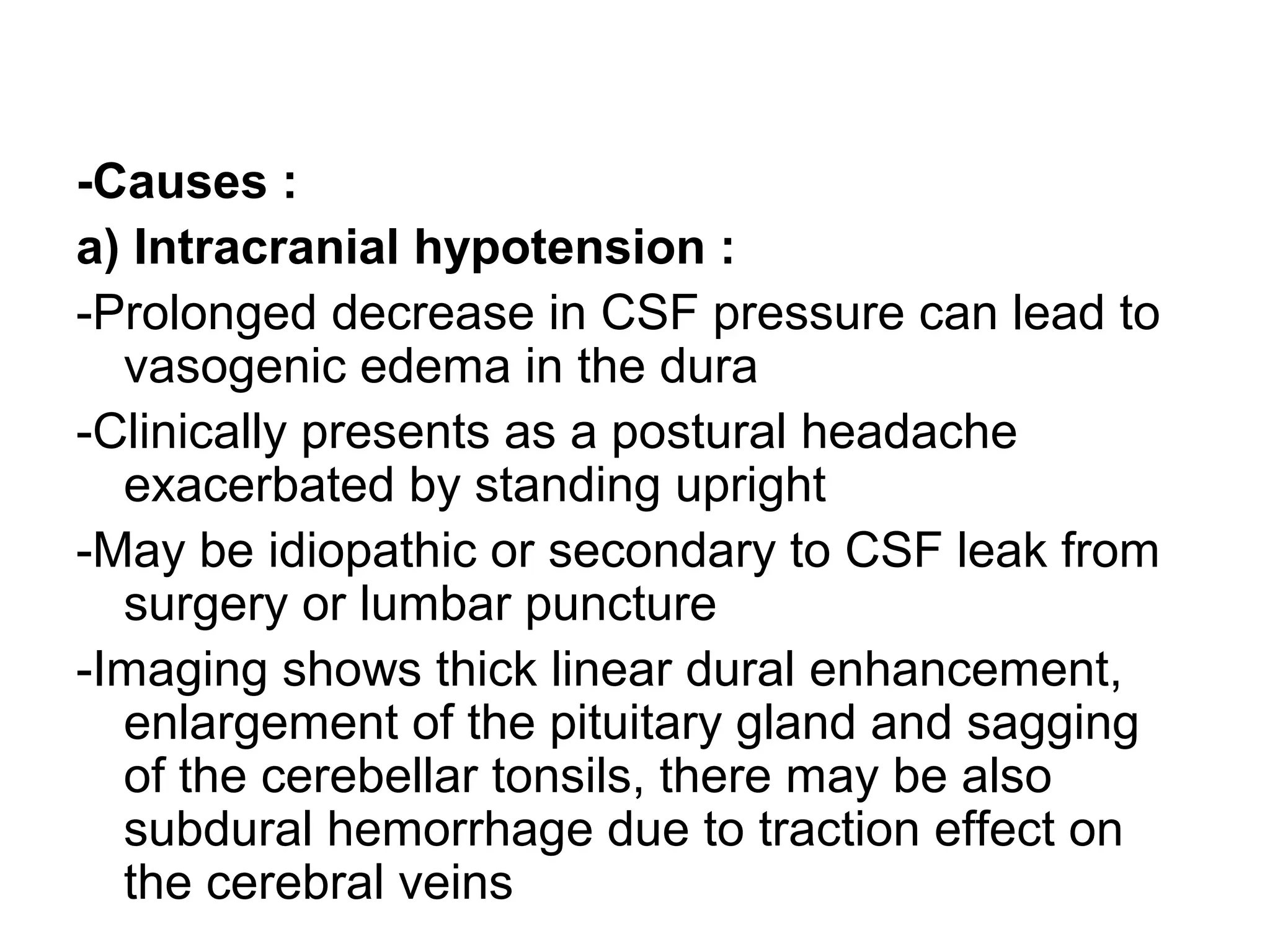
a) Intracranial hypotension :
-Prolonged decrease in CSF pressure can lead to
vasogenic edema in the dura
-Clinically presents as a postural headache
exacerbated by standing upright
-May be idiopathic or secondary to CSF leak from
surgery or lumbar puncture
-Imaging shows thick linear dural enhancement,
enlargement of the pituitary gland and sagging
of the cerebellar tonsils, there may be also
subdural hemorrhage due to traction effect on
the cerebral veins
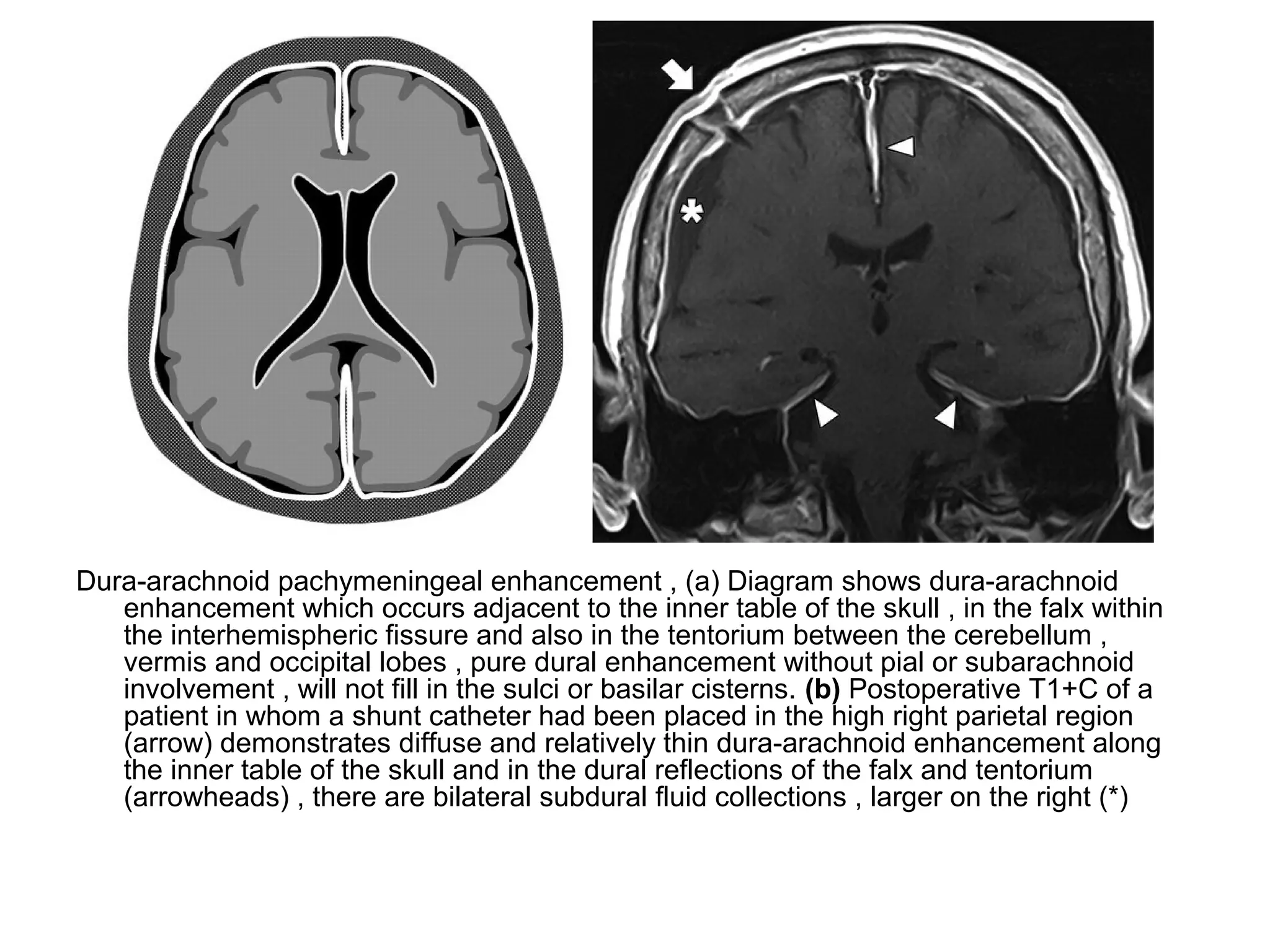
Dura-arachnoid pachymeningeal enhancement , (a) Diagram shows dura-arachnoid
enhancement which occurs adjacent to the inner table of the skull , in the falx within
the interhemispheric fissure and also in the tentorium between the cerebellum ,
vermis and occipital lobes , pure dural enhancement without pial or subarachnoid
involvement , will not fill in the sulci or basilar cisterns. (b) Postoperative T1+C of a
patient in whom a shunt catheter had been placed in the high right parietal region
(arrow) demonstrates diffuse and relatively thin dura-arachnoid enhancement along
the inner table of the skull and in the dural reflections of the falx and tentorium
(arrowheads) , there are bilateral subdural fluid collections , larger on the right (*)
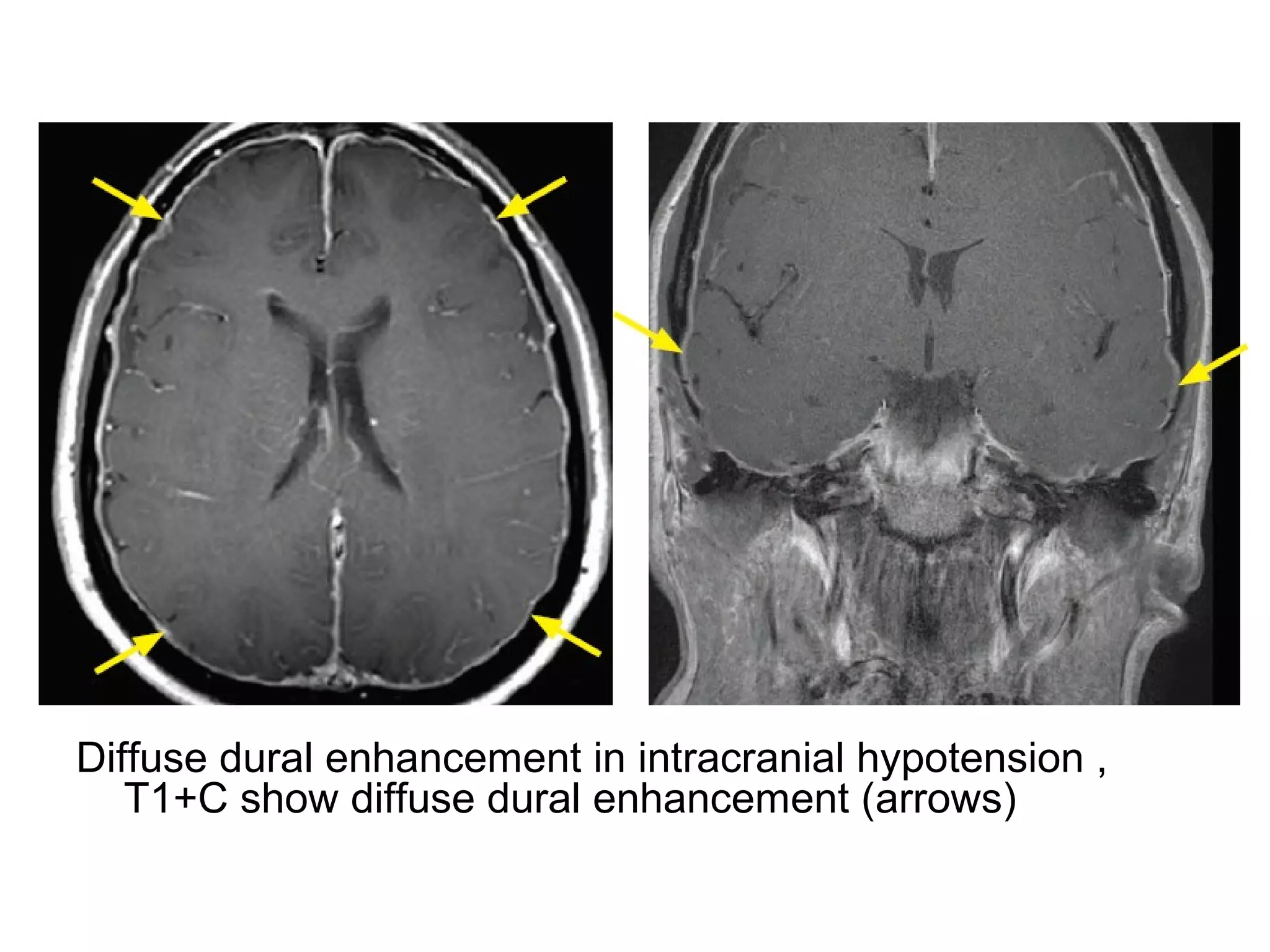
Diffuse dural enhancement in intracranial hypotension ,
T1+C show diffuse dural enhancement (arrows)
b) Postoperative : dural enhancement may be
seen postoperatively
c) Post lumbar puncture : diffuse dural
enhancement is occasionally seen after routine
lumbar puncture
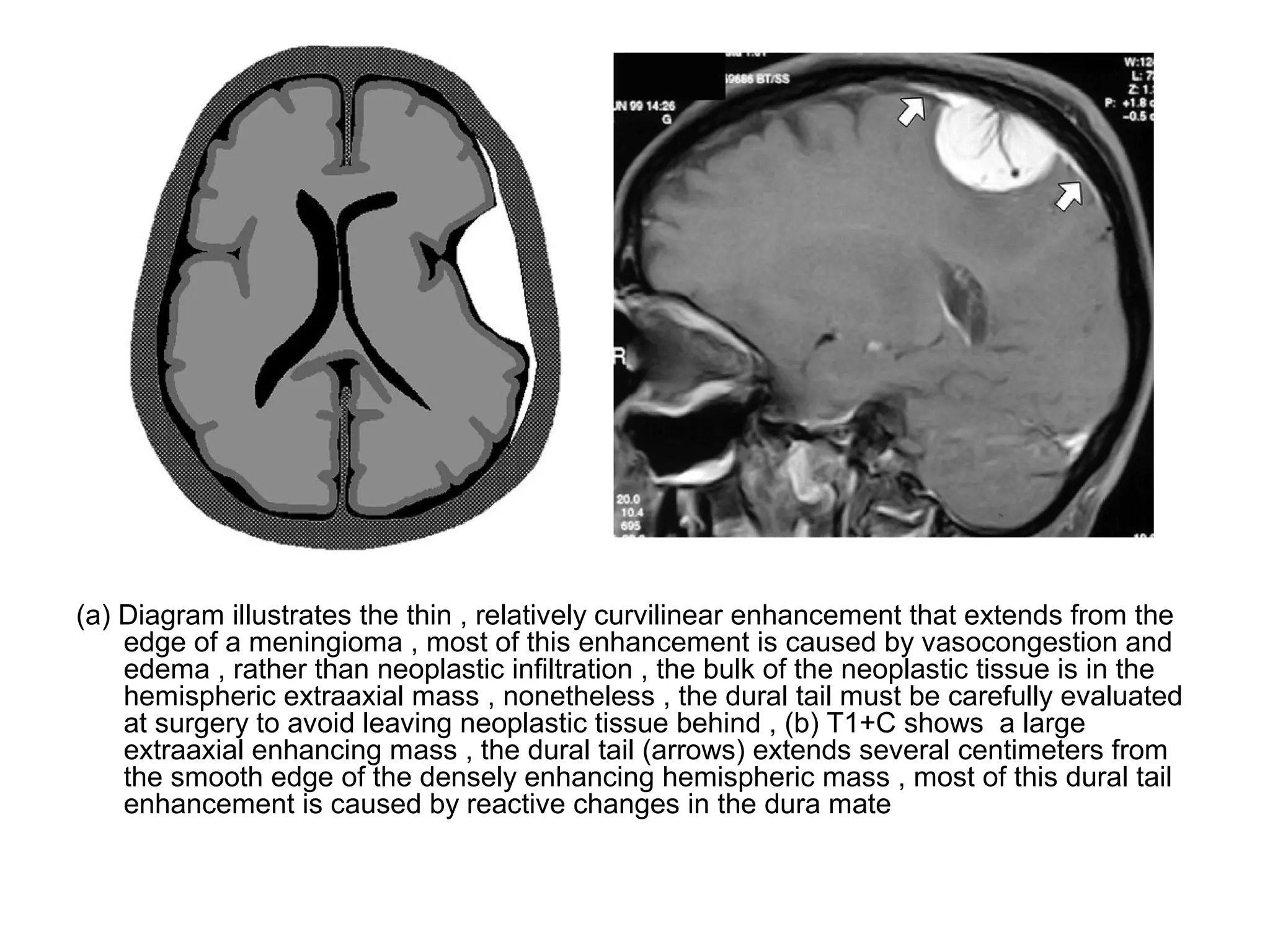
d) Meningeal neoplasm : such as meningioma,
can produce a focal area of dural enhancement
called a dural tail due to reactive changes in the
dura, metastatic disease to the dura most
commonly breast cancer in a female and
prostate cancer in a male, can cause irregular
dural enhancement
e) Granulomatous disease : including
sarcoidosis, TB & fungal disease, can produce
dural enhancement, typically of the basal
meninges (meninges of the skull base)
(a) Diagram illustrates the thin , relatively curvilinear enhancement that extends from the
edge of a meningioma , most of this enhancement is caused by vasocongestion and
edema , rather than neoplastic infiltration , the bulk of the neoplastic tissue is in the
hemispheric extraaxial mass , nonetheless , the dural tail must be carefully evaluated
at surgery to avoid leaving neoplastic tissue behind , (b) T1+C shows a large
extraaxial enhancing mass , the dural tail (arrows) extends several centimeters from
the smooth edge of the densely enhancing hemispheric mass , most of this dural tail
enhancement is caused by reactive changes in the dura mate
6-Leptomeningeal (Pia-arachnoid)
Enhancement (Extra-axial) :
-The leptomeninges (lepto means thin or
narrow) include the pia & arachnoid
-Leptomeningeal enhancement follows the
undulating contours of the sulci as it
includes enhancement of both the
subarachnoid space and the pial surface
of the brain
-Causes :
1-Meningitis :
-Bacterial, viral or fungal is the primary
consideration when leptomeningeal
enhancement is seen
-Leptomeningeal enhancement in meningitis is
caused by BBB breakdown due to inflammation
or infection
-Fine linear enhancement suggests bacterial or
viral meningitis
-Thicker nodular enhancement suggests fungal
meningitis
2-Leptomeningeal carcinomatosis :
-Also called carcinomatous meningitis
-Is spread of neoplasm into the subarachnoid
space which may be due to primary brain tumor
or metastatic disease
-CNS neoplasms known to cause leptomeningeal
carcinomatosis include medulloblastoma,
oligodendroglioma, choroid plexus tumor,
lymphoma, ependymoma, glioblastoma &
germinoma (MOCLEGG)
-metastatic tumors known to cause carcinomatosis
include lymphoma & breast cancer
3-Viral encephalitis :
-May produce cranial nerve enhancement within
the subarachnoid space
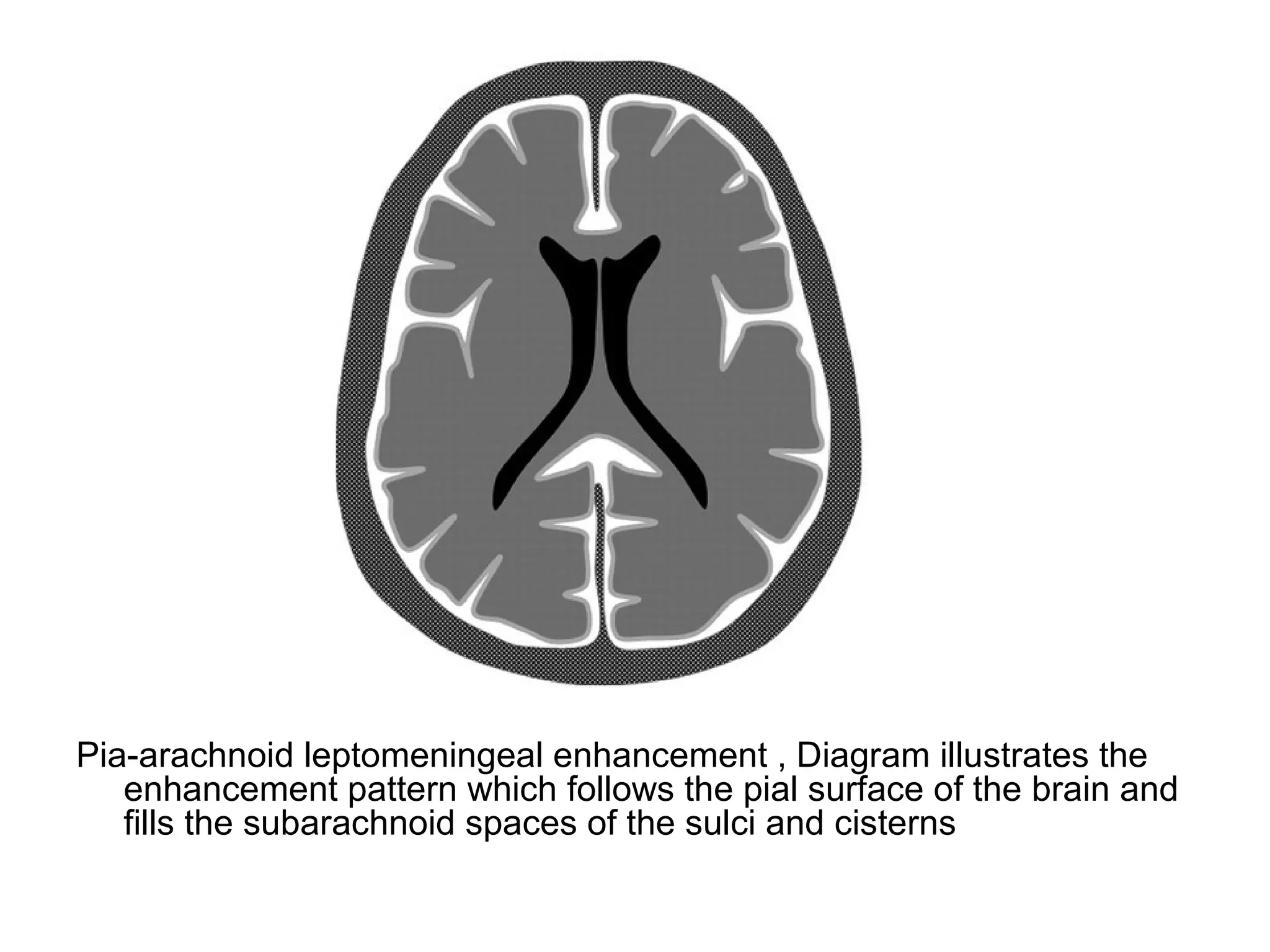
Pia-arachnoid leptomeningeal enhancement , Diagram illustrates the
enhancement pattern which follows the pial surface of the brain and
fills the subarachnoid spaces of the sulci and cisterns
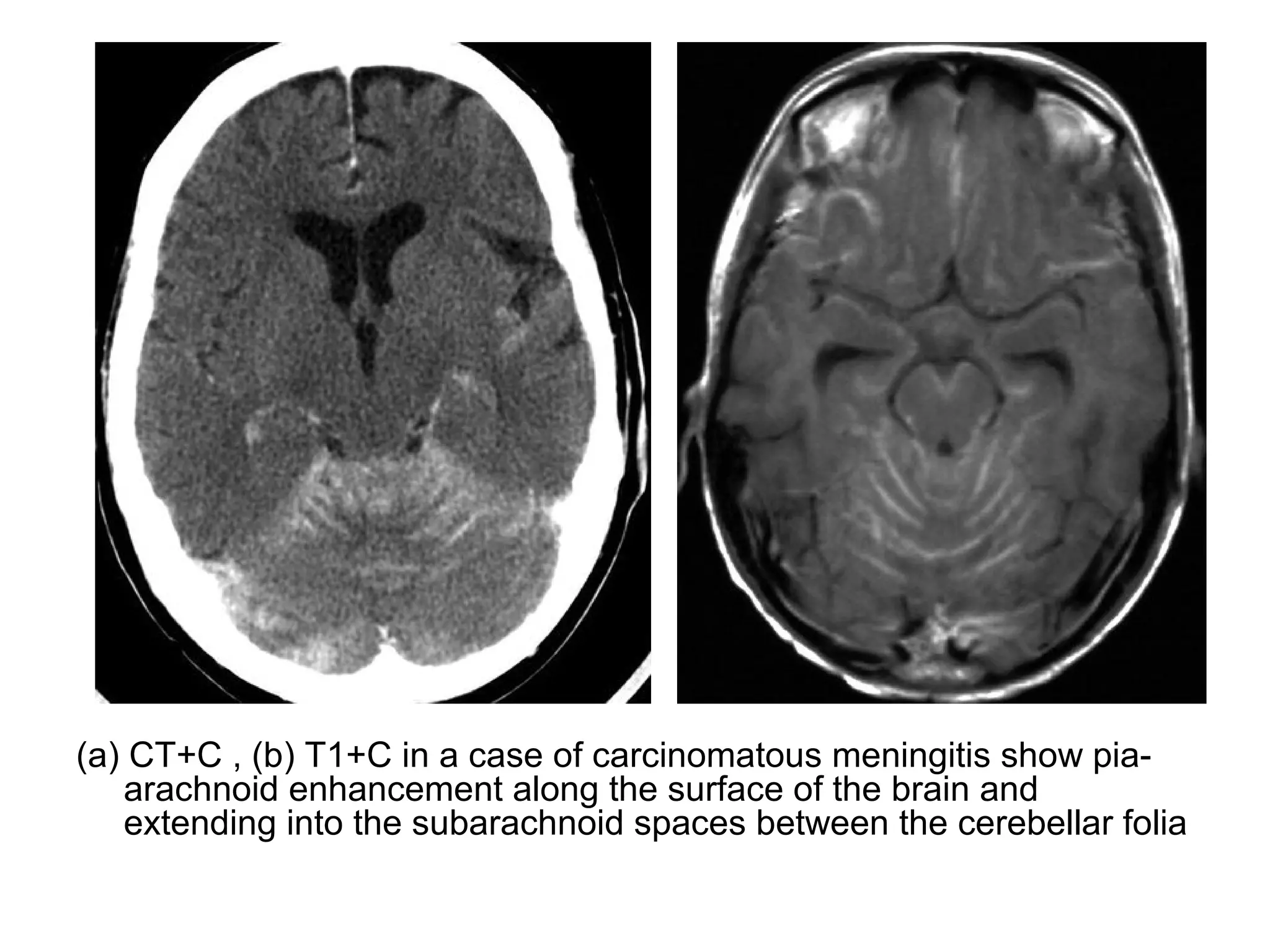
(a) CT+C , (b) T1+C in a case of carcinomatous meningitis show pia-
arachnoid enhancement along the surface of the brain and
extending into the subarachnoid spaces between the cerebellar folia
**N.B. :
-The D.D. of FLAIR hyperintensity in the subarachnoid
space overlaps with the differential for leptomeningeal
enhancement, subarachnoid FLAIR hyperintensity may
be due to :
1-Meningitis & leptomeningeal carcinomatosis : both have
increased subarachnoid FALIR signal & leptomeningeal
enhancement
2-SAH : manifests as increased subarachnoid FLAIR signal
without leptomeningeal enhancement, blooming artifact
on GRE or SWI from blood products will help
differentiate SAH from carcinomatosis
Patterns of Enhancement in the Brain

Patterns of Enhancement in the Brain

  • 1.
  • 2.
    Mohamed Zaitoun Assistant Lecturer-DiagnosticRadiology Department , Zagazig University Hospitals Egypt FINR (Fellowship of Interventional Neuroradiology)-Switzerland zaitoun82@gmail.com
  • 5.
    Knowing as muchas possible about your enemy precedes successful battle and learning about the disease process precedes successful management
  • 6.
    Patterns of Enhancementin the Brain 1-Periventricular Enhancement (Intra-axial) 2-Gyriform Enhancement (Intra-axial) 3-Nodular Subcortical Enhancement (Intra-axial) 4-Ring Enhancement (Intra-axial) 5-Pachymeningeal (Dural) Enhancement (Extra- axial) 6-Leptomeningeal (Pia-arachnoid) Enhancement (Extra-axial)
  • 7.
    *Blood Brain Barrier(BBB) & Enhancement : -Micro or macro disruption of the BBB produces a parenchymal enhancement after contrast administration, which may be secondary to infection, inflammation, neoplasm, trauma and vascular etiologies -The BBB is formed by astrocyte foot processes of brain capillary endothelial cells & prevents direct communication between the systemic capillaries & the protected extracellular fluid of the brain
  • 8.
    -Several CNS regionsdon’t have a BBB and therefore normally enhance : a) Choroid plexus b) Pituitary & pineal glands c) Tuber cinereum (controls circadian rhythm, located in the inferior hypothalamus) d) Area postrema (controls vomiting, located at inferior aspect of the 4th ventricle) -The dura also lacks a BBB , but doesn’t normally enhance -Intracranial enhancement may be intra or extra-axial, extra-axial structures that may enhance in pathologic conditions include the dura (pachymeninges) & arachnoid (leptomeninges)
  • 9.
  • 10.
  • 11.
  • 12.
  • 13.
    Tuber cinereum (a)T1, (b) T1+C
  • 14.
    T2 shows theapproximate location of the circumventricular area postrema (yellow circle) in the dorsal medulla adjacent
  • 16.
    -Vascular enhancement isdue to a localized increase in blood flow, which may be secondary to vasodilatation, hyperemia, neovascularity or arteriovenous shunting -On CT, the arterial phase of contrast injection (for instance CTA) mostly shows intravascular enhancement, parenchymal enhancement, including the dural folds of the falx and tentorium, is best seen several minutes after the initial contrast bolus -On MRI, routine contrast-enhanced sequences are obtained in the parenchymal phase, several minutes after injection, most intracranial vascular MRI imaging is performed with a non-contrast time of flight (TOF) technique
  • 17.
    1-Periventricular Enhancement (Intra-axial): -Enhancement of the subependymal surface can be either neoplastic, infections or demyelinating in etiology -Causes : 1-Primary CNS lymphoma (presentations include periventricular enhancement, solitary brain mass or multiple brain masses) 2-Infectious ependymitis (most commonly by CMV) 3-Primary glial tumor (high grade astrocytoma) 4-M.S.
  • 18.
    Periventricular pattern, diagramillustrates thick periventricular enhancement as shown around the right lateral ventricle, this enhancement pattern is usually neoplastic and is most commonly seen in primary CNS lymphoma & high-grade astrocytoma, thin periventricular enhancement as shown around the left lateral ventricle is usually infectious
  • 19.
    Thick periventricular enhancementin primary CNS lymphoma in an adult patient with AIDS. , (a) NECT shows a thick rind of periventricular hyperattenuation with surrounding vasogenic edema (b) CT+C shows abnormal enhancement around both lateral ventricles this (rind) is much thicker around the right lateral ventricle and involves the same areas that were hyperattenuating before contrast material administration
  • 20.
    Thin periventricular enhancementin cytomegalovirus ependymitis , T1+C show abnormal enhancement completely surrounding both lateral ventricles , the enhancement is thin and very uniform , CMV causes an inflammation of the ventricular lining and produces ependymitis
  • 21.
    2-Gyriform Enhancement (Intra-axial): -Causes : 1-Herpes encephalitis 2-Subacute Infarct (can show gyriform enhancement, lasting 6 days to 6 weeks after the initial ischemic event, in contrast to gyriform enhancement of subacute infarct, an acute infarct may show vascular enhancement due to reactive collateral vasodilatation and resultant hyperemia 3-PRES 4-Meningitis (may cause gyral enhancement in addition to the more typical leptomeningeal enhancement)
  • 22.
    Cortical gyral enhancement, Diagram illustrates gyral enhancement that is localized to the superficial gray matter of the cerebral cortex , there is no enhancement of the arachnoid and none in the subarachnoid space or sulci
  • 23.
    T1+C in acase of herpes encephalitis shows multifocal intra-axial curvilinear , cortical gyri-form enhancement that involves both temporal lobes , the enhancement is most prominent on the right but is also seen in the left insular region (arrows) as well as in the medial frontal lobes and cingulate gyrus (arrowhead)
  • 24.
    Cortical gyral enhancementin embolic cerebral infarction , (a) NECT shows the sulci in the right hemisphere are normally prominent , on the left , the parietal sulci are effaced within a wedge-shaped region of abnormal hypoattenuation , the gyral surface is actually slightly hyperattenuating due to reperfusion injury with secondary petechial hemorrhage in the infarcted cortex , (b) CT+C shows cortical gyral enhancement , the same endothelial damage that allows red cells to extravasate also permits contrast material to escape the vascular lumen and enter the brain parenchyma
  • 25.
    Cortical gyral enhancementin subacute thrombotic cerebral infarction , CT+C shows enhancement that is limited to the opercular surfaces , insula and caudate nucleus head (all of which are gray matter)
  • 26.
    3-Nodular Subcortical Enhancement(Intra-axial) : -Nodular intra-axial enhancement is most commonly due to metastatic disease -Hematogenously disseminated metastatic disease is small (<2 cm) circumscribed lesions, commonly found subcortical, in or near the gray matter-white matter (corticomedullary) junction, whereas primary tumors are usually deeper -Metastatic disease usually travels into the brain through the arteries and less commonly via the venous system -CNS metastases are distributed by blood flow and the majority are supratentorial in the cerebral hemispheres, most often in the territory of the middle cerebral artery
  • 27.
    -Venous dissemination ofmetastases (e.g. pelvic malignancy spread via the Batson prevertebral venous plexus) leads to posterior fossa (cerebellum & brainstem) disease by transit through the retroclival venous plexus -Edema is almost always present with metastatic disease of the gray-white junction, although slightly more distal cortical metastases mayn’t show any edema and may be detectable only on the post-contrast images
  • 28.
    Subcortical nodular enhancement, Diagram illustrates nodular lesions near the gray matter-white matter junction and one near the deep gray matter , this pattern is typical for metastatic cancer and clot emboli , because of their typical subcortical location , metastases often manifest with cortical symptoms or seizures while the lesions are small (often <1 cm in diameter)
  • 29.
  • 30.
    4-Ring Enhancement (Intra-axial): -The two most common causes are high-grade neoplasm & cerebral abscess -The mnemonic (MAGIC DR) : 1-Metastases (hematogenous metastases are typically at the subcortical gray-white junction, metastases are often multiple, but smaller lesions mayn’t be ring-enhancing 2-Abscess (the key finding is reduced diffusivity, bright on DWI & dark on ADC, caused by high viscosity of central necrosis & a characteristic smooth, hypointense rim on T2)
  • 31.
    Subcortical nodular enhancementin metastatic breast cancer , T1+C shows multiple ring-enhancing lesions from necrosis of the metastases , the majority of these lesions are near the cortex or deep gray matter with most being at the gray matter-white matter junction , this appearance is similar to those of septic emboli and abscesses which indicates the need for good clinical correlation
  • 32.
    Smooth ring-enhancing patternin late cerebritis and subsequent cerebral abscess , Diagram illustrates a thin (<10 mm) rim of enhancement which is usually very smooth along the inner margin , this pattern is characteristic of an abscess , the lesion is surrounded by a crown of vasogenic edema spreading into the white matter
  • 33.
    Smooth ring-enhancing patternin late cerebritis and subsequent cerebral abscess , (a) T1+C shows the inner wall of the ring-enhancing lesion is smoother than the slightly irregular outer wall , this appearance reflects an earlier stage in the organization of the infection , as it makes the transition from cerebritis to abscess , since a more organized abscess will appear smoother , (b) CT+C shows a sharply marginated ringed lesion with surrounding perilesional vasogenic edema , (c) DWI shows the lesion has markedly restricted diffusion (hyperintensity) due to the viscous pus and necrotic brain tissue in the abscess core
  • 34.
    3-Glioma (high gradetumors such as GBM typically have a thick & irregular wall), MRS will be abnormal outside the margin of an enhancing high grade glial neoplasm secondary to nonenhancing infiltrative tumor, this is in contrast to a demyelinating lesion, abscess and metastases, where the spectral pattern returns to normal at the margin of the lesion, MRI perfusion shows elevated perfusion in a high grade glioma 4-Infarct (although subacute cortical infarcts often show gyral enhancement, ring enhancement can be seen in subacute basal ganglia infarcts, in contrast to neoplasm & infection, a subacute infarct doesn’t have significant mass effect)
  • 35.
    Necrotic ring patternof high-grade neoplasms , (a) Diagram illustrates a lesion with an enhanced rim that is very thick medially , the ring is thicker and more irregular than that seen in a typical abscess , the lesion is surrounded by a crown of vasogenic edema spreading into the white matter , (b) GBM , T1+C shows the irregular heterogeneous ring-enhancing mass , the ring has a characteristically undulating or wavy margin and its inner aspect is shaggy and irregular
  • 36.
    GBM , T1+Cshows a mass with a complex appearance , the outer cortical region of the tumor (*) has a thick irregular rim with a shaggy inner margin (an appearance that is more typical of a glioblastoma multiforme) , the relatively smooth and thin deep inner margin mimics the thin reactive rim of an abscess wall
  • 37.
    Ring enhancement insubacute basal ganglia infarct
  • 38.
    5-Contusion (both traumatic& nontraumatic intraparenchymal hemorrhage can show ring enhancement in the subacute to chronic stage) 6-Demyelinating disease (the key finding in ring- enhancing demyelinating disease is lack of significant mass effect, the “ring” of enhancement is often incomplete & “C” shaped), MS is the most common demyelinating disease, enhancement suggests active disease, although the typical finding is an incomplete rim of enhancement, tumefactive demyelinating disease can look identical to a high-grade tumor
  • 39.
    (a) Day 1, NECT shows focal hyperdensity in the left frontal lobe representing a contusion , (b) After 10 days , NECT shows evolution of the left frontal contusion which is now hypodense , (b) CT+C shows ring enhancement
  • 40.
    Open ring pattern, Diagram illustrates a lesion with an incomplete rim (only part of the rim enhances) , this appearance may be seen in multiple sclerosis (without mass effect as in this drawing) , tumefactive demyelination (with mass effect)
  • 41.
    (a) T1+C showstwo rimmed lesions , neither has a completely circumferential rim of enhancement (arrows) , the left frontal lesion has a more conspicuous open ring sign , note the absence of surrounding vasogenic edema , another potential differential feature to distinguish demyelination from both abscess and neoplasm , (b) T2 shows the two homogeneous , hyperintense lesions and the conspicuous absence of vasogenic edema
  • 42.
    7-Radiation Necrosis (maylook identical to a high-grade tumor, on perfusion, cerebral blood volume is generally low in radiation necrosis and typically increased in a high grade glioma)
  • 43.
    Ring enhancement inradiation necrosis
  • 44.
    5-Pachymeningeal (Dural) Enhancement(Extra- axial) : -The pachymeninges (pachy means thick, a thick- skinned elephant is a pachyderm, refers to the dura matter) -In addition to surrounding the surface of the brain, the dura forms several reflections, including the falx, tentorium & cavernous sinus -The dura doesn’t have a BBB, although contrast molecules normally diffuse into the dura on enhanced CT or MRI, dural enhancement is never visualized on CT & is only visualized on MRI in pathologic situations
  • 45.
    -Dural enhancement isn’tseen on CT because both the skull & adjacent enhancing dura appear white -Enhancement of normal dura isn’t visible on MRI because MRI visualization of enhancement requires both water protons & gadolinium, although gadolinium is present in the dura, there are normally very few water protons, however, dural pathology often causes dural edema, which provides enough water protons to make the gadolinium visible, therefore, dural enhancement on MRI is an indication of edema rather than BBB breakdown
  • 46.
    -Causes : a) Intracranialhypotension : -Prolonged decrease in CSF pressure can lead to vasogenic edema in the dura -Clinically presents as a postural headache exacerbated by standing upright -May be idiopathic or secondary to CSF leak from surgery or lumbar puncture -Imaging shows thick linear dural enhancement, enlargement of the pituitary gland and sagging of the cerebellar tonsils, there may be also subdural hemorrhage due to traction effect on the cerebral veins
  • 47.
    Dura-arachnoid pachymeningeal enhancement, (a) Diagram shows dura-arachnoid enhancement which occurs adjacent to the inner table of the skull , in the falx within the interhemispheric fissure and also in the tentorium between the cerebellum , vermis and occipital lobes , pure dural enhancement without pial or subarachnoid involvement , will not fill in the sulci or basilar cisterns. (b) Postoperative T1+C of a patient in whom a shunt catheter had been placed in the high right parietal region (arrow) demonstrates diffuse and relatively thin dura-arachnoid enhancement along the inner table of the skull and in the dural reflections of the falx and tentorium (arrowheads) , there are bilateral subdural fluid collections , larger on the right (*)
  • 48.
    Diffuse dural enhancementin intracranial hypotension , T1+C show diffuse dural enhancement (arrows)
  • 49.
    b) Postoperative :dural enhancement may be seen postoperatively c) Post lumbar puncture : diffuse dural enhancement is occasionally seen after routine lumbar puncture d) Meningeal neoplasm : such as meningioma, can produce a focal area of dural enhancement called a dural tail due to reactive changes in the dura, metastatic disease to the dura most commonly breast cancer in a female and prostate cancer in a male, can cause irregular dural enhancement e) Granulomatous disease : including sarcoidosis, TB & fungal disease, can produce dural enhancement, typically of the basal meninges (meninges of the skull base)
  • 50.
    (a) Diagram illustratesthe thin , relatively curvilinear enhancement that extends from the edge of a meningioma , most of this enhancement is caused by vasocongestion and edema , rather than neoplastic infiltration , the bulk of the neoplastic tissue is in the hemispheric extraaxial mass , nonetheless , the dural tail must be carefully evaluated at surgery to avoid leaving neoplastic tissue behind , (b) T1+C shows a large extraaxial enhancing mass , the dural tail (arrows) extends several centimeters from the smooth edge of the densely enhancing hemispheric mass , most of this dural tail enhancement is caused by reactive changes in the dura mate
  • 51.
    6-Leptomeningeal (Pia-arachnoid) Enhancement (Extra-axial): -The leptomeninges (lepto means thin or narrow) include the pia & arachnoid -Leptomeningeal enhancement follows the undulating contours of the sulci as it includes enhancement of both the subarachnoid space and the pial surface of the brain
  • 52.
    -Causes : 1-Meningitis : -Bacterial,viral or fungal is the primary consideration when leptomeningeal enhancement is seen -Leptomeningeal enhancement in meningitis is caused by BBB breakdown due to inflammation or infection -Fine linear enhancement suggests bacterial or viral meningitis -Thicker nodular enhancement suggests fungal meningitis
  • 53.
    2-Leptomeningeal carcinomatosis : -Alsocalled carcinomatous meningitis -Is spread of neoplasm into the subarachnoid space which may be due to primary brain tumor or metastatic disease -CNS neoplasms known to cause leptomeningeal carcinomatosis include medulloblastoma, oligodendroglioma, choroid plexus tumor, lymphoma, ependymoma, glioblastoma & germinoma (MOCLEGG) -metastatic tumors known to cause carcinomatosis include lymphoma & breast cancer 3-Viral encephalitis : -May produce cranial nerve enhancement within the subarachnoid space
  • 54.
    Pia-arachnoid leptomeningeal enhancement, Diagram illustrates the enhancement pattern which follows the pial surface of the brain and fills the subarachnoid spaces of the sulci and cisterns
  • 55.
    (a) CT+C ,(b) T1+C in a case of carcinomatous meningitis show pia- arachnoid enhancement along the surface of the brain and extending into the subarachnoid spaces between the cerebellar folia
  • 56.
    **N.B. : -The D.D.of FLAIR hyperintensity in the subarachnoid space overlaps with the differential for leptomeningeal enhancement, subarachnoid FLAIR hyperintensity may be due to : 1-Meningitis & leptomeningeal carcinomatosis : both have increased subarachnoid FALIR signal & leptomeningeal enhancement 2-SAH : manifests as increased subarachnoid FLAIR signal without leptomeningeal enhancement, blooming artifact on GRE or SWI from blood products will help differentiate SAH from carcinomatosis