Movement of Water at the
  Tissue/Organ Level

From Cell to Cell, Through the Root
            to the Stem
             Apoplast
             Symplast
Water Absorption by Roots
• Surface is increased by:
   – Root hairs
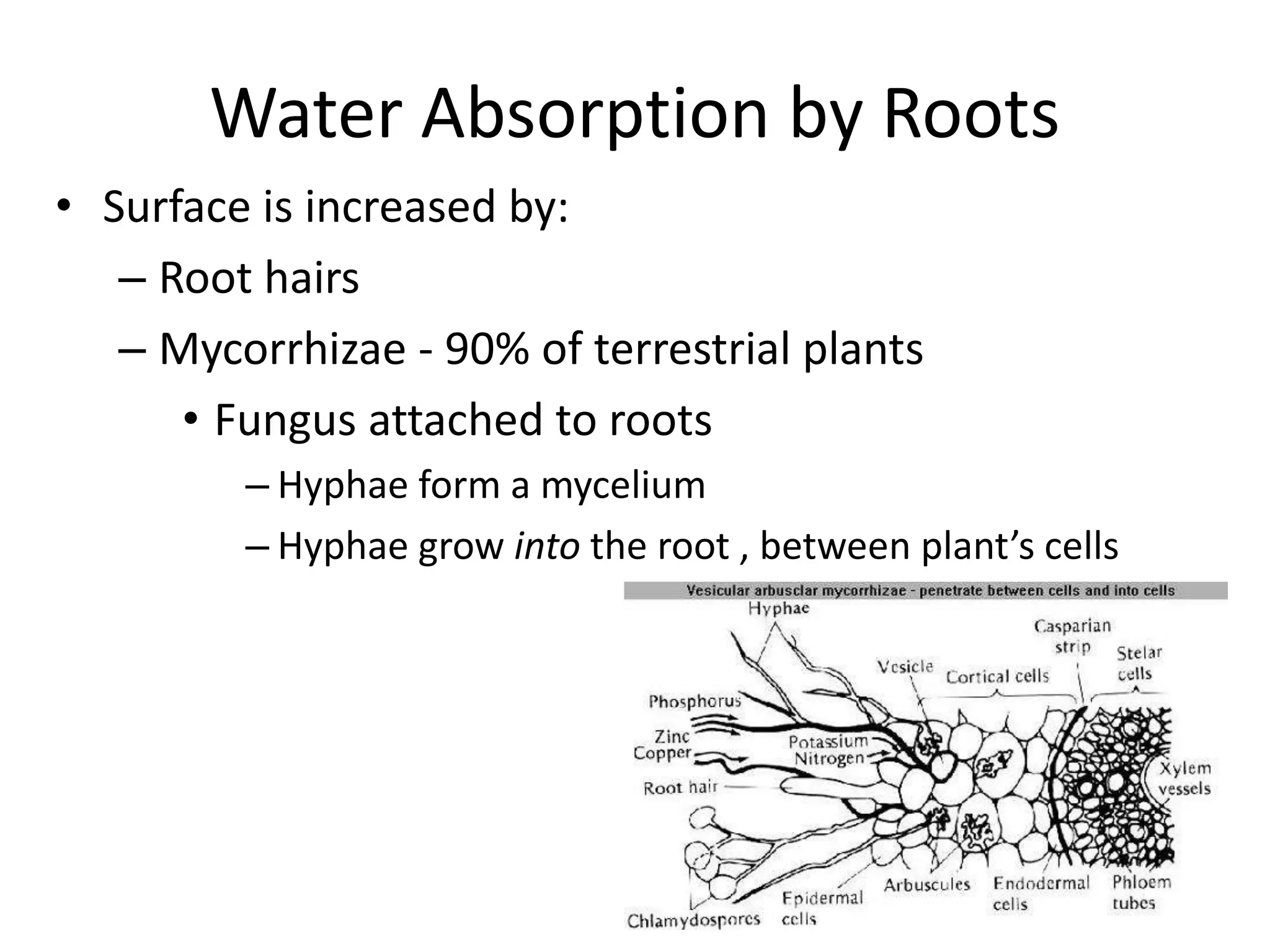
   – Mycorrhizae - 90% of terrestrial plants
      • Fungus attached to roots
         – Hyphae form a mycelium
         – Hyphae grow into the root , between plant’s cells
Apoplast Symplast
• Water and minerals are passed from the root
  epidermis through the cortex to the stele via apoplast
  or symplast
Water Movement Through Tissues
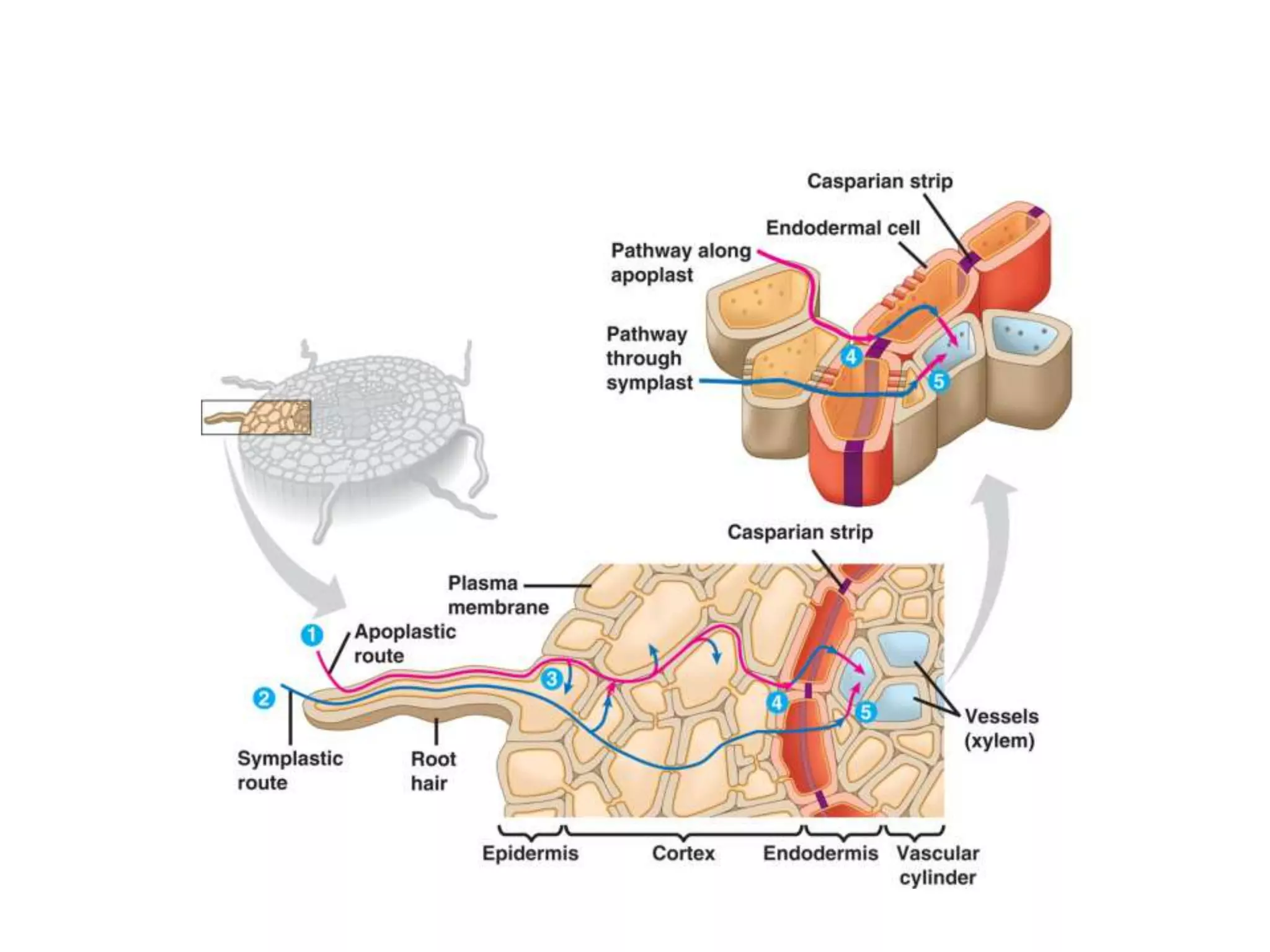
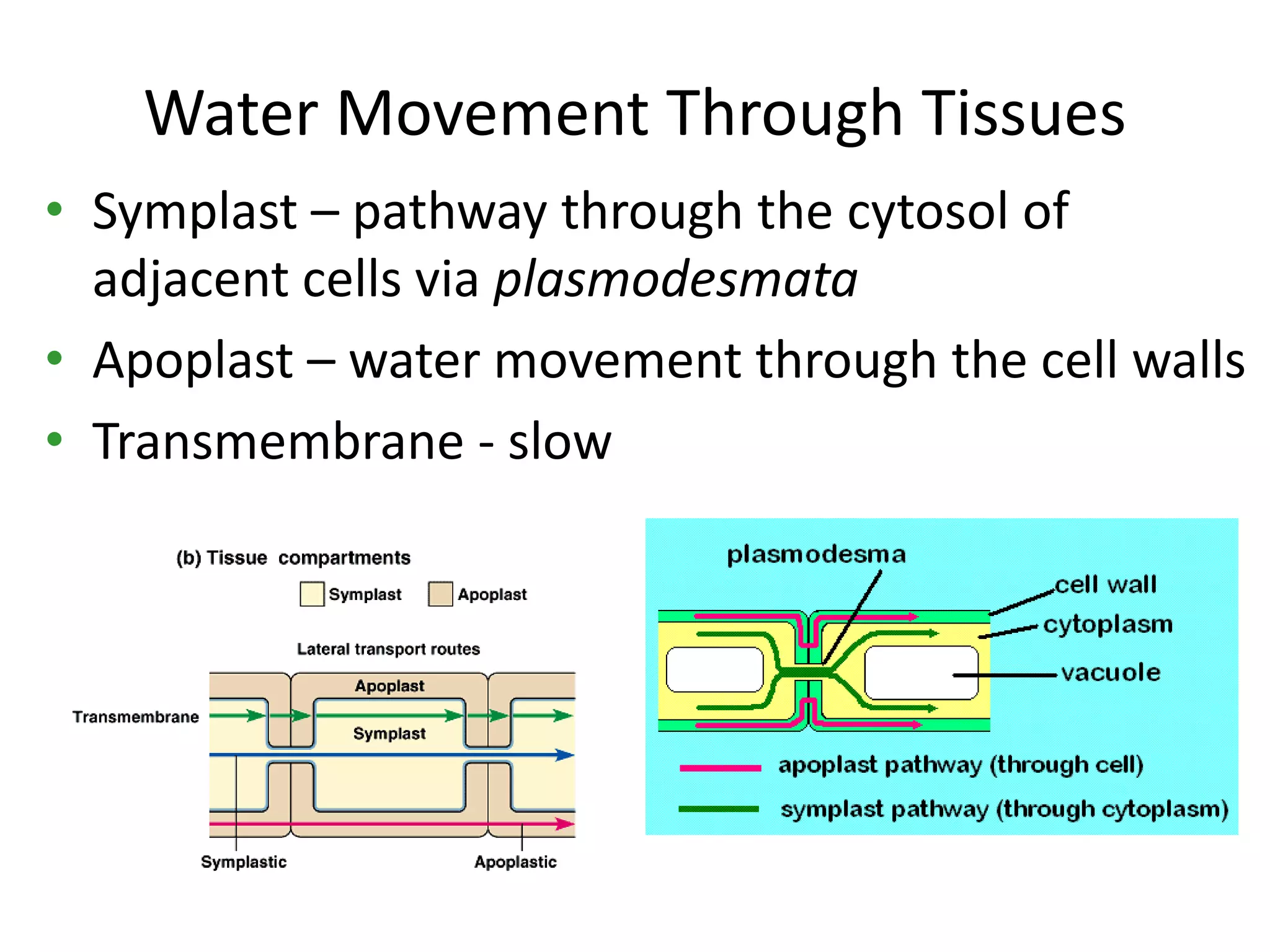
• Symplast – pathway through the cytosol of
  adjacent cells via plasmodesmata
• Apoplast – water movement through the cell walls
• Transmembrane - slow
Symplast Pathway
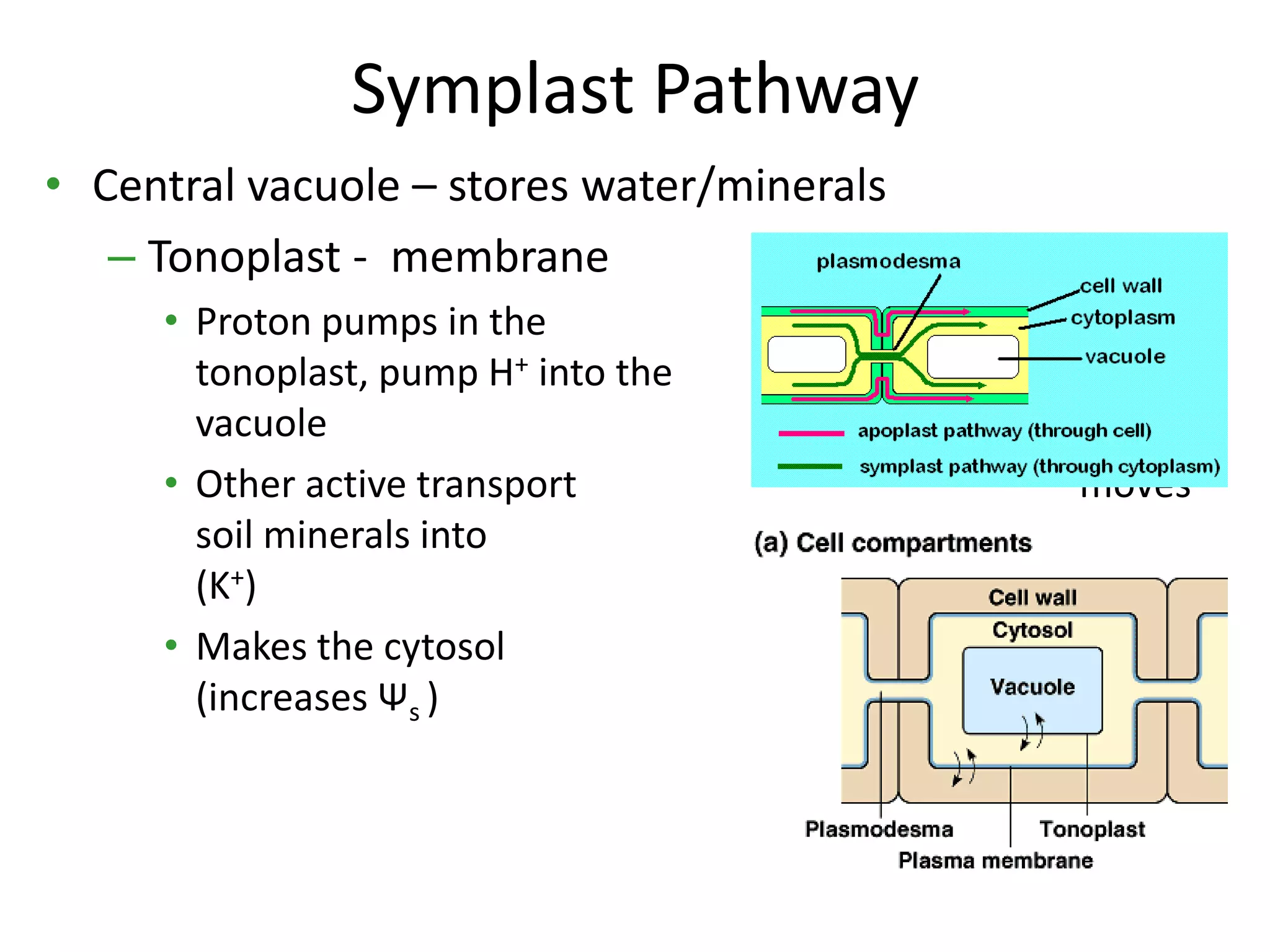
• Central vacuole – stores water/minerals
   – Tonoplast - membrane
     • Proton pumps in the
       tonoplast, pump H+ into the
       vacuole
     • Other active transport                    moves
       soil minerals into                   the vacuole
       (K+)
     • Makes the cytosol                    hyposmotic
       (increases Ψs )
Apoplast Pathway
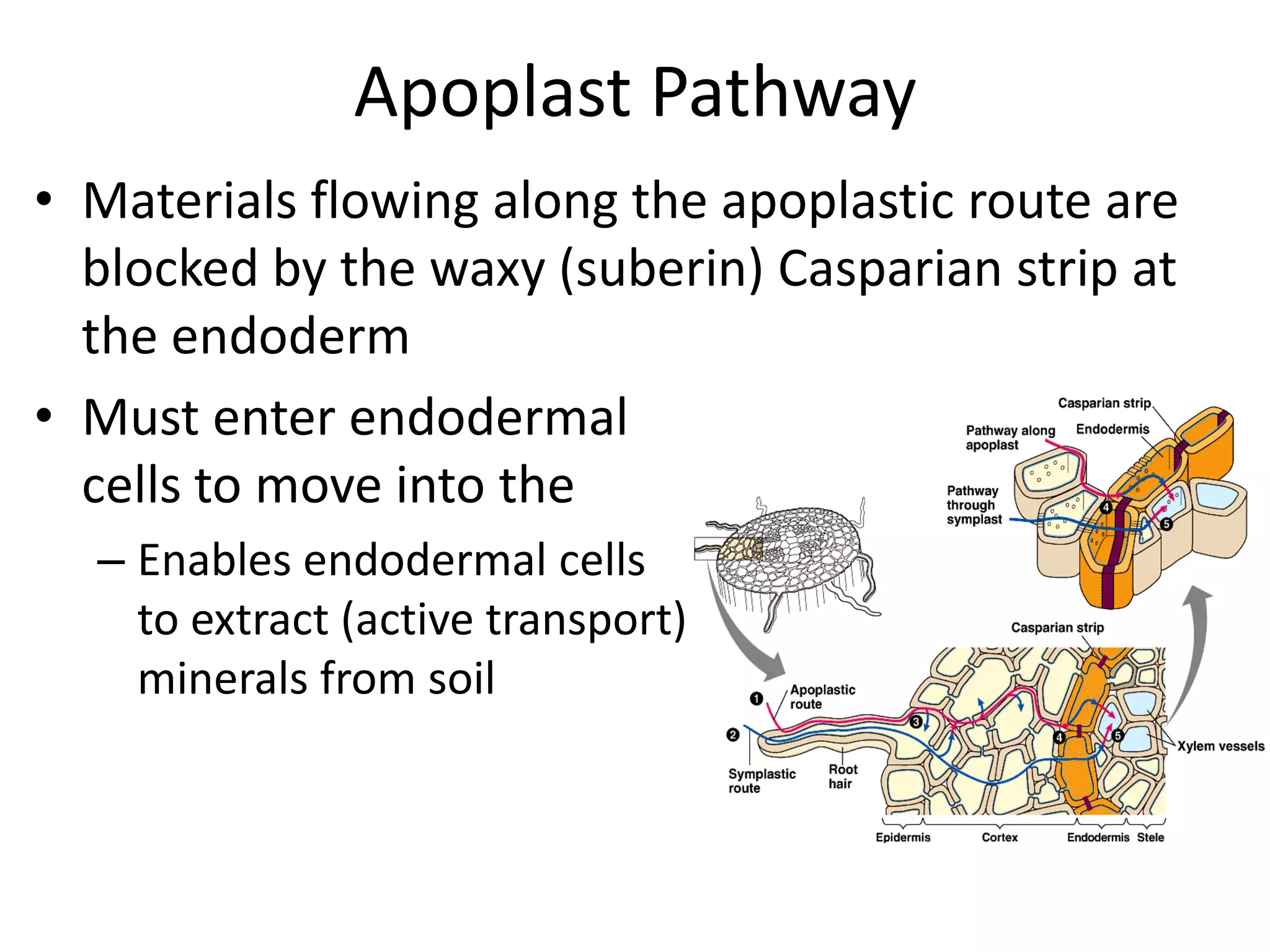
• Materials flowing along the apoplastic route are
  blocked by the waxy (suberin) Casparian strip at
  the endoderm
• Must enter endodermal
  cells to move into the                     xylem
  – Enables endodermal cells
    to extract (active transport)
    minerals from soil
Movement Through Tissues
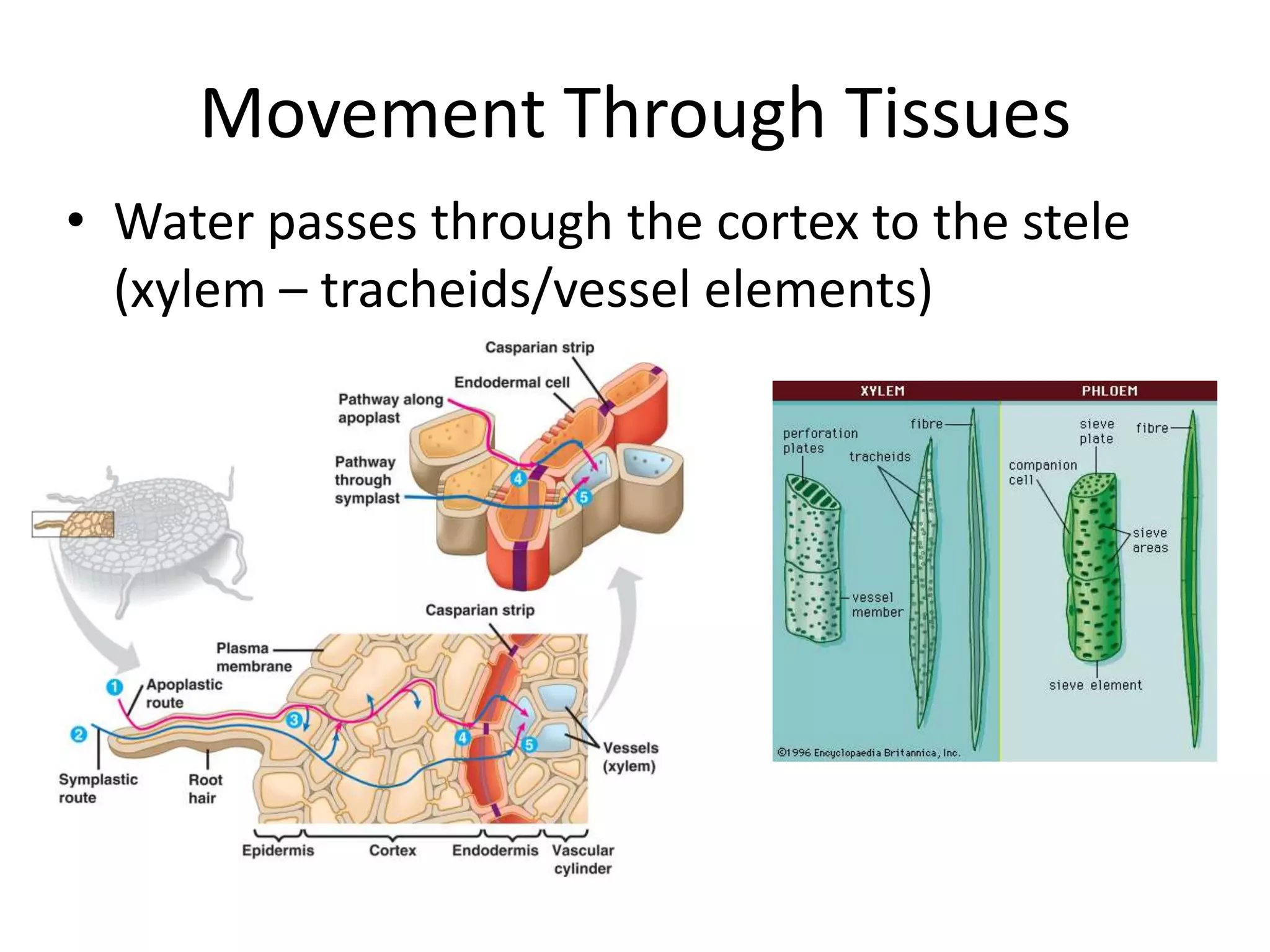
• Water passes through the cortex to the stele
  (xylem – tracheids/vessel elements)

Movement of water at the tissue

  • 1.
    Movement of Waterat the Tissue/Organ Level From Cell to Cell, Through the Root to the Stem Apoplast Symplast
  • 2.
    Water Absorption byRoots • Surface is increased by: – Root hairs – Mycorrhizae - 90% of terrestrial plants • Fungus attached to roots – Hyphae form a mycelium – Hyphae grow into the root , between plant’s cells
  • 3.
    Apoplast Symplast • Waterand minerals are passed from the root epidermis through the cortex to the stele via apoplast or symplast
  • 5.
    Water Movement ThroughTissues • Symplast – pathway through the cytosol of adjacent cells via plasmodesmata • Apoplast – water movement through the cell walls • Transmembrane - slow
  • 6.
    Symplast Pathway • Centralvacuole – stores water/minerals – Tonoplast - membrane • Proton pumps in the tonoplast, pump H+ into the vacuole • Other active transport moves soil minerals into the vacuole (K+) • Makes the cytosol hyposmotic (increases Ψs )
  • 7.
    Apoplast Pathway • Materialsflowing along the apoplastic route are blocked by the waxy (suberin) Casparian strip at the endoderm • Must enter endodermal cells to move into the xylem – Enables endodermal cells to extract (active transport) minerals from soil
  • 8.
    Movement Through Tissues •Water passes through the cortex to the stele (xylem – tracheids/vessel elements)