6.4 Gas Exchange:

Ventilation: the process of filling and refilling our lungs with air and breathing that air out.

Gas Exchange: The movement of the gases. 2 locations in the body:

    -   Lungs: O2 moves from lungs to blood stream
    -   Capillary bed where opposite gas exchange occurs

Cell Respiration: Cell respiration is the controlled release of energy from organic compounds in cells to
form ATP.

Why do we need a ventilation system?

Because our bodies are so thick, our outside skin is only exposed to the air. The ventilation system
ensures that the concentration of the respiratory gases within the lungs encourages the diffusion of
each gases in our direction that is beneficial to the body.

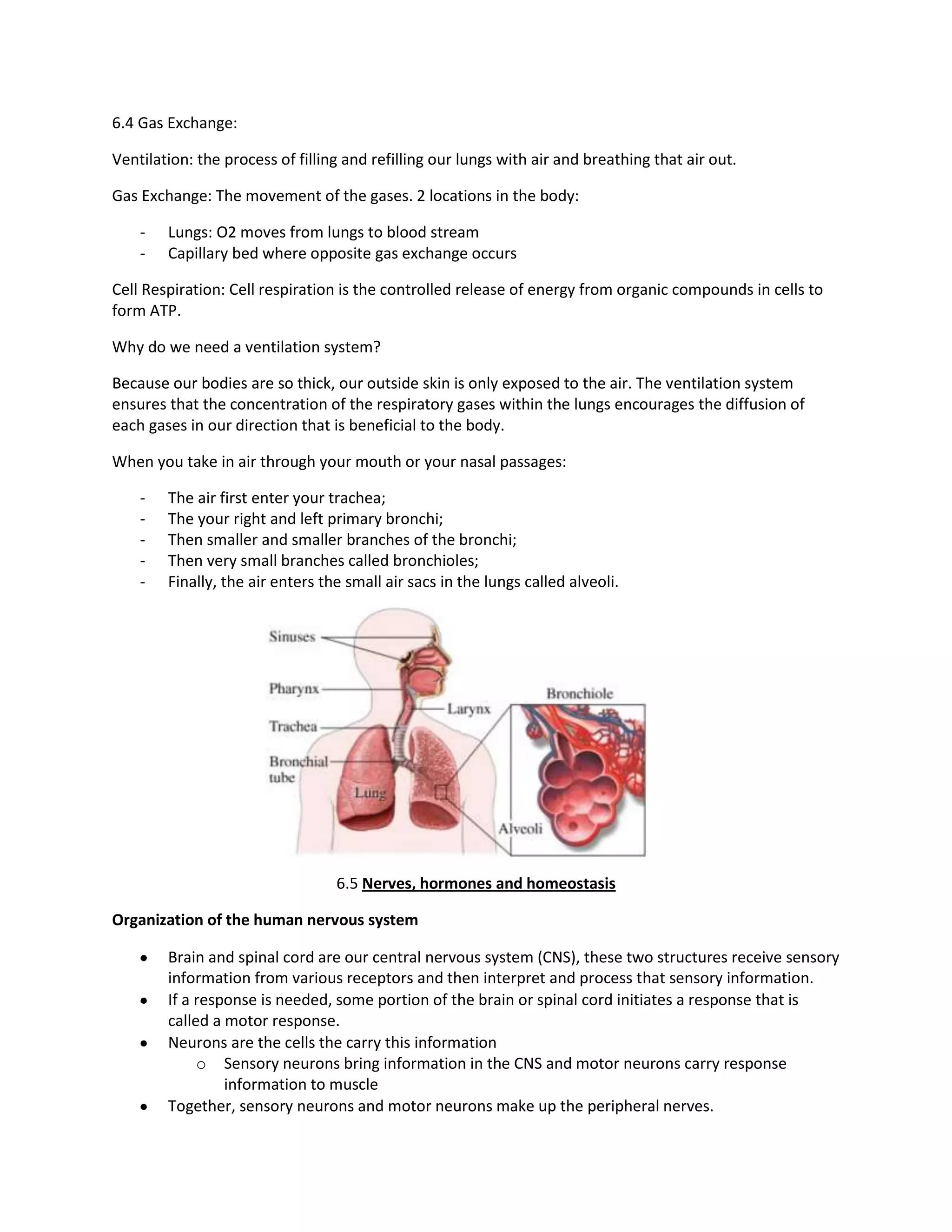
When you take in air through your mouth or your nasal passages:

    -   The air first enter your trachea;
    -   The your right and left primary bronchi;
    -   Then smaller and smaller branches of the bronchi;
    -   Then very small branches called bronchioles;
    -   Finally, the air enters the small air sacs in the lungs called alveoli.


                                  6.5 Nerves, hormones and homeostasis

Organization of the human nervous system

        Brain and spinal cord are our central nervous system (CNS), these two structures receive sensory
        information from various receptors and then interpret and process that sensory information.
        If a response is needed, some portion of the brain or spinal cord initiates a response that is
        called a motor response.
        Neurons are the cells the carry this information
             o Sensory neurons bring information in the CNS and motor neurons carry response
                 information to muscle
        Together, sensory neurons and motor neurons make up the peripheral nerves.
A neuron is an individual cell that carries electrical impulses from one point in the body to
        another and does so very quickly.
        A nerve is when many individual neurons group together into a single structure
        Spinal nerves – 31 pairs (left and right) of these emerge directly from the spinal cord. They are
        mixed nerves, as some of the neurons within them are sensory and some are motor
        Cranial nerves – 12 pairs of these emerge from an area of the brain known as the brainstem.
        One well known example is the optic nerve pair which carry visual information from the retina
        of the eyes to the brain

6.6 Reproduction


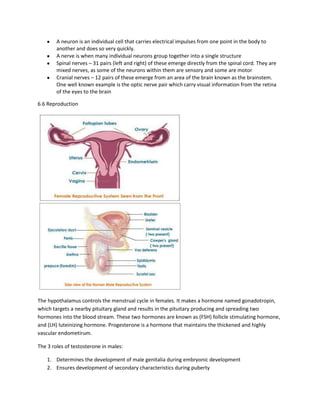
The hypothalamus controls the menstrual cycle in females. It makes a hormone named gonadotropin,
which targets a nearby pituitary gland and results in the pituitary producing and spreading two
hormones into the blood stream. These two hormones are known as (FSH) follicle stimulating hormone,
and (LH) luteinizing hormone. Progesterone is a hormone that maintains the thickened and highly
vascular endometirum.

The 3 roles of testosterone in males:

    1. Determines the development of male genitalia during embryonic development
    2. Ensures development of secondary characteristics during puberty
3. Maintains the sex drives of males throughout their lifetime.

    In-vitro fertilization:
-   Woman is injected with FSH for about 10 days. This ensures development of many follicles
    within ovaries.
-   Males ejaculate into a container to obtain the sperm cells that are needed for fertilization.
-   Eggs are mixed with sperm cells in separate culture dishes. When an ova is fertilized and
    healthy, then 3 embryos are placed in the woman’s uterus.

6 3 notes

  • 1.
    6.4 Gas Exchange: Ventilation:the process of filling and refilling our lungs with air and breathing that air out. Gas Exchange: The movement of the gases. 2 locations in the body: - Lungs: O2 moves from lungs to blood stream - Capillary bed where opposite gas exchange occurs Cell Respiration: Cell respiration is the controlled release of energy from organic compounds in cells to form ATP. Why do we need a ventilation system? Because our bodies are so thick, our outside skin is only exposed to the air. The ventilation system ensures that the concentration of the respiratory gases within the lungs encourages the diffusion of each gases in our direction that is beneficial to the body. When you take in air through your mouth or your nasal passages: - The air first enter your trachea; - The your right and left primary bronchi; - Then smaller and smaller branches of the bronchi; - Then very small branches called bronchioles; - Finally, the air enters the small air sacs in the lungs called alveoli. 6.5 Nerves, hormones and homeostasis Organization of the human nervous system Brain and spinal cord are our central nervous system (CNS), these two structures receive sensory information from various receptors and then interpret and process that sensory information. If a response is needed, some portion of the brain or spinal cord initiates a response that is called a motor response. Neurons are the cells the carry this information o Sensory neurons bring information in the CNS and motor neurons carry response information to muscle Together, sensory neurons and motor neurons make up the peripheral nerves.
  • 2.
    A neuron isan individual cell that carries electrical impulses from one point in the body to another and does so very quickly. A nerve is when many individual neurons group together into a single structure Spinal nerves – 31 pairs (left and right) of these emerge directly from the spinal cord. They are mixed nerves, as some of the neurons within them are sensory and some are motor Cranial nerves – 12 pairs of these emerge from an area of the brain known as the brainstem. One well known example is the optic nerve pair which carry visual information from the retina of the eyes to the brain 6.6 Reproduction The hypothalamus controls the menstrual cycle in females. It makes a hormone named gonadotropin, which targets a nearby pituitary gland and results in the pituitary producing and spreading two hormones into the blood stream. These two hormones are known as (FSH) follicle stimulating hormone, and (LH) luteinizing hormone. Progesterone is a hormone that maintains the thickened and highly vascular endometirum. The 3 roles of testosterone in males: 1. Determines the development of male genitalia during embryonic development 2. Ensures development of secondary characteristics during puberty
  • 3.
    3. Maintains thesex drives of males throughout their lifetime. In-vitro fertilization: - Woman is injected with FSH for about 10 days. This ensures development of many follicles within ovaries. - Males ejaculate into a container to obtain the sperm cells that are needed for fertilization. - Eggs are mixed with sperm cells in separate culture dishes. When an ova is fertilized and healthy, then 3 embryos are placed in the woman’s uterus.