ASSIMILATION OF
PHOSPHORUS
Aradhana bhatt
M.Sc microbiology
1 sem
PHOSPHORUS
Phosphorus is an important plant macronutrient,
making up about 0.2% of a plant’s dry weight.
It is a component of key molecules such as nucleic
acids, phospholipids, and ATP, and, consequently,
plants cannot grow without a reliable supply of
this nutrient.
Pi is also involved in controlling key enzyme
reactions and in the regulation of metabolic
pathways .
After N, P is the second most frequently limiting
macronutrient for plant growth.
ASSIMILATION OF
PHOSPHORUS
PHOSPHORUS IN SOIL
Although the total amount of P in the soil
may be high, it is often present in
unavailable forms or in forms that are only
available outside of the rhizosphere. Few
unfertilized soils release P fast enough to
support the high growth rates of crop plant
species. In many agricultural systems in
which the application of P to the soil is
necessary to ensure plant productivity, the
recovery of applied P by crop plants in a
growing season is very low, because in the
soil more than 80% of the P becomes
immobile and unavailable for plant uptake
because of adsorption, precipitation, or
conversion to the organic form (Holford,
1997).
.
Soil P is found in different pools, such as
organic and mineral P .
It is important to emphasize that 20 to 80% of P
in soils is found in the organic form, of which
phytic acid (inositol hexaphosphate) is usually
a major component .
The remainder is found in the inorganic
fraction containing 170 mineral forms of P.
Soil microbes release immobile forms of P to
the soil solution and are also responsible for the
immobilization of P.
The low availability of P in the bulk soil
limits plant uptake. More soluble minerals such
as K move through the soil via bulk flow and
diffusion, but P is moved mainly by diffusion.
Since the rate of diffusion of P is slow, high
plant uptake rates create a zone around the root
that is depleted of P.
P UPTAKE ACROSS THE PLASMA MEMBRANE
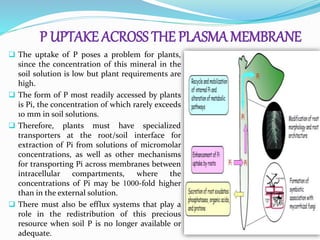
 The uptake of P poses a problem for plants,
since the concentration of this mineral in the
soil solution is low but plant requirements are
high.
 The form of P most readily accessed by plants
is Pi, the concentration of which rarely exceeds
10 mm in soil solutions.
 Therefore, plants must have specialized
transporters at the root/soil interface for
extraction of Pi from solutions of micromolar
concentrations, as well as other mechanisms
for transporting Pi across membranes between
intracellular compartments, where the
concentrations of Pi may be 1000-fold higher
than in the external solution.
 There must also be efflux systems that play a
role in the redistribution of this precious
resource when soil P is no longer available or
adequate.
REGULATION OF Pi UPTAKE
 When the supply of Pi is limited, plants grow more roots,
increase the rate of uptake by roots from the soil,
retranslocate Pi from older leaves, and deplete the vacuolar
stores of Pi.
 Conversely, when plants have an adequate supply of Pi and
are absorbing it at rates that exceed demand, a number of
processes act to prevent the accumulation of toxic Pi
concentrations.
 These processes include the conversion of Pi into organic
storage compounds (e.g. phytic acid), a reduction in the Pi
uptake rate from the outside solution , and Pi loss by efflux,
which can be between 8 and 70% of the influx .Any or all of
these processes may be strategies for the maintenance of
intracellular Pi homeostasis.
P TRANSLOCATION IN WHOLE PLANT
 In P-sufficient plants most of the Pi absorbed by the roots is
transported in the xylem to the younger leaves.
 Concentrations of Pi in the xylem range from 1 mM in Pi-starved
plants to 7 mM in plants grown in solutions containing 125 mM
Pi .
 There is also significant retranslocation of Pi in the phloem from
older leaves to the growing shoots and from the shoots to the
roots.
 In Pi-deficient plants the restricted supply of Pi to the shoots
from the roots via the xylem is supplemented by increased
mobilization of stored P in the older leaves and retranslocation
to both the younger leaves and growing roots.
 This process involves both the depletion of Pi stores and the
breakdown of organic P in the older leaves.
 In the xylem P is transported almost solely as Pi, whereas
significant amounts of organic P are found in the phloem.
.
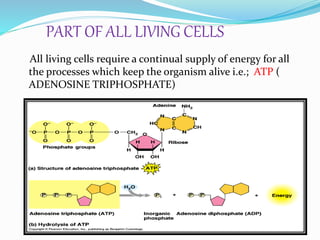
PART OF ALL LIVING CELLS
All living cells require a continual supply of energy for all
the processes which keep the organism alive i.e.; ATP (
ADENOSINE TRIPHOSPHATE)
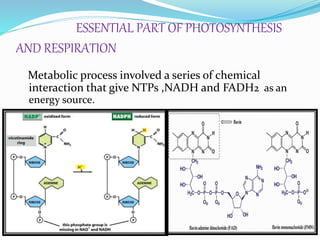
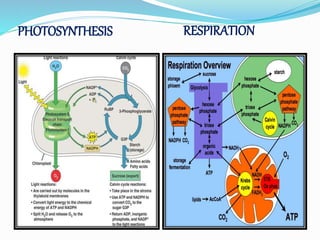
ESSENTIAL PART OF PHOTOSYNTHESIS
AND RESPIRATION
Metabolic process involved a series of chemical
interaction that give NTPs ,NADH and FADH2 as an
energy source.
.
PHOTOSYNTHESIS RESPIRATION
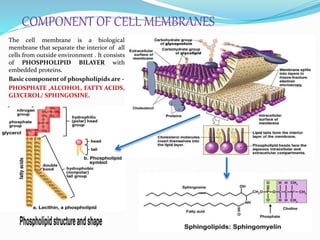
COMPONENT OF CELL MEMBRANES
The cell membrane is a biological
membrane that separate the interior of all
cells from outside environment . It consists
of PHOSPHOLIPID BILAYER with
embedded proteins.
Basic component of phospholipids are -
PHOSPHATE ,ALCOHOL, FATTY ACIDS,
GLYCEROL/ SPHINGOSINE.
.
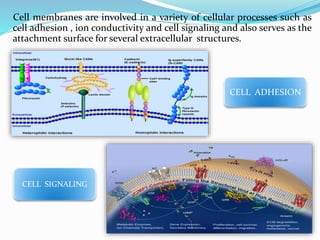
Cell membranes are involved in a variety of cellular processes such as
cell adhesion , ion conductivity and cell signaling and also serves as the
attachment surface for several extracellular structures.
CELL ADHESION
CELL SIGNALING
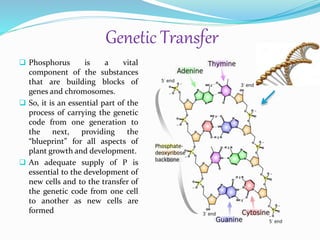
Genetic Transfer
 Phosphorus is a vital
component of the substances
that are building blocks of
genes and chromosomes.
 So, it is an essential part of the
process of carrying the genetic
code from one generation to
the next, providing the
“blueprint” for all aspects of
plant growth and development.
 An adequate supply of P is
essential to the development of
new cells and to the transfer of
the genetic code from one cell
to another as new cells are
formed
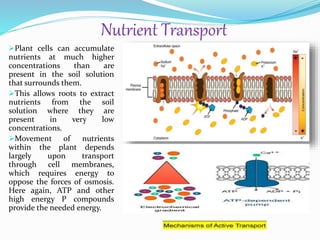
Nutrient Transport
Plant cells can accumulate
nutrients at much higher
concentrations than are
present in the soil solution
that surrounds them.
This allows roots to extract
nutrients from the soil
solution where they are
present in very low
concentrations.
Movement of nutrients
within the plant depends
largely upon transport
through cell membranes,
which requires energy to
oppose the forces of osmosis.
Here again, ATP and other
high energy P compounds
provide the needed energy.
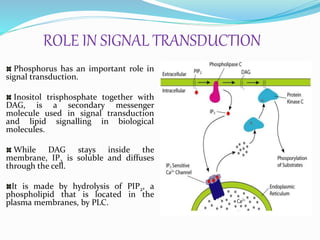
ROLE IN SIGNAL TRANSDUCTION
Phosphorus has an important role in
signal transduction.
Inositol trisphosphate together with
DAG, is a secondary messenger
molecule used in signal transduction
and lipid signalling in biological
molecules.
While DAG stays inside the
membrane, IP3 is soluble and diffuses
through the cell.
It is made by hydrolysis of PIP2, a
phospholipid that is located in the
plasma membranes, by PLC.
Assimilation of phosphorus

Assimilation of phosphorus

  • 1.
  • 2.
    PHOSPHORUS Phosphorus is animportant plant macronutrient, making up about 0.2% of a plant’s dry weight. It is a component of key molecules such as nucleic acids, phospholipids, and ATP, and, consequently, plants cannot grow without a reliable supply of this nutrient. Pi is also involved in controlling key enzyme reactions and in the regulation of metabolic pathways . After N, P is the second most frequently limiting macronutrient for plant growth.
  • 3.
  • 4.
    PHOSPHORUS IN SOIL Althoughthe total amount of P in the soil may be high, it is often present in unavailable forms or in forms that are only available outside of the rhizosphere. Few unfertilized soils release P fast enough to support the high growth rates of crop plant species. In many agricultural systems in which the application of P to the soil is necessary to ensure plant productivity, the recovery of applied P by crop plants in a growing season is very low, because in the soil more than 80% of the P becomes immobile and unavailable for plant uptake because of adsorption, precipitation, or conversion to the organic form (Holford, 1997).
  • 5.
    . Soil P isfound in different pools, such as organic and mineral P . It is important to emphasize that 20 to 80% of P in soils is found in the organic form, of which phytic acid (inositol hexaphosphate) is usually a major component . The remainder is found in the inorganic fraction containing 170 mineral forms of P. Soil microbes release immobile forms of P to the soil solution and are also responsible for the immobilization of P. The low availability of P in the bulk soil limits plant uptake. More soluble minerals such as K move through the soil via bulk flow and diffusion, but P is moved mainly by diffusion. Since the rate of diffusion of P is slow, high plant uptake rates create a zone around the root that is depleted of P.
  • 6.
    P UPTAKE ACROSSTHE PLASMA MEMBRANE  The uptake of P poses a problem for plants, since the concentration of this mineral in the soil solution is low but plant requirements are high.  The form of P most readily accessed by plants is Pi, the concentration of which rarely exceeds 10 mm in soil solutions.  Therefore, plants must have specialized transporters at the root/soil interface for extraction of Pi from solutions of micromolar concentrations, as well as other mechanisms for transporting Pi across membranes between intracellular compartments, where the concentrations of Pi may be 1000-fold higher than in the external solution.  There must also be efflux systems that play a role in the redistribution of this precious resource when soil P is no longer available or adequate.
  • 7.
    REGULATION OF PiUPTAKE  When the supply of Pi is limited, plants grow more roots, increase the rate of uptake by roots from the soil, retranslocate Pi from older leaves, and deplete the vacuolar stores of Pi.  Conversely, when plants have an adequate supply of Pi and are absorbing it at rates that exceed demand, a number of processes act to prevent the accumulation of toxic Pi concentrations.  These processes include the conversion of Pi into organic storage compounds (e.g. phytic acid), a reduction in the Pi uptake rate from the outside solution , and Pi loss by efflux, which can be between 8 and 70% of the influx .Any or all of these processes may be strategies for the maintenance of intracellular Pi homeostasis.
  • 8.
    P TRANSLOCATION INWHOLE PLANT  In P-sufficient plants most of the Pi absorbed by the roots is transported in the xylem to the younger leaves.  Concentrations of Pi in the xylem range from 1 mM in Pi-starved plants to 7 mM in plants grown in solutions containing 125 mM Pi .  There is also significant retranslocation of Pi in the phloem from older leaves to the growing shoots and from the shoots to the roots.  In Pi-deficient plants the restricted supply of Pi to the shoots from the roots via the xylem is supplemented by increased mobilization of stored P in the older leaves and retranslocation to both the younger leaves and growing roots.  This process involves both the depletion of Pi stores and the breakdown of organic P in the older leaves.  In the xylem P is transported almost solely as Pi, whereas significant amounts of organic P are found in the phloem.
  • 9.
  • 10.
    PART OF ALLLIVING CELLS All living cells require a continual supply of energy for all the processes which keep the organism alive i.e.; ATP ( ADENOSINE TRIPHOSPHATE)
  • 11.
    ESSENTIAL PART OFPHOTOSYNTHESIS AND RESPIRATION Metabolic process involved a series of chemical interaction that give NTPs ,NADH and FADH2 as an energy source.
  • 12.
  • 13.
    COMPONENT OF CELLMEMBRANES The cell membrane is a biological membrane that separate the interior of all cells from outside environment . It consists of PHOSPHOLIPID BILAYER with embedded proteins. Basic component of phospholipids are - PHOSPHATE ,ALCOHOL, FATTY ACIDS, GLYCEROL/ SPHINGOSINE.
  • 14.
    . Cell membranes areinvolved in a variety of cellular processes such as cell adhesion , ion conductivity and cell signaling and also serves as the attachment surface for several extracellular structures. CELL ADHESION CELL SIGNALING
  • 15.
    Genetic Transfer  Phosphorusis a vital component of the substances that are building blocks of genes and chromosomes.  So, it is an essential part of the process of carrying the genetic code from one generation to the next, providing the “blueprint” for all aspects of plant growth and development.  An adequate supply of P is essential to the development of new cells and to the transfer of the genetic code from one cell to another as new cells are formed
  • 16.
    Nutrient Transport Plant cellscan accumulate nutrients at much higher concentrations than are present in the soil solution that surrounds them. This allows roots to extract nutrients from the soil solution where they are present in very low concentrations. Movement of nutrients within the plant depends largely upon transport through cell membranes, which requires energy to oppose the forces of osmosis. Here again, ATP and other high energy P compounds provide the needed energy.
  • 17.
    ROLE IN SIGNALTRANSDUCTION Phosphorus has an important role in signal transduction. Inositol trisphosphate together with DAG, is a secondary messenger molecule used in signal transduction and lipid signalling in biological molecules. While DAG stays inside the membrane, IP3 is soluble and diffuses through the cell. It is made by hydrolysis of PIP2, a phospholipid that is located in the plasma membranes, by PLC.