PHLOEM TRANSPORT
BY
DR. SEEMA GAIKWAD
DEPT. OF BOTANY
VIDNYAN MAHAVIDYALAYA, SANGOLA
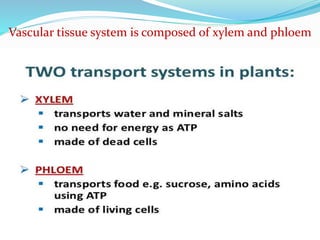
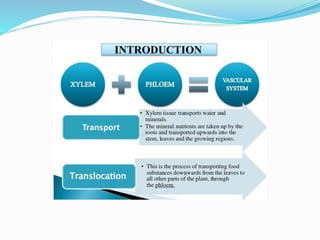
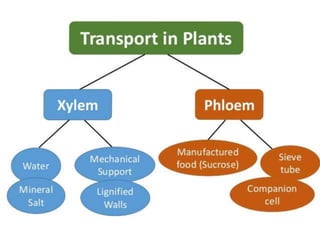
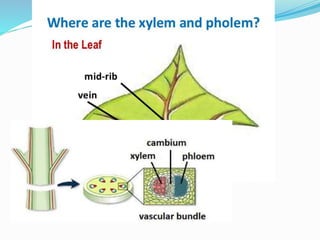
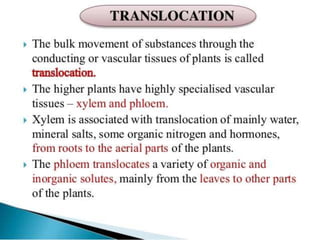
Vascular tissue system is composed of xylem and phloem
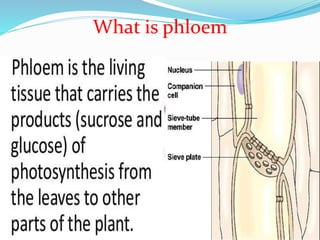
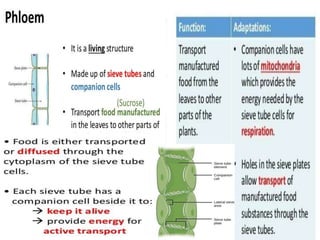
What is phloem
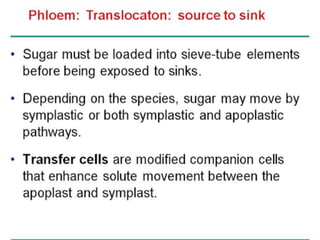
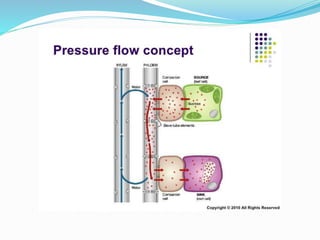
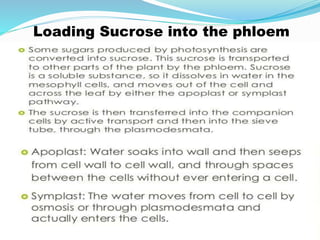
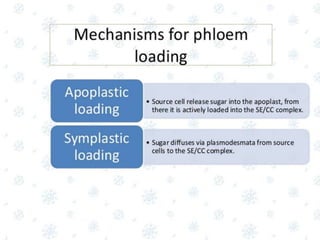
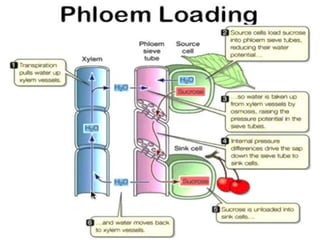
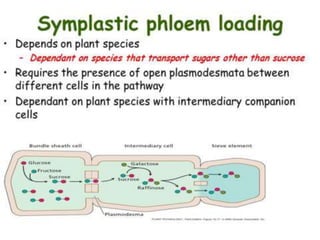
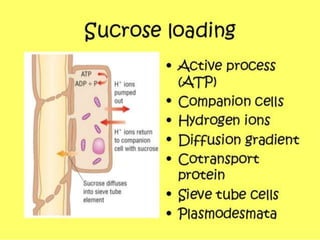
Loading Sucrose into the phloem
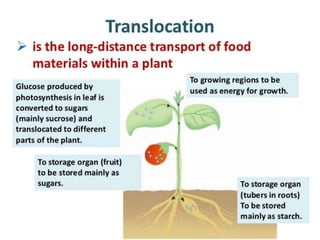
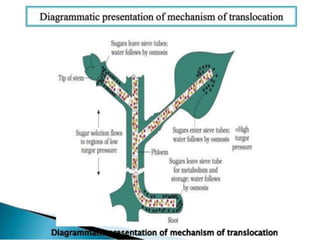
Assimilate Partitioning - a) During vegetative phase b) during reproductive phase
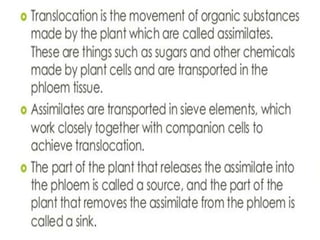
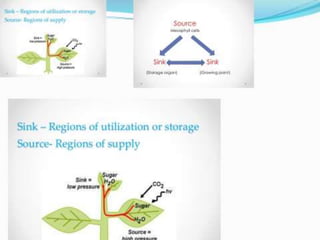
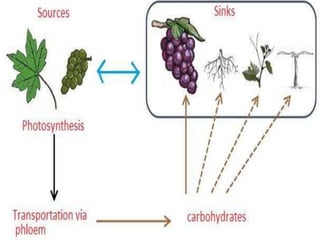
The distribution of assimilates between sink is called assimilate partitioning.
Assimilate partitioning between many compacting sinks depends on three
factors.1) the nature of vascular connections between source & sink. 2) Proximity
of the sink to source 3) sink strength. One of the important factors in assimilate
partitioning is sink strength. Sink strength is a product of sink size & sink activity.
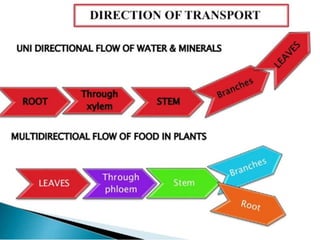
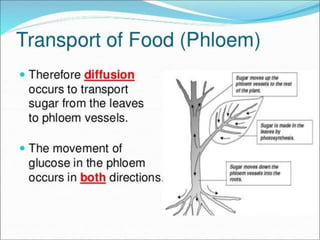
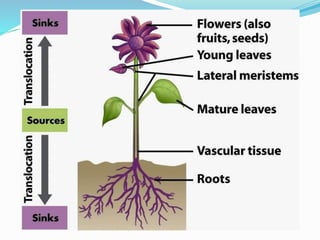
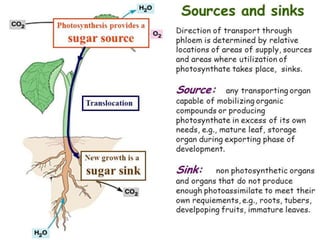
a) Assimilate Partitioning during vegetative phase: During vegetative growth
phase the main sink are meristematic regions, roots and non-photosynthetic tissue
in main stem & branches. For the growth and developments of organs & cells in
these sink regions the photoassimlates from source region are rapidly translocated
in vertical direction. The photoassimilates are translocated either upward towards
the growing stem apex or downwards towards actively functioning root system or
in both the directions. Generally, under conditions of normal requirements, the
translocation of assimilates takes place from the source to the closest sink.
During vegetative growth phase, photoassimlates from young source leaves near top portion of
the plant are translocated towards growing stem apex. Older green active lvs. (Non-senescent)
near the basal portion of the plant supply photoassimlate to root & underground organs. Leaves in
the central part of stem may transport photoassimlates equally in both direction towards stem tip
and basal part of the stem.
b) Assimilate partitioning during reproductive phase: During reproductive phase the number
of sinks increases due to productions of reproductive structure. The additional sinks in the form
of flower buds, flowers, fruits, and seeds are formed on the main stem & branches. As compared
to sinks during vegetative phase the sink formed during reproductive phase are with higher sink
strength. The sink strength is closely related to productivity & the yield of the plant. For this
reason, assimilate partitioning during reproductive phase is more important than that during
vegetative phase. Although it appears that the sink strength is a major factor in assimilate
distribution the process of assimilate partitioning remain a complex and highly integrated
process. This complicated process is also controlled or regulated by changes in turgor by
hormones & by genetic factors. As the roles of these factors are relatively less known, the
physiology of assimilate partitioning is poorly understood
Thank You

Translocation in Phloem.pptx

  • 1.
    PHLOEM TRANSPORT BY DR. SEEMAGAIKWAD DEPT. OF BOTANY VIDNYAN MAHAVIDYALAYA, SANGOLA
  • 3.
    Vascular tissue systemis composed of xylem and phloem
  • 9.
  • 28.
  • 41.
    Assimilate Partitioning -a) During vegetative phase b) during reproductive phase The distribution of assimilates between sink is called assimilate partitioning. Assimilate partitioning between many compacting sinks depends on three factors.1) the nature of vascular connections between source & sink. 2) Proximity of the sink to source 3) sink strength. One of the important factors in assimilate partitioning is sink strength. Sink strength is a product of sink size & sink activity. a) Assimilate Partitioning during vegetative phase: During vegetative growth phase the main sink are meristematic regions, roots and non-photosynthetic tissue in main stem & branches. For the growth and developments of organs & cells in these sink regions the photoassimlates from source region are rapidly translocated in vertical direction. The photoassimilates are translocated either upward towards the growing stem apex or downwards towards actively functioning root system or in both the directions. Generally, under conditions of normal requirements, the translocation of assimilates takes place from the source to the closest sink.
  • 42.
    During vegetative growthphase, photoassimlates from young source leaves near top portion of the plant are translocated towards growing stem apex. Older green active lvs. (Non-senescent) near the basal portion of the plant supply photoassimlate to root & underground organs. Leaves in the central part of stem may transport photoassimlates equally in both direction towards stem tip and basal part of the stem. b) Assimilate partitioning during reproductive phase: During reproductive phase the number of sinks increases due to productions of reproductive structure. The additional sinks in the form of flower buds, flowers, fruits, and seeds are formed on the main stem & branches. As compared to sinks during vegetative phase the sink formed during reproductive phase are with higher sink strength. The sink strength is closely related to productivity & the yield of the plant. For this reason, assimilate partitioning during reproductive phase is more important than that during vegetative phase. Although it appears that the sink strength is a major factor in assimilate distribution the process of assimilate partitioning remain a complex and highly integrated process. This complicated process is also controlled or regulated by changes in turgor by hormones & by genetic factors. As the roles of these factors are relatively less known, the physiology of assimilate partitioning is poorly understood
  • 43.