Introduction, scope & Importance
By,
Abhinava J V
University of Agricultural Sciences, Dharwad
What is Molecular Biology ?
 The branch of biology that deals with the
structure, function, and manipulation of the
macromolecules (e.g. proteins and nucleic acids)
essential to life.
 The branch of biology that deals with the nature of
biological phenomena at the molecular level
through the study of DNA, RNA, proteins, and
other macromolecules involved in genetic
information and cell function.
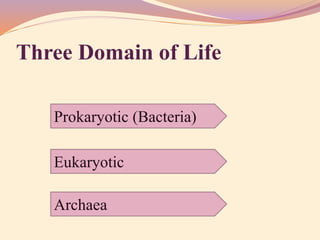
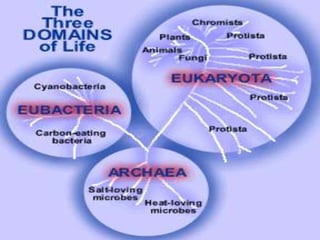
Three Domain of Life
Eukaryotic
Prokaryotic (Bacteria)
Archaea
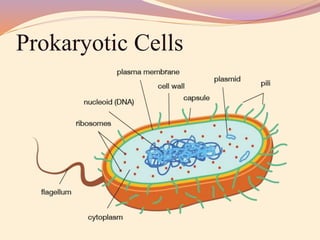
Prokaryotic Cells
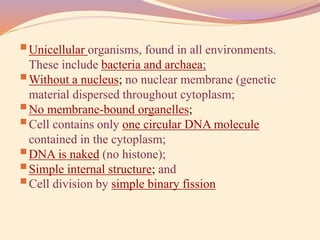
Unicellular organisms, found in all environments.
These include bacteria and archaea;
Without a nucleus; no nuclear membrane (genetic
material dispersed throughout cytoplasm;
No membrane-bound organelles;
Cell contains only one circular DNA molecule
contained in the cytoplasm;
DNA is naked (no histone);
Simple internal structure; and
Cell division by simple binary fission
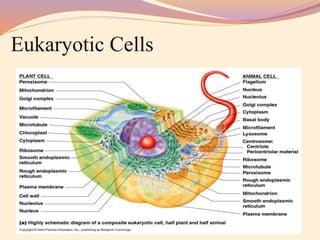
Eukaryotic Cells
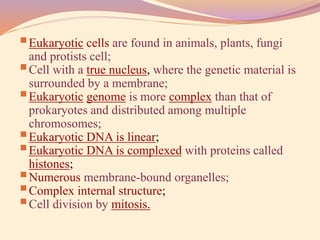
Eukaryotic cells are found in animals, plants, fungi
and protists cell;
Cell with a true nucleus, where the genetic material is
surrounded by a membrane;
Eukaryotic genome is more complex than that of
prokaryotes and distributed among multiple
chromosomes;
Eukaryotic DNA is linear;
Eukaryotic DNA is complexed with proteins called
histones;
Numerous membrane-bound organelles;
Complex internal structure;
Cell division by mitosis.
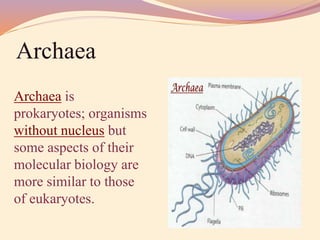
Archaea
Archaea is
prokaryotes; organisms
without nucleus but
some aspects of their
molecular biology are
more similar to those
of eukaryotes.
Nucleic acids
 Nucleic acids are biopolymers, or large biomolecules,
essential for all known forms of life.
 Nucleic acids, which include DNA (deoxyribonucleic
acid) and RNA (ribonucleic acid), are made from
monomers known as nucleotides.
 Nucleotides are composed of a nitrogenous base, a
five-carbon sugar (ribose or deoxyribose), and at least
one phosphate group.
Chromosomes
 Chromosomes are thread-like structures located
inside the nucleus of animal and plant cells.
 Each chromosome is made of protein and a single
molecule of deoxyribonucleic acid (DNA).
 Passed from parents to offspring, DNA contains the
specific instructions that make each type of living
creature unique
Gene
The gene; it is a segment within a very long strand of
DNA.
Genes are the basic units of hereditary.
Genes located on chromosome on its place or locus.
Allele; a variant of the DNA sequence at a given locus.
Each allele inherited from a different parent.
The Genome
 A genome is an organism's complete set of genetic
information , including all of its genes.
 Each genome contains all of the information needed
to build and maintain that organism.
 Encoded in the DNA (for some viruses, RNA).
 In humans, a copy of the entire genome—more than 3
billion DNA base pairs—is contained in all cells that
have a nucleus.
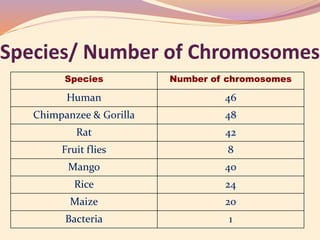
Species/ Number of Chromosomes
Species Number of chromosomes
Human 46
Chimpanzee & Gorilla 48
Rat 42
Fruit flies 8
Mango 40
Rice 24
Maize 20
Bacteria 1
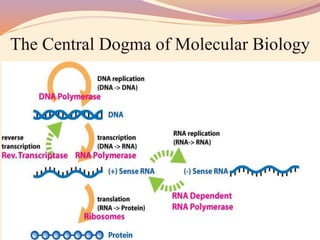
The Central Dogma of Molecular Biology
Application of Molecular Biology
Research
Diagnosis
Transplantation
Paternity
Forensic analysis
Gene therapy
Drug Design
……
Molecular biology introduction

Molecular biology introduction

  • 1.
    Introduction, scope &Importance By, Abhinava J V University of Agricultural Sciences, Dharwad
  • 2.
    What is MolecularBiology ?  The branch of biology that deals with the structure, function, and manipulation of the macromolecules (e.g. proteins and nucleic acids) essential to life.  The branch of biology that deals with the nature of biological phenomena at the molecular level through the study of DNA, RNA, proteins, and other macromolecules involved in genetic information and cell function.
  • 3.
    Three Domain ofLife Eukaryotic Prokaryotic (Bacteria) Archaea
  • 4.
  • 5.
    Unicellular organisms, foundin all environments. These include bacteria and archaea; Without a nucleus; no nuclear membrane (genetic material dispersed throughout cytoplasm; No membrane-bound organelles; Cell contains only one circular DNA molecule contained in the cytoplasm; DNA is naked (no histone); Simple internal structure; and Cell division by simple binary fission
  • 6.
  • 7.
    Eukaryotic cells arefound in animals, plants, fungi and protists cell; Cell with a true nucleus, where the genetic material is surrounded by a membrane; Eukaryotic genome is more complex than that of prokaryotes and distributed among multiple chromosomes; Eukaryotic DNA is linear; Eukaryotic DNA is complexed with proteins called histones; Numerous membrane-bound organelles; Complex internal structure; Cell division by mitosis.
  • 8.
    Archaea Archaea is prokaryotes; organisms withoutnucleus but some aspects of their molecular biology are more similar to those of eukaryotes.
  • 10.
    Nucleic acids  Nucleicacids are biopolymers, or large biomolecules, essential for all known forms of life.  Nucleic acids, which include DNA (deoxyribonucleic acid) and RNA (ribonucleic acid), are made from monomers known as nucleotides.  Nucleotides are composed of a nitrogenous base, a five-carbon sugar (ribose or deoxyribose), and at least one phosphate group.
  • 11.
    Chromosomes  Chromosomes arethread-like structures located inside the nucleus of animal and plant cells.  Each chromosome is made of protein and a single molecule of deoxyribonucleic acid (DNA).  Passed from parents to offspring, DNA contains the specific instructions that make each type of living creature unique
  • 12.
    Gene The gene; itis a segment within a very long strand of DNA. Genes are the basic units of hereditary. Genes located on chromosome on its place or locus. Allele; a variant of the DNA sequence at a given locus. Each allele inherited from a different parent.
  • 13.
    The Genome  Agenome is an organism's complete set of genetic information , including all of its genes.  Each genome contains all of the information needed to build and maintain that organism.  Encoded in the DNA (for some viruses, RNA).  In humans, a copy of the entire genome—more than 3 billion DNA base pairs—is contained in all cells that have a nucleus.
  • 14.
    Species/ Number ofChromosomes Species Number of chromosomes Human 46 Chimpanzee & Gorilla 48 Rat 42 Fruit flies 8 Mango 40 Rice 24 Maize 20 Bacteria 1
  • 15.
    The Central Dogmaof Molecular Biology
  • 16.
    Application of MolecularBiology Research Diagnosis Transplantation Paternity Forensic analysis Gene therapy Drug Design ……