Skin cancer - the abnormal
growth of skin cells - most
often develops on skin
exposed to the sun.
 1. Growth –from a baby to an adult – you need more cells.
 2. Repair – if you get a cut – you need more cells to fill in the
cut.
 3. Replacement – when cells die – they need to be replaced.
 Fun fact: Skin cancer is the abnormal growth of cells – they
don’t know when to stop making more – this produces a tumor.
The cell life cycle
consists of:
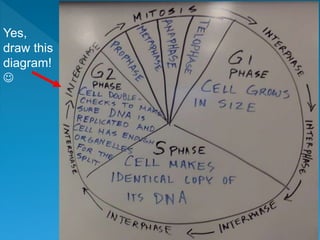
 Interphase -normal activities for the cell
 Mitosis (5 steps):
1.Prophase – nucleus dissapears
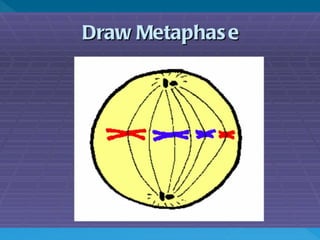
2. Metaphase – chromosomes line up
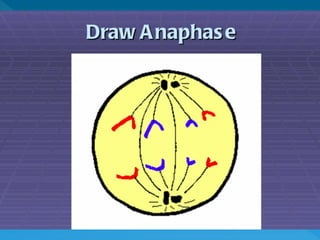
3. Anaphase – chromosomes separate
4. Telophase – nuclei form
 Cytokinesis - cell splits in two
 Back to Interphase – normal activities for the cell
Yes,
draw this
diagram!

• G1 phase: Cell grows in size
• S phase: Chromosomes are
copied - the number doubles.
(In the microscope, DNA
appears as threadlike
spaghetti called chromatin).
• G2 phase: Cell double checks
that DNA has been copied and
cell has enough organelles for
the upcoming split
Draw this
Animal Cell Plant Cell
Photographs from: http://www.bioweb.uncc.edu/biol1110/Stages.htm
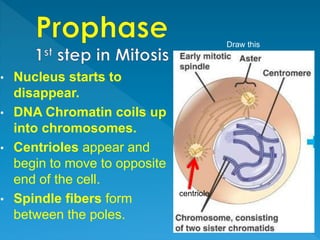
• Nucleus starts to
disappear.
• DNA Chromatin coils up
into chromosomes.
• Centrioles appear and
begin to move to opposite
end of the cell.
• Spindle fibers form
between the poles.
centriole
Draw this
Animal Cell Plant Cell
Photographs from: http://www.bioweb.uncc.edu/biol1110/Stages.htm
Spindle fibers
Centrioles
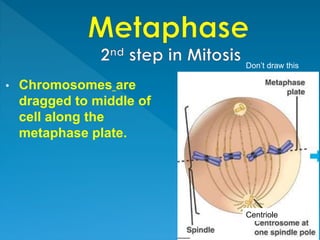
• Chromosomes are
dragged to middle of
cell along the
metaphase plate.
Centriole
Don’t draw this
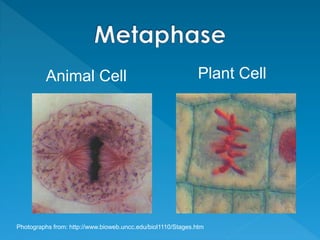
Animal Cell Plant Cell
Photographs from: http://www.bioweb.uncc.edu/biol1110/Stages.htm
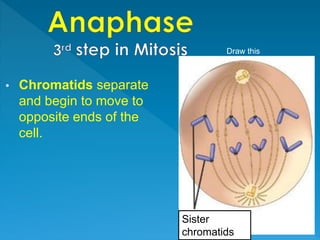
• Chromatids separate
and begin to move to
opposite ends of the
cell.
Sister
chromatids
Draw this
Animal Cell Plant Cell
Photographs from: http://www.bioweb.uncc.edu/biol1110/Stages.htm
• Two new nuclei form.
• Chromosomes unwind into
chromatin.
• Mitosis ends.
Draw this
Animal Cell Plant Cell
Photographs from: http://www.bioweb.uncc.edu/biol1110/Stages.htm
• Cell membrane
moves inward
to create two
daughter cells
– each with its
own nucleus.
• In plant cells, a
cell plate forms
in between the
daughter cells.
Draw this
• The cell wall makes plant cells rigid, so they can’t move inward
and separate like animal cells can.
• Vesicles filled with cell wall parts are towed to the middle of the
cell.
• They fuse together, forming a “cell plate.”
• The cell plate becomes the new cell wall.
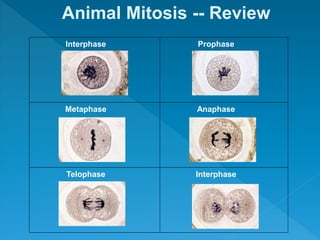
Animal Mitosis -- Review
Interphase Prophase
Metaphase Anaphase
Telophase Interphase
Plant Mitosis -- Review
Interphase Prophase
Metaphase Anaphase
Telophase Interphase

Mitosis notes presentation

  • 2.
    Skin cancer -the abnormal growth of skin cells - most often develops on skin exposed to the sun.  1. Growth –from a baby to an adult – you need more cells.  2. Repair – if you get a cut – you need more cells to fill in the cut.  3. Replacement – when cells die – they need to be replaced.  Fun fact: Skin cancer is the abnormal growth of cells – they don’t know when to stop making more – this produces a tumor.
  • 3.
    The cell lifecycle consists of:  Interphase -normal activities for the cell  Mitosis (5 steps): 1.Prophase – nucleus dissapears 2. Metaphase – chromosomes line up 3. Anaphase – chromosomes separate 4. Telophase – nuclei form  Cytokinesis - cell splits in two  Back to Interphase – normal activities for the cell
  • 4.
  • 5.
    • G1 phase:Cell grows in size • S phase: Chromosomes are copied - the number doubles. (In the microscope, DNA appears as threadlike spaghetti called chromatin). • G2 phase: Cell double checks that DNA has been copied and cell has enough organelles for the upcoming split Draw this
  • 6.
    Animal Cell PlantCell Photographs from: http://www.bioweb.uncc.edu/biol1110/Stages.htm
  • 7.
    • Nucleus startsto disappear. • DNA Chromatin coils up into chromosomes. • Centrioles appear and begin to move to opposite end of the cell. • Spindle fibers form between the poles. centriole Draw this
  • 8.
    Animal Cell PlantCell Photographs from: http://www.bioweb.uncc.edu/biol1110/Stages.htm Spindle fibers Centrioles
  • 10.
    • Chromosomes are draggedto middle of cell along the metaphase plate. Centriole Don’t draw this
  • 11.
    Animal Cell PlantCell Photographs from: http://www.bioweb.uncc.edu/biol1110/Stages.htm
  • 13.
    • Chromatids separate andbegin to move to opposite ends of the cell. Sister chromatids Draw this
  • 14.
    Animal Cell PlantCell Photographs from: http://www.bioweb.uncc.edu/biol1110/Stages.htm
  • 16.
    • Two newnuclei form. • Chromosomes unwind into chromatin. • Mitosis ends. Draw this
  • 17.
    Animal Cell PlantCell Photographs from: http://www.bioweb.uncc.edu/biol1110/Stages.htm
  • 19.
    • Cell membrane movesinward to create two daughter cells – each with its own nucleus. • In plant cells, a cell plate forms in between the daughter cells. Draw this
  • 20.
    • The cellwall makes plant cells rigid, so they can’t move inward and separate like animal cells can. • Vesicles filled with cell wall parts are towed to the middle of the cell. • They fuse together, forming a “cell plate.” • The cell plate becomes the new cell wall.
  • 21.
    Animal Mitosis --Review Interphase Prophase Metaphase Anaphase Telophase Interphase
  • 22.
    Plant Mitosis --Review Interphase Prophase Metaphase Anaphase Telophase Interphase