
M-Phase
Cytokinesis, The M-Phase
What is M-Phase?
M-phase or mitotic phase occurd after
 interphase stage, the dividing cells
           enter M phase
M-Phase

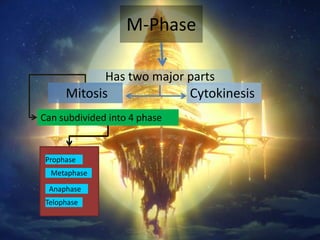
              Has two major parts
      Mitosis                 Cytokinesis
Can subdivided into 4 phase


 Prophase
  Metaphase

  Anaphase
 Telophase
Prophase
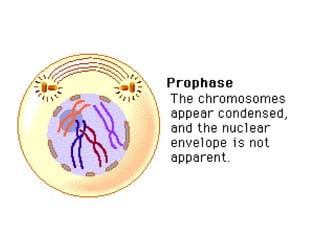
• The chormosomes in the nucleus condense
  and become more tightly coiled
• Each chormosomes consists a pair of sister
  chormatids joined together at the centromere.
• The spindle fibre in the cytoplasm begin to
  form and extends between the centrioles.
• The nucleolus disappers and the nuclear
  membrane diseintegrates at the end of
  prophase
Metaphase
• Begin when centromeres of all the
  choromosomes are lined up on the metaphase
  plate.
• Two sister chromatids are attached to one
  another at the centrometer.
• Metaphase ends when the centromeres
  divide.
Anaphase
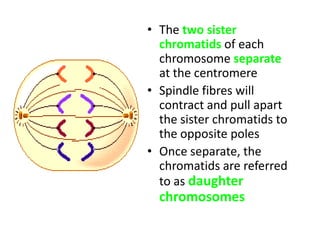
• Two sister chormatids of each chromosomes
  separate at the centromere.
• The sister chromatids are pulled apart to the
  opposite poles by shortening of the spindle
  fibre .
• The separated chromatids are called daughter
  chromosomes.
• The two sister
  chromatids of each
  chromosome separate
  at the centromere
• Spindle fibres will
  contract and pull apart
  the sister chromatids to
  the opposite poles
• Once separate, the
  chromatids are referred
  to as daughter
  chromosomes
Telophase
• Begins when two set of chromosomes reach
  the opposite poles of the cell.
• Chromosomes start to uncoil and revert to their
  extended state.
• The spindle fibre disappear and a new nuclear
  membrane form around each set of
  chromosomes.
• The nucleolus re-form in each nucleas.
So what is Cytokinesis?
1)Following mitosis, the cytoplasm of the cell will
divide through a process called cytokinesis to form
two daughter cells, each having one nucleus
2) Cytokinesis is the process of cytoplasmic division
3) It usually begins before nuclear division is complete
                THAT IS CYTOKINESIS
Cytokinesis in animal cell
• Actin filaments in the cytoplasm started to
  contracts to pull a ring of the plasma
  membrane,forming a cleavge furrow.
• The cleavge furrow deepens progressively
  until the cell is separated into two daughter
  cell.
Cleavage furrow
Sia Lily                     16
Is the cytokinesis in animal cell is same
            as the plant cell?
Cytokinesis in plant cell
• A clevage furrow does not form.
• Instead a membrane –enclosed vesicles gather at
  the plant cell’s equator between the two nuclei.
• The vesicles fuse to form cell plate.
• The cell plate grow outward and fuse with plasma
  membrane of the parent cell.
• New cell wall and plasma membrane are formed
  from the content of the cell plate
• Cellulose fibre are produced at the end of
  cytokinesis.
The End


Me Gusta!!

The m phase

  • 1.
  • 2.
  • 3.
    M-phase or mitoticphase occurd after interphase stage, the dividing cells enter M phase
  • 4.
    M-Phase Has two major parts Mitosis Cytokinesis Can subdivided into 4 phase Prophase Metaphase Anaphase Telophase
  • 5.
    Prophase • The chormosomesin the nucleus condense and become more tightly coiled • Each chormosomes consists a pair of sister chormatids joined together at the centromere. • The spindle fibre in the cytoplasm begin to form and extends between the centrioles. • The nucleolus disappers and the nuclear membrane diseintegrates at the end of prophase
  • 7.
    Metaphase • Begin whencentromeres of all the choromosomes are lined up on the metaphase plate. • Two sister chromatids are attached to one another at the centrometer. • Metaphase ends when the centromeres divide.
  • 9.
    Anaphase • Two sisterchormatids of each chromosomes separate at the centromere. • The sister chromatids are pulled apart to the opposite poles by shortening of the spindle fibre . • The separated chromatids are called daughter chromosomes.
  • 10.
    • The twosister chromatids of each chromosome separate at the centromere • Spindle fibres will contract and pull apart the sister chromatids to the opposite poles • Once separate, the chromatids are referred to as daughter chromosomes
  • 11.
    Telophase • Begins whentwo set of chromosomes reach the opposite poles of the cell. • Chromosomes start to uncoil and revert to their extended state. • The spindle fibre disappear and a new nuclear membrane form around each set of chromosomes. • The nucleolus re-form in each nucleas.
  • 13.
    So what isCytokinesis?
  • 14.
    1)Following mitosis, thecytoplasm of the cell will divide through a process called cytokinesis to form two daughter cells, each having one nucleus 2) Cytokinesis is the process of cytoplasmic division 3) It usually begins before nuclear division is complete THAT IS CYTOKINESIS
  • 15.
    Cytokinesis in animalcell • Actin filaments in the cytoplasm started to contracts to pull a ring of the plasma membrane,forming a cleavge furrow. • The cleavge furrow deepens progressively until the cell is separated into two daughter cell.
  • 16.
  • 17.
    Is the cytokinesisin animal cell is same as the plant cell?
  • 19.
    Cytokinesis in plantcell • A clevage furrow does not form. • Instead a membrane –enclosed vesicles gather at the plant cell’s equator between the two nuclei. • The vesicles fuse to form cell plate. • The cell plate grow outward and fuse with plasma membrane of the parent cell. • New cell wall and plasma membrane are formed from the content of the cell plate • Cellulose fibre are produced at the end of cytokinesis.
  • 21.