Effective Mistake-proofing for Healthcare:
Principles & Techniques for Sustained Improvement
Presented by:
Brian Nass BSEE, MSME, MSIE
Senior Advisor, Lean Advisors Inc
www.leanadvisors.com
1
Patient story
Copyright ©2013 Lean Advisors Inc.
Patient story
Copyright ©2013 Lean Advisors Inc.
Patient story
Copyright ©2013 Lean Advisors Inc.
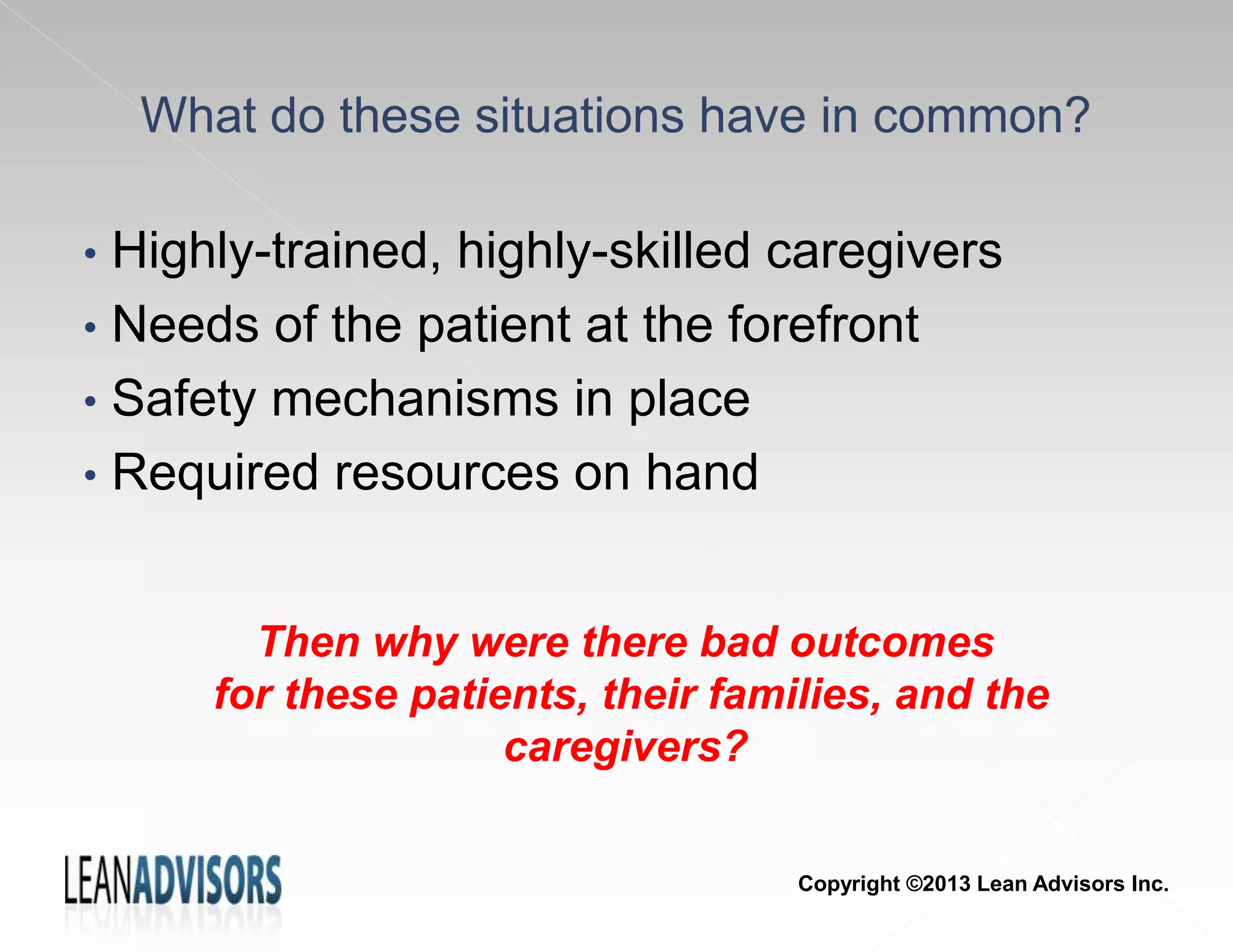
• Highly-trained, highly-skilled caregivers
• Needs of the patient at the forefront
• Safety mechanisms in place
• Required resources on hand
What do these situations have in common?
Then why were there bad outcomes
for these patients, their families, and the
caregivers?
Copyright ©2013 Lean Advisors Inc.
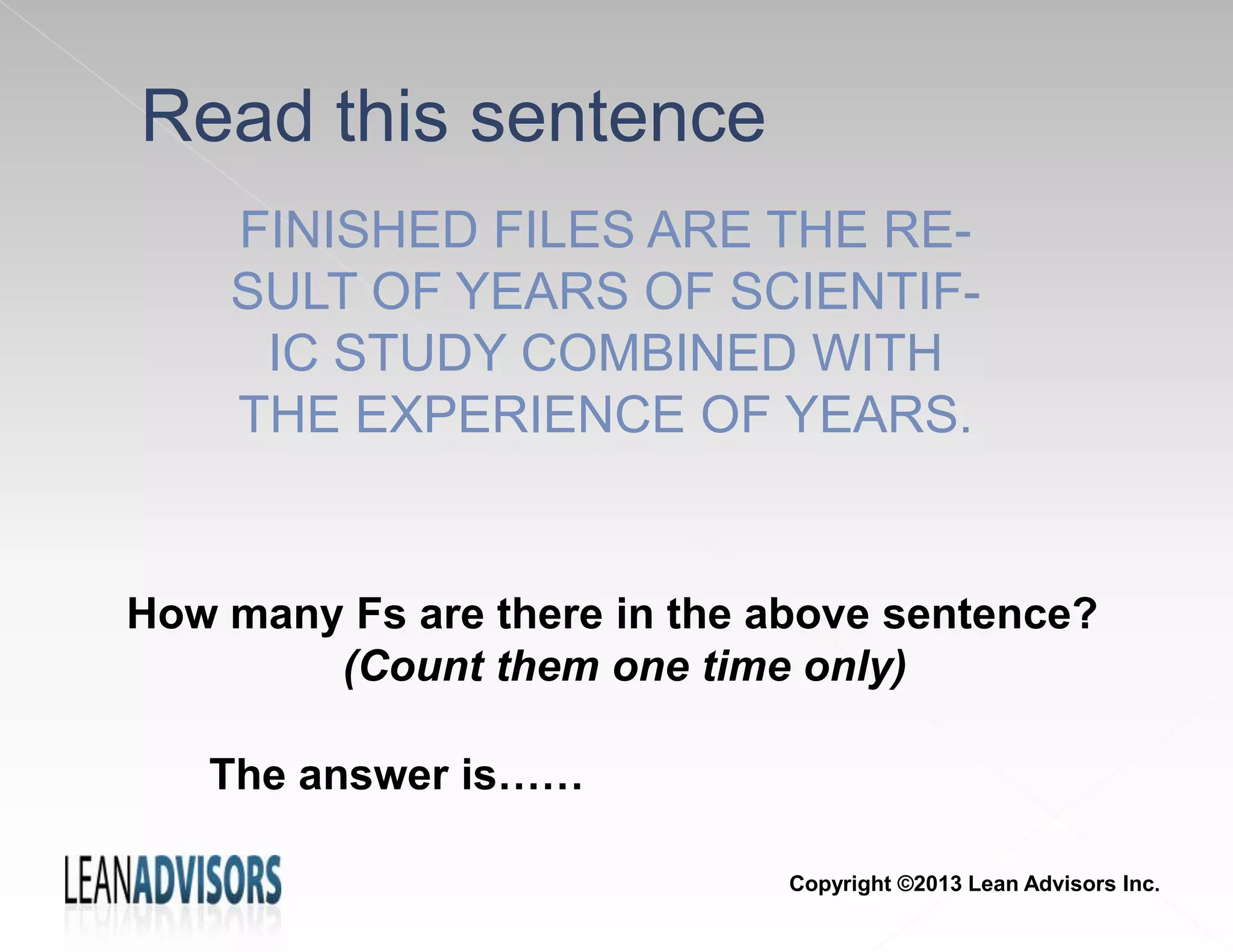
Read this sentence
FINISHED FILES ARE THE RE-
SULT OF YEARS OF SCIENTIF-
IC STUDY COMBINED WITH
THE EXPERIENCE OF YEARS.
How many Fs are there in the above sentence?
(Count them one time only)
The answer is……
Copyright ©2013 Lean Advisors Inc.
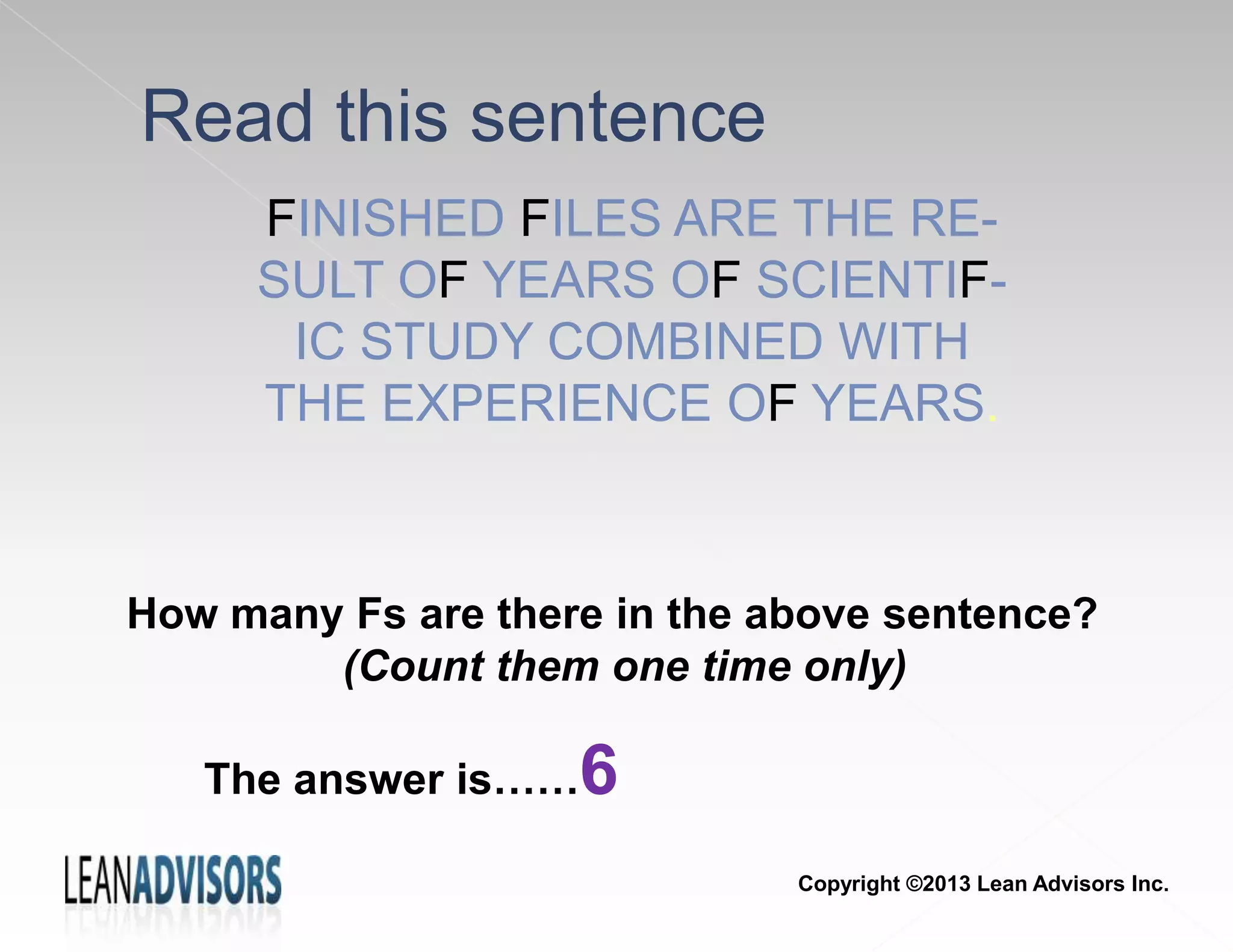
Read this sentence
FINISHED FILES ARE THE RE-
SULT OF YEARS OF SCIENTIF-
IC STUDY COMBINED WITH
THE EXPERIENCE OF YEARS.
The answer is……6
How many Fs are there in the above sentence?
(Count them one time only)
Copyright ©2013 Lean Advisors Inc.
Objectives
Understand what is meant by defect-free
philosophy
Understand why errors occur
Understand what is meant by mistake-
proofing and identify best mistake-proofing
strategies
Understand how consideration of human
factors can help in developing solutions for
improvement
Know what to do next and how to do it
Copyright ©2013 Lean Advisors Inc.
Definitions
Mistake
› An error in intent, leading to a
wrong action
Slip
› An error in execution of an
action, even though the intent was
correct
Copyright ©2013 Lean Advisors Inc.
Definitions
Process Defect
› An undesirable outcome
› Any instance of not meeting patient,
customer, institutional, or regulatory
requirements
› An un-necessary outcome
Defects are also a
category of WASTE.
Copyright ©2013 Lean Advisors Inc.
Examples of defects
› Turn-around time beyond customer’s
expectation
› Wrong-site surgery
› Patient leaving ED without being seen
› Prescription filled incorrectly
› Patient dissatisfied with the food
› Lost specimen
› Any instance where we paid expedite
charges to mail something out
(e.g., used Fed Ex) when it wasn’t
necessary
Definitions
Defect-free philosophy
• While humans are error-prone, our processes
need not create defects
• Error- and defect-free processes are achieved
through improved process design
Copyright ©2013 Lean Advisors Inc.
Mistake-Proofing Solutions
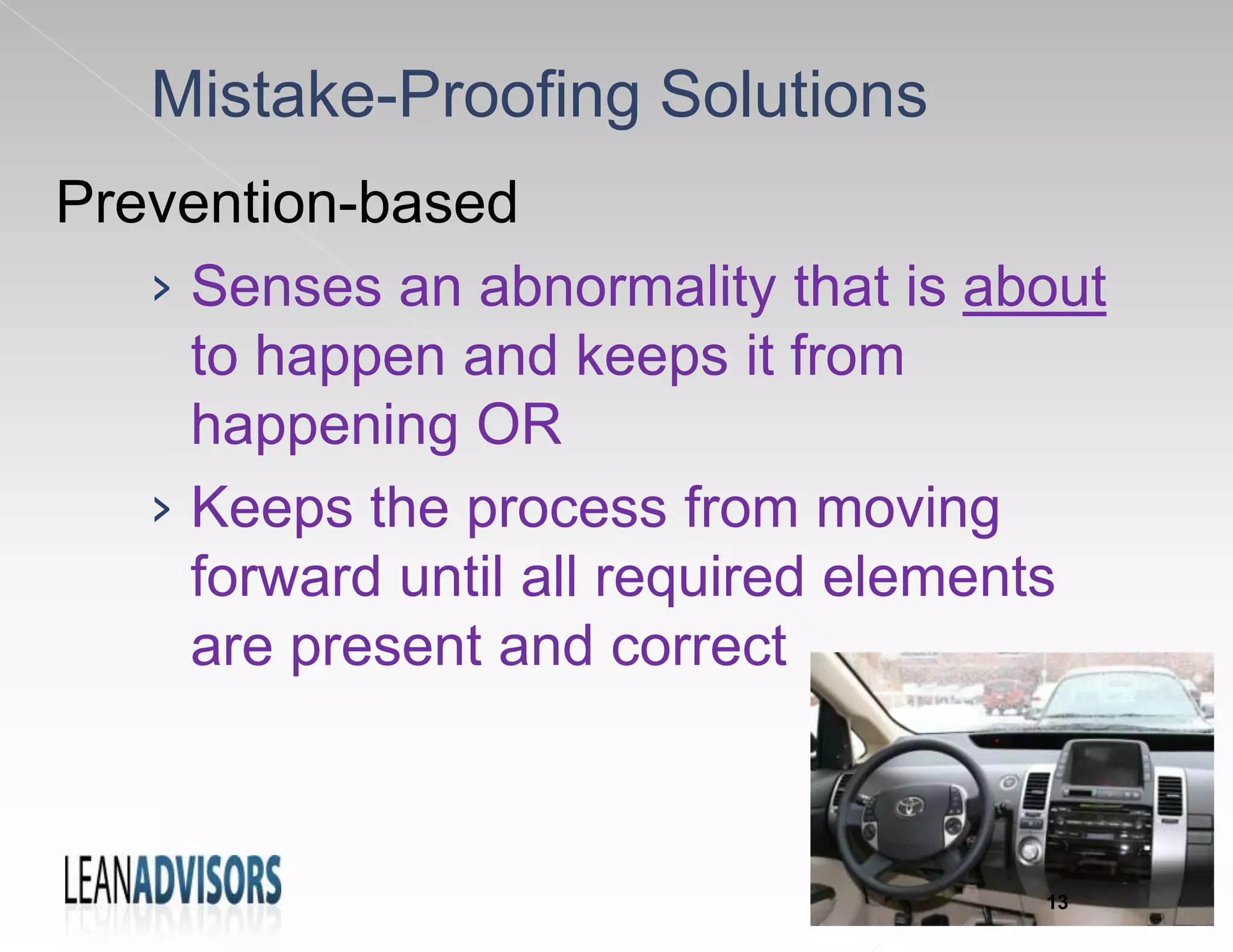
Prevention-based
› Senses an abnormality that is about
to happen and keeps it from
happening OR
› Keeps the process from moving
forward until all required elements
are present and correct
13
Mistake-Proofing Solutions
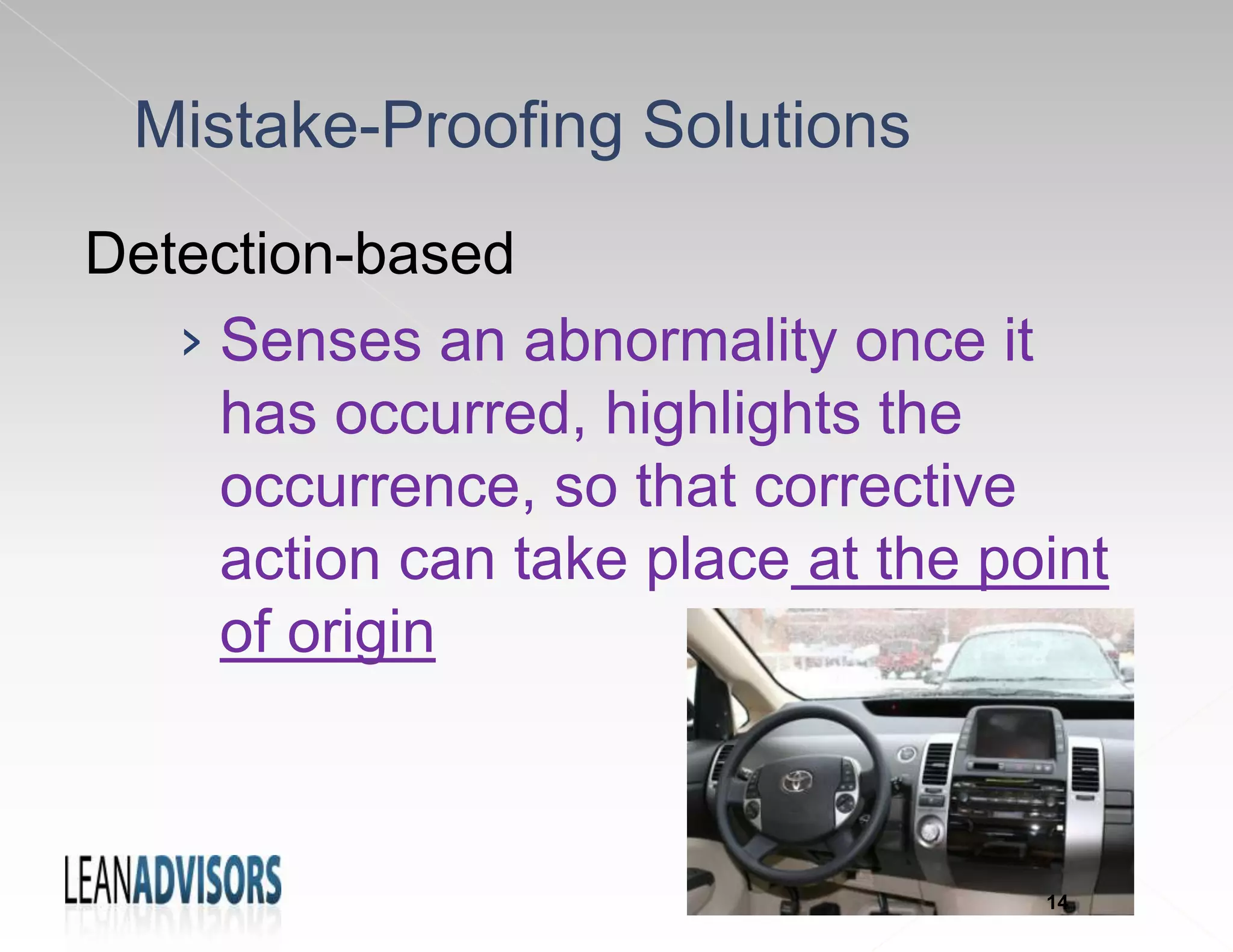
Detection-based
› Senses an abnormality once it
has occurred, highlights the
occurrence, so that corrective
action can take place at the point
of origin
14
Mistake-Proofing
Well-designed mistake-proofing solutions
(“devices”)…..
› Are devised by the people closest to the
work
› Prevent error
› Provide immediate feedback
› Compel countermeasure(s)
› Make it impossible to do the wrong thing
› Are simple and inexpensive
Copyright ©2013 Lean Advisors Inc.
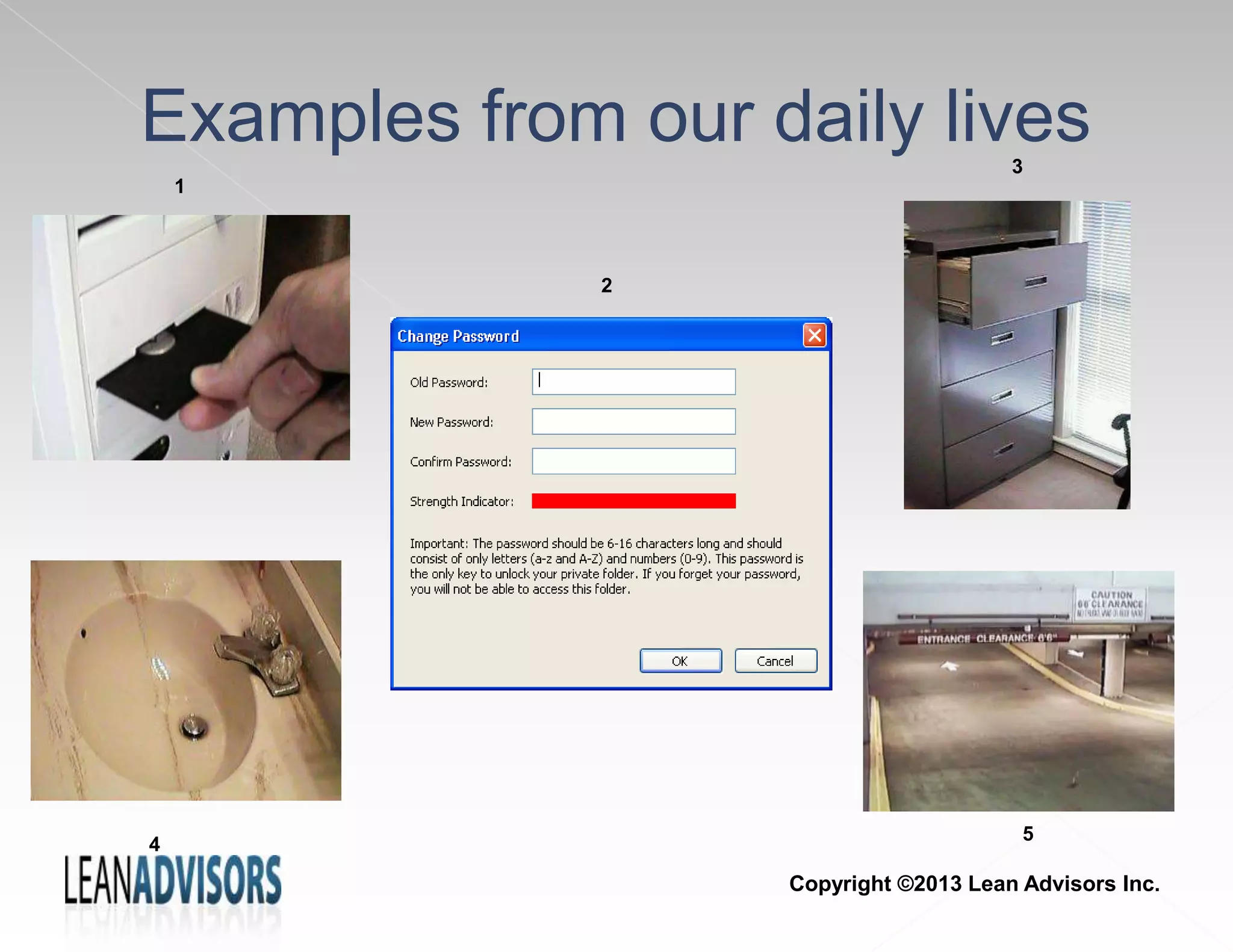
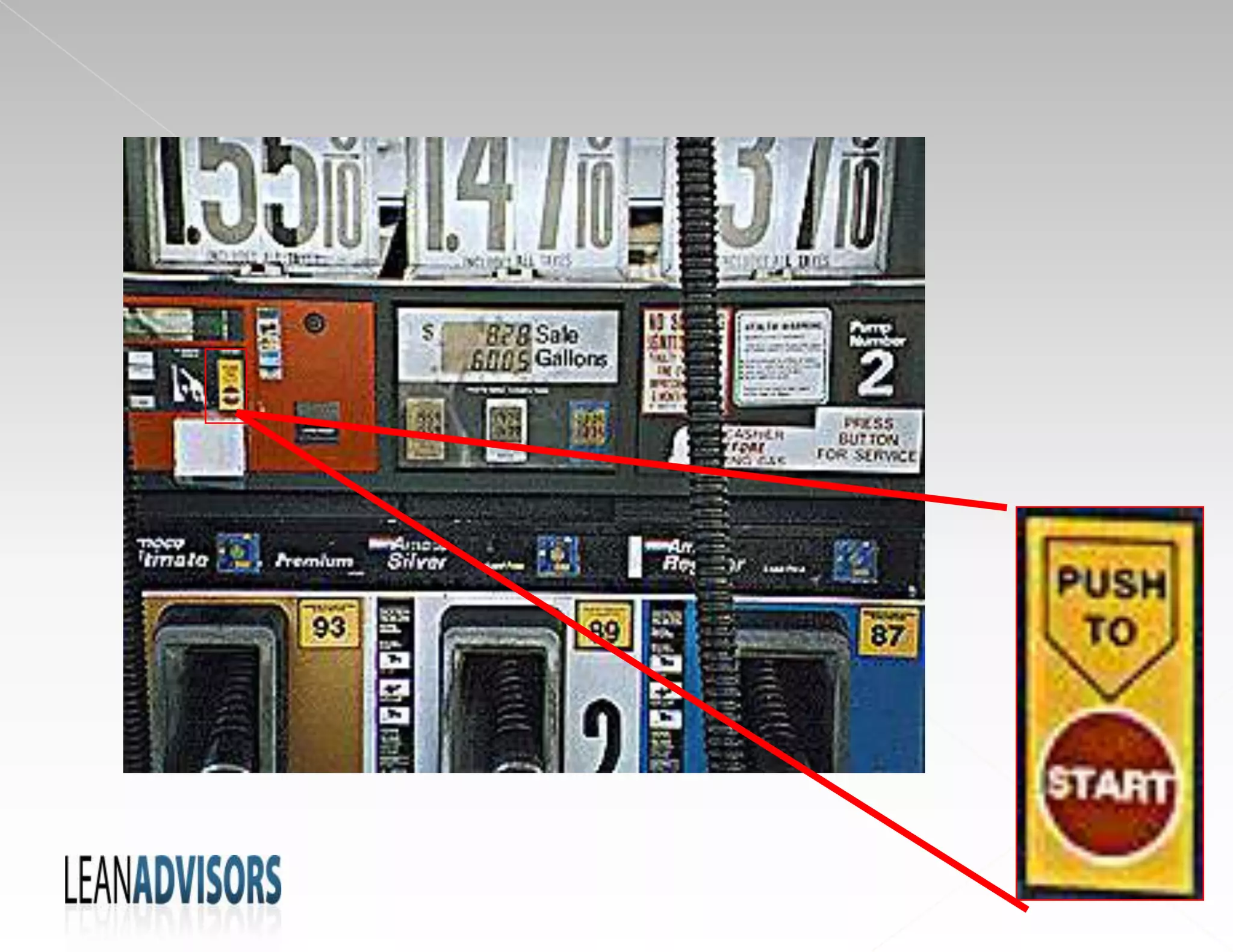
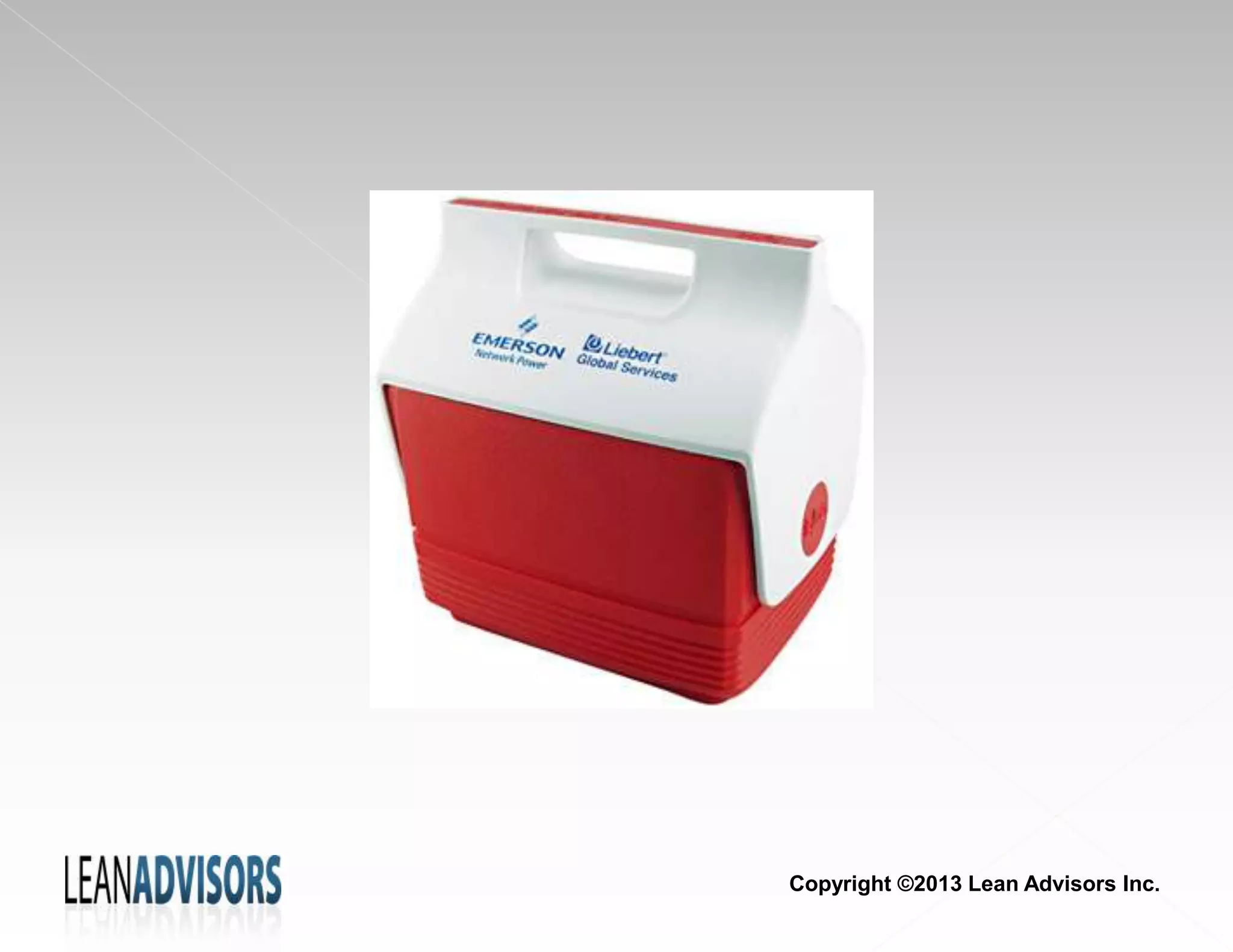
Examples from our daily lives
1
2
3
4
5
Copyright ©2013 Lean Advisors Inc.
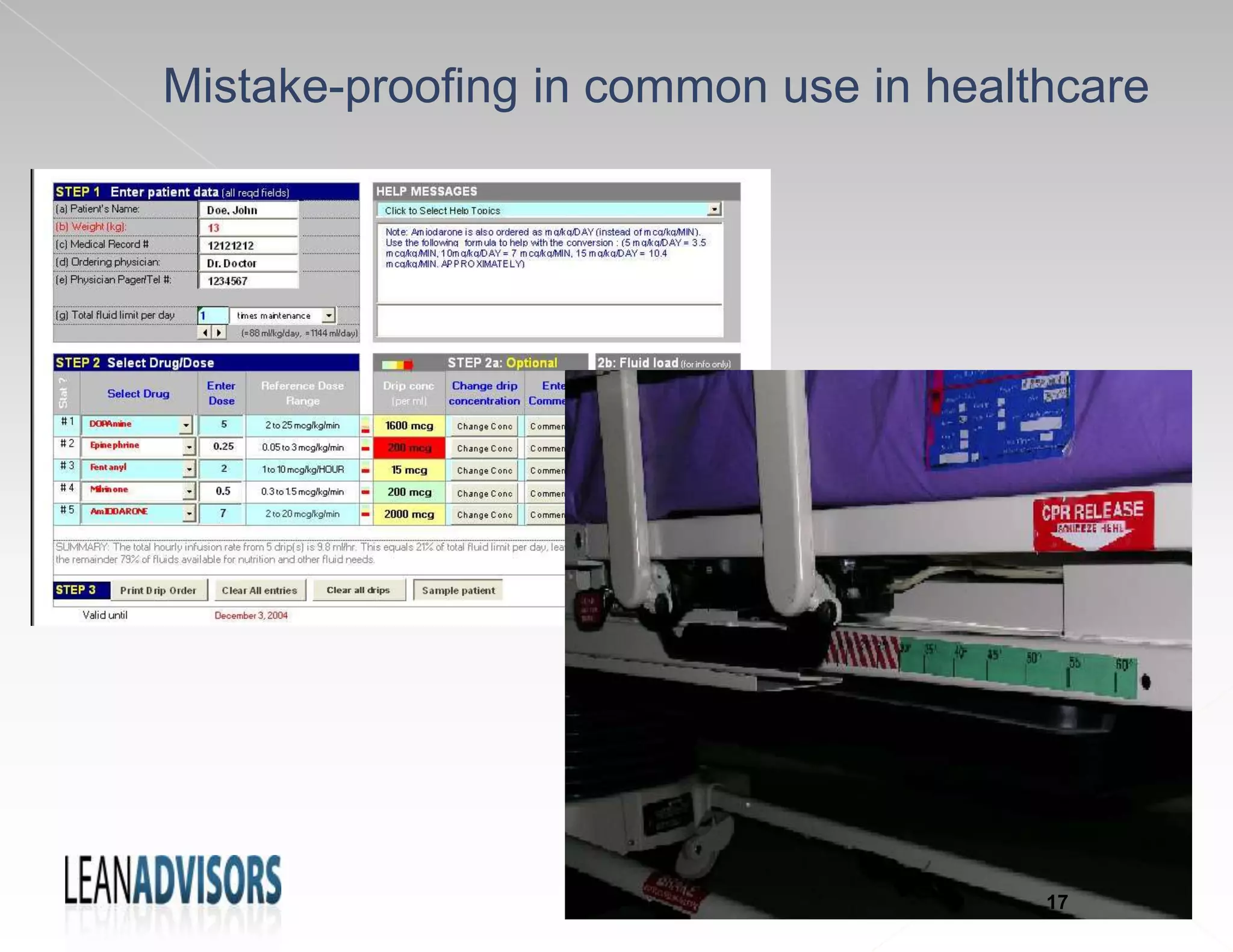
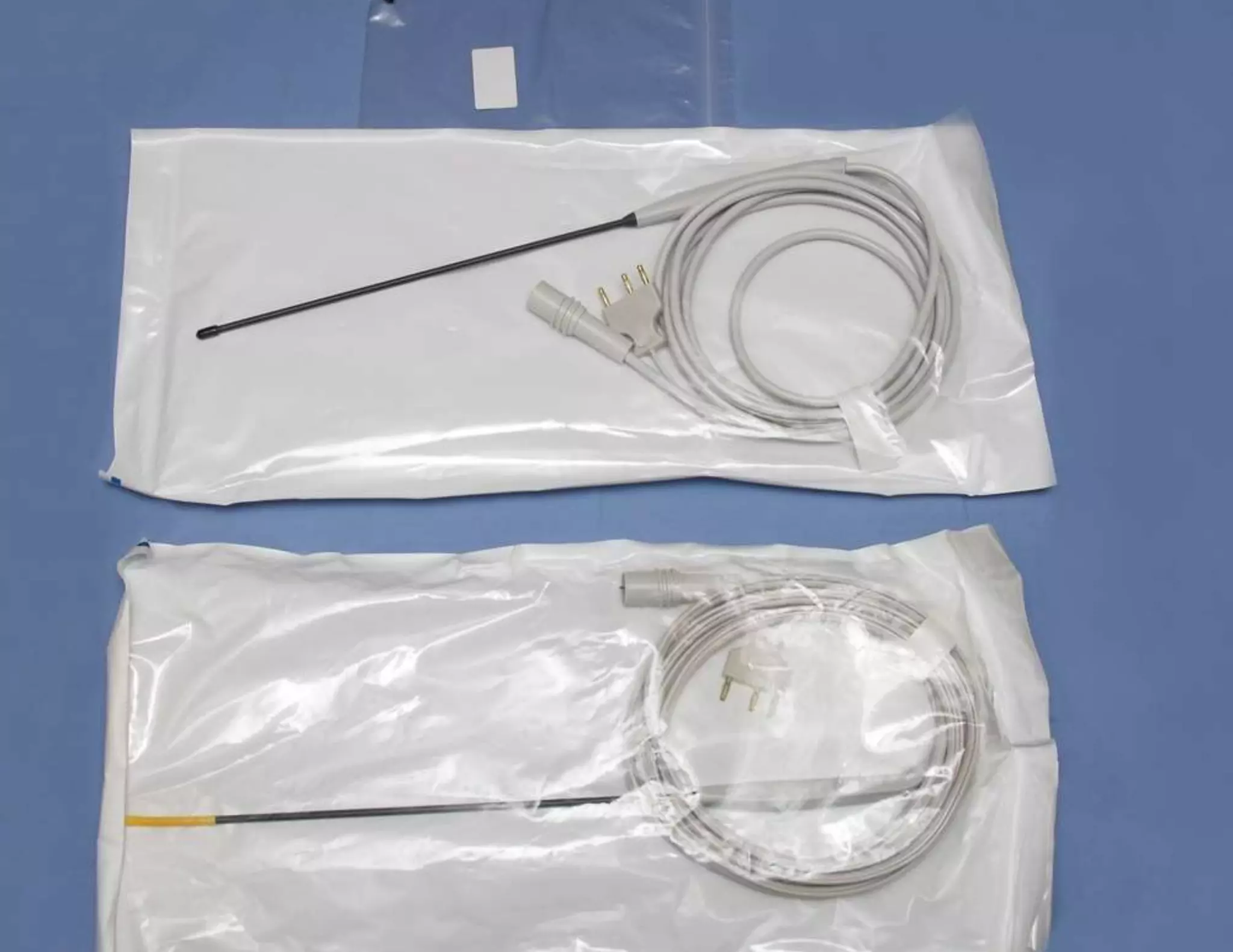
Mistake-proofing in common use in healthcare
17
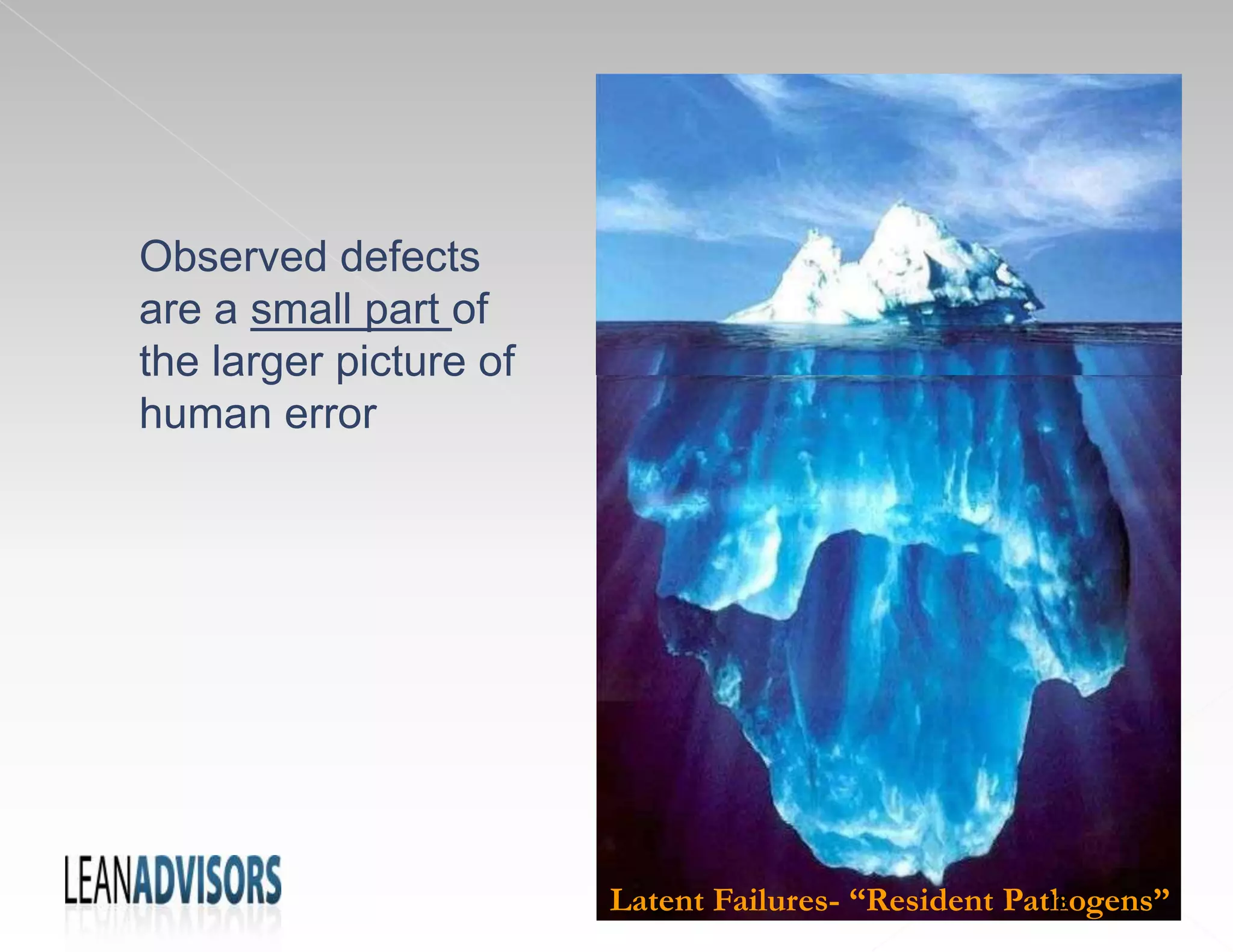
Defects- “Triggers”
Latent Failures- “Resident Pathogens”
Observed defects
are a small part of
the larger picture of
human error
18
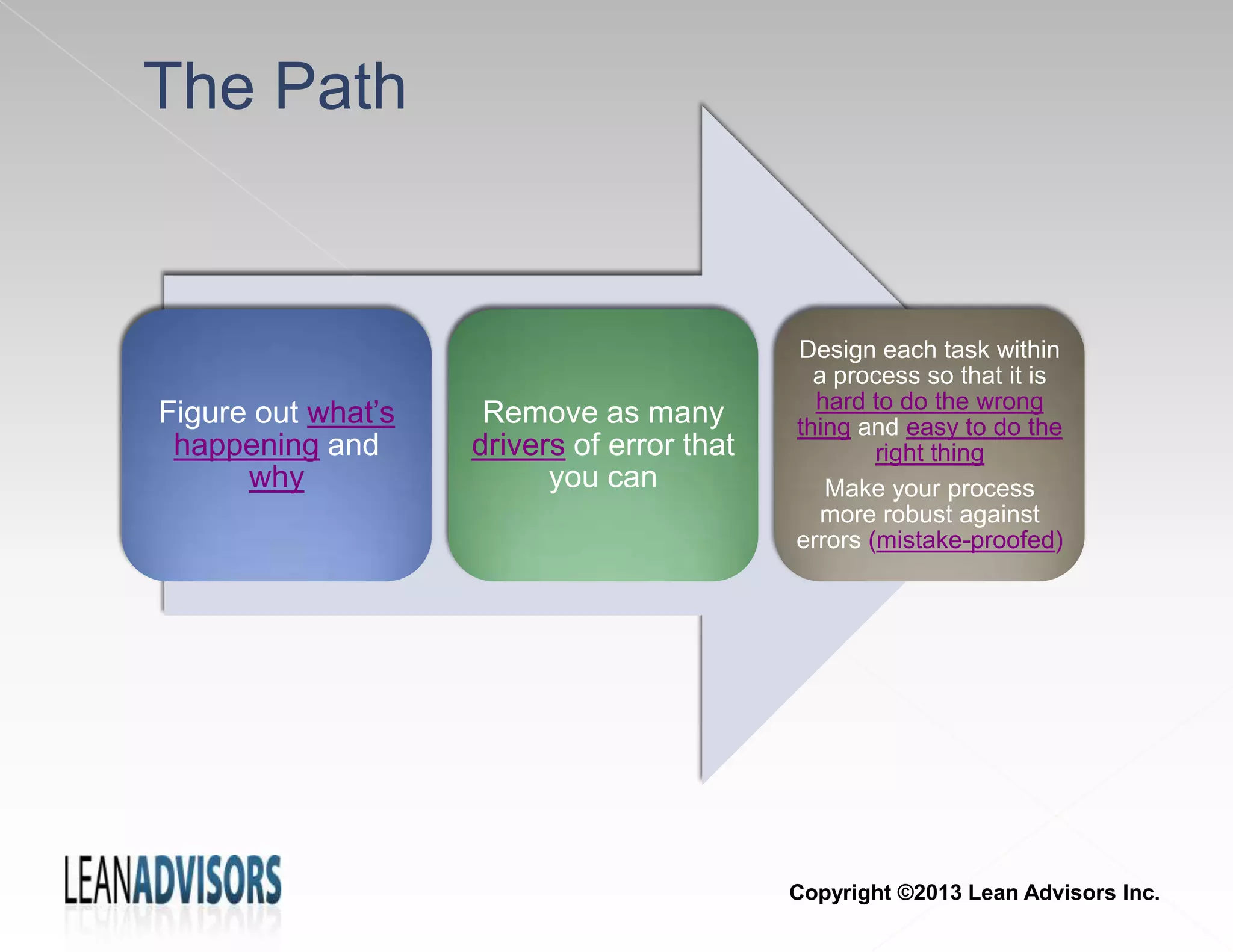
The Path
Figure out what’s
happening and
why
Remove as many
drivers of error that
you can
Design each task within
a process so that it is
hard to do the wrong
thing and easy to do the
right thing
Make your process
more robust against
errors (mistake-proofed)
Copyright ©2013 Lean Advisors Inc.
It’s NOT About Assigning Blame…
It is natural for people to make mistakes
It is natural for people to miss a defect
It is natural for people to not notice…
› an IV pump malfunctioning
› dosing calculation not quite right
› vital signs that are incorrect
› equipment alarming
Copyright ©2013 Lean Advisors Inc.
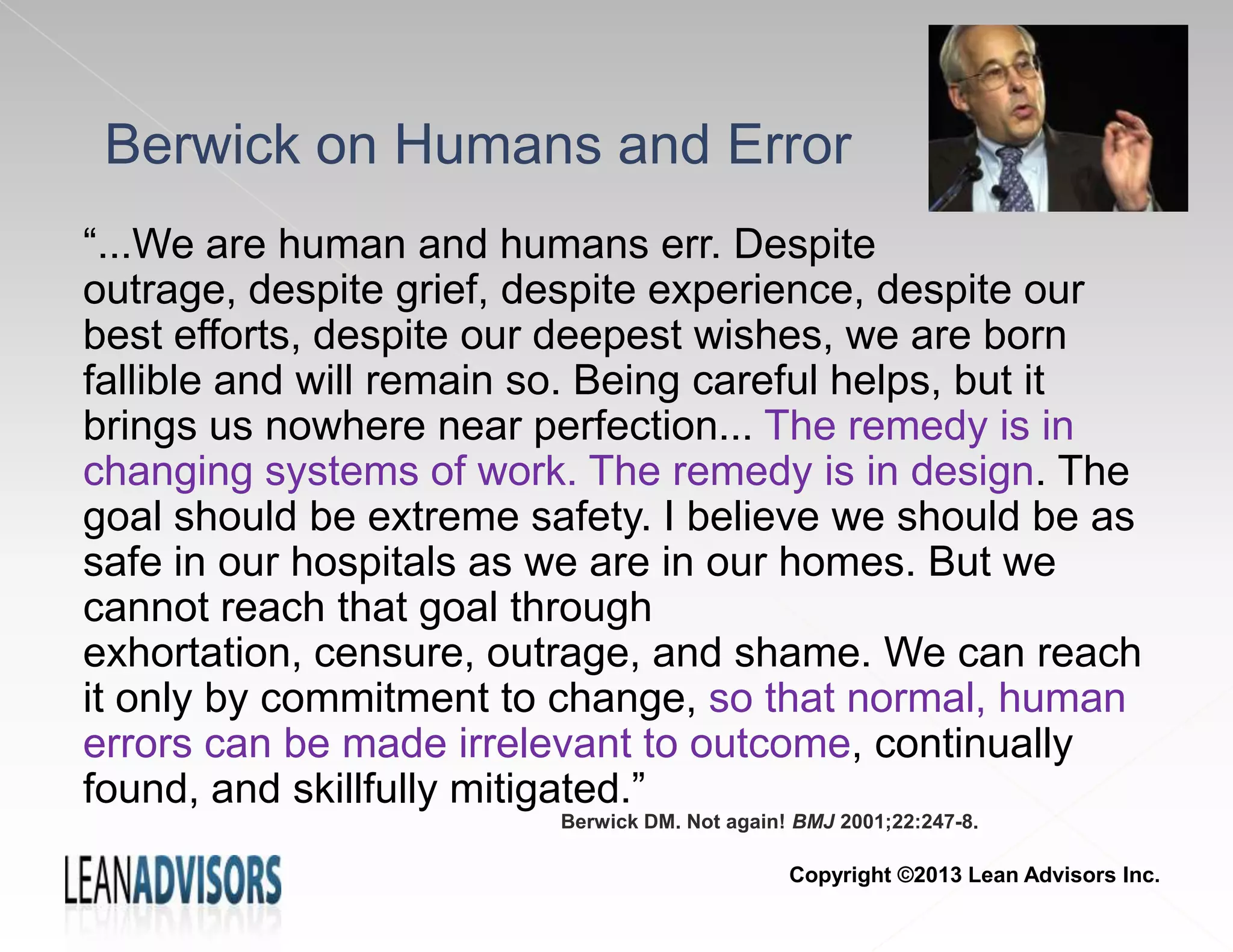
Berwick on Humans and Error
“...We are human and humans err. Despite
outrage, despite grief, despite experience, despite our
best efforts, despite our deepest wishes, we are born
fallible and will remain so. Being careful helps, but it
brings us nowhere near perfection... The remedy is in
changing systems of work. The remedy is in design. The
goal should be extreme safety. I believe we should be as
safe in our hospitals as we are in our homes. But we
cannot reach that goal through
exhortation, censure, outrage, and shame. We can reach
it only by commitment to change, so that normal, human
errors can be made irrelevant to outcome, continually
found, and skillfully mitigated.”
Berwick DM. Not again! BMJ 2001;22:247-8.
Copyright ©2013 Lean Advisors Inc.
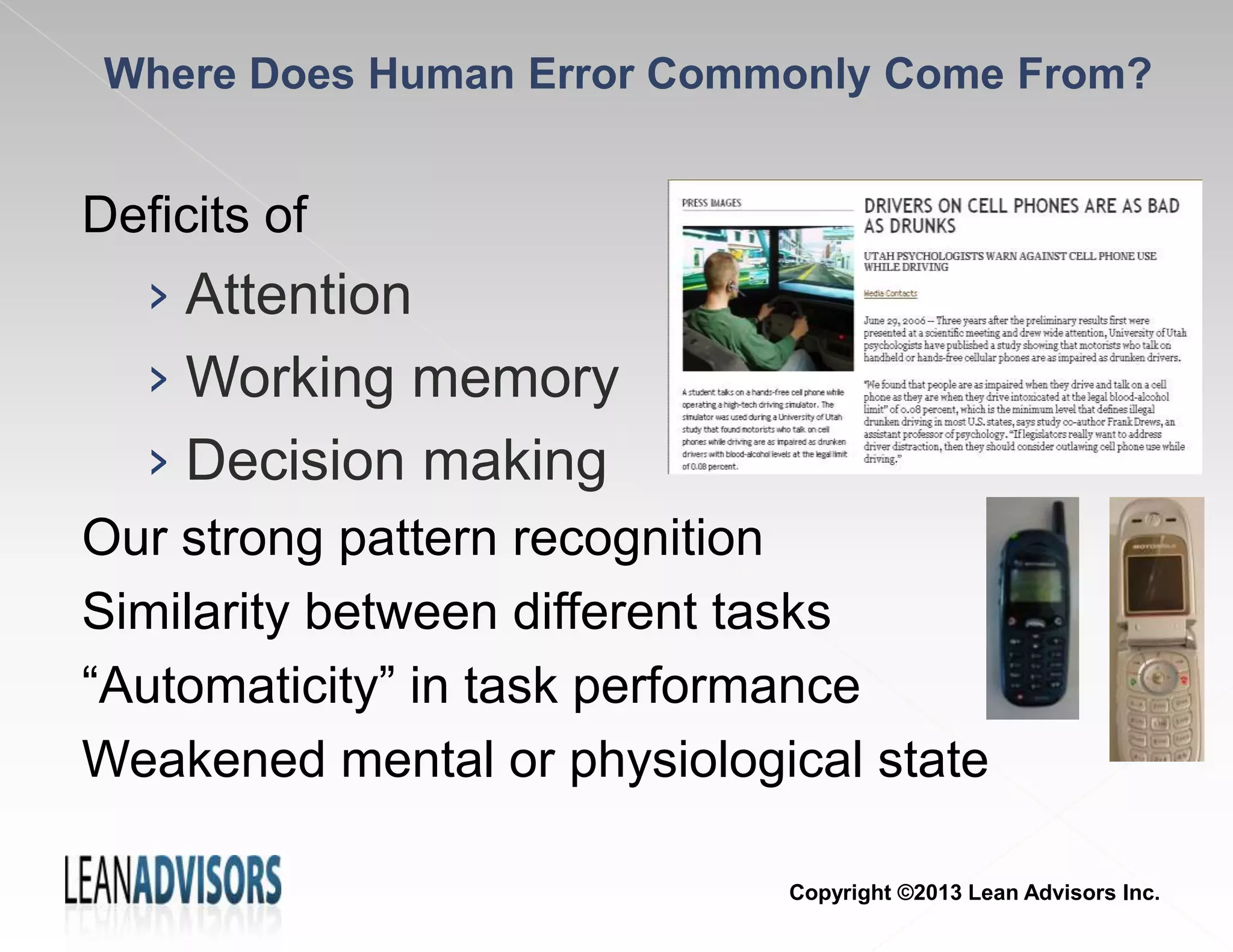
Where Does Human Error Commonly Come From?
Deficits of
› Attention
› Working memory
› Decision making
Our strong pattern recognition
Similarity between different tasks
“Automaticity” in task performance
Weakened mental or physiological state
Copyright ©2013 Lean Advisors Inc.
THE PAOMNNEHAL PWEOR OF THE
HMUAN MNID
“I cdnuolt blveiee that I cluod aulaclty uesdnatnrd what I
was rdgnieg.
Aoccdrnig to a rscheearch at Cmabrigde Uinervtisy, it
deosn't mttaer in what oredr the ltteers in a wrod
are, the olny iprmoatnt tihng is that the first and last
ltteer be in the rghit pclae. The rset can be a taotl mses
and you can sitll raed it wouthit a porbelm. This is
bcuseae the huamn mnid deos not raed ervey lteter by
istlef, but the wrod as a wlohe.
Amzanig, huh?”
What are the implications of this?
Copyright ©2013 Lean Advisors Inc.
Human Factors
The study of human capabilities and
limitations
› How we think
› How we act/ What we do
› What we use to do it
Copyright ©2013 Lean Advisors Inc.
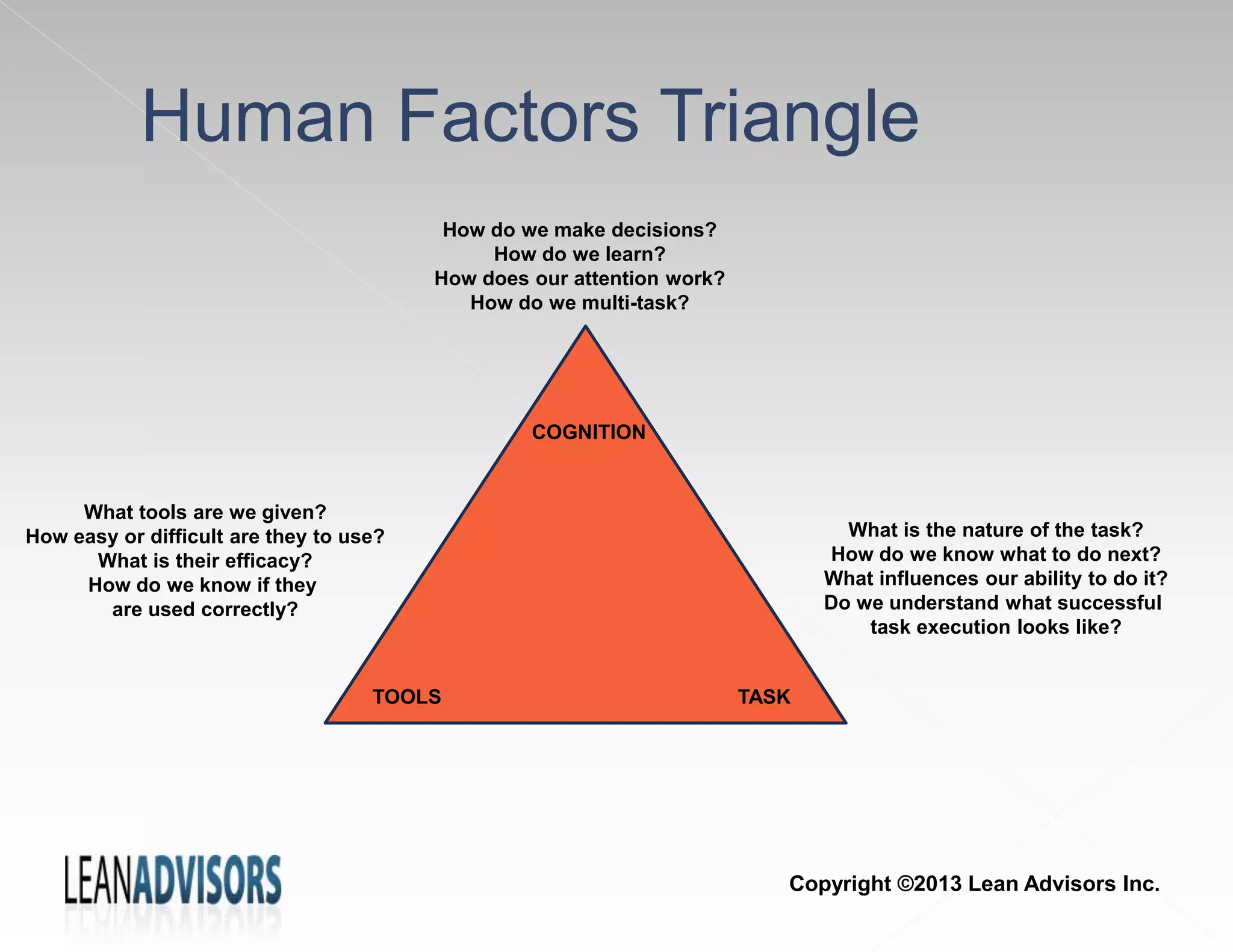
Human Factors Triangle
COGNITION
TASKTOOLS
How do we make decisions?
How do we learn?
How does our attention work?
How do we multi-task?
What is the nature of the task?
How do we know what to do next?
What influences our ability to do it?
Do we understand what successful
task execution looks like?
What tools are we given?
How easy or difficult are they to use?
What is their efficacy?
How do we know if they
are used correctly?
Copyright ©2013 Lean Advisors Inc.
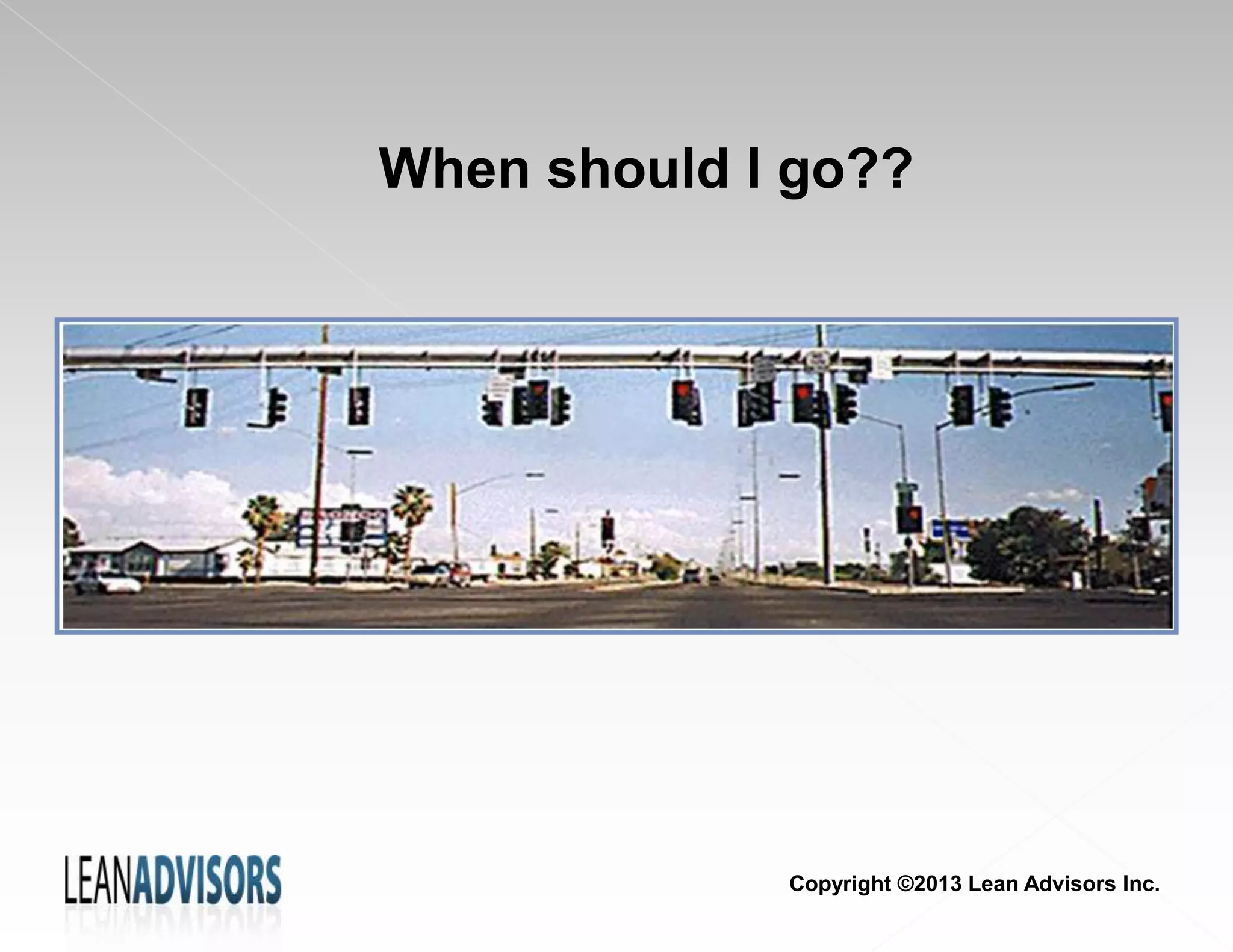
When should I go??
Copyright ©2013 Lean Advisors Inc.
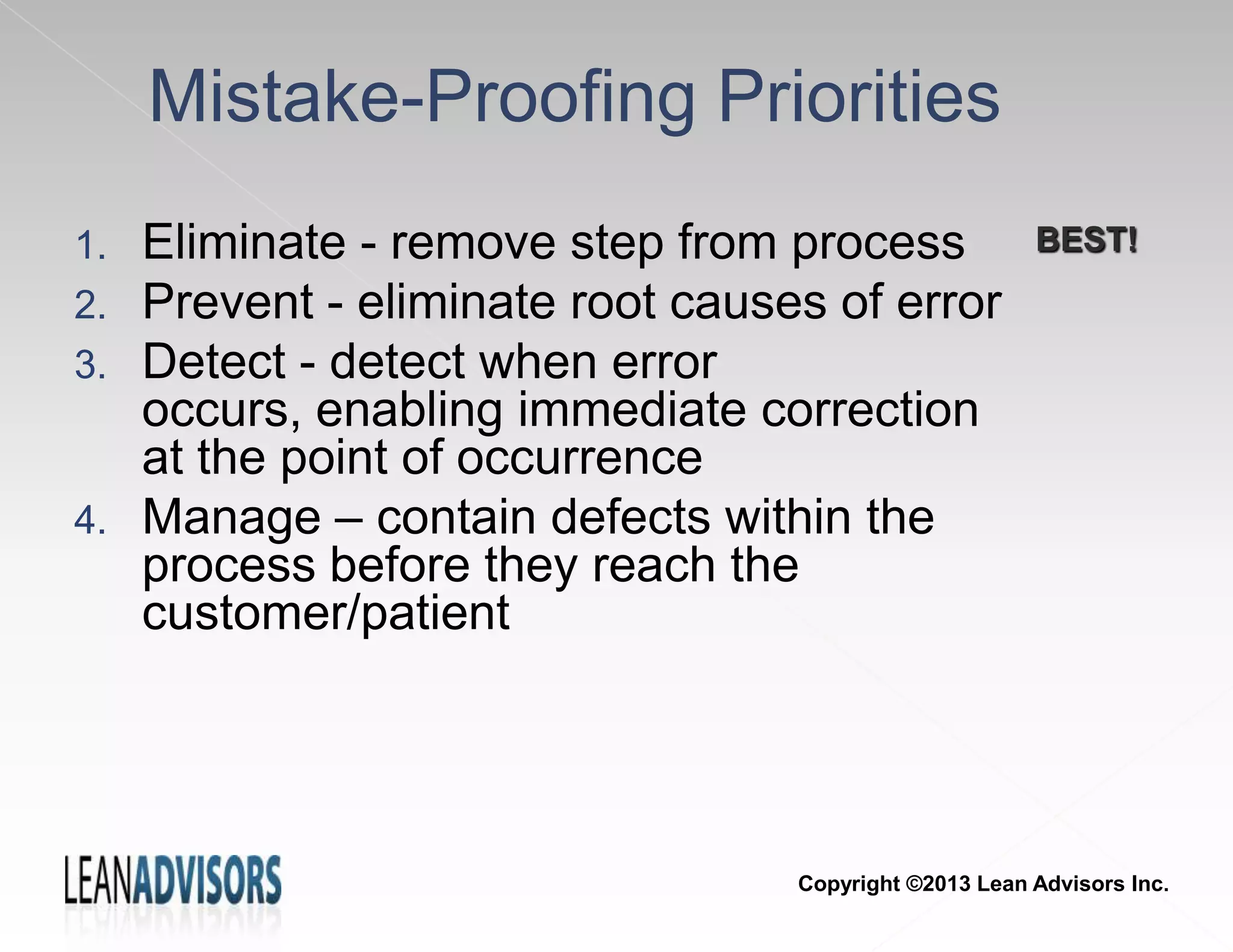
Mistake-Proofing Priorities
1. Eliminate - remove step from process
2. Prevent - eliminate root causes of error
3. Detect - detect when error
occurs, enabling immediate correction
at the point of occurrence
4. Manage – contain defects within the
process before they reach the
customer/patient
BEST!
Copyright ©2013 Lean Advisors Inc.
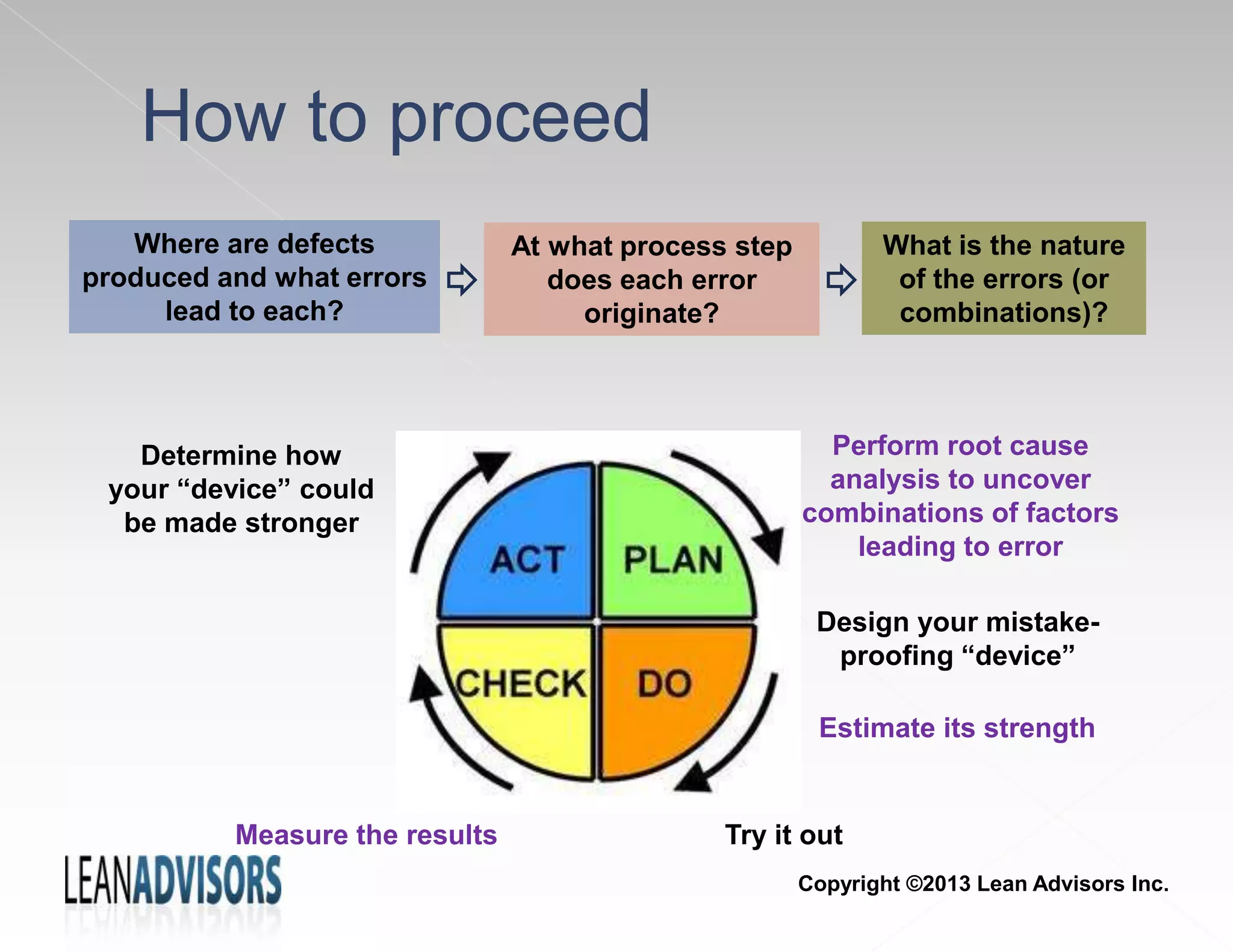
How to proceed
Where are defects
produced and what errors
lead to each?
At what process step
does each error
originate?
What is the nature
of the errors (or
combinations)?
Perform root cause
analysis to uncover
combinations of factors
leading to error
Design your mistake-
proofing “device”
Estimate its strength
Try it outMeasure the results
Determine how
your “device” could
be made stronger
Copyright ©2013 Lean Advisors Inc.
Assessing Efficacy of the “Device”
• Is it automatically triggered?
• Does it prevent wrong actions?
• If not preventive, does it shut down the process?
• If not a shut down, does it effectively alarm the
person making the error?
• To what extent can people create work-arounds?
• To what extent can we sustain this “device”?
• How feasible is this to implement?
Copyright ©2013 Lean Advisors Inc.
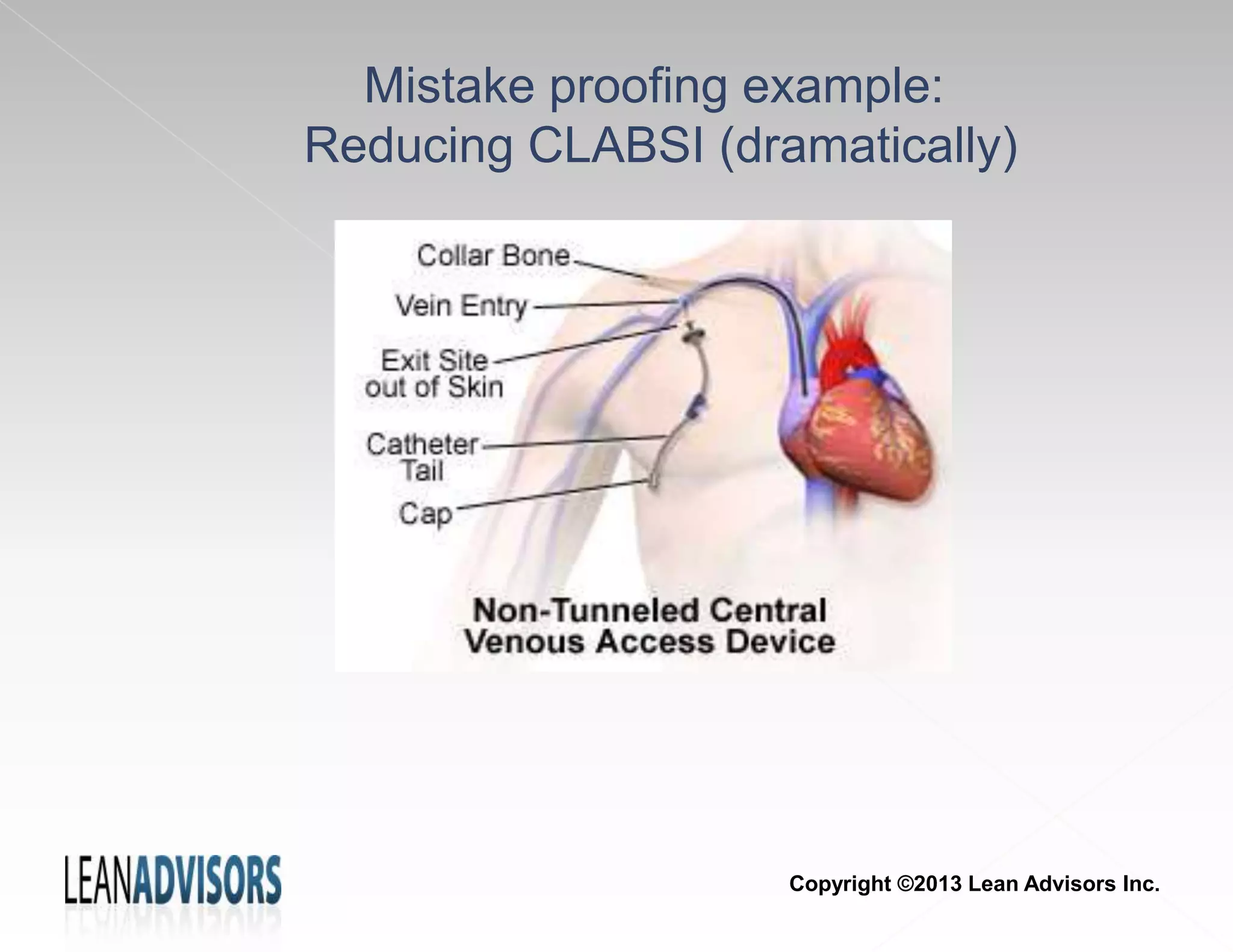
Mistake proofing example:
Reducing CLABSI (dramatically)
Copyright ©2013 Lean Advisors Inc.
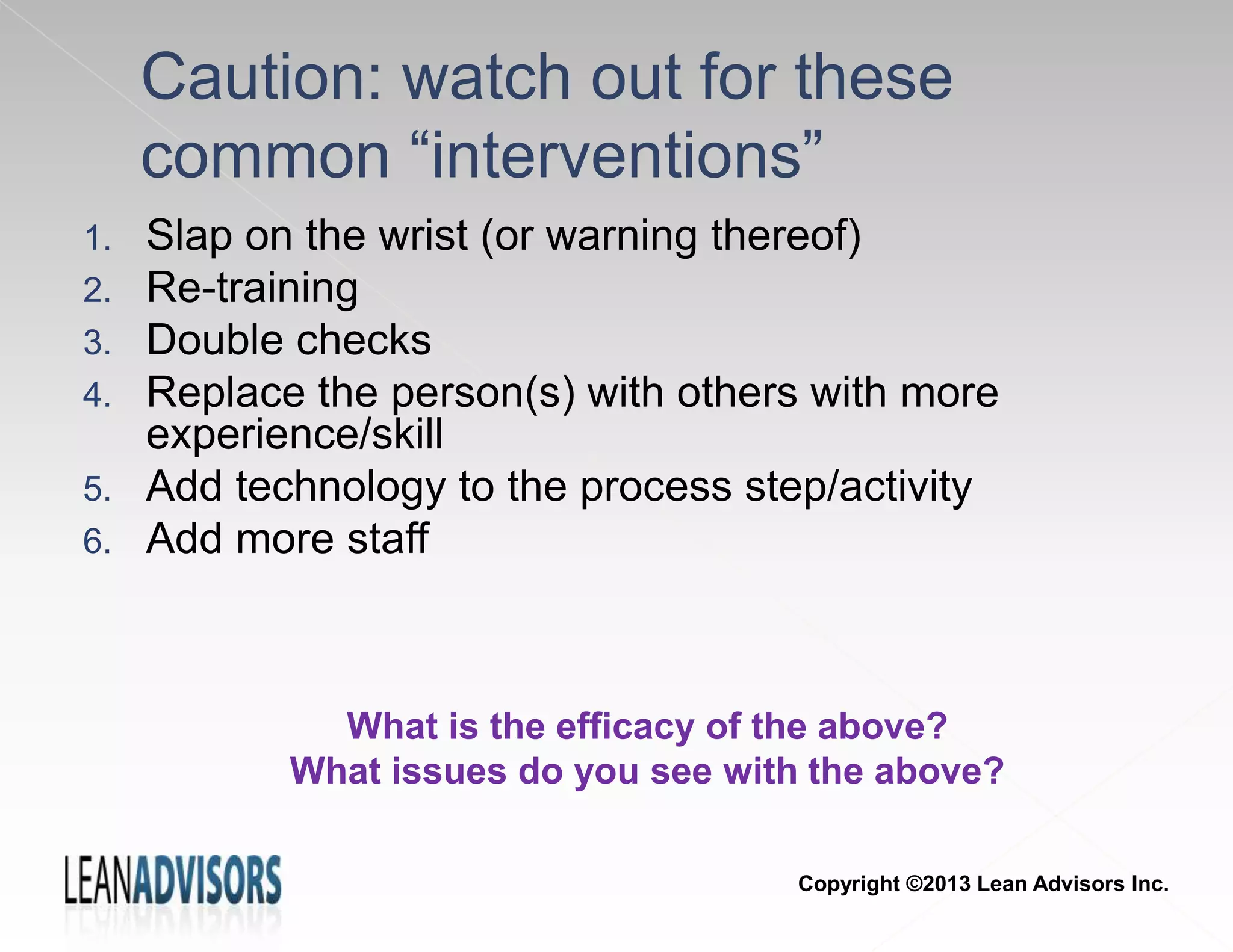
1. Slap on the wrist (or warning thereof)
2. Re-training
3. Double checks
4. Replace the person(s) with others with more
experience/skill
5. Add technology to the process step/activity
6. Add more staff
Caution: watch out for these
common “interventions”
What is the efficacy of the above?
What issues do you see with the above?
Copyright ©2013 Lean Advisors Inc.
Separate handouts provided:
1. “Red Flag” conditions
2. Reading list
3. Double checks: design guidelines
Thank you!
Copyright ©2013 Lean Advisors Inc.
Frequently Asked Questions
Contact US:
877-778-6413
corp@leanadvisors.com
www.leanadvisors.com
Copyright ©2013 Lean Advisors Inc.

Mistake proofing presentation

  • 1.
    Effective Mistake-proofing forHealthcare: Principles & Techniques for Sustained Improvement Presented by: Brian Nass BSEE, MSME, MSIE Senior Advisor, Lean Advisors Inc www.leanadvisors.com 1
  • 2.
  • 3.
  • 4.
  • 5.
    • Highly-trained, highly-skilledcaregivers • Needs of the patient at the forefront • Safety mechanisms in place • Required resources on hand What do these situations have in common? Then why were there bad outcomes for these patients, their families, and the caregivers? Copyright ©2013 Lean Advisors Inc.
  • 6.
    Read this sentence FINISHEDFILES ARE THE RE- SULT OF YEARS OF SCIENTIF- IC STUDY COMBINED WITH THE EXPERIENCE OF YEARS. How many Fs are there in the above sentence? (Count them one time only) The answer is…… Copyright ©2013 Lean Advisors Inc.
  • 7.
    Read this sentence FINISHEDFILES ARE THE RE- SULT OF YEARS OF SCIENTIF- IC STUDY COMBINED WITH THE EXPERIENCE OF YEARS. The answer is……6 How many Fs are there in the above sentence? (Count them one time only) Copyright ©2013 Lean Advisors Inc.
  • 8.
    Objectives Understand what ismeant by defect-free philosophy Understand why errors occur Understand what is meant by mistake- proofing and identify best mistake-proofing strategies Understand how consideration of human factors can help in developing solutions for improvement Know what to do next and how to do it Copyright ©2013 Lean Advisors Inc.
  • 9.
    Definitions Mistake › An errorin intent, leading to a wrong action Slip › An error in execution of an action, even though the intent was correct Copyright ©2013 Lean Advisors Inc.
  • 10.
    Definitions Process Defect › Anundesirable outcome › Any instance of not meeting patient, customer, institutional, or regulatory requirements › An un-necessary outcome Defects are also a category of WASTE. Copyright ©2013 Lean Advisors Inc.
  • 11.
    Examples of defects ›Turn-around time beyond customer’s expectation › Wrong-site surgery › Patient leaving ED without being seen › Prescription filled incorrectly › Patient dissatisfied with the food › Lost specimen › Any instance where we paid expedite charges to mail something out (e.g., used Fed Ex) when it wasn’t necessary Definitions
  • 12.
    Defect-free philosophy • Whilehumans are error-prone, our processes need not create defects • Error- and defect-free processes are achieved through improved process design Copyright ©2013 Lean Advisors Inc.
  • 13.
    Mistake-Proofing Solutions Prevention-based › Sensesan abnormality that is about to happen and keeps it from happening OR › Keeps the process from moving forward until all required elements are present and correct 13
  • 14.
    Mistake-Proofing Solutions Detection-based › Sensesan abnormality once it has occurred, highlights the occurrence, so that corrective action can take place at the point of origin 14
  • 15.
    Mistake-Proofing Well-designed mistake-proofing solutions (“devices”)….. ›Are devised by the people closest to the work › Prevent error › Provide immediate feedback › Compel countermeasure(s) › Make it impossible to do the wrong thing › Are simple and inexpensive Copyright ©2013 Lean Advisors Inc.
  • 16.
    Examples from ourdaily lives 1 2 3 4 5 Copyright ©2013 Lean Advisors Inc.
  • 17.
    Mistake-proofing in commonuse in healthcare 17
  • 18.
    Defects- “Triggers” Latent Failures-“Resident Pathogens” Observed defects are a small part of the larger picture of human error 18
  • 19.
    The Path Figure outwhat’s happening and why Remove as many drivers of error that you can Design each task within a process so that it is hard to do the wrong thing and easy to do the right thing Make your process more robust against errors (mistake-proofed) Copyright ©2013 Lean Advisors Inc.
  • 20.
    It’s NOT AboutAssigning Blame… It is natural for people to make mistakes It is natural for people to miss a defect It is natural for people to not notice… › an IV pump malfunctioning › dosing calculation not quite right › vital signs that are incorrect › equipment alarming Copyright ©2013 Lean Advisors Inc.
  • 21.
    Berwick on Humansand Error “...We are human and humans err. Despite outrage, despite grief, despite experience, despite our best efforts, despite our deepest wishes, we are born fallible and will remain so. Being careful helps, but it brings us nowhere near perfection... The remedy is in changing systems of work. The remedy is in design. The goal should be extreme safety. I believe we should be as safe in our hospitals as we are in our homes. But we cannot reach that goal through exhortation, censure, outrage, and shame. We can reach it only by commitment to change, so that normal, human errors can be made irrelevant to outcome, continually found, and skillfully mitigated.” Berwick DM. Not again! BMJ 2001;22:247-8. Copyright ©2013 Lean Advisors Inc.
  • 22.
    Where Does HumanError Commonly Come From? Deficits of › Attention › Working memory › Decision making Our strong pattern recognition Similarity between different tasks “Automaticity” in task performance Weakened mental or physiological state Copyright ©2013 Lean Advisors Inc.
  • 23.
    THE PAOMNNEHAL PWEOROF THE HMUAN MNID “I cdnuolt blveiee that I cluod aulaclty uesdnatnrd what I was rdgnieg. Aoccdrnig to a rscheearch at Cmabrigde Uinervtisy, it deosn't mttaer in what oredr the ltteers in a wrod are, the olny iprmoatnt tihng is that the first and last ltteer be in the rghit pclae. The rset can be a taotl mses and you can sitll raed it wouthit a porbelm. This is bcuseae the huamn mnid deos not raed ervey lteter by istlef, but the wrod as a wlohe. Amzanig, huh?” What are the implications of this? Copyright ©2013 Lean Advisors Inc.
  • 24.
    Human Factors The studyof human capabilities and limitations › How we think › How we act/ What we do › What we use to do it Copyright ©2013 Lean Advisors Inc.
  • 25.
    Human Factors Triangle COGNITION TASKTOOLS Howdo we make decisions? How do we learn? How does our attention work? How do we multi-task? What is the nature of the task? How do we know what to do next? What influences our ability to do it? Do we understand what successful task execution looks like? What tools are we given? How easy or difficult are they to use? What is their efficacy? How do we know if they are used correctly? Copyright ©2013 Lean Advisors Inc.
  • 26.
    When should Igo?? Copyright ©2013 Lean Advisors Inc.
  • 28.
    Copyright ©2013 LeanAdvisors Inc.
  • 30.
    Mistake-Proofing Priorities 1. Eliminate- remove step from process 2. Prevent - eliminate root causes of error 3. Detect - detect when error occurs, enabling immediate correction at the point of occurrence 4. Manage – contain defects within the process before they reach the customer/patient BEST! Copyright ©2013 Lean Advisors Inc.
  • 31.
    How to proceed Whereare defects produced and what errors lead to each? At what process step does each error originate? What is the nature of the errors (or combinations)? Perform root cause analysis to uncover combinations of factors leading to error Design your mistake- proofing “device” Estimate its strength Try it outMeasure the results Determine how your “device” could be made stronger Copyright ©2013 Lean Advisors Inc.
  • 32.
    Assessing Efficacy ofthe “Device” • Is it automatically triggered? • Does it prevent wrong actions? • If not preventive, does it shut down the process? • If not a shut down, does it effectively alarm the person making the error? • To what extent can people create work-arounds? • To what extent can we sustain this “device”? • How feasible is this to implement? Copyright ©2013 Lean Advisors Inc.
  • 33.
    Mistake proofing example: ReducingCLABSI (dramatically) Copyright ©2013 Lean Advisors Inc.
  • 34.
    1. Slap onthe wrist (or warning thereof) 2. Re-training 3. Double checks 4. Replace the person(s) with others with more experience/skill 5. Add technology to the process step/activity 6. Add more staff Caution: watch out for these common “interventions” What is the efficacy of the above? What issues do you see with the above? Copyright ©2013 Lean Advisors Inc.
  • 35.
    Separate handouts provided: 1.“Red Flag” conditions 2. Reading list 3. Double checks: design guidelines Thank you! Copyright ©2013 Lean Advisors Inc.
  • 36.
    Frequently Asked Questions ContactUS: 877-778-6413 corp@leanadvisors.com www.leanadvisors.com Copyright ©2013 Lean Advisors Inc.