





“HUMAN ERROR”
as a
Root Cause
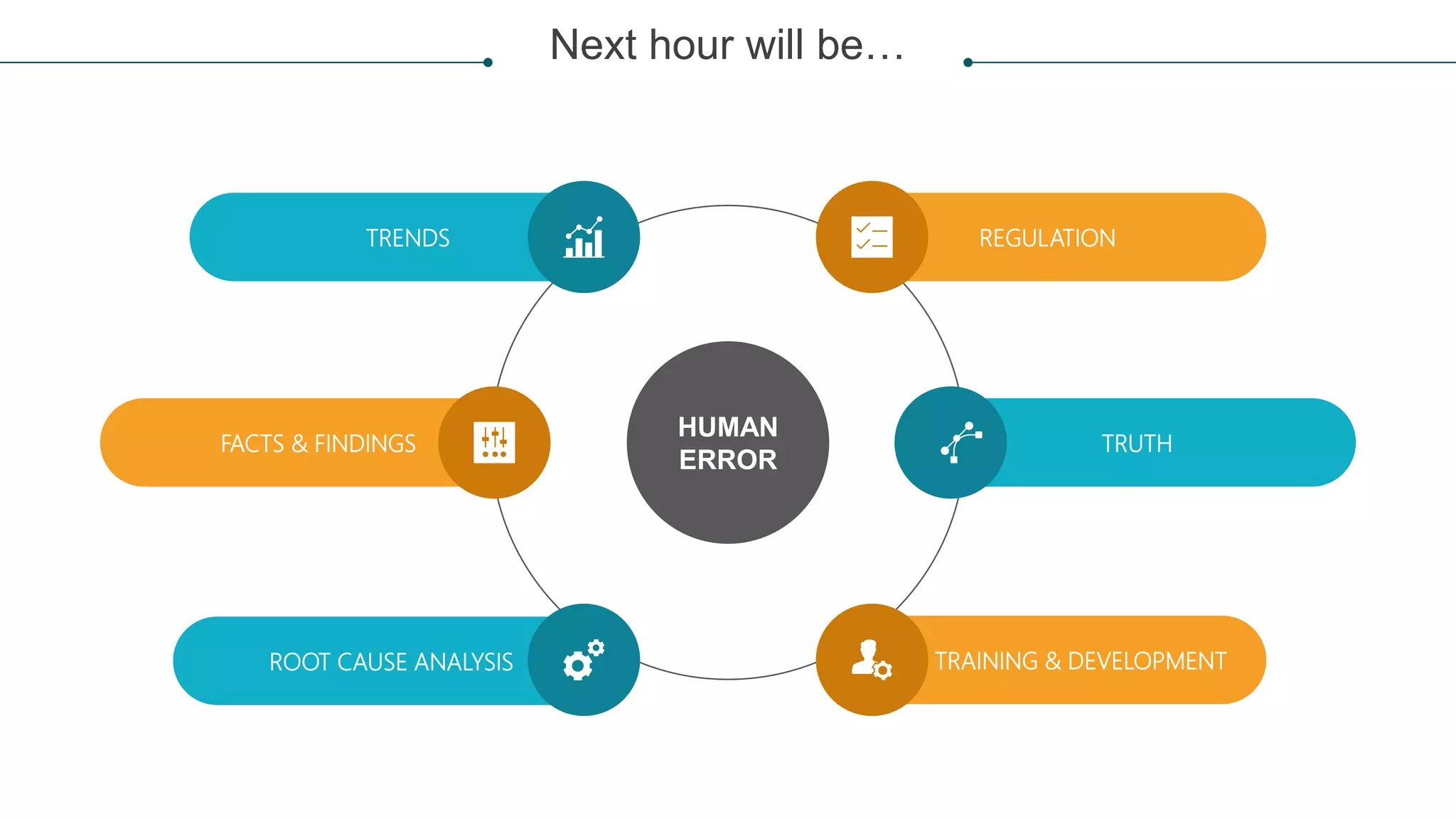
Next hour will be…
HUMAN
ERROR
REGULATION
TRUTH
TRAINING & DEVELOPMENT
TRENDS
FACTS & FINDINGS
ROOT CAUSE ANALYSIS
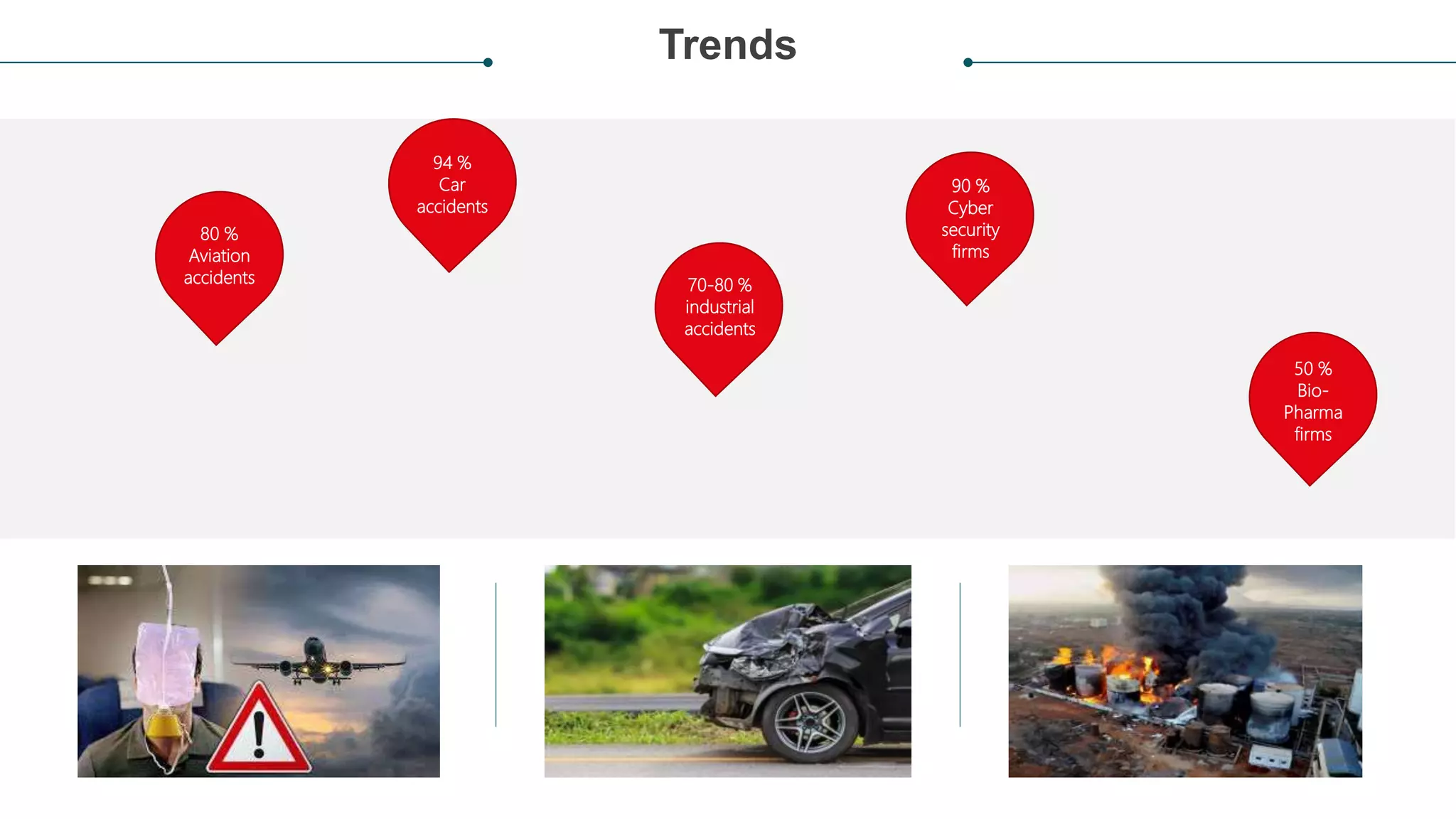
Trends
80 %
Aviation
accidents
94 %
Car
accidents
70-80 %
industrial
accidents
90 %
Cyber
security
firms
50 %
Bio-
Pharma
firms
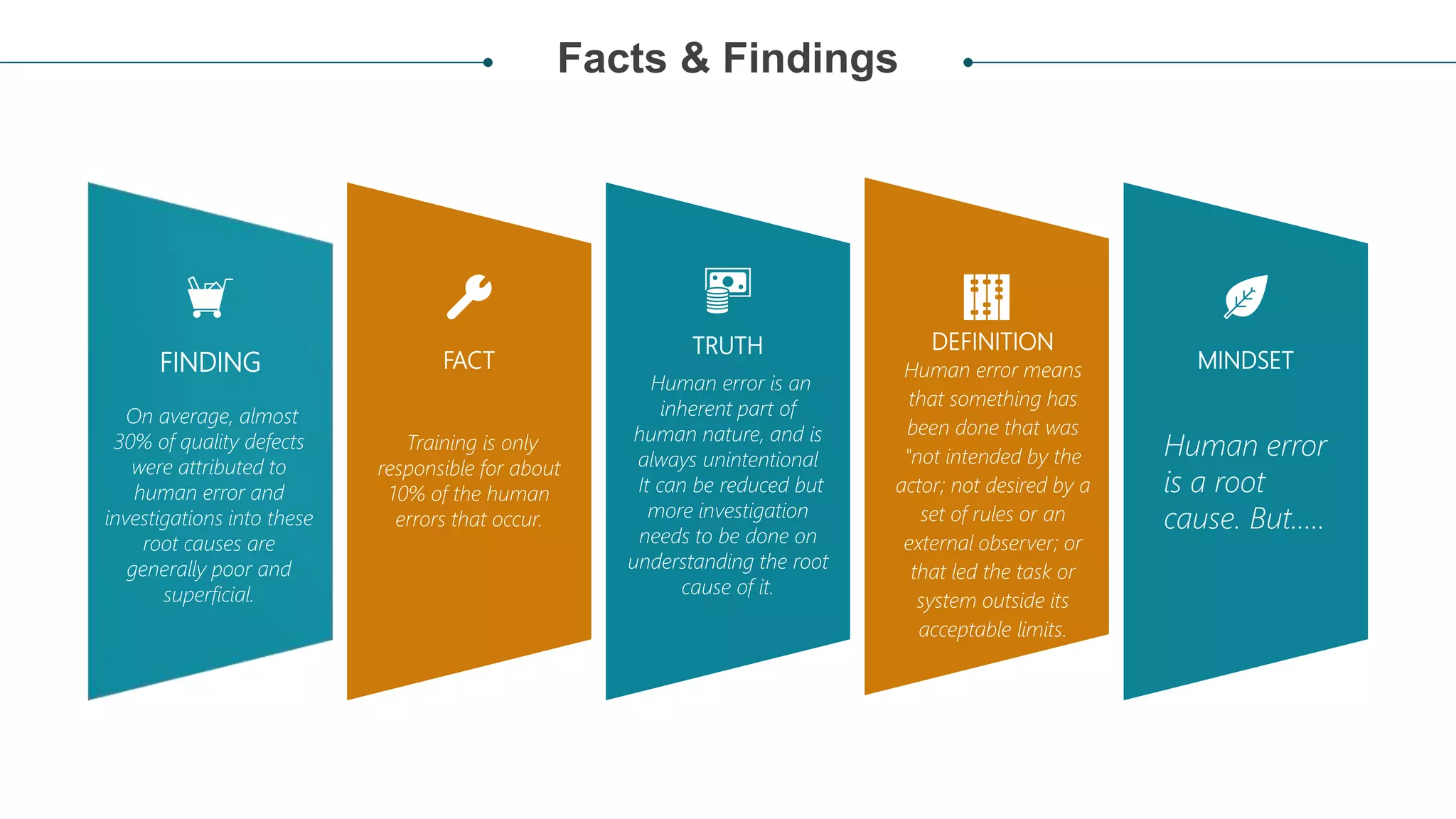
Facts & Findings
FINDING FACT
TRUTH DEFINITION
MINDSET
On average, almost
30% of quality defects
were attributed to
human error and
investigations into these
root causes are
generally poor and
superficial.
Training is only
responsible for about
10% of the human
errors that occur.
Human error is an
inherent part of
human nature, and is
always unintentional
It can be reduced but
more investigation
needs to be done on
understanding the root
cause of it.
Human error means
that something has
been done that was
"not intended by the
actor; not desired by a
set of rules or an
external observer; or
that led the task or
system outside its
acceptable limits.
Human error
is a root
cause. But…..
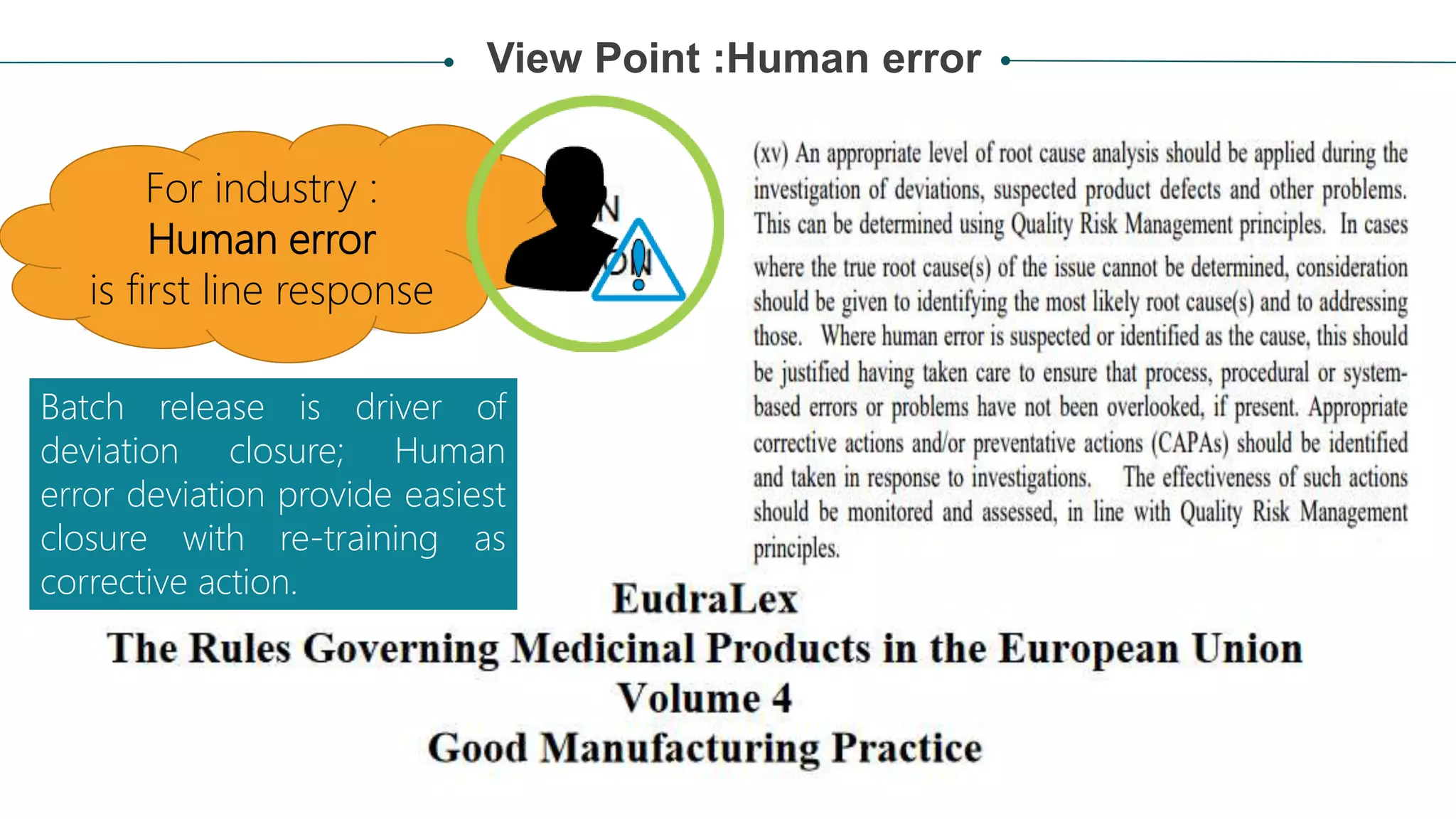
For industry :
Human error
is first line response
View Point :Human error
Batch release is driver of
deviation closure; Human
error deviation provide easiest
closure with re-training as
corrective action.
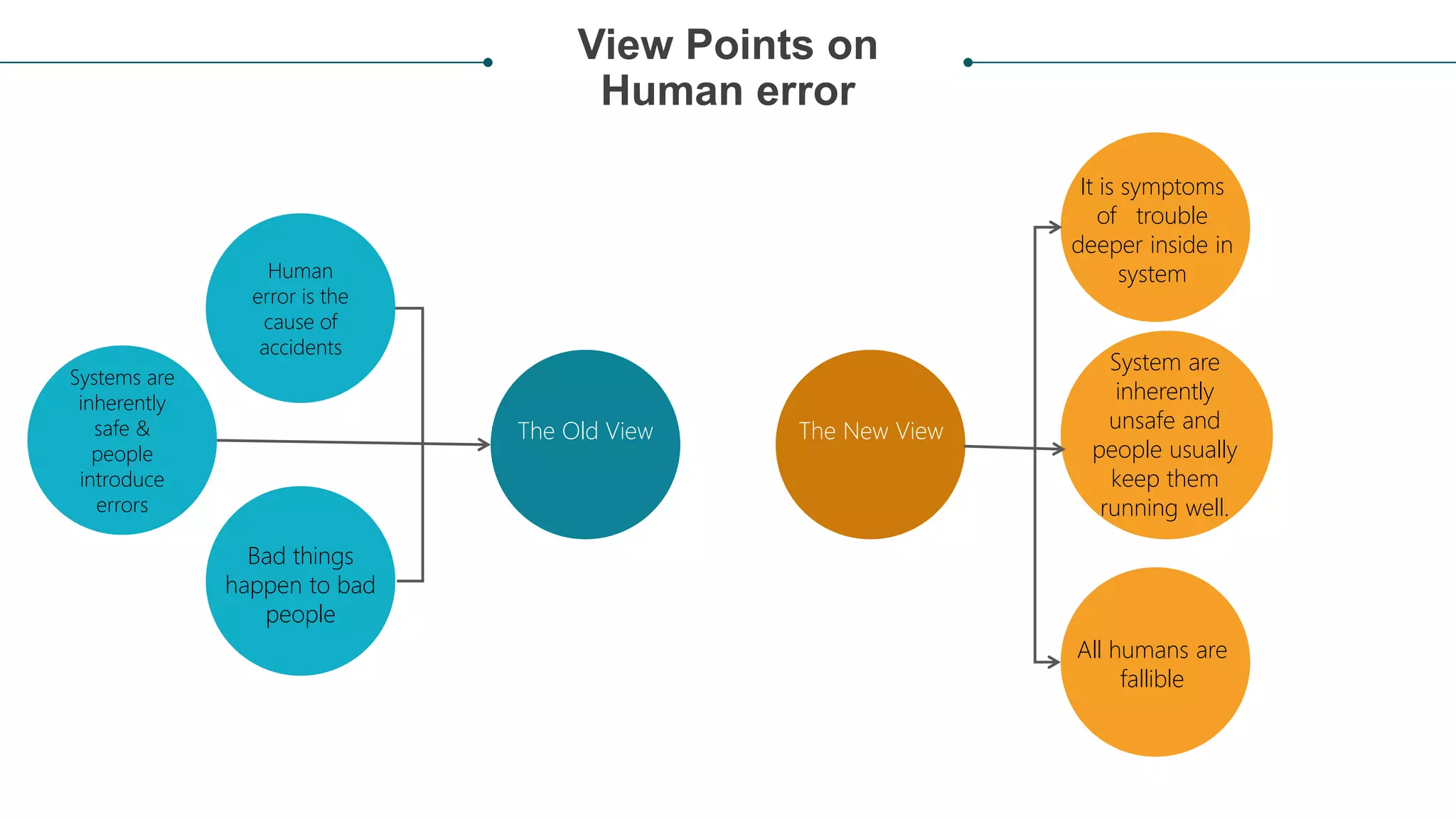
View Points on
Human error
Human
error is the
cause of
accidents
Bad things
happen to bad
people
The Old View The New View
System are
inherently
unsafe and
people usually
keep them
running well.
It is symptoms
of trouble
deeper inside in
system
All humans are
fallible
Systems are
inherently
safe &
people
introduce
errors
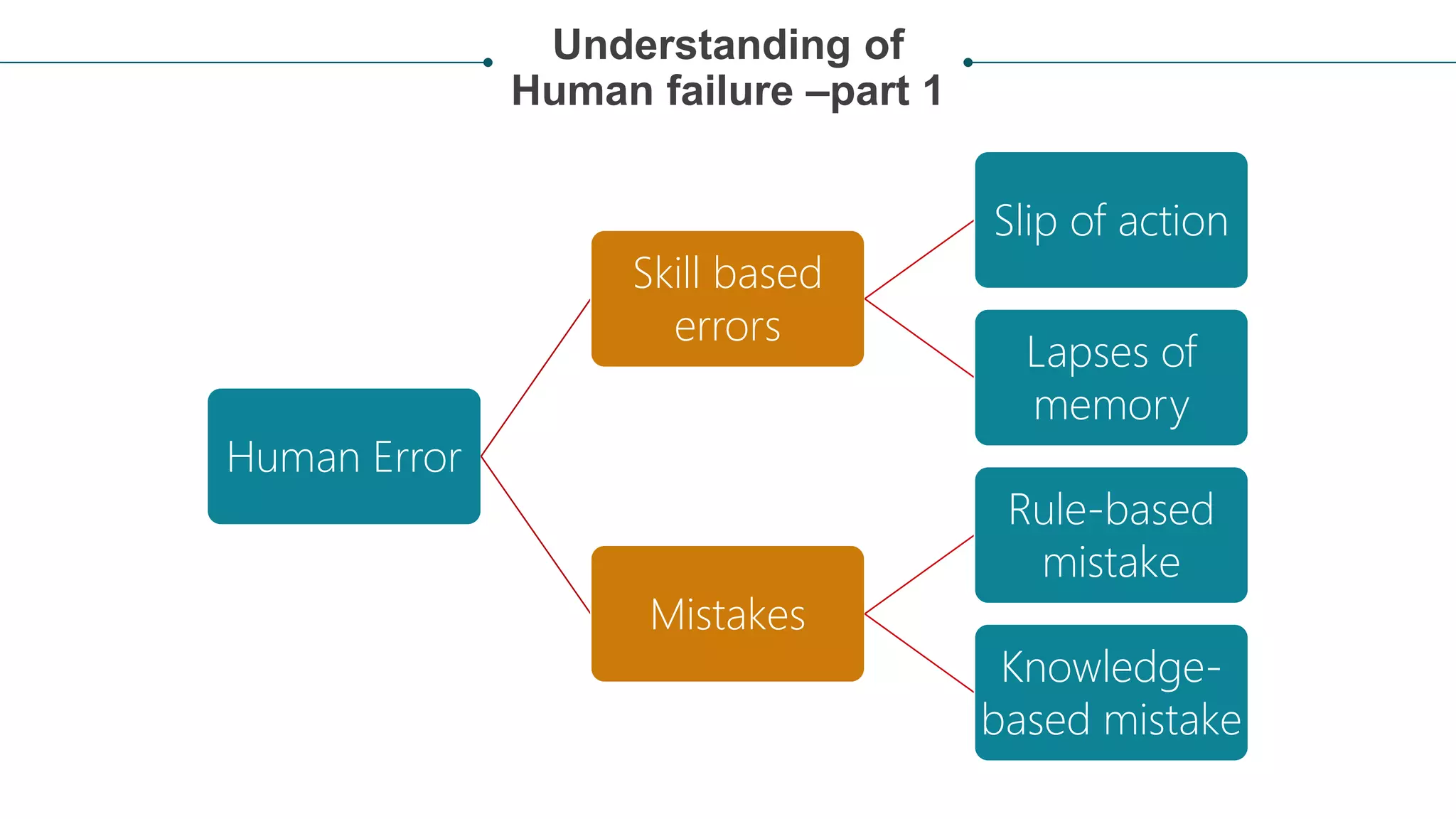
Understanding of
Human failure –part 1
Human Error
Skill based
errors
Slip of action
Lapses of
memory
Mistakes
Rule-based
mistake
Knowledge-
based mistake
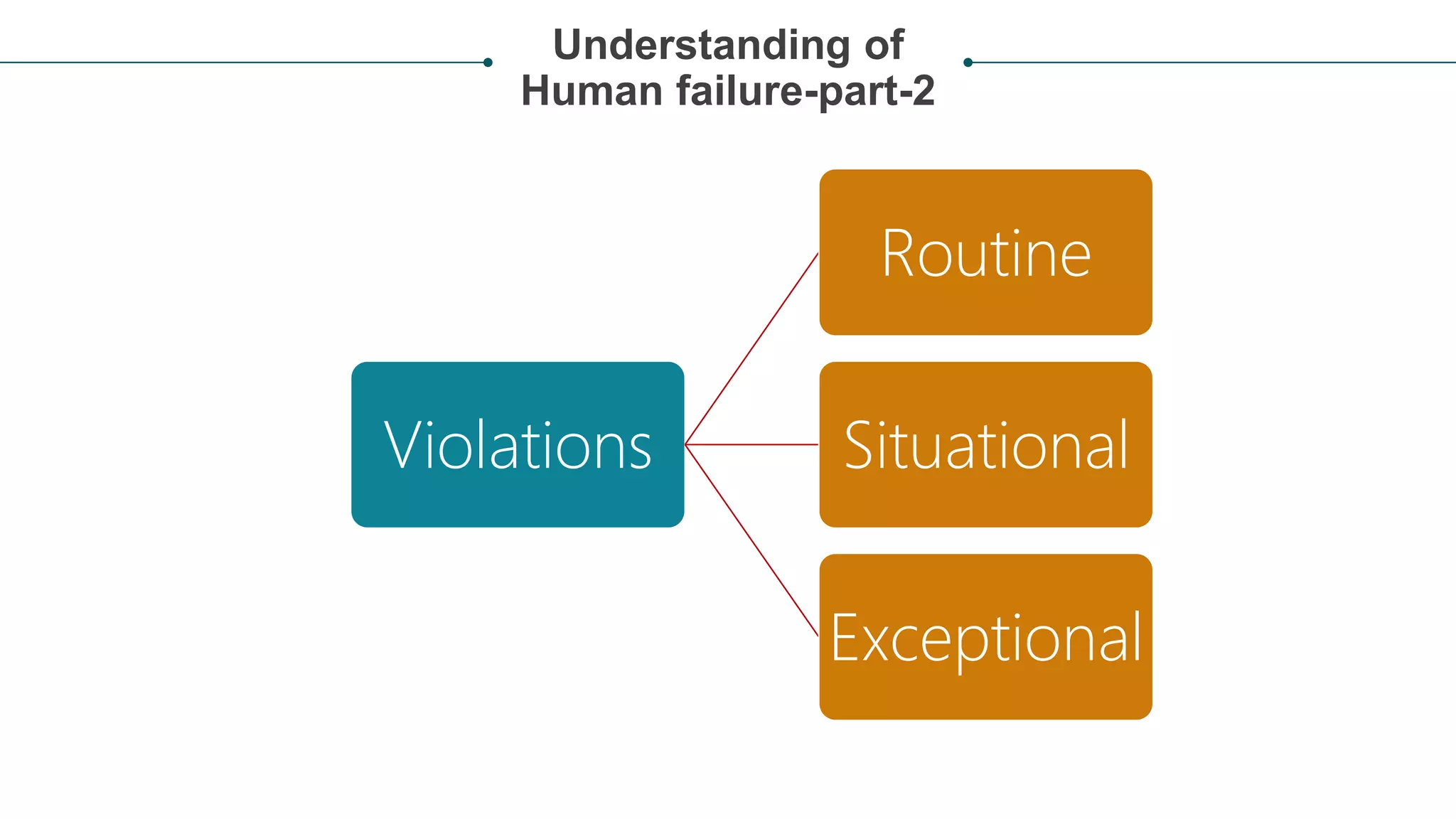
Understanding of
Human failure-part-2
Violations
Routine
Situational
Exceptional
Understanding of
Human failure Human Error
Skill based
errors
Slip of action
Lapses of
memory
Mistakes
Rule-based
mistake
Knowledge-
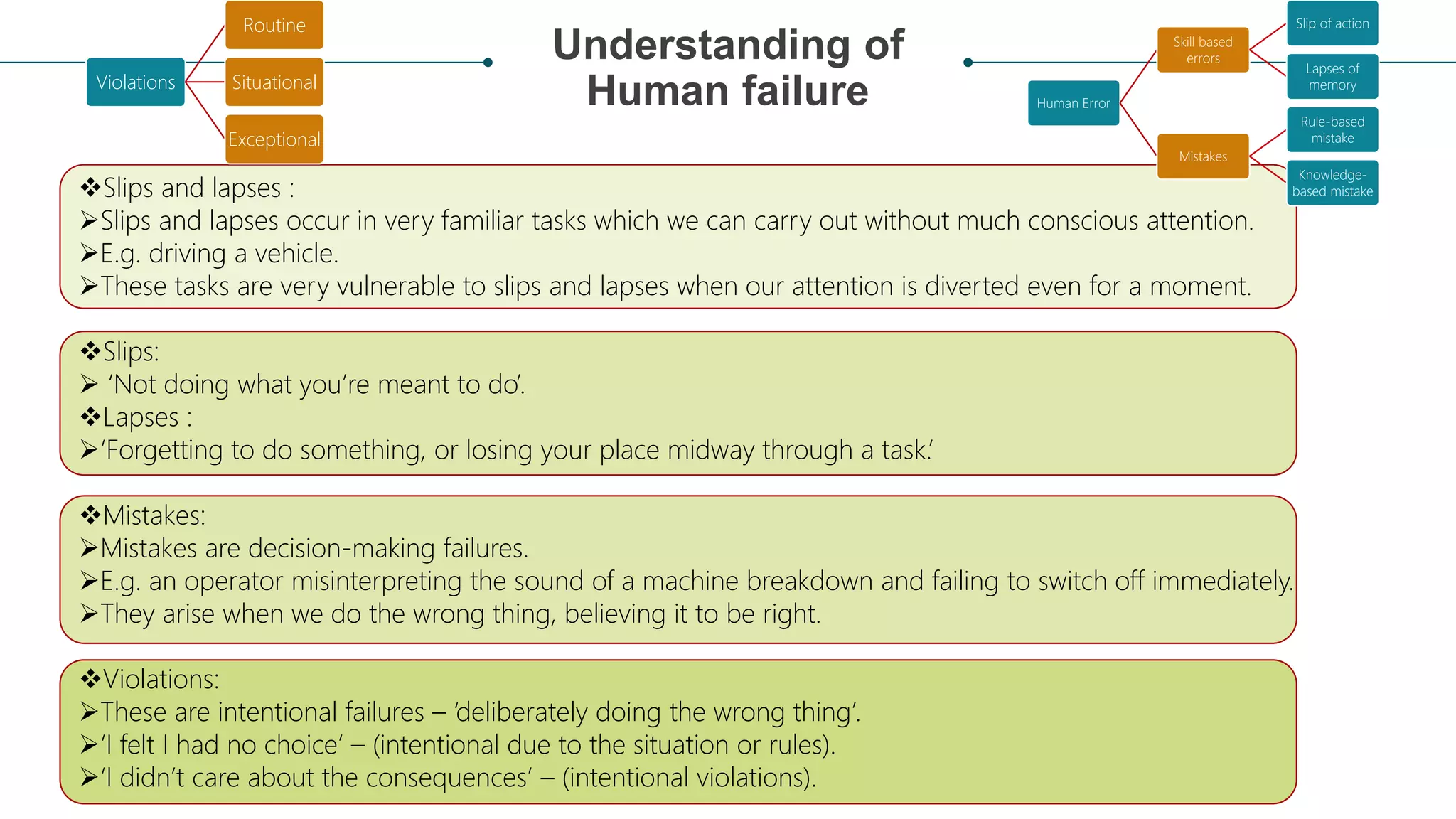
based mistakeSlips and lapses :
Slips and lapses occur in very familiar tasks which we can carry out without much conscious attention.
E.g. driving a vehicle.
These tasks are very vulnerable to slips and lapses when our attention is diverted even for a moment.
Slips:
 ‘Not doing what you’re meant to do’.
Lapses :
‘Forgetting to do something, or losing your place midway through a task.’
Mistakes:
Mistakes are decision-making failures.
E.g. an operator misinterpreting the sound of a machine breakdown and failing to switch off immediately.
They arise when we do the wrong thing, believing it to be right.
Violations:
These are intentional failures – ‘deliberately doing the wrong thing’.
‘I felt I had no choice’ – (intentional due to the situation or rules).
‘I didn’t care about the consequences’ – (intentional violations).
Violations
Routine
Situational
Exceptional
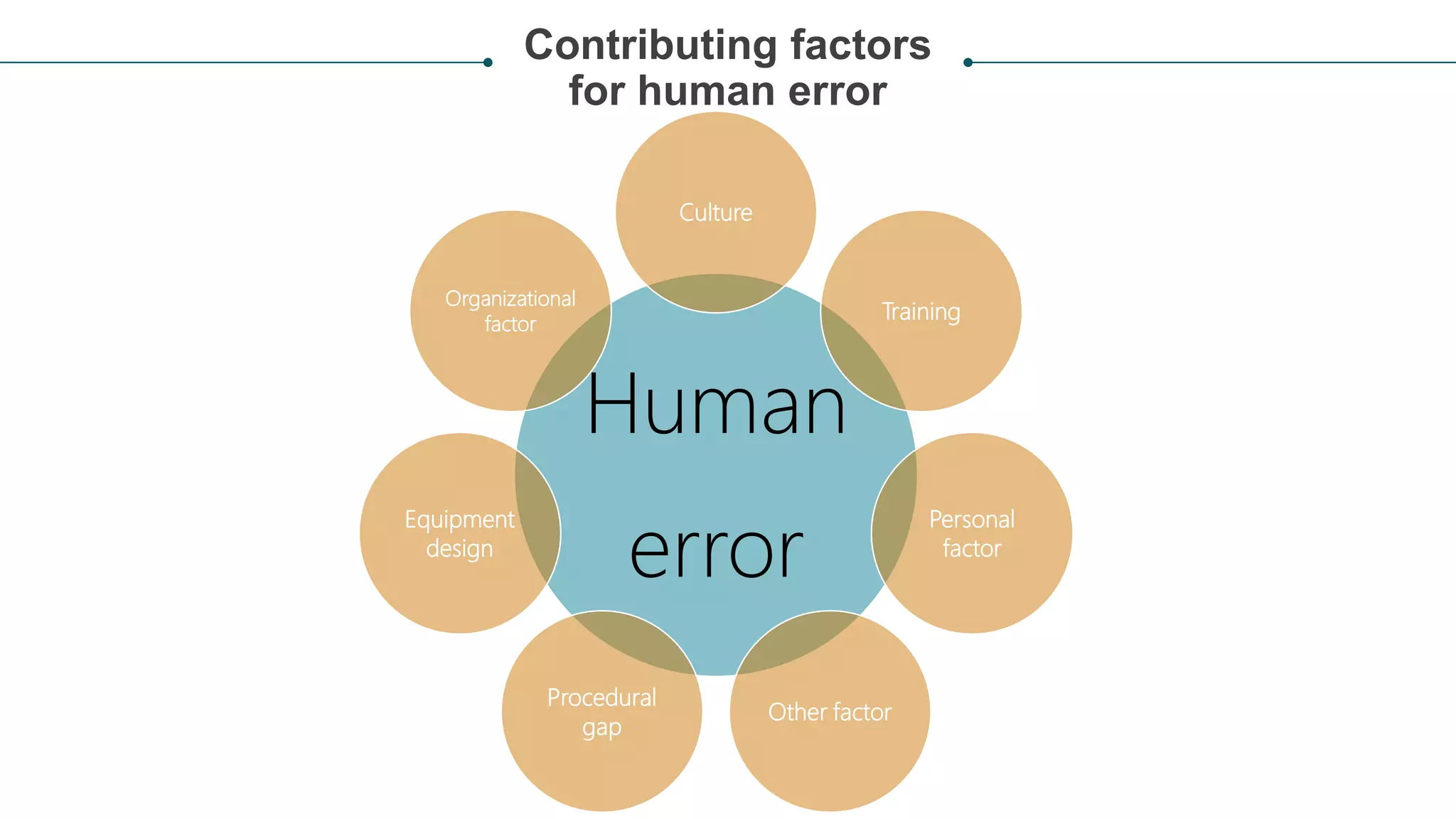
Contributing factors
for human error
Human
error
Culture
Training
Personal
factor
Other factor
Procedural
gap
Equipment
design
Organizational
factor
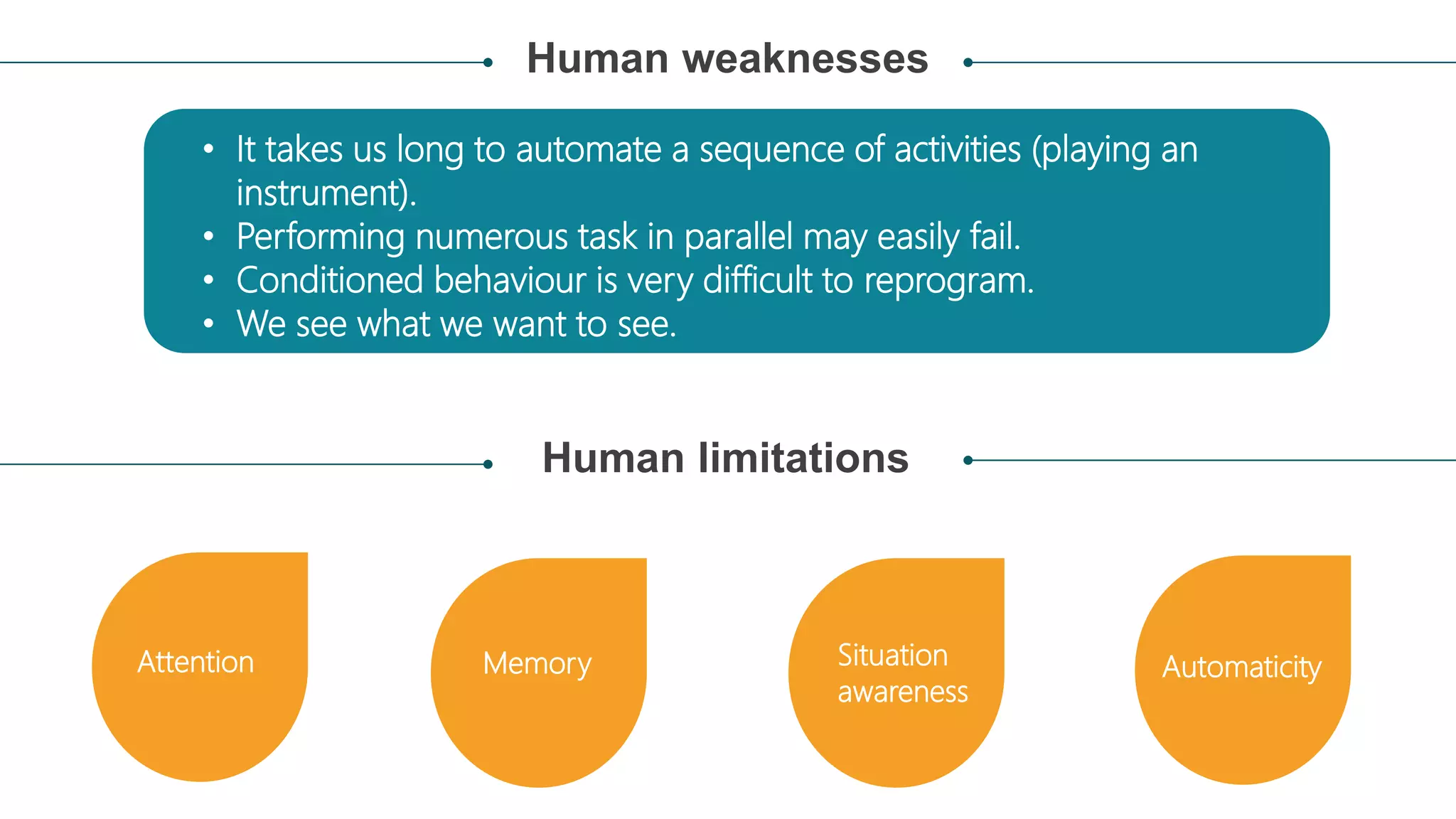
Human weaknesses
• It takes us long to automate a sequence of activities (playing an
instrument).
• Performing numerous task in parallel may easily fail.
• Conditioned behaviour is very difficult to reprogram.
• We see what we want to see.
Human limitations
Attention Memory Situation
awareness
Automaticity
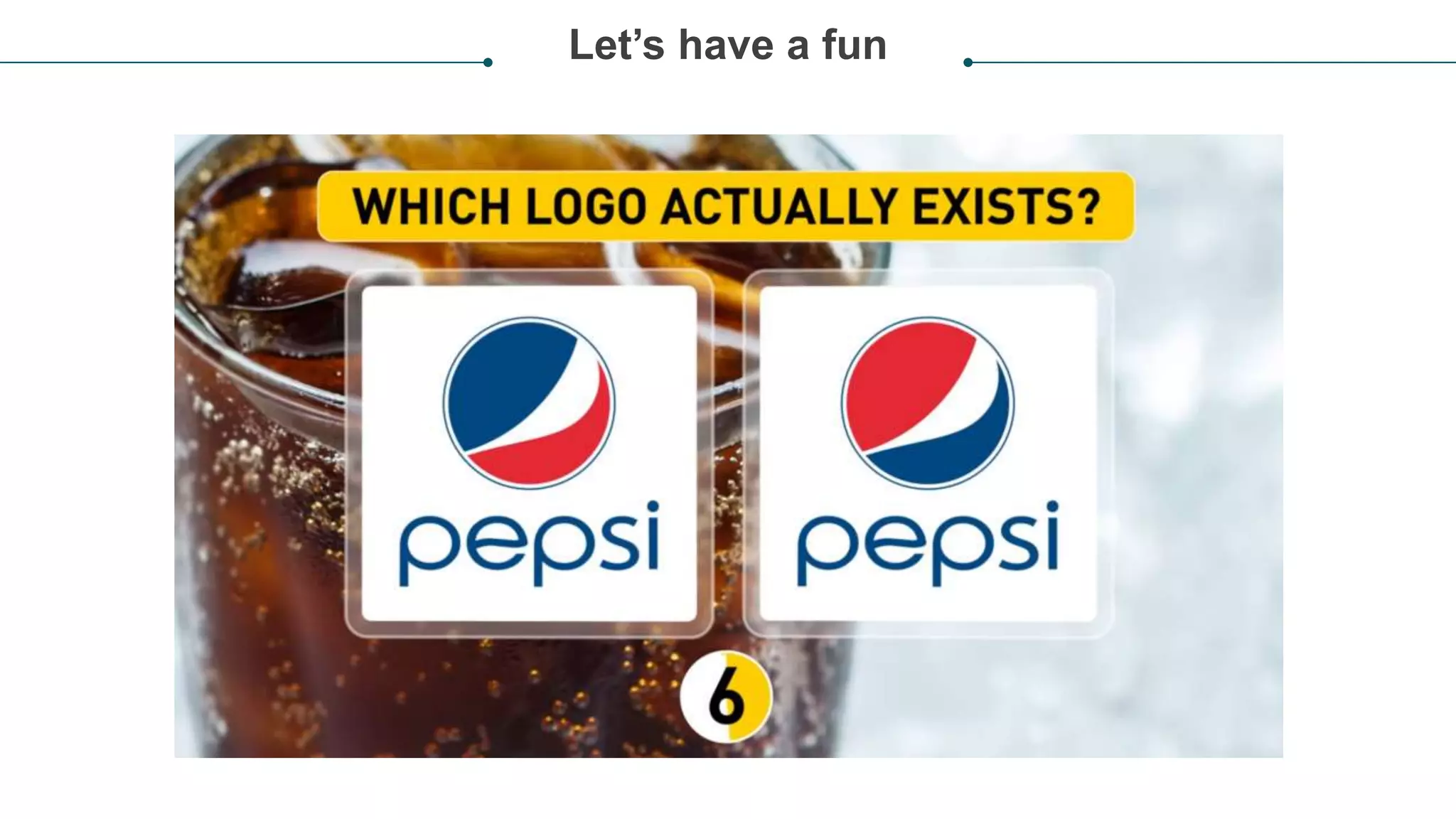
Let’s have a fun
Let’s have a fun
Let’s have a fun
Let’s have a fun
Let’s have a fun
Let’s have a fun
Let’s have a fun
Let’s have a fun
Let’s have a fun
Let’s have a fun
Let’s have a fun
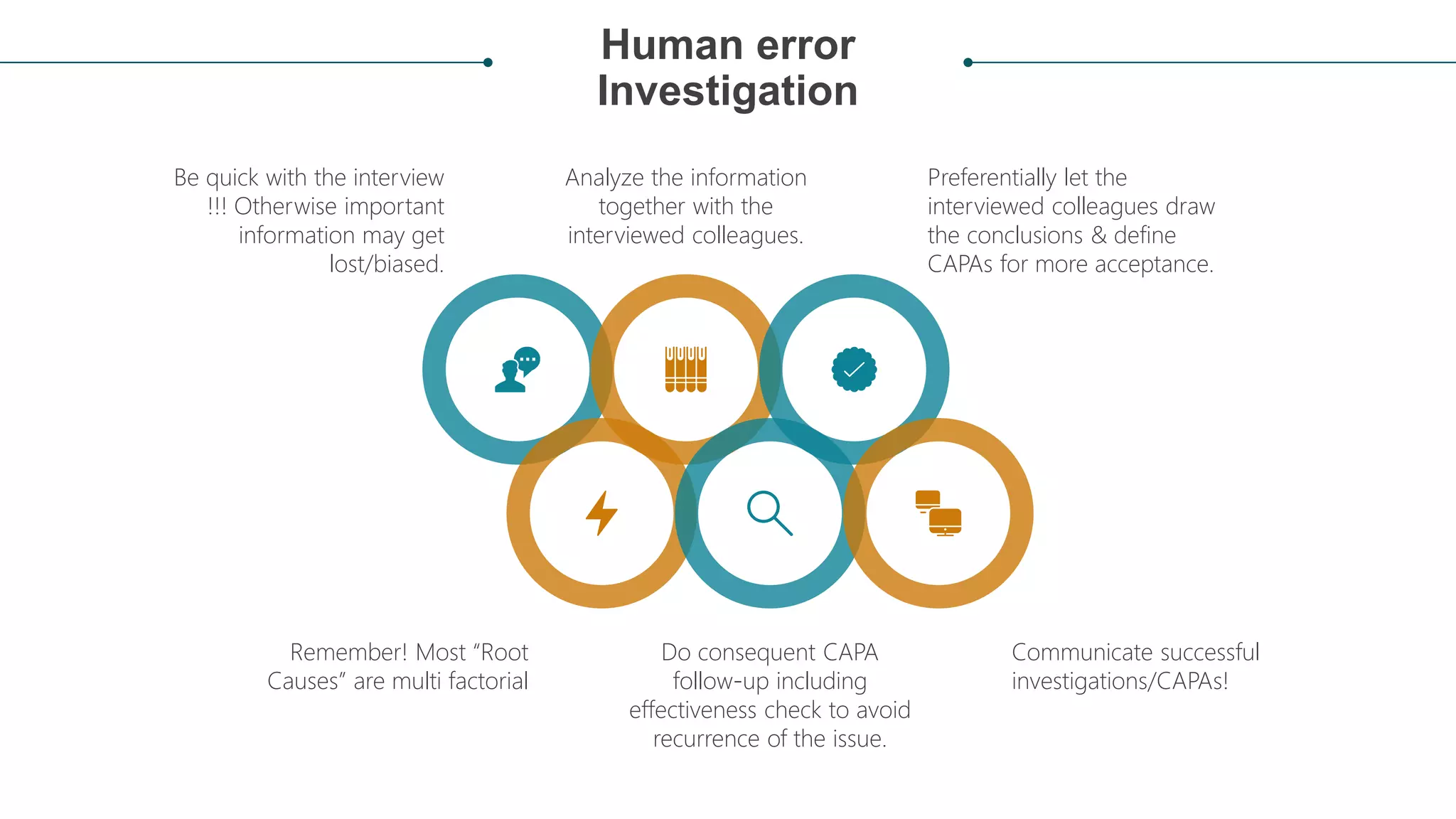
Human error
Investigation
Be quick with the interview
!!! Otherwise important
information may get
lost/biased.
Analyze the information
together with the
interviewed colleagues.
Preferentially let the
interviewed colleagues draw
the conclusions & define
CAPAs for more acceptance.
Remember! Most “Root
Causes” are multi factorial
Do consequent CAPA
follow-up including
effectiveness check to avoid
recurrence of the issue.
Communicate successful
investigations/CAPAs!
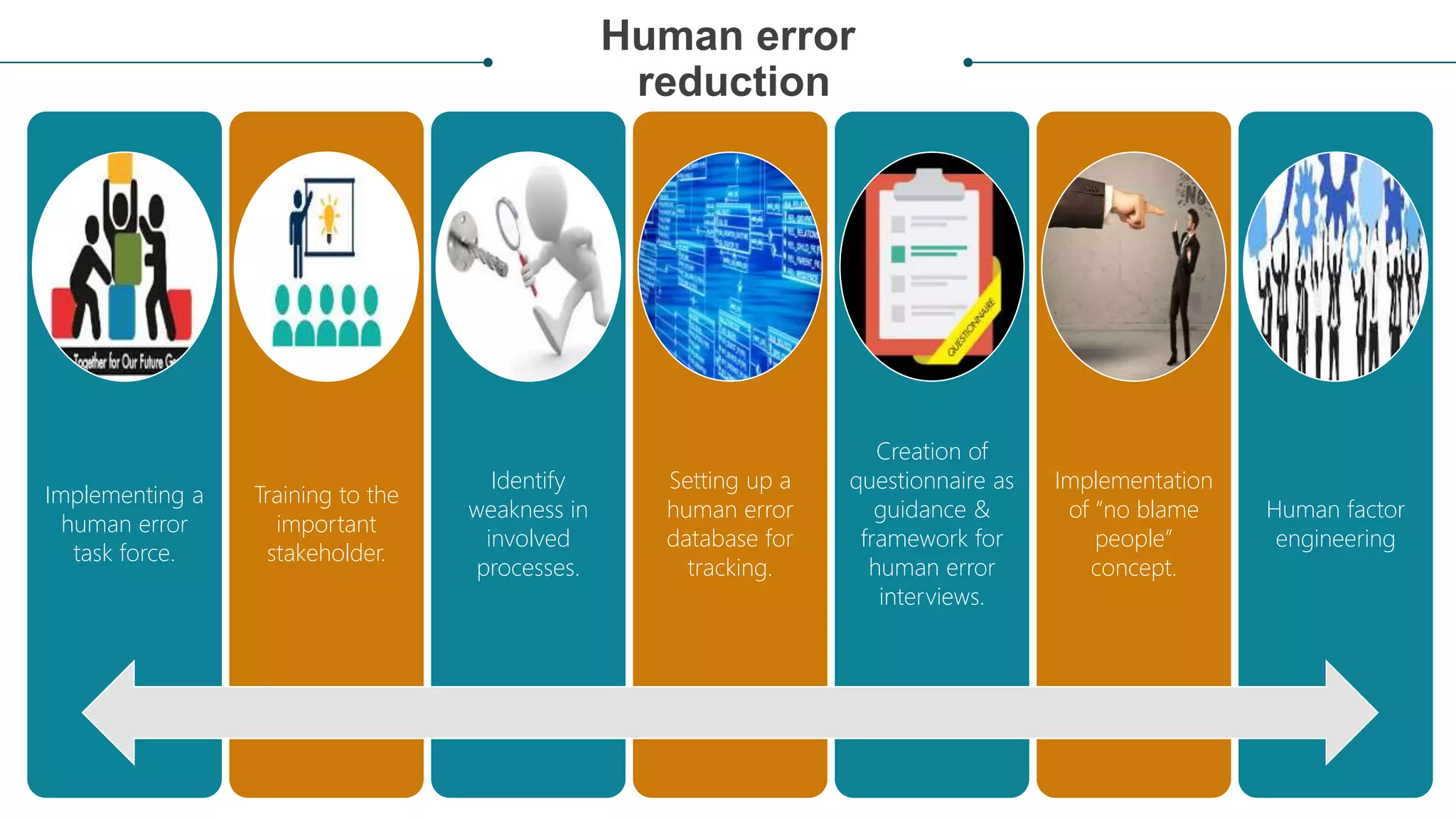
Human error
reduction
Implementing a
human error
task force.
Training to the
important
stakeholder.
Identify
weakness in
involved
processes.
Setting up a
human error
database for
tracking.
Creation of
questionnaire as
guidance &
framework for
human error
interviews.
Implementation
of “no blame
people”
concept.
Human factor
engineering
Thank You
Author : Jignesh Bhadani (University 1st Rank holder in Biotechnology)
“Biotech professional with keen interest in product quality and patient safety.”

Human error as a root cause

  • 1.
  • 2.
    Next hour willbe… HUMAN ERROR REGULATION TRUTH TRAINING & DEVELOPMENT TRENDS FACTS & FINDINGS ROOT CAUSE ANALYSIS
  • 3.
    Trends 80 % Aviation accidents 94 % Car accidents 70-80% industrial accidents 90 % Cyber security firms 50 % Bio- Pharma firms
  • 4.
    Facts & Findings FINDINGFACT TRUTH DEFINITION MINDSET On average, almost 30% of quality defects were attributed to human error and investigations into these root causes are generally poor and superficial. Training is only responsible for about 10% of the human errors that occur. Human error is an inherent part of human nature, and is always unintentional It can be reduced but more investigation needs to be done on understanding the root cause of it. Human error means that something has been done that was "not intended by the actor; not desired by a set of rules or an external observer; or that led the task or system outside its acceptable limits. Human error is a root cause. But…..
  • 5.
    For industry : Humanerror is first line response View Point :Human error Batch release is driver of deviation closure; Human error deviation provide easiest closure with re-training as corrective action.
  • 6.
    View Points on Humanerror Human error is the cause of accidents Bad things happen to bad people The Old View The New View System are inherently unsafe and people usually keep them running well. It is symptoms of trouble deeper inside in system All humans are fallible Systems are inherently safe & people introduce errors
  • 7.
    Understanding of Human failure–part 1 Human Error Skill based errors Slip of action Lapses of memory Mistakes Rule-based mistake Knowledge- based mistake
  • 8.
  • 9.
    Understanding of Human failureHuman Error Skill based errors Slip of action Lapses of memory Mistakes Rule-based mistake Knowledge- based mistakeSlips and lapses : Slips and lapses occur in very familiar tasks which we can carry out without much conscious attention. E.g. driving a vehicle. These tasks are very vulnerable to slips and lapses when our attention is diverted even for a moment. Slips:  ‘Not doing what you’re meant to do’. Lapses : ‘Forgetting to do something, or losing your place midway through a task.’ Mistakes: Mistakes are decision-making failures. E.g. an operator misinterpreting the sound of a machine breakdown and failing to switch off immediately. They arise when we do the wrong thing, believing it to be right. Violations: These are intentional failures – ‘deliberately doing the wrong thing’. ‘I felt I had no choice’ – (intentional due to the situation or rules). ‘I didn’t care about the consequences’ – (intentional violations). Violations Routine Situational Exceptional
  • 10.
    Contributing factors for humanerror Human error Culture Training Personal factor Other factor Procedural gap Equipment design Organizational factor
  • 11.
    Human weaknesses • Ittakes us long to automate a sequence of activities (playing an instrument). • Performing numerous task in parallel may easily fail. • Conditioned behaviour is very difficult to reprogram. • We see what we want to see. Human limitations Attention Memory Situation awareness Automaticity
  • 12.
  • 13.
  • 14.
  • 15.
  • 16.
  • 17.
  • 18.
  • 19.
  • 20.
  • 21.
  • 22.
  • 23.
    Human error Investigation Be quickwith the interview !!! Otherwise important information may get lost/biased. Analyze the information together with the interviewed colleagues. Preferentially let the interviewed colleagues draw the conclusions & define CAPAs for more acceptance. Remember! Most “Root Causes” are multi factorial Do consequent CAPA follow-up including effectiveness check to avoid recurrence of the issue. Communicate successful investigations/CAPAs!
  • 24.
    Human error reduction Implementing a humanerror task force. Training to the important stakeholder. Identify weakness in involved processes. Setting up a human error database for tracking. Creation of questionnaire as guidance & framework for human error interviews. Implementation of “no blame people” concept. Human factor engineering
  • 25.
    Thank You Author :Jignesh Bhadani (University 1st Rank holder in Biotechnology) “Biotech professional with keen interest in product quality and patient safety.”