Color Studies
   Mid-term Exam
1. Is color an abstraction/idea,
or is it an actual sensory event?
2. The beginning of every
color experience is a
physiological response to
a stimulus of ___________.
3. As you look at your
computer screen, are you
looking at an example of
direct of reflected light?
4. Name the three
attributes of color:
5. What does the word “achromatic” mean?
6. What are complementary colors?
7. What are analogous colors?
8. What are tertiary colors?
9. What is the difference between a tint and a
                    shade?
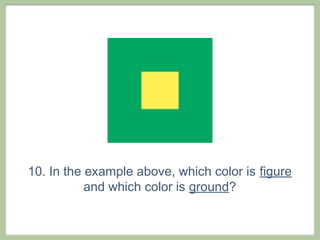
10. In the example above, which color is figure
           and which color is ground?
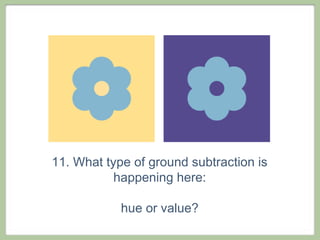
11. What type of ground subtraction is
           happening here:

            hue or value?
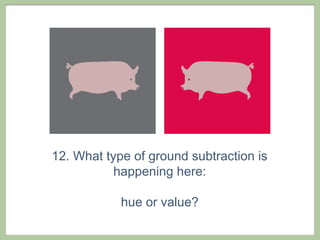
12. What type of ground subtraction is
           happening here:

            hue or value?
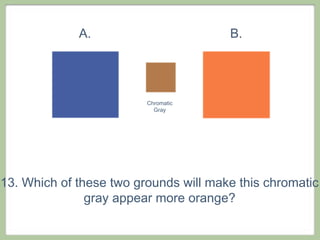
A.                        B.


                         Chromatic
                           Gray


13. Which of these two grounds will make this chromatic
               gray appear more orange?
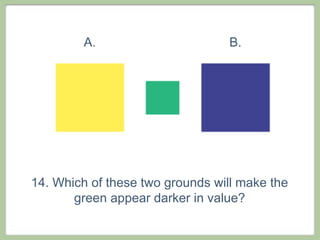
A.                      B.


14. Which of these two grounds will make the
       green appear darker in value?
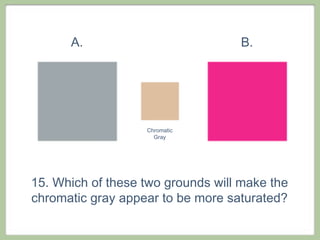
A.                           B.


                   Chromatic
                     Gray


15. Which of these two grounds will make the
chromatic gray appear to be more saturated?
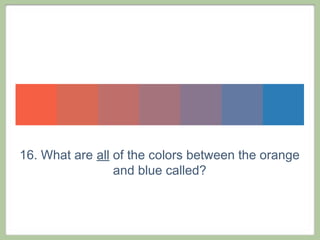
16. What are all of the colors between the orange
                 and blue called?
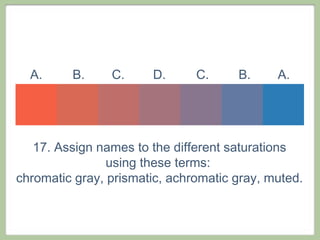
A.     B.     C.     D.      C.     B.     A.


   17. Assign names to the different saturations
                using these terms:
chromatic gray, prismatic, achromatic gray, muted.
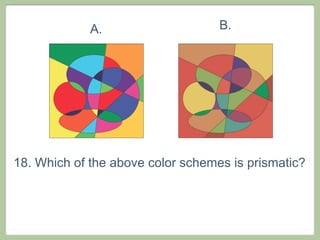
A.                    B.


18. Which of the above color schemes is prismatic?
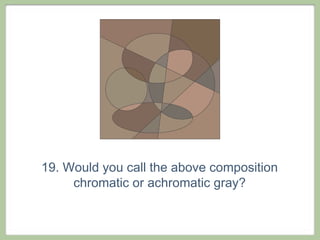
19. Would you call the above composition
     chromatic or achromatic gray?
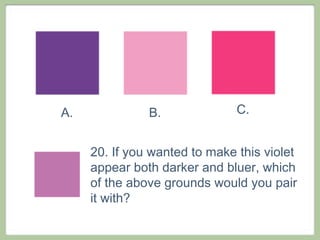
A.             B.              C.


     20. If you wanted to make this violet
     appear both darker and bluer, which
     of the above grounds would you pair
     it with?

Mid term

  • 1.
    Color Studies Mid-term Exam
  • 2.
    1. Is coloran abstraction/idea, or is it an actual sensory event?
  • 3.
    2. The beginningof every color experience is a physiological response to a stimulus of ___________.
  • 4.
    3. As youlook at your computer screen, are you looking at an example of direct of reflected light?
  • 5.
    4. Name thethree attributes of color:
  • 6.
    5. What doesthe word “achromatic” mean?
  • 7.
    6. What arecomplementary colors?
  • 8.
    7. What areanalogous colors?
  • 9.
    8. What aretertiary colors?
  • 10.
    9. What isthe difference between a tint and a shade?
  • 11.
    10. In theexample above, which color is figure and which color is ground?
  • 12.
    11. What typeof ground subtraction is happening here: hue or value?
  • 13.
    12. What typeof ground subtraction is happening here: hue or value?
  • 14.
    A. B. Chromatic Gray 13. Which of these two grounds will make this chromatic gray appear more orange?
  • 15.
    A. B. 14. Which of these two grounds will make the green appear darker in value?
  • 16.
    A. B. Chromatic Gray 15. Which of these two grounds will make the chromatic gray appear to be more saturated?
  • 17.
    16. What areall of the colors between the orange and blue called?
  • 18.
    A. B. C. D. C. B. A. 17. Assign names to the different saturations using these terms: chromatic gray, prismatic, achromatic gray, muted.
  • 19.
    A. B. 18. Which of the above color schemes is prismatic?
  • 20.
    19. Would youcall the above composition chromatic or achromatic gray?
  • 21.
    A. B. C. 20. If you wanted to make this violet appear both darker and bluer, which of the above grounds would you pair it with?