Mid-term Exam

Digital Photography - 2863
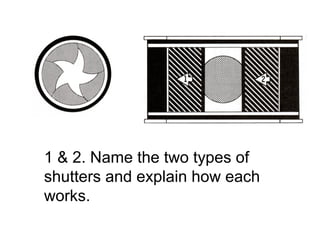
1 & 2. Name the two types of
shutters and explain how each
works.
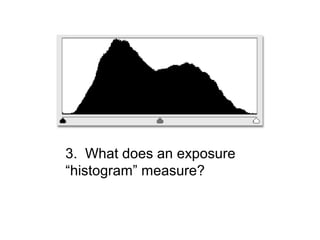
3. What does an exposure
“histogram” measure?
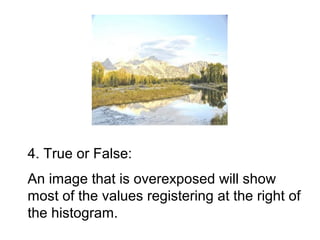
4. True or False:
An image that is overexposed will show
most of the values registering at the right of
the histogram.
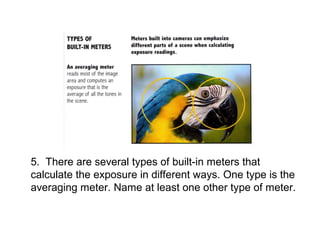
5. There are several types of built-in meters that
calculate the exposure in different ways. One type is the
averaging meter. Name at least one other type of meter.
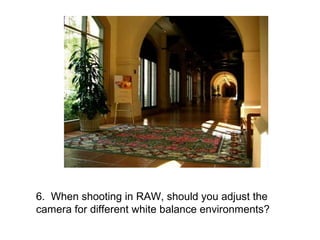
6. When shooting in RAW, should you adjust the
camera for different white balance environments?
7. What does the aperture do?

A. It controls how much light reaches the
   sensor.
B. It controls how long the shutter is open.
C. It controls the depth of field.
D. It controls the speed of the film.
E. Both A and C.
F. Both B and D.
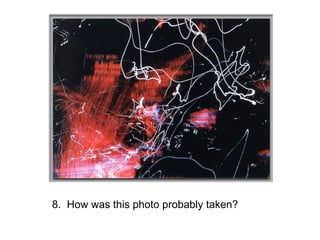
8. How was this photo probably taken?
9. True or False:
Moving the exposure compensation dial to +1 or +2
increases the exposure by one or two stops and
lightens the picture.
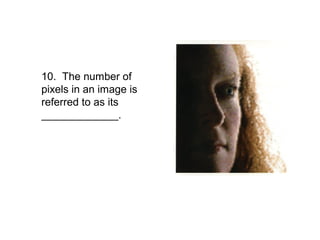
10. The number of
pixels in an image is
referred to as its
_____________.
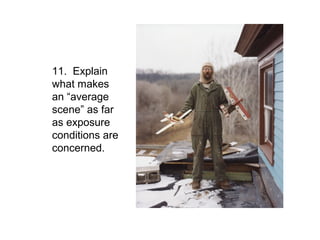
11. Explain
what makes
an “average
scene” as far
as exposure
conditions are
concerned.
12. An aperture of f/2.8 lets in:

     a. twice as much light
     b. half as much light

     as an aperture of f/4.
13. The focal length of a lens affects the
photograph in what two ways?

• Amount of light and angle of view
• Angle of view and magnification
• Depth of field and magnification
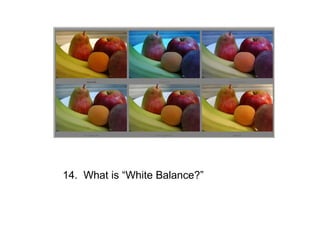
14. What is “White Balance?”
15. True or False:

• A small aperture has a shallow depth of
  field and a large aperture has a deep
  depth of field.
16. An f/32 aperture has what
        size opening?

           A. Large
           B. Small
           C. Medium
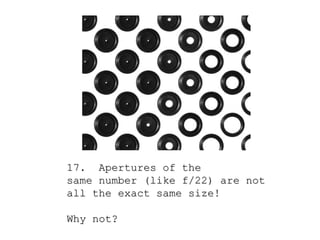
17. Apertures of the
same number (like f/22) are not
all the exact same size!

Why not?
18. True or False:
An “incident-light
meter” measures
the amount of light
falling on the meter
itself.
19. The built in meter in your
camera is called “TTL .” What does
this acronym stand for?
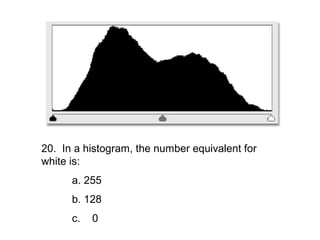
20. In a histogram, the number equivalent for
white is:
      a. 255
      b. 128
      c.   0
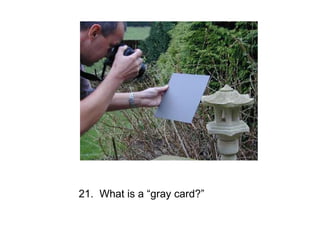
21. What is a “gray card?”
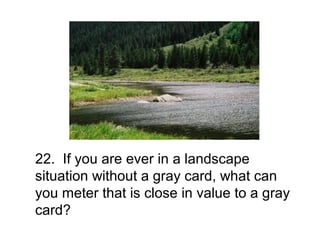
22. If you are ever in a landscape
situation without a gray card, what can
you meter that is close in value to a gray
card?
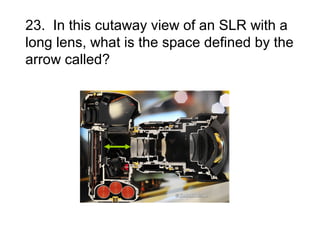
23. In this cutaway view of an SLR with a
long lens, what is the space defined by the
arrow called?
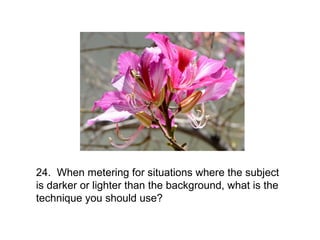
24. When metering for situations where the subject
is darker or lighter than the background, what is the
technique you should use?
25. A lens is called “fast”because:
A. It takes very little time to focus.

A. It can capture a greater depth of field in
   a longer period of time.

C. The wide aperture allows for faster
   exposure times.
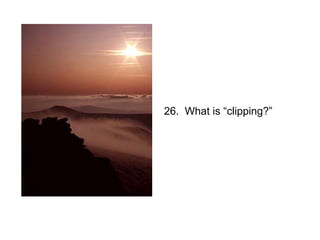
26. What is “clipping?”
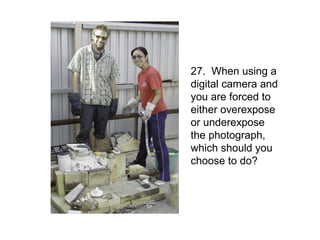
27. When using a
digital camera and
you are forced to
either overexpose
or underexpose
the photograph,
which should you
choose to do?
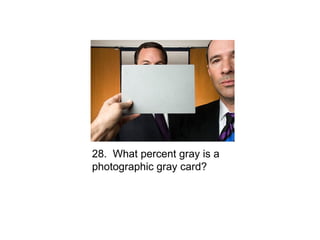
28. What percent gray is a
photographic gray card?
29. A digital picture is made up of a large
number of ________, each one a square
with a single value and color in a grid like a
checkerboard.
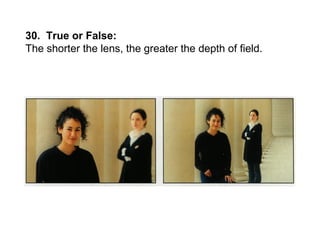
30. True or False:
The shorter the lens, the greater the depth of field.
31. What are the two types of color
processes?
(One commonly uses the CMYK color
environment and the other uses the RGB
environment.)
32. What is “bracketing?”
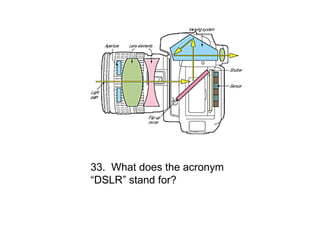
33. What does the acronym
“DSLR” stand for?
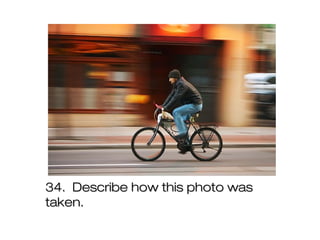
34. Describe how this photo was
taken.
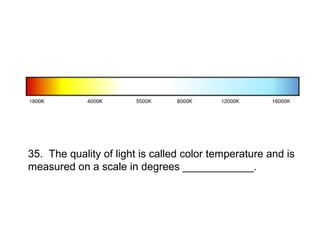
35. The quality of light is called color temperature and is
measured on a scale in degrees ____________.
36. A device that reads the amount of light
striking your subject is called __________.
In the next slides, choose the
    best description of the
 exposure, lens or technique.


                          37
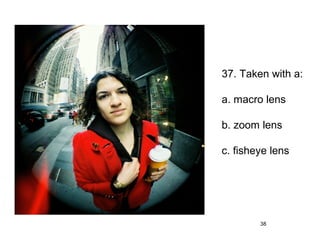
37. Taken with a:

a. macro lens

b. zoom lens

c. fisheye lens


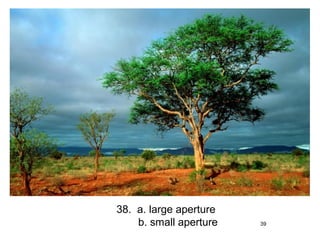
        38
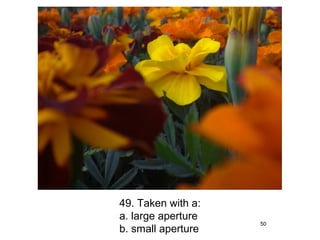
38. a. large aperture
    b. small aperture   39
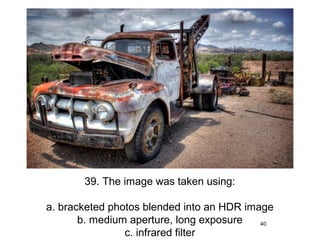
39. The image was taken using:

a. bracketed photos blended into an HDR image
       b. medium aperture, long exposure   40
                c. infrared filter
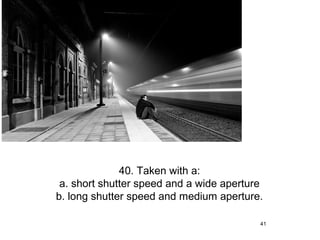
40. Taken with a:
 a. short shutter speed and a wide aperture
b. long shutter speed and medium aperture.

                                          41
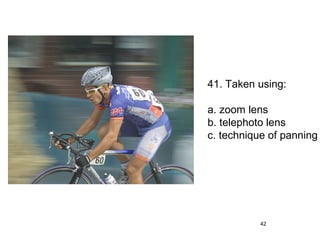
41. Taken using:

a. zoom lens
b. telephoto lens
c. technique of panning


           42
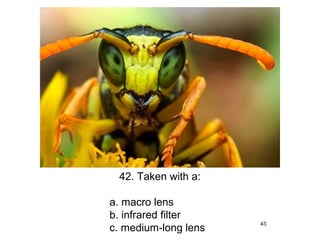
42. Taken with a:

a. macro lens
b. infrared filter
                      43
c. medium-long lens
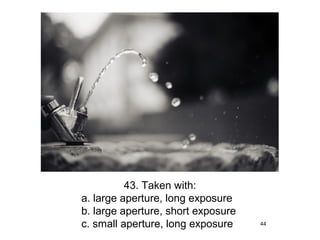
43. Taken with:
a. large aperture, long exposure
b. large aperture, short exposure
c. small aperture, long exposure    44
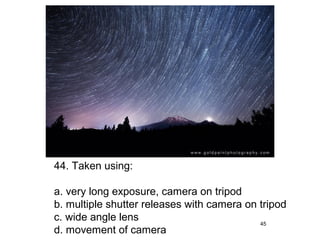
44. Taken using:

a. very long exposure, camera on tripod
b. multiple shutter releases with camera on tripod
c. wide angle lens                          45
d. movement of camera
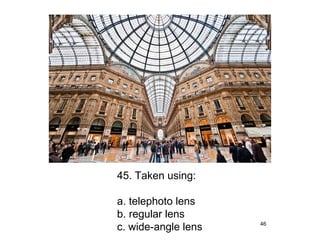
45. Taken using:

a. telephoto lens
b. regular lens
c. wide-angle lens   46
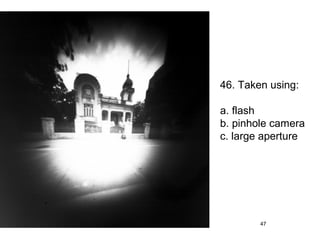
46. Taken using:

a. flash
b. pinhole camera
c. large aperture


        47
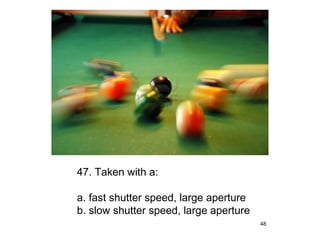
47. Taken with a:

a. fast shutter speed, large aperture
b. slow shutter speed, large aperture
                                        48
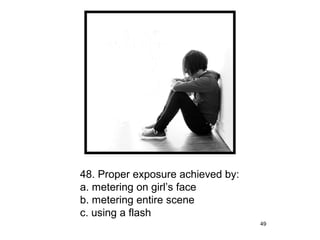
48. Proper exposure achieved by:
a. metering on girl’s face
b. metering entire scene
c. using a flash
                                   49
49. Taken with a:
a. large aperture
                    50
b. small aperture
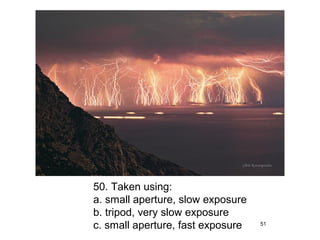
50. Taken using:
a. small aperture, slow exposure
b. tripod, very slow exposure
c. small aperture, fast exposure   51

Mid term sp.2013ppt

  • 1.
  • 2.
    1 & 2.Name the two types of shutters and explain how each works.
  • 3.
    3. What doesan exposure “histogram” measure?
  • 4.
    4. True orFalse: An image that is overexposed will show most of the values registering at the right of the histogram.
  • 5.
    5. There areseveral types of built-in meters that calculate the exposure in different ways. One type is the averaging meter. Name at least one other type of meter.
  • 6.
    6. When shootingin RAW, should you adjust the camera for different white balance environments?
  • 7.
    7. What doesthe aperture do? A. It controls how much light reaches the sensor. B. It controls how long the shutter is open. C. It controls the depth of field. D. It controls the speed of the film. E. Both A and C. F. Both B and D.
  • 8.
    8. How wasthis photo probably taken?
  • 9.
    9. True orFalse: Moving the exposure compensation dial to +1 or +2 increases the exposure by one or two stops and lightens the picture.
  • 10.
    10. The numberof pixels in an image is referred to as its _____________.
  • 11.
    11. Explain what makes an“average scene” as far as exposure conditions are concerned.
  • 12.
    12. An apertureof f/2.8 lets in: a. twice as much light b. half as much light as an aperture of f/4.
  • 13.
    13. The focallength of a lens affects the photograph in what two ways? • Amount of light and angle of view • Angle of view and magnification • Depth of field and magnification
  • 14.
    14. What is“White Balance?”
  • 15.
    15. True orFalse: • A small aperture has a shallow depth of field and a large aperture has a deep depth of field.
  • 16.
    16. An f/32aperture has what size opening? A. Large B. Small C. Medium
  • 17.
    17. Apertures ofthe same number (like f/22) are not all the exact same size! Why not?
  • 18.
    18. True orFalse: An “incident-light meter” measures the amount of light falling on the meter itself.
  • 19.
    19. The builtin meter in your camera is called “TTL .” What does this acronym stand for?
  • 20.
    20. In ahistogram, the number equivalent for white is: a. 255 b. 128 c. 0
  • 21.
    21. What isa “gray card?”
  • 22.
    22. If youare ever in a landscape situation without a gray card, what can you meter that is close in value to a gray card?
  • 23.
    23. In thiscutaway view of an SLR with a long lens, what is the space defined by the arrow called?
  • 24.
    24. When meteringfor situations where the subject is darker or lighter than the background, what is the technique you should use?
  • 25.
    25. A lensis called “fast”because: A. It takes very little time to focus. A. It can capture a greater depth of field in a longer period of time. C. The wide aperture allows for faster exposure times.
  • 26.
    26. What is“clipping?”
  • 27.
    27. When usinga digital camera and you are forced to either overexpose or underexpose the photograph, which should you choose to do?
  • 28.
    28. What percentgray is a photographic gray card?
  • 29.
    29. A digitalpicture is made up of a large number of ________, each one a square with a single value and color in a grid like a checkerboard.
  • 30.
    30. True orFalse: The shorter the lens, the greater the depth of field.
  • 31.
    31. What arethe two types of color processes? (One commonly uses the CMYK color environment and the other uses the RGB environment.)
  • 32.
    32. What is“bracketing?”
  • 33.
    33. What doesthe acronym “DSLR” stand for?
  • 34.
    34. Describe howthis photo was taken.
  • 35.
    35. The qualityof light is called color temperature and is measured on a scale in degrees ____________.
  • 36.
    36. A devicethat reads the amount of light striking your subject is called __________.
  • 37.
    In the nextslides, choose the best description of the exposure, lens or technique. 37
  • 38.
    37. Taken witha: a. macro lens b. zoom lens c. fisheye lens 38
  • 39.
    38. a. largeaperture b. small aperture 39
  • 40.
    39. The imagewas taken using: a. bracketed photos blended into an HDR image b. medium aperture, long exposure 40 c. infrared filter
  • 41.
    40. Taken witha: a. short shutter speed and a wide aperture b. long shutter speed and medium aperture. 41
  • 42.
    41. Taken using: a.zoom lens b. telephoto lens c. technique of panning 42
  • 43.
    42. Taken witha: a. macro lens b. infrared filter 43 c. medium-long lens
  • 44.
    43. Taken with: a.large aperture, long exposure b. large aperture, short exposure c. small aperture, long exposure 44
  • 45.
    44. Taken using: a.very long exposure, camera on tripod b. multiple shutter releases with camera on tripod c. wide angle lens 45 d. movement of camera
  • 46.
    45. Taken using: a.telephoto lens b. regular lens c. wide-angle lens 46
  • 47.
    46. Taken using: a.flash b. pinhole camera c. large aperture 47
  • 48.
    47. Taken witha: a. fast shutter speed, large aperture b. slow shutter speed, large aperture 48
  • 49.
    48. Proper exposureachieved by: a. metering on girl’s face b. metering entire scene c. using a flash 49
  • 50.
    49. Taken witha: a. large aperture 50 b. small aperture
  • 51.
    50. Taken using: a.small aperture, slow exposure b. tripod, very slow exposure c. small aperture, fast exposure 51