Controlling Your Camera

        Apertures
Apertures have two effects on
     your photographs:
Apertures have two effects on
     your photographs:
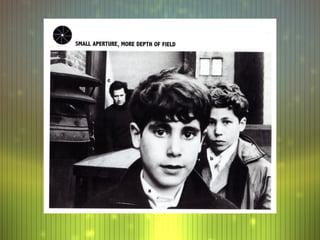
 They control the depth of field.
Apertures have two effects on
     your photographs:
 They control the depth of field.
 And they control how much light
 reaches your sensor.
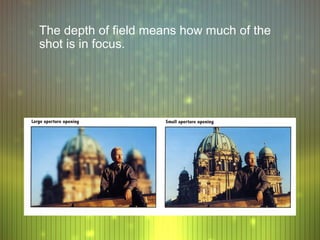
The depth of field means how much of the
shot is in focus.
The depth of field means how much of the
shot is in focus.
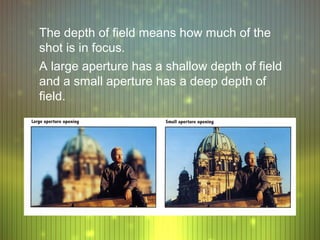
A large aperture has a shallow depth of field
and a small aperture has a deep depth of
field.
So, what exactly is an aperture?
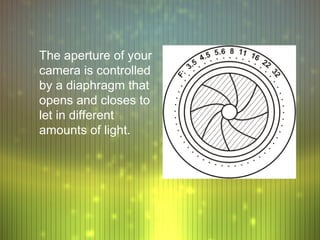
The aperture of your
camera is controlled
by a diaphragm that
opens and closes to
let in different
amounts of light.
The diaphragm
of your camera
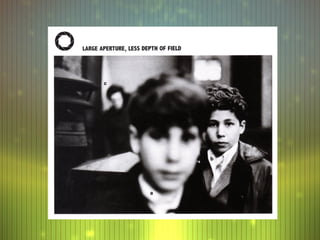
works much like
the pupil of the            QuickTime™ and a
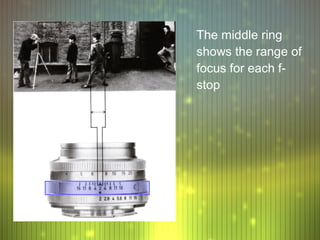
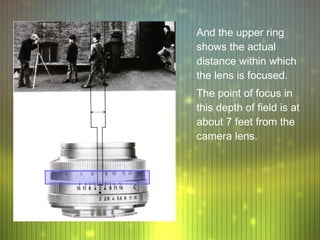
                              decompressor

human eye,
                    are needed to see this picture.


opening and
closing to adjust
the amount of
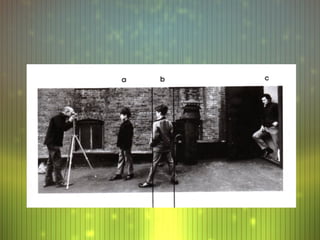
light that
reaches the
eye.
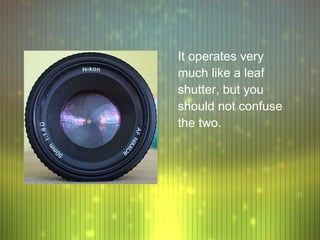
It operates very
much like a leaf
shutter, but you
should not confuse
the two.
It operates very
much like a leaf
shutter, but you
should not confuse
the two.
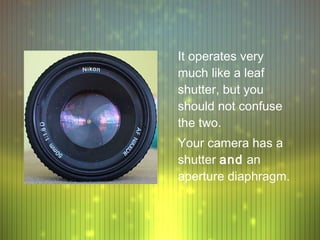
Your camera has a
shutter and an
aperture diaphragm.
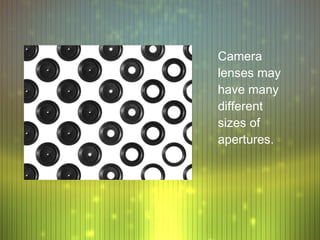
Camera
lenses may
have many
different
sizes of
apertures.
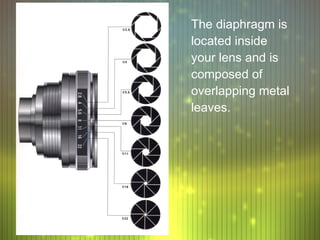
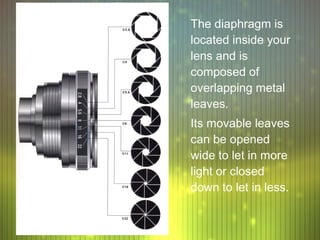
The diaphragm is
located inside
your lens and is
composed of
overlapping metal
leaves.
The diaphragm is
located inside your
lens and is
composed of
overlapping metal
leaves.
Its movable leaves
can be opened
wide to let in more
light or closed
down to let in less.
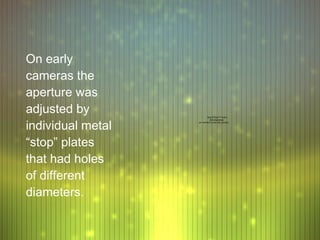
On early
cameras the
aperture was
adjusted by                QuickTime™ and a


individual metal
                             decompressor
                   are needed to see this picture.


“stop” plates
that had holes
of different
diameters.
The term stop
is still used to
refer to the
aperture size,
and a lens is
                           QuickTime™ and a
                             decompressor
                   are needed to see this picture.


said to be
“stopped down”
when the size of
the aperture is
decreased.
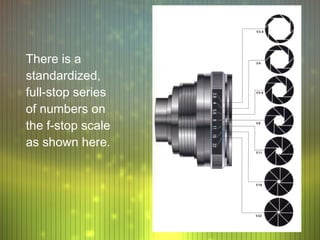
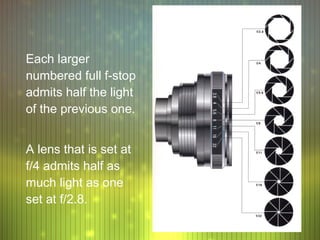
There is a
standardized,
full-stop series
of numbers on
the f-stop scale
as shown here.
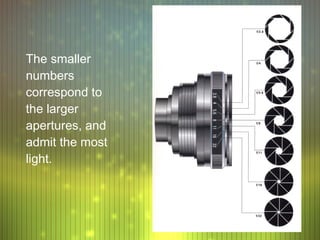
The smaller
numbers
correspond to
the larger
apertures, and
admit the most
light.
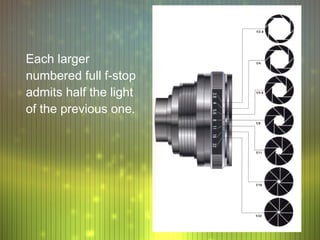
Each larger
numbered full f-stop
admits half the light
of the previous one.
Each larger
numbered full f-stop
admits half the light
of the previous one.


A lens that is set at
f/4 admits half as
much light as one
set at f/2.8.
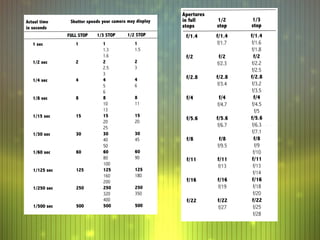
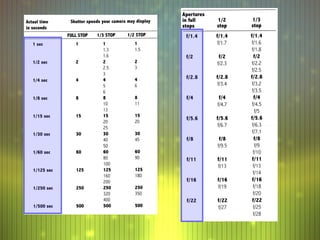
Notice that f-stops have the same
  half or double relationship that
full-stop shutter-speed settings do.


                   QuickTime™ and a
                     decompressor
           are needed to see this picture.
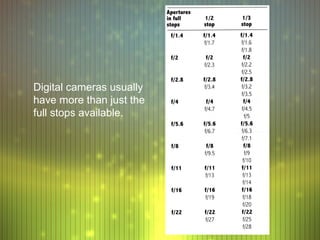
Digital cameras usually
have more than just the
full stops available.
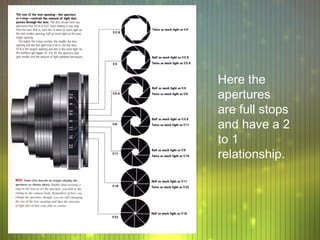
Here the
apertures
are full stops
and have a 2
to 1
relationship.
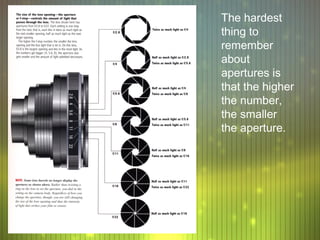
The hardest
thing to
remember
about
apertures is
that the higher
the number,
the smaller
the aperture.
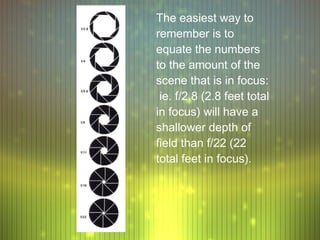
The easiest way to
remember is to
equate the numbers
to the amount of the
scene that is in focus:
 ie. f/2.8 (2.8 feet total
in focus) will have a
shallower depth of
field than f/22 (22
total feet in focus).
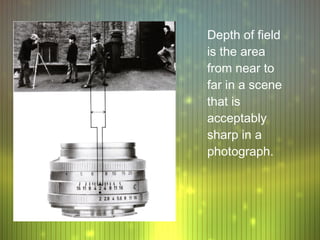
Depth of field
is the area
from near to
far in a scene
that is
acceptably
sharp in a
photograph.
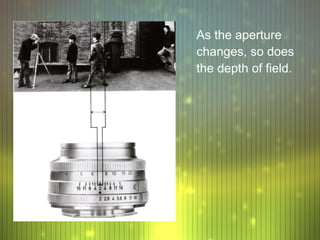
As the aperture
changes, so does
the depth of field.
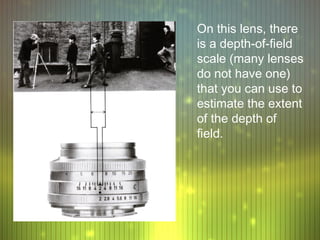
On this lens, there
is a depth-of-field
scale (many lenses
do not have one)
that you can use to
estimate the extent
of the depth of
field.
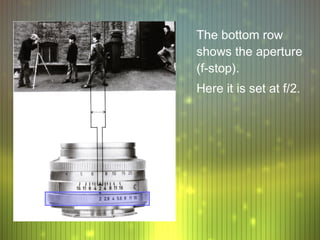
The bottom row
shows the aperture
(f-stop).
Here it is set at f/2.
The middle ring
shows the range of
focus for each f-
stop
And the upper ring
shows the actual
distance within which
the lens is focused.
The point of focus in
this depth of field is at
about 7 feet from the
camera lens.
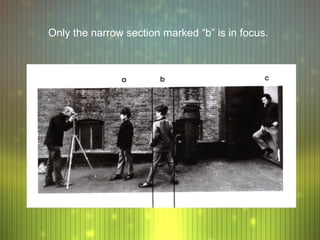
Only the narrow section marked “b” is in focus.
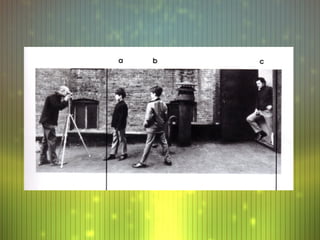
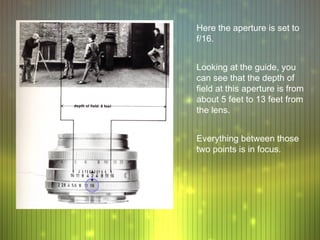
Here the aperture is set to
f/16.


Looking at the guide, you
can see that the depth of
field at this aperture is from
about 5 feet to 13 feet from
the lens.


Everything between those
two points is in focus.
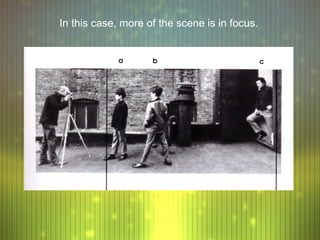
In this case, more of the scene is in focus.
Few lenses provide a range of
apertures greater than eight stops.


                   QuickTime™ and a
                     decompressor
           are needed to see this picture.
Lenses are often described as
        fast or slow.


                  QuickTime™ and a
                    decompressor
          are needed to see this picture.
These terms refer to the width of the
  maximum aperture for the lens.


                     QuickTime™ and a
                       decompressor
             are needed to see this picture.
A lens that opens to f/1.4 opens wider
and is said to be faster than one that
          opens only to f/2.


                     QuickTime™ and a
                       decompressor
             are needed to see this picture.
Faster lenses allow you to shoot
more easily in low light or at faster
          shutter speeds.


                      QuickTime™ and a
                        decompressor
              are needed to see this picture.
Fast lenses are also more expensive
         than slower lenses.


                     QuickTime™ and a
                       decompressor
             are needed to see this picture.
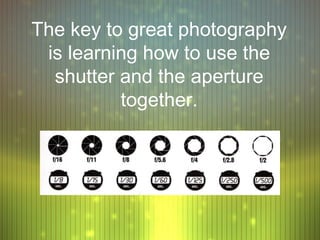
The key to great photography
 is learning how to use the
  shutter and the aperture
          together.
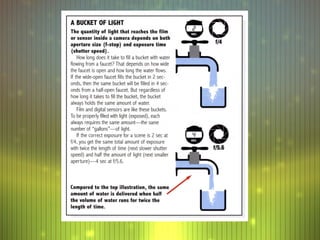
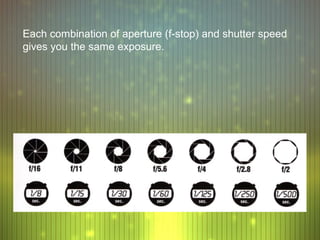
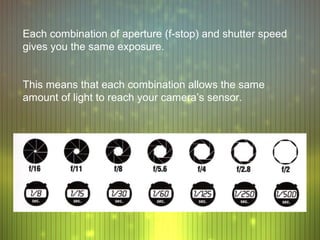
Each combination of aperture (f-stop) and shutter speed
gives you the same exposure.
Each combination of aperture (f-stop) and shutter speed
gives you the same exposure.


This means that each combination allows the same
amount of light to reach your camera’s sensor.
However, this does not mean that each
exposure makes the same photograph.
Remember that the aperture and
shutter speed affect the motion blur and
the depth of field.
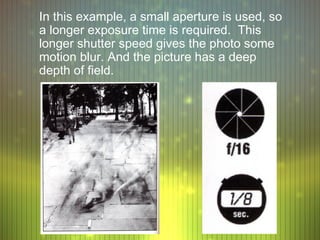
In this example, a small aperture is used, so
a longer exposure time is required. This
longer shutter speed gives the photo some
motion blur. And the picture has a deep
depth of field.
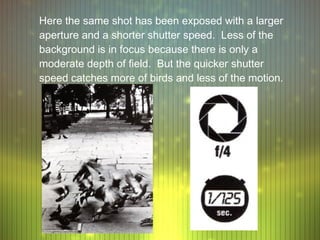
Here the same shot has been exposed with a larger
aperture and a shorter shutter speed. Less of the
background is in focus because there is only a
moderate depth of field. But the quicker shutter
speed catches more of birds and less of the motion.
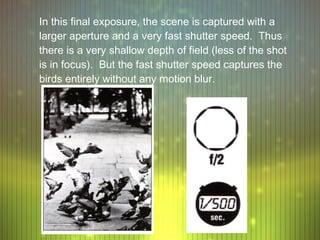
In this final exposure, the scene is captured with a
larger aperture and a very fast shutter speed. Thus
there is a very shallow depth of field (less of the shot
is in focus). But the fast shutter speed captures the
birds entirely without any motion blur.
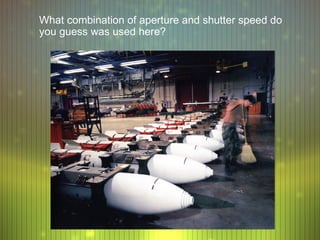
What combination of aperture and shutter speed do
you guess was used here?
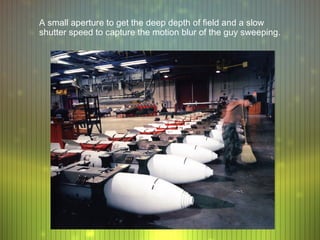
A small aperture to get the deep depth of field and a slow
shutter speed to capture the motion blur of the guy sweeping.
Paul Shambroom, B83 Nuclear Gravity Bombs in Weapons Storage
Area, Barksdale Air Force Base, Louisiana, 1995
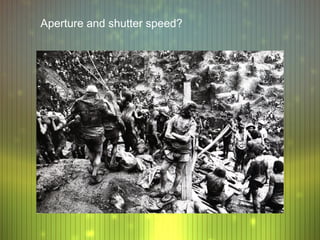
Aperture and shutter speed?
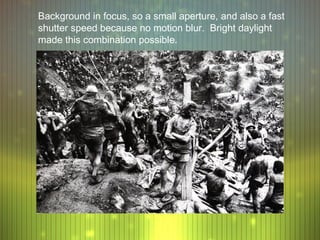
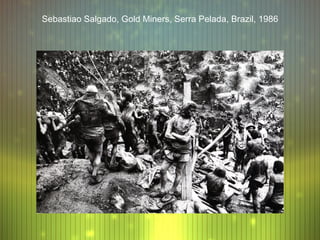
Background in focus, so a small aperture, and also a fast
shutter speed because no motion blur. Bright daylight
made this combination possible.
Sebastiao Salgado, Gold Miners, Serra Pelada, Brazil, 1986
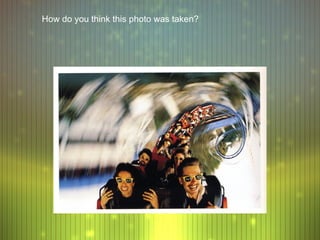
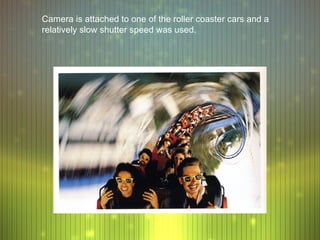
How do you think this photo was taken?
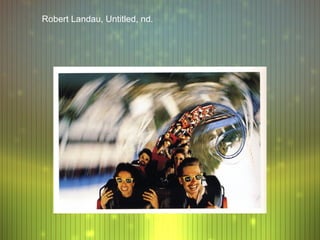
Camera is attached to one of the roller coaster cars and a
relatively slow shutter speed was used.
Robert Landau, Untitled, nd.
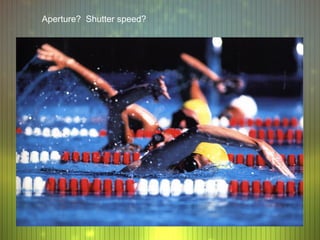
Aperture? Shutter speed?
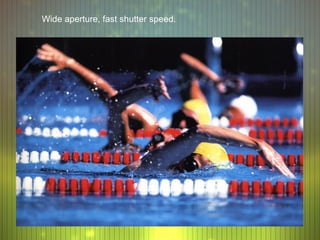
Wide aperture, fast shutter speed.
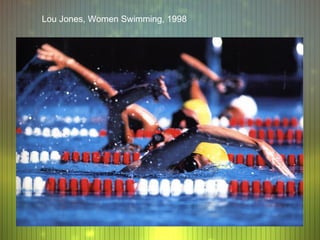
Lou Jones, Women Swimming, 1998
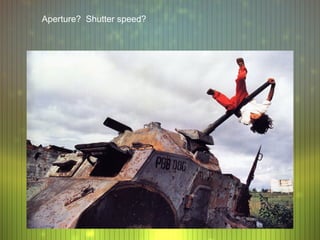
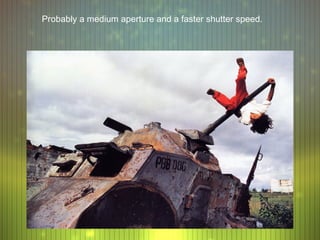
Aperture? Shutter speed?
Probably a medium aperture and a faster shutter speed.
James Nachtwey, Nicaragua, 1982

Controlling Your Camera: Apertures

  • 1.
  • 2.
    Apertures have twoeffects on your photographs:
  • 3.
    Apertures have twoeffects on your photographs: They control the depth of field.
  • 4.
    Apertures have twoeffects on your photographs: They control the depth of field. And they control how much light reaches your sensor.
  • 5.
    The depth offield means how much of the shot is in focus.
  • 6.
    The depth offield means how much of the shot is in focus. A large aperture has a shallow depth of field and a small aperture has a deep depth of field.
  • 7.
    So, what exactlyis an aperture?
  • 8.
    The aperture ofyour camera is controlled by a diaphragm that opens and closes to let in different amounts of light.
  • 9.
    The diaphragm of yourcamera works much like the pupil of the QuickTime™ and a decompressor human eye, are needed to see this picture. opening and closing to adjust the amount of light that reaches the eye.
  • 10.
    It operates very muchlike a leaf shutter, but you should not confuse the two.
  • 11.
    It operates very muchlike a leaf shutter, but you should not confuse the two. Your camera has a shutter and an aperture diaphragm.
  • 12.
  • 13.
    The diaphragm is locatedinside your lens and is composed of overlapping metal leaves.
  • 14.
    The diaphragm is locatedinside your lens and is composed of overlapping metal leaves. Its movable leaves can be opened wide to let in more light or closed down to let in less.
  • 15.
    On early cameras the aperturewas adjusted by QuickTime™ and a individual metal decompressor are needed to see this picture. “stop” plates that had holes of different diameters.
  • 16.
    The term stop isstill used to refer to the aperture size, and a lens is QuickTime™ and a decompressor are needed to see this picture. said to be “stopped down” when the size of the aperture is decreased.
  • 17.
    There is a standardized, full-stopseries of numbers on the f-stop scale as shown here.
  • 18.
    The smaller numbers correspond to thelarger apertures, and admit the most light.
  • 19.
    Each larger numbered fullf-stop admits half the light of the previous one.
  • 20.
    Each larger numbered fullf-stop admits half the light of the previous one. A lens that is set at f/4 admits half as much light as one set at f/2.8.
  • 21.
    Notice that f-stopshave the same half or double relationship that full-stop shutter-speed settings do. QuickTime™ and a decompressor are needed to see this picture.
  • 24.
    Digital cameras usually havemore than just the full stops available.
  • 25.
    Here the apertures are fullstops and have a 2 to 1 relationship.
  • 26.
    The hardest thing to remember about aperturesis that the higher the number, the smaller the aperture.
  • 27.
    The easiest wayto remember is to equate the numbers to the amount of the scene that is in focus: ie. f/2.8 (2.8 feet total in focus) will have a shallower depth of field than f/22 (22 total feet in focus).
  • 28.
    Depth of field isthe area from near to far in a scene that is acceptably sharp in a photograph.
  • 29.
    As the aperture changes,so does the depth of field.
  • 30.
    On this lens,there is a depth-of-field scale (many lenses do not have one) that you can use to estimate the extent of the depth of field.
  • 31.
    The bottom row showsthe aperture (f-stop). Here it is set at f/2.
  • 32.
    The middle ring showsthe range of focus for each f- stop
  • 33.
    And the upperring shows the actual distance within which the lens is focused. The point of focus in this depth of field is at about 7 feet from the camera lens.
  • 36.
    Only the narrowsection marked “b” is in focus.
  • 37.
    Here the apertureis set to f/16. Looking at the guide, you can see that the depth of field at this aperture is from about 5 feet to 13 feet from the lens. Everything between those two points is in focus.
  • 40.
    In this case,more of the scene is in focus.
  • 41.
    Few lenses providea range of apertures greater than eight stops. QuickTime™ and a decompressor are needed to see this picture.
  • 42.
    Lenses are oftendescribed as fast or slow. QuickTime™ and a decompressor are needed to see this picture.
  • 43.
    These terms referto the width of the maximum aperture for the lens. QuickTime™ and a decompressor are needed to see this picture.
  • 44.
    A lens thatopens to f/1.4 opens wider and is said to be faster than one that opens only to f/2. QuickTime™ and a decompressor are needed to see this picture.
  • 45.
    Faster lenses allowyou to shoot more easily in low light or at faster shutter speeds. QuickTime™ and a decompressor are needed to see this picture.
  • 46.
    Fast lenses arealso more expensive than slower lenses. QuickTime™ and a decompressor are needed to see this picture.
  • 47.
    The key togreat photography is learning how to use the shutter and the aperture together.
  • 49.
    Each combination ofaperture (f-stop) and shutter speed gives you the same exposure.
  • 50.
    Each combination ofaperture (f-stop) and shutter speed gives you the same exposure. This means that each combination allows the same amount of light to reach your camera’s sensor.
  • 51.
    However, this doesnot mean that each exposure makes the same photograph. Remember that the aperture and shutter speed affect the motion blur and the depth of field.
  • 52.
    In this example,a small aperture is used, so a longer exposure time is required. This longer shutter speed gives the photo some motion blur. And the picture has a deep depth of field.
  • 53.
    Here the sameshot has been exposed with a larger aperture and a shorter shutter speed. Less of the background is in focus because there is only a moderate depth of field. But the quicker shutter speed catches more of birds and less of the motion.
  • 54.
    In this finalexposure, the scene is captured with a larger aperture and a very fast shutter speed. Thus there is a very shallow depth of field (less of the shot is in focus). But the fast shutter speed captures the birds entirely without any motion blur.
  • 55.
    What combination ofaperture and shutter speed do you guess was used here?
  • 56.
    A small apertureto get the deep depth of field and a slow shutter speed to capture the motion blur of the guy sweeping.
  • 57.
    Paul Shambroom, B83Nuclear Gravity Bombs in Weapons Storage Area, Barksdale Air Force Base, Louisiana, 1995
  • 58.
  • 59.
    Background in focus,so a small aperture, and also a fast shutter speed because no motion blur. Bright daylight made this combination possible.
  • 60.
    Sebastiao Salgado, GoldMiners, Serra Pelada, Brazil, 1986
  • 61.
    How do youthink this photo was taken?
  • 62.
    Camera is attachedto one of the roller coaster cars and a relatively slow shutter speed was used.
  • 63.
  • 64.
  • 65.
    Wide aperture, fastshutter speed.
  • 66.
    Lou Jones, WomenSwimming, 1998
  • 67.
  • 68.
    Probably a mediumaperture and a faster shutter speed.
  • 69.

Editor's Notes

  • #42 Compact digital cameras usually have even less than SLR’s.
  • #47 This is because more of the lens is composed of precision glass.
  • #49 Go through this slowly.
  • #53 We are going to look at three exposures that allow the same amount of light to reach the sensor, but that the different shutter speeds and apertures make very different photos.
  • #56 Small aperture Slow shutter speed to show motion blur
  • #59 Small aperture Fast shutter speed - no motion blur
  • #62 (camera is attached or held steady on the coaster and a relatively slow shutter speed used)
  • #65 (wide aperture, fast shutter speed)
  • #68 Definitely a fast shutter speed and medium to wide area in focus, so probably a medium to small aperture.