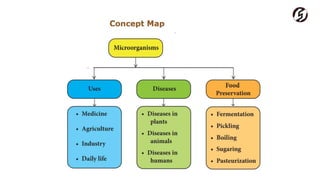
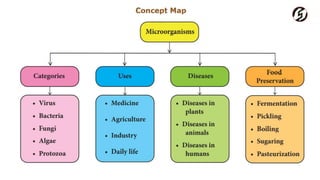
Microorganisms are useful in different fields such as
medicine, agriculture and industry.
Medicine
We obtain antibiotics and vaccines from microbes.
Antibiotics
• The word ‘anti’ means ‘against’. Antibiotic is a substance produced by
living organisms which is toxic for other organisms.
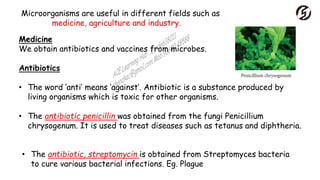
• The antibiotic penicillin was obtained from the fungi Penicillium
chrysogenum. It is used to treat diseases such as tetanus and diphtheria.
• The antibiotic, streptomycin is obtained from Streptomyces bacteria
to cure various bacterial infections. Eg. Plague
Vaccines
• Vaccines are prepared from dead or weakened microbes.
• When the vaccine is injected to the body of a patient, the body produces
antibodies to fight against the germs.
• Vaccination is otherwise called as immunization.
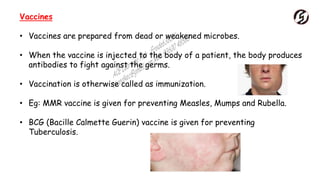
• Eg: MMR vaccine is given for preventing Measles, Mumps and Rubella.
• BCG (Bacille Calmette Guerin) vaccine is given for preventing
Tuberculosis.
Agriculture:
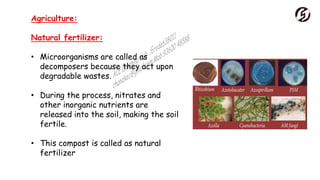
Natural fertilizer:
• Microorganisms are called as
decomposers because they act upon
degradable wastes.
• During the process, nitrates and
other inorganic nutrients are
released into the soil, making the soil
fertile.
• This compost is called as natural
fertilizer
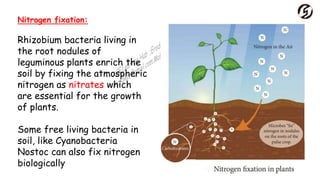
Nitrogen fixation:
Rhizobium bacteria living in
the root nodules of
leguminous plants enrich the
soil by fixing the atmospheric
nitrogen as nitrates which
are essential for the growth
of plants.
Some free living bacteria in
soil, like Cyanobacteria
Nostoc can also fix nitrogen
biologically
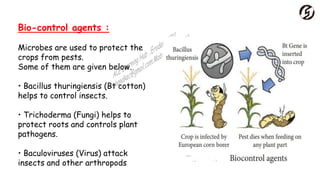
Bio-control agents :
Microbes are used to protect the
crops from pests.
Some of them are given below.
• Bacillus thuringiensis (Bt cotton)
helps to control insects.
• Trichoderma (Fungi) helps to
protect roots and controls plant
pathogens.
• Baculoviruses (Virus) attack
insects and other arthropods
Industry :
Sewage treatment:
Aerobic microbes are allowed to grow in the primary effluent during the
secondary stage of waste water treatment.
These microbes consume the major part of the organic matter in the
effluent.
In the anaerobic treatment of sewage, Methanobacterium is used.
Production of biogas:
Human and animal faecal matter and plant wastes are broken down by
anaerobic bacteria to produce methane (biogas) along with carbon dioxide
and hydrogen.
These bacteria are called as methanogens.
Production of alcohol and wine
• Alcoholic drinks are prepared by fermentation process using yeast.
Sugars present in grapes are fermented by using yeast.
• Beer is produced by the fermentation of sugars in rice and barley.
Microbes in retting and tanning
Flax plants are tied in bundles and kept in water. Bacteria loosen the
supporting fibres of the stem by acting on the stem tissues. This process
is known as retting.
Linen thread is made from these fibres.
In tanning industry bacteria act upon the skin of animals and makes it soft
and therefore it becomes pliable.
Microbes in Food Process
Microorganisms commonly used for food processing are yeast, bacteria, and
moulds.
Fermentation process which is carried out by microorganisms help to
preserve food and generate distinctive new food products
a. Food preservation
Two techniques are followed in food preservation. They are:
• Traditional techniques
• Modern techniques
1. Traditional techniques: Fermentation, pickling, boiling and sugaring are
the traditional techniques followed in food preservation.
Fermentation:
Fermentation is the microbial conversion of starch and sugars
into alcohol. It makes foods more nutritious and palatable.
Pickling:
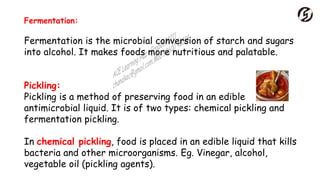
Pickling is a method of preserving food in an edible
antimicrobial liquid. It is of two types: chemical pickling and
fermentation pickling.
In chemical pickling, food is placed in an edible liquid that kills
bacteria and other microorganisms. Eg. Vinegar, alcohol,
vegetable oil (pickling agents).
In fermentation pickling, bacteria in the liquid produce organic
acid as preservation agent that produces lactic acid due to the
presence of Lactobacillus.
Boiling :
Boiling liquid food items kill all the microbes. Eg. Milk and Water.
Sugaring:
Sugar is used to preserve fruits in an antimicrobial syrup with
fruits such as apples, pears, peaches, plums or in a crystallized
form, so that the product is stored in dry condition.
Modern techniques:
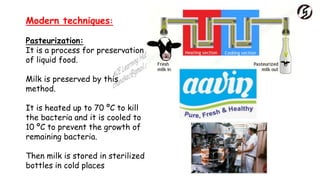
Pasteurization:
It is a process for preservation
of liquid food.
Milk is preserved by this
method.
It is heated up to 70 ºC to kill
the bacteria and it is cooled to
10 ºC to prevent the growth of
remaining bacteria.
Then milk is stored in sterilized
bottles in cold places
b. Food production
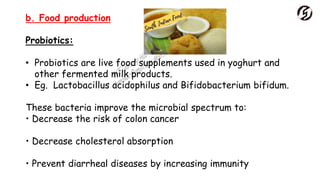
Probiotics:
• Probiotics are live food supplements used in yoghurt and
other fermented milk products.
• Eg. Lactobacillus acidophilus and Bifidobacterium bifidum.
These bacteria improve the microbial spectrum to:
• Decrease the risk of colon cancer
• Decrease cholesterol absorption
• Prevent diarrheal diseases by increasing immunity
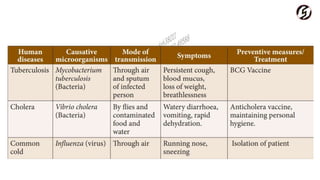
• A few microorganisms are harmful to plants, animals and
humans.
• They cause diseases and hence they are called as pathogens.
• Pathogens enter into the body through cuts and wounds in
the skin, mouth or nose and cause diseases.
• Viruses causing ‘flu’ are spread through air. When the
patient sneezes droplets containing viruses spread in air and
it gets entered to another person when he breathes.
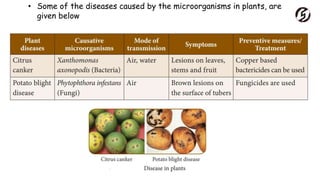
• Some of the diseases caused by the microorganisms in plants, are
given below
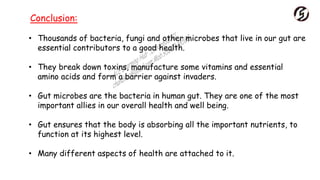
• Thousands of bacteria, fungi and other microbes that live in our gut are
essential contributors to a good health.
• They break down toxins, manufacture some vitamins and essential
amino acids and form a barrier against invaders.
• Gut microbes are the bacteria in human gut. They are one of the most
important allies in our overall health and well being.
• Gut ensures that the body is absorbing all the important nutrients, to
function at its highest level.
• Many different aspects of health are attached to it.
Conclusion:
Microorganism : uses

Microorganism : uses

  • 4.
    Microorganisms are usefulin different fields such as medicine, agriculture and industry. Medicine We obtain antibiotics and vaccines from microbes. Antibiotics • The word ‘anti’ means ‘against’. Antibiotic is a substance produced by living organisms which is toxic for other organisms. • The antibiotic penicillin was obtained from the fungi Penicillium chrysogenum. It is used to treat diseases such as tetanus and diphtheria. • The antibiotic, streptomycin is obtained from Streptomyces bacteria to cure various bacterial infections. Eg. Plague
  • 5.
    Vaccines • Vaccines areprepared from dead or weakened microbes. • When the vaccine is injected to the body of a patient, the body produces antibodies to fight against the germs. • Vaccination is otherwise called as immunization. • Eg: MMR vaccine is given for preventing Measles, Mumps and Rubella. • BCG (Bacille Calmette Guerin) vaccine is given for preventing Tuberculosis.
  • 6.
    Agriculture: Natural fertilizer: • Microorganismsare called as decomposers because they act upon degradable wastes. • During the process, nitrates and other inorganic nutrients are released into the soil, making the soil fertile. • This compost is called as natural fertilizer
  • 7.
    Nitrogen fixation: Rhizobium bacterialiving in the root nodules of leguminous plants enrich the soil by fixing the atmospheric nitrogen as nitrates which are essential for the growth of plants. Some free living bacteria in soil, like Cyanobacteria Nostoc can also fix nitrogen biologically
  • 8.
    Bio-control agents : Microbesare used to protect the crops from pests. Some of them are given below. • Bacillus thuringiensis (Bt cotton) helps to control insects. • Trichoderma (Fungi) helps to protect roots and controls plant pathogens. • Baculoviruses (Virus) attack insects and other arthropods
  • 9.
    Industry : Sewage treatment: Aerobicmicrobes are allowed to grow in the primary effluent during the secondary stage of waste water treatment. These microbes consume the major part of the organic matter in the effluent. In the anaerobic treatment of sewage, Methanobacterium is used. Production of biogas: Human and animal faecal matter and plant wastes are broken down by anaerobic bacteria to produce methane (biogas) along with carbon dioxide and hydrogen. These bacteria are called as methanogens.
  • 10.
    Production of alcoholand wine • Alcoholic drinks are prepared by fermentation process using yeast. Sugars present in grapes are fermented by using yeast. • Beer is produced by the fermentation of sugars in rice and barley. Microbes in retting and tanning Flax plants are tied in bundles and kept in water. Bacteria loosen the supporting fibres of the stem by acting on the stem tissues. This process is known as retting. Linen thread is made from these fibres. In tanning industry bacteria act upon the skin of animals and makes it soft and therefore it becomes pliable.
  • 11.
    Microbes in FoodProcess Microorganisms commonly used for food processing are yeast, bacteria, and moulds. Fermentation process which is carried out by microorganisms help to preserve food and generate distinctive new food products a. Food preservation Two techniques are followed in food preservation. They are: • Traditional techniques • Modern techniques 1. Traditional techniques: Fermentation, pickling, boiling and sugaring are the traditional techniques followed in food preservation.
  • 12.
    Fermentation: Fermentation is themicrobial conversion of starch and sugars into alcohol. It makes foods more nutritious and palatable. Pickling: Pickling is a method of preserving food in an edible antimicrobial liquid. It is of two types: chemical pickling and fermentation pickling. In chemical pickling, food is placed in an edible liquid that kills bacteria and other microorganisms. Eg. Vinegar, alcohol, vegetable oil (pickling agents).
  • 13.
    In fermentation pickling,bacteria in the liquid produce organic acid as preservation agent that produces lactic acid due to the presence of Lactobacillus. Boiling : Boiling liquid food items kill all the microbes. Eg. Milk and Water. Sugaring: Sugar is used to preserve fruits in an antimicrobial syrup with fruits such as apples, pears, peaches, plums or in a crystallized form, so that the product is stored in dry condition.
  • 14.
    Modern techniques: Pasteurization: It isa process for preservation of liquid food. Milk is preserved by this method. It is heated up to 70 ºC to kill the bacteria and it is cooled to 10 ºC to prevent the growth of remaining bacteria. Then milk is stored in sterilized bottles in cold places
  • 15.
    b. Food production Probiotics: •Probiotics are live food supplements used in yoghurt and other fermented milk products. • Eg. Lactobacillus acidophilus and Bifidobacterium bifidum. These bacteria improve the microbial spectrum to: • Decrease the risk of colon cancer • Decrease cholesterol absorption • Prevent diarrheal diseases by increasing immunity
  • 16.
    • A fewmicroorganisms are harmful to plants, animals and humans. • They cause diseases and hence they are called as pathogens. • Pathogens enter into the body through cuts and wounds in the skin, mouth or nose and cause diseases. • Viruses causing ‘flu’ are spread through air. When the patient sneezes droplets containing viruses spread in air and it gets entered to another person when he breathes.
  • 17.
    • Some ofthe diseases caused by the microorganisms in plants, are given below
  • 19.
    • Thousands ofbacteria, fungi and other microbes that live in our gut are essential contributors to a good health. • They break down toxins, manufacture some vitamins and essential amino acids and form a barrier against invaders. • Gut microbes are the bacteria in human gut. They are one of the most important allies in our overall health and well being. • Gut ensures that the body is absorbing all the important nutrients, to function at its highest level. • Many different aspects of health are attached to it. Conclusion: