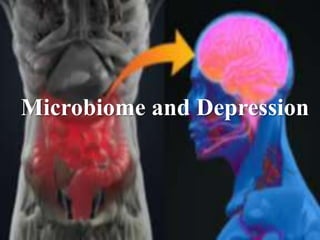
Microbiome and Depression
Introduction
 The microbiome includes all the microorganisms that inhabit our
digestive tract
 A healthy microbiome starts with a vaginal birth
 It is possible that the high caesarian birth rate contributes factor to
anxiety and depression
 Beneficial microflora is also an important part of healthy digestion
 Probiotics are key factor in obesity, hormonal balance, healthy kidney
function
Healthy Microbiome
 Avoid excess sugary foods, good quality sleep, Meditation and
relaxation, eat foods with fiber, probiotic and supplement
 While probiotic studies have not demonstrated toxicity
 A healthy microbiome works to boost mood in a few important ways
 Healthy gut function has been linked to normal central nervous system
(CNS) function
 Hormones, neurotransmitters and immunological factors released from
the gut are known to send signals to the brain
Microbiome Cause Depression
 Stress and depression can cause an effect to the microbiome in the gut
 This can cause the microbiome to be inefficient to perform it specific
function
 Population of genus increased in response to depression:
1. Bacteroidetes sp.
2. Proteobacteria sp.
3. Fusobacteria sp.
4. Actinobacteria sp.
These cause inflammatory reaction to the brain region lead to depression.
Genus decreased in response to depression
Depression cause some of microbiome in the gut to be degenerated
Population of genus decreased in response to depression:
1. Coprococcus sp.
2. Oscillospira sp.
3. Faecalibacterium sp.
4. Pseudobutyrivibrio sp.
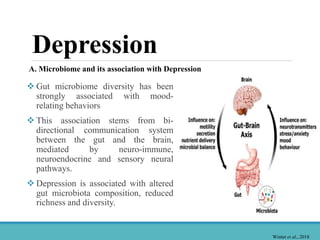
Depression
Winter et al., 2018
 Gut microbiome diversity has been
strongly associated with mood-
relating behaviors
 This association stems from bi-
directional communication system
between the gut and the brain,
mediated by neuro-immune,
neuroendocrine and sensory neural
pathways.
 Depression is associated with altered
gut microbiota composition, reduced
richness and diversity.
A. Microbiome and its association with Depression
B. Three possible sequences of events that might occur
between the gut microbiota and depression
1. reductions in the gut microbiota populations of specific species might
precede reductions of neurotransmitter levels in the brain
2. depressive states might induce modification of specific gut microbiota
species
3. these changes to neurotransmitter levels in the brain and gut might occur
simultaneously, and any relationship between them could be merely chance
C. Two Hypothesis
• Two directional hypotheses were therefore generated
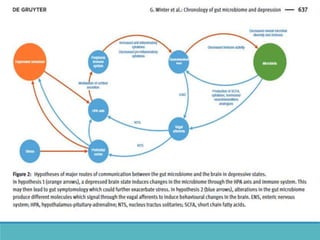
• Hypothesis 1: depressive state modulates gut microbiota
• Hypothesis 2: gut microbiota modulate depressive state
• Alterations in the abundance of different genera within Bacteroidetes,
Firmicutes, Proteobacteriaand Actinobacteria phyla
Winter et al., 2018
Treatments
• For a long time, the antidepressant therapies usually targeted the brain
abnormalities, while the dysfunction of other organs was ignored or
supposed to alleviate following the improvement of brain function
• Regulating the gut microbiota and improving the microbiota–gut–brain
axis function will probably bring far-reaching influences to the therapy
and prevention of depression
• The therapy has higher flexibility and operability compared with
traditional therapies, and it is easier for patients to accept and easier for
high-risk individuals to prevent depression
Treatments
• Microbiota dysbiosis can induce various physiological and psychological
diseases, and microbiota restoration brings improvement to these diseases
• Four main effective methods to recover normal microbiota
a. Probiotics
b. Prebiotics
c. Fecal microbiota transplantation (FMT)
Probiotics
Bifidobacteria, Lactobacillus
a. normalize cortisol levels
b. regulate the HPA axis
c. reduce circulating pro-inflammatory cytokines
Prebiotics
•fructo-oligosaccharides and galacto-oligosaccharides (soluble fibers) to stimulate the
pre-existing gut microbiota
◦ Prebiotics confer similar anxiolytic and antidepressant effects as probiotics
Fecal Microbiota Transplantation (FCT)
Fecal matter (stool) from a healthy individual is transplanted to the bowel of someone
with a chronic condition, with the goal of repopulating their microbiome with more
diverse species of bacteria and reducing symptoms
Treatments
Recent Advancements
•Patients with depression or chronic fatigue syndrome (CFS) show
distinctions in their intestinal microbiota
•Emerging research continues to show that diminished microbial diversity
in early life can place an individual on a trajectory toward increased risk
of allergic diseases
•Dietary patterns and specific combinations of nutrients such as omega-3
fatty acids, zinc, magnesium and plant phytochemicals are of relevance
to depression and other mental disorders
•The multi-system complexity of CFS has made this a proving ground for
understanding the relevancy of the immune system to mental health,
allergies, so-called functional gastrointestinal disorders (e.g., irritable
bowel syndrome) and microbiota
Recent Advancements
• Additional potential mechanisms include direct and indirect effects on
neurotransmitter/neuropeptide production, enhancement of nutritional status,
and more direct bacteria-to-brain communication
• Epidemiological studies have reported that more traditional dietary patterns
are associated with good mental health and lowered risk of depression
• The vagus nerve is a confirmed conduit for promoting anxious behavior
following induction of intestinal inflammation, and of anxiolysis following
administration of a probiotic
• These studies provided further theoretical possibilities that beneficial
microbes could be systemic mediators of neurological effect
• Higher consumption of fast foods and highly-processed foods those that more
closely resemble what is now known as the ‘westernized’ dietary pattern that
have been associated with a higher risk of the depression
Recent Advancements
• Probiotics have shown promising results in the management of
anxiety and depression
• Probiotic supplementation to healthy individuals reduces anxiety and
depression-like behaviour in various models of stress-induction
Summary
• As a person develop depression, species of microbiomes such as
Proteobacteria sp. increases and cause inflammatory response to the
brain lead to more depression
• Subsequently, depression cause other species of microbiomes such as
Coprococcus sp. and Oscillospira sp. to reduce in number and reduce
its function
• Microbiota dysbiosis can induce physiological and psycological
diseases and microbiota restoration brings improvement to these
diseases
• It is suggested that to reduce depression and increase beneficial
microbiome to have healthy diet including more vegetables and low
fat, exercise, avoiding stress, avoiding use of antibiotics and, taking
prebiotics and probiotics as required
References
• Winter, G., Hart, R. A., Charlesworth, R. P. G., & Sharpley, C. F. (2018). Gut
microbiome and depression: what we know and what we need to know.
Reviews in the Neurosciences, 29(6), 629–643. doi:10.1515/revneuro-2017-
0072.
• Bercik P, Verdu EF, Foster JA, et al (2010). Chronic gastrointestinal
inflammation induces anxiety-like behavior and alters central nervous system
biochemistry in mice. Gastroenterology.;139(6): 2102-2112.
• Megan Clapp, Megan Clapp, Lindsey Herrera, (2017). Gut microbiota’s effect
on mental health: The gut-brain axis, Clin Pract.,7(4): 987.
• Shan Liang, Xiaoli Wu (2018). Recognizing Depression from the Microbiota–
Gut–Brain Axis, Int J Mol Sci., 19(6): 1592.
• Alan C. Logan et al, (2016). The Microbiome and Mental Health: Looking
Back, Moving Forward with Lessons from Allergic Diseases, Clin
Psychopharmacol Neurosci., 14(2): 131–147.

Microbiomes and depression

  • 1.
  • 2.
    Introduction  The microbiomeincludes all the microorganisms that inhabit our digestive tract  A healthy microbiome starts with a vaginal birth  It is possible that the high caesarian birth rate contributes factor to anxiety and depression  Beneficial microflora is also an important part of healthy digestion  Probiotics are key factor in obesity, hormonal balance, healthy kidney function
  • 3.
    Healthy Microbiome  Avoidexcess sugary foods, good quality sleep, Meditation and relaxation, eat foods with fiber, probiotic and supplement  While probiotic studies have not demonstrated toxicity  A healthy microbiome works to boost mood in a few important ways  Healthy gut function has been linked to normal central nervous system (CNS) function  Hormones, neurotransmitters and immunological factors released from the gut are known to send signals to the brain
  • 4.
    Microbiome Cause Depression Stress and depression can cause an effect to the microbiome in the gut  This can cause the microbiome to be inefficient to perform it specific function  Population of genus increased in response to depression: 1. Bacteroidetes sp. 2. Proteobacteria sp. 3. Fusobacteria sp. 4. Actinobacteria sp. These cause inflammatory reaction to the brain region lead to depression.
  • 5.
    Genus decreased inresponse to depression Depression cause some of microbiome in the gut to be degenerated Population of genus decreased in response to depression: 1. Coprococcus sp. 2. Oscillospira sp. 3. Faecalibacterium sp. 4. Pseudobutyrivibrio sp.
  • 6.
    Depression Winter et al.,2018  Gut microbiome diversity has been strongly associated with mood- relating behaviors  This association stems from bi- directional communication system between the gut and the brain, mediated by neuro-immune, neuroendocrine and sensory neural pathways.  Depression is associated with altered gut microbiota composition, reduced richness and diversity. A. Microbiome and its association with Depression
  • 7.
    B. Three possiblesequences of events that might occur between the gut microbiota and depression 1. reductions in the gut microbiota populations of specific species might precede reductions of neurotransmitter levels in the brain 2. depressive states might induce modification of specific gut microbiota species 3. these changes to neurotransmitter levels in the brain and gut might occur simultaneously, and any relationship between them could be merely chance C. Two Hypothesis • Two directional hypotheses were therefore generated • Hypothesis 1: depressive state modulates gut microbiota • Hypothesis 2: gut microbiota modulate depressive state • Alterations in the abundance of different genera within Bacteroidetes, Firmicutes, Proteobacteriaand Actinobacteria phyla Winter et al., 2018
  • 9.
    Treatments • For along time, the antidepressant therapies usually targeted the brain abnormalities, while the dysfunction of other organs was ignored or supposed to alleviate following the improvement of brain function • Regulating the gut microbiota and improving the microbiota–gut–brain axis function will probably bring far-reaching influences to the therapy and prevention of depression • The therapy has higher flexibility and operability compared with traditional therapies, and it is easier for patients to accept and easier for high-risk individuals to prevent depression
  • 10.
    Treatments • Microbiota dysbiosiscan induce various physiological and psychological diseases, and microbiota restoration brings improvement to these diseases • Four main effective methods to recover normal microbiota a. Probiotics b. Prebiotics c. Fecal microbiota transplantation (FMT) Probiotics Bifidobacteria, Lactobacillus a. normalize cortisol levels b. regulate the HPA axis c. reduce circulating pro-inflammatory cytokines
  • 11.
    Prebiotics •fructo-oligosaccharides and galacto-oligosaccharides(soluble fibers) to stimulate the pre-existing gut microbiota ◦ Prebiotics confer similar anxiolytic and antidepressant effects as probiotics Fecal Microbiota Transplantation (FCT) Fecal matter (stool) from a healthy individual is transplanted to the bowel of someone with a chronic condition, with the goal of repopulating their microbiome with more diverse species of bacteria and reducing symptoms Treatments
  • 12.
    Recent Advancements •Patients withdepression or chronic fatigue syndrome (CFS) show distinctions in their intestinal microbiota •Emerging research continues to show that diminished microbial diversity in early life can place an individual on a trajectory toward increased risk of allergic diseases •Dietary patterns and specific combinations of nutrients such as omega-3 fatty acids, zinc, magnesium and plant phytochemicals are of relevance to depression and other mental disorders •The multi-system complexity of CFS has made this a proving ground for understanding the relevancy of the immune system to mental health, allergies, so-called functional gastrointestinal disorders (e.g., irritable bowel syndrome) and microbiota
  • 13.
    Recent Advancements • Additionalpotential mechanisms include direct and indirect effects on neurotransmitter/neuropeptide production, enhancement of nutritional status, and more direct bacteria-to-brain communication • Epidemiological studies have reported that more traditional dietary patterns are associated with good mental health and lowered risk of depression • The vagus nerve is a confirmed conduit for promoting anxious behavior following induction of intestinal inflammation, and of anxiolysis following administration of a probiotic • These studies provided further theoretical possibilities that beneficial microbes could be systemic mediators of neurological effect • Higher consumption of fast foods and highly-processed foods those that more closely resemble what is now known as the ‘westernized’ dietary pattern that have been associated with a higher risk of the depression
  • 14.
    Recent Advancements • Probioticshave shown promising results in the management of anxiety and depression • Probiotic supplementation to healthy individuals reduces anxiety and depression-like behaviour in various models of stress-induction
  • 15.
    Summary • As aperson develop depression, species of microbiomes such as Proteobacteria sp. increases and cause inflammatory response to the brain lead to more depression • Subsequently, depression cause other species of microbiomes such as Coprococcus sp. and Oscillospira sp. to reduce in number and reduce its function • Microbiota dysbiosis can induce physiological and psycological diseases and microbiota restoration brings improvement to these diseases • It is suggested that to reduce depression and increase beneficial microbiome to have healthy diet including more vegetables and low fat, exercise, avoiding stress, avoiding use of antibiotics and, taking prebiotics and probiotics as required
  • 16.
    References • Winter, G.,Hart, R. A., Charlesworth, R. P. G., & Sharpley, C. F. (2018). Gut microbiome and depression: what we know and what we need to know. Reviews in the Neurosciences, 29(6), 629–643. doi:10.1515/revneuro-2017- 0072. • Bercik P, Verdu EF, Foster JA, et al (2010). Chronic gastrointestinal inflammation induces anxiety-like behavior and alters central nervous system biochemistry in mice. Gastroenterology.;139(6): 2102-2112. • Megan Clapp, Megan Clapp, Lindsey Herrera, (2017). Gut microbiota’s effect on mental health: The gut-brain axis, Clin Pract.,7(4): 987. • Shan Liang, Xiaoli Wu (2018). Recognizing Depression from the Microbiota– Gut–Brain Axis, Int J Mol Sci., 19(6): 1592. • Alan C. Logan et al, (2016). The Microbiome and Mental Health: Looking Back, Moving Forward with Lessons from Allergic Diseases, Clin Psychopharmacol Neurosci., 14(2): 131–147.