The Gut Brain-Axis: How Gut Microbiota
Impacts Mental Health
INTRODUCTION TO GUT BRAIN AXIS
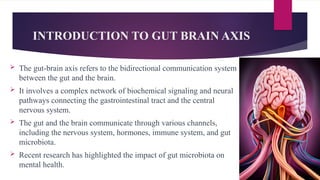
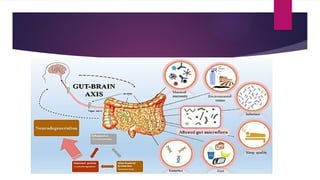
 The gut-brain axis refers to the bidirectional communication system
between the gut and the brain.
 It involves a complex network of biochemical signaling and neural
pathways connecting the gastrointestinal tract and the central
nervous system.
 The gut and the brain communicate through various channels,
including the nervous system, hormones, immune system, and gut
microbiota.
 Recent research has highlighted the impact of gut microbiota on
mental health.
IMPORTANCE OF GUT MICROBIOTA
 Gut microbiota refers to the diverse community of microorganisms
residing in the gastrointestinal tract, including bacteria, viruses,
fungi, and other microbes.
 Gut microbiota plays a vital role in nutrient metabolism, aiding in
the digestion and absorption of dietary components, such as fibers
and complex carbohydrates.
 The gut microbiota produces essential vitamins, such as vitamin K
and some B vitamins, which are crucial for overall health.
IMPOTANCE OF GUT MICROBIOTA
 The gut microbiota contributes to the synthesis and regulation of
neurotransmitters, such as serotonin, dopamine, and GABA, which
are involved in mood, cognition, and behavior.
 Emerging research suggests that gut microbiota plays a crucial role
in the development and function of the central nervous system,
affecting brain health and mental well-being.
 Imbalances in gut microbiota, known as dysbiosis, have been
associated with various health conditions, including mental health
disorders, autoimmune diseases, obesity, and gastrointestinal
disorders.
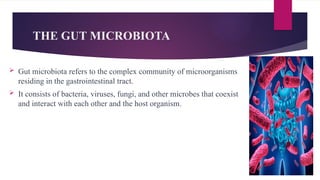
THE GUT MICROBIOTA
 Gut microbiota refers to the complex community of microorganisms
residing in the gastrointestinal tract.
 It consists of bacteria, viruses, fungi, and other microbes that coexist
and interact with each other and the host organism.
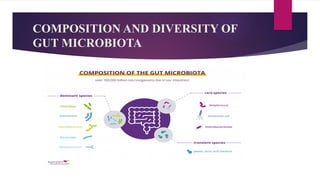
COMPOSITION AND DIVERSITY OF GUT MICROBIOTA
 The gut microbiota is highly diverse, consisting of thousands of different
microbial species.
 Bacteria are the most abundant microbes in the gut, with hundreds of
different species present.
 Other microorganisms, such as viruses and fungi, are also part of the gut
microbiota, albeit in smaller quantities.
 The composition of gut microbiota can vary significantly between
individuals, influenced by factors such as age, diet, geography, genetics,
and lifestyle.
COMPOSITION AND DIVERSITY OF
GUT MICROBIOTA
Factors Affecting Gut Microbiota
 Diet: A diet rich in fiber promotes the growth of beneficial bacteria, while a
diet high in sugar and processed foods may disrupt the microbial balance.
 Antibiotics: Antibiotic use can disrupt the gut microbiota by killing both
harmful and beneficial bacteria, leading to imbalances and potential health
consequences.
 Birth and Early Life: The mode of delivery (vaginal birth vs. cesarean
section) and early feeding practices (breastfeeding vs. formula feeding).
Gut-Brain Axis
 The gut-brain axis refers to the bidirectional communication system between
the gut and the brain.
 It involves a complex network of biochemical signaling and neural pathways
connecting the gastrointestinal tract and the central nervous system.
 The gut and the brain communicate through various channels, including the
nervous system, hormones, immune system, and gut microbiota.
 The gut-brain axis plays a crucial role in maintaining homeostasis,
regulating mood, stress response, immune function, and overall mental well-
being.
Bidirectional Communication between the Gut and the Brain
 Nervous System: The gut and the brain are connected through a complex
network of nerves, including the vague nerve. This allows for the bidirectional
transmission of signals.
 Hormonal Signaling: Various hormones produced in the gut, such as
serotonin and ghrelin, can travel through the bloodstream and reach the brain.
 Gut Microbiota: The gut microbiota, composed of trillions of
microorganisms, can produce various metabolites and neurotransmitters.
These compounds can enter the bloodstream and reach the brain, influencing
brain function and behavior.
Bidirectional Communication between the Gut and the Brain
 Neurotransmitters: The gut produces and releases
neurotransmitters, such as serotonin, dopamine, and gamma-
aminobutyric acid (GABA), which are critical for mood regulation
and mental health.
 Inflammation: Inflammatory signals originating in the gut can
affect the brain. Chronic inflammation in the gut can lead to the
production of pro-inflammatory molecules that can cross the blood-
brain barrier and impact brain function.
 Psychological Factors: stress, anxiety, and emotions, can influence
gut function
Neurotransmitters and Gut Microbiota
 Neurotransmitters are chemical messengers that play a vital role in
communication between nerve cells in the brain.
 They are involved in regulating various mental processes, including
mood, emotions, cognition, and behavior.
 Imbalances or deficiencies in neurotransmitters have been associated with
mental health disorders such as depression, anxiety, and schizophrenia.
 Examples of important neurotransmitters include serotonin, dopamine,
norepinephrine, and gamma-aminobutyric acid (GABA).
Neurotransmitters REGULATION and Gut Microbiota
 Gut microbiota can produce and regulate the production of
neurotransmitters within the gastrointestinal tract.
 Certain strains of gut bacteria have the ability to synthesize
neurotransmitters, including serotonin and GABA.
 The production of neurotransmitters by gut microbiota can influence
the levels and availability of these neurotransmitters in the brain.
 Changes in the composition and activity of gut microbiota can impact
neurotransmitter production, potentially influencing mental health.
Serotonin and Mental Health
 Serotonin is a neurotransmitter that plays a crucial role in mood
regulation and emotional well-being.
 It is often referred to as the "feel-good" neurotransmitter due to its
positive impact on mood and happiness.
 Serotonin helps regulate various physiological functions, including
sleep, appetite, and pain perception.
 Imbalances in serotonin levels have been associated with mood
disorders such as depression and anxiety.
Serotonin production through gut microbiota and Mental Health
 Gut microbiota plays a significant role in the production and
regulation of serotonin within the body.
 Certain strains of gut bacteria have the ability to produce serotonin.
 Gut microbiota can influence serotonin levels by modulating the
availability of its precursor, tryptophan, which is obtained through
the diet.
 Disruptions in the gut microbiota composition or dysbiosis may
lead to alterations in serotonin production and metabolism.
Gut Microbiota and Stress Response
 Gut microbiota has bidirectional communication with the brain,
allowing it to influence and be influenced by the stress response.
 The gut microbiota can modulate the body's stress response through
the production of neurotransmitters, such as serotonin and gamma-
aminobutyric acid (GABA), which can affect mood and stress levels.
 Gut microbiota can also interact with the hypothalamic-pituitary-
adrenal (HPA) axis, which plays a central role in the body's stress
response.
Impact of Stress on gut microbiota composition
 Stress, particularly chronic or severe stress, can lead to alterations
in gut microbiota composition and diversity.
 Stress can disrupt the balance of beneficial and harmful bacteria in
the gut, leading to dysbiosis.
 Stress-related changes in gut microbiota composition can affect gut
barrier function, immune responses, and inflammation levels.
 These alterations in gut microbiota composition and function may
contribute to stress-related gastrointestinal symptoms and
disorders.
Gut Microbiota and Depression
 Gut dysbiosis refers to an imbalance or disruption in the composition and function of
the gut microbiota.
 Research has shown a significant association between gut dysbiosis and depression,
suggesting a potential link between gut health and mental well-being.
 Imbalances in gut microbiota can lead to increased intestinal permeability, allowing
harmful substances to enter the bloodstream and trigger inflammation.
 Dysbiosis-induced inflammation can affect the production and availability of
neurotransmitters like serotonin, which are essential for mood regulation.
 Gut dysbiosis may impact the gut-brain axis and disrupt communication between the
gut and the brain.
Research studies linking gut microbiota with depression
 Several studies have observed alterations in gut microbiota
composition in individuals with depression compared to healthy
individuals.
 One study found that individuals with depression had reduced
levels of certain beneficial bacteria, such as Bifidobacterium and
Lactobacillus, and increased levels of potentially harmful bacteria.
 Animal studies have demonstrated that transplanting gut microbiota
from depressed individuals into germ-free mice can induce
depressive-like behaviors, providing further evidence of the gut-
brain connection.
Continue..
 Interventions targeting gut microbiota, such as probiotics and
prebiotics, have shown promising results in alleviating depressive
symptoms in both animal models and human clinical trials.
 Additionally, fecal microbiota transplantation (FMT), which
involves transferring fecal matter from a healthy donor to a
recipient, has shown potential in improving depressive symptoms
in some individuals.
Gut Microbiota and Alzheimer's Disease
 Emerging research suggests a potential relationship between gut
microbiota and Alzheimer's disease, a neurodegenerative disorder
characterized by cognitive decline and memory loss.
 Alterations in gut microbiota composition and function have been
observed in individuals with Alzheimer's disease compared to
healthy individuals.
 Disruptions in gut microbiota may contribute to the development
and progression of Alzheimer's disease through various
mechanisms, including inflammation, immune system activation,
and production of neurotoxic metabolites.
Gut Microbiota and Alzheimer's Disease
 The gut-brain axis plays a crucial role in this relationship, as gut
microbiota can influence brain health and function, potentially
impacting the pathogenesis of Alzheimer's disease.
 Dysbiosis-induced inflammation and impaired gut barrier function
may lead to the leakage of bacterial products into the bloodstream,
triggering systemic inflammation and neuroinflammation, which
are associated with Alzheimer's disease.
 Gut microbiota can modulate neuroinflammation and the
accumulation of amyloid-beta plaques, which are characteristic
features of Alzheimer's disease.
Potential mechanism and therapeutic implications
 Modulating gut microbiota through interventions like probiotics, prebiotics, and
dietary changes may have therapeutic implications for Alzheimer's disease.
 Animal studies have shown that specific probiotic strains can improve cognitive
function and reduce Alzheimer's pathology.
 Fecal microbiota transplantation (FMT) is being explored as a potential therapeutic
approach to modulate gut microbiota and improve cognitive function in Alzheimer's
disease.
 Further research is needed to fully understand the complex relationship between gut
microbiota and Alzheimer's disease and to develop targeted interventions for
prevention and treatment.
Gut Microbiota and Cognitive Function
 Gut microbiota has been shown to have a significant influence on cognitive function,
including memory, learning, and decision-making.
 The gut microbiota produces various compounds, such as neurotransmitters, short-chain
fatty acids, and metabolites, which can directly or indirectly impact brain function.
 Gut microbiota-derived metabolites, like butyrate, have been associated with enhanced
cognitive function and neuroprotective effects.
 Certain strains of gut bacteria can produce neurotransmitters, such as serotonin and
gamma-aminobutyric acid (GABA), which play a role in cognitive processes.
 Imbalances or disruptions in gut microbiota composition, known as dysbiosis, have been
linked to cognitive impairment, neurodegenerative diseases, and psychiatric disorders.
Gut-brain axis and age-related cognitive decline
 The gut-brain axis, the bidirectional communication system between the
gut and the brain, plays a crucial role in age-related cognitive decline.
 Age-related changes in gut microbiota composition have been observed,
including a decrease in microbial diversity and alterations in beneficial
and harmful bacteria.
 Dysbiosis of the gut microbiota in older adults has been associated with
cognitive decline, including impairments in memory and executive
function.
Gut-brain axis and age-related cognitive
decline
 Age-related dysregulation of the gut-brain axis can lead to increased
inflammation, oxidative stress, and neuroinflammation, which contribute
to cognitive decline.
 The integrity of the gut barrier may also be compromised with age,
allowing harmful substances to enter the bloodstream and impact brain
health.
 Modulating the gut microbiota through interventions like probiotics,
prebiotics, and dietary modifications may have the potential to improve
cognitive function and mitigate age-related cognitive decline
Gut Microbiota and Neurodevelopmental Disorders
 The gut-brain axis has been implicated in the pathogenesis of
neurodevelopmental disorders such as autism spectrum disorder
(ASD) and attention deficit hyperactivity disorder (ADHD).
 Alterations in gut microbiota composition, known as dysbiosis,
have been observed in individuals with neurodevelopmental
disorders.
 Dysbiosis-induced changes in gut microbiota can impact brain
development and function, potentially contributing to the
development of neurodevelopmental disorders.
Gut Microbiota and Neurodevelopmental
Disorders
 Disruptions in the gut-brain axis can lead to abnormal
neurotransmitter signaling, inflammation, impaired gut barrier
function, and oxidative stress, which may play a role in the
pathophysiology of these disorders.
 Emerging evidence suggests that the gut microbiota can influence
social behavior, cognition, and emotional regulation, which are
often affected in individuals with neurodevelopmental disorders.
Potential intervention targeting gut microbiota
 Probiotics, have been investigated as a potential intervention for
neurodevelopmental disorders. They aim to restore a healthy
balance of gut microbiota.
 Prebiotics can also modulate the gut microbiota and have shown
promise in improving symptoms associated with
neurodevelopmental disorders.
 Dietary modifications like the gluten-free, casein-free (GFCF) diet,
have been explored as potential interventions
 Fecal microbiota transplantation (FMT), the transfer of fecal matter
from a healthy donor to a recipient
Gut Microbiota and Bipolar Disorder
Gut Microbiota targeted therapies for bipolar disorder
 Modulating gut microbiota through targeted therapies is an
emerging area of research for bipolar disorder.
 Probiotics, such as specific strains of Lactobacillus and
Bifidobacterium, have shown potential in improving mood
symptoms and reducing the severity of depressive and manic
episodes.
 Prebiotics, which promote the growth of beneficial gut bacteria,
may also be considered as a therapeutic approach to modulate gut
microbiota in bipolar disorder.
Gut Microbiota targeted therapies for
bipolar disorder
 Dietary interventions, including a Mediterranean-style diet rich in
fruits, vegetables, whole grains, and lean proteins, have been
associated with improved mood stability and may indirectly
influence gut microbiota composition.
 Additional research is needed to understand the specific
mechanisms underlying gut microbiota-targeted therapies and their
effectiveness in bipolar disorder.
Gut Microbiota and Schizophrenia
 Emerging research suggests that individuals with schizophrenia
may exhibit alterations in gut microbiota composition compared to
healthy individuals.
 Dysbiosis, characterized by imbalances in beneficial and harmful
bacteria, has been observed in individuals with schizophrenia.
 Disruptions in gut microbiota composition may contribute to
inflammation, immune dysregulation, and abnormal
neurotransmitter signaling, which are associated with
schizophrenia.
Symptoms
 Altered gut microbiota composition in schizophrenia may be associated
with symptoms such as cognitive impairments, mood disturbances, and
gastrointestinal problems commonly reported by individuals with the
disorder.
 Dysbiosis-induced inflammation and immune dysregulation may play a
role in the exacerbation of symptoms in schizophrenia.
 Gut microbiota alterations may interact with antipsychotic medications,
potentially impacting treatment response and side effects experienced by
individuals with schizophrenia.
Potential therapeutic strategies
 Probiotics, specifically strains of Lactobacillus and
Bifidobacterium, have shown promise in reducing symptom
severity and improving cognitive function in individuals with
schizophrenia.
 Prebiotics, which promote the growth of beneficial gut bacteria,
may also be explored as a therapeutic approach to modulate gut
microbiota in schizophrenia.
 Dietary modifications, such as adopting a healthy and balanced
diet, may indirectly influence gut microbiota composition and
improve symptoms in schizophrenia.
Gut Microbiota and Attention Deficit Hyperactivity Disorder (ADHD)
Gut Microbiota and Attention Deficit
Hyperactivity Disorder (ADHD)
 Dysbiosis, or imbalances in gut microbiota, may contribute to
neuroinflammation, oxidative stress, and abnormalities in
neurotransmitter signaling, which are associated with ADHD
symptoms.
 Disruptions in the gut-brain axis can impact cognitive function,
behavior, and emotional regulation, potentially influencing the
development and severity of ADHD.
Gut Microbiota Intervention in Attention Deficit Hyperactivity Disorder
(ADHD) Management
 Probiotics, specifically strains of Bifidobacterium and
Lactobacillus, have shown promise in improving ADHD
symptoms, including inattention, hyperactivity, and impulsivity.
 Prebiotics, such as dietary fibers that promote the growth of
beneficial bacteria, may also be considered as a therapeutic
approach for modulating gut microbiota in ADHD.
Gut Microbiota Intervention in Attention
Deficit Hyperactivity Disorder (ADHD)
Management
Conclusion
Conclusion
Thank you

The%20gut%20brain-axis-2 which contain connection

  • 1.
    The Gut Brain-Axis:How Gut Microbiota Impacts Mental Health
  • 2.
    INTRODUCTION TO GUTBRAIN AXIS  The gut-brain axis refers to the bidirectional communication system between the gut and the brain.  It involves a complex network of biochemical signaling and neural pathways connecting the gastrointestinal tract and the central nervous system.  The gut and the brain communicate through various channels, including the nervous system, hormones, immune system, and gut microbiota.  Recent research has highlighted the impact of gut microbiota on mental health.
  • 3.
    IMPORTANCE OF GUTMICROBIOTA  Gut microbiota refers to the diverse community of microorganisms residing in the gastrointestinal tract, including bacteria, viruses, fungi, and other microbes.  Gut microbiota plays a vital role in nutrient metabolism, aiding in the digestion and absorption of dietary components, such as fibers and complex carbohydrates.  The gut microbiota produces essential vitamins, such as vitamin K and some B vitamins, which are crucial for overall health.
  • 4.
    IMPOTANCE OF GUTMICROBIOTA  The gut microbiota contributes to the synthesis and regulation of neurotransmitters, such as serotonin, dopamine, and GABA, which are involved in mood, cognition, and behavior.  Emerging research suggests that gut microbiota plays a crucial role in the development and function of the central nervous system, affecting brain health and mental well-being.  Imbalances in gut microbiota, known as dysbiosis, have been associated with various health conditions, including mental health disorders, autoimmune diseases, obesity, and gastrointestinal disorders.
  • 5.
    THE GUT MICROBIOTA Gut microbiota refers to the complex community of microorganisms residing in the gastrointestinal tract.  It consists of bacteria, viruses, fungi, and other microbes that coexist and interact with each other and the host organism.
  • 6.
    COMPOSITION AND DIVERSITYOF GUT MICROBIOTA  The gut microbiota is highly diverse, consisting of thousands of different microbial species.  Bacteria are the most abundant microbes in the gut, with hundreds of different species present.  Other microorganisms, such as viruses and fungi, are also part of the gut microbiota, albeit in smaller quantities.  The composition of gut microbiota can vary significantly between individuals, influenced by factors such as age, diet, geography, genetics, and lifestyle.
  • 7.
    COMPOSITION AND DIVERSITYOF GUT MICROBIOTA
  • 8.
    Factors Affecting GutMicrobiota  Diet: A diet rich in fiber promotes the growth of beneficial bacteria, while a diet high in sugar and processed foods may disrupt the microbial balance.  Antibiotics: Antibiotic use can disrupt the gut microbiota by killing both harmful and beneficial bacteria, leading to imbalances and potential health consequences.  Birth and Early Life: The mode of delivery (vaginal birth vs. cesarean section) and early feeding practices (breastfeeding vs. formula feeding).
  • 9.
    Gut-Brain Axis  Thegut-brain axis refers to the bidirectional communication system between the gut and the brain.  It involves a complex network of biochemical signaling and neural pathways connecting the gastrointestinal tract and the central nervous system.  The gut and the brain communicate through various channels, including the nervous system, hormones, immune system, and gut microbiota.  The gut-brain axis plays a crucial role in maintaining homeostasis, regulating mood, stress response, immune function, and overall mental well- being.
  • 11.
    Bidirectional Communication betweenthe Gut and the Brain  Nervous System: The gut and the brain are connected through a complex network of nerves, including the vague nerve. This allows for the bidirectional transmission of signals.  Hormonal Signaling: Various hormones produced in the gut, such as serotonin and ghrelin, can travel through the bloodstream and reach the brain.  Gut Microbiota: The gut microbiota, composed of trillions of microorganisms, can produce various metabolites and neurotransmitters. These compounds can enter the bloodstream and reach the brain, influencing brain function and behavior.
  • 12.
    Bidirectional Communication betweenthe Gut and the Brain  Neurotransmitters: The gut produces and releases neurotransmitters, such as serotonin, dopamine, and gamma- aminobutyric acid (GABA), which are critical for mood regulation and mental health.  Inflammation: Inflammatory signals originating in the gut can affect the brain. Chronic inflammation in the gut can lead to the production of pro-inflammatory molecules that can cross the blood- brain barrier and impact brain function.  Psychological Factors: stress, anxiety, and emotions, can influence gut function
  • 13.
    Neurotransmitters and GutMicrobiota  Neurotransmitters are chemical messengers that play a vital role in communication between nerve cells in the brain.  They are involved in regulating various mental processes, including mood, emotions, cognition, and behavior.  Imbalances or deficiencies in neurotransmitters have been associated with mental health disorders such as depression, anxiety, and schizophrenia.  Examples of important neurotransmitters include serotonin, dopamine, norepinephrine, and gamma-aminobutyric acid (GABA).
  • 14.
    Neurotransmitters REGULATION andGut Microbiota  Gut microbiota can produce and regulate the production of neurotransmitters within the gastrointestinal tract.  Certain strains of gut bacteria have the ability to synthesize neurotransmitters, including serotonin and GABA.  The production of neurotransmitters by gut microbiota can influence the levels and availability of these neurotransmitters in the brain.  Changes in the composition and activity of gut microbiota can impact neurotransmitter production, potentially influencing mental health.
  • 15.
    Serotonin and MentalHealth  Serotonin is a neurotransmitter that plays a crucial role in mood regulation and emotional well-being.  It is often referred to as the "feel-good" neurotransmitter due to its positive impact on mood and happiness.  Serotonin helps regulate various physiological functions, including sleep, appetite, and pain perception.  Imbalances in serotonin levels have been associated with mood disorders such as depression and anxiety.
  • 16.
    Serotonin production throughgut microbiota and Mental Health  Gut microbiota plays a significant role in the production and regulation of serotonin within the body.  Certain strains of gut bacteria have the ability to produce serotonin.  Gut microbiota can influence serotonin levels by modulating the availability of its precursor, tryptophan, which is obtained through the diet.  Disruptions in the gut microbiota composition or dysbiosis may lead to alterations in serotonin production and metabolism.
  • 17.
    Gut Microbiota andStress Response  Gut microbiota has bidirectional communication with the brain, allowing it to influence and be influenced by the stress response.  The gut microbiota can modulate the body's stress response through the production of neurotransmitters, such as serotonin and gamma- aminobutyric acid (GABA), which can affect mood and stress levels.  Gut microbiota can also interact with the hypothalamic-pituitary- adrenal (HPA) axis, which plays a central role in the body's stress response.
  • 18.
    Impact of Stresson gut microbiota composition  Stress, particularly chronic or severe stress, can lead to alterations in gut microbiota composition and diversity.  Stress can disrupt the balance of beneficial and harmful bacteria in the gut, leading to dysbiosis.  Stress-related changes in gut microbiota composition can affect gut barrier function, immune responses, and inflammation levels.  These alterations in gut microbiota composition and function may contribute to stress-related gastrointestinal symptoms and disorders.
  • 19.
    Gut Microbiota andDepression  Gut dysbiosis refers to an imbalance or disruption in the composition and function of the gut microbiota.  Research has shown a significant association between gut dysbiosis and depression, suggesting a potential link between gut health and mental well-being.  Imbalances in gut microbiota can lead to increased intestinal permeability, allowing harmful substances to enter the bloodstream and trigger inflammation.  Dysbiosis-induced inflammation can affect the production and availability of neurotransmitters like serotonin, which are essential for mood regulation.  Gut dysbiosis may impact the gut-brain axis and disrupt communication between the gut and the brain.
  • 20.
    Research studies linkinggut microbiota with depression  Several studies have observed alterations in gut microbiota composition in individuals with depression compared to healthy individuals.  One study found that individuals with depression had reduced levels of certain beneficial bacteria, such as Bifidobacterium and Lactobacillus, and increased levels of potentially harmful bacteria.  Animal studies have demonstrated that transplanting gut microbiota from depressed individuals into germ-free mice can induce depressive-like behaviors, providing further evidence of the gut- brain connection.
  • 21.
    Continue..  Interventions targetinggut microbiota, such as probiotics and prebiotics, have shown promising results in alleviating depressive symptoms in both animal models and human clinical trials.  Additionally, fecal microbiota transplantation (FMT), which involves transferring fecal matter from a healthy donor to a recipient, has shown potential in improving depressive symptoms in some individuals.
  • 22.
    Gut Microbiota andAlzheimer's Disease  Emerging research suggests a potential relationship between gut microbiota and Alzheimer's disease, a neurodegenerative disorder characterized by cognitive decline and memory loss.  Alterations in gut microbiota composition and function have been observed in individuals with Alzheimer's disease compared to healthy individuals.  Disruptions in gut microbiota may contribute to the development and progression of Alzheimer's disease through various mechanisms, including inflammation, immune system activation, and production of neurotoxic metabolites.
  • 23.
    Gut Microbiota andAlzheimer's Disease  The gut-brain axis plays a crucial role in this relationship, as gut microbiota can influence brain health and function, potentially impacting the pathogenesis of Alzheimer's disease.  Dysbiosis-induced inflammation and impaired gut barrier function may lead to the leakage of bacterial products into the bloodstream, triggering systemic inflammation and neuroinflammation, which are associated with Alzheimer's disease.  Gut microbiota can modulate neuroinflammation and the accumulation of amyloid-beta plaques, which are characteristic features of Alzheimer's disease.
  • 24.
    Potential mechanism andtherapeutic implications  Modulating gut microbiota through interventions like probiotics, prebiotics, and dietary changes may have therapeutic implications for Alzheimer's disease.  Animal studies have shown that specific probiotic strains can improve cognitive function and reduce Alzheimer's pathology.  Fecal microbiota transplantation (FMT) is being explored as a potential therapeutic approach to modulate gut microbiota and improve cognitive function in Alzheimer's disease.  Further research is needed to fully understand the complex relationship between gut microbiota and Alzheimer's disease and to develop targeted interventions for prevention and treatment.
  • 25.
    Gut Microbiota andCognitive Function  Gut microbiota has been shown to have a significant influence on cognitive function, including memory, learning, and decision-making.  The gut microbiota produces various compounds, such as neurotransmitters, short-chain fatty acids, and metabolites, which can directly or indirectly impact brain function.  Gut microbiota-derived metabolites, like butyrate, have been associated with enhanced cognitive function and neuroprotective effects.  Certain strains of gut bacteria can produce neurotransmitters, such as serotonin and gamma-aminobutyric acid (GABA), which play a role in cognitive processes.  Imbalances or disruptions in gut microbiota composition, known as dysbiosis, have been linked to cognitive impairment, neurodegenerative diseases, and psychiatric disorders.
  • 26.
    Gut-brain axis andage-related cognitive decline  The gut-brain axis, the bidirectional communication system between the gut and the brain, plays a crucial role in age-related cognitive decline.  Age-related changes in gut microbiota composition have been observed, including a decrease in microbial diversity and alterations in beneficial and harmful bacteria.  Dysbiosis of the gut microbiota in older adults has been associated with cognitive decline, including impairments in memory and executive function.
  • 27.
    Gut-brain axis andage-related cognitive decline  Age-related dysregulation of the gut-brain axis can lead to increased inflammation, oxidative stress, and neuroinflammation, which contribute to cognitive decline.  The integrity of the gut barrier may also be compromised with age, allowing harmful substances to enter the bloodstream and impact brain health.  Modulating the gut microbiota through interventions like probiotics, prebiotics, and dietary modifications may have the potential to improve cognitive function and mitigate age-related cognitive decline
  • 28.
    Gut Microbiota andNeurodevelopmental Disorders  The gut-brain axis has been implicated in the pathogenesis of neurodevelopmental disorders such as autism spectrum disorder (ASD) and attention deficit hyperactivity disorder (ADHD).  Alterations in gut microbiota composition, known as dysbiosis, have been observed in individuals with neurodevelopmental disorders.  Dysbiosis-induced changes in gut microbiota can impact brain development and function, potentially contributing to the development of neurodevelopmental disorders.
  • 29.
    Gut Microbiota andNeurodevelopmental Disorders  Disruptions in the gut-brain axis can lead to abnormal neurotransmitter signaling, inflammation, impaired gut barrier function, and oxidative stress, which may play a role in the pathophysiology of these disorders.  Emerging evidence suggests that the gut microbiota can influence social behavior, cognition, and emotional regulation, which are often affected in individuals with neurodevelopmental disorders.
  • 30.
    Potential intervention targetinggut microbiota  Probiotics, have been investigated as a potential intervention for neurodevelopmental disorders. They aim to restore a healthy balance of gut microbiota.  Prebiotics can also modulate the gut microbiota and have shown promise in improving symptoms associated with neurodevelopmental disorders.  Dietary modifications like the gluten-free, casein-free (GFCF) diet, have been explored as potential interventions  Fecal microbiota transplantation (FMT), the transfer of fecal matter from a healthy donor to a recipient
  • 31.
    Gut Microbiota andBipolar Disorder
  • 32.
    Gut Microbiota targetedtherapies for bipolar disorder  Modulating gut microbiota through targeted therapies is an emerging area of research for bipolar disorder.  Probiotics, such as specific strains of Lactobacillus and Bifidobacterium, have shown potential in improving mood symptoms and reducing the severity of depressive and manic episodes.  Prebiotics, which promote the growth of beneficial gut bacteria, may also be considered as a therapeutic approach to modulate gut microbiota in bipolar disorder.
  • 33.
    Gut Microbiota targetedtherapies for bipolar disorder  Dietary interventions, including a Mediterranean-style diet rich in fruits, vegetables, whole grains, and lean proteins, have been associated with improved mood stability and may indirectly influence gut microbiota composition.  Additional research is needed to understand the specific mechanisms underlying gut microbiota-targeted therapies and their effectiveness in bipolar disorder.
  • 34.
    Gut Microbiota andSchizophrenia  Emerging research suggests that individuals with schizophrenia may exhibit alterations in gut microbiota composition compared to healthy individuals.  Dysbiosis, characterized by imbalances in beneficial and harmful bacteria, has been observed in individuals with schizophrenia.  Disruptions in gut microbiota composition may contribute to inflammation, immune dysregulation, and abnormal neurotransmitter signaling, which are associated with schizophrenia.
  • 35.
    Symptoms  Altered gutmicrobiota composition in schizophrenia may be associated with symptoms such as cognitive impairments, mood disturbances, and gastrointestinal problems commonly reported by individuals with the disorder.  Dysbiosis-induced inflammation and immune dysregulation may play a role in the exacerbation of symptoms in schizophrenia.  Gut microbiota alterations may interact with antipsychotic medications, potentially impacting treatment response and side effects experienced by individuals with schizophrenia.
  • 36.
    Potential therapeutic strategies Probiotics, specifically strains of Lactobacillus and Bifidobacterium, have shown promise in reducing symptom severity and improving cognitive function in individuals with schizophrenia.  Prebiotics, which promote the growth of beneficial gut bacteria, may also be explored as a therapeutic approach to modulate gut microbiota in schizophrenia.  Dietary modifications, such as adopting a healthy and balanced diet, may indirectly influence gut microbiota composition and improve symptoms in schizophrenia.
  • 37.
    Gut Microbiota andAttention Deficit Hyperactivity Disorder (ADHD)
  • 38.
    Gut Microbiota andAttention Deficit Hyperactivity Disorder (ADHD)  Dysbiosis, or imbalances in gut microbiota, may contribute to neuroinflammation, oxidative stress, and abnormalities in neurotransmitter signaling, which are associated with ADHD symptoms.  Disruptions in the gut-brain axis can impact cognitive function, behavior, and emotional regulation, potentially influencing the development and severity of ADHD.
  • 39.
    Gut Microbiota Interventionin Attention Deficit Hyperactivity Disorder (ADHD) Management  Probiotics, specifically strains of Bifidobacterium and Lactobacillus, have shown promise in improving ADHD symptoms, including inattention, hyperactivity, and impulsivity.  Prebiotics, such as dietary fibers that promote the growth of beneficial bacteria, may also be considered as a therapeutic approach for modulating gut microbiota in ADHD.
  • 40.
    Gut Microbiota Interventionin Attention Deficit Hyperactivity Disorder (ADHD) Management
  • 41.
  • 42.
  • 43.