HELICOBACTER
PYLORI
MSC-II
MI-1414
FOOD MICROBIOLOGY
ISA-2
GOA UNIVERSITY
introduction
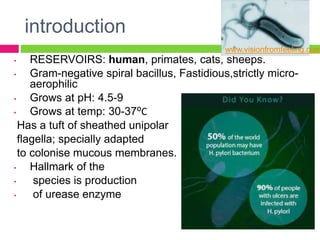
• RESERVOIRS: human, primates, cats, sheeps.
• Gram-negative spiral bacillus, Fastidious,strictly micro-
aerophilic
• Grows at pH: 4.5-9
• Grows at temp: 30-37⁰C
Has a tuft of sheathed unipolar
flagella; specially adapted
to colonise mucous membranes.
• Hallmark of the
• species is production
• of urease enzyme
www.visionfromfeeling.com
Disease
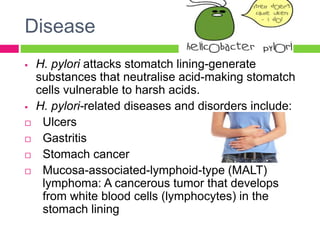
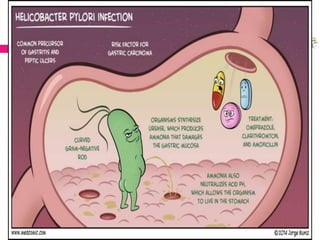
 H. pylori attacks stomatch lining-generate
substances that neutralise acid-making stomatch
cells vulnerable to harsh acids.
 H. pylori-related diseases and disorders include:
 Ulcers
 Gastritis
 Stomach cancer
 Mucosa-associated-lymphoid-type (MALT)
lymphoma: A cancerous tumor that develops
from white blood cells (lymphocytes) in the
stomach lining
TREATMENT
 SUPPLEMENTS FOR THE TREATMENT OF H.PYLORI
 Antioxidants: Vitamins A,C,E and selenium, N-acetyl cysteine,
alpha lipoic acid.
 Probiotics: Lactobacillus salivarius and Lactobacillus acidophilus
 Multivitamin and mineral
 Gastro-intestinal: (where appropriate) Hydrochloric acid (HCl),
digestive enzymes, L-Glutamine
 Antibacterials: Garlic, citrus seed extract, mastic gum, berberine
 Antibiotics: Amoxicillan, clarithromycin, metronidazole and
tetracycline, which kill bacteria.
 Proton Pump Inhibitors: Lansoprazole (Prevacid) and Omeprazole
(Prilosec), which reduce the production of stomach acid
 Anti-diarrheal medicine: Bismuth subsalicylate (Pepto Bismal),
which reduces inflammation and may help kill bacteria
sources
 Consumption of sewage-contaminated
drinking water and vegetables.
 Consumption of uncooked vegetables irrigated
with sewage contaminated water.
 H. pylori can survive in low acid environment
under refrigerated conditions in some foods,
such as fresh fruit and vegetables, fresh
poultry or fish, fresh meats, and some dairy
products and milk
 Food contaminated with Candida species
bearing intracellular H. pylori- important in
food industry
transmission
 Person to person transmission
 Fecal-oral
 oral- oral
 iatrogenic
prevention
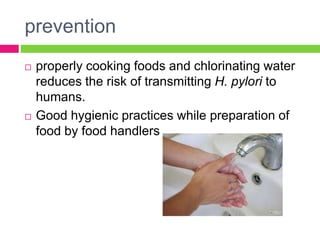
 properly cooking foods and chlorinating water
reduces the risk of transmitting H. pylori to
humans.
 Good hygienic practices while preparation of
food by food handlers
Food to be avoided
 Foods to be avoided in any H. pylori diet are
those sugar which can be used by the
bacteria, chocolate, coffee, dairy products, red
and processed meat, pickled products, refined
grains, salt, and spirits.
 H. pylori is unlikely to grow in food, but it may
survive in a viable but nonculturable form.
references
 Brown LM Helicobacter pylori: epidemiology and routes of
transmission(2000) Epidemiological Review 22(2):283-97
 Hanifi Körkoca, Dicle Yalçın, Bayram Yasemin, İrfan Bayram,
Mustafa Berktaş(2015) Helicobacter pylori Stool Antigen
Feco-prevalence in Food Workers in Van, Turkey Journal of
Microbiology and Infectious Diseases 5(1):10-14
 Herrera AG (2004) Helicobacter pylori and food products: a
public health problem Methods in Molecular Biology 268:297-
301
 Kabir AMA, Aiba Y, Takagi A, Kamiya S, Miwa T, Koga Y
Prevention of Helicobacter pylori infection by lactobacilli in a
gnotobiotic murine model (1997 )Gut 41: 49-55
 Yvonne T.H.P. van Duynhoven and Rob de Jonge (2001)
Transmission of Helicobacter pylori : a rolefor food? Bulletin
of the World Health Organization, 79 (5)

helicobacter pylori

  • 1.
  • 2.
    introduction • RESERVOIRS: human,primates, cats, sheeps. • Gram-negative spiral bacillus, Fastidious,strictly micro- aerophilic • Grows at pH: 4.5-9 • Grows at temp: 30-37⁰C Has a tuft of sheathed unipolar flagella; specially adapted to colonise mucous membranes. • Hallmark of the • species is production • of urease enzyme www.visionfromfeeling.com
  • 3.
    Disease  H. pyloriattacks stomatch lining-generate substances that neutralise acid-making stomatch cells vulnerable to harsh acids.  H. pylori-related diseases and disorders include:  Ulcers  Gastritis  Stomach cancer  Mucosa-associated-lymphoid-type (MALT) lymphoma: A cancerous tumor that develops from white blood cells (lymphocytes) in the stomach lining
  • 4.
    TREATMENT  SUPPLEMENTS FORTHE TREATMENT OF H.PYLORI  Antioxidants: Vitamins A,C,E and selenium, N-acetyl cysteine, alpha lipoic acid.  Probiotics: Lactobacillus salivarius and Lactobacillus acidophilus  Multivitamin and mineral  Gastro-intestinal: (where appropriate) Hydrochloric acid (HCl), digestive enzymes, L-Glutamine  Antibacterials: Garlic, citrus seed extract, mastic gum, berberine  Antibiotics: Amoxicillan, clarithromycin, metronidazole and tetracycline, which kill bacteria.  Proton Pump Inhibitors: Lansoprazole (Prevacid) and Omeprazole (Prilosec), which reduce the production of stomach acid  Anti-diarrheal medicine: Bismuth subsalicylate (Pepto Bismal), which reduces inflammation and may help kill bacteria
  • 5.
    sources  Consumption ofsewage-contaminated drinking water and vegetables.  Consumption of uncooked vegetables irrigated with sewage contaminated water.  H. pylori can survive in low acid environment under refrigerated conditions in some foods, such as fresh fruit and vegetables, fresh poultry or fish, fresh meats, and some dairy products and milk  Food contaminated with Candida species bearing intracellular H. pylori- important in food industry
  • 6.
    transmission  Person toperson transmission  Fecal-oral  oral- oral  iatrogenic
  • 8.
    prevention  properly cookingfoods and chlorinating water reduces the risk of transmitting H. pylori to humans.  Good hygienic practices while preparation of food by food handlers
  • 9.
    Food to beavoided  Foods to be avoided in any H. pylori diet are those sugar which can be used by the bacteria, chocolate, coffee, dairy products, red and processed meat, pickled products, refined grains, salt, and spirits.  H. pylori is unlikely to grow in food, but it may survive in a viable but nonculturable form.
  • 10.
    references  Brown LMHelicobacter pylori: epidemiology and routes of transmission(2000) Epidemiological Review 22(2):283-97  Hanifi Körkoca, Dicle Yalçın, Bayram Yasemin, İrfan Bayram, Mustafa Berktaş(2015) Helicobacter pylori Stool Antigen Feco-prevalence in Food Workers in Van, Turkey Journal of Microbiology and Infectious Diseases 5(1):10-14  Herrera AG (2004) Helicobacter pylori and food products: a public health problem Methods in Molecular Biology 268:297- 301  Kabir AMA, Aiba Y, Takagi A, Kamiya S, Miwa T, Koga Y Prevention of Helicobacter pylori infection by lactobacilli in a gnotobiotic murine model (1997 )Gut 41: 49-55  Yvonne T.H.P. van Duynhoven and Rob de Jonge (2001) Transmission of Helicobacter pylori : a rolefor food? Bulletin of the World Health Organization, 79 (5)