
METHODS OF LEARNING 
EDUCATION
THERE ARE FOUR METHODS OF LEARNING ; 
LEARNING BY TRIAL AND ERROR 
LEARNING BY IMITATION 
LEARNIG BY INSIGHT 
LEARNIG BY DOING
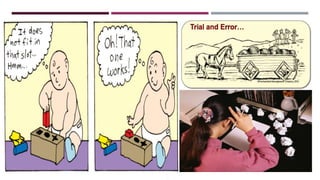
LEARNING BY TRIAL AND ERROR 
 In the cases discussed the common factors are; 
 Problem is felt 
 Need to solve the problem is also felt 
 Effort to solve the problem is made 
 On failure the effort is made again and again 
 The effort was made by chance the solution is found 
 On finding the solution the acts are memorized
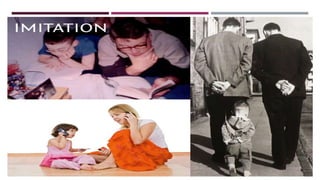
LEARNING BY IMITATION 
 Imitation is an advanced behavior whereby an individual observes and 
replicates another's behavior. Imitation is also a form of social 
learning that leads to the "development of traditions, and ultimately 
our culture. It allows for the transfer of information (behaviours, 
customs, etc.) between individuals and down generations without the 
need for genetic inheritance. 
 The ability to copy the actions of others is present from birth in both 
infant humans and chimpanzees and provides a method for the social 
transmission of knowledge. For this type of learning to have an impact 
over the long-term, the infant must be able to encode, store, and 
retrieve the information they receive for use at a later date.
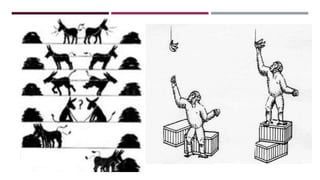
LEARNIG BY INSIGHT 
 A mental process marked by the sudden and expected 
solution to a problem. 
 Insight learning does not involve gradual shaping or trial and 
error. Instead, internal organizational processes occur that 
cause new behavior. 
 Insight learning occurs when a new behavior is learned 
through cognitive processes rather than through interactions 
with the outside world. 

LEARNIG BY DOING 
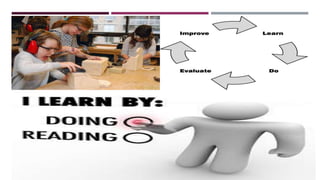
 There is really only one way to learn how to do something 
and that is to do it. If you want to learn to throw a football, 
drive a car, build a mousetrap, design a building, cook a stir-fry, 
or be a management consultant, you must have a go at 
doing it. 
What the people do in learning by doing is; 
 The aims are determined 
 The difficulty is identified 
 The ways to solve, the knowledge and skills needed are 
identified
The end 
THANK YOU

Methods of learning

  • 1.
  • 2.
    THERE ARE FOURMETHODS OF LEARNING ; LEARNING BY TRIAL AND ERROR LEARNING BY IMITATION LEARNIG BY INSIGHT LEARNIG BY DOING
  • 4.
    LEARNING BY TRIALAND ERROR  In the cases discussed the common factors are;  Problem is felt  Need to solve the problem is also felt  Effort to solve the problem is made  On failure the effort is made again and again  The effort was made by chance the solution is found  On finding the solution the acts are memorized
  • 6.
    LEARNING BY IMITATION  Imitation is an advanced behavior whereby an individual observes and replicates another's behavior. Imitation is also a form of social learning that leads to the "development of traditions, and ultimately our culture. It allows for the transfer of information (behaviours, customs, etc.) between individuals and down generations without the need for genetic inheritance.  The ability to copy the actions of others is present from birth in both infant humans and chimpanzees and provides a method for the social transmission of knowledge. For this type of learning to have an impact over the long-term, the infant must be able to encode, store, and retrieve the information they receive for use at a later date.
  • 8.
    LEARNIG BY INSIGHT  A mental process marked by the sudden and expected solution to a problem.  Insight learning does not involve gradual shaping or trial and error. Instead, internal organizational processes occur that cause new behavior.  Insight learning occurs when a new behavior is learned through cognitive processes rather than through interactions with the outside world. 
  • 10.
    LEARNIG BY DOING  There is really only one way to learn how to do something and that is to do it. If you want to learn to throw a football, drive a car, build a mousetrap, design a building, cook a stir-fry, or be a management consultant, you must have a go at doing it. What the people do in learning by doing is;  The aims are determined  The difficulty is identified  The ways to solve, the knowledge and skills needed are identified
  • 11.