
“CURRENT
PERSPECTIVE IN
PSYCHOLOGY IN
DETAIL”
PSYCHOLOGY PERSPECTIVE:
Most modern psychologists do not adhere to any of the early
schools of psychology that can be readily distinguished in
terms of concepts, assumptions, methods and the behavior they
study. Although some psychologists identify themselves as
behaviorist or psychoanalyst, but most psychologists are
eclectic. They borrow assumptions and concepts from different
theories in accordance with the demands of the particular
situation. Consequently certain new theoretical twentieth
century providing a rich variety of viewpoints to
psychologists. The following six perspectives represent the
major approaches to the modern study of psychology.
BEHAVIOURAL PERSPECTIVE;
Behaviorism is concerned with how environmental factors
(called stimuli) affect observable behavior (called the
response). The behaviorist approach proposes two main
processes: namely classicalconditioning and operant
conditioning. Classical conditioning involves learning by
association, and operant conditioning involves learning from
the consequences of behavior. Behaviorism also believes
in scientific methodology and that only observable behavior
should be studies because this can be objectively measured.
Behaviorism rejects the idea that people have free will, and
believes that the environment determines all behavior.
Behaviorism is the scientific study of observable behavior
working on the basis that behavior can be reduced to learn S-R
(Stimulus-Response) units.
Classical conditioning was studied by the psychologist Ivan
Pavlov. Though looking into natural reflexes and neutral
stimuli he managed to condition dogs to salivate to the sound
of a bell through repeated associated of the sound of the bell
and food. The principles of CC have been applied in many
therapies.
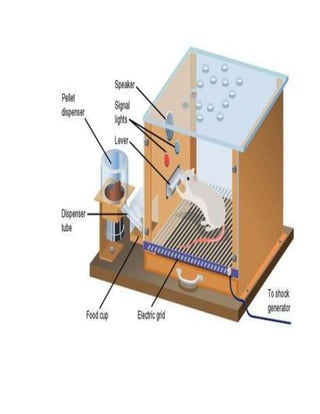
B.F. Skinner investigated operant conditioning of voluntary
and involuntary behavior. He felt that some behavior could be
explained by the person's motive. Therefore behavior occurs
for a reason, and the three main behavior shaping techniques
are positive reinforcement, negative reinforcement and
punishment.
COGNITIVE PERSPECTIVE;
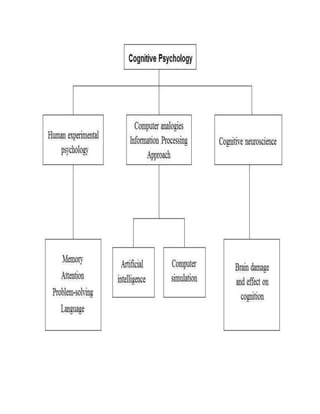
Cognitive Psychology revolves around the notion that if
we want to know what makes peopletick then the way to
do it is to figure out what processes are actuallygoing on
in their minds. In other words, psychologists from this
perspective study cognition which is ‘the mental act or
process by which knowledge is acquired.’ The cognitive
perspective is concernedwith “mental” functions such
as memory, perception,attentionetc. It views peopleas
being similar to computers in the way we process
information (e.g. input-process-output). For example,
both human brains and computers process information,
store data and have input and output procedures. This had
led cognitive psychologists to explain that memory
comprises of three stages: encoding(where information is
received and attended to), storage (where the information
is retained) and retrieval (where the information is
recalled).It is an extremely scientific approach and
typically uses lab experiments to study human behavior.
The cognitive approach has many applications
includingcognitive therapy and eyewitness testimony.
PSYCHODYNAMIC
PERSPECTIVE; who hasn't heard of Sigmund
Freud? So many expressions from our daily life come
from Freud's theories of psychoanalysis - subconscious,
denial, repression and anal personalityto name only a few
Freud believes that events in our childhoodcan have a
significant impact on our behavior as adults. Freud’s
psychoanalysis is both a theory and a therapy. It is the
original psychodynamic theory and inspired psychologists
such as Jung and Erikson to develop their own
psychodynamic theories. Freud’s work is vast and he has
contributed greatly to psychology as a discipline. Freud,
the founder of psychoanalysis, explained the human mind
as like an iceberg, with only a small amount of it being
visible, that is our observable behavior, but it is the
unconscious, submerged mind that has the most,
underlyinginfluence on our behavior. Freud used three
main methods of accessing the unconsciousmind: free
association, dream analysis and slips of the tongue. He
believed that the unconscious mind consisted of three
components:the 'id' the 'ego' and the 'superego'. The 'id'
contains two main instincts: 'Eros', which is the life
instinct, which involves self-preservation and sex which is
fuelled by the 'libido' energy force. 'Thanatos' is the death
instinct, whose energies, because they are less powerful
than those of 'Eros' are channeledaway from ourselves
and into aggression towards others. The 'id' and the
'superego' are constantlyin conflict with each other, and
the 'ego' tries to resolve the discord. If this conflict is not
resolved, we tend to use defense mechanisms to reduce
our anxieties. Psychoanalysis attempts to help patients
resolve their inner conflicts. An aspect of psychoanalysis
is Freud's theoryof psychosexual development. It shows
how early experiences affect adult personality.
Stimulation of different areas of the body is important as
the child progresses through the important developmental
stages.
HUMANISTIC PERSPECTVE;
Humanistic psychology is a psychological perspective
that emphasizes the study of the whole person (known as
holism). Humanistic psychologists look at human
behavior not only through the eyes of the observer, but
through the eyes of the person doing the behaving.
Humanistic psychologists believe that an individual's
behavior is connected to his inner feelings and self-image.
The humanistic perspective centers on the view that each
person is unique and individual and has the free will to
change at any time in his or her lives. The humanistic
perspective suggests that we are each responsible for our
own happiness and well-beingas humans. We have the
innate (i.e. inborn)capacity for self-actualizationwhich is
our unique desire to achieve our highest potential as
people. Because of this focus on the person and his or her
personal experiences and subjective perceptionof the
world the humanists regarded scientific methods as
inappropriatefor studying behavior. Two of the most
influential and enduringtheories in humanistic
psychology that emerged in the 1950sand 1960s are those
of Carl Rogers and Abraham Maslow.
BIOLOGICAL PERSPECTIVE;we
can thank Charles Darwin (1859)for demonstratingin the
idea that genetics and evolution play a role in influencing
human behavior through natural selection. Theorists in the
biological perspective who study behavioral genomics
consider how genes affect behavior. Now that the human
genome is mapped, perhaps, we will someday understand
more precisely how behavior is affected by the DNA we
inherit. Biological factors such as chromosomes,
hormones and the brain all have a significant influence on
human behavior, for example gender. The biological
approach believes that most behavior is inherited and has
an adaptive (or evolutionary)function. For example, in
the weeks immediately after the birth of a child, levels of
testosteronein fathers drop by more than 30 per cent. This
has an evolutionary function. Testosterone-deprived men
are less likely to wander off in search of new mates to
inseminate. They are also less aggressive, which is useful
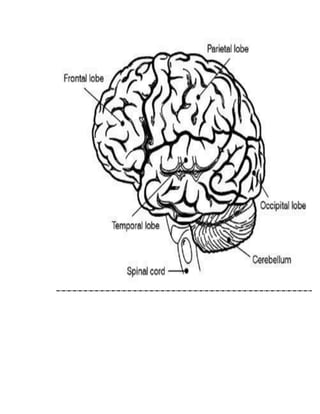
when there is a baby around. Biological psychologists
explain behaviors in neurological terms, i.e. the
physiology and structureof the brain and how this
influences behavior. Many biological psychologists have
concentratedon abnormal behavior and have tried to
explain it. For example biological psychologists believe
that schizophreniais affected by levels of dopamine (a
neurotransmitter).Thesefindings have helped psychiatry
take off and help relieve the symptoms of the
mental through drugs. However Freud and other
disciplines would argue that this just treats the symptoms
and not the cause. This is where health psychologists take
the finding that biological psychologists produceand look
at the environmental factors that are involved to get a
betterpicture.
Current perspective in psychology

Current perspective in psychology

  • 1.
    “CURRENT PERSPECTIVE IN PSYCHOLOGY IN DETAIL” PSYCHOLOGYPERSPECTIVE: Most modern psychologists do not adhere to any of the early schools of psychology that can be readily distinguished in terms of concepts, assumptions, methods and the behavior they study. Although some psychologists identify themselves as behaviorist or psychoanalyst, but most psychologists are eclectic. They borrow assumptions and concepts from different theories in accordance with the demands of the particular situation. Consequently certain new theoretical twentieth century providing a rich variety of viewpoints to psychologists. The following six perspectives represent the major approaches to the modern study of psychology.
  • 2.
    BEHAVIOURAL PERSPECTIVE; Behaviorism isconcerned with how environmental factors (called stimuli) affect observable behavior (called the response). The behaviorist approach proposes two main processes: namely classicalconditioning and operant conditioning. Classical conditioning involves learning by association, and operant conditioning involves learning from the consequences of behavior. Behaviorism also believes in scientific methodology and that only observable behavior should be studies because this can be objectively measured. Behaviorism rejects the idea that people have free will, and believes that the environment determines all behavior. Behaviorism is the scientific study of observable behavior working on the basis that behavior can be reduced to learn S-R (Stimulus-Response) units. Classical conditioning was studied by the psychologist Ivan Pavlov. Though looking into natural reflexes and neutral stimuli he managed to condition dogs to salivate to the sound of a bell through repeated associated of the sound of the bell and food. The principles of CC have been applied in many therapies.
  • 3.
    B.F. Skinner investigatedoperant conditioning of voluntary and involuntary behavior. He felt that some behavior could be explained by the person's motive. Therefore behavior occurs for a reason, and the three main behavior shaping techniques are positive reinforcement, negative reinforcement and punishment. COGNITIVE PERSPECTIVE; Cognitive Psychology revolves around the notion that if we want to know what makes peopletick then the way to do it is to figure out what processes are actuallygoing on in their minds. In other words, psychologists from this perspective study cognition which is ‘the mental act or process by which knowledge is acquired.’ The cognitive perspective is concernedwith “mental” functions such as memory, perception,attentionetc. It views peopleas being similar to computers in the way we process information (e.g. input-process-output). For example, both human brains and computers process information, store data and have input and output procedures. This had led cognitive psychologists to explain that memory comprises of three stages: encoding(where information is received and attended to), storage (where the information is retained) and retrieval (where the information is recalled).It is an extremely scientific approach and typically uses lab experiments to study human behavior.
  • 4.
    The cognitive approachhas many applications includingcognitive therapy and eyewitness testimony. PSYCHODYNAMIC PERSPECTIVE; who hasn't heard of Sigmund Freud? So many expressions from our daily life come from Freud's theories of psychoanalysis - subconscious, denial, repression and anal personalityto name only a few Freud believes that events in our childhoodcan have a significant impact on our behavior as adults. Freud’s psychoanalysis is both a theory and a therapy. It is the original psychodynamic theory and inspired psychologists such as Jung and Erikson to develop their own psychodynamic theories. Freud’s work is vast and he has contributed greatly to psychology as a discipline. Freud, the founder of psychoanalysis, explained the human mind as like an iceberg, with only a small amount of it being visible, that is our observable behavior, but it is the unconscious, submerged mind that has the most, underlyinginfluence on our behavior. Freud used three main methods of accessing the unconsciousmind: free association, dream analysis and slips of the tongue. He believed that the unconscious mind consisted of three components:the 'id' the 'ego' and the 'superego'. The 'id' contains two main instincts: 'Eros', which is the life instinct, which involves self-preservation and sex which is fuelled by the 'libido' energy force. 'Thanatos' is the death
  • 5.
    instinct, whose energies,because they are less powerful than those of 'Eros' are channeledaway from ourselves and into aggression towards others. The 'id' and the 'superego' are constantlyin conflict with each other, and the 'ego' tries to resolve the discord. If this conflict is not resolved, we tend to use defense mechanisms to reduce our anxieties. Psychoanalysis attempts to help patients resolve their inner conflicts. An aspect of psychoanalysis is Freud's theoryof psychosexual development. It shows how early experiences affect adult personality. Stimulation of different areas of the body is important as the child progresses through the important developmental stages. HUMANISTIC PERSPECTVE; Humanistic psychology is a psychological perspective that emphasizes the study of the whole person (known as holism). Humanistic psychologists look at human behavior not only through the eyes of the observer, but through the eyes of the person doing the behaving. Humanistic psychologists believe that an individual's behavior is connected to his inner feelings and self-image. The humanistic perspective centers on the view that each person is unique and individual and has the free will to change at any time in his or her lives. The humanistic perspective suggests that we are each responsible for our
  • 6.
    own happiness andwell-beingas humans. We have the innate (i.e. inborn)capacity for self-actualizationwhich is our unique desire to achieve our highest potential as people. Because of this focus on the person and his or her personal experiences and subjective perceptionof the world the humanists regarded scientific methods as inappropriatefor studying behavior. Two of the most influential and enduringtheories in humanistic psychology that emerged in the 1950sand 1960s are those of Carl Rogers and Abraham Maslow. BIOLOGICAL PERSPECTIVE;we can thank Charles Darwin (1859)for demonstratingin the idea that genetics and evolution play a role in influencing human behavior through natural selection. Theorists in the biological perspective who study behavioral genomics consider how genes affect behavior. Now that the human genome is mapped, perhaps, we will someday understand more precisely how behavior is affected by the DNA we inherit. Biological factors such as chromosomes, hormones and the brain all have a significant influence on human behavior, for example gender. The biological approach believes that most behavior is inherited and has an adaptive (or evolutionary)function. For example, in the weeks immediately after the birth of a child, levels of testosteronein fathers drop by more than 30 per cent. This has an evolutionary function. Testosterone-deprived men
  • 7.
    are less likelyto wander off in search of new mates to inseminate. They are also less aggressive, which is useful when there is a baby around. Biological psychologists explain behaviors in neurological terms, i.e. the physiology and structureof the brain and how this influences behavior. Many biological psychologists have concentratedon abnormal behavior and have tried to explain it. For example biological psychologists believe that schizophreniais affected by levels of dopamine (a neurotransmitter).Thesefindings have helped psychiatry take off and help relieve the symptoms of the mental through drugs. However Freud and other disciplines would argue that this just treats the symptoms and not the cause. This is where health psychologists take the finding that biological psychologists produceand look at the environmental factors that are involved to get a betterpicture.