
SURESH BABU G
ASST. PROFESSOR IN GENERAL
EDUCATION
CTE , CPAS PAIPPAD
Thinking
 Thinking consists of the cognitive rearrangement or
manipulation of both information from environment
and symbols stored in long-term memory.
 Thinking is the form of information processing that
goes on during the period between a stimulus event
and response to it.
Definition
 Ross:- “ Thinking is mental activity in its cognitive
aspect or mental activity with regard to psychological
objects”.
 Garret:- “ Thinking is behavior which is often implicit
and hidden and in which symbols (images, ideas , and
concepts) are ordinarily employed”.
 Mohsin :- “ Thinking is an implicit problem solving
behavior”.
Types of Thinking
 Perceptual or Concrete thinking
 Conceptual or Abstract thinking
 Reflective thinking or logical thinking
 Creative thinking
 Critical Thinking
 Convergent thinking
 Divergent thinking
 Concrete thinking – Its basis is perception or concrete
object
 Abstract thinking – Based on Concepts , generalized
ideas
 Reflective thinking – Based on problem solving
 Creative thinking – Based on creating new
 Critical thinking –It us the ability to think clearly and
rationally . It includes the ability to engage in
reflection and independent thinking.
Convergent thinking
 It is concerned with a particular end result
 The thinker gather information relevant to the
problem and then proceeds by using problem solving
rules
 The result of convergent thinking is usually a solution
 Not a type of thinking one primarily uses when they
think creatively
 In convergent thinking the person is good at bringing
material from a variety of sources to solve a problem to
produce the correct answer
Divergent Thinking
 It is not concerned with a particular end result
 In divergent thinking one tend to think in a divergent
manner thus having many varied thoughts about a
problem
 The result of the divergent thinking is usually many
solution for a problem
 Divergent thinking is a type of thinking one primarily
uses when they think creatively
 In divergent thinking skill is in broadly elaborated of
ideas prompted by a stimulus
Creative thinking
 This type of thinking is chiefly aimed to create
something new.
 It is in search of new relationships and associations to
describe and interpret the nature of things , events
and situations.
 The person himself usually formulates the problem
and he is free to gather evidence and invent tools for
its solution.
Stages of Creative thinking
 Stage of preparation- focuses attention on problem,
organizing data , defining problem and producing relevant
ideas
 The stage of incubation – Person test the idea , flashes of
insight and trial judgment occurs. This is a period of no
obvious activity and progress. The problem is being solved
unconsciously.
 The stage of illumination- This is called “Eureka” when the
individual suddenly perceive the theme and relationship
among the various components of the problem
 Revision – Here the individual reflects , evaluates and
submits to critical appraisal.
Developing creative thinking in
pupils
 Freedom to respond
 Opportunity for ego involvement
 Encouraging originality and flexibility
 Providing appropriate opportunities and atmosphere
for creativity expression
 Developing healthy habits among children
 Using creative resources of the community
 Proper organization of the curriculum
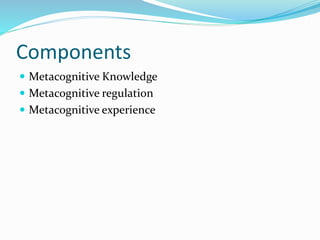
Components
 Metacognitive Knowledge
 Metacognitive regulation
 Metacognitive experience
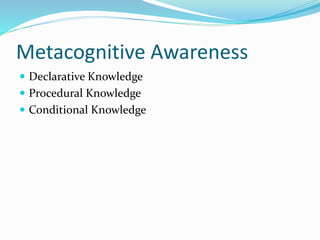
Metacognitive Awareness
 Declarative Knowledge
 Procedural Knowledge
 Conditional Knowledge
Metacognitive Skills
 Planning
 Monitoring
 Evaluating
THaNks

Thinking

  • 1.
    SURESH BABU G ASST.PROFESSOR IN GENERAL EDUCATION CTE , CPAS PAIPPAD
  • 2.
    Thinking  Thinking consistsof the cognitive rearrangement or manipulation of both information from environment and symbols stored in long-term memory.  Thinking is the form of information processing that goes on during the period between a stimulus event and response to it.
  • 3.
    Definition  Ross:- “Thinking is mental activity in its cognitive aspect or mental activity with regard to psychological objects”.  Garret:- “ Thinking is behavior which is often implicit and hidden and in which symbols (images, ideas , and concepts) are ordinarily employed”.  Mohsin :- “ Thinking is an implicit problem solving behavior”.
  • 4.
    Types of Thinking Perceptual or Concrete thinking  Conceptual or Abstract thinking  Reflective thinking or logical thinking  Creative thinking  Critical Thinking  Convergent thinking  Divergent thinking
  • 5.
     Concrete thinking– Its basis is perception or concrete object  Abstract thinking – Based on Concepts , generalized ideas  Reflective thinking – Based on problem solving  Creative thinking – Based on creating new  Critical thinking –It us the ability to think clearly and rationally . It includes the ability to engage in reflection and independent thinking.
  • 6.
    Convergent thinking  Itis concerned with a particular end result  The thinker gather information relevant to the problem and then proceeds by using problem solving rules  The result of convergent thinking is usually a solution  Not a type of thinking one primarily uses when they think creatively  In convergent thinking the person is good at bringing material from a variety of sources to solve a problem to produce the correct answer
  • 7.
    Divergent Thinking  Itis not concerned with a particular end result  In divergent thinking one tend to think in a divergent manner thus having many varied thoughts about a problem  The result of the divergent thinking is usually many solution for a problem  Divergent thinking is a type of thinking one primarily uses when they think creatively  In divergent thinking skill is in broadly elaborated of ideas prompted by a stimulus
  • 8.
    Creative thinking  Thistype of thinking is chiefly aimed to create something new.  It is in search of new relationships and associations to describe and interpret the nature of things , events and situations.  The person himself usually formulates the problem and he is free to gather evidence and invent tools for its solution.
  • 9.
    Stages of Creativethinking  Stage of preparation- focuses attention on problem, organizing data , defining problem and producing relevant ideas  The stage of incubation – Person test the idea , flashes of insight and trial judgment occurs. This is a period of no obvious activity and progress. The problem is being solved unconsciously.  The stage of illumination- This is called “Eureka” when the individual suddenly perceive the theme and relationship among the various components of the problem  Revision – Here the individual reflects , evaluates and submits to critical appraisal.
  • 10.
    Developing creative thinkingin pupils  Freedom to respond  Opportunity for ego involvement  Encouraging originality and flexibility  Providing appropriate opportunities and atmosphere for creativity expression  Developing healthy habits among children  Using creative resources of the community  Proper organization of the curriculum
  • 15.
    Components  Metacognitive Knowledge Metacognitive regulation  Metacognitive experience
  • 16.
    Metacognitive Awareness  DeclarativeKnowledge  Procedural Knowledge  Conditional Knowledge
  • 17.
    Metacognitive Skills  Planning Monitoring  Evaluating
  • 19.