


Methodology:
An Introduction
COMS 3099:
Language
& Communication
Seminar
Carol Jaggernauth
Definitions
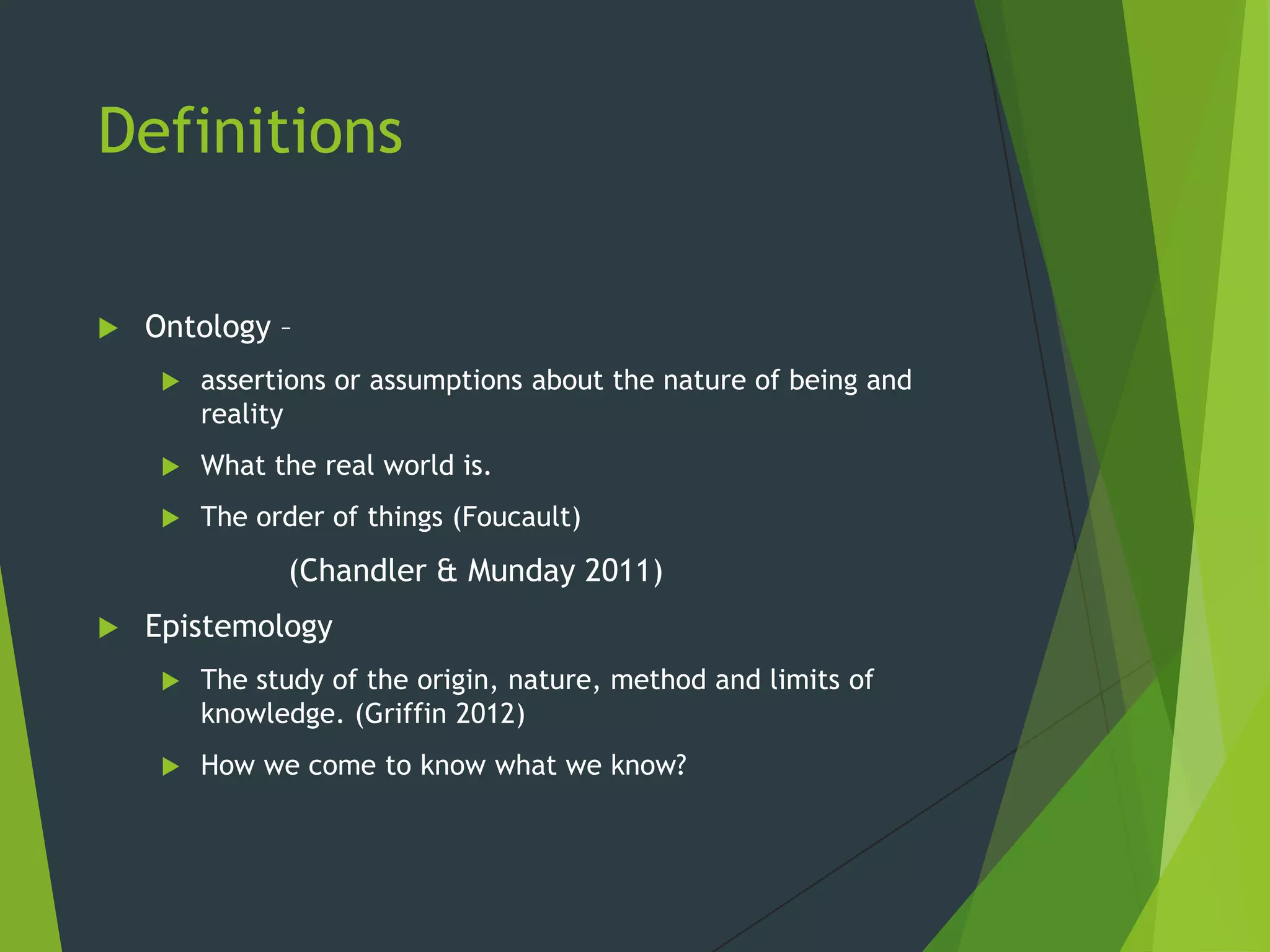
 Ontology –
 assertions or assumptions about the nature of being and
reality
 What the real world is.
 The order of things (Foucault)
(Chandler & Munday 2011)
 Epistemology
 The study of the origin, nature, method and limits of
knowledge. (Griffin 2012)
 How we come to know what we know?
Definitions cont’d
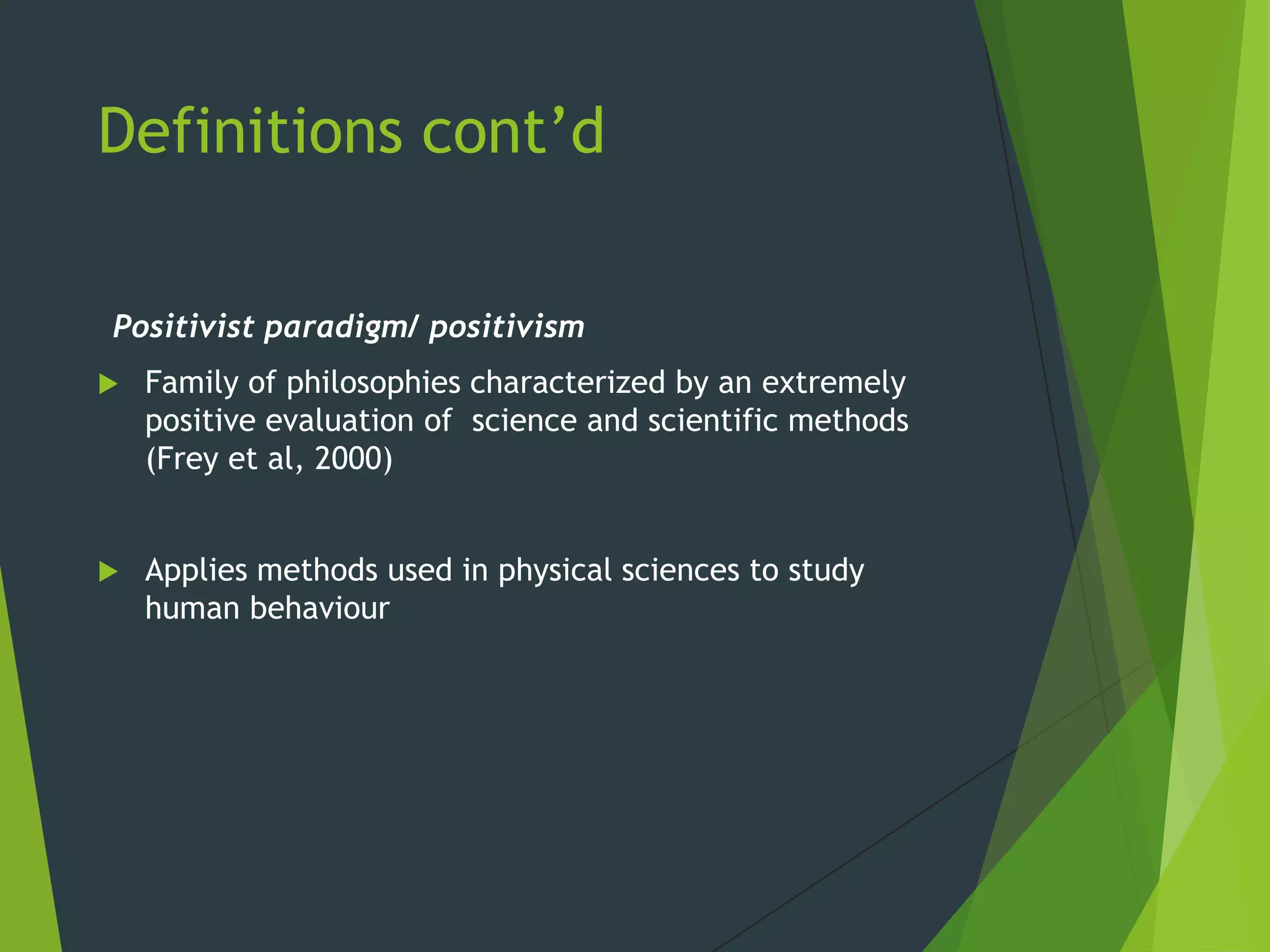
Positivist paradigm/ positivism
 Family of philosophies characterized by an extremely
positive evaluation of science and scientific methods
(Frey et al, 2000)
 Applies methods used in physical sciences to study
human behaviour
Definitions cont’d
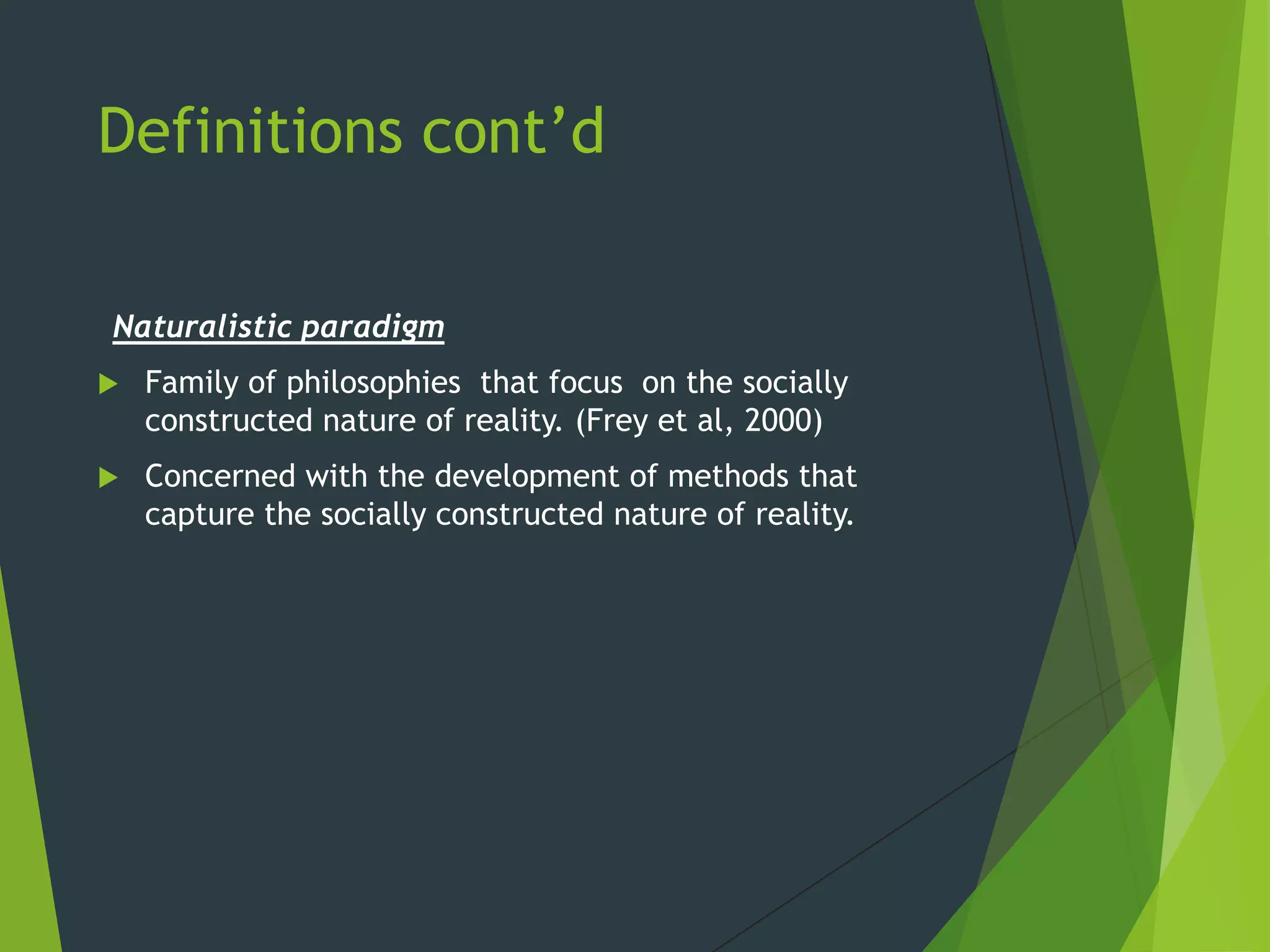
Naturalistic paradigm
 Family of philosophies that focus on the socially
constructed nature of reality. (Frey et al, 2000)
 Concerned with the development of methods that
capture the socially constructed nature of reality.
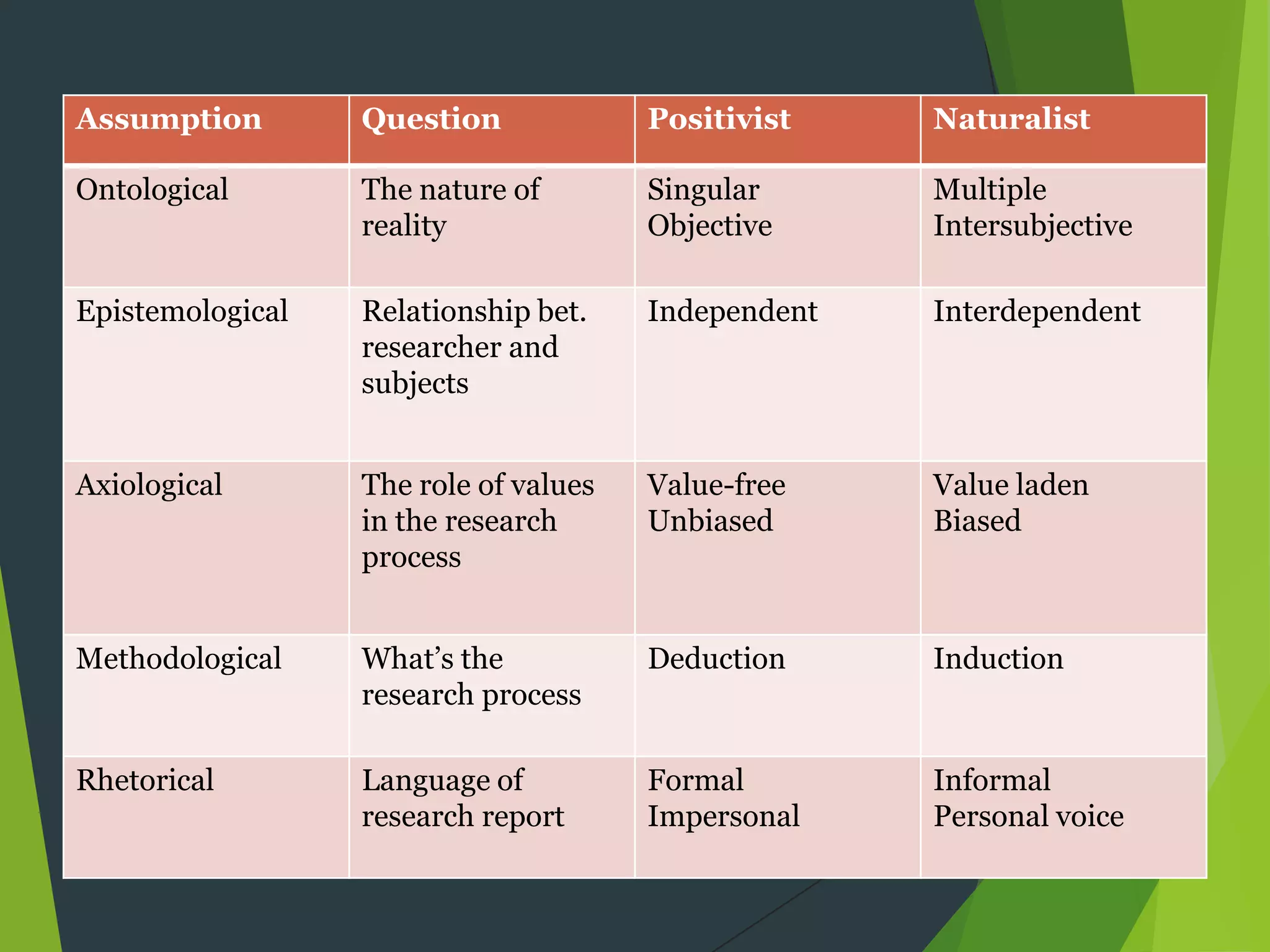
Assumption Question Positivist Naturalist
Ontological The nature of
reality
Singular
Objective
Multiple
Intersubjective
Epistemological Relationship bet.
researcher and
subjects
Independent Interdependent
Axiological The role of values
in the research
process
Value-free
Unbiased
Value laden
Biased
Methodological What’s the
research process
Deduction Induction
Rhetorical Language of
research report
Formal
Impersonal
Informal
Personal voice
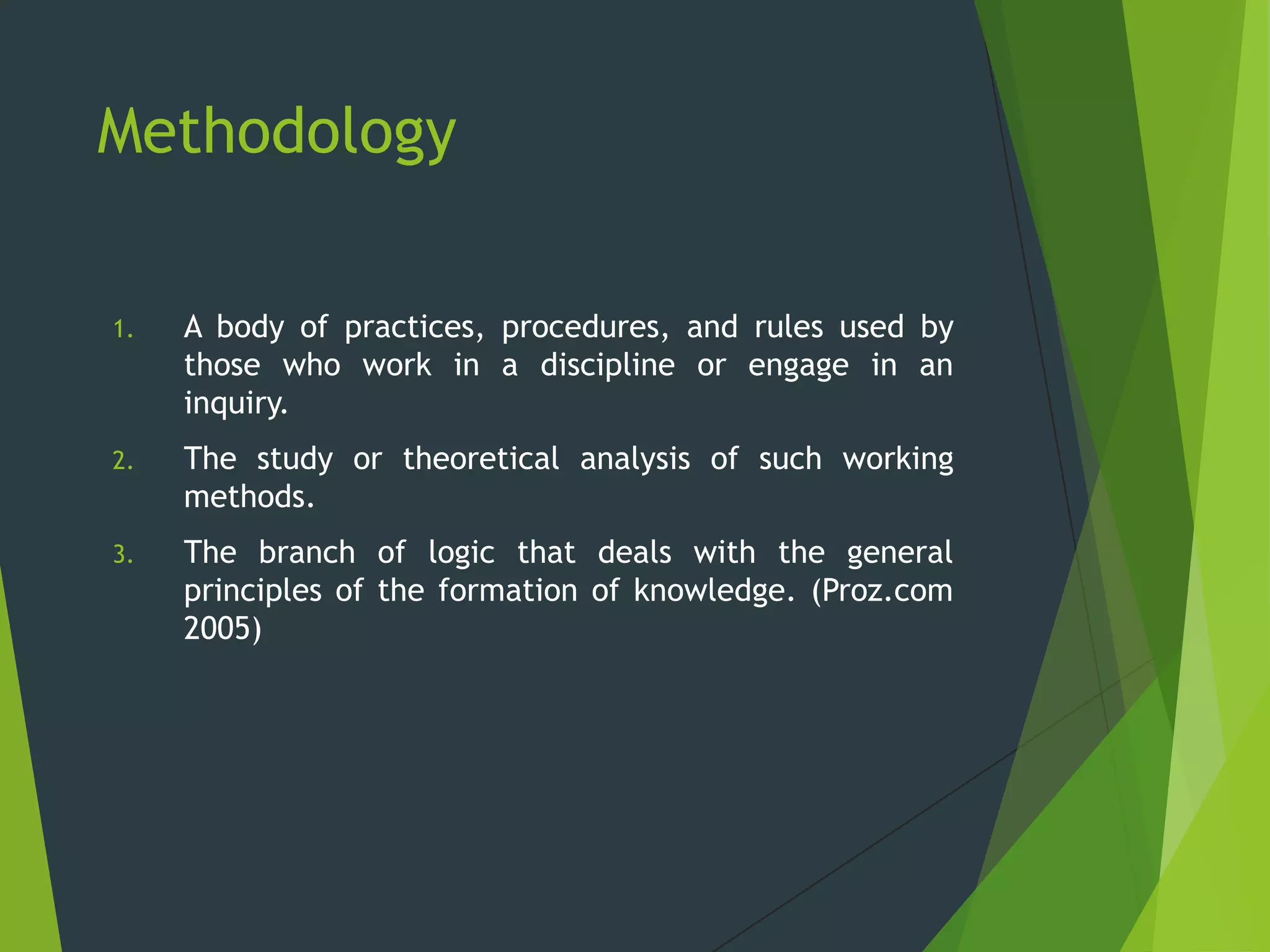
Methodology
1. A body of practices, procedures, and rules used by
those who work in a discipline or engage in an
inquiry.
2. The study or theoretical analysis of such working
methods.
3. The branch of logic that deals with the general
principles of the formation of knowledge. (Proz.com
2005)
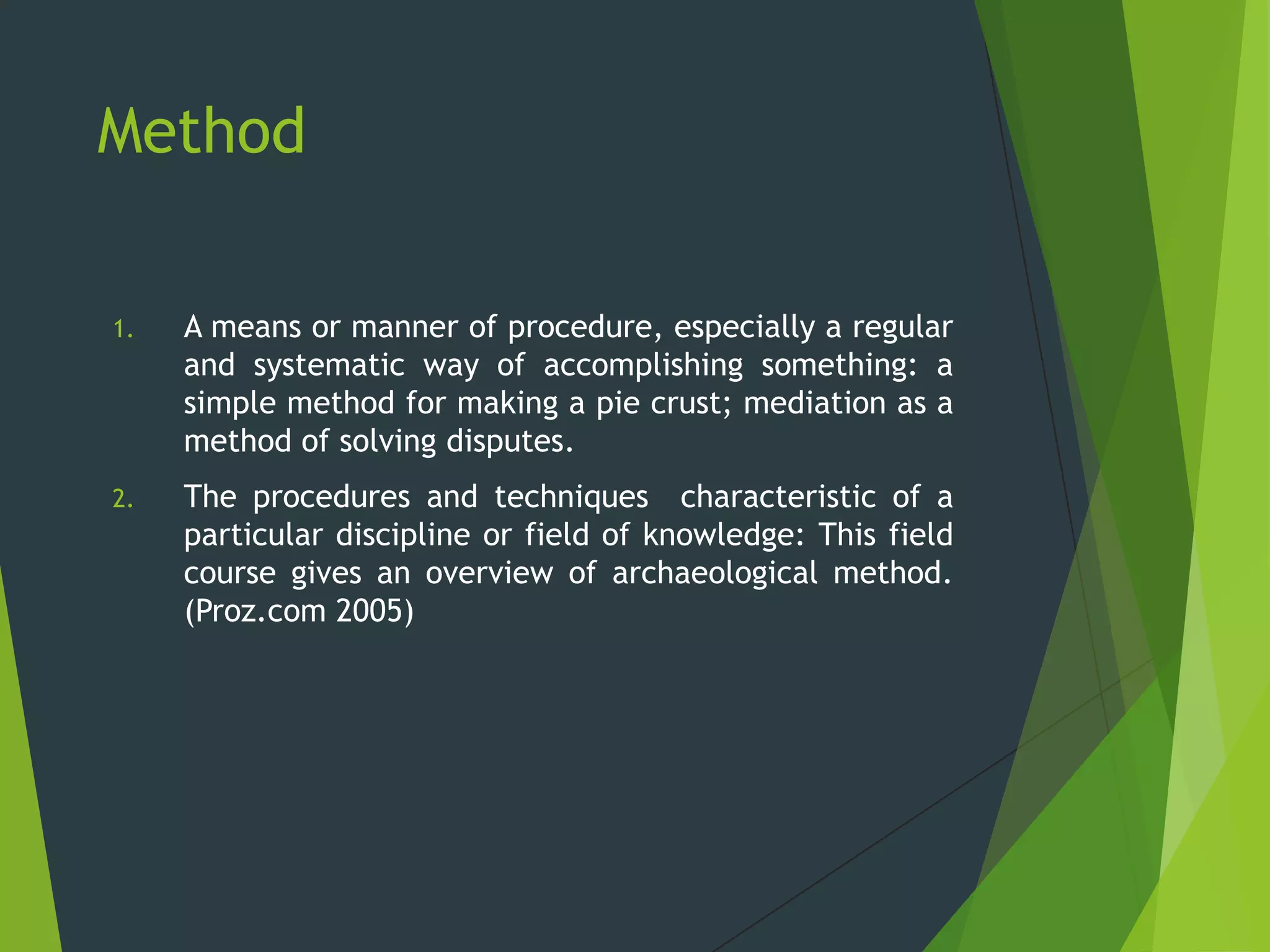
Method
1. A means or manner of procedure, especially a regular
and systematic way of accomplishing something: a
simple method for making a pie crust; mediation as a
method of solving disputes.
2. The procedures and techniques characteristic of a
particular discipline or field of knowledge: This field
course gives an overview of archaeological method.
(Proz.com 2005)
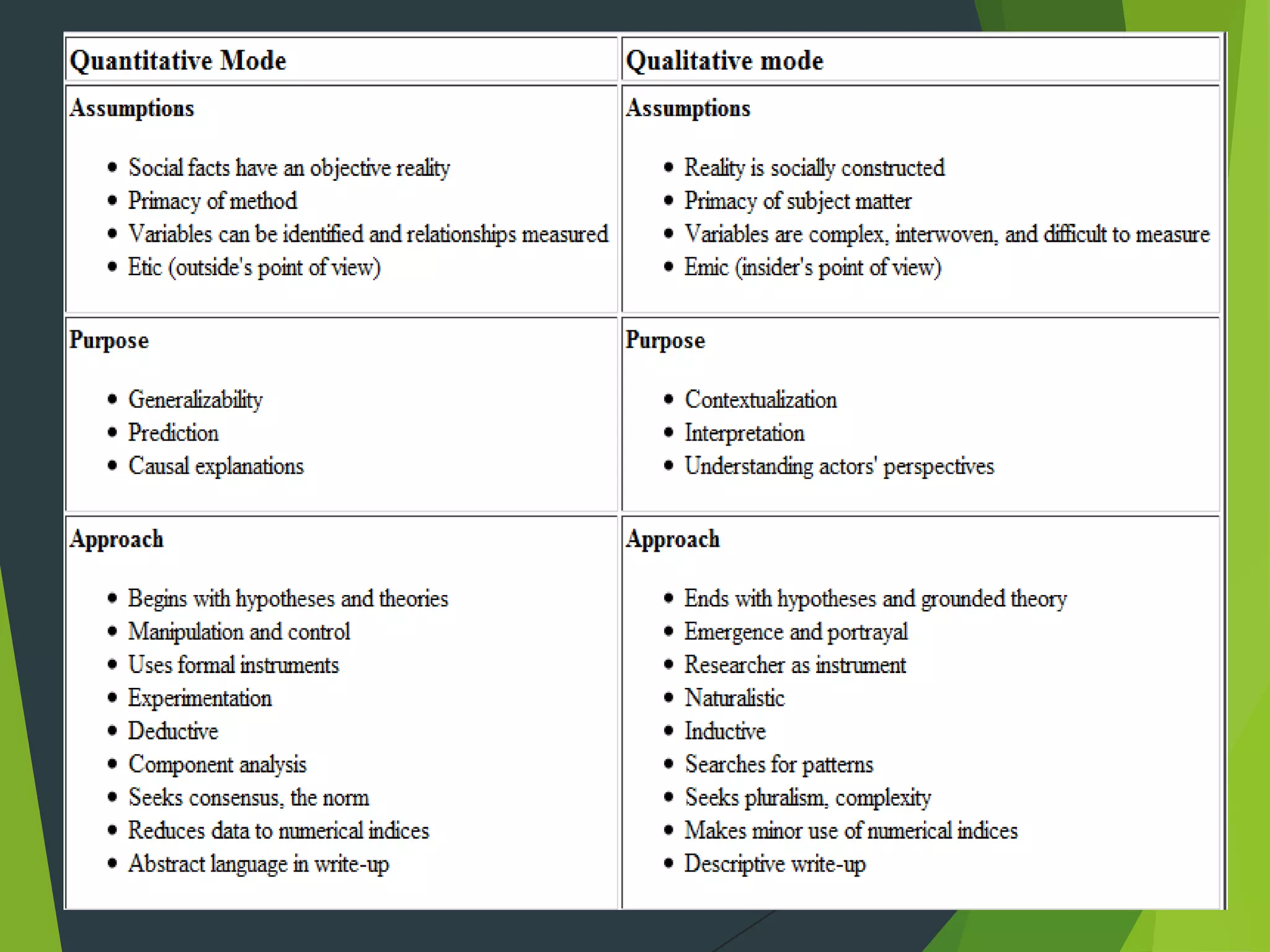
Qualitative Research vs
Quantitative Research
Qualitative Research
 The acquisition of data that take the form of symbols
other than meaningful numbers.
 In-depth and detailed information.
 Gives preference to participants lived experience.
 Quality rather than quantity.
 Smaller population samples
 Methods include– focus groups, interviews, ethnography
, textual analysis
Quantitative Research
 Data collection takes the form of meaningful numbers
 Enumeration – a process of reducing abstract concepts
to numbers
 Larger population samples
 Quantity rather than quality.
 Methods include- experiments, surveys and content
analysis.
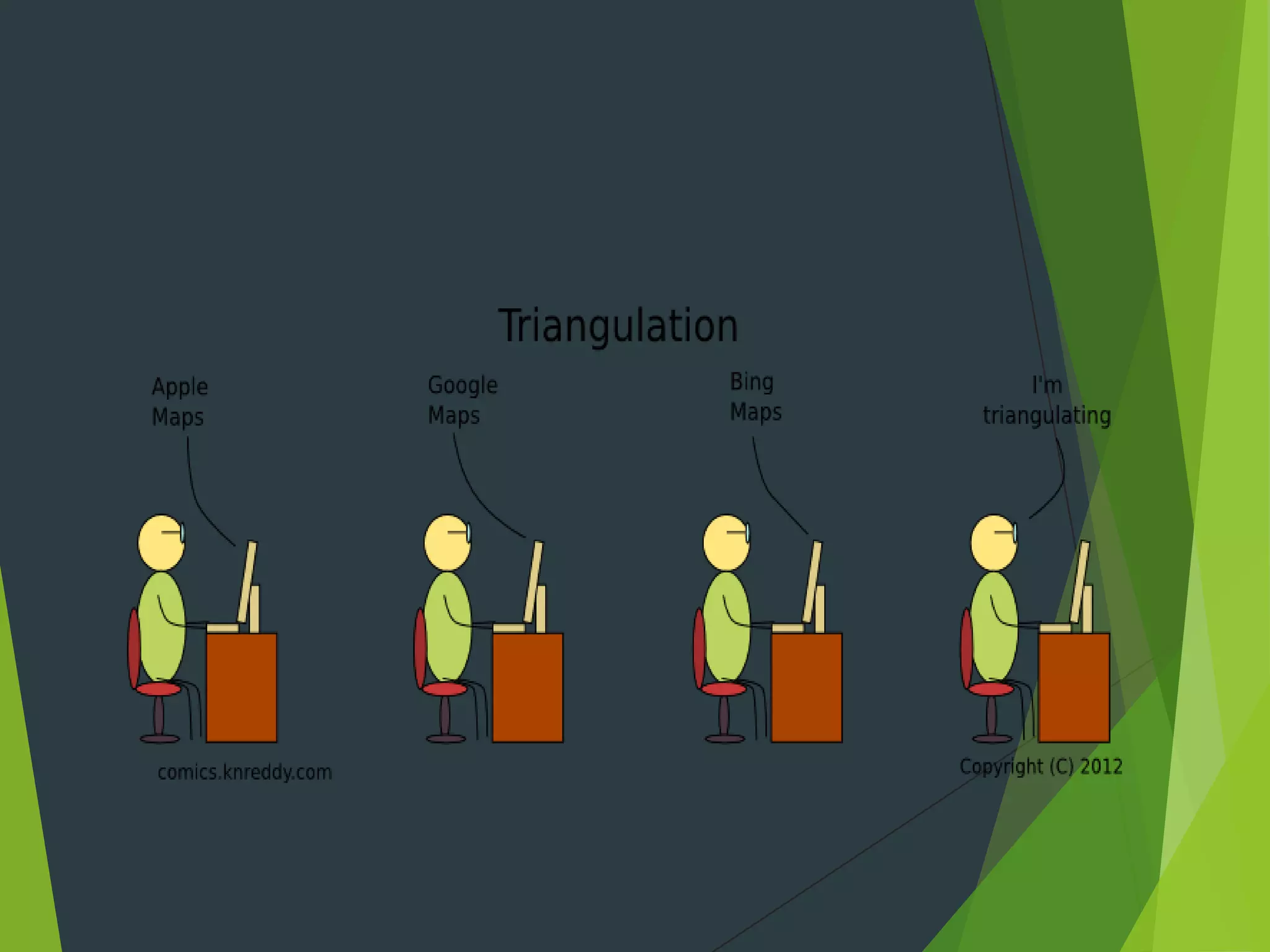
Triangulation
 The mixing of data or methods so that diverse
viewpoints or standpoints cast light upon a topic. (Olsen
2003)
 Facilitates cross analysis of data.
 Reduces limitation of using one method.
 Increases reliability and flexibility.
 Combination may include Surveys and Focus Groups etc.
Surveys
Focus Groups
Guidelines for Methodology
Chapter
 Introduction
 Reintroduce the big question
 Justification for research question (significance)
 Conceptual Design – Model
 Language
 Data Analysis
 Scales
 Definitions (beginning)
 Methodological Context – ontological, epistemological
 Method
 A,b,.c,d
 What was done in detail
 Who you collected data from
 Why the fliers (Important characteristics)
 Instruments – questionnaire and research questions
Checklist
(Adapted from Dr. Tia Cooper)
1. The questions that you are attempting to answer and
any problems that you may face in finding the
answers
2. General definition or overview of the approach you
will use.
3. A thorough description of how you will collect the
data and the analytical procedures you will use to
draw conclusions based on this information
 Include an introductory paragraph that describes
the problem you will address using your
methodology
 Subsequent paragraphs should explain the method
that you will use to collect data to address the
problem.
 Include justification for why these methods are
appropriate
 You should explain why you did not use more common
methods
 Explain why you purposely included/excluded certain
groups from research
 Provide a brief explanation that discusses the
inclusion/exclusion of groups and implications for your
study
 Discuss how certain variables may impact the outcome of
your research (diff. lifestyles, etc)
Methodology an introduction

Methodology an introduction

  • 1.
    Methodology: An Introduction COMS 3099: Language &Communication Seminar Carol Jaggernauth
  • 2.
    Definitions  Ontology – assertions or assumptions about the nature of being and reality  What the real world is.  The order of things (Foucault) (Chandler & Munday 2011)  Epistemology  The study of the origin, nature, method and limits of knowledge. (Griffin 2012)  How we come to know what we know?
  • 3.
    Definitions cont’d Positivist paradigm/positivism  Family of philosophies characterized by an extremely positive evaluation of science and scientific methods (Frey et al, 2000)  Applies methods used in physical sciences to study human behaviour
  • 4.
    Definitions cont’d Naturalistic paradigm Family of philosophies that focus on the socially constructed nature of reality. (Frey et al, 2000)  Concerned with the development of methods that capture the socially constructed nature of reality.
  • 5.
    Assumption Question PositivistNaturalist Ontological The nature of reality Singular Objective Multiple Intersubjective Epistemological Relationship bet. researcher and subjects Independent Interdependent Axiological The role of values in the research process Value-free Unbiased Value laden Biased Methodological What’s the research process Deduction Induction Rhetorical Language of research report Formal Impersonal Informal Personal voice
  • 7.
    Methodology 1. A bodyof practices, procedures, and rules used by those who work in a discipline or engage in an inquiry. 2. The study or theoretical analysis of such working methods. 3. The branch of logic that deals with the general principles of the formation of knowledge. (Proz.com 2005)
  • 8.
    Method 1. A meansor manner of procedure, especially a regular and systematic way of accomplishing something: a simple method for making a pie crust; mediation as a method of solving disputes. 2. The procedures and techniques characteristic of a particular discipline or field of knowledge: This field course gives an overview of archaeological method. (Proz.com 2005)
  • 9.
  • 10.
    Qualitative Research  Theacquisition of data that take the form of symbols other than meaningful numbers.  In-depth and detailed information.  Gives preference to participants lived experience.  Quality rather than quantity.  Smaller population samples  Methods include– focus groups, interviews, ethnography , textual analysis
  • 11.
    Quantitative Research  Datacollection takes the form of meaningful numbers  Enumeration – a process of reducing abstract concepts to numbers  Larger population samples  Quantity rather than quality.  Methods include- experiments, surveys and content analysis.
  • 14.
    Triangulation  The mixingof data or methods so that diverse viewpoints or standpoints cast light upon a topic. (Olsen 2003)  Facilitates cross analysis of data.  Reduces limitation of using one method.  Increases reliability and flexibility.  Combination may include Surveys and Focus Groups etc.
  • 15.
  • 16.
  • 17.
    Guidelines for Methodology Chapter Introduction  Reintroduce the big question  Justification for research question (significance)  Conceptual Design – Model  Language
  • 18.
     Data Analysis Scales  Definitions (beginning)  Methodological Context – ontological, epistemological  Method  A,b,.c,d  What was done in detail  Who you collected data from  Why the fliers (Important characteristics)  Instruments – questionnaire and research questions
  • 20.
    Checklist (Adapted from Dr.Tia Cooper) 1. The questions that you are attempting to answer and any problems that you may face in finding the answers 2. General definition or overview of the approach you will use. 3. A thorough description of how you will collect the data and the analytical procedures you will use to draw conclusions based on this information
  • 21.
     Include anintroductory paragraph that describes the problem you will address using your methodology  Subsequent paragraphs should explain the method that you will use to collect data to address the problem.  Include justification for why these methods are appropriate
  • 22.
     You shouldexplain why you did not use more common methods  Explain why you purposely included/excluded certain groups from research  Provide a brief explanation that discusses the inclusion/exclusion of groups and implications for your study  Discuss how certain variables may impact the outcome of your research (diff. lifestyles, etc)