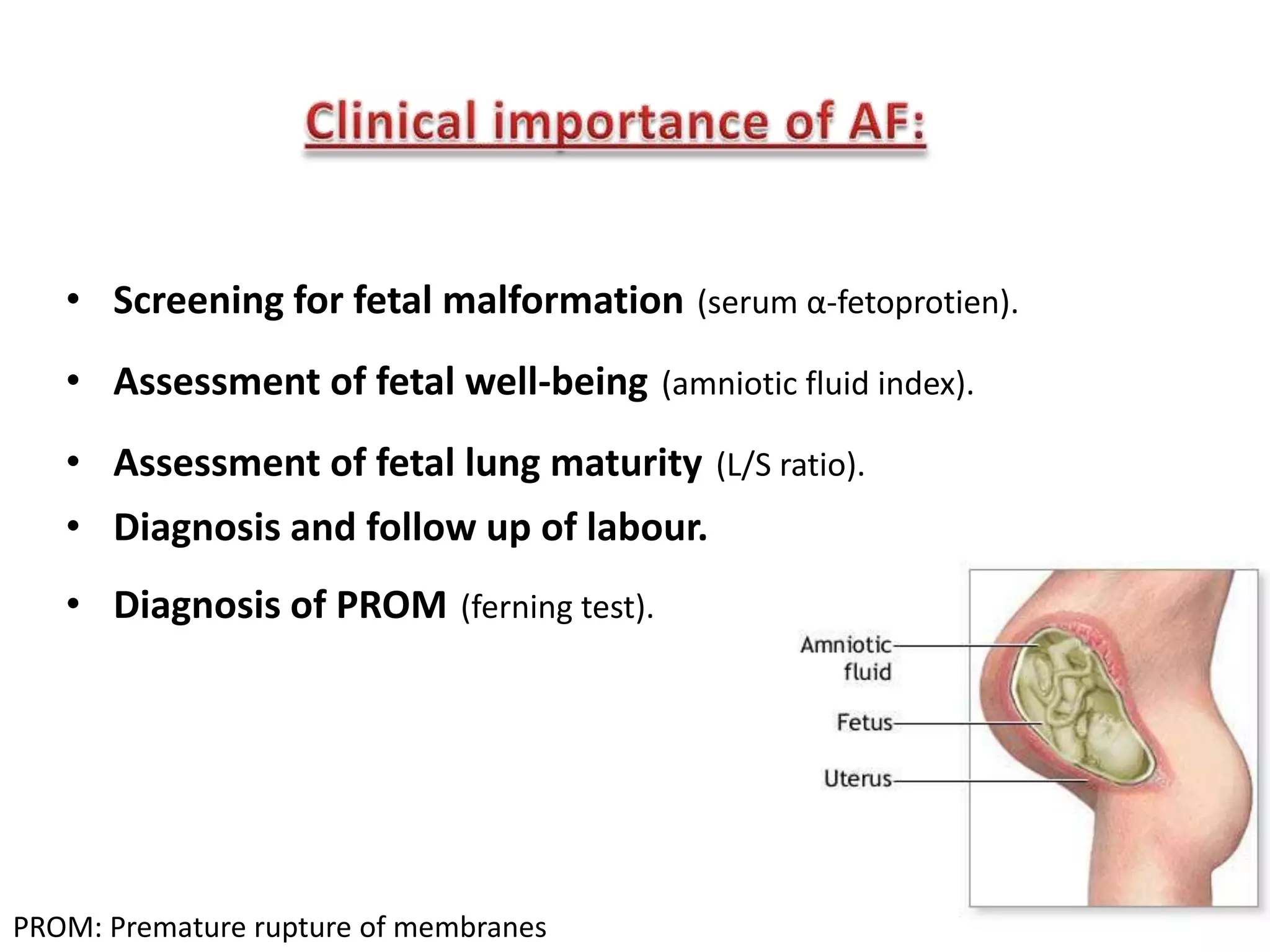
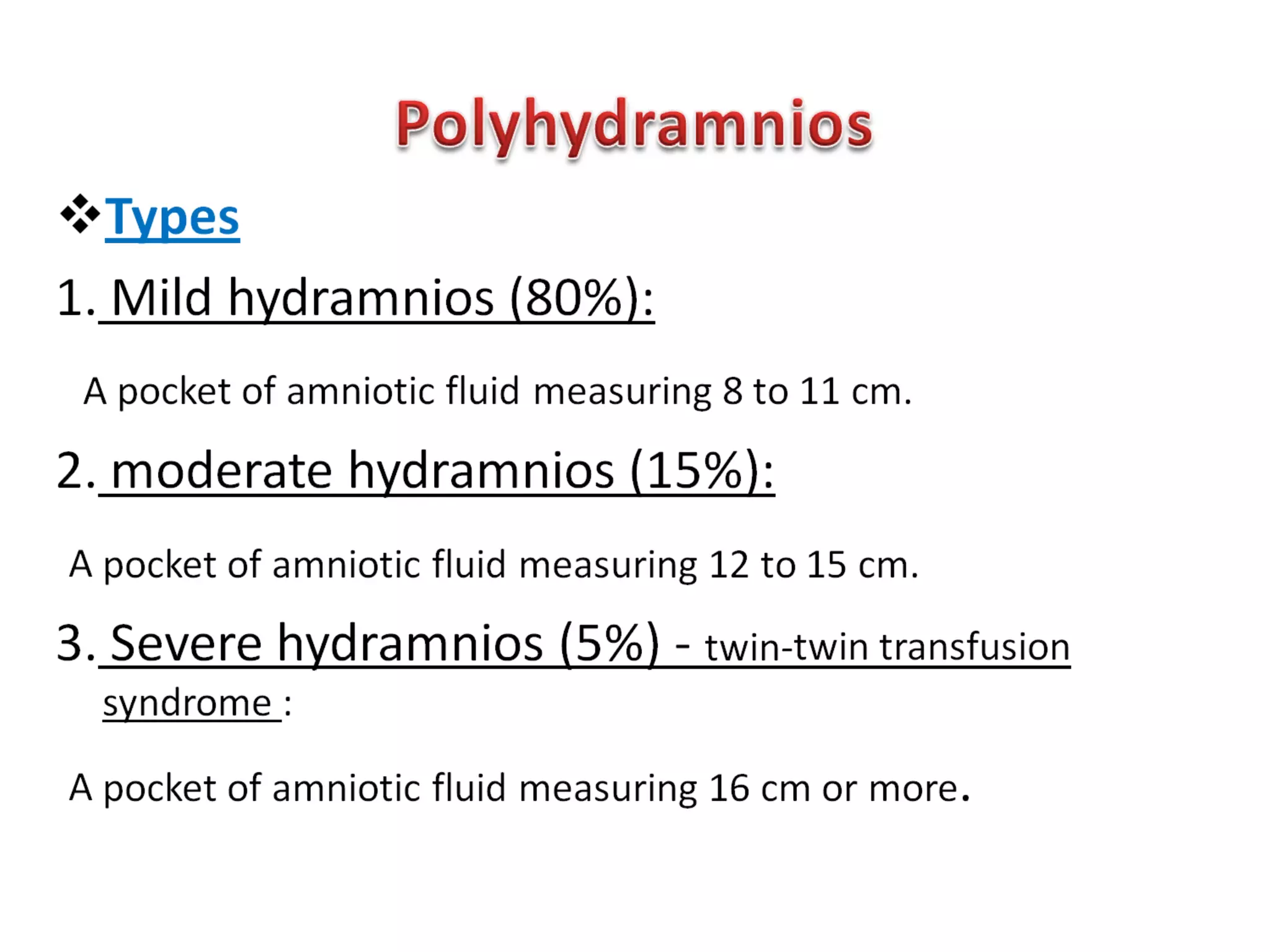
• Screening for fetal malformation (serum α-fetoprotien).
   • Assessment of fetal well-being (amniotic fluid index).
   • Assessment of fetal lung maturity (L/S ratio).
   • Diagnosis and follow up of labour.
   • Diagnosis of PROM (ferning test).


PROM: Premature rupture of membranes
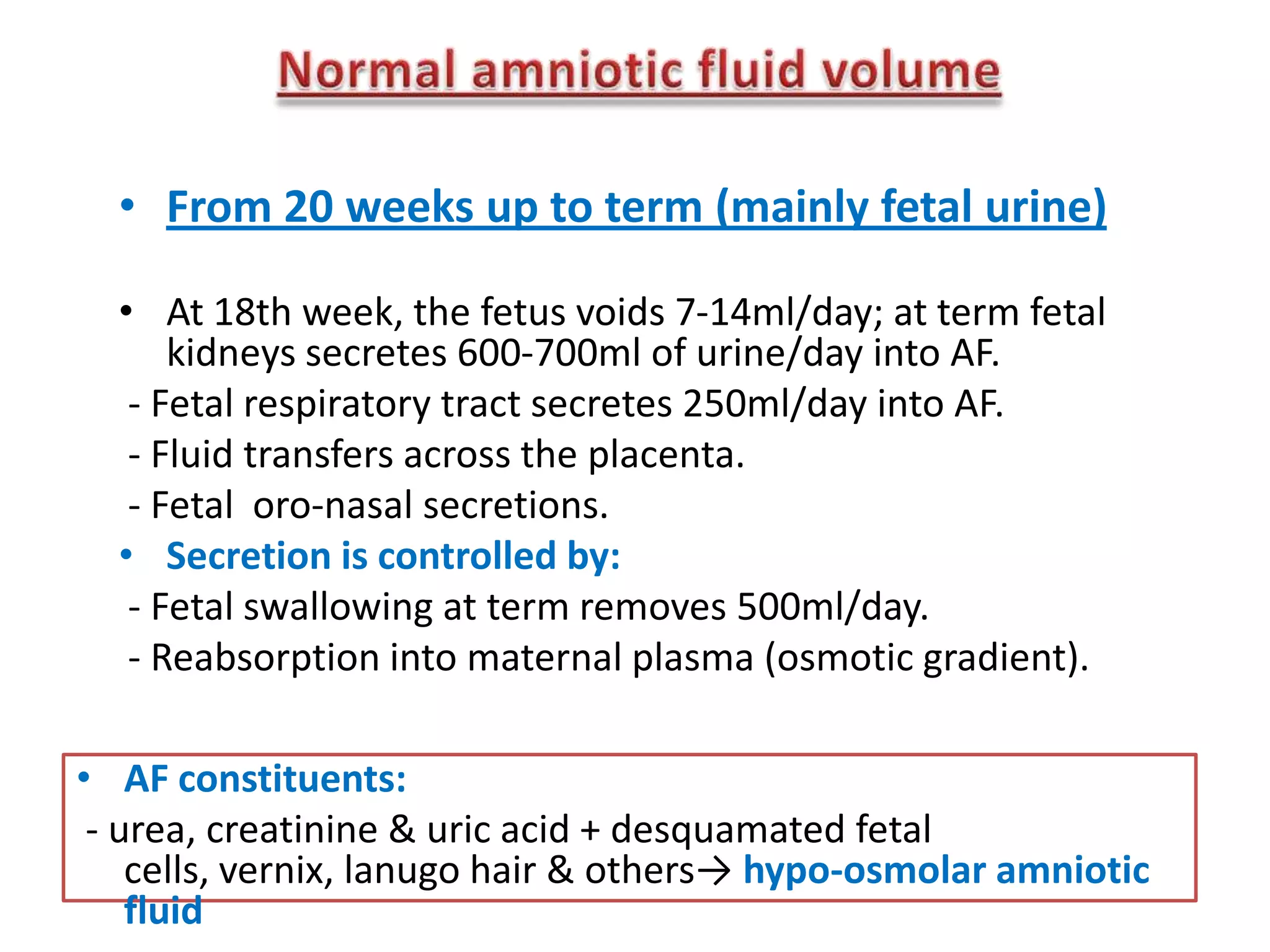
• From 20 weeks up to term (mainly fetal urine)

  • At 18th week, the fetus voids 7-14ml/day; at term fetal
      kidneys secretes 600-700ml of urine/day into AF.
   - Fetal respiratory tract secretes 250ml/day into AF.
   - Fluid transfers across the placenta.
   - Fetal oro-nasal secretions.
  • Secretion is controlled by:
   - Fetal swallowing at term removes 500ml/day.
   - Reabsorption into maternal plasma (osmotic gradient).

• AF constituents:
 - urea, creatinine & uric acid + desquamated fetal
    cells, vernix, lanugo hair & others→ hypo-osmolar amniotic
    fluid
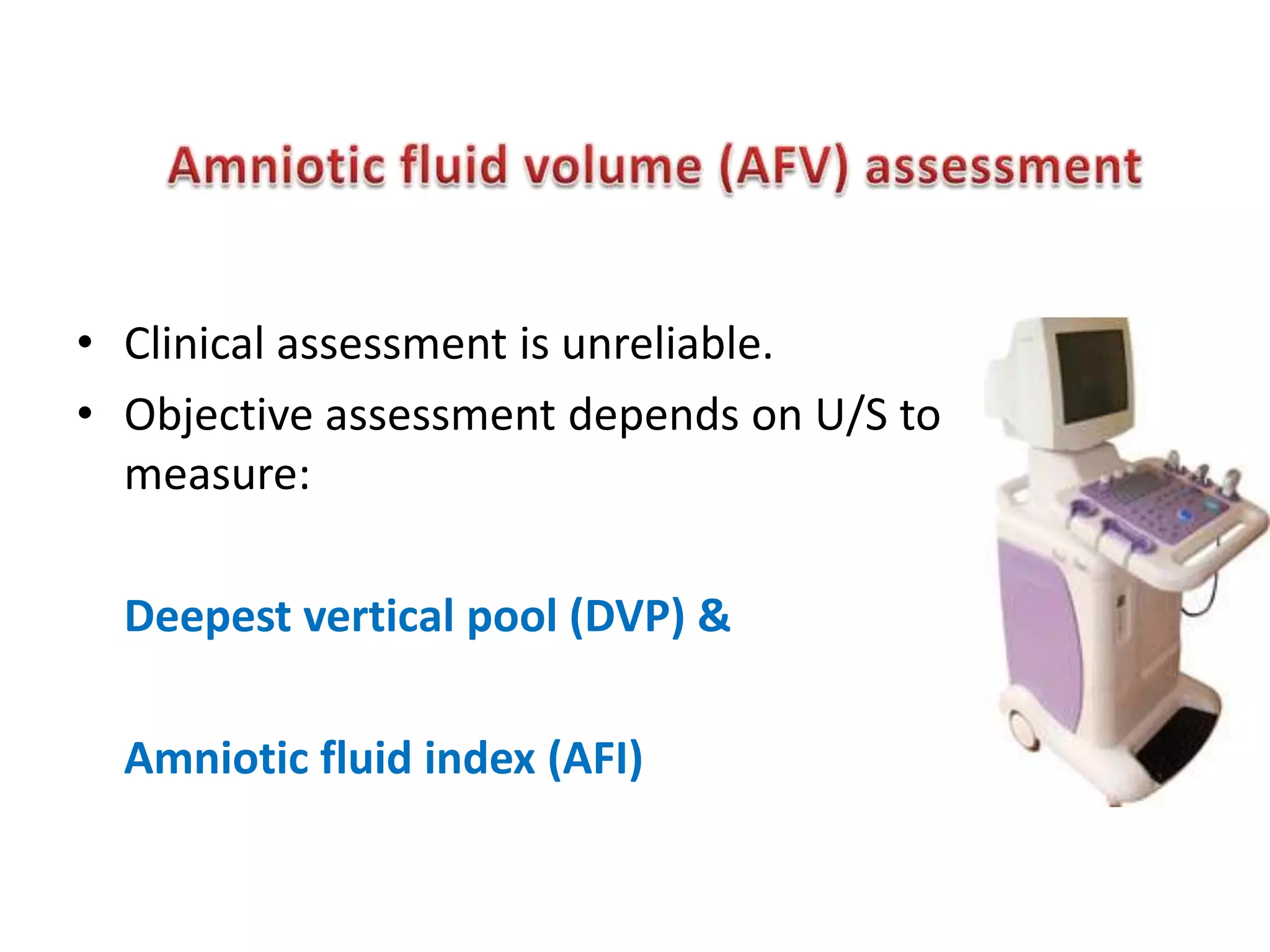
• Clinical assessment is unreliable.
• Objective assessment depends on U/S to
  measure:

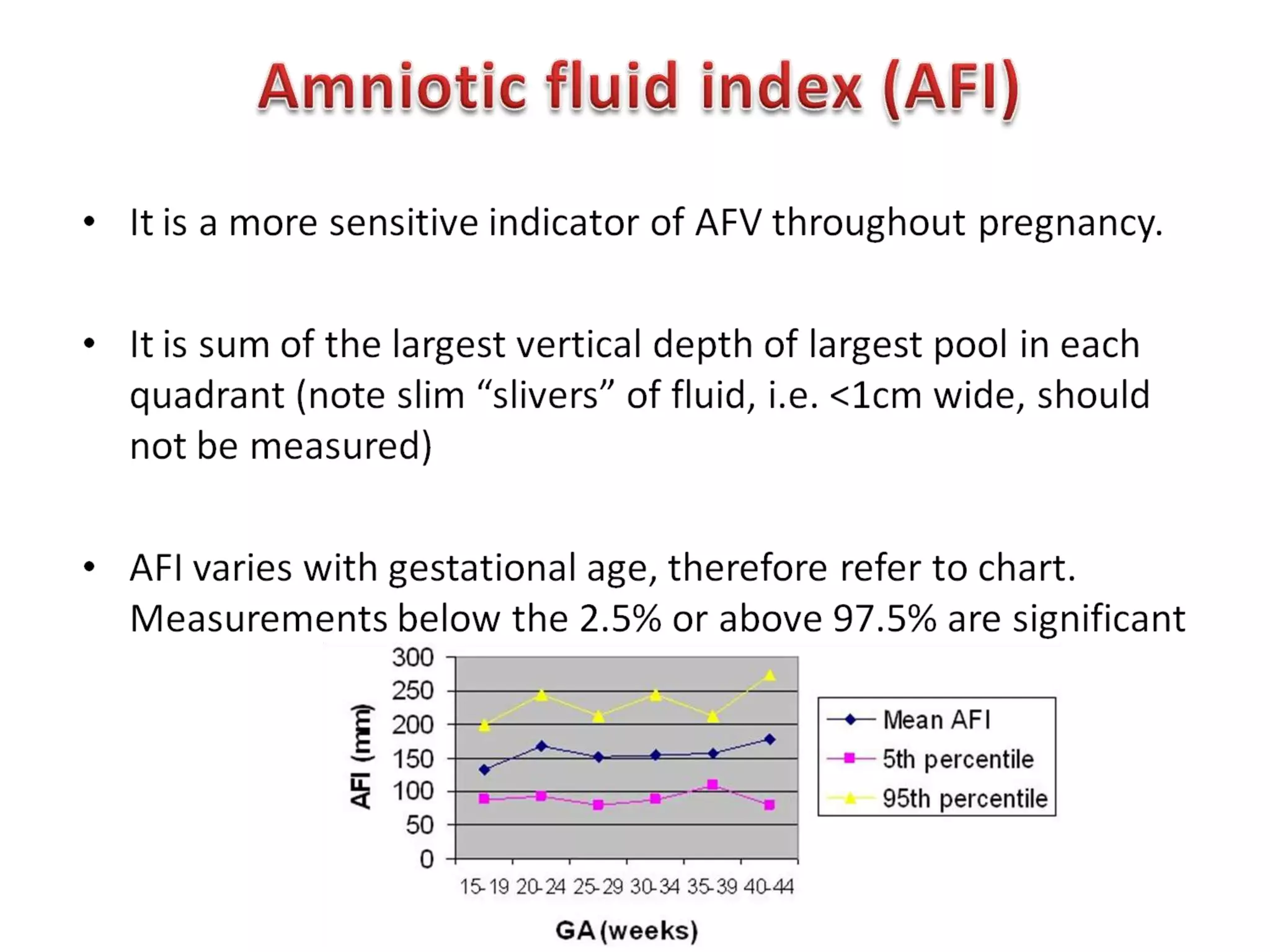
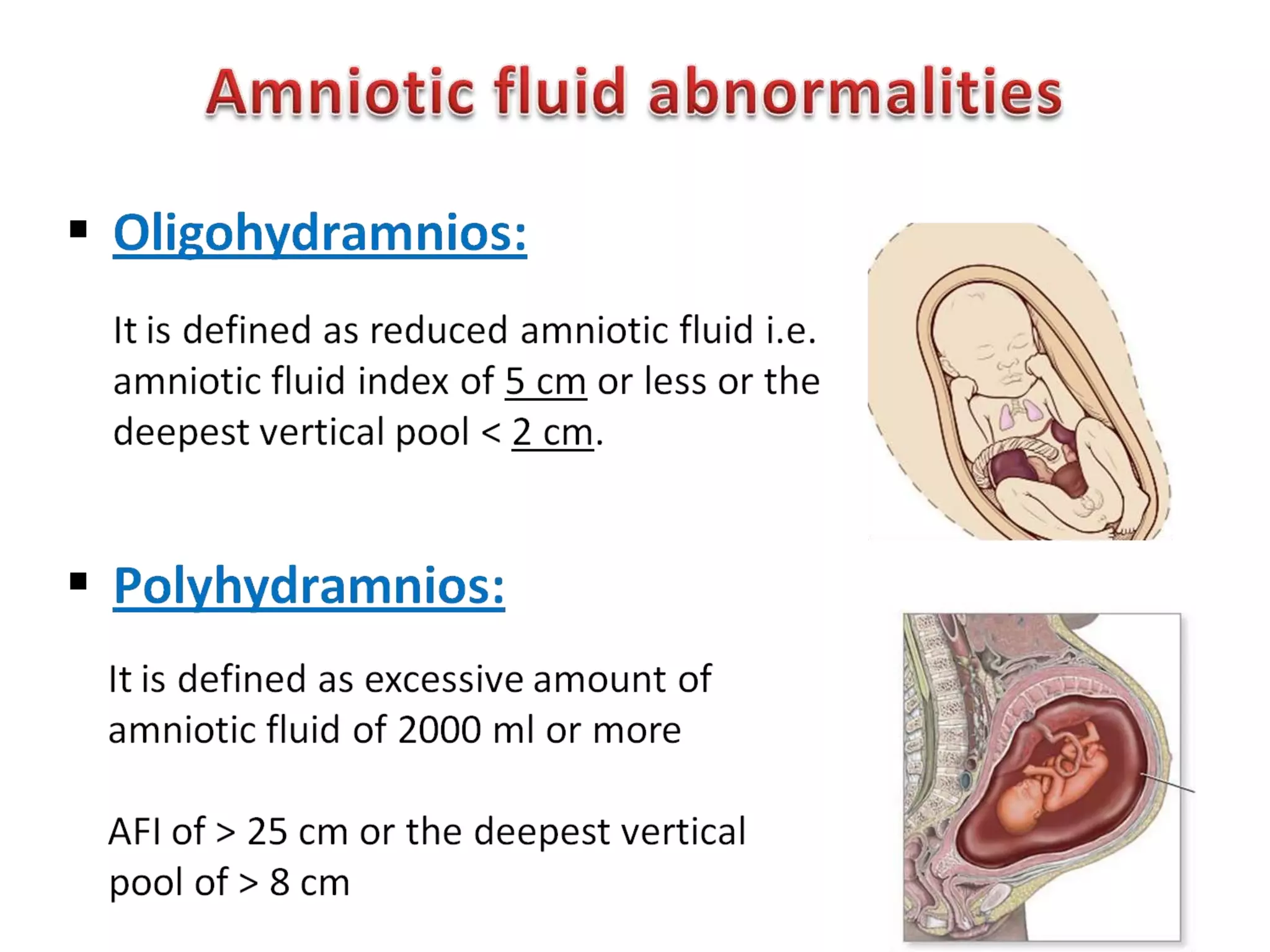
  Deepest vertical pool (DVP) &

  Amniotic fluid index (AFI)
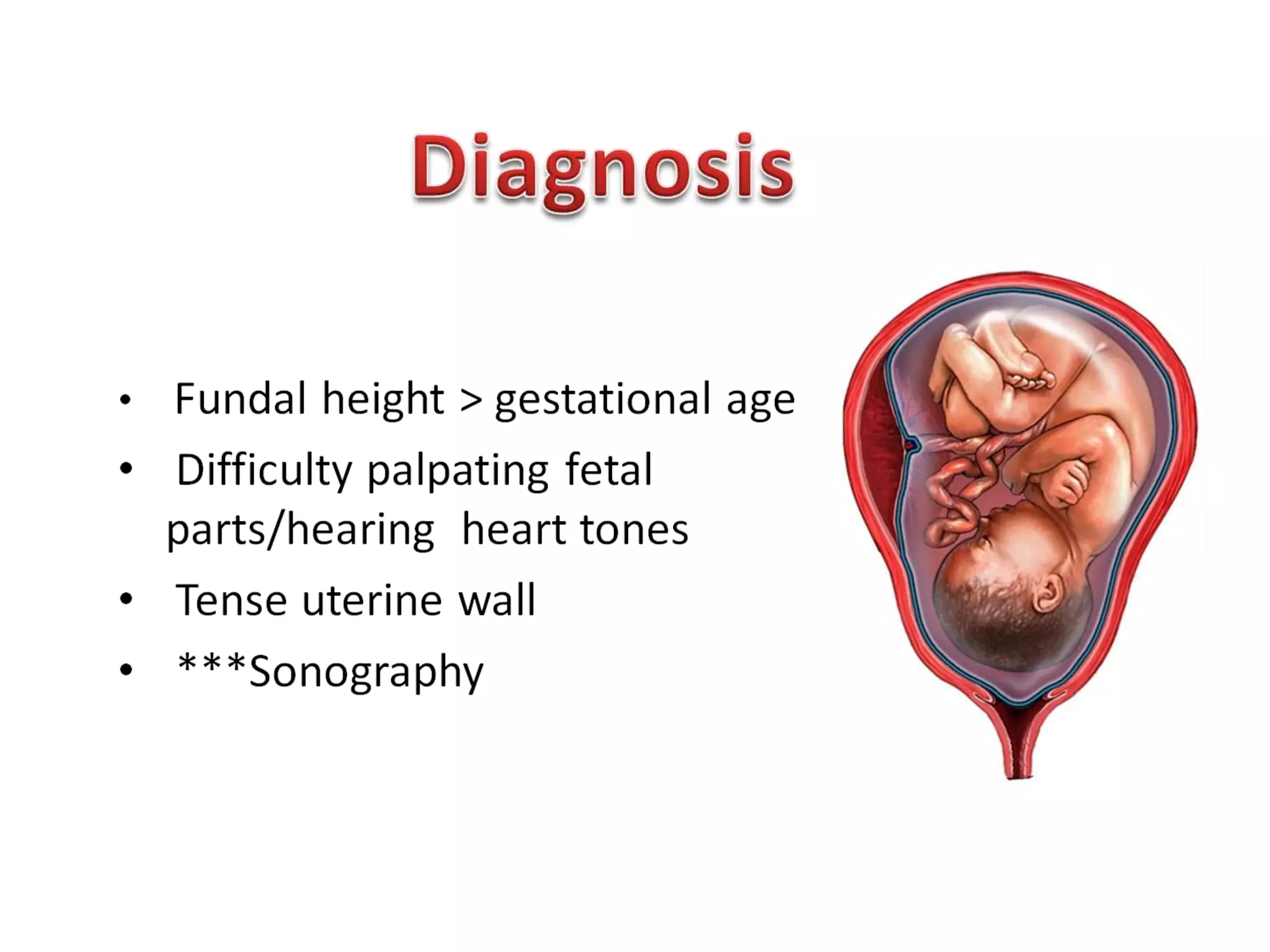
•   Fundal height < gestational age
•   Decreased fetal movement
•   Fetal Heart Rate tracing abnormality
•   Diagnosis: Ultrasound
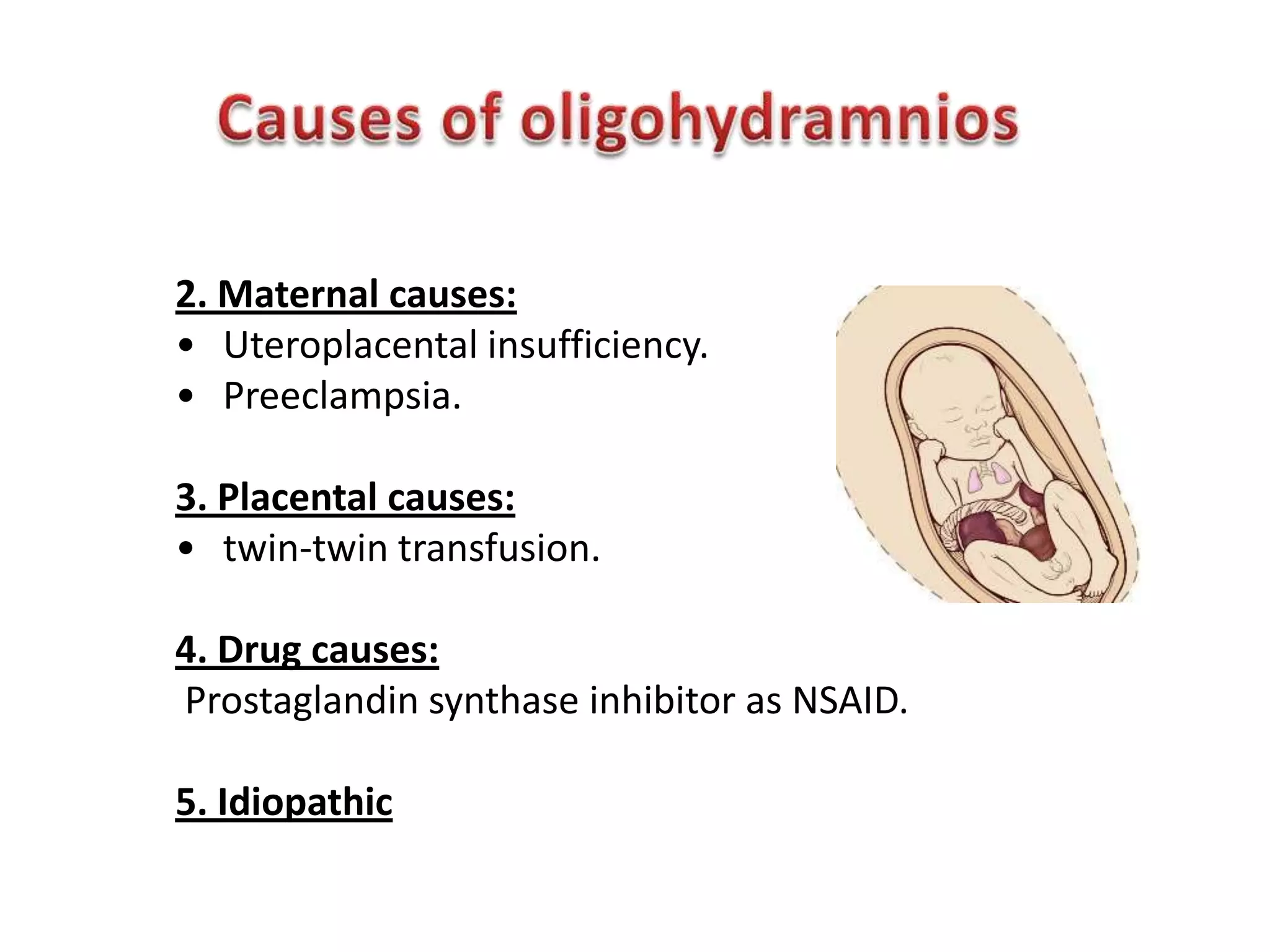
2. Maternal causes:
• Uteroplacental insufficiency.
• Preeclampsia.

3. Placental causes:
• twin-twin transfusion.

4. Drug causes:
Prostaglandin synthase inhibitor as NSAID.

5. Idiopathic
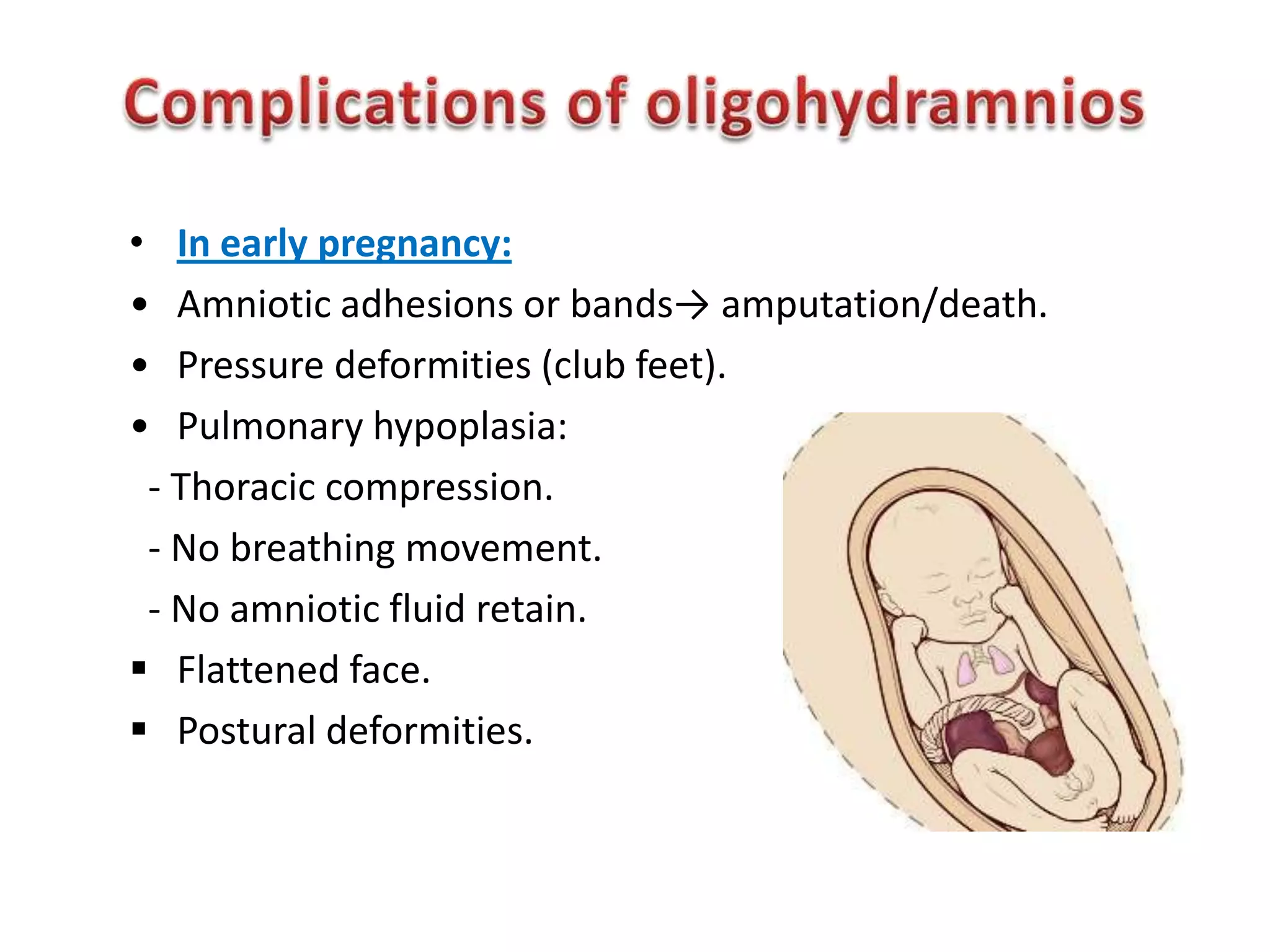
• In early pregnancy:
• Amniotic adhesions or bands→ amputation/death.
• Pressure deformities (club feet).
• Pulmonary hypoplasia:
 - Thoracic compression.
 - No breathing movement.
 - No amniotic fluid retain.
 Flattened face.
 Postural deformities.
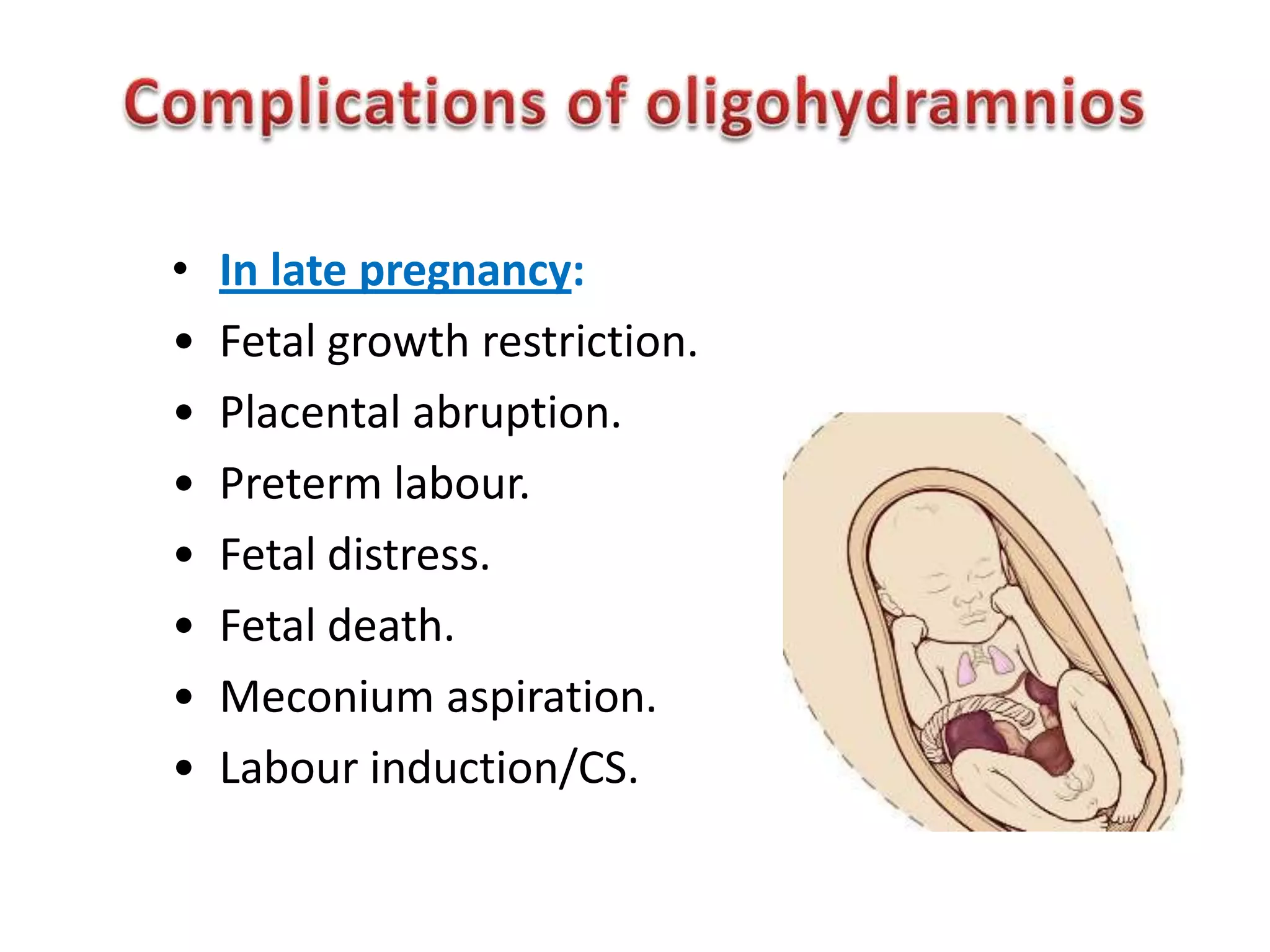
•   In late pregnancy:
•   Fetal growth restriction.
•   Placental abruption.
•   Preterm labour.
•   Fetal distress.
•   Fetal death.
•   Meconium aspiration.
•   Labour induction/CS.
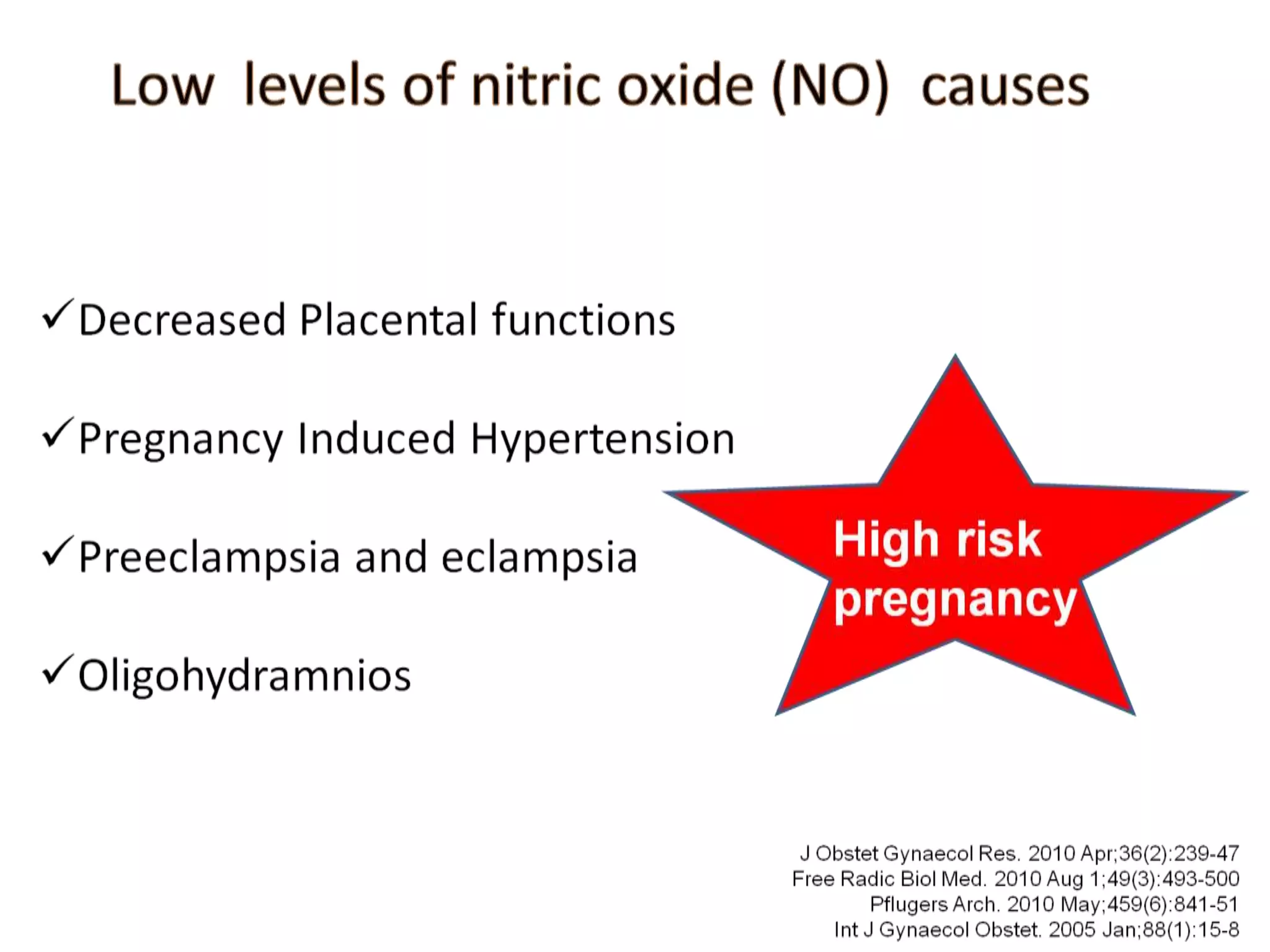
J Obstet Gynaecol Res. 2010 Apr;36(2):239-47
Free Radic Biol Med. 2010 Aug 1;49(3):493-500
         Pflugers Arch. 2010 May;459(6):841-51
    Int J Gynaecol Obstet. 2005 Jan;88(1):15-8
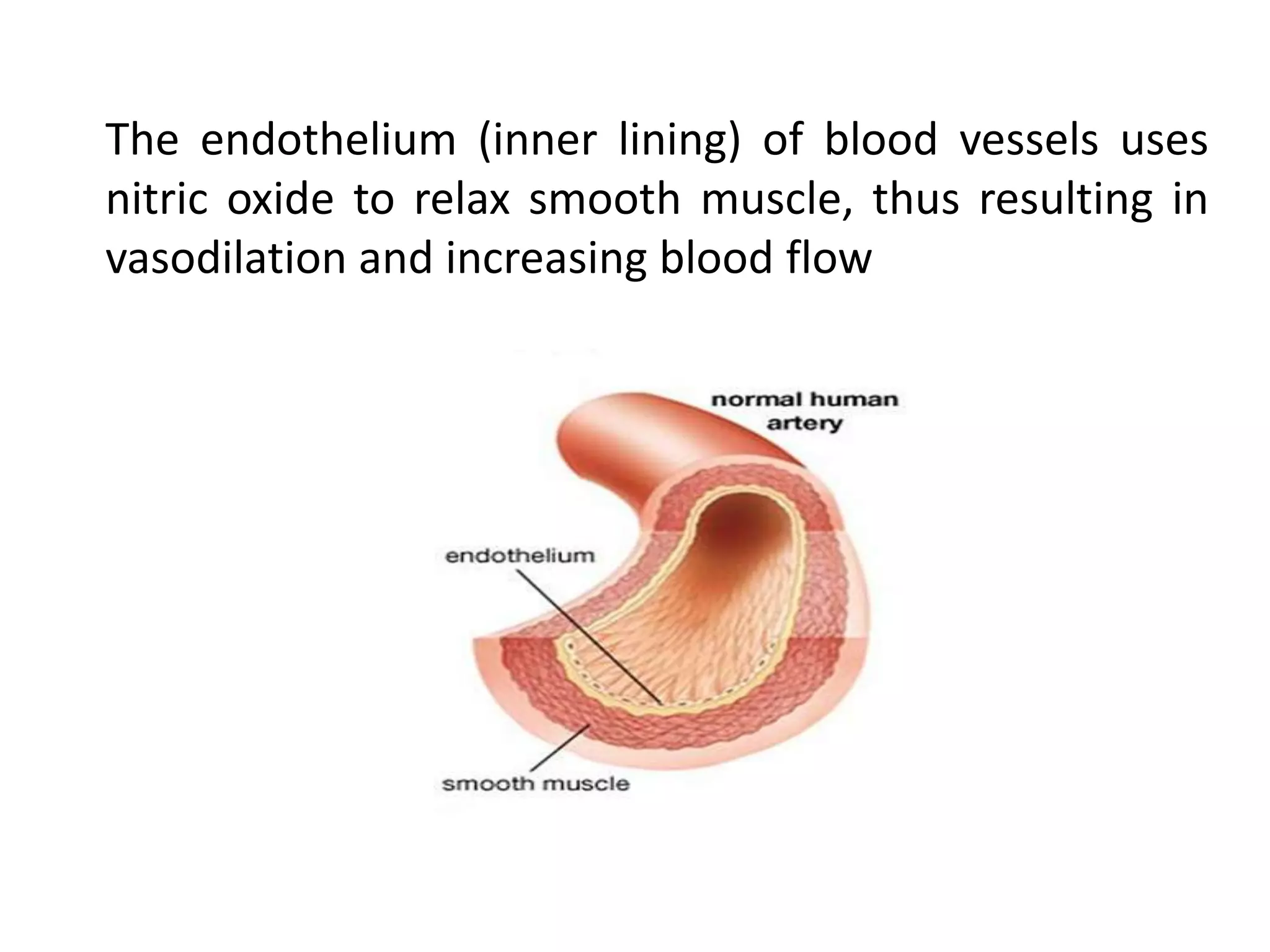
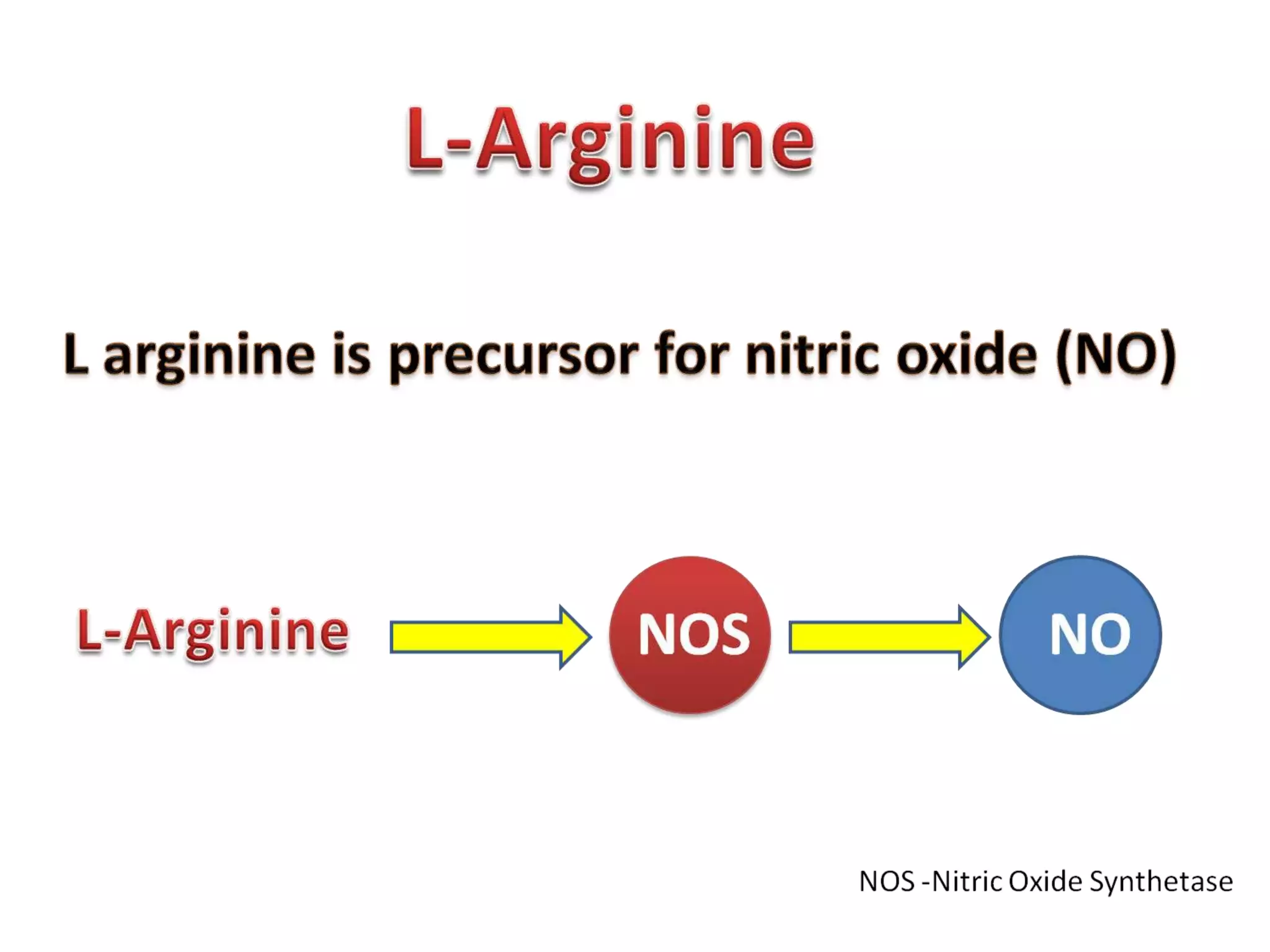
The endothelium (inner lining) of blood vessels uses
nitric oxide to relax smooth muscle, thus resulting in
vasodilation and increasing blood flow
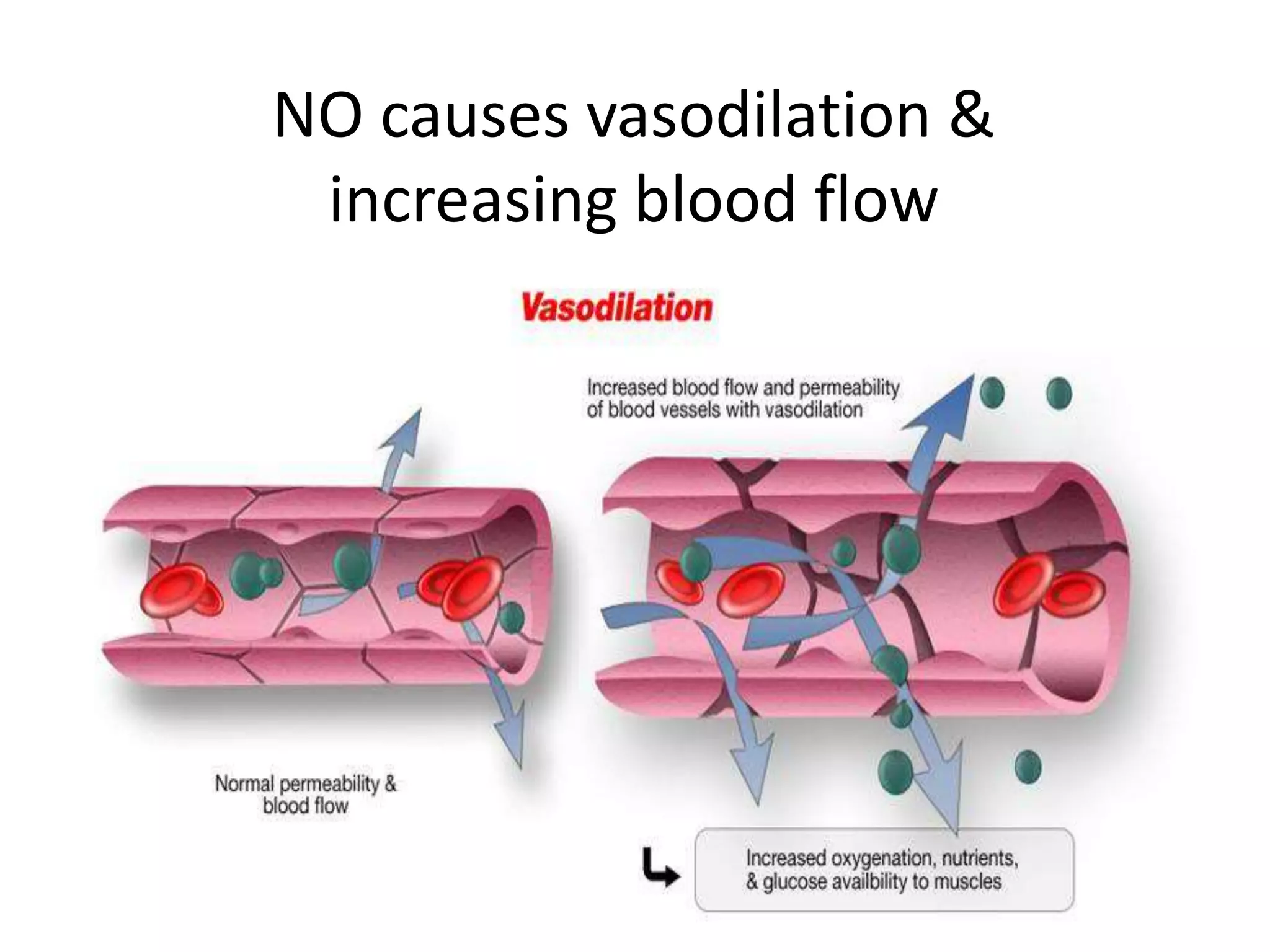
NO causes vasodilation &
 increasing blood flow
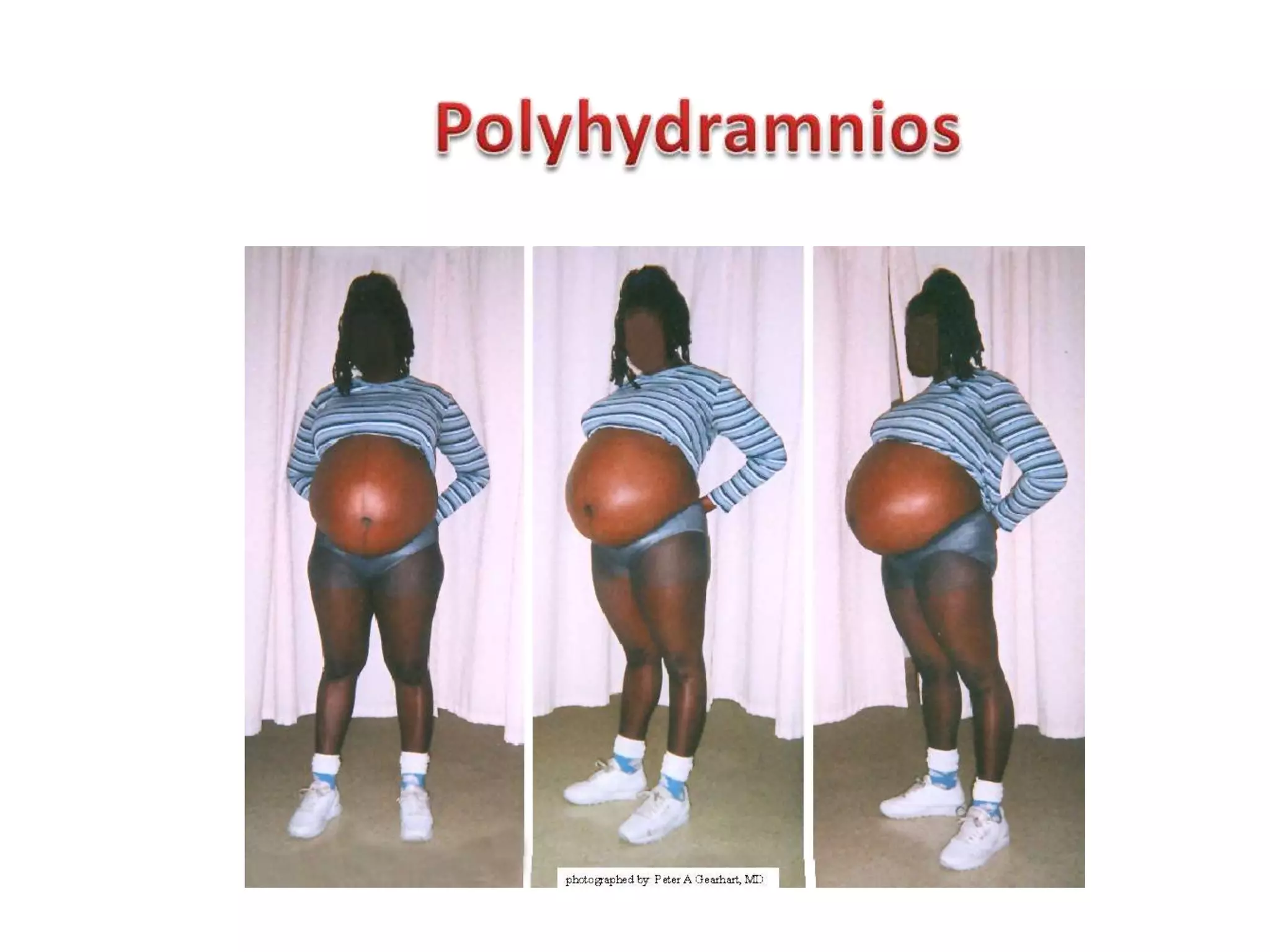
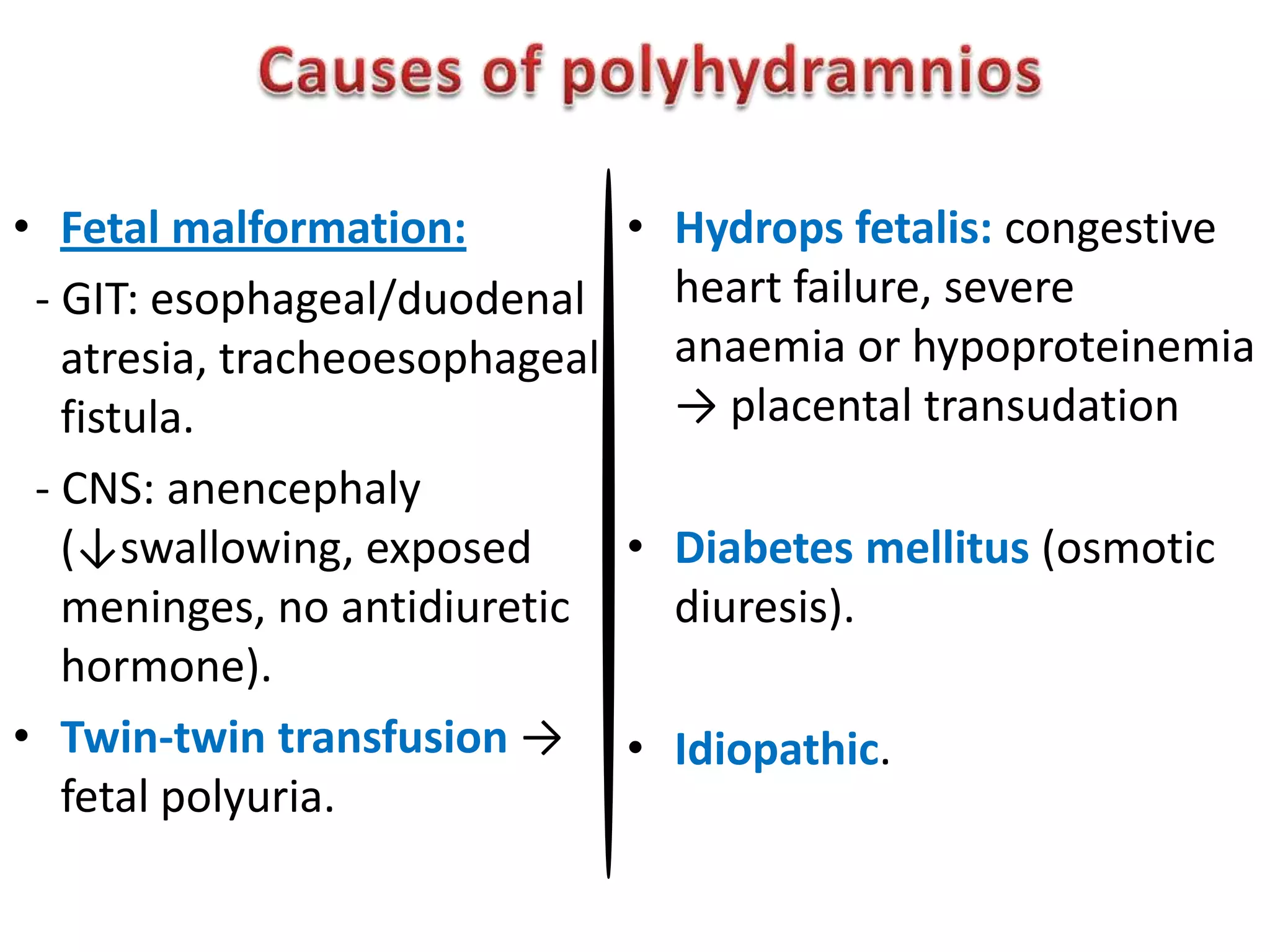
• Fetal malformation:         • Hydrops fetalis: congestive
 - GIT: esophageal/duodenal     heart failure, severe
   atresia, tracheoesophageal   anaemia or hypoproteinemia
   fistula.                     → placental transudation
 - CNS: anencephaly
   (↓swallowing, exposed      • Diabetes mellitus (osmotic
   meninges, no antidiuretic    diuresis).
   hormone).
• Twin-twin transfusion → • Idiopathic.
   fetal polyuria.
• Fetal prognosis worsens with more severe
  hydramnios and congenital anomalies
• 15-20% fetal malformations
• Preterm delivery
• Suspect diabetes
• Prolapse of cord
• Abruption
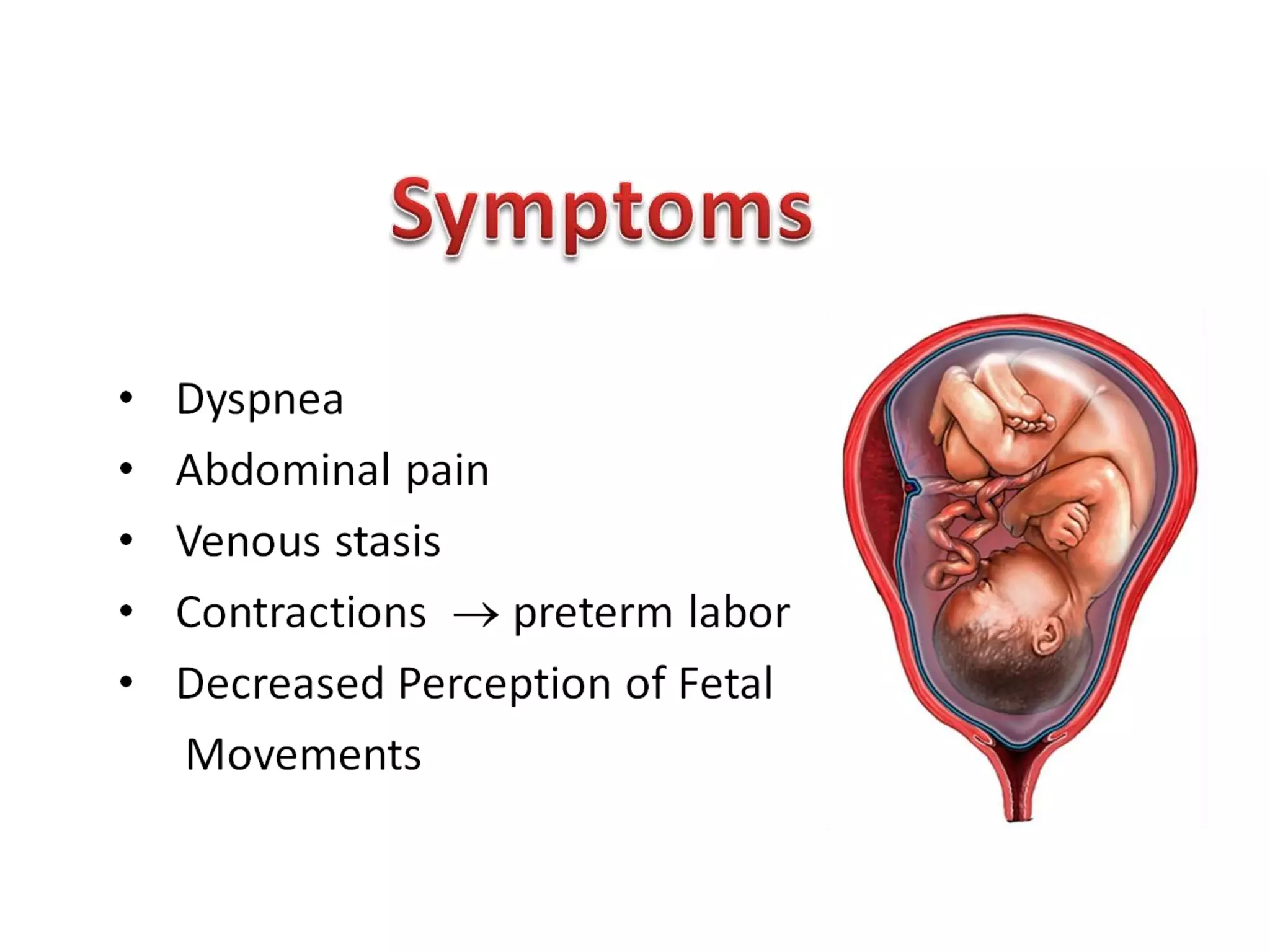
•   Dyspnea
•   Venous Stasis
•   Placental abruption
•   Uterine dysfunction
•   Post-partum hemorrhage
•   Abnormal presentation -- C/S
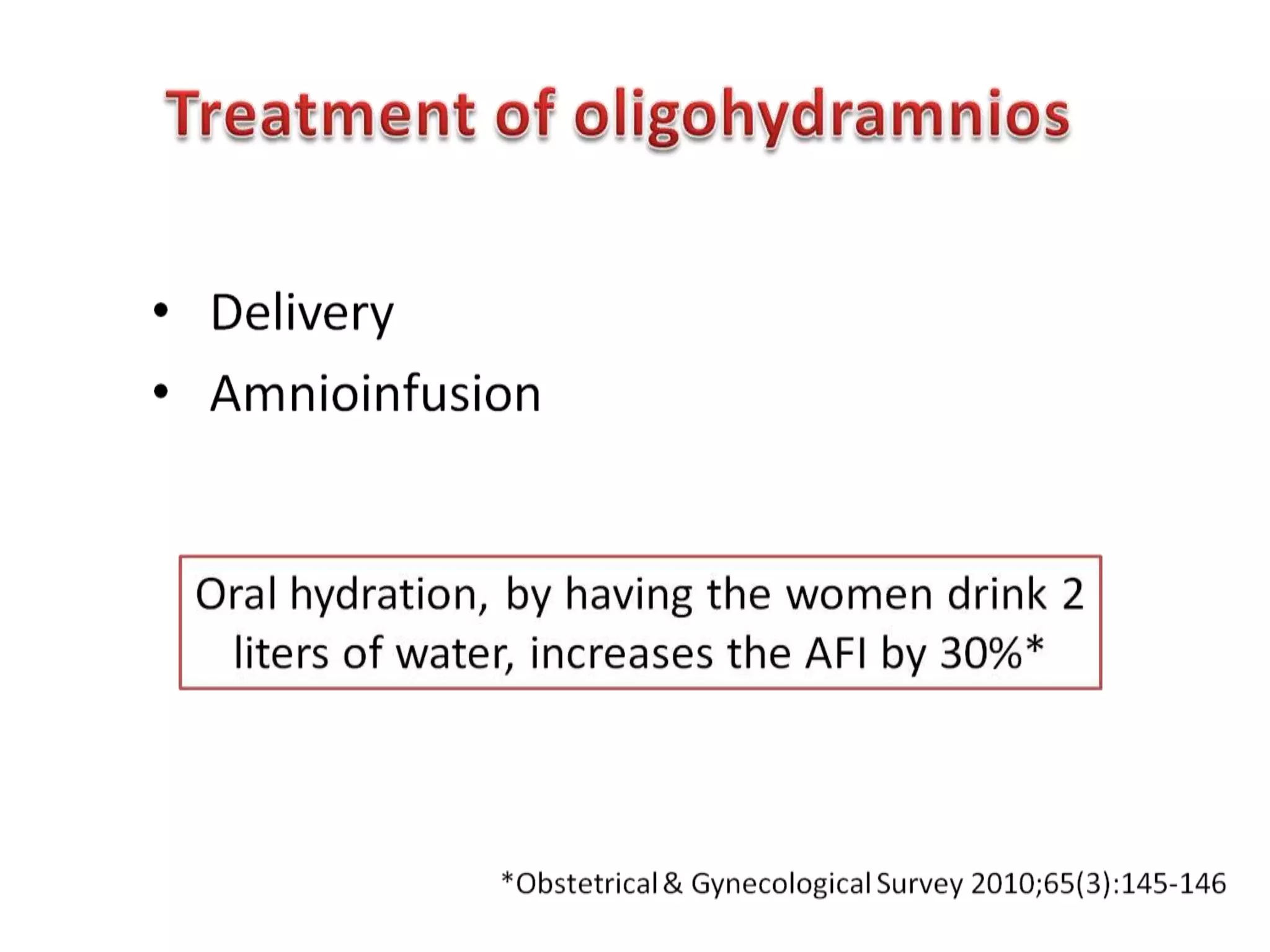
• Minor degrees: no treatment.
• Bed rest, diuretics, water and salt restriction: ineffective.
• Hospitalization: dyspnea, abdominal pain or difficult
    ambulation.
• Indomethacin therapy: .
 - impairs lung liquid production/enhances absorption.
 - ↓fluid movement across fetal membranes.
 * Complications: premature closure of ductus
    arteriosus, impairment of renal function, and cerebral
    vasoconstriction.
• Amniocentesis: to relieve maternal distress and to test for fetal
    lung maturity. Complications: ruptured
    membrane, chorioamnionitis, placental abruption, preterm
    labour.
Amniotic fluid

Amniotic fluid

  • 4.
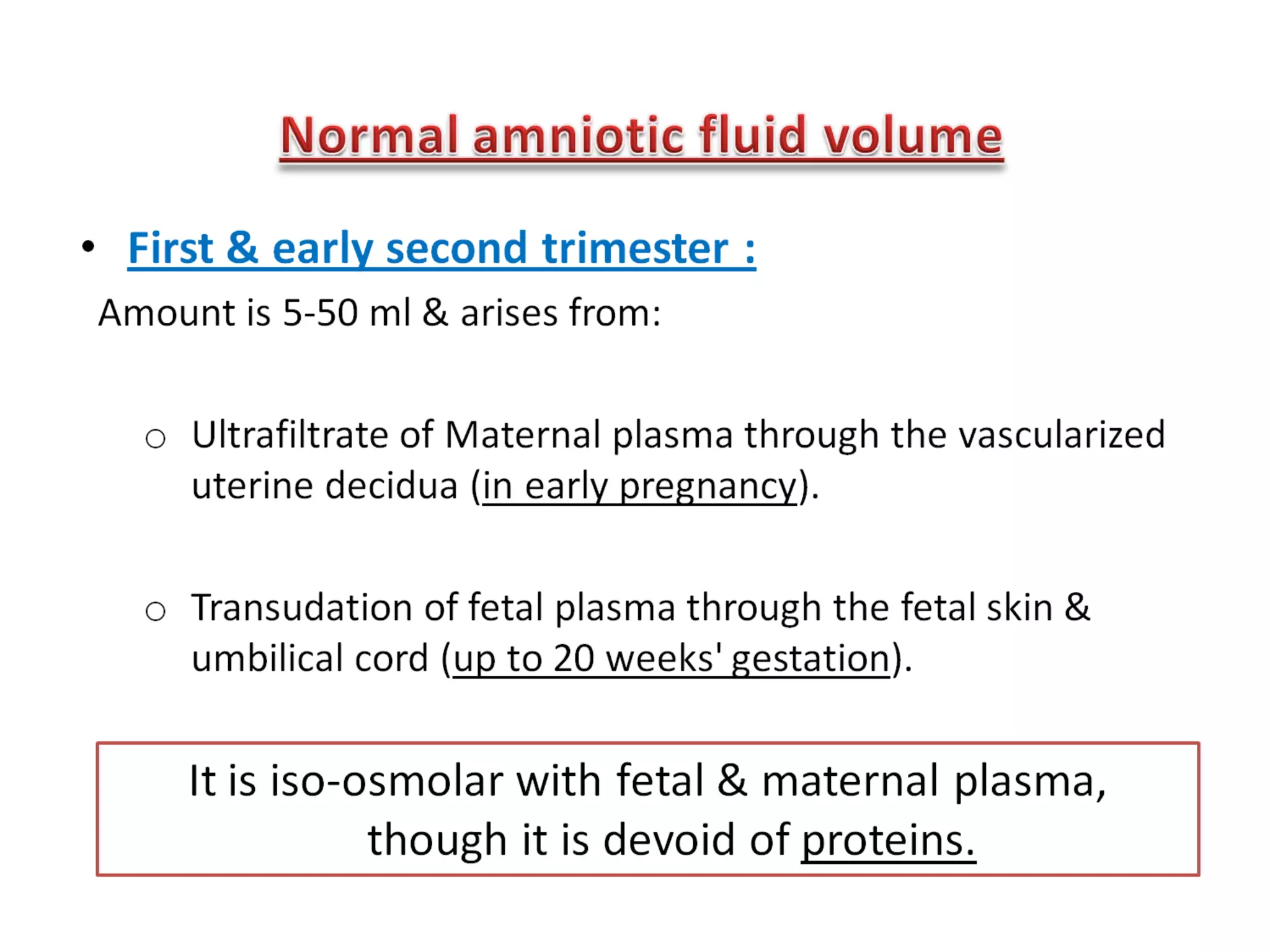
    • Screening forfetal malformation (serum α-fetoprotien). • Assessment of fetal well-being (amniotic fluid index). • Assessment of fetal lung maturity (L/S ratio). • Diagnosis and follow up of labour. • Diagnosis of PROM (ferning test). PROM: Premature rupture of membranes
  • 6.
    • From 20weeks up to term (mainly fetal urine) • At 18th week, the fetus voids 7-14ml/day; at term fetal kidneys secretes 600-700ml of urine/day into AF. - Fetal respiratory tract secretes 250ml/day into AF. - Fluid transfers across the placenta. - Fetal oro-nasal secretions. • Secretion is controlled by: - Fetal swallowing at term removes 500ml/day. - Reabsorption into maternal plasma (osmotic gradient). • AF constituents: - urea, creatinine & uric acid + desquamated fetal cells, vernix, lanugo hair & others→ hypo-osmolar amniotic fluid
  • 8.
    • Clinical assessmentis unreliable. • Objective assessment depends on U/S to measure: Deepest vertical pool (DVP) & Amniotic fluid index (AFI)
  • 13.
    Fundal height < gestational age • Decreased fetal movement • Fetal Heart Rate tracing abnormality • Diagnosis: Ultrasound
  • 14.
    2. Maternal causes: •Uteroplacental insufficiency. • Preeclampsia. 3. Placental causes: • twin-twin transfusion. 4. Drug causes: Prostaglandin synthase inhibitor as NSAID. 5. Idiopathic
  • 15.
    • In earlypregnancy: • Amniotic adhesions or bands→ amputation/death. • Pressure deformities (club feet). • Pulmonary hypoplasia: - Thoracic compression. - No breathing movement. - No amniotic fluid retain.  Flattened face.  Postural deformities.
  • 16.
    In late pregnancy: • Fetal growth restriction. • Placental abruption. • Preterm labour. • Fetal distress. • Fetal death. • Meconium aspiration. • Labour induction/CS.
  • 18.
    J Obstet GynaecolRes. 2010 Apr;36(2):239-47 Free Radic Biol Med. 2010 Aug 1;49(3):493-500 Pflugers Arch. 2010 May;459(6):841-51 Int J Gynaecol Obstet. 2005 Jan;88(1):15-8
  • 20.
    The endothelium (innerlining) of blood vessels uses nitric oxide to relax smooth muscle, thus resulting in vasodilation and increasing blood flow
  • 21.
    NO causes vasodilation& increasing blood flow
  • 30.
    • Fetal malformation: • Hydrops fetalis: congestive - GIT: esophageal/duodenal heart failure, severe atresia, tracheoesophageal anaemia or hypoproteinemia fistula. → placental transudation - CNS: anencephaly (↓swallowing, exposed • Diabetes mellitus (osmotic meninges, no antidiuretic diuresis). hormone). • Twin-twin transfusion → • Idiopathic. fetal polyuria.
  • 31.
    • Fetal prognosisworsens with more severe hydramnios and congenital anomalies • 15-20% fetal malformations • Preterm delivery • Suspect diabetes • Prolapse of cord • Abruption
  • 32.
    Dyspnea • Venous Stasis • Placental abruption • Uterine dysfunction • Post-partum hemorrhage • Abnormal presentation -- C/S
  • 33.
    • Minor degrees:no treatment. • Bed rest, diuretics, water and salt restriction: ineffective. • Hospitalization: dyspnea, abdominal pain or difficult ambulation. • Indomethacin therapy: . - impairs lung liquid production/enhances absorption. - ↓fluid movement across fetal membranes. * Complications: premature closure of ductus arteriosus, impairment of renal function, and cerebral vasoconstriction. • Amniocentesis: to relieve maternal distress and to test for fetal lung maturity. Complications: ruptured membrane, chorioamnionitis, placental abruption, preterm labour.