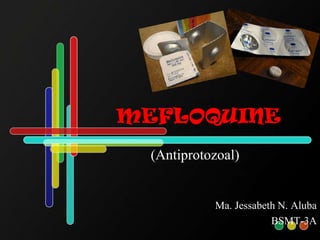
MEFLOQUINE
(Antiprotozoal)
Ma. Jessabeth N. Aluba
BSMT-3A
I. Introduction
• Mefloquine (Lariam, Mephaquin or Mefliam) is a
synthetic 4-quinoline methanol derivative, chemically
related to Quinine.
• Chemical formula of C17H16F6N2O with a molecular
mass of 378.312 g/mol
• It is an effective orally administered medication used
in the prevention and treatment of Plasmodium
falciparum and against other malarial parasites such
as Plasmodium vivax, Plasmodium ovale and
Plasmodium malariae.
• Rare but serious neuropsychiatric problems have been
associated with its use.
• May increase the risk of convulsion in epileptic
patients.
• Also a risk of fatal arryhythmias if given together
with Halofantrine.
II. Mechanism of action
• The exact mechanism of action is uncertain or is
unknown.
• However, it is proposed to share a similar mechanism
of action with Chloroquine, which is inhibition of
heme polymerase.
III. Indications
Treatment of Acute Malaria Infections:
Mefloquine is indicated for the treatment of mild to
moderate acute malaria caused by mefloquine-
susceptible strains of P. falciparum (both
chloroquine-susceptible and resistant strains) or
by Plasmodium vivax. There are insufficient clinical
data to document the effect of mefloquine in malaria
caused by P. ovale or P. malariae.
Malaria prevention:
Mefloquine is useful for the prevention of malaria in
all areas except for those where parasites may have
resistance to multiple drugs. It is typically taken for
one to two weeks before entering an area with
malaria.Doxycycline and atovaquone/proguanil provi
de protection within one to two days and may be
better tolerated. If a person becomes ill with malaria
despite prophylaxis with mefloquine, the use
of halofantrine and quinine for treatment may be
ineffective.
IV. Contraindications
• Contraindicated in patients hypersensitive to
mefloquine or related compounds.
• Contraindicated for prevention of malaria in patients
with a history of seizures or an active or recent
history of depression, generalized anxiety
disorder, psychosis, schizophrenia, or other major
psychiatric disorders.
V. Adverse effects
• CNS
fever, dizziness, syncope, headache, psychotic
changes, hallucinations, confusion, anxiety, fatigue, v
ertigo, depression, seizures, tremor, ataxia, mood
changes, panic attacks
• CV
chest pain, edema
• EENT
tinnitus, visual disturbances
• GI
Anorexia, vomiting, nausea, loose stools, diarrhea,
abdominal discomfort or pain, dyspepsia
• Hematologic
leukopenia, thrombocytopenia
• Musculoskeletal
myalgia
• Skin
rash
• Other
chills, itching, weight loss, unusual aches and pains,
jaundice
VI. Responsibilities
• Take dose immediately before or after a meal on the
same day each week, to improve compliance.
• Patient should not take drug on an empty stomach
and always to take it with at least 8 ounces of water.
• Patient should be careful when performing activities
that require alertness and coordination because
dizziness, disturbed sense of balance, and
neuropsychiatric reactions may occur.
• Patient should notify prescriber if signs and
symptoms of impending toxicity occur.
• Women of childbearing age should use reliable
contraception during treatment.
• Call your doctor immediately if you are experiencing
some uncommon side effects like tingling in your
fingers or toes, difficulty in walking, dark colored
urine, shaking of arms or legs that you cannot control,
etc.
THANK
YOU!!

Mefloquine

  • 1.
  • 2.
    I. Introduction • Mefloquine(Lariam, Mephaquin or Mefliam) is a synthetic 4-quinoline methanol derivative, chemically related to Quinine. • Chemical formula of C17H16F6N2O with a molecular mass of 378.312 g/mol • It is an effective orally administered medication used in the prevention and treatment of Plasmodium falciparum and against other malarial parasites such as Plasmodium vivax, Plasmodium ovale and Plasmodium malariae.
  • 3.
    • Rare butserious neuropsychiatric problems have been associated with its use. • May increase the risk of convulsion in epileptic patients. • Also a risk of fatal arryhythmias if given together with Halofantrine.
  • 4.
    II. Mechanism ofaction • The exact mechanism of action is uncertain or is unknown. • However, it is proposed to share a similar mechanism of action with Chloroquine, which is inhibition of heme polymerase.
  • 5.
    III. Indications Treatment ofAcute Malaria Infections: Mefloquine is indicated for the treatment of mild to moderate acute malaria caused by mefloquine- susceptible strains of P. falciparum (both chloroquine-susceptible and resistant strains) or by Plasmodium vivax. There are insufficient clinical data to document the effect of mefloquine in malaria caused by P. ovale or P. malariae.
  • 6.
    Malaria prevention: Mefloquine isuseful for the prevention of malaria in all areas except for those where parasites may have resistance to multiple drugs. It is typically taken for one to two weeks before entering an area with malaria.Doxycycline and atovaquone/proguanil provi de protection within one to two days and may be better tolerated. If a person becomes ill with malaria despite prophylaxis with mefloquine, the use of halofantrine and quinine for treatment may be ineffective.
  • 7.
    IV. Contraindications • Contraindicatedin patients hypersensitive to mefloquine or related compounds. • Contraindicated for prevention of malaria in patients with a history of seizures or an active or recent history of depression, generalized anxiety disorder, psychosis, schizophrenia, or other major psychiatric disorders.
  • 8.
    V. Adverse effects •CNS fever, dizziness, syncope, headache, psychotic changes, hallucinations, confusion, anxiety, fatigue, v ertigo, depression, seizures, tremor, ataxia, mood changes, panic attacks • CV chest pain, edema • EENT tinnitus, visual disturbances
  • 9.
    • GI Anorexia, vomiting,nausea, loose stools, diarrhea, abdominal discomfort or pain, dyspepsia • Hematologic leukopenia, thrombocytopenia • Musculoskeletal myalgia • Skin rash
  • 10.
    • Other chills, itching,weight loss, unusual aches and pains, jaundice
  • 11.
    VI. Responsibilities • Takedose immediately before or after a meal on the same day each week, to improve compliance. • Patient should not take drug on an empty stomach and always to take it with at least 8 ounces of water. • Patient should be careful when performing activities that require alertness and coordination because dizziness, disturbed sense of balance, and neuropsychiatric reactions may occur. • Patient should notify prescriber if signs and symptoms of impending toxicity occur.
  • 12.
    • Women ofchildbearing age should use reliable contraception during treatment. • Call your doctor immediately if you are experiencing some uncommon side effects like tingling in your fingers or toes, difficulty in walking, dark colored urine, shaking of arms or legs that you cannot control, etc.
  • 13.