Camera angles
and shots
By Natasha and Amy
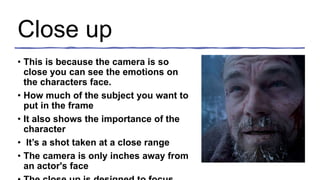
Close up
• This is because the camera is so
close you can see the emotions on
the characters face.
• How much of the subject you want to
put in the frame
• It also shows the importance of the
character
• It’s a shot taken at a close range
• The camera is only inches away from
an actor's face
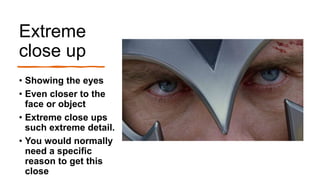
Extreme
close up
• Showing the eyes
• Even closer to the
face or object
• Extreme close ups
such extreme detail.
• You would normally
need a specific
reason to get this
close
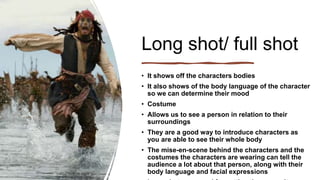
Long shot/ full shot
• It shows off the characters bodies
• It also shows of the body language of the character
so we can determine their mood
• Costume
• Allows us to see a person in relation to their
surroundings
• They are a good way to introduce characters as
you are able to see their whole body
• The mise-en-scene behind the characters and the
costumes the characters are wearing can tell the
audience a lot about that person, along with their
body language and facial expressions
Medium shot/mid
shot
• Showing facial expressions
• It is for showing the emotions of the
character
• It also shows their body language
• Med shot is from the waist upwards
• The mid-shot can be used to focus
attention on an interaction between 2
actors, such as a struggle, debate or
Two shot
• This shot is to show the relationship
between people
• This is combined with other key
terms
• Two shot is a type of shot in which
the frame encompasses two people
(the subjects)
• The subjects do not have to be next
to each other, and there are many
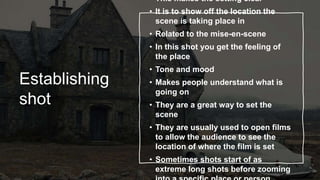
Establishing
shot
• This makes the setting clear
• It is to show off the location the
scene is taking place in
• Related to the mise-en-scene
• In this shot you get the feeling of
the place
• Tone and mood
• Makes people understand what is
going on
• They are a great way to set the
scene
• They are usually used to open films
to allow the audience to see the
location of where the film is set
• Sometimes shots start of as
extreme long shots before zooming
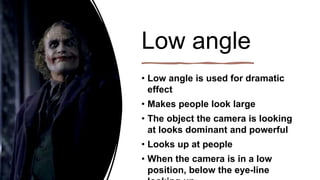
Low angle
• Low angle is used for dramatic
effect
• Makes people look large
• The object the camera is looking
at looks dominant and powerful
• Looks up at people
• When the camera is in a low
position, below the eye-line
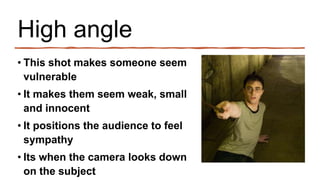
High angle
• This shot makes someone seem
vulnerable
• It makes them seem weak, small
and innocent
• It positions the audience to feel
sympathy
• Its when the camera looks down
on the subject
Straight angle/
eye level shot
• This shot wants the
audience to feel like it is
happening in their eye
line
• To seem like they can
relate to that person
• They can also feel
empathy in certain scenes
• This is the most used
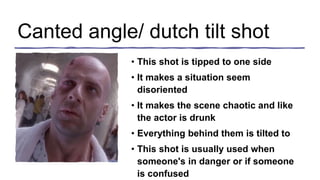
Canted angle/ dutch tilt shot
• This shot is tipped to one side
• It makes a situation seem
disoriented
• It makes the scene chaotic and like
the actor is drunk
• Everything behind them is tilted to
• This shot is usually used when
someone's in danger or if someone
is confused
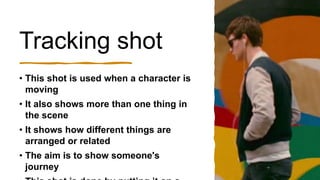
Tracking shot
• This shot is used when a character is
moving
• It also shows more than one thing in
the scene
• It shows how different things are
arranged or related
• The aim is to show someone's
journey
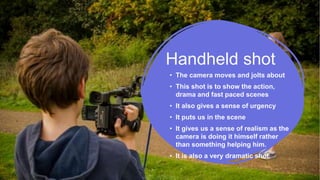
Handheld shot
• The camera moves and jolts about
• This shot is to show the action,
drama and fast paced scenes
• It also gives a sense of urgency
• It puts us in the scene
• It gives us a sense of realism as the
camera is doing it himself rather
than something helping him.
• It is also a very dramatic shot.
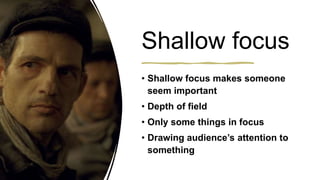
Shallow focus
• Shallow focus makes someone
seem important
• Depth of field
• Only some things in focus
• Drawing audience’s attention to
something
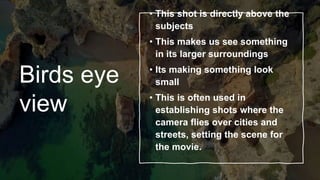
Birds eye
view
• This shot is directly above the
subjects
• This makes us see something
in its larger surroundings
• Its making something look
small
• This is often used in
establishing shots where the
camera flies over cities and
streets, setting the scene for
the movie.
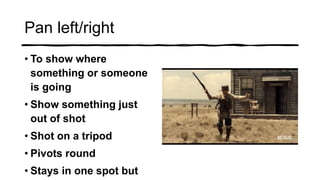
Pan left/right
• To show where
something or someone
is going
• Show something just
out of shot
• Shot on a tripod
• Pivots round
• Stays in one spot but
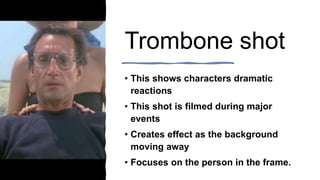
Trombone shot
• This shows characters dramatic
reactions
• This shot is filmed during major
events
• Creates effect as the background
moving away
• Focuses on the person in the frame.
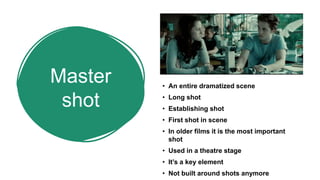
Master
shot
• An entire dramatized scene
• Long shot
• Establishing shot
• First shot in scene
• In older films it is the most important
shot
• Used in a theatre stage
• It’s a key element
• Not built around shots anymore
Pull focus
• It changes where the audience is looking
• It draws our attention to something else
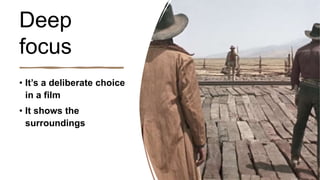
Deep
focus
• It’s a deliberate choice
in a film
• It shows the
surroundings
Tilt up/
down
• Showing the whole of an object or person a
bit at a time
• Making it seem like someone
• Objectifying
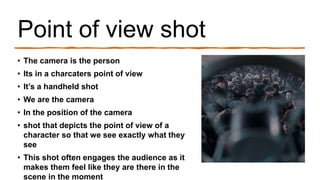
Point of view shot
• The camera is the person
• Its in a charcaters point of view
• It’s a handheld shot
• We are the camera
• In the position of the camera
• shot that depicts the point of view of a
character so that we see exactly what they
see
• This shot often engages the audience as it
makes them feel like they are there in the
scene in the moment
Zoom
in/zoom out
• Camera stays still
• Lens moves in
• Zoom in- focusses our
attention on someone
• Zoom out- shows the
bigger picture
Crane
up/down
• Seeming dramatic
• Drawing attention to
someone’s isolation
• From eye level up or down
• Seems important

Camera angles and shots

  • 1.
  • 2.
    Close up • Thisis because the camera is so close you can see the emotions on the characters face. • How much of the subject you want to put in the frame • It also shows the importance of the character • It’s a shot taken at a close range • The camera is only inches away from an actor's face
  • 3.
    Extreme close up • Showingthe eyes • Even closer to the face or object • Extreme close ups such extreme detail. • You would normally need a specific reason to get this close
  • 4.
    Long shot/ fullshot • It shows off the characters bodies • It also shows of the body language of the character so we can determine their mood • Costume • Allows us to see a person in relation to their surroundings • They are a good way to introduce characters as you are able to see their whole body • The mise-en-scene behind the characters and the costumes the characters are wearing can tell the audience a lot about that person, along with their body language and facial expressions
  • 5.
    Medium shot/mid shot • Showingfacial expressions • It is for showing the emotions of the character • It also shows their body language • Med shot is from the waist upwards • The mid-shot can be used to focus attention on an interaction between 2 actors, such as a struggle, debate or
  • 6.
    Two shot • Thisshot is to show the relationship between people • This is combined with other key terms • Two shot is a type of shot in which the frame encompasses two people (the subjects) • The subjects do not have to be next to each other, and there are many
  • 7.
    Establishing shot • This makesthe setting clear • It is to show off the location the scene is taking place in • Related to the mise-en-scene • In this shot you get the feeling of the place • Tone and mood • Makes people understand what is going on • They are a great way to set the scene • They are usually used to open films to allow the audience to see the location of where the film is set • Sometimes shots start of as extreme long shots before zooming
  • 8.
    Low angle • Lowangle is used for dramatic effect • Makes people look large • The object the camera is looking at looks dominant and powerful • Looks up at people • When the camera is in a low position, below the eye-line
  • 9.
    High angle • Thisshot makes someone seem vulnerable • It makes them seem weak, small and innocent • It positions the audience to feel sympathy • Its when the camera looks down on the subject
  • 10.
    Straight angle/ eye levelshot • This shot wants the audience to feel like it is happening in their eye line • To seem like they can relate to that person • They can also feel empathy in certain scenes • This is the most used
  • 11.
    Canted angle/ dutchtilt shot • This shot is tipped to one side • It makes a situation seem disoriented • It makes the scene chaotic and like the actor is drunk • Everything behind them is tilted to • This shot is usually used when someone's in danger or if someone is confused
  • 12.
    Tracking shot • Thisshot is used when a character is moving • It also shows more than one thing in the scene • It shows how different things are arranged or related • The aim is to show someone's journey
  • 13.
    Handheld shot • Thecamera moves and jolts about • This shot is to show the action, drama and fast paced scenes • It also gives a sense of urgency • It puts us in the scene • It gives us a sense of realism as the camera is doing it himself rather than something helping him. • It is also a very dramatic shot.
  • 14.
    Shallow focus • Shallowfocus makes someone seem important • Depth of field • Only some things in focus • Drawing audience’s attention to something
  • 15.
    Birds eye view • Thisshot is directly above the subjects • This makes us see something in its larger surroundings • Its making something look small • This is often used in establishing shots where the camera flies over cities and streets, setting the scene for the movie.
  • 16.
    Pan left/right • Toshow where something or someone is going • Show something just out of shot • Shot on a tripod • Pivots round • Stays in one spot but
  • 17.
    Trombone shot • Thisshows characters dramatic reactions • This shot is filmed during major events • Creates effect as the background moving away • Focuses on the person in the frame.
  • 18.
    Master shot • An entiredramatized scene • Long shot • Establishing shot • First shot in scene • In older films it is the most important shot • Used in a theatre stage • It’s a key element • Not built around shots anymore
  • 19.
    Pull focus • Itchanges where the audience is looking • It draws our attention to something else
  • 20.
    Deep focus • It’s adeliberate choice in a film • It shows the surroundings
  • 21.
    Tilt up/ down • Showingthe whole of an object or person a bit at a time • Making it seem like someone • Objectifying
  • 22.
    Point of viewshot • The camera is the person • Its in a charcaters point of view • It’s a handheld shot • We are the camera • In the position of the camera • shot that depicts the point of view of a character so that we see exactly what they see • This shot often engages the audience as it makes them feel like they are there in the scene in the moment
  • 23.
    Zoom in/zoom out • Camerastays still • Lens moves in • Zoom in- focusses our attention on someone • Zoom out- shows the bigger picture
  • 24.
    Crane up/down • Seeming dramatic •Drawing attention to someone’s isolation • From eye level up or down • Seems important