Camera Angles, Shot types On
         location.
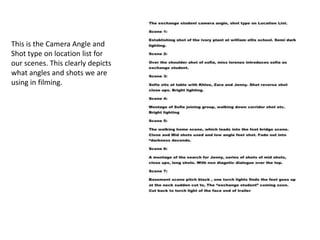
This is the Camera Angle and
Shot type on location list for
our scenes. This clearly depicts
what angles and shots we are
using in filming.
• Below is a mini description of a variety of
  shots some of which my group has used.


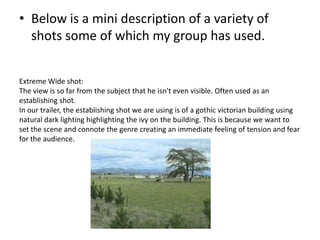
Extreme Wide shot:
The view is so far from the subject that he isn't even visible. Often used as an
establishing shot.
In our trailer, the establishing shot we are using is of a gothic victorian building using
natural dark lighting highlighting the ivy on the building. This is because we want to
set the scene and connote the genre creating an immediate feeling of tension and fear
for the audience.
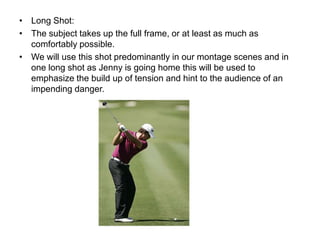
• Long Shot:
• The subject takes up the full frame, or at least as much as
  comfortably possible.
• We will use this shot predominantly in our montage scenes and in
  one long shot as Jenny is going home this will be used to
  emphasize the build up of tension and hint to the audience of an
  impending danger.
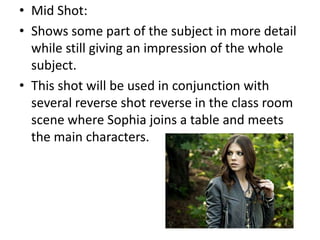
• Mid Shot:
• Shows some part of the subject in more detail
  while still giving an impression of the whole
  subject.
• This shot will be used in conjunction with
  several reverse shot reverse in the class room
  scene where Sophia joins a table and meets
  the main characters.
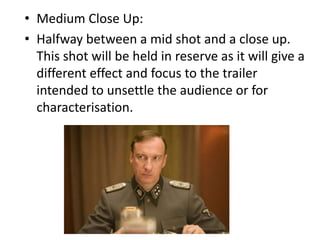
• Medium Close Up:
• Halfway between a mid shot and a close up.
  This shot will be held in reserve as it will give a
  different effect and focus to the trailer
  intended to unsettle the audience or for
  characterisation.
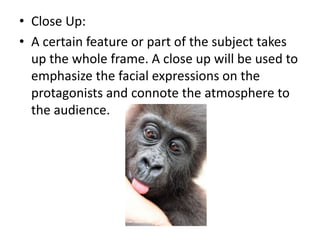
• Close Up:
• A certain feature or part of the subject takes
  up the whole frame. A close up will be used to
  emphasize the facial expressions on the
  protagonists and connote the atmosphere to
  the audience.
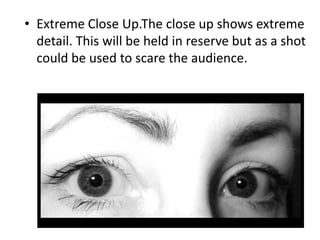
• Extreme Close Up.The close up shows extreme
  detail. This will be held in reserve but as a shot
  could be used to scare the audience.
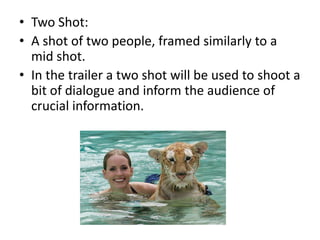
• Two Shot:
• A shot of two people, framed similarly to a
  mid shot.
• In the trailer a two shot will be used to shoot a
  bit of dialogue and inform the audience of
  crucial information.
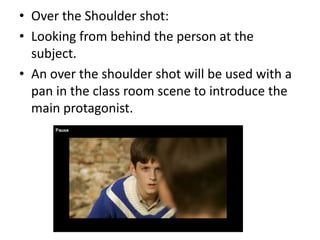
• Over the Shoulder shot:
• Looking from behind the person at the
  subject.
• An over the shoulder shot will be used with a
  pan in the class room scene to introduce the
  main protagonist.
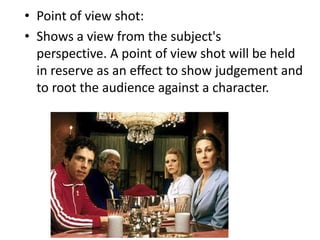
• Point of view shot:
• Shows a view from the subject's
  perspective. A point of view shot will be held
  in reserve as an effect to show judgement and
  to root the audience against a character.

Camera angles shot types list

  • 1.
    Camera Angles, Shottypes On location.
  • 2.
    This is theCamera Angle and Shot type on location list for our scenes. This clearly depicts what angles and shots we are using in filming.
  • 3.
    • Below isa mini description of a variety of shots some of which my group has used. Extreme Wide shot: The view is so far from the subject that he isn't even visible. Often used as an establishing shot. In our trailer, the establishing shot we are using is of a gothic victorian building using natural dark lighting highlighting the ivy on the building. This is because we want to set the scene and connote the genre creating an immediate feeling of tension and fear for the audience.
  • 4.
    • Long Shot: •The subject takes up the full frame, or at least as much as comfortably possible. • We will use this shot predominantly in our montage scenes and in one long shot as Jenny is going home this will be used to emphasize the build up of tension and hint to the audience of an impending danger.
  • 5.
    • Mid Shot: •Shows some part of the subject in more detail while still giving an impression of the whole subject. • This shot will be used in conjunction with several reverse shot reverse in the class room scene where Sophia joins a table and meets the main characters.
  • 6.
    • Medium CloseUp: • Halfway between a mid shot and a close up. This shot will be held in reserve as it will give a different effect and focus to the trailer intended to unsettle the audience or for characterisation.
  • 7.
    • Close Up: •A certain feature or part of the subject takes up the whole frame. A close up will be used to emphasize the facial expressions on the protagonists and connote the atmosphere to the audience.
  • 8.
    • Extreme CloseUp.The close up shows extreme detail. This will be held in reserve but as a shot could be used to scare the audience.
  • 9.
    • Two Shot: •A shot of two people, framed similarly to a mid shot. • In the trailer a two shot will be used to shoot a bit of dialogue and inform the audience of crucial information.
  • 10.
    • Over theShoulder shot: • Looking from behind the person at the subject. • An over the shoulder shot will be used with a pan in the class room scene to introduce the main protagonist.
  • 11.
    • Point ofview shot: • Shows a view from the subject's perspective. A point of view shot will be held in reserve as an effect to show judgement and to root the audience against a character.