Glossary 
Name Example Purpose 
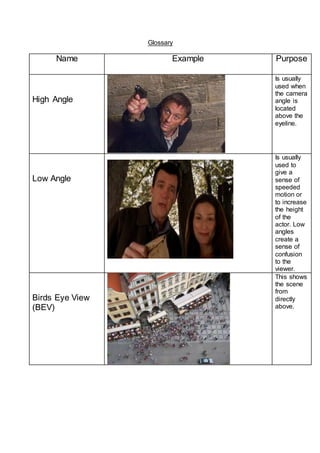
High Angle 
Is usually 
used when 
the camera 
angle is 
located 
above the 
eyeline. 
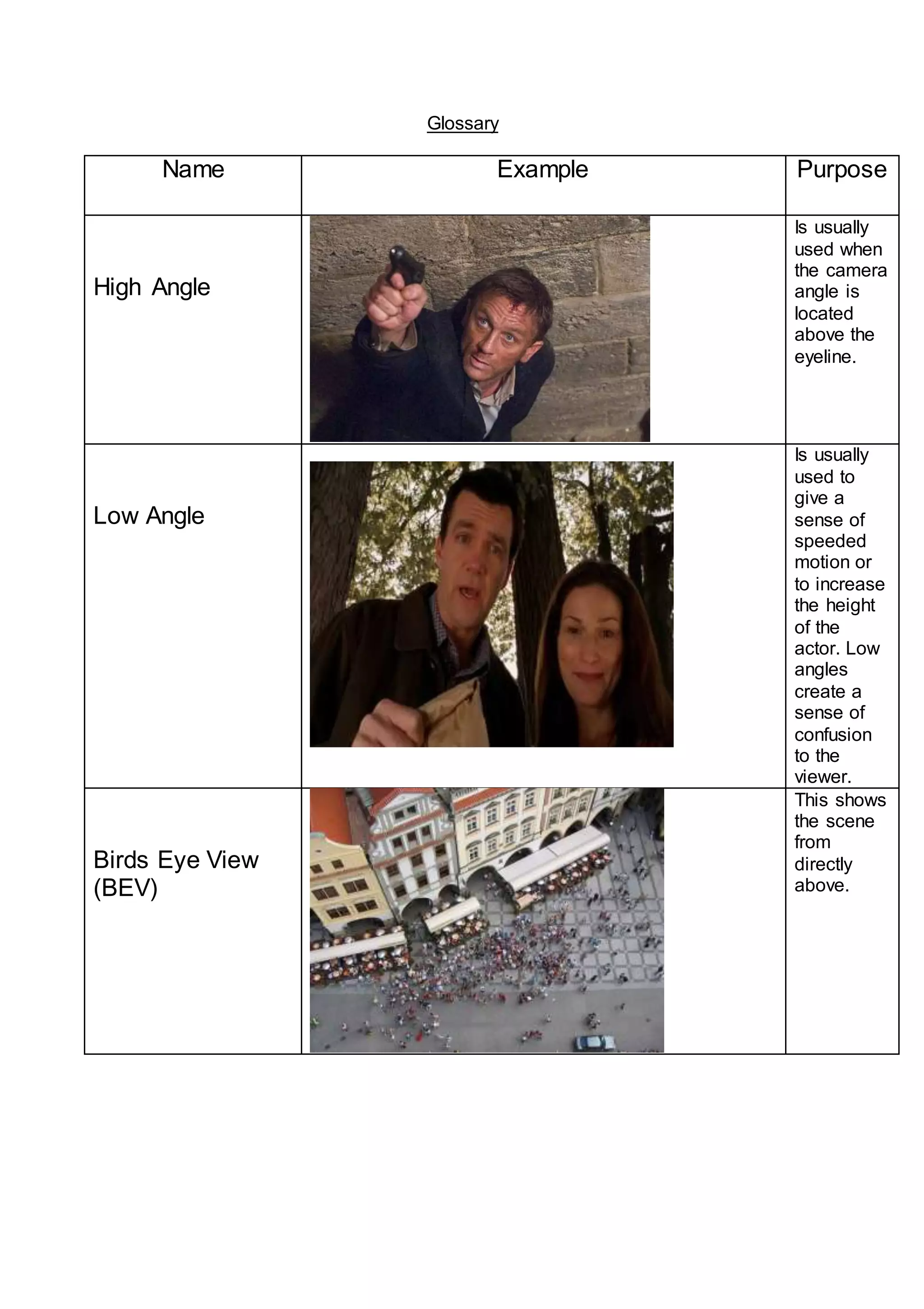
Low Angle 
Is usually 
used to 
give a 
sense of 
speeded 
motion or 
to increase 
the height 
of the 
actor. Low 
angles 
create a 
sense of 
confusion 
to the 
viewer. 
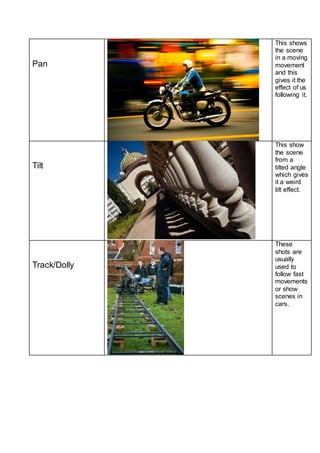
Birds Eye View 
(BEV) 
This shows 
the scene 
from 
directly 
above.
Pan 
This shows 
the scene 
in a moving 
movement 
and this 
gives it the 
effect of us 
following it. 
Tilt 
This show 
the scene 
from a 
tilted angle 
which gives 
it a weird 
tilt effect. 
Track/Dolly 
These 
shots are 
usually 
used to 
follow fast 
movements 
or show 
scenes in 
cars.
Crane/Mechanical 
shot 
Used to 
show high 
angle shots 
and shows 
the scene 
from a full 
angle. 
Steadicam 
This is 
used to 
show the 
movement 
of a moving 
vehicle. 
Zoom/Reverse 
Zoom 
Hand Held 
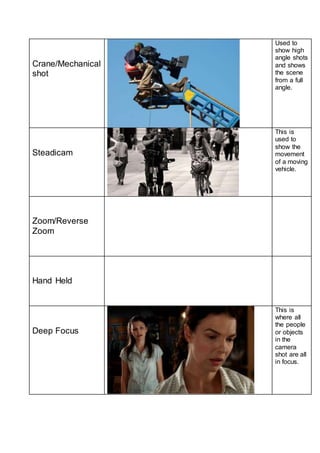
Deep Focus 
This is 
where all 
the people 
or objects 
in the 
camera 
shot are all 
in focus.
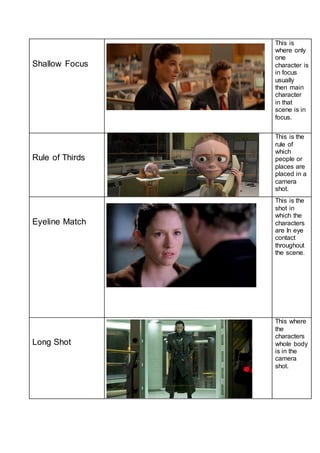
Shallow Focus 
This is 
where only 
one 
character is 
in focus 
usually 
then main 
character 
in that 
scene is in 
focus. 
Rule of Thirds 
This is the 
rule of 
which 
people or 
places are 
placed in a 
camera 
shot. 
Eyeline Match 
This is the 
shot in 
which the 
characters 
are In eye 
contact 
throughout 
the scene. 
Long Shot 
This where 
the 
characters 
whole body 
is in the 
camera 
shot.
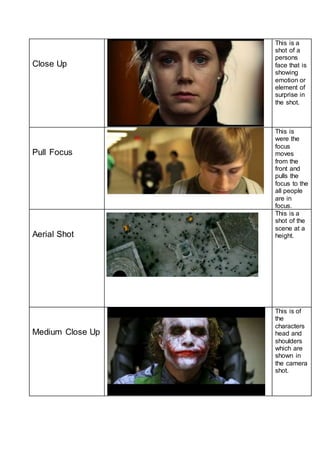
Close Up 
This is a 
shot of a 
persons 
face that is 
showing 
emotion or 
element of 
surprise in 
the shot. 
Pull Focus 
This is 
were the 
focus 
moves 
from the 
front and 
pulls the 
focus to the 
all people 
are in 
focus. 
Aerial Shot 
This is a 
shot of the 
scene at a 
height. 
Medium Close Up 
This is of 
the 
characters 
head and 
shoulders 
which are 
shown in 
the camera 
shot.
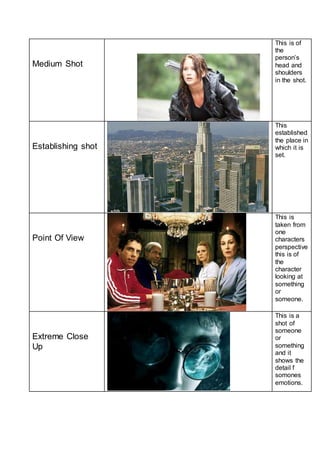
Medium Shot 
This is of 
the 
person’s 
head and 
shoulders 
in the shot. 
Establishing shot 
This 
established 
the place in 
which it is 
set. 
Point Of View 
This is 
taken from 
one 
characters 
perspective 
this is of 
the 
character 
looking at 
something 
or 
someone. 
Extreme Close 
Up 
This is a 
shot of 
someone 
or 
something 
and it 
shows the 
detail f 
somones 
emotions.
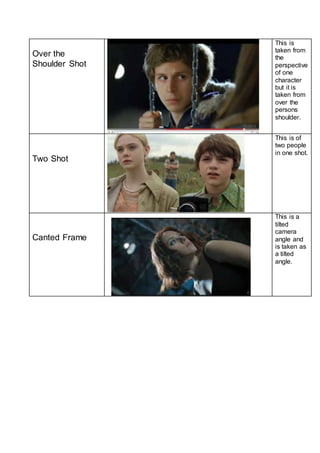
Over the 
Shoulder Shot 
This is 
taken from 
the 
perspective 
of one 
character 
but it is 
taken from 
over the 
persons 
shoulder. 
Two Shot 
This is of 
two people 
in one shot. 
Canted Frame 
This is a 
tilted 
camera 
angle and 
is taken as 
a tilted 
angle.

camera shots glossary

  • 1.
    Glossary Name ExamplePurpose High Angle Is usually used when the camera angle is located above the eyeline. Low Angle Is usually used to give a sense of speeded motion or to increase the height of the actor. Low angles create a sense of confusion to the viewer. Birds Eye View (BEV) This shows the scene from directly above.
  • 2.
    Pan This shows the scene in a moving movement and this gives it the effect of us following it. Tilt This show the scene from a tilted angle which gives it a weird tilt effect. Track/Dolly These shots are usually used to follow fast movements or show scenes in cars.
  • 3.
    Crane/Mechanical shot Usedto show high angle shots and shows the scene from a full angle. Steadicam This is used to show the movement of a moving vehicle. Zoom/Reverse Zoom Hand Held Deep Focus This is where all the people or objects in the camera shot are all in focus.
  • 4.
    Shallow Focus Thisis where only one character is in focus usually then main character in that scene is in focus. Rule of Thirds This is the rule of which people or places are placed in a camera shot. Eyeline Match This is the shot in which the characters are In eye contact throughout the scene. Long Shot This where the characters whole body is in the camera shot.
  • 5.
    Close Up Thisis a shot of a persons face that is showing emotion or element of surprise in the shot. Pull Focus This is were the focus moves from the front and pulls the focus to the all people are in focus. Aerial Shot This is a shot of the scene at a height. Medium Close Up This is of the characters head and shoulders which are shown in the camera shot.
  • 6.
    Medium Shot Thisis of the person’s head and shoulders in the shot. Establishing shot This established the place in which it is set. Point Of View This is taken from one characters perspective this is of the character looking at something or someone. Extreme Close Up This is a shot of someone or something and it shows the detail f somones emotions.
  • 7.
    Over the ShoulderShot This is taken from the perspective of one character but it is taken from over the persons shoulder. Two Shot This is of two people in one shot. Canted Frame This is a tilted camera angle and is taken as a tilted angle.