Glossary Camera 
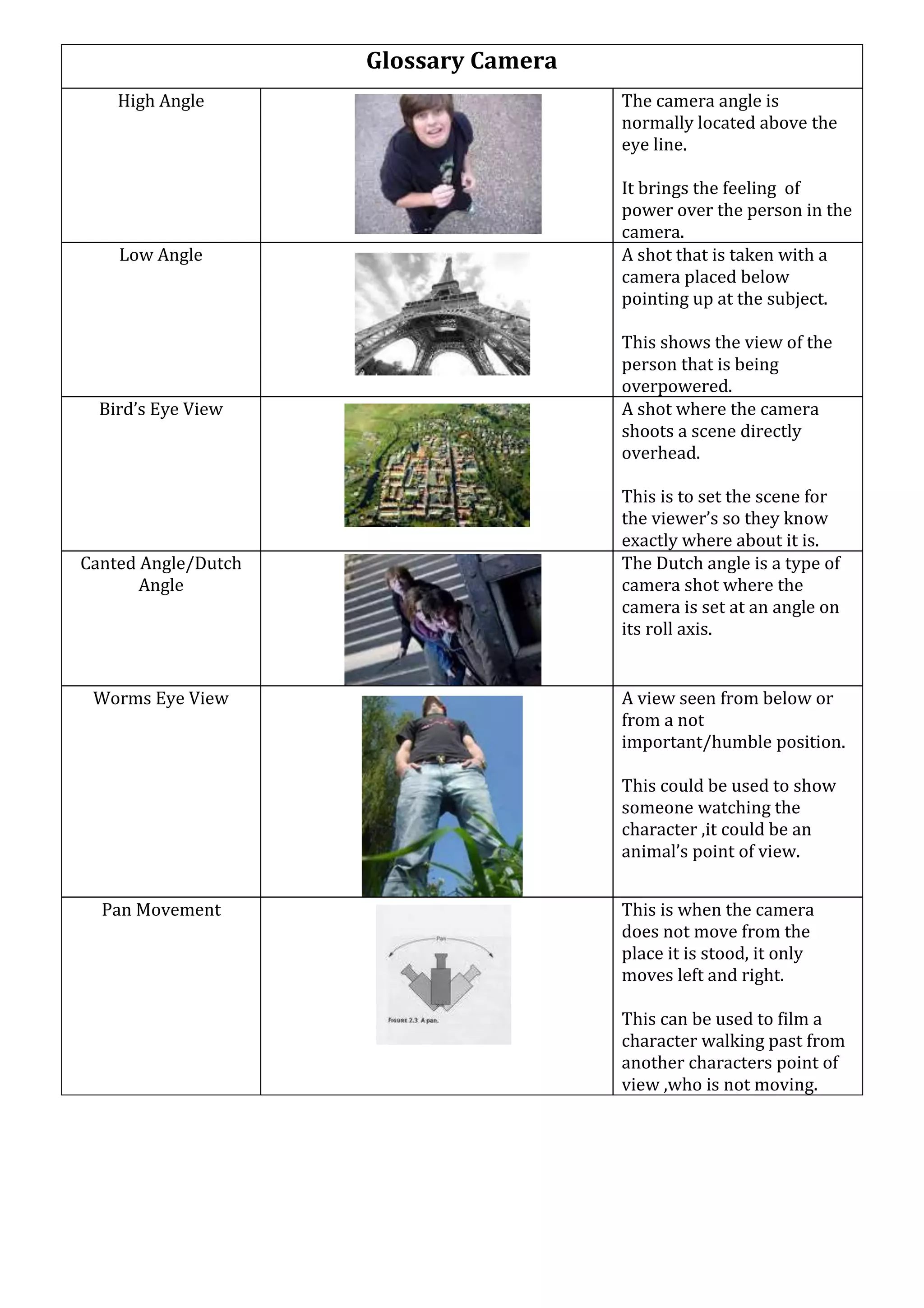
High Angle The camera angle is 
normally located above the 
eye line. 
It brings the feeling of 
power over the person in the 
camera. 
Low Angle A shot that is taken with a 
camera placed below 
pointing up at the subject. 
This shows the view of the 
person that is being 
overpowered. 
Bird’s Eye View 
A shot where the camera 
shoots a scene directly 
overhead. 
This is to set the scene for 
the viewer’s so they know 
exactly where about it is. 
Canted Angle/Dutch 
Angle 
The Dutch angle is a type of 
camera shot where the 
camera is set at an angle on 
its roll axis. 
Worms Eye View A view seen from below or 
from a not 
important/humble position. 
This could be used to show 
someone watching the 
character ,it could be an 
animal’s point of view. 
Pan Movement This is when the camera 
does not move from the 
place it is stood, it only 
moves left and right. 
This can be used to film a 
character walking past from 
another characters point of 
view ,who is not moving.
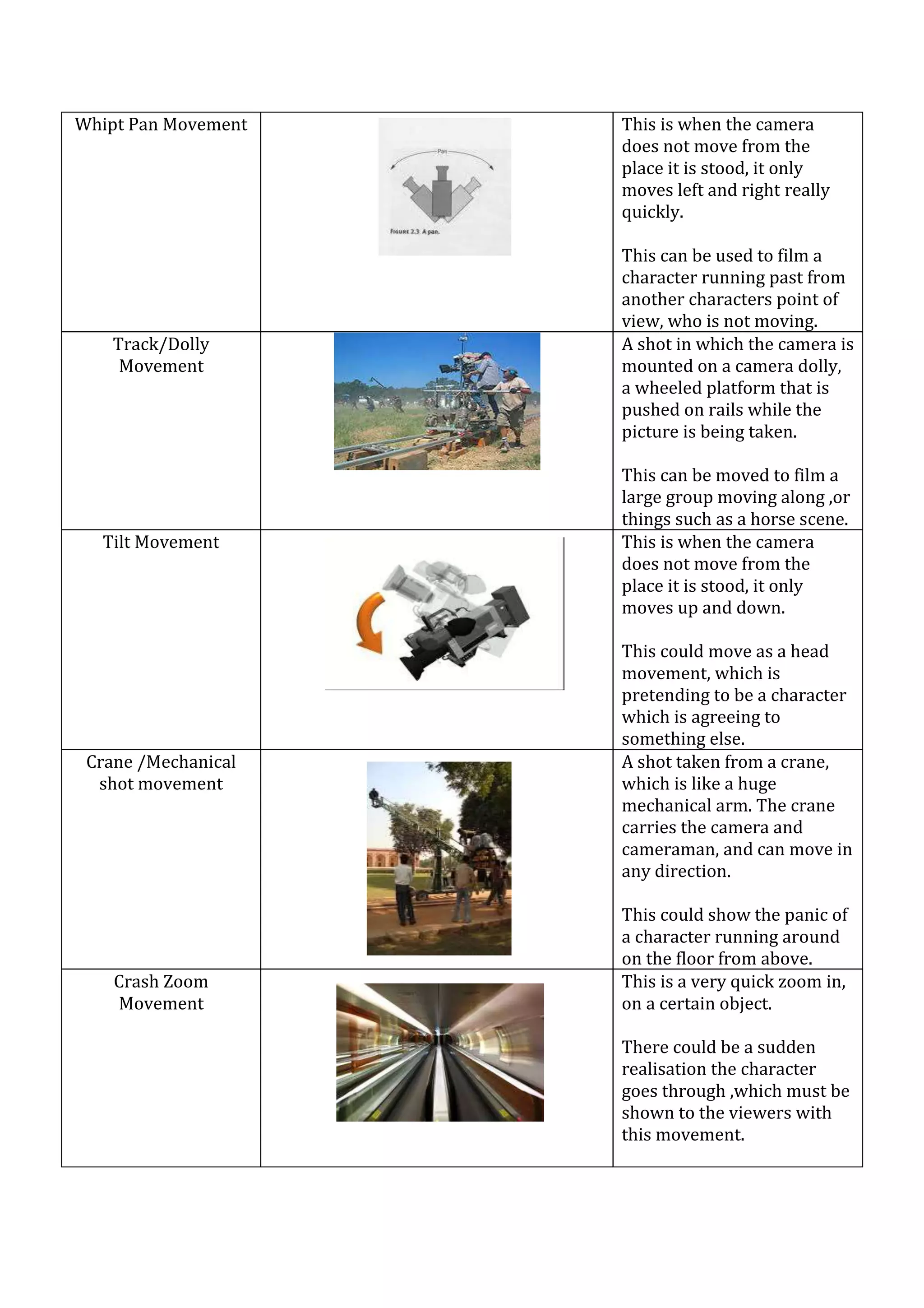
Whipt Pan Movement This is when the camera 
does not move from the 
place it is stood, it only 
moves left and right really 
quickly. 
This can be used to film a 
character running past from 
another characters point of 
view, who is not moving. 
Track/Dolly 
Movement 
A shot in which the camera is 
mounted on a camera dolly, 
a wheeled platform that is 
pushed on rails while the 
picture is being taken. 
This can be moved to film a 
large group moving along ,or 
things such as a horse scene. 
Tilt Movement This is when the camera 
does not move from the 
place it is stood, it only 
moves up and down. 
This could move as a head 
movement, which is 
pretending to be a character 
which is agreeing to 
something else. 
Crane /Mechanical 
shot movement 
A shot taken from a crane, 
which is like a huge 
mechanical arm. The crane 
carries the camera and 
cameraman, and can move in 
any direction. 
This could show the panic of 
a character running around 
on the floor from above. 
Crash Zoom 
Movement 
This is a very quick zoom in, 
on a certain object. 
There could be a sudden 
realisation the character 
goes through ,which must be 
shown to the viewers with 
this movement.
Stedicam Movement This is when the cameraman 
has weights on him and is 
carrying the camera. This is 
so that they can get through 
crowds in a steady 
movement. 
This can follow a character 
that is searching in a large 
crowd and there needs to be 
a close up shot. 
Zoom/Reverse Zoom 
Movement 
Zooming in to extreme detail 
and out for the bigger 
picture in a smooth 
movement. 
Hand Held Movement This is when the cameraman 
holds the camera in their 
hands to film. 
This can be used in a scene 
where the movement needs 
to be shaky, this could be to 
show someone being 
nervous. 
Deep Focus 
Composition 
Everything in the planes 
remains clearly in focus, 
from close-up range to 
infinity. 
This is to make sure 
everything in the scene 
because it is all important to 
acknowledge everything 
going on. 
Shallow Focus 
Composition 
Is used to emphasize one 
part of the image over 
another. 
This draws the attention to 
the characters facial 
emotions. 
Rule of Thirds 
Composition 
This makes sure the entire 
screen is used, and there is 
no unused space.
Eye Line Match 
Composition 
This is to make sure when 
the camera switches during 
conversation, which the eyes 
are lined up to make it 
realistic. 
Makes sure the viewer’s still 
know who is in the 
conversation. 
Long shot Camera A detailed shot from head to 
toe, with the entire person in 
the frame. 
Close Up Camera A detailed view of a person 
or object, normally without 
anything else going on. 
Medium Close Up 
Camera 
A medium close up includes 
the shoulders upwards. 
Medium Shot Camera A medium shot of a figure 
generally includes the body 
from the knees or waist up. 
Establishing shot 
Camera 
Usually an extreme long, 
used at the beginning to 
show the view where the 
scene is, before the story line 
starts.
Over the shoulder shot A medium shot, used in 
dialogue scenes, in which 
one actor is filmed head-on 
from over the shoulder of 
another actor. 
Two Shot A shot with two actors in. 
Pull Focus Movement This is when an object is in 
focus in the background, 
then focus changes to the 
object I the fore ground.

Camera Glossary

  • 1.
    Glossary Camera HighAngle The camera angle is normally located above the eye line. It brings the feeling of power over the person in the camera. Low Angle A shot that is taken with a camera placed below pointing up at the subject. This shows the view of the person that is being overpowered. Bird’s Eye View A shot where the camera shoots a scene directly overhead. This is to set the scene for the viewer’s so they know exactly where about it is. Canted Angle/Dutch Angle The Dutch angle is a type of camera shot where the camera is set at an angle on its roll axis. Worms Eye View A view seen from below or from a not important/humble position. This could be used to show someone watching the character ,it could be an animal’s point of view. Pan Movement This is when the camera does not move from the place it is stood, it only moves left and right. This can be used to film a character walking past from another characters point of view ,who is not moving.
  • 2.
    Whipt Pan MovementThis is when the camera does not move from the place it is stood, it only moves left and right really quickly. This can be used to film a character running past from another characters point of view, who is not moving. Track/Dolly Movement A shot in which the camera is mounted on a camera dolly, a wheeled platform that is pushed on rails while the picture is being taken. This can be moved to film a large group moving along ,or things such as a horse scene. Tilt Movement This is when the camera does not move from the place it is stood, it only moves up and down. This could move as a head movement, which is pretending to be a character which is agreeing to something else. Crane /Mechanical shot movement A shot taken from a crane, which is like a huge mechanical arm. The crane carries the camera and cameraman, and can move in any direction. This could show the panic of a character running around on the floor from above. Crash Zoom Movement This is a very quick zoom in, on a certain object. There could be a sudden realisation the character goes through ,which must be shown to the viewers with this movement.
  • 3.
    Stedicam Movement Thisis when the cameraman has weights on him and is carrying the camera. This is so that they can get through crowds in a steady movement. This can follow a character that is searching in a large crowd and there needs to be a close up shot. Zoom/Reverse Zoom Movement Zooming in to extreme detail and out for the bigger picture in a smooth movement. Hand Held Movement This is when the cameraman holds the camera in their hands to film. This can be used in a scene where the movement needs to be shaky, this could be to show someone being nervous. Deep Focus Composition Everything in the planes remains clearly in focus, from close-up range to infinity. This is to make sure everything in the scene because it is all important to acknowledge everything going on. Shallow Focus Composition Is used to emphasize one part of the image over another. This draws the attention to the characters facial emotions. Rule of Thirds Composition This makes sure the entire screen is used, and there is no unused space.
  • 4.
    Eye Line Match Composition This is to make sure when the camera switches during conversation, which the eyes are lined up to make it realistic. Makes sure the viewer’s still know who is in the conversation. Long shot Camera A detailed shot from head to toe, with the entire person in the frame. Close Up Camera A detailed view of a person or object, normally without anything else going on. Medium Close Up Camera A medium close up includes the shoulders upwards. Medium Shot Camera A medium shot of a figure generally includes the body from the knees or waist up. Establishing shot Camera Usually an extreme long, used at the beginning to show the view where the scene is, before the story line starts.
  • 5.
    Over the shouldershot A medium shot, used in dialogue scenes, in which one actor is filmed head-on from over the shoulder of another actor. Two Shot A shot with two actors in. Pull Focus Movement This is when an object is in focus in the background, then focus changes to the object I the fore ground.