Camera Terminology
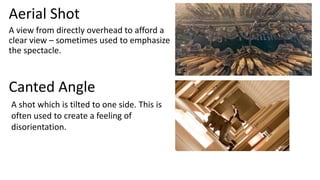
Aerial Shot
A view from directly overhead to afford a
clear view – sometimes used to emphasize
the spectacle.
Canted Angle
A shot which is tilted to one side. This is
often used to create a feeling of
disorientation.
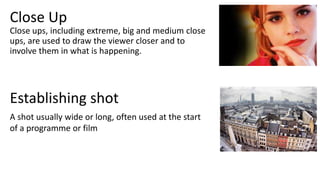
Close ups, including extreme, big and medium close
ups, are used to draw the viewer closer and to
involve them in what is happening.
Close Up
Establishing shot
A shot usually wide or long, often used at the start
of a programme or film
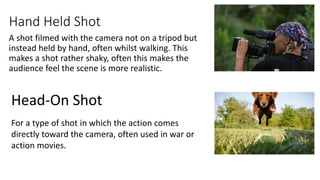
Hand Held Shot
A shot filmed with the camera not on a tripod but
instead held by hand, often whilst walking. This
makes a shot rather shaky, often this makes the
audience feel the scene is more realistic.
Head-On Shot
For a type of shot in which the action comes
directly toward the camera, often used in war or
action movies.
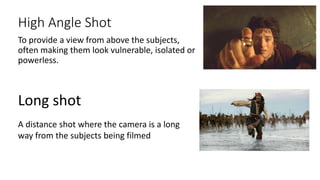
High Angle Shot
To provide a view from above the subjects,
often making them look vulnerable, isolated or
powerless.
Long shot
A distance shot where the camera is a long
way from the subjects being filmed
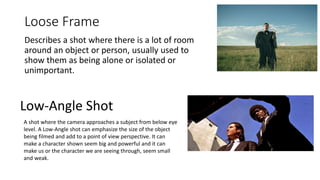
Loose Frame
Describes a shot where there is a lot of room
around an object or person, usually used to
show them as being alone or isolated or
unimportant.
Low-Angle Shot
A shot where the camera approaches a subject from below eye
level. A Low-Angle shot can emphasize the size of the object
being filmed and add to a point of view perspective. It can
make a character shown seem big and powerful and it can
make us or the character we are seeing through, seem small
and weak.
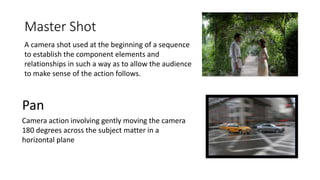
Master Shot
A camera shot used at the beginning of a sequence
to establish the component elements and
relationships in such a way as to allow the audience
to make sense of the action follows.
Pan
Camera action involving gently moving the camera
180 degrees across the subject matter in a
horizontal plane
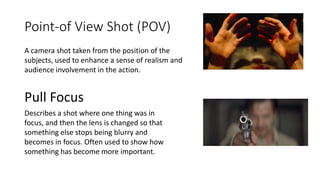
Point-of View Shot (POV)
A camera shot taken from the position of the
subjects, used to enhance a sense of realism and
audience involvement in the action.
Pull Focus
Describes a shot where one thing was in
focus, and then the lens is changed so that
something else stops being blurry and
becomes in focus. Often used to show how
something has become more important.
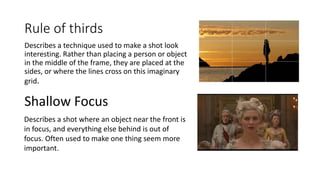
Rule of thirds
Describes a technique used to make a shot look
interesting. Rather than placing a person or object
in the middle of the frame, they are placed at the
sides, or where the lines cross on this imaginary
grid.
Shallow Focus
Describes a shot where an object near the front is
in focus, and everything else behind is out of
focus. Often used to make one thing seem more
important.
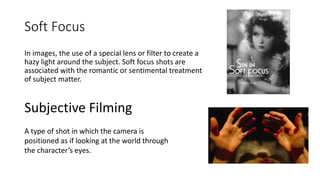
Soft Focus
In images, the use of a special lens or filter to create a
hazy light around the subject. Soft focus shots are
associated with the romantic or sentimental treatment
of subject matter.
Subjective Filming
A type of shot in which the camera is
positioned as if looking at the world through
the character’s eyes.
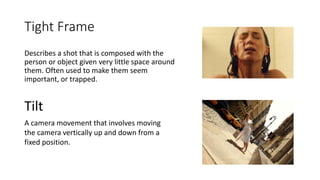
Tight Frame
Describes a shot that is composed with the
person or object given very little space around
them. Often used to make them seem
important, or trapped.
Tilt
A camera movement that involves moving
the camera vertically up and down from a
fixed position.
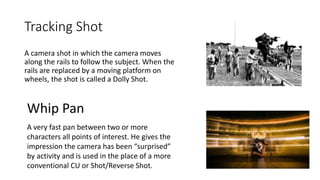
Tracking Shot
A camera shot in which the camera moves
along the rails to follow the subject. When the
rails are replaced by a moving platform on
wheels, the shot is called a Dolly Shot.
Whip Pan
A very fast pan between two or more
characters all points of interest. He gives the
impression the camera has been “surprised”
by activity and is used in the place of a more
conventional CU or Shot/Reverse Shot.
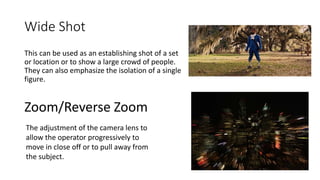
Wide Shot
This can be used as an establishing shot of a set
or location or to show a large crowd of people.
They can also emphasize the isolation of a single
figure.
Zoom/Reverse Zoom
The adjustment of the camera lens to
allow the operator progressively to
move in close off or to pull away from
the subject.
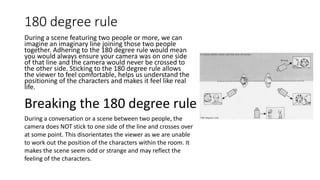
180 degree rule
During a scene featuring two people or more, we can
imagine an imaginary line joining those two people
together. Adhering to the 180 degree rule would mean
you would always ensure your camera was on one side
of that line and the camera would never be crossed to
the other side. Sticking to the 180 degree rule allows
the viewer to feel comfortable, helps us understand the
positioning of the characters and makes it feel like real
life.
Breaking the 180 degree rule
During a conversation or a scene between two people, the
camera does NOT stick to one side of the line and crosses over
at some point. This disorientates the viewer as we are unable
to work out the position of the characters within the room. It
makes the scene seem odd or strange and may reflect the
feeling of the characters.

Camera angles and shots

  • 1.
  • 2.
    Aerial Shot A viewfrom directly overhead to afford a clear view – sometimes used to emphasize the spectacle. Canted Angle A shot which is tilted to one side. This is often used to create a feeling of disorientation.
  • 3.
    Close ups, includingextreme, big and medium close ups, are used to draw the viewer closer and to involve them in what is happening. Close Up Establishing shot A shot usually wide or long, often used at the start of a programme or film
  • 4.
    Hand Held Shot Ashot filmed with the camera not on a tripod but instead held by hand, often whilst walking. This makes a shot rather shaky, often this makes the audience feel the scene is more realistic. Head-On Shot For a type of shot in which the action comes directly toward the camera, often used in war or action movies.
  • 5.
    High Angle Shot Toprovide a view from above the subjects, often making them look vulnerable, isolated or powerless. Long shot A distance shot where the camera is a long way from the subjects being filmed
  • 6.
    Loose Frame Describes ashot where there is a lot of room around an object or person, usually used to show them as being alone or isolated or unimportant. Low-Angle Shot A shot where the camera approaches a subject from below eye level. A Low-Angle shot can emphasize the size of the object being filmed and add to a point of view perspective. It can make a character shown seem big and powerful and it can make us or the character we are seeing through, seem small and weak.
  • 7.
    Master Shot A camerashot used at the beginning of a sequence to establish the component elements and relationships in such a way as to allow the audience to make sense of the action follows. Pan Camera action involving gently moving the camera 180 degrees across the subject matter in a horizontal plane
  • 8.
    Point-of View Shot(POV) A camera shot taken from the position of the subjects, used to enhance a sense of realism and audience involvement in the action. Pull Focus Describes a shot where one thing was in focus, and then the lens is changed so that something else stops being blurry and becomes in focus. Often used to show how something has become more important.
  • 9.
    Rule of thirds Describesa technique used to make a shot look interesting. Rather than placing a person or object in the middle of the frame, they are placed at the sides, or where the lines cross on this imaginary grid. Shallow Focus Describes a shot where an object near the front is in focus, and everything else behind is out of focus. Often used to make one thing seem more important.
  • 10.
    Soft Focus In images,the use of a special lens or filter to create a hazy light around the subject. Soft focus shots are associated with the romantic or sentimental treatment of subject matter. Subjective Filming A type of shot in which the camera is positioned as if looking at the world through the character’s eyes.
  • 11.
    Tight Frame Describes ashot that is composed with the person or object given very little space around them. Often used to make them seem important, or trapped. Tilt A camera movement that involves moving the camera vertically up and down from a fixed position.
  • 12.
    Tracking Shot A camerashot in which the camera moves along the rails to follow the subject. When the rails are replaced by a moving platform on wheels, the shot is called a Dolly Shot. Whip Pan A very fast pan between two or more characters all points of interest. He gives the impression the camera has been “surprised” by activity and is used in the place of a more conventional CU or Shot/Reverse Shot.
  • 13.
    Wide Shot This canbe used as an establishing shot of a set or location or to show a large crowd of people. They can also emphasize the isolation of a single figure. Zoom/Reverse Zoom The adjustment of the camera lens to allow the operator progressively to move in close off or to pull away from the subject.
  • 14.
    180 degree rule Duringa scene featuring two people or more, we can imagine an imaginary line joining those two people together. Adhering to the 180 degree rule would mean you would always ensure your camera was on one side of that line and the camera would never be crossed to the other side. Sticking to the 180 degree rule allows the viewer to feel comfortable, helps us understand the positioning of the characters and makes it feel like real life. Breaking the 180 degree rule During a conversation or a scene between two people, the camera does NOT stick to one side of the line and crosses over at some point. This disorientates the viewer as we are unable to work out the position of the characters within the room. It makes the scene seem odd or strange and may reflect the feeling of the characters.