
• Fats are more completely absorbed during pregnancy.
• True
• False
• Recommendation for protein during pregnancy for a
woman weighing 50 kg is
• 60
• 14
• 32
• 75
• Which fatty acid(s) is essential for the development of the
CNS system of the fetus. Select all that apply.
• Linoleic acid
• Omega 3
• Gamma-linoleic acid
• DHA
• What is the adequate intake of calcium (mg/day) for
pregnant women under the age of 19
• 1100
• 1000
• 1200
• 1300
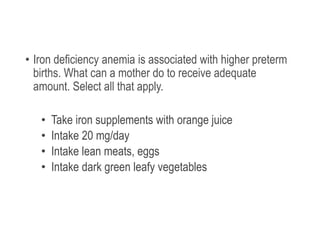
• Iron deficiency anemia is associated with higher preterm
births. What can a mother do to receive adequate
amount. Select all that apply.
• Take iron supplements with orange juice
• Intake 20 mg/day
• Intake lean meats, eggs
• Intake dark green leafy vegetables
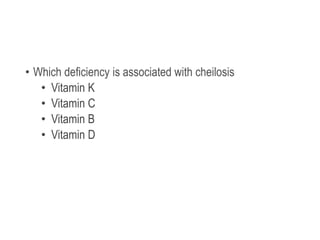
• Which deficiency is associated with cheilosis
• Vitamin K
• Vitamin C
• Vitamin B
• Vitamin D
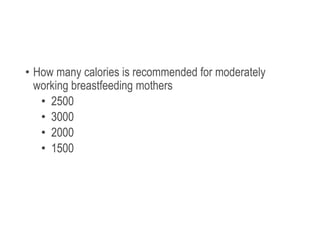
• How many calories is recommended for moderately
working breastfeeding mothers
• 2500
• 3000
• 2000
• 1500
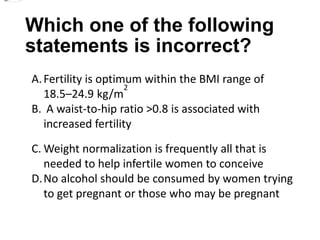
Which one of the following
statements is incorrect?
A.Fertility is optimum within the BMI range of
18.5–24.9 kg/m
2
B. A waist-to-hip ratio >0.8 is associated with
increased fertility
C. Weight normalization is frequently all that is
needed to help infertile women to conceive
D.No alcohol should be consumed by women trying
to get pregnant or those who may be pregnant
The extra energy cost of pregnancy (about
77,000 kcal over the course of pregnancy) is
met by:
A.Increased efficiency of energy utilization
B. Reduced physical activity
C. Increased food intake
D.All of the above
All females who could become pregnant are
recommended to take:
A. 400 μg folic acid each day until pregnancy is
confirmed
B. 400 μg folic acid each day from the time
pregnancy is confirmed until delivery
C. 400 μg folic acid each day from at least 3
months before conception until week 12 of
pregnancy
D. None of the above
Women planning to
conceive should avoid:
A. Excessive caffeine
B. Excessive vitamin A
C. Unpasteurised milk and cheese
D. All of the above
Which one of the following
statements is incorrect?
A.Introduction of complementary foods too early
may give rise to allergic reactions
B. Delayed introduction of complementary foods may
give rise to growth faltering
C. Breastfeeding should continue to the age of 2
years or beyond
D.Low-fat and high-fibre diets are appropriate for
infants under the age of 2
Which one of the following foods is safe to
give as complementary foods for infants?
A. Nuts
B. Honey
C. Soft boiled egg
D. None of the above
Lactoferrin in human milk:
A. Promotes calcium absorption
B. Binds iron to restrict bacterial growth
C. Facilitates fat digestion
D. None of the above
According to the WHO, obesity in
children and teenagers aged 5–19 is
defined as:
A. BMI greater than 25 kg/m2
B. BMI greater than 30 kg/m2
C. BMI greater than two standard deviations
above the mean for their particular age and
sex
D. None of the above
Teenage girls are
particularly vulnerable to:
A. Protein deficiency
B. Vitamin B12 deficiency
C. Iron deficiency
D. None of the above
Which vitamin/mineral helps prevent birth
defects?
A. Iron
B. Calcium
C. Vitamin A
D. Folic Acid
It is recommended that pregnant women get at least
1000mgs/day of _______, to help build healthy bones for
mother and baby.
A. calcium
B. folic acid
C. iron
D. thiamine
Maternal weight gain is usually monitored in
pregnancy. Which of the following statements is/are
true:
A. research to define pattern and level of optimal
weight gain is ongoing
B. both inadequate and excessive weight gain are
associated with poorer maternal and infant health
outcomes
C. excessive maternal weight gain in pregnancy has
been linked to obesity in the offspring
D. all of the options given are correct
Which of the following statements is/are true?
How can smoking affect breastfeeding?
• Suppresses milk production
• Alters the composition of breast milk
• Increases the risk of early cessation of
breastfeeding
• all of the options given are correct
Infants born to mothers who are vegan may be
at increased risk of deficiency of which nutrient?
A. Vitamin C
B. B12
C. Folate
D. Calcium
Which of the following statements is/are true?
There is increasing concern about the importance of
adequate nutrition in the pre-conception period to
support a successful pregnancy. This is because:
A. In the embryonic period the foetus is vulnerable to
external factors in its environment
B. the embryonic period often occurs before a woman
knows she is pregnant
C. interventions in late pregnancy may be too late to
be effective
D. all of the options given are correct
A maternal practice that can be harmful to
the fetus is:
A.a low-carbohydrate diet.
B.Fasting
C.Smoking
D.All of the above
To produce a healthy infant, the mother
should ideally have an adequate diet:
A. during the 9 months she carries the
infant.
B. during the last trimester when the baby
is growing so rapidly.
C. during the second and third trimesters
of pregnancy.
D. beginning months before conception
occurs and continuing through the
period of lactation.
During which trimester do most organs
show great development, making this the
most critical time with respect to fetal
development?
• 1st
• 2 nd
• 3 rd
• All of the above
To avoid constipation, the pregnant woman
should increase her intake of:
A. milk and dairy products.
B. whole-grain bread and fruits.
C. sugars and starches
D. lean meat, poultry, and fish.
The "physiological anemia of
pregnancy" is a result of a(n):
A. Increase in the mother's blood volume.
B. decrease in the mother's iron
absorption.
C. decrease in the mother's water
consumption.
D. decrease in the mother's red blood cell
production.
The third trimester is the
main time for storage of:
A. iron, fat, and calcium.
B. iron, calcium, and folate.
C. vitamin D, vitamin K, and fat
D. fat, calcium, and folate.

mcq nutrition.pptx

  • 2.
    • Fats aremore completely absorbed during pregnancy. • True • False
  • 3.
    • Recommendation forprotein during pregnancy for a woman weighing 50 kg is • 60 • 14 • 32 • 75
  • 4.
    • Which fattyacid(s) is essential for the development of the CNS system of the fetus. Select all that apply. • Linoleic acid • Omega 3 • Gamma-linoleic acid • DHA
  • 5.
    • What isthe adequate intake of calcium (mg/day) for pregnant women under the age of 19 • 1100 • 1000 • 1200 • 1300
  • 6.
    • Iron deficiencyanemia is associated with higher preterm births. What can a mother do to receive adequate amount. Select all that apply. • Take iron supplements with orange juice • Intake 20 mg/day • Intake lean meats, eggs • Intake dark green leafy vegetables
  • 7.
    • Which deficiencyis associated with cheilosis • Vitamin K • Vitamin C • Vitamin B • Vitamin D
  • 8.
    • How manycalories is recommended for moderately working breastfeeding mothers • 2500 • 3000 • 2000 • 1500
  • 9.
    Which one ofthe following statements is incorrect? A.Fertility is optimum within the BMI range of 18.5–24.9 kg/m 2 B. A waist-to-hip ratio >0.8 is associated with increased fertility C. Weight normalization is frequently all that is needed to help infertile women to conceive D.No alcohol should be consumed by women trying to get pregnant or those who may be pregnant
  • 10.
    The extra energycost of pregnancy (about 77,000 kcal over the course of pregnancy) is met by: A.Increased efficiency of energy utilization B. Reduced physical activity C. Increased food intake D.All of the above
  • 11.
    All females whocould become pregnant are recommended to take: A. 400 μg folic acid each day until pregnancy is confirmed B. 400 μg folic acid each day from the time pregnancy is confirmed until delivery C. 400 μg folic acid each day from at least 3 months before conception until week 12 of pregnancy D. None of the above
  • 12.
    Women planning to conceiveshould avoid: A. Excessive caffeine B. Excessive vitamin A C. Unpasteurised milk and cheese D. All of the above
  • 13.
    Which one ofthe following statements is incorrect? A.Introduction of complementary foods too early may give rise to allergic reactions B. Delayed introduction of complementary foods may give rise to growth faltering C. Breastfeeding should continue to the age of 2 years or beyond D.Low-fat and high-fibre diets are appropriate for infants under the age of 2
  • 14.
    Which one ofthe following foods is safe to give as complementary foods for infants? A. Nuts B. Honey C. Soft boiled egg D. None of the above
  • 15.
    Lactoferrin in humanmilk: A. Promotes calcium absorption B. Binds iron to restrict bacterial growth C. Facilitates fat digestion D. None of the above
  • 16.
    According to theWHO, obesity in children and teenagers aged 5–19 is defined as: A. BMI greater than 25 kg/m2 B. BMI greater than 30 kg/m2 C. BMI greater than two standard deviations above the mean for their particular age and sex D. None of the above
  • 17.
    Teenage girls are particularlyvulnerable to: A. Protein deficiency B. Vitamin B12 deficiency C. Iron deficiency D. None of the above
  • 18.
    Which vitamin/mineral helpsprevent birth defects? A. Iron B. Calcium C. Vitamin A D. Folic Acid
  • 19.
    It is recommendedthat pregnant women get at least 1000mgs/day of _______, to help build healthy bones for mother and baby. A. calcium B. folic acid C. iron D. thiamine
  • 20.
    Maternal weight gainis usually monitored in pregnancy. Which of the following statements is/are true: A. research to define pattern and level of optimal weight gain is ongoing B. both inadequate and excessive weight gain are associated with poorer maternal and infant health outcomes C. excessive maternal weight gain in pregnancy has been linked to obesity in the offspring D. all of the options given are correct
  • 21.
    Which of thefollowing statements is/are true? How can smoking affect breastfeeding? • Suppresses milk production • Alters the composition of breast milk • Increases the risk of early cessation of breastfeeding • all of the options given are correct
  • 22.
    Infants born tomothers who are vegan may be at increased risk of deficiency of which nutrient? A. Vitamin C B. B12 C. Folate D. Calcium
  • 23.
    Which of thefollowing statements is/are true? There is increasing concern about the importance of adequate nutrition in the pre-conception period to support a successful pregnancy. This is because: A. In the embryonic period the foetus is vulnerable to external factors in its environment B. the embryonic period often occurs before a woman knows she is pregnant C. interventions in late pregnancy may be too late to be effective D. all of the options given are correct
  • 24.
    A maternal practicethat can be harmful to the fetus is: A.a low-carbohydrate diet. B.Fasting C.Smoking D.All of the above
  • 25.
    To produce ahealthy infant, the mother should ideally have an adequate diet: A. during the 9 months she carries the infant. B. during the last trimester when the baby is growing so rapidly. C. during the second and third trimesters of pregnancy. D. beginning months before conception occurs and continuing through the period of lactation.
  • 26.
    During which trimesterdo most organs show great development, making this the most critical time with respect to fetal development? • 1st • 2 nd • 3 rd • All of the above
  • 27.
    To avoid constipation,the pregnant woman should increase her intake of: A. milk and dairy products. B. whole-grain bread and fruits. C. sugars and starches D. lean meat, poultry, and fish.
  • 28.
    The "physiological anemiaof pregnancy" is a result of a(n): A. Increase in the mother's blood volume. B. decrease in the mother's iron absorption. C. decrease in the mother's water consumption. D. decrease in the mother's red blood cell production.
  • 29.
    The third trimesteris the main time for storage of: A. iron, fat, and calcium. B. iron, calcium, and folate. C. vitamin D, vitamin K, and fat D. fat, calcium, and folate.

Editor's Notes

  • #3 True
  • #10 he correct answer is B.
  • #11 The correct answer is D.
  • #12 The correct answer is C.
  • #13 The correct answer is D.
  • #14 The correct answer is D.
  • #15 The correct answer is D. Soft-boiled eggs have runny, undercooked yolks and aren't considered safe to eat for babies (6 months and onward) especially because of the risk of contracting salmonella. Instead, offer hard-boiled eggs as a comparable option, or switch to scrambled eggs or poached eggs with firm yolks for variety.
  • #16 The correct answer is B.
  • #17 The correct answer is C.
  • #18 The correct answer is C.
  • #19 Folic Acid
  • #20 calcium
  • #23 B12
  • #24 D
  • #30 iron, fat, and calcium.