
Therapeutic Diets
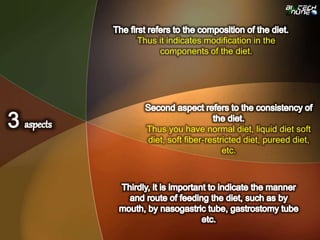
Thus it indicates modification in the
components of the diet.
Thus you have normal diet, liquid diet soft
diet, soft fiber-restricted diet, pureed diet,
etc.
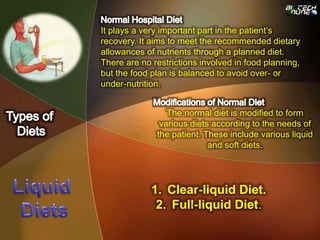
It plays a very important part in the patient’s
recovery. It aims to meet the recommended dietary
allowances of nutrients through a planned diet.
There are no restrictions involved in food planning,
but the food plan is balanced to avoid over- or
under-nutrition.
1. Clear-liquid Diet.
2. Full-liquid Diet.
The normal diet is modified to form
various diets according to the needs of
the patient. These include various liquid
and soft diets.
o Liquid diet helps to maintain liquid and electrolyte balance, relieve thirst
and stimulate the digestion system to function, after an operation or
disturbance in the system due to infection.
o If the fluids are chosen well, the diet can provide 200-500 kcal, some
sodium, potassium and ascorbic acid.
 A clear-liquid diet is given:
1. For a patient suffering from nausea, vomiting or loss of appetite
(anorexia).
2. During acute stage of diarrhea.
3. Post-operative first stage.
4. After tube or parenteral feeding before resuming oral feeding.
Full-liquid Diet: In full liquid diet, foods included are –liquids and foods
which are liquid at body temperature. It can provide adequate nutrition,
with the exception of iron. As the nutrient-density is not high, six or more
feedings are given. Skim milk powder is added to increase the protein
content of the diet. This increases the lactose content of the diet and
therefore, it should not be given to persons with low lactase activity. This
diet has high calcium and fat content and is low in fiber.
Soft Diet: Soft diet is used after full-liquid diet and before moving on to a
normal diet. It is nutritionally adequate. Foods included are those, which
are easy to mix with saliva, swallow and digest. Exclude foods, which
contain harsh fiber, strong flavors and too much fat. Soft diets include
several variations such as mechanically soft diet, pureed diet and fiber-
restricted soft diet.
Mechanically Soft Diet: In this diet the modification of normal diet is in
texture only. The method of preparation or the seasonings used are not
restricted. This is also called Dental Soft Diet, as it is prescribed for those
who cannot chew, due to absence or removal of teeth or ill-fitting dentures.
Pureed Diets: Pureed diets include foods, which are smooth, soft and
need hardly any chewing. These are good for patients who have difficulty
in swallowing. All foods (except those that are already soft or smooth) are
blended or pureed in a mixer. Liquids are added to get the consistency
needed by the patient. To increase calories, fat and/or sugars are added.
Soft Fiber-Restricted Diet: Indigestible carbohydrates are excluded from
this diet. Indigestible fibers include those which make up cell wall of plants
(such as cellulose, hemicellulose, lignin, pectic substances, gums and
mucin). The amount of indigestible carbohydrates in the diet can be
reduced by using:
(a) refined cereals and breads
(b) immature vegetables
(c) fruits without skins and seeds and
(d) cooked vegetables and fruits
Connective Tissue: The texture of meat, tender or less tender is mainly
decided by the amount of connective tissue present. The amount of
connective tissue in meat depends on the age of the animal and how much
the muscle is exercised. The acceptance of meat preparations can be
improved by cooking. Meat may be made tender by using moist heat and
lower temperature cookery.
Flavour – Strong flavoured vegetables such as onions, leeks, radishes,
dried beans and cabbage family vegetables ( brussel sprouts, cauliflower,
broccoli, turnips) are normally omitted. But there is individual variation in
patients’ acceptance of these. Hence the individual patient’s preference
needs to be considered in this matter.The effects of spices on the digestive
system have been studied. It is found that cinnamon, allspice, thyme, sage,
mace, paprika and caraway, used to flavour foods, do not have harmful
effect. But black pepper, chilli pepper, cloves, mustard seed and perhaps
nutmeg are considered gastric irritants and best avoided.
Beverages: Both tea and coffee are stimulating beverages. When these
are used in the diet, one needs to know how to prepare these to avoid
undesirable side effects on the other components. A mild cup of tea (from
½ tsp dried leaves) contains about 0.05g caffeine, but quick infusion
extracts most of the caffeine, but not the tannins. As tannins precipitate
proteins, a quick infusion is recommended for use in the diet.
Coffee contains an average of 1.25% caffeine. A cup of strong coffee
contains about 0.1g of caffeine. Besides caffeine, coffee contains
chlorogenic acid, which differs from tannins in that it does not precipitate
proteins and is not astringent. Cocoa contains 31% carbohydrate, 9%
protein and 10% fat. It contains about 1.5% theobromine and a trace of
caffeine, both being stimulant
Nutrient Content: In the past, it was common practice to put more
emphasis on “foods to avoid” and less on “foods to eat”. It led to this group
of diets being one of the hazards of hospitalization, resulting in nutritional
deficiency and delay in recovery. Such deficiency can be avoided by proper
selection and use of correct amount of foods in the diet. Foods from the first
four groups may be used in amounts enough to meet or exceed RDAs.
Tube Feeding
If a patient whose gastrointestinal tract is working, cannot take sufficient food
orally, tube feeding is resorted to. Tube feeding is given in the following
conditions:
(i) Babies who have low birth weight and cannot suck.
(ii) Those that are undernourished and cannot take or retain food taken orally.
(iii) Persistent anorexia patients, who need forced feeding
(iv) After certain types of surgery
(v) Patients with severe malabsorption
(vi) Patients who cannot absorb or digest food
(vii) Semiconscious or unconscious patients or any other condition which
prevents intake of sufficient food.
Since the feed must be formulated to meet the nutritional needs of the patient,
it is also called formula feed.
Tube Feeding
I. Natural liquid foods
II. Raw or cooked foods blended to liquid form, or
III. Commercially made special formulated diets
Subscribe!

Introduction Diet therapy

  • 1.
  • 2.
    Thus it indicatesmodification in the components of the diet. Thus you have normal diet, liquid diet soft diet, soft fiber-restricted diet, pureed diet, etc.
  • 3.
    It plays avery important part in the patient’s recovery. It aims to meet the recommended dietary allowances of nutrients through a planned diet. There are no restrictions involved in food planning, but the food plan is balanced to avoid over- or under-nutrition. 1. Clear-liquid Diet. 2. Full-liquid Diet. The normal diet is modified to form various diets according to the needs of the patient. These include various liquid and soft diets.
  • 4.
    o Liquid diethelps to maintain liquid and electrolyte balance, relieve thirst and stimulate the digestion system to function, after an operation or disturbance in the system due to infection. o If the fluids are chosen well, the diet can provide 200-500 kcal, some sodium, potassium and ascorbic acid.  A clear-liquid diet is given: 1. For a patient suffering from nausea, vomiting or loss of appetite (anorexia). 2. During acute stage of diarrhea. 3. Post-operative first stage. 4. After tube or parenteral feeding before resuming oral feeding.
  • 5.
    Full-liquid Diet: Infull liquid diet, foods included are –liquids and foods which are liquid at body temperature. It can provide adequate nutrition, with the exception of iron. As the nutrient-density is not high, six or more feedings are given. Skim milk powder is added to increase the protein content of the diet. This increases the lactose content of the diet and therefore, it should not be given to persons with low lactase activity. This diet has high calcium and fat content and is low in fiber. Soft Diet: Soft diet is used after full-liquid diet and before moving on to a normal diet. It is nutritionally adequate. Foods included are those, which are easy to mix with saliva, swallow and digest. Exclude foods, which contain harsh fiber, strong flavors and too much fat. Soft diets include several variations such as mechanically soft diet, pureed diet and fiber- restricted soft diet. Mechanically Soft Diet: In this diet the modification of normal diet is in texture only. The method of preparation or the seasonings used are not restricted. This is also called Dental Soft Diet, as it is prescribed for those who cannot chew, due to absence or removal of teeth or ill-fitting dentures.
  • 6.
    Pureed Diets: Pureeddiets include foods, which are smooth, soft and need hardly any chewing. These are good for patients who have difficulty in swallowing. All foods (except those that are already soft or smooth) are blended or pureed in a mixer. Liquids are added to get the consistency needed by the patient. To increase calories, fat and/or sugars are added. Soft Fiber-Restricted Diet: Indigestible carbohydrates are excluded from this diet. Indigestible fibers include those which make up cell wall of plants (such as cellulose, hemicellulose, lignin, pectic substances, gums and mucin). The amount of indigestible carbohydrates in the diet can be reduced by using: (a) refined cereals and breads (b) immature vegetables (c) fruits without skins and seeds and (d) cooked vegetables and fruits Connective Tissue: The texture of meat, tender or less tender is mainly decided by the amount of connective tissue present. The amount of connective tissue in meat depends on the age of the animal and how much the muscle is exercised. The acceptance of meat preparations can be improved by cooking. Meat may be made tender by using moist heat and lower temperature cookery.
  • 7.
    Flavour – Strongflavoured vegetables such as onions, leeks, radishes, dried beans and cabbage family vegetables ( brussel sprouts, cauliflower, broccoli, turnips) are normally omitted. But there is individual variation in patients’ acceptance of these. Hence the individual patient’s preference needs to be considered in this matter.The effects of spices on the digestive system have been studied. It is found that cinnamon, allspice, thyme, sage, mace, paprika and caraway, used to flavour foods, do not have harmful effect. But black pepper, chilli pepper, cloves, mustard seed and perhaps nutmeg are considered gastric irritants and best avoided. Beverages: Both tea and coffee are stimulating beverages. When these are used in the diet, one needs to know how to prepare these to avoid undesirable side effects on the other components. A mild cup of tea (from ½ tsp dried leaves) contains about 0.05g caffeine, but quick infusion extracts most of the caffeine, but not the tannins. As tannins precipitate proteins, a quick infusion is recommended for use in the diet.
  • 8.
    Coffee contains anaverage of 1.25% caffeine. A cup of strong coffee contains about 0.1g of caffeine. Besides caffeine, coffee contains chlorogenic acid, which differs from tannins in that it does not precipitate proteins and is not astringent. Cocoa contains 31% carbohydrate, 9% protein and 10% fat. It contains about 1.5% theobromine and a trace of caffeine, both being stimulant
  • 9.
    Nutrient Content: Inthe past, it was common practice to put more emphasis on “foods to avoid” and less on “foods to eat”. It led to this group of diets being one of the hazards of hospitalization, resulting in nutritional deficiency and delay in recovery. Such deficiency can be avoided by proper selection and use of correct amount of foods in the diet. Foods from the first four groups may be used in amounts enough to meet or exceed RDAs.
  • 10.
    Tube Feeding If apatient whose gastrointestinal tract is working, cannot take sufficient food orally, tube feeding is resorted to. Tube feeding is given in the following conditions: (i) Babies who have low birth weight and cannot suck. (ii) Those that are undernourished and cannot take or retain food taken orally. (iii) Persistent anorexia patients, who need forced feeding (iv) After certain types of surgery (v) Patients with severe malabsorption (vi) Patients who cannot absorb or digest food (vii) Semiconscious or unconscious patients or any other condition which prevents intake of sufficient food. Since the feed must be formulated to meet the nutritional needs of the patient, it is also called formula feed.
  • 11.
    Tube Feeding I. Naturalliquid foods II. Raw or cooked foods blended to liquid form, or III. Commercially made special formulated diets
  • 12.