CHILD
HOSPITALIZATI
ON
DEFINITION
Child Hospitalization is admittance of a
child to the hospital as a patient for
treatment or observation or
investigative purpose.
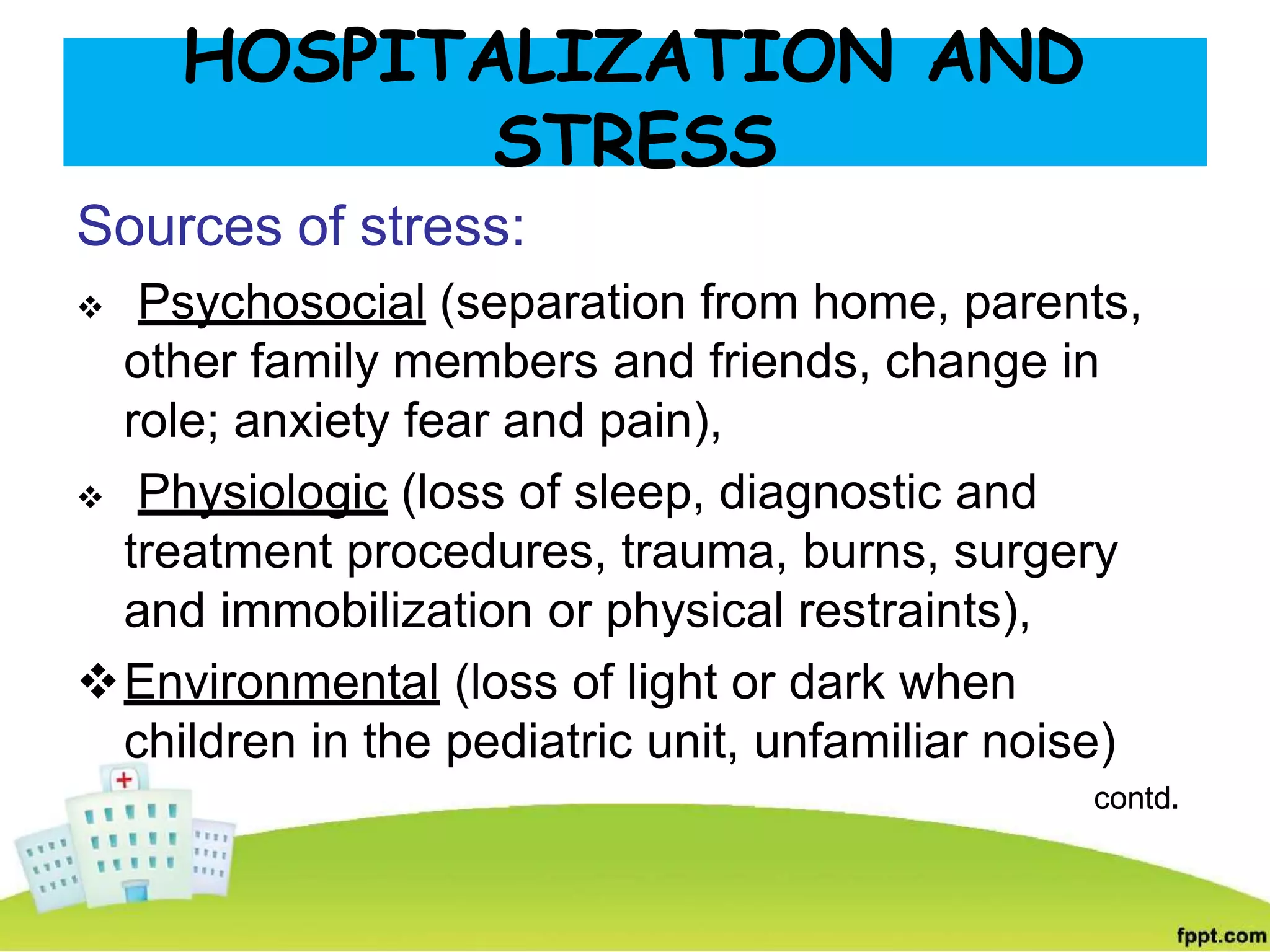
HOSPITALIZATION AND
STRESS
Sources of stress:
 Psychosocial (separation from home, parents,
other family members and friends, change in
role; anxiety fear and pain),
 Physiologic (loss of sleep, diagnostic and
treatment procedures, trauma, burns, surgery
and immobilization or physical restraints),
Environmental (loss of light or dark when
children in the pediatric unit, unfamiliar noise)
contd.
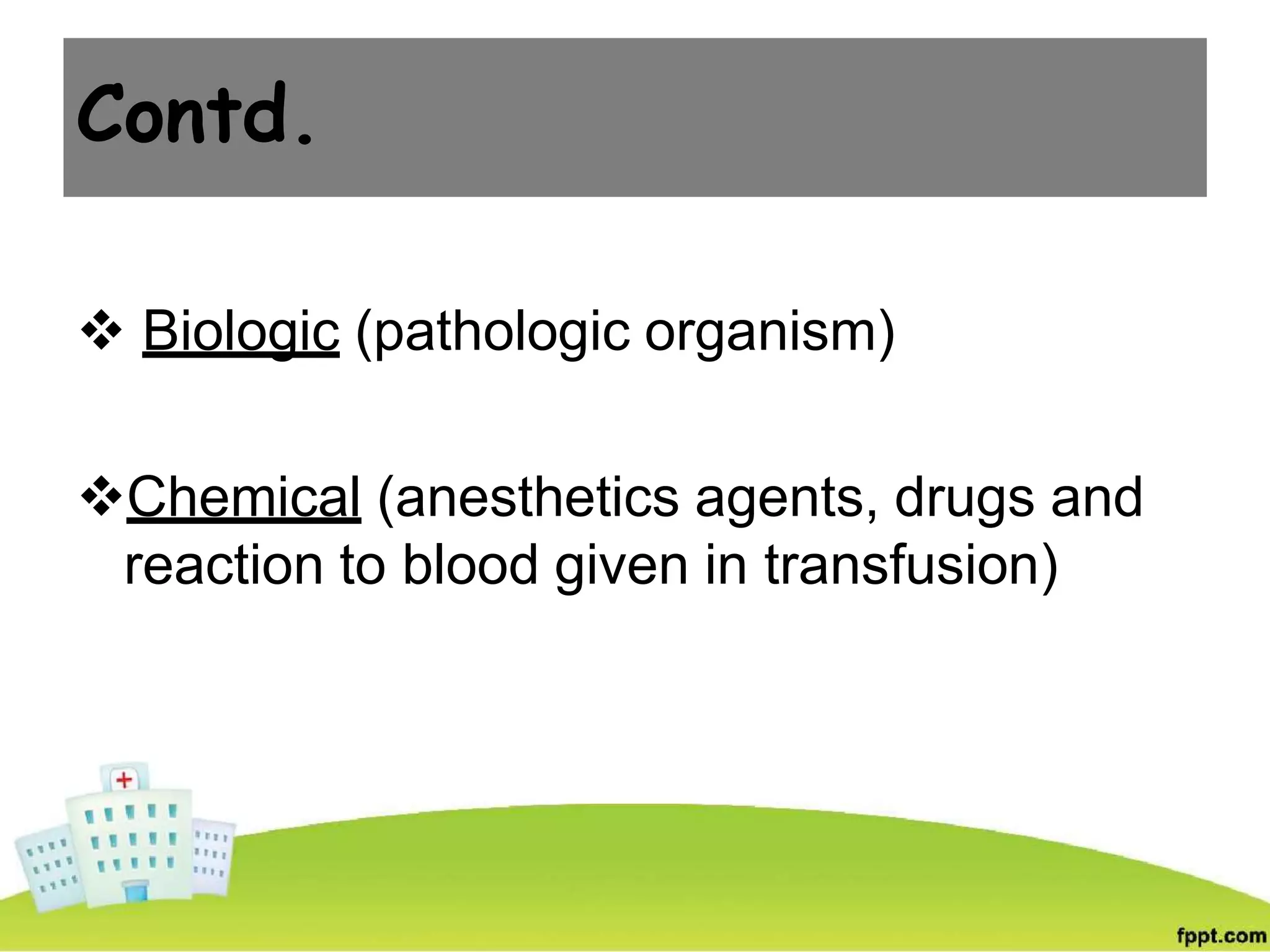
Contd.
 Biologic (pathologic organism)
Chemical (anesthetics agents, drugs and
reaction to blood given in transfusion)
Defense Mechanism
Used by sick children during normal growth
and development and sickness
• Denial of reality: a way to avoid
disagreeable and unpleasant realities
• Repression: a tendency to thrust from
consciousness back into the unconscious
ideas of an anxiety provoking nature
contd.
Contd.
• Rationalization: the mental process by
which only a seemingly reasonable or
justifiable explanation is given for beliefs,
ideas, or activities one wishes to hold or to
do,
• Regression: a return to an earlier or
former state,
• Displacement: the hostile feelings to
objects or persons less dangerous than
those that originally known,
contd.
Contd.
• Reaction formation: substation of an
opposing action when an objectionable
one cannot be expressed,
• Sublimation: the conscious diversion of
drives into socially and personally
acceptable behavior,
• Projection: the placing of one’s mistakes
or failures up to another person or the
thing,
contd.
Contd.
• Introjections: attributes or values and
attitudes of others into one’s own ego
structure,
• Withdrawal and escape: the attempt to
avoid unwanted or threatening situations
by running away.
• Loss of security because of separation
from their parents, bodily injury, pain, and
for older child, loss of control.
Stressor of Hospitalization
• Major stressor of hospitalization for a sick
child is –
1. Separation Anxiety
2. Loss of Control
Phases of Separation
Anxiety
• Phase of protest: children react
aggressively to the separation from the
parent.
They cry and scream for the parents, refuse
the attention of anyone else, and are
inconsolable in their grief.
contd.
Contd.
• Phase of despair: the crying stops and
depression is evident.
The in play food, and withdraws from
others. child is much less active, is
uninterested
• Phase of detachment: also called denial.
Superficially it appears that the child has
finally adjusted to the loss.
contd.
Contd.
• Phase of Resignation: this behavior is not
a sign of contentment.
The child detaches from the parent in an
effort to escape the emotional pain of
desiring the parent’s presence and copes by
forming shallow relationships with others,
increasingly self-centered and
primary importance to material
becoming
attaching
objects.
Contd.
• Phase of Detachment: most serious stage,
as reversal of the potential adverse effects
is less likely to occur after detachment is
established.
Although the progression to the stage of
detachment is uncommon, the initial stages
are frequently observed even with brief
separation from the parents.
contd.
Separation Anxiety in different
Age Groups
• Early Childhood: If separation is avoided,
young children have a tremendous
capacity to withstand any other stress.
• Children in the toddler stage demonstrate
goal directed behavior, like they may plead
with the parents to stay.
• May have temper tantrums
contd.
Contd.
• Preschoolers can tolerate brief periods of
separation from their parents and are
more inclined to develop substitute trust in
other significant adults.
• They may demonstrate separation anxiety
by refusing to eat, experiencing difficulty in
sleeping, crying quietly for their parents,
continually asking when the parents will
visit or withdrawing from others.
contd.
Later childhood adolescence
• May react more to the separation from
their usual activities and peers than to
absence of their parents.
• Feeling of loneliness, boredom, isolation
and depression
• For adolescents, separation from home and
parents may produce varied emotions
ranging from difficulty coping to welcoming
the event. Contd.
Contd.
• Loss of the peer group contact may pose a
severe emotional threat because of loss of
group status, inability to exert group
control or leadership and loss of group
status, inability to exert group control or
leadership and loss of group acceptance.
Loss of Control
• Lack of control increases the perception of
threat and can affect children’s coping
skills.
• Without an insight into the type of
environment conductive to children’s
optimal growth, the hospital can at best
temporarily slow development and at worst
permanently restrict it.
contd.
Contd.
Infants: are developing the most important
attribute of human personality that is Trust
which is established through consistent
loving care by a nurturing person.
• Infants attempt to control their
environment through emotional
expressions such as crying or smiling.
• Inconsistent care deviations from the
infants’ daily routine may lead to mistrust
and a decreased sense of control.
Toddlers
• Toddlers are striving for autonomy and this
goal is evident in most of the behaviours,
motor skills, play, interpersonal
relationships, activities of daily living and
communication.
• When their egocentric pleasures meet with
obstacles, toddlers react with negativism
especially temper tantrums.
contd.
Contd.
• Loss of control also results from altered
routines and rituals. Toddlers rely on the
consistency and familiarity of daily rituals
to provide a measure of stability and
control in their complex world of growing
and developing.
• When these routines e.g. Eating, sleeping,
playing, bathing are disrupted, difficulties
can occur in any or all these areas.
contd.
Contd.
• Enforced dependency is a chief
characteristic of the sick role and accounts
for the numerous instances of toddler
negativism.
• For example, rigid schedules, altered care
giving activities, unfamiliar surroundings
and medical procedures, toddlers control
over their world.
Preschoolers
• Preschoolers also suffer from loss of
control caused by physiological
restrictions, altered routines and enforced
dependency.
• Their specific cognitive abilities which
make them feel all powerful also make
them feel out of control.
contd.
Contd.
• Pre-schoolers magical thinking limits their
ability to understand events because they
view all their experiences from their own
self referenced perspective.
• Without adequate preparation for
unfamiliar settings or experiences pre-
schoolers fantasy explanations for such
events are usually more exaggerated and
frightening than the facts.
contd.
Contd.
• Pre-schoolers preoperational thinking
means that they understand explanation
only in terms of real events.
• Transductive reasoning implies that pre-
schoolers deduct from the particular to the
particular.
School Age Children
• Because of striving for independence and
productivity, the school age children are
particularly vulnerable to events that may
lessen their feelings of control and power.
• For school age children, dependent
activities e.g. enforced bed rest, use of
bedpan, inability to choose a menu, lack of
privacy, help with the bed bath or transport
by a wheelchair or stretcher can be direct
threat to their security.
contd.
Contd.
• A sense of control results from a feeling of
usefulness and productivity. Also illness
may lead to a feeling of loss of control.
• Emphasizing areas of control and
capitalizing on quiet activities particularly
hobbies such as building models or
playing age appropriate video or board
games, promotes their adjustment to
physical restriction.
Adolescents
• Adolescents struggle for independence,
self-assertion and liberation centers on the
quest for personal identity.
• Anything that interferes with this poses a
threat to their sense of identity and results
in loss of control.
• Adolescents may react to dependency
with rejection, uncooperativeness or
withdrawal.
contd.
Contd.
• Adolescents respond to depersonalization
with self-assertion, anger or frustration.
• Sick adolescents’ often voluntarily isolate
themselves from age mates until they feel
they can compete on an equal basis and
meet the group expectations.
Effect of Hospitalization
• Children may react to the stress of
hospitalization :
• before admission,
• during hospitalization and
• after discharge
contd.
Contd.
• A number of risk factors make certain
children more vulnerable than others to
the stresses of hospitalization, e.g.
difficult temperament,
lack of fit between child and parent,
age between 6 months and 5 years
male gender
below average intelligence,
multiple and continuing stresses.
Contd.
• Some of the responses for stressors on
sick school age children are:
Regression,
Separation anxiety,
Apathy,
Fears
Sleep disturbances especially for children
younger than 7 years of age.
Post hospitalization Behavior
• Young Children:
• Show initial aloofness towards parents.
• Frequently followed by dependency
behavior e.g. clinging to parents, demands
for parents’ attention, vigorous opposition
to any separation.
• Includes new fears, night walking,
withdrawal and shyness, hyperactivity,
temper tantrums, attachment to blanket or
toy.
Older Children
May present with:
Emotional coldness,
Followed by intense, demanding
dependence on parents,
Anger towards parents,
Jealously towards others.
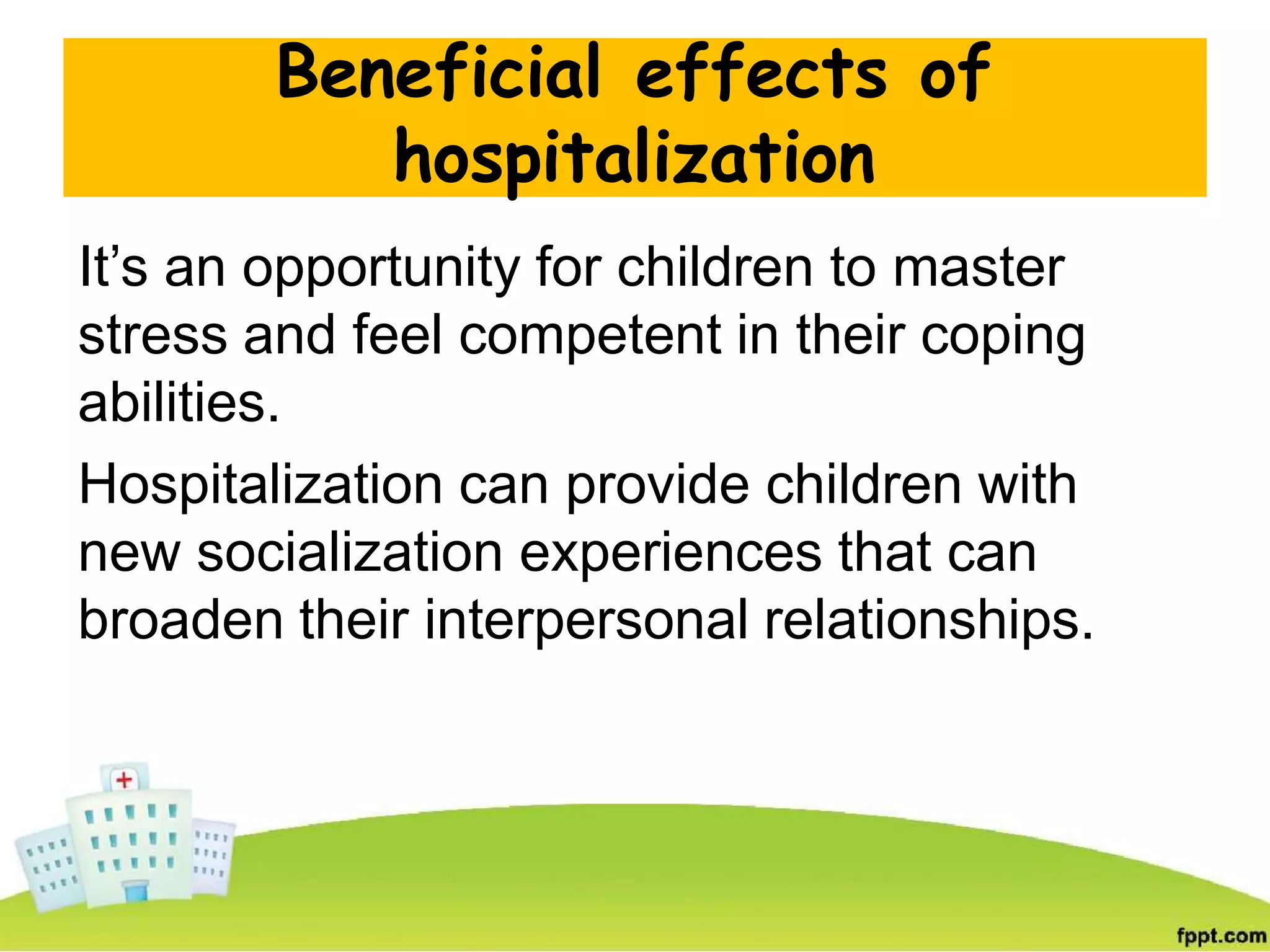
Beneficial effects of
hospitalization
It’s an opportunity for children to master
stress and feel competent in their coping
abilities.
Hospitalization can provide children with
new socialization experiences that can
broaden their interpersonal relationships.
Parental Reaction
Parental reaction to the illness in their child
depends on the following factors:
 Seriousness of the threat to the child,
 Previous experiences with illness and
hospitalization,
 Medical procedure involved in diagnosis
and treatment
 Available support system,
contd.
Contd.
 personal ego problems
 previous coping abilities,
 additional stresses on the family systems,
cultural and religious beliefs,
 communication patterns among the family
members.
Sibling Reaction
Siblings experience:
• Loneliness,
• Fear,
• Worry,
• Anger,
• Resentment,
• Jealousy and
• Guilt.
Informed Consent for Care
• Parents, older children, adolescents are
becoming increasingly aware of their rights
as consumers of health care and want to
exercise them.
contd.
Contd.
• The need to have all the information
relevant to making decisions, including the
risks involved in diagnostic procedures
and medical and surgical treatment, before
consent is given.
• Consent given after such information is
understood as informed consent.
contd.
Contd.
• Problem may arise when the parent are
not available to give the consent for care
when the child becoming an emancipated
minor, or when parents refuse care for
their minor child on the basis of religion
beliefs
Situations in which consent is
required
• Diagnostic procedures in which there is
some risk involved, including, among
others, lumber puncture, needle biopsy,
bone marrow aspiration, cardiac
catheterization, angiography and
bronchoscopy
contd.
Contd.
• Medical treatments as blood transfusion,
paracentesis, thoracentesis and radiation
therapy.
contd.
Contd.
• Surgery as any invasion of a body cavity,
craniotomy, open heart surgery or
abdominal laparotomy.
Nursing Management
and
Therapeutic Care
1. Preventing Separation
• A primary nursing goal is to prevent
separation particularly in children younger
than 5 years of age.
• Nurse must have an appreciation of the
child’s separation behaviours.
• Toddlers and preschoolers have a limited
concept of time.
contd.
contd.
• The young child’s ability to tolerate parental
absence is limited. Therefore, parental visits
should be frequent. This may necessitate that
each parental absence is limited. Therefore,
parental visits should be frequent. This may
necessitate that each parent visit at different
times to lessen the length of separation.
• The nurse should offer explanations or
prepare the child for those experiences that
are unavoidable.
2. Minimizing Loss of Control
• Feelings of loss of control result from
separation, changed routines, enforced
dependency and magical thinking.
• Promoting freedom of movement
Younger children react most strenuously to
any type of physical restriction or
immobilization. Although temporary
immobilization may be necessary for some
inventions.
Contd.
Contd.
Most physical restriction can be
prevented if nurse gains child’s
cooperation.
ontd.
3.Maintaining Child’s Routine
• Altered daily schedules and loss of rituals
are particularly stressful for toddlers and
early preschoolers and may increase the
stress of separation.
• This approach is most suitable for non-
critically ill school age or adolescent child
who has mastered the concept of time.
4.Encouraging Independence
• Principal interventions should focus on
respect for individuality and the
opportunity for decision making. Enabling
children’s control involves helping them
maintain independence and promoting the
concept of self-care.
5.Promoting Understanding
• Loss of control can occur from feelings of
having too little influence on one’s destiny.
• More children feel more in control when
they know what to except, since the
elements of fear is reduced.
6.Preventing Bodily Injury
• Beyond early infancy all children fear
bodily injury from mutilation, bodily
intrusion, body image change, disability, or
death.
• Preparation of children for painful
procedures decreases their fears and
increases cooperation.
contd.
Contd.
• When children are upset about their
illness, their perception can be changed by
1) providing a somewhat different and less
negative account of the disease or
2)offering an explanation that is a
characteristic of the next stage of cognitive
development.
7.Providing Developmentally
Appropriate Activities
• A primary goal of nursing care for the child
who is hospitalized is to minimize threats
to the child’s development.
• The nurse needs to provide opportunities
for the child to participate in
developmentally appropriate activities
further normalizes the child’s environment
and helps reduces interference with the
child’s ongoing development.
Contd.
Contd.
• It is essential to provide adolescents
flexible routines and activities such as
group activities.
Providing opportunity for
expressive activities
• Play is one of the most important aspects
of a child’s life and one of the most
effective tools for managing stress.
• Play is essential to children’s mental,
emotional, and social well-being.
Functions of play in hospital
 Provides diversion and brings about relaxation.
 Helps child feel more secure in strange
environment.
 Lessens the stress of separation and the feeling
of homesickness.
 Provides means of release of tension and
expression of feelings.
 Places child in active role and provides
opportunity to make choices and be in control
Diversional Therapy
• Almost any kind of play can be used for
diversion and recreation, but the activity
should be selected on the basis of child’s
age, interests and limitations.
• When supervising play for ill children it is
better to select activities that are simpler
than would normally be chosen for the
child’s specific developmental level.
Contd.
• When supervising play for ill children it is
better to select activities that are simpler
than would normally be chosen for the
child’s specific developmental level.
Toys
• Small children need the comfort and
reassurance of familiar things such as the
stuffed animal and blankets that the child
hugs for comfort and takes to bed at night.
Expressive Activities
• Play and other expressive activities
provide one of the best opportunities for
encouraging emotional expression,
including safe release of anger.
Creative expression
• Drawing and painting are the excellent
media for expression.
Maximizing benefits of
hospitalization
• Fostering parent child relationship
• Providing educational opportunities
• Promoting self-mastery
• Providing socialization
• Protection of child from injury
Safety of hospitalized child
• The catches on the sides of the crib should
be in a good condition, and the gates should
always be up when the child is in bed.
• Falls from crib, youth beds, wheelchairs and
other conveyances can prevented if safety
restraints are used and the are carefully
supervised.
• Medicine cabinets must be locked when not
in use and should never be left standing on a
bedside. Contd.
Contd.
• Instruments and solutions should be kept
in cabinets or on shelves where children
cannot reach them.
• Children must never be permitted to run in
a hospital because of the danger of failing.
• Infants and small children should not be
allowed to play with tongue depressors,
applicators, or syringes because of the
danger of jabbing themselves in the eyes.
Contd.
Contd.
• Nursing bottles should never be popped,
nor should feedings be forced upon a
small child.
• Electrical outlets extension cords lying
across the floor of a hospital unit are
hazardous, especially a nurse carrying an
infant or a young child.
Restraints
• All infants and children have physiologic
and psychological needs to be mobile.
• Prolonged immobility of children may
result physically loss of muscular strength
and flexibility.
• The restraint of the child is absolutely
necessary at times to examine them, to
facilitate treatment procedures and to
protect them from harm.
contd.
Contd.
• The reason for applying restraints must be
explained to both child and parents. This
must be done through the application of
restraints to a doll or a stuffed animal.
• Sufficient padding must be used under
extremity restraints to prevent skin
irritation.
• Before the restraints are reapplied the
child’s position should be changed to
improve physiologic functioning.
Special Hospital Situations
1. Ambulatory or outpatient setting
The benefits of ambulatory setting are:
• Minimizing of the stressors of
hospitalization
• Reduced chance of infection
• Cost savings
2. Isolation
• Admission to an isolation room increases
all the stressors
• When the child is placed in isolation,
preparation is essential
• Young children need preparation terms of
what they will hear, see and or feel in
isolation.
3.Emergency Admission
• Appropriate introduction to the family
• Use of child’s name
• Determination of child’s age and some
judgment about developmental age
• Information about chief complaints from
both the parents and the child.
4.Admission to Intensive
care unit
• Prepare child and parent for ICU
admission by focusing primarily on the
sensory aspects.
• Encourage parents to stay with the child
• Provide information about the child’s
condition in an understandable language.
Discharge
The objectives of planning for discharge are:
• To make certain that the care given in the
hospital will be continued as necessary at
home,
• The nurse can assist the parent and child
to meet this objective by educating them
concerning the illness and the essential
requirements for care,
contd.
Contd.
• Whether the child has been cared for in an
ambulatory area or has been an inpatient,
the parents or another adult and the child
must assume the responsibility for follow-
up care at home.
• Planning for care following discharge
should be initiated as soon as feasible
after the child’s admission.
child hospitalization ppt.pptx

child hospitalization ppt.pptx

  • 1.
  • 2.
    DEFINITION Child Hospitalization isadmittance of a child to the hospital as a patient for treatment or observation or investigative purpose.
  • 3.
    HOSPITALIZATION AND STRESS Sources ofstress:  Psychosocial (separation from home, parents, other family members and friends, change in role; anxiety fear and pain),  Physiologic (loss of sleep, diagnostic and treatment procedures, trauma, burns, surgery and immobilization or physical restraints), Environmental (loss of light or dark when children in the pediatric unit, unfamiliar noise) contd.
  • 4.
    Contd.  Biologic (pathologicorganism) Chemical (anesthetics agents, drugs and reaction to blood given in transfusion)
  • 5.
    Defense Mechanism Used bysick children during normal growth and development and sickness • Denial of reality: a way to avoid disagreeable and unpleasant realities • Repression: a tendency to thrust from consciousness back into the unconscious ideas of an anxiety provoking nature contd.
  • 6.
    Contd. • Rationalization: themental process by which only a seemingly reasonable or justifiable explanation is given for beliefs, ideas, or activities one wishes to hold or to do, • Regression: a return to an earlier or former state, • Displacement: the hostile feelings to objects or persons less dangerous than those that originally known, contd.
  • 7.
    Contd. • Reaction formation:substation of an opposing action when an objectionable one cannot be expressed, • Sublimation: the conscious diversion of drives into socially and personally acceptable behavior, • Projection: the placing of one’s mistakes or failures up to another person or the thing, contd.
  • 8.
    Contd. • Introjections: attributesor values and attitudes of others into one’s own ego structure, • Withdrawal and escape: the attempt to avoid unwanted or threatening situations by running away. • Loss of security because of separation from their parents, bodily injury, pain, and for older child, loss of control.
  • 9.
    Stressor of Hospitalization •Major stressor of hospitalization for a sick child is – 1. Separation Anxiety 2. Loss of Control
  • 10.
    Phases of Separation Anxiety •Phase of protest: children react aggressively to the separation from the parent. They cry and scream for the parents, refuse the attention of anyone else, and are inconsolable in their grief. contd.
  • 11.
    Contd. • Phase ofdespair: the crying stops and depression is evident. The in play food, and withdraws from others. child is much less active, is uninterested • Phase of detachment: also called denial. Superficially it appears that the child has finally adjusted to the loss. contd.
  • 12.
    Contd. • Phase ofResignation: this behavior is not a sign of contentment. The child detaches from the parent in an effort to escape the emotional pain of desiring the parent’s presence and copes by forming shallow relationships with others, increasingly self-centered and primary importance to material becoming attaching objects.
  • 13.
    Contd. • Phase ofDetachment: most serious stage, as reversal of the potential adverse effects is less likely to occur after detachment is established. Although the progression to the stage of detachment is uncommon, the initial stages are frequently observed even with brief separation from the parents. contd.
  • 14.
    Separation Anxiety indifferent Age Groups • Early Childhood: If separation is avoided, young children have a tremendous capacity to withstand any other stress. • Children in the toddler stage demonstrate goal directed behavior, like they may plead with the parents to stay. • May have temper tantrums contd.
  • 15.
    Contd. • Preschoolers cantolerate brief periods of separation from their parents and are more inclined to develop substitute trust in other significant adults. • They may demonstrate separation anxiety by refusing to eat, experiencing difficulty in sleeping, crying quietly for their parents, continually asking when the parents will visit or withdrawing from others. contd.
  • 16.
    Later childhood adolescence •May react more to the separation from their usual activities and peers than to absence of their parents. • Feeling of loneliness, boredom, isolation and depression • For adolescents, separation from home and parents may produce varied emotions ranging from difficulty coping to welcoming the event. Contd.
  • 17.
    Contd. • Loss ofthe peer group contact may pose a severe emotional threat because of loss of group status, inability to exert group control or leadership and loss of group status, inability to exert group control or leadership and loss of group acceptance.
  • 18.
    Loss of Control •Lack of control increases the perception of threat and can affect children’s coping skills. • Without an insight into the type of environment conductive to children’s optimal growth, the hospital can at best temporarily slow development and at worst permanently restrict it. contd.
  • 19.
    Contd. Infants: are developingthe most important attribute of human personality that is Trust which is established through consistent loving care by a nurturing person. • Infants attempt to control their environment through emotional expressions such as crying or smiling. • Inconsistent care deviations from the infants’ daily routine may lead to mistrust and a decreased sense of control.
  • 20.
    Toddlers • Toddlers arestriving for autonomy and this goal is evident in most of the behaviours, motor skills, play, interpersonal relationships, activities of daily living and communication. • When their egocentric pleasures meet with obstacles, toddlers react with negativism especially temper tantrums. contd.
  • 21.
    Contd. • Loss ofcontrol also results from altered routines and rituals. Toddlers rely on the consistency and familiarity of daily rituals to provide a measure of stability and control in their complex world of growing and developing. • When these routines e.g. Eating, sleeping, playing, bathing are disrupted, difficulties can occur in any or all these areas. contd.
  • 22.
    Contd. • Enforced dependencyis a chief characteristic of the sick role and accounts for the numerous instances of toddler negativism. • For example, rigid schedules, altered care giving activities, unfamiliar surroundings and medical procedures, toddlers control over their world.
  • 23.
    Preschoolers • Preschoolers alsosuffer from loss of control caused by physiological restrictions, altered routines and enforced dependency. • Their specific cognitive abilities which make them feel all powerful also make them feel out of control. contd.
  • 24.
    Contd. • Pre-schoolers magicalthinking limits their ability to understand events because they view all their experiences from their own self referenced perspective. • Without adequate preparation for unfamiliar settings or experiences pre- schoolers fantasy explanations for such events are usually more exaggerated and frightening than the facts. contd.
  • 25.
    Contd. • Pre-schoolers preoperationalthinking means that they understand explanation only in terms of real events. • Transductive reasoning implies that pre- schoolers deduct from the particular to the particular.
  • 26.
    School Age Children •Because of striving for independence and productivity, the school age children are particularly vulnerable to events that may lessen their feelings of control and power. • For school age children, dependent activities e.g. enforced bed rest, use of bedpan, inability to choose a menu, lack of privacy, help with the bed bath or transport by a wheelchair or stretcher can be direct threat to their security. contd.
  • 27.
    Contd. • A senseof control results from a feeling of usefulness and productivity. Also illness may lead to a feeling of loss of control. • Emphasizing areas of control and capitalizing on quiet activities particularly hobbies such as building models or playing age appropriate video or board games, promotes their adjustment to physical restriction.
  • 28.
    Adolescents • Adolescents strugglefor independence, self-assertion and liberation centers on the quest for personal identity. • Anything that interferes with this poses a threat to their sense of identity and results in loss of control. • Adolescents may react to dependency with rejection, uncooperativeness or withdrawal. contd.
  • 29.
    Contd. • Adolescents respondto depersonalization with self-assertion, anger or frustration. • Sick adolescents’ often voluntarily isolate themselves from age mates until they feel they can compete on an equal basis and meet the group expectations.
  • 30.
    Effect of Hospitalization •Children may react to the stress of hospitalization : • before admission, • during hospitalization and • after discharge contd.
  • 31.
    Contd. • A numberof risk factors make certain children more vulnerable than others to the stresses of hospitalization, e.g. difficult temperament, lack of fit between child and parent, age between 6 months and 5 years male gender below average intelligence, multiple and continuing stresses.
  • 32.
    Contd. • Some ofthe responses for stressors on sick school age children are: Regression, Separation anxiety, Apathy, Fears Sleep disturbances especially for children younger than 7 years of age.
  • 33.
    Post hospitalization Behavior •Young Children: • Show initial aloofness towards parents. • Frequently followed by dependency behavior e.g. clinging to parents, demands for parents’ attention, vigorous opposition to any separation. • Includes new fears, night walking, withdrawal and shyness, hyperactivity, temper tantrums, attachment to blanket or toy.
  • 34.
    Older Children May presentwith: Emotional coldness, Followed by intense, demanding dependence on parents, Anger towards parents, Jealously towards others.
  • 35.
    Beneficial effects of hospitalization It’san opportunity for children to master stress and feel competent in their coping abilities. Hospitalization can provide children with new socialization experiences that can broaden their interpersonal relationships.
  • 36.
    Parental Reaction Parental reactionto the illness in their child depends on the following factors:  Seriousness of the threat to the child,  Previous experiences with illness and hospitalization,  Medical procedure involved in diagnosis and treatment  Available support system, contd.
  • 37.
    Contd.  personal egoproblems  previous coping abilities,  additional stresses on the family systems, cultural and religious beliefs,  communication patterns among the family members.
  • 38.
    Sibling Reaction Siblings experience: •Loneliness, • Fear, • Worry, • Anger, • Resentment, • Jealousy and • Guilt.
  • 39.
    Informed Consent forCare • Parents, older children, adolescents are becoming increasingly aware of their rights as consumers of health care and want to exercise them. contd.
  • 40.
    Contd. • The needto have all the information relevant to making decisions, including the risks involved in diagnostic procedures and medical and surgical treatment, before consent is given. • Consent given after such information is understood as informed consent. contd.
  • 41.
    Contd. • Problem mayarise when the parent are not available to give the consent for care when the child becoming an emancipated minor, or when parents refuse care for their minor child on the basis of religion beliefs
  • 42.
    Situations in whichconsent is required • Diagnostic procedures in which there is some risk involved, including, among others, lumber puncture, needle biopsy, bone marrow aspiration, cardiac catheterization, angiography and bronchoscopy contd.
  • 43.
    Contd. • Medical treatmentsas blood transfusion, paracentesis, thoracentesis and radiation therapy. contd.
  • 44.
    Contd. • Surgery asany invasion of a body cavity, craniotomy, open heart surgery or abdominal laparotomy.
  • 45.
  • 46.
    1. Preventing Separation •A primary nursing goal is to prevent separation particularly in children younger than 5 years of age. • Nurse must have an appreciation of the child’s separation behaviours. • Toddlers and preschoolers have a limited concept of time. contd.
  • 47.
    contd. • The youngchild’s ability to tolerate parental absence is limited. Therefore, parental visits should be frequent. This may necessitate that each parental absence is limited. Therefore, parental visits should be frequent. This may necessitate that each parent visit at different times to lessen the length of separation. • The nurse should offer explanations or prepare the child for those experiences that are unavoidable.
  • 48.
    2. Minimizing Lossof Control • Feelings of loss of control result from separation, changed routines, enforced dependency and magical thinking. • Promoting freedom of movement Younger children react most strenuously to any type of physical restriction or immobilization. Although temporary immobilization may be necessary for some inventions. Contd.
  • 49.
    Contd. Most physical restrictioncan be prevented if nurse gains child’s cooperation. ontd.
  • 50.
    3.Maintaining Child’s Routine •Altered daily schedules and loss of rituals are particularly stressful for toddlers and early preschoolers and may increase the stress of separation. • This approach is most suitable for non- critically ill school age or adolescent child who has mastered the concept of time.
  • 51.
    4.Encouraging Independence • Principalinterventions should focus on respect for individuality and the opportunity for decision making. Enabling children’s control involves helping them maintain independence and promoting the concept of self-care.
  • 52.
    5.Promoting Understanding • Lossof control can occur from feelings of having too little influence on one’s destiny. • More children feel more in control when they know what to except, since the elements of fear is reduced.
  • 53.
    6.Preventing Bodily Injury •Beyond early infancy all children fear bodily injury from mutilation, bodily intrusion, body image change, disability, or death. • Preparation of children for painful procedures decreases their fears and increases cooperation. contd.
  • 54.
    Contd. • When childrenare upset about their illness, their perception can be changed by 1) providing a somewhat different and less negative account of the disease or 2)offering an explanation that is a characteristic of the next stage of cognitive development.
  • 55.
    7.Providing Developmentally Appropriate Activities •A primary goal of nursing care for the child who is hospitalized is to minimize threats to the child’s development. • The nurse needs to provide opportunities for the child to participate in developmentally appropriate activities further normalizes the child’s environment and helps reduces interference with the child’s ongoing development. Contd.
  • 56.
    Contd. • It isessential to provide adolescents flexible routines and activities such as group activities.
  • 57.
    Providing opportunity for expressiveactivities • Play is one of the most important aspects of a child’s life and one of the most effective tools for managing stress. • Play is essential to children’s mental, emotional, and social well-being.
  • 58.
    Functions of playin hospital  Provides diversion and brings about relaxation.  Helps child feel more secure in strange environment.  Lessens the stress of separation and the feeling of homesickness.  Provides means of release of tension and expression of feelings.  Places child in active role and provides opportunity to make choices and be in control
  • 59.
    Diversional Therapy • Almostany kind of play can be used for diversion and recreation, but the activity should be selected on the basis of child’s age, interests and limitations. • When supervising play for ill children it is better to select activities that are simpler than would normally be chosen for the child’s specific developmental level.
  • 60.
    Contd. • When supervisingplay for ill children it is better to select activities that are simpler than would normally be chosen for the child’s specific developmental level.
  • 61.
    Toys • Small childrenneed the comfort and reassurance of familiar things such as the stuffed animal and blankets that the child hugs for comfort and takes to bed at night.
  • 62.
    Expressive Activities • Playand other expressive activities provide one of the best opportunities for encouraging emotional expression, including safe release of anger. Creative expression • Drawing and painting are the excellent media for expression.
  • 63.
    Maximizing benefits of hospitalization •Fostering parent child relationship • Providing educational opportunities • Promoting self-mastery • Providing socialization • Protection of child from injury
  • 64.
    Safety of hospitalizedchild • The catches on the sides of the crib should be in a good condition, and the gates should always be up when the child is in bed. • Falls from crib, youth beds, wheelchairs and other conveyances can prevented if safety restraints are used and the are carefully supervised. • Medicine cabinets must be locked when not in use and should never be left standing on a bedside. Contd.
  • 65.
    Contd. • Instruments andsolutions should be kept in cabinets or on shelves where children cannot reach them. • Children must never be permitted to run in a hospital because of the danger of failing. • Infants and small children should not be allowed to play with tongue depressors, applicators, or syringes because of the danger of jabbing themselves in the eyes. Contd.
  • 66.
    Contd. • Nursing bottlesshould never be popped, nor should feedings be forced upon a small child. • Electrical outlets extension cords lying across the floor of a hospital unit are hazardous, especially a nurse carrying an infant or a young child.
  • 67.
    Restraints • All infantsand children have physiologic and psychological needs to be mobile. • Prolonged immobility of children may result physically loss of muscular strength and flexibility. • The restraint of the child is absolutely necessary at times to examine them, to facilitate treatment procedures and to protect them from harm. contd.
  • 68.
    Contd. • The reasonfor applying restraints must be explained to both child and parents. This must be done through the application of restraints to a doll or a stuffed animal. • Sufficient padding must be used under extremity restraints to prevent skin irritation. • Before the restraints are reapplied the child’s position should be changed to improve physiologic functioning.
  • 69.
    Special Hospital Situations 1.Ambulatory or outpatient setting The benefits of ambulatory setting are: • Minimizing of the stressors of hospitalization • Reduced chance of infection • Cost savings
  • 70.
    2. Isolation • Admissionto an isolation room increases all the stressors • When the child is placed in isolation, preparation is essential • Young children need preparation terms of what they will hear, see and or feel in isolation.
  • 71.
    3.Emergency Admission • Appropriateintroduction to the family • Use of child’s name • Determination of child’s age and some judgment about developmental age • Information about chief complaints from both the parents and the child.
  • 72.
    4.Admission to Intensive careunit • Prepare child and parent for ICU admission by focusing primarily on the sensory aspects. • Encourage parents to stay with the child • Provide information about the child’s condition in an understandable language.
  • 73.
    Discharge The objectives ofplanning for discharge are: • To make certain that the care given in the hospital will be continued as necessary at home, • The nurse can assist the parent and child to meet this objective by educating them concerning the illness and the essential requirements for care, contd.
  • 74.
    Contd. • Whether thechild has been cared for in an ambulatory area or has been an inpatient, the parents or another adult and the child must assume the responsibility for follow- up care at home. • Planning for care following discharge should be initiated as soon as feasible after the child’s admission.