FACTORS ON
WHICH
BALANCED
DIET
DEPENDS
KIRAN SAXENA
DEPARTMENT OF FOOD AND NUTRITION
ERA UNIVERSITY
INTRODUCTION
• A balanced diet provides all the necessary nutrients for overall health
and long life. Eating a balanced diet reduces your risk for heart disease,
cancer, diabetes and other health problems. Achieving this goal in a
culture where you're surrounded by unhealthy foods can be
challenging. When you understand the factors that contribute to a
balanced diet, however, you can make choices that support your health
and well-being.
7 FACTORS OF A
BALANCED DIET
PROTEIN
• Protein is a key factor in creating a balanced diet. Proteins
are the building blocks of life, necessary for the development,
repair and maintenance of your body's cells. In fact, every
cell in your body contains protein. During the process of
digestion, protein molecules are broken down into smaller
substances known as amino acids, which can be used by your
body. Good protein sources include animal foods such as lean
meats, fish, low-fat dairy and eggs; and plant sources like
beans, legumes and nuts.
CARBOHYDRATES
• Carbohydrates play an essential role in a balanced diet. Your body breaks
down carbohydrates into glucose, or blood sugar, which is used for
energy. All carbohydrates, however, do not contribute to a healthy diet.
Simple carbohydrates found in processed and refined foods like candy,
cookies and white rice are devoid of fiber and important vitamins. These
foods can cause your blood sugar to spike and then drop, resulting in
unhealthy blood sugar fluctuations. Carbohydrates such as legumes,
vegetables, whole grains and fruits contain essential vitamins like vitamin
A -- necessary for proper vision -- and vitamin C, a powerful antioxidant
that fights free radicals, which are unstable molecules that damage your
body's cells.
FATS
• Fats are another important element of a balanced diet. They are necessary
for the performance of important functions like absorption of fat-soluble
vitamins A, D, E and K . While some fats are good for you, others are
harmful to your health. Monounsaturated and polyunsaturated fats help
lower LDL -- bad cholesterol -- and increase HDL, the good cholesterol.
Polyunsaturated fats also contain heart-healthy omega-3 fatty acids.
Saturated fats and trans fats are bad fats that raise LDL cholesterol and
lower HDL cholesterol. Include foods that contain unsaturated fats, such
as salmon, trout, avocados, nuts and oils like olive or canola. Limit your
intake of processed bakery items, fried food, red meat, poultry with skin
and full-fat dairy foods
VITAMINS
• Vitamins are a class of organic nutrients that cannot be made by your
body. Although only small amounts are needed, they are essential for
your overall good health. Vitamins release energy, build cells and assist in
the development of collagen, which helps heal wounds and support blood
vessel walls. Vitamins A, D, E and K are fat-soluble and can be stored by
your body. Fat-soluble vitamins taken in excess can be toxic. Water-
soluble vitamins -- vitamin C and the B vitamins -- are rapidly used by
your body and the excess isn't stored, but lost through urine. Water-
soluble vitamins need to be replaced daily. Eating a wide variety of foods,
including whole grains, fresh fruits and vegetables, fish, legumes, low-fat
dairy and poultry, helps provide your body with sufficient vitamins.
MINERALS
• Minerals are inorganic substances needed by your body in
tiny amounts. A key function of major minerals, such as
sodium, chloride and potassium, is to maintain proper water
balance in your body. Calcium, phosphorus and magnesium
help support healthy bones and teeth. Trace minerals like
iron carry oxygen throughout your body, and zinc helps in
the creation of new cells. As is also true of vitamins, eating a
wide variety of foods, including whole grains, fresh fruits and
vegetables, fish, legumes, low-fat dairy and poultry, provides
your body with sufficient minerals.
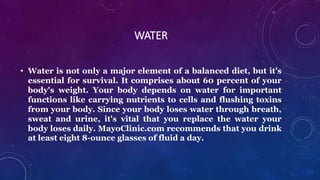
WATER
• Water is not only a major element of a balanced diet, but it's
essential for survival. It comprises about 60 percent of your
body's weight. Your body depends on water for important
functions like carrying nutrients to cells and flushing toxins
from your body. Since your body loses water through breath,
sweat and urine, it's vital that you replace the water your
body loses daily. MayoClinic.com recommends that you drink
at least eight 8-ounce glasses of fluid a day.
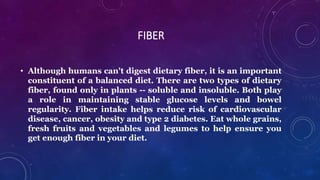
FIBER
• Although humans can't digest dietary fiber, it is an important
constituent of a balanced diet. There are two types of dietary
fiber, found only in plants -- soluble and insoluble. Both play
a role in maintaining stable glucose levels and bowel
regularity. Fiber intake helps reduce risk of cardiovascular
disease, cancer, obesity and type 2 diabetes. Eat whole grains,
fresh fruits and vegetables and legumes to help ensure you
get enough fiber in your diet.
EAT MORE
Raw and cooked vegetables & fruit (“5-a-day”)
Nuts
Seeds
beans & pulses
whole grain cereals/bread
lean white meat (chicken without skin)
fish (especially oily)& fruit (“5-a-day”), nuts, seeds, beans
& pulses, whole grain cereals/bread, lean white meat
(chicken without skin), fish (especially oily)
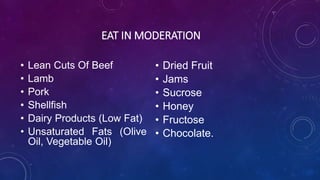
EAT IN MODERATION
• Lean Cuts Of Beef
• Lamb
• Pork
• Shellfish
• Dairy Products (Low Fat)
• Unsaturated Fats (Olive
Oil, Vegetable Oil)
• Dried Fruit
• Jams
• Sucrose
• Honey
• Fructose
• Chocolate.
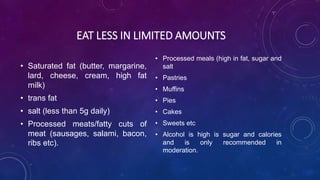
EAT LESS IN LIMITED AMOUNTS
• Saturated fat (butter, margarine,
lard, cheese, cream, high fat
milk)
• trans fat
• salt (less than 5g daily)
• Processed meats/fatty cuts of
meat (sausages, salami, bacon,
ribs etc).
• Processed meals (high in fat, sugar and
salt
• Pastries
• Muffins
• Pies
• Cakes
• Sweets etc
• Alcohol is high is sugar and calories
and is only recommended in
moderation.

Factors on which balanced diet depends

  • 1.
  • 2.
    INTRODUCTION • A balanceddiet provides all the necessary nutrients for overall health and long life. Eating a balanced diet reduces your risk for heart disease, cancer, diabetes and other health problems. Achieving this goal in a culture where you're surrounded by unhealthy foods can be challenging. When you understand the factors that contribute to a balanced diet, however, you can make choices that support your health and well-being.
  • 3.
    7 FACTORS OFA BALANCED DIET
  • 4.
    PROTEIN • Protein isa key factor in creating a balanced diet. Proteins are the building blocks of life, necessary for the development, repair and maintenance of your body's cells. In fact, every cell in your body contains protein. During the process of digestion, protein molecules are broken down into smaller substances known as amino acids, which can be used by your body. Good protein sources include animal foods such as lean meats, fish, low-fat dairy and eggs; and plant sources like beans, legumes and nuts.
  • 5.
    CARBOHYDRATES • Carbohydrates playan essential role in a balanced diet. Your body breaks down carbohydrates into glucose, or blood sugar, which is used for energy. All carbohydrates, however, do not contribute to a healthy diet. Simple carbohydrates found in processed and refined foods like candy, cookies and white rice are devoid of fiber and important vitamins. These foods can cause your blood sugar to spike and then drop, resulting in unhealthy blood sugar fluctuations. Carbohydrates such as legumes, vegetables, whole grains and fruits contain essential vitamins like vitamin A -- necessary for proper vision -- and vitamin C, a powerful antioxidant that fights free radicals, which are unstable molecules that damage your body's cells.
  • 6.
    FATS • Fats areanother important element of a balanced diet. They are necessary for the performance of important functions like absorption of fat-soluble vitamins A, D, E and K . While some fats are good for you, others are harmful to your health. Monounsaturated and polyunsaturated fats help lower LDL -- bad cholesterol -- and increase HDL, the good cholesterol. Polyunsaturated fats also contain heart-healthy omega-3 fatty acids. Saturated fats and trans fats are bad fats that raise LDL cholesterol and lower HDL cholesterol. Include foods that contain unsaturated fats, such as salmon, trout, avocados, nuts and oils like olive or canola. Limit your intake of processed bakery items, fried food, red meat, poultry with skin and full-fat dairy foods
  • 7.
    VITAMINS • Vitamins area class of organic nutrients that cannot be made by your body. Although only small amounts are needed, they are essential for your overall good health. Vitamins release energy, build cells and assist in the development of collagen, which helps heal wounds and support blood vessel walls. Vitamins A, D, E and K are fat-soluble and can be stored by your body. Fat-soluble vitamins taken in excess can be toxic. Water- soluble vitamins -- vitamin C and the B vitamins -- are rapidly used by your body and the excess isn't stored, but lost through urine. Water- soluble vitamins need to be replaced daily. Eating a wide variety of foods, including whole grains, fresh fruits and vegetables, fish, legumes, low-fat dairy and poultry, helps provide your body with sufficient vitamins.
  • 8.
    MINERALS • Minerals areinorganic substances needed by your body in tiny amounts. A key function of major minerals, such as sodium, chloride and potassium, is to maintain proper water balance in your body. Calcium, phosphorus and magnesium help support healthy bones and teeth. Trace minerals like iron carry oxygen throughout your body, and zinc helps in the creation of new cells. As is also true of vitamins, eating a wide variety of foods, including whole grains, fresh fruits and vegetables, fish, legumes, low-fat dairy and poultry, provides your body with sufficient minerals.
  • 9.
    WATER • Water isnot only a major element of a balanced diet, but it's essential for survival. It comprises about 60 percent of your body's weight. Your body depends on water for important functions like carrying nutrients to cells and flushing toxins from your body. Since your body loses water through breath, sweat and urine, it's vital that you replace the water your body loses daily. MayoClinic.com recommends that you drink at least eight 8-ounce glasses of fluid a day.
  • 10.
    FIBER • Although humanscan't digest dietary fiber, it is an important constituent of a balanced diet. There are two types of dietary fiber, found only in plants -- soluble and insoluble. Both play a role in maintaining stable glucose levels and bowel regularity. Fiber intake helps reduce risk of cardiovascular disease, cancer, obesity and type 2 diabetes. Eat whole grains, fresh fruits and vegetables and legumes to help ensure you get enough fiber in your diet.
  • 11.
    EAT MORE Raw andcooked vegetables & fruit (“5-a-day”) Nuts Seeds beans & pulses whole grain cereals/bread lean white meat (chicken without skin) fish (especially oily)& fruit (“5-a-day”), nuts, seeds, beans & pulses, whole grain cereals/bread, lean white meat (chicken without skin), fish (especially oily)
  • 12.
    EAT IN MODERATION •Lean Cuts Of Beef • Lamb • Pork • Shellfish • Dairy Products (Low Fat) • Unsaturated Fats (Olive Oil, Vegetable Oil) • Dried Fruit • Jams • Sucrose • Honey • Fructose • Chocolate.
  • 13.
    EAT LESS INLIMITED AMOUNTS • Saturated fat (butter, margarine, lard, cheese, cream, high fat milk) • trans fat • salt (less than 5g daily) • Processed meats/fatty cuts of meat (sausages, salami, bacon, ribs etc). • Processed meals (high in fat, sugar and salt • Pastries • Muffins • Pies • Cakes • Sweets etc • Alcohol is high is sugar and calories and is only recommended in moderation.