PATELLOFEMORAL TRACKING
AND MCCONNELL TAPING
Minni Titicula
PF tracking disorder
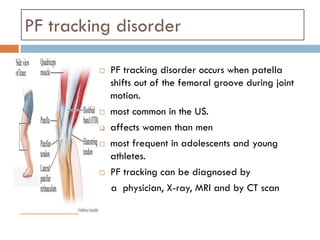
 PF tracking disorder occurs when patella
shifts out of the femoral groove during joint
motion.
 most common in the US.
 affects women than men
 most frequent in adolescents and young
athletes.
 PF tracking can be diagnosed by
a physician, X-ray, MRI and by CT scan
Patellar tracking Disorder
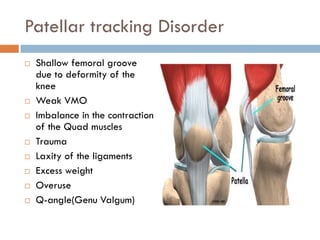
 Shallow femoral groove
due to deformity of the
knee
 Weak VMO
 Imbalance in the contraction
of the Quad muscles
 Trauma
 Laxity of the ligaments
 Excess weight
 Overuse
 Q-angle(Genu Valgum)
Quadriceps Angle
 Q-angle is an angle
between ASIS and Tibial
Tuberosity.
 Normal 10-20 degrees
 A high Q-angle causes the
quadriceps to pull on the
patella and leads to
patellar tracking which is a
predisposing factor for
pain.
Symptoms
 Pain exacerbates when
walking, squatting, kneeling,
running, or even sitting.
 Swelling of the knee
 A grinding or popping
sensation
 “Knee buckling” occurs when
knee cannot bear weight
Interventions
 Surgery -repeated patellar subluxation
-damaged articular cartilage
-knee joint deformity
 Pharmacology -NSAIDs and ice
 Physical Therapy- Knee brace
 -LEFS can be administered to the patient
-Taping
-Strengthening exercises for quads
If left untreated this disorder can lead to Chrondromalacia or
Osteoarthritis(OA)
Physical therapy
 As a conservative
treatment our primary
goals for rehabilitation
will be to reduce pain,
re-establish motion,
strengthen, and
stabilize the joint.
McConnell Taping
 McConnell tape was invented by
Jenny McConnell, a PT from
Australia, who used taping to
help patients with patellar
tracking and was effective in
reducing the pain.
 McConnell Tape is a rigid, highly
adhesive tape that is applied for
upto18 hours or less depending
on patient’s comfort.
 McConnell taping is applied
after warm up and before
strengthening exercises.
Patellar tracking
 By centering the patella
within the femoral
groove, the force is
distributed across a
larger surface area and
stress on the articular
cartilage is decreased.
 The primary goal of
taping is to position
patella and reduce
pain.
McConnell Taping
 It is most commonly used for patellofemoral syndrome, shoulder
subluxation, lumbar, foot, and hip impingement.
 According to a randomized study it was found that McConnell
taping plus physical therapy was no better than physical
therapy alone. Still, when applied correctly on selected
patients, taping reduced pain.
 http://www.youtube.com/watch?v=sMJBHBiZjCs
Benefits of taping
 Decreases pain during activity
 Aids in healing certain knee injuries
 Corrects patellar alignment
 Allows an earlier return to activity following injury
 Prevents dislocation of the patella
 Improves activation of the VMO muscle
Exercises
Quadriceps strengthening is most recommended because they
play a significant role in patellar movement. Hip, hamstring,
and IT band stretching are also important.
Strengthening -Isometric Quadriceps exercises
-Straight leg raises
-Wall squats with a ball
Flexibility –Quad Stretch
-Hamstring stretch
-Gastrocnemius/Solius stretch
Swimming and bike riding are also recommended.
Taping Technique
1.Clean the area
with alcohol
swab
2. Palpate the
Patella
3.Apply cover
roll
4.Apply
McConnell
tape
Test your knowledge
Tracking disorder of the Patella occurs due to
a) Knee deformity c) High Q-angle
b) Weak Quad muscles d)All of the above
Why do women tend to have this tracking disorder?
What is the main goal for taping?
a) to position patella in the femoral groove c) to increase patellar tracking
b) to reduce pain d) a and b
When do we apply McConnell tape on the patient?
a)During activity b)after activity c ) before activity
Ignoring the symptoms of a PF tracking disorder can have severe long-term effects
such as __________________
Reference
 SAMEER DIXIT, M.D., and JOHN P. DIFIORI,M.D(2007), Management of Patellofemoral Pain
Syndrome, Am Fam Physician. 2007 Jan 15;75(2):194-202., University of California, Los
Angeles, California
 Mark. S, and JUHN, D.O (1999) Patellofemoral Pain Syndrome: A Review and Guidelines for
Treatment., University of Washington School of Medicine, Seattle, Washington, Am Fam
Physician. 1999 Nov 1;60(7):2012-2018.
 www.webmd.com
 Dutton,M. (2012), Orthopedics for the Physical Therapist Assistant Pages 540-542, Jones and
Bartlett Learning, Mississiauga, Canada.
Thank you

McConnell-Taping-PPT.pdf

  • 1.
  • 2.
    PF tracking disorder PF tracking disorder occurs when patella shifts out of the femoral groove during joint motion.  most common in the US.  affects women than men  most frequent in adolescents and young athletes.  PF tracking can be diagnosed by a physician, X-ray, MRI and by CT scan
  • 3.
    Patellar tracking Disorder Shallow femoral groove due to deformity of the knee  Weak VMO  Imbalance in the contraction of the Quad muscles  Trauma  Laxity of the ligaments  Excess weight  Overuse  Q-angle(Genu Valgum)
  • 4.
    Quadriceps Angle  Q-angleis an angle between ASIS and Tibial Tuberosity.  Normal 10-20 degrees  A high Q-angle causes the quadriceps to pull on the patella and leads to patellar tracking which is a predisposing factor for pain.
  • 5.
    Symptoms  Pain exacerbateswhen walking, squatting, kneeling, running, or even sitting.  Swelling of the knee  A grinding or popping sensation  “Knee buckling” occurs when knee cannot bear weight
  • 6.
    Interventions  Surgery -repeatedpatellar subluxation -damaged articular cartilage -knee joint deformity  Pharmacology -NSAIDs and ice  Physical Therapy- Knee brace  -LEFS can be administered to the patient -Taping -Strengthening exercises for quads If left untreated this disorder can lead to Chrondromalacia or Osteoarthritis(OA)
  • 7.
    Physical therapy  Asa conservative treatment our primary goals for rehabilitation will be to reduce pain, re-establish motion, strengthen, and stabilize the joint.
  • 8.
    McConnell Taping  McConnelltape was invented by Jenny McConnell, a PT from Australia, who used taping to help patients with patellar tracking and was effective in reducing the pain.  McConnell Tape is a rigid, highly adhesive tape that is applied for upto18 hours or less depending on patient’s comfort.  McConnell taping is applied after warm up and before strengthening exercises.
  • 9.
    Patellar tracking  Bycentering the patella within the femoral groove, the force is distributed across a larger surface area and stress on the articular cartilage is decreased.  The primary goal of taping is to position patella and reduce pain.
  • 10.
    McConnell Taping  Itis most commonly used for patellofemoral syndrome, shoulder subluxation, lumbar, foot, and hip impingement.  According to a randomized study it was found that McConnell taping plus physical therapy was no better than physical therapy alone. Still, when applied correctly on selected patients, taping reduced pain.  http://www.youtube.com/watch?v=sMJBHBiZjCs
  • 11.
    Benefits of taping Decreases pain during activity  Aids in healing certain knee injuries  Corrects patellar alignment  Allows an earlier return to activity following injury  Prevents dislocation of the patella  Improves activation of the VMO muscle
  • 12.
    Exercises Quadriceps strengthening ismost recommended because they play a significant role in patellar movement. Hip, hamstring, and IT band stretching are also important. Strengthening -Isometric Quadriceps exercises -Straight leg raises -Wall squats with a ball Flexibility –Quad Stretch -Hamstring stretch -Gastrocnemius/Solius stretch Swimming and bike riding are also recommended.
  • 13.
    Taping Technique 1.Clean thearea with alcohol swab 2. Palpate the Patella 3.Apply cover roll 4.Apply McConnell tape
  • 14.
    Test your knowledge Trackingdisorder of the Patella occurs due to a) Knee deformity c) High Q-angle b) Weak Quad muscles d)All of the above Why do women tend to have this tracking disorder? What is the main goal for taping? a) to position patella in the femoral groove c) to increase patellar tracking b) to reduce pain d) a and b When do we apply McConnell tape on the patient? a)During activity b)after activity c ) before activity Ignoring the symptoms of a PF tracking disorder can have severe long-term effects such as __________________
  • 15.
    Reference  SAMEER DIXIT,M.D., and JOHN P. DIFIORI,M.D(2007), Management of Patellofemoral Pain Syndrome, Am Fam Physician. 2007 Jan 15;75(2):194-202., University of California, Los Angeles, California  Mark. S, and JUHN, D.O (1999) Patellofemoral Pain Syndrome: A Review and Guidelines for Treatment., University of Washington School of Medicine, Seattle, Washington, Am Fam Physician. 1999 Nov 1;60(7):2012-2018.  www.webmd.com  Dutton,M. (2012), Orthopedics for the Physical Therapist Assistant Pages 540-542, Jones and Bartlett Learning, Mississiauga, Canada.
  • 16.