@Physiocouk #manchesterphysio facebook.com/physiocouk
Welcome
@Physiocouk #manchesterphysio facebook.com/physiocouk
Myofascial Release (MFR) workshop
With Louise Rigby & Kate McNally
@Physiocouk #manchesterphysio facebook.com/physiocouk
Kate’s LinkedIn: www.linkedin.com/katemcnally
Twitter: @KateMcPhysiocouk
Louise’s LinkedIn: www.linkedin.com/Louiserigby
Twitter: @LouPhysiocouk
Who are we?
@Physiocouk #manchesterphysio facebook.com/physiocouk
Let’s connect
Website: www.massage.physio.co.uk
Twitter: @physiocouk
Facebook: www.facebook.com/physiocouk
Aims of today
@Physiocouk #manchesterphysio facebook.com/physiocouk
✓ Learn and understand fascia structures and it's anatomy
✓ Learn the indications and contraindication to myofascial
release techniques.
✓ Learn different myofascial release techniques and how to
perform them safely.
✓ Learn which outcome measures and other treatment
techniques to use with myofascial release.
Itinerary
@Physiocouk #manchesterphysio facebook.com/physiocouk
10.00 - 10.30 - Induction / Arrival
10.30 - 11:15 - Theory: MFR
11.15 - 12:15 - Practical: MFR (Upper Limb)
12:15 - 12.45 - Lunch
12:45 -13:45 - Practical: MFR (Lower Limb)
13.45 - 14.30 - Treatments alongside MFR
14.30 - 15.00 - Evidence and Case Studies
@Physiocouk #manchesterphysio facebook.com/physiocouk
Theory:
Myofascial Release
@Physiocouk #manchesterphysio facebook.com/physiocouk
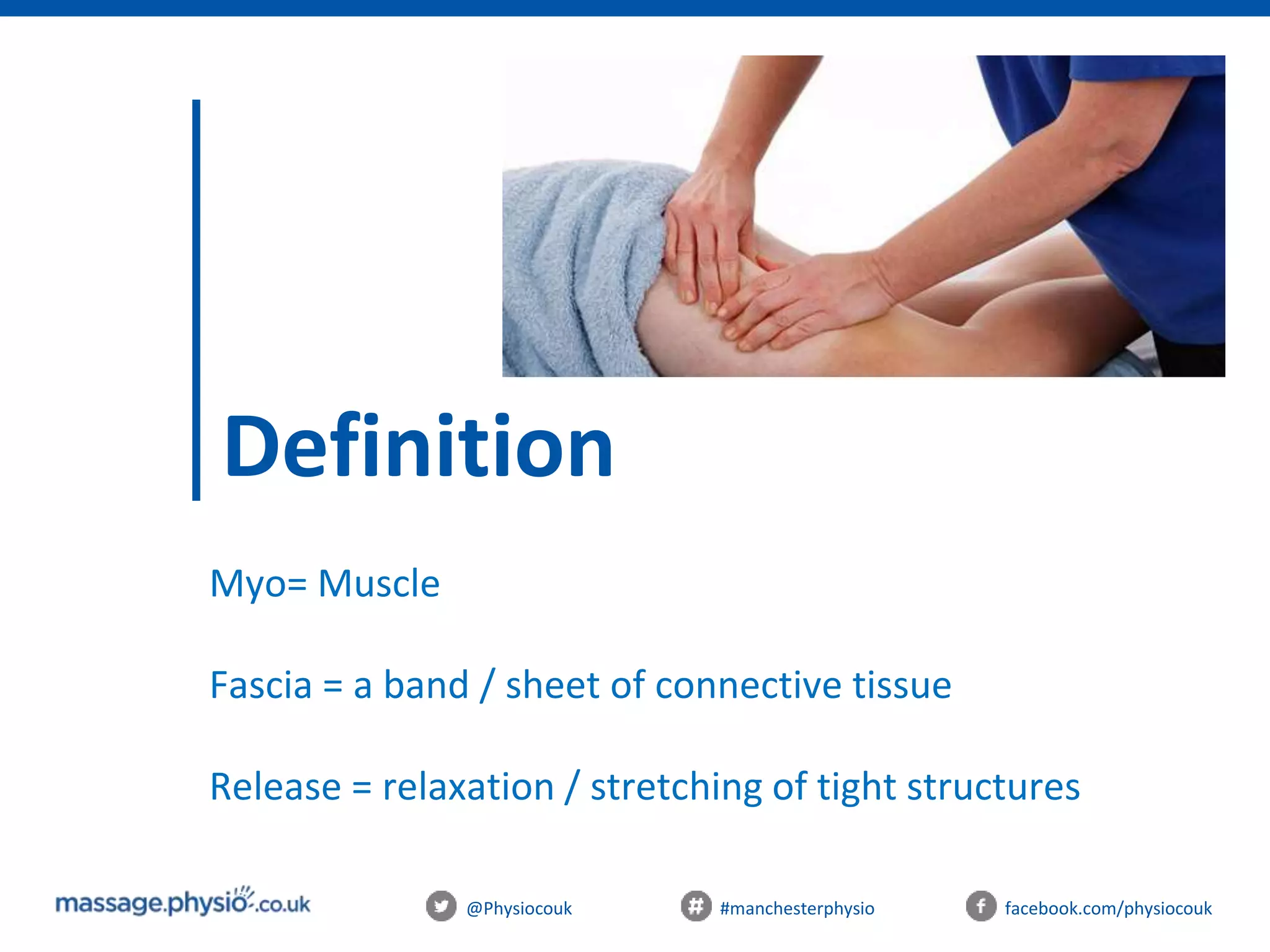
Definition
Myo= Muscle
Fascia = a band / sheet of connective tissue
Release = relaxation / stretching of tight structures
@Physiocouk #manchesterphysio facebook.com/physiocouk
What is fascia?
Where is it found?
•Fascia is a layer of fibrous tissue that surrounds groups
of muscle, bone, blood vessels and nerves.
•It binds structures together, whilst permitting other
structures to glide smoothly over each other.
•Fascia is dense, regular connective tissue, which
contains closely packed bundles of collagen fibres aligned
in a wavy pattern parallel to the direction of pull.
@Physiocouk #manchesterphysio facebook.com/physiocouk
Layers of Fascia
Fascia is classified depending on it’s distinct layers, functions and
anatomical position:
Superficial, deep and visceral
@Physiocouk #manchesterphysio facebook.com/physiocouk
Muscle anatomy
•All muscle tissues have a superficial covering of
vary thicknesses of fascia, made of connective
tissue and laced with adipose tissue.
A singular muscle fibre is referred to as a myofibril
and contains thick and thin myofilaments.
@Physiocouk #manchesterphysio facebook.com/physiocouk
Function of Fascia
● Reduce friction during a muscular
contraction
● Support the nerves and blood vessels as they
glide through the muscle.
● The fascia holds the muscle together and
keeps it in the correct place.
● The fascia separates the muscles so they can
work independently of each other.
@Physiocouk #manchesterphysio facebook.com/physiocouk
Fascia- why does it go wrong?
Age and injury can cause an increase of laying down of collagen,
increased cross linkages and restrictions (adhesions)
Fascia increases its density and decreases its ability to slide freely
following:
• Trauma and injury
• Poor posture
• Infections or disease
• Over and under use
• Ischaemia
• Local and systemic inflammation
• Tissue dehydration
• Emotional stress and centralised pain
@Physiocouk #manchesterphysio facebook.com/physiocouk
How can we treat fascia?
•Theory of fascial lines.
•Structures are grouped together in recognised fascial lines and when
one structure is released the benefits may be present further along
the line.
•The point of restriction may be away from the point of pain.
@Physiocouk #manchesterphysio facebook.com/physiocouk
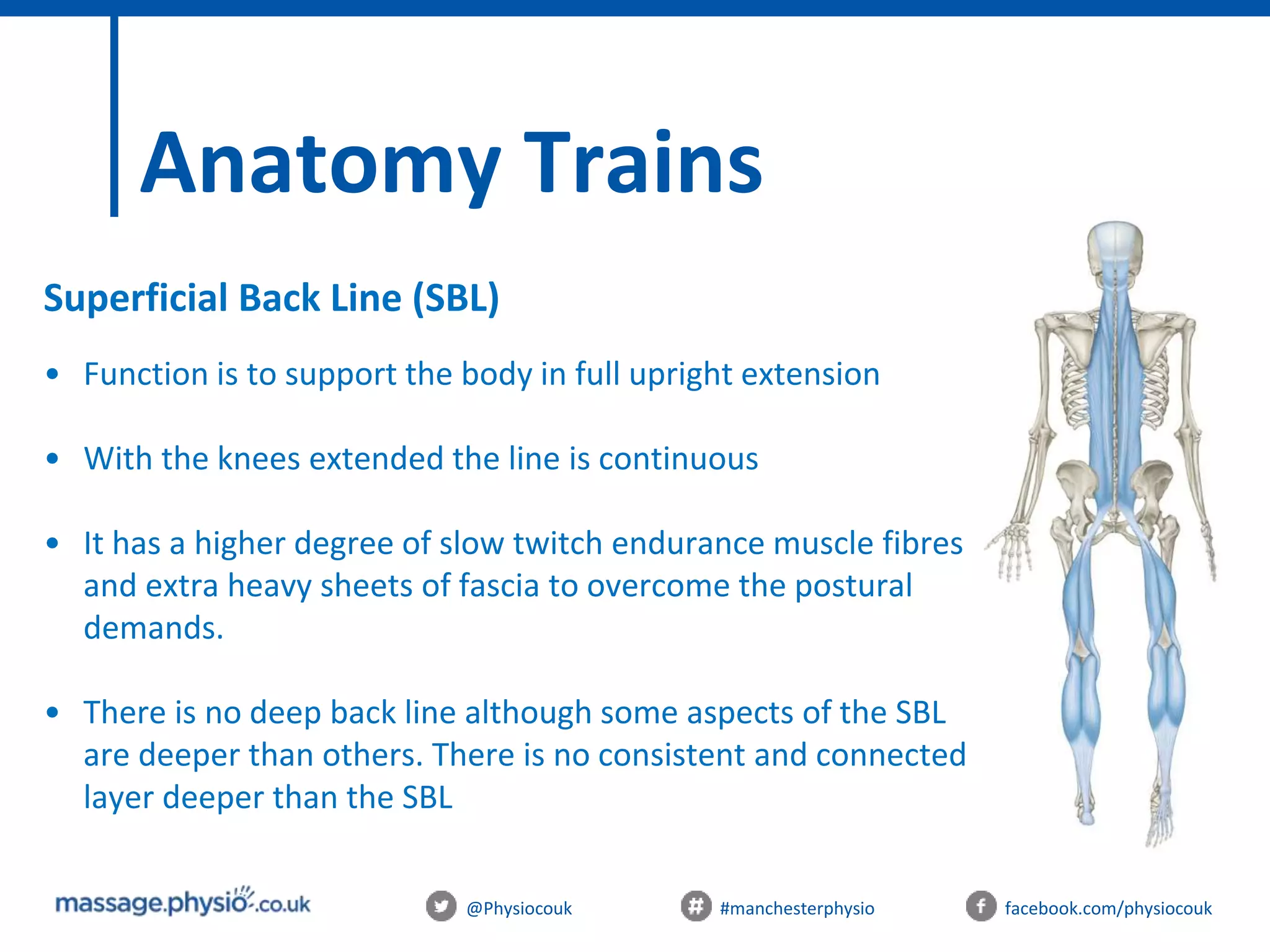
Anatomy Trains
Superficial Back Line (SBL)
• Function is to support the body in full upright extension
• With the knees extended the line is continuous
• It has a higher degree of slow twitch endurance muscle fibres
and extra heavy sheets of fascia to overcome the postural
demands.
• There is no deep back line although some aspects of the SBL
are deeper than others. There is no consistent and connected
layer deeper than the SBL
@Physiocouk #manchesterphysio facebook.com/physiocouk
Anatomy Trains
Superficial Front Line
• Function is to balance the SBL and provide tensile
support from the top to lift those parts of the
skeleton which extend forward of the gravity line
(pubis, ribcage and face)
• Viewing the patient from the side reveals the state
of imbalance between the SFL & SBL
@Physiocouk #manchesterphysio facebook.com/physiocouk
Anatomy Trains
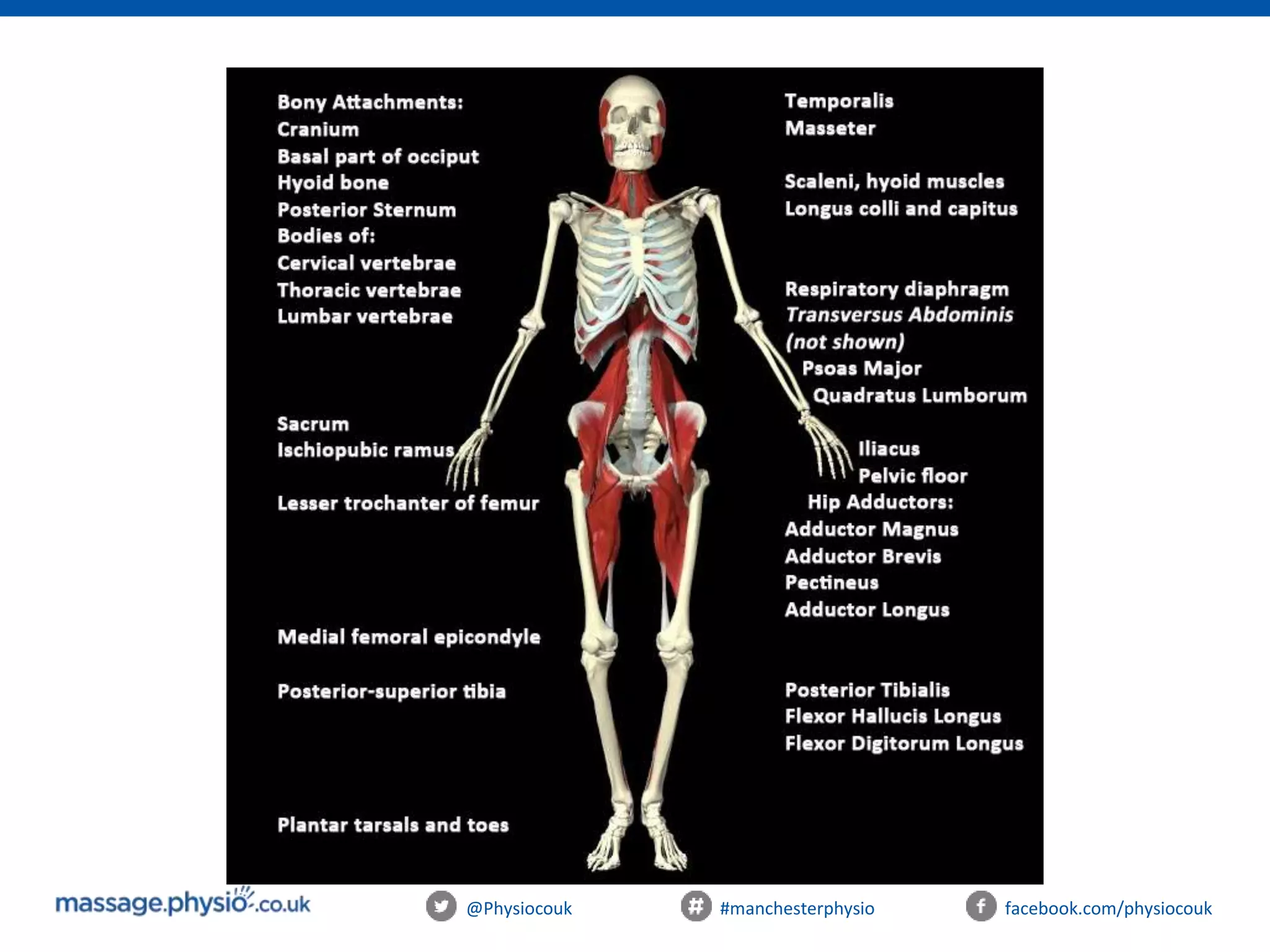
Deep Front Line
• Infused with slow twitch endurance muscle fibres, the DFL
provides stability and subtle positioning changes to core
structure.
• Failure of the DFL does not cause an acute change but more
functional restriction over a period of time which may appear
in another line.
• Its role in surrounding the heart and lungs has a significant
effect upon respiration.
@Physiocouk #manchesterphysio facebook.com/physiocouk
Anatomy Trains
Demonstration of Theory
@Physiocouk #manchesterphysio facebook.com/physiocouk
What is Myofascial
Release?
Myo = muscle
Fascia = a band or sheet of connective tissue
Release = the relaxation and/or stretching of tight
structures
@Physiocouk #manchesterphysio facebook.com/physiocouk
What is Myofascial
Release?
“Myofascial Release is a specialised physical
and manual therapy used for the effective
treatment and rehabilitation of soft tissue and
fascial tension and restrictions”
Myofascial Release UK
@Physiocouk #manchesterphysio facebook.com/physiocouk
What is Myofascial
Release?
•Safe and effective hands-on technique that works on the fascia to
release restrictions.
• Applied with prolonged pressure to restricted tissue.
• Aims to release tension and stretch out restricted parts of the
fascia.
@Physiocouk #manchesterphysio facebook.com/physiocouk
Aims and benefits
Myofascial Release can decreases Pain:
Endorphin release/ increased temperature/ pain gate theory.
Myofascial release can help the immune system.
Increased lymphatic flow.
Myofascial Release promotes healing
Increased blood flow and cell nutrition
Myofascial release can reduce tension
Stretching/ elongation of fascia/ Increased heat in tissues
@Physiocouk #manchesterphysio facebook.com/physiocouk
How is myofascial release
applied?
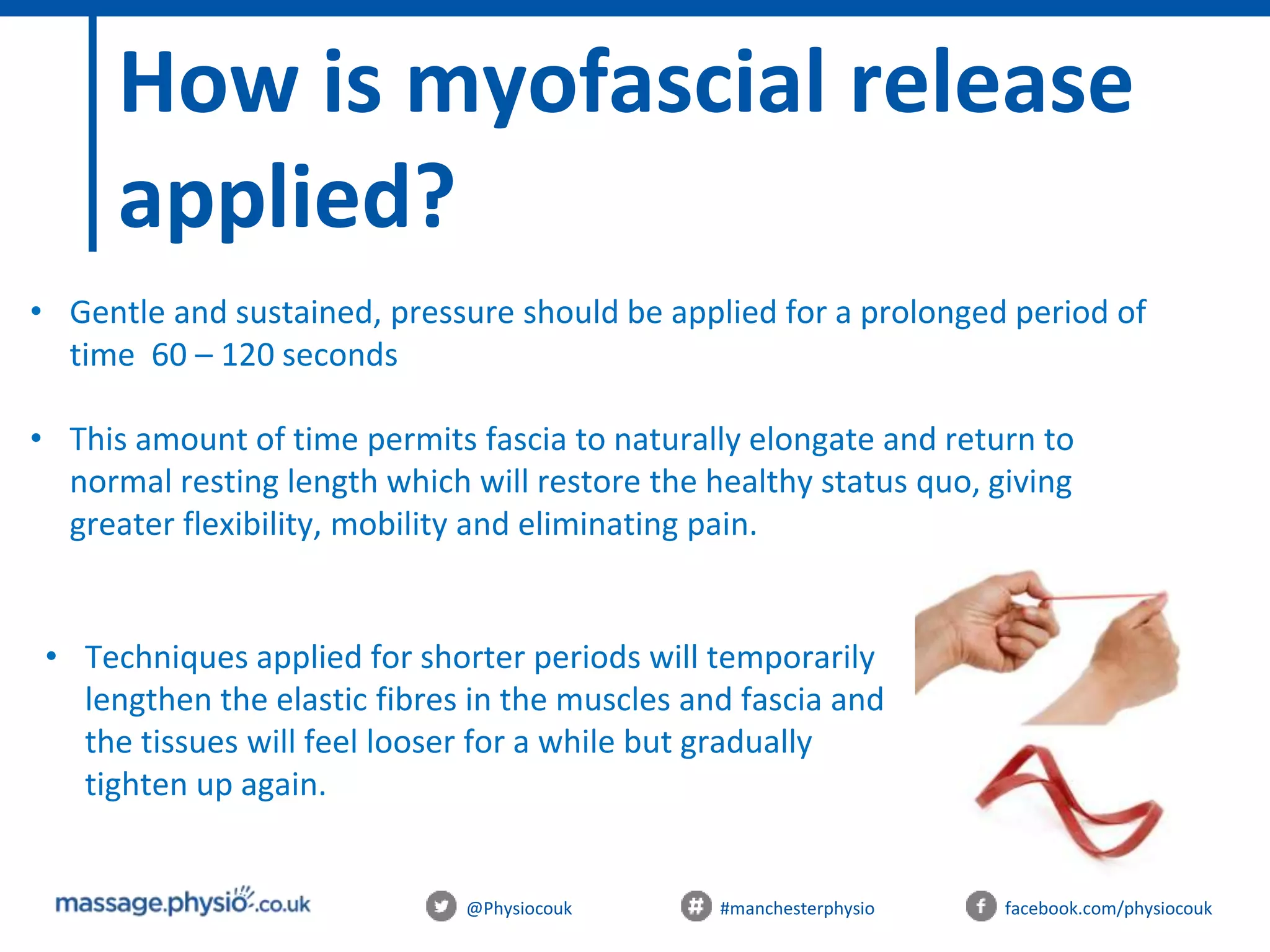
• Gentle and sustained, pressure should be applied for a prolonged period of
time 60 – 120 seconds
• This amount of time permits fascia to naturally elongate and return to
normal resting length which will restore the healthy status quo, giving
greater flexibility, mobility and eliminating pain.
• Techniques applied for shorter periods will temporarily
lengthen the elastic fibres in the muscles and fascia and
the tissues will feel looser for a while but gradually
tighten up again.
@Physiocouk #manchesterphysio facebook.com/physiocouk
Manual handling and body
position
Posture
• Bed height
• Stance
• Patient position
• Use different parts of your hands/ arms to apply pressure
• Keep arms straight to utilise body weight when applying
pressure/resistance.
• Move from the hips and knees as much as possible
• Oil (or cream)- only needs to be a little bit - some advise not to be able to
tack and pin effectively.
Look after yourself before you look after the patient!
@Physiocouk #manchesterphysio facebook.com/physiocouk
Post Rx soreness?
Very common for people to experience post Rx soreness for up to 72
hours after treatment.
Side effects can include:
• Bruising
• Redness
• Tenderness/Increased Sensitivity
• Increased symptoms
• Aching similar to DOMS
@Physiocouk #manchesterphysio facebook.com/physiocouk
Post Rx soreness?
Causes
• The release of toxins/waste products from muscular tissue
• Neurological sensitisation
• Increased blood flow and micro trauma can lead to bruising and
redness
Advice
• Reassure the patient it's a normal response to be sore after soft
tissue treatment
• Advise them to use ice (safely)
• Recommend they drink water to keep hydrated
@Physiocouk #manchesterphysio facebook.com/physiocouk
Indication for Rx
• Loss of mobility and range of motion
• Increased amounts of scar tissue and adhesions
• Increased tone of overactive muscles
• Poor quality of movement
@Physiocouk #manchesterphysio facebook.com/physiocouk
Specific Pathologies
treated with myofascial
release
● Whiplash associated conditions
● Fibromyalgia / Non- specific chronic pain
● Lower back pain
● Individuals with reduced ROM
● Postural Tension
● Reduced blood flow from trauma or post surgery
● Reduced immune system
@Physiocouk #manchesterphysio facebook.com/physiocouk
Contraindications for Rx
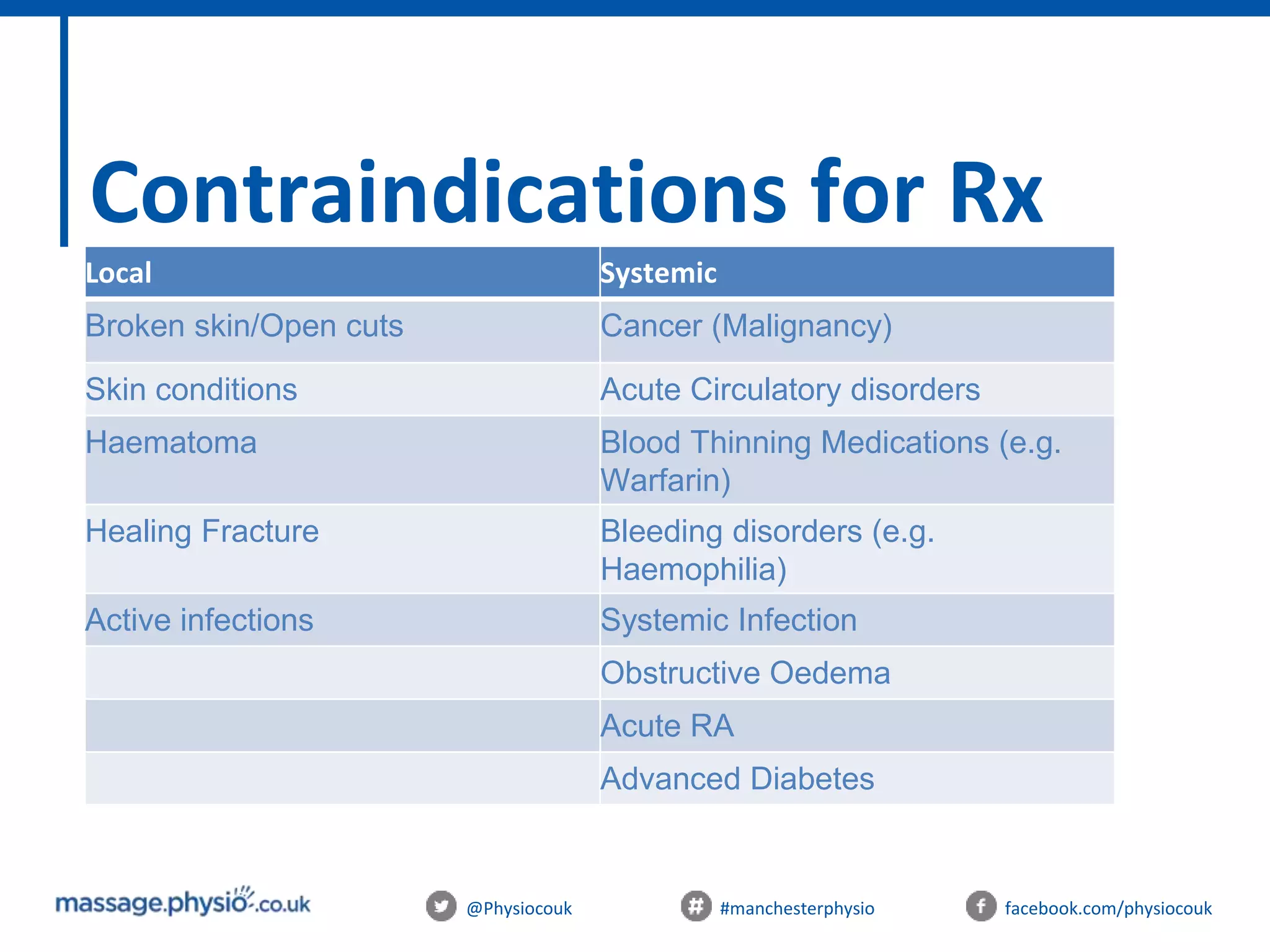
Local Systemic
Broken skin/Open cuts Cancer (Malignancy)
Skin conditions Acute Circulatory disorders
Haematoma Blood Thinning Medications (e.g.
Warfarin)
Healing Fracture Bleeding disorders (e.g.
Haemophilia)
Active infections Systemic Infection
Obstructive Oedema
Acute RA
Advanced Diabetes
@Physiocouk #manchesterphysio facebook.com/physiocouk
Precautions to Rx
• Pregnancy
• Hypersensitivity
• Hyper or Hypo- tension
• Patient Anxiety or lack of communication during
Rx
• Acute/ Inflammatory stage of healing
@Physiocouk #manchesterphysio facebook.com/physiocouk
Research
Benefits of Massage-Myofascial Release
Therapy on Pain, Anxiety, Quality of Sleep,
Depression, and Quality of Life in Patients with
Fibromyalgia
Castro-S anchez A, Guillermo A, Narrocha, Granero-Molina, Aguilera-
Manrique,Quesada-Rubio J and Moreno-Lorenzo,(2011). Evidence based
complementary and alternative Medicine.
@Physiocouk #manchesterphysio facebook.com/physiocouk
Research
Systematic review including x10 studies
Myofascial release - more of an ‘umbrella term’
8/10 studies also used trigger point and PNF as part of their
Rx techniques
Findings: effective for reducing pain in some pathologies
such as plantar fasciitis.
Most effective when combined with exercise, strengthening
and electrotherapy.
@Physiocouk #manchesterphysio facebook.com/physiocouk
Research
Myofascial release therapy in the treatment of
occupational mechanical neck pain: a
randomised parallel group study.
Rodríguez-Fuentes, I., De Toro, F. J., Rodríguez-Fuentes,
G., de Oliveira, I. M., Meijide-Faílde, R., & Fuentes-
Boquete, I. M. (2016). American Journal of physical
medicine & rehabilitation, 95(7), 507-515.
@Physiocouk #manchesterphysio facebook.com/physiocouk
Research
Effectiveness of myofascial release in the
management of chronic low back pain in
nursing professionals
Ajimsha, M. S., Daniel, B., & Chithra, S. (2014). Journal of bodywork and
movement therapies, 18(2), 273-281.
@Physiocouk #manchesterphysio facebook.com/physiocouk
Practical
@Physiocouk #manchesterphysio facebook.com/physiocouk
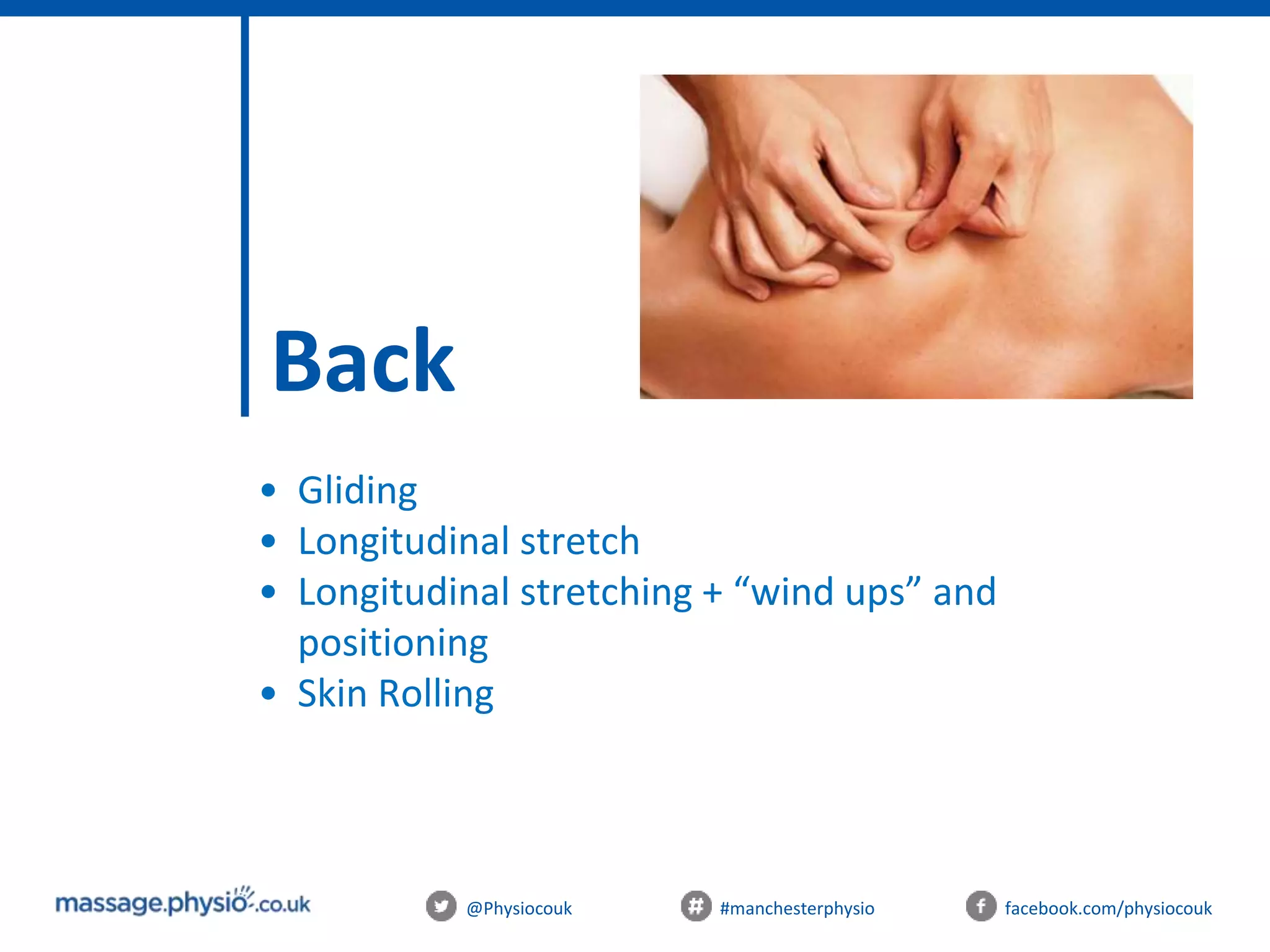
Back
• Gliding
• Longitudinal stretch
• Longitudinal stretching + “wind ups” and
positioning
• Skin Rolling
@Physiocouk #manchesterphysio facebook.com/physiocouk
Shoulder/ Upper Traps
• Stripping
• Isolated MFR over trigger points
• Supine UFT
• Circular motions
• Press and glide using thumb - longitudinal
@Physiocouk #manchesterphysio facebook.com/physiocouk
Lunch
@Physiocouk #manchesterphysio facebook.com/physiocouk
Quadriceps
• Gliding
• Longitudinal stretch
• Skin rolling
• Forearm stretch and roll
@Physiocouk #manchesterphysio facebook.com/physiocouk
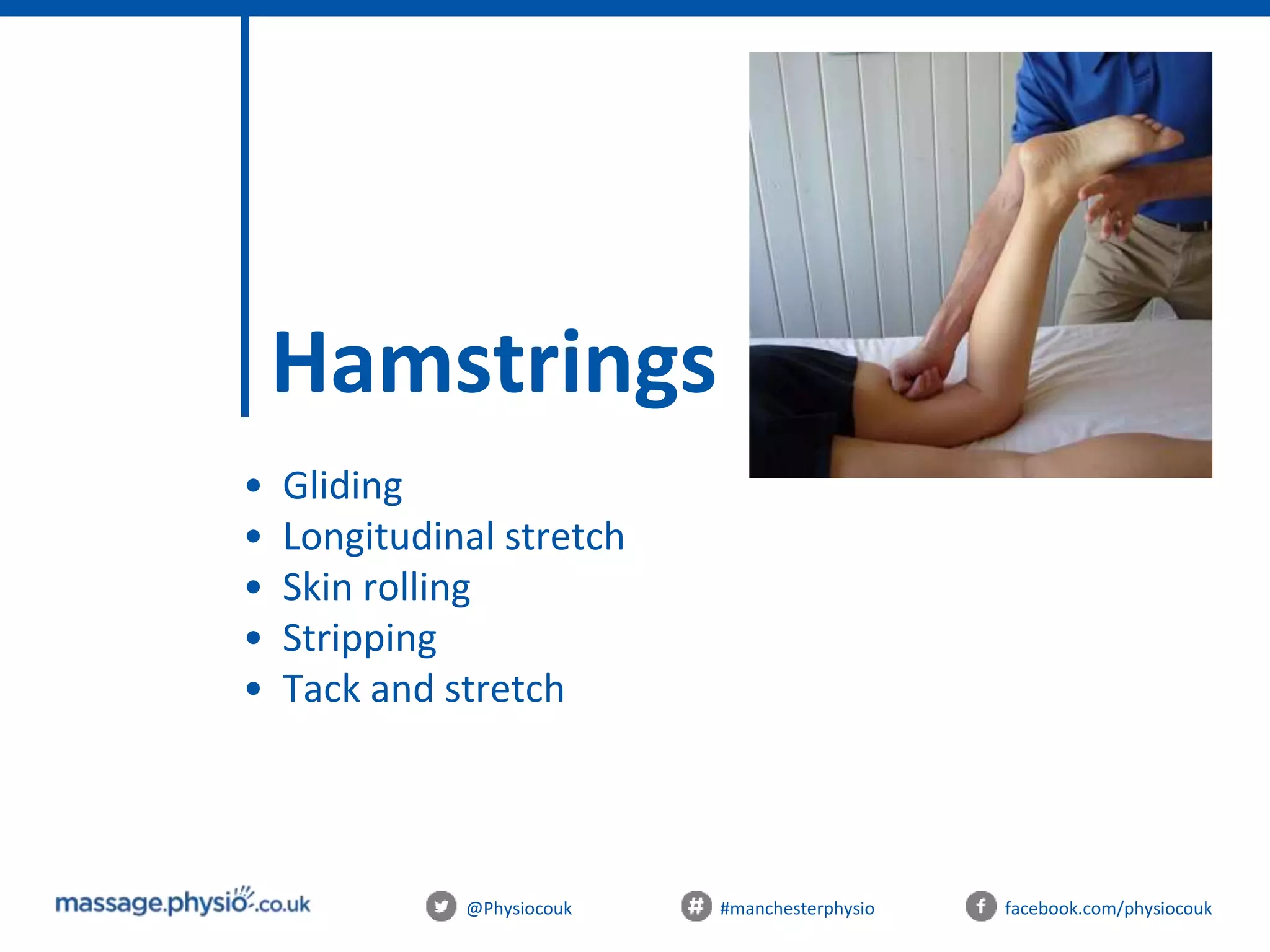
Hamstrings
• Gliding
• Longitudinal stretch
• Skin rolling
• Stripping
• Tack and stretch
@Physiocouk #manchesterphysio facebook.com/physiocouk
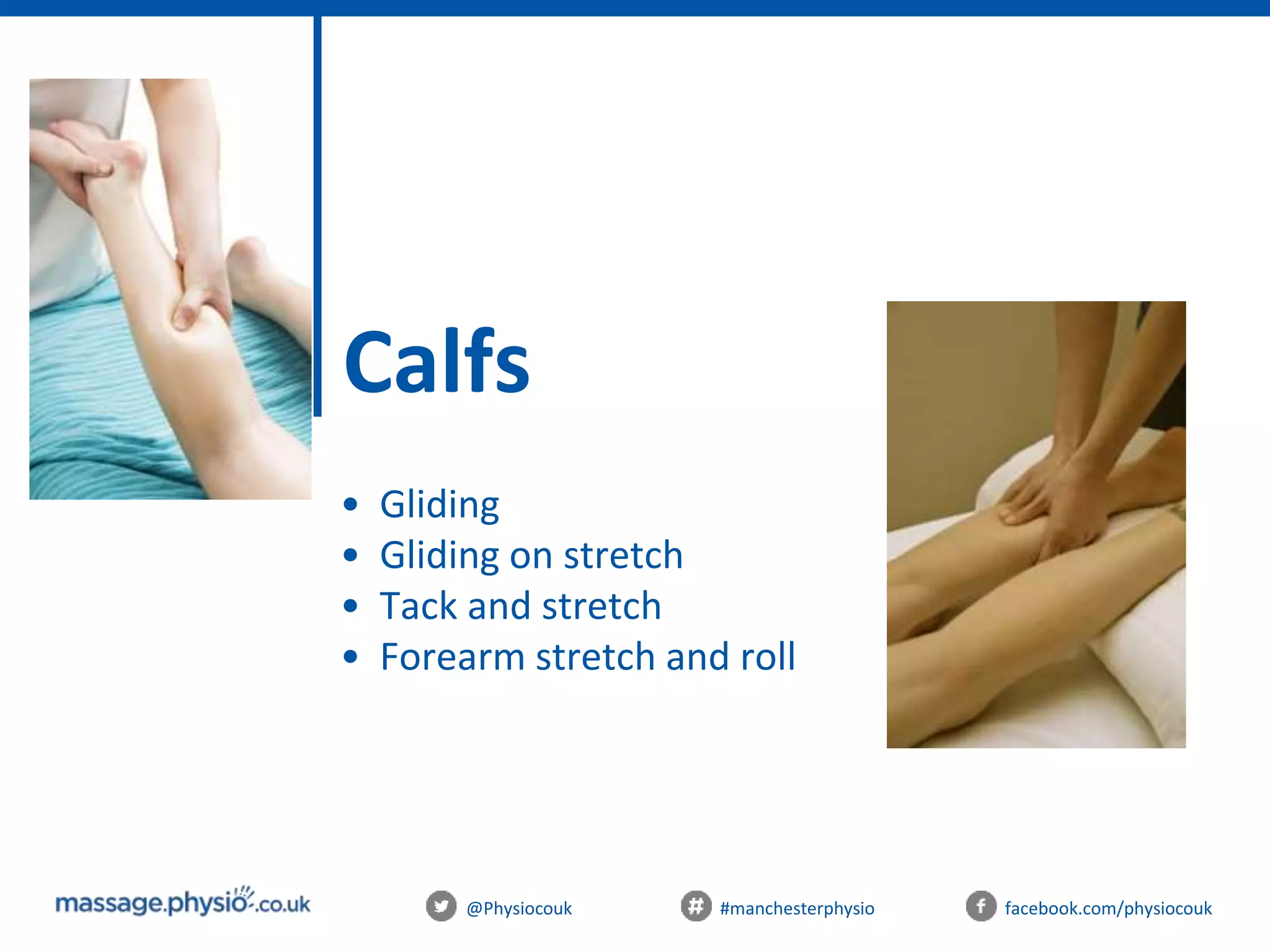
Calfs
• Gliding
• Gliding on stretch
• Tack and stretch
• Forearm stretch and roll
@Physiocouk #manchesterphysio facebook.com/physiocouk
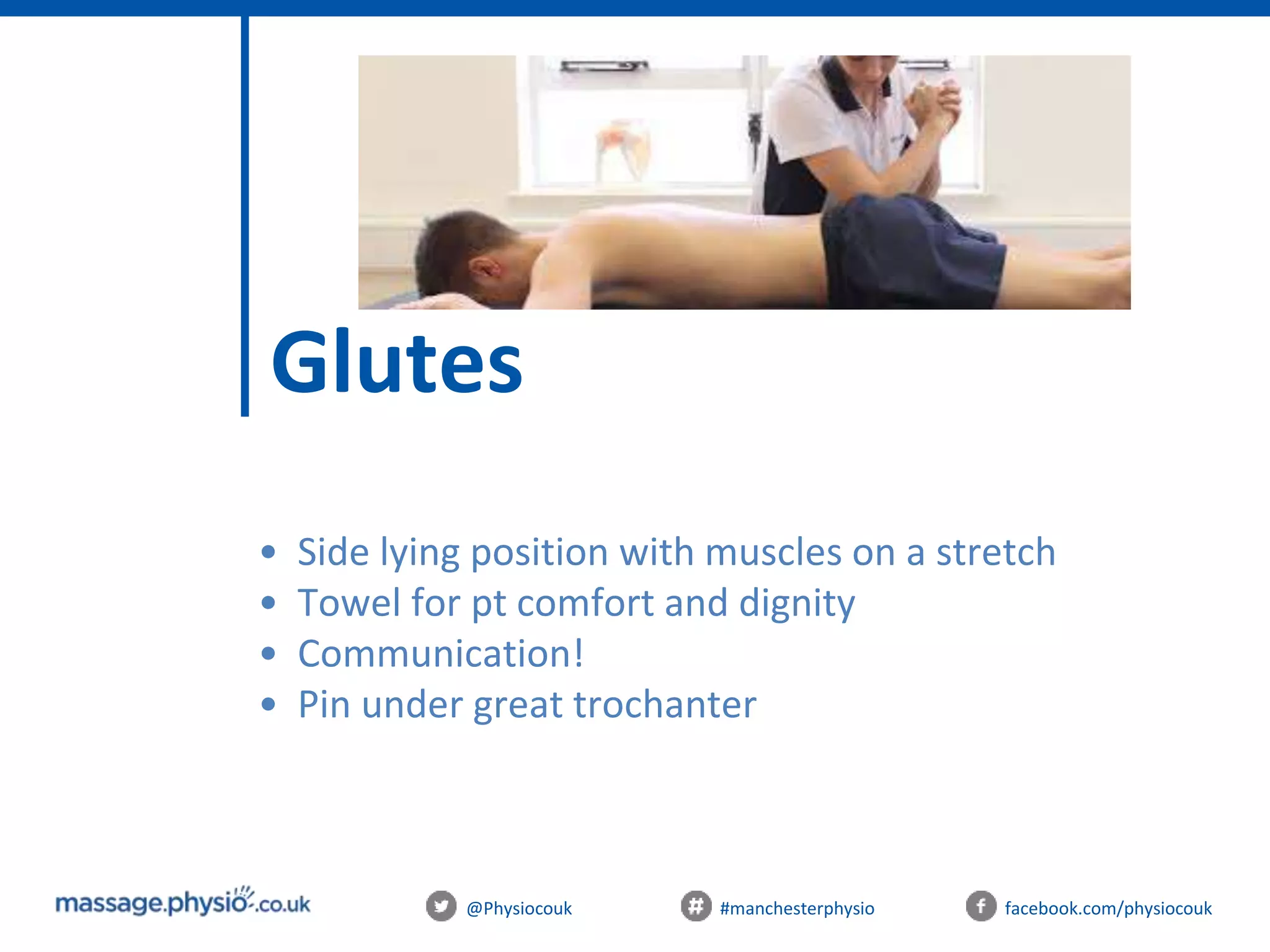
Glutes
• Side lying position with muscles on a stretch
• Towel for pt comfort and dignity
• Communication!
• Pin under great trochanter
@Physiocouk #manchesterphysio facebook.com/physiocouk
Treatments that work
well alongside MFR
@Physiocouk #manchesterphysio facebook.com/physiocouk
Taping
@Physiocouk #manchesterphysio facebook.com/physiocouk
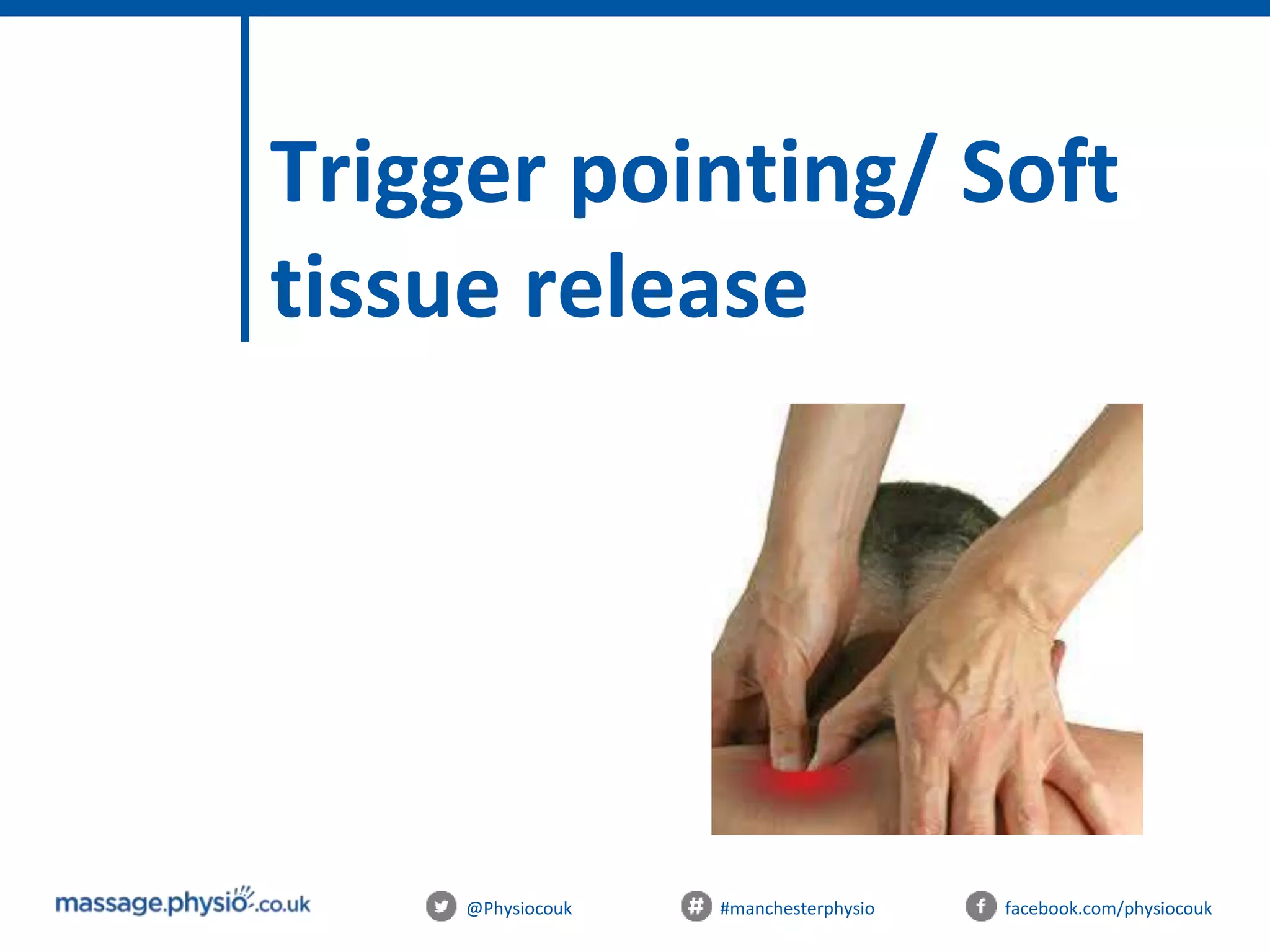
Trigger pointing/ Soft
tissue release
@Physiocouk #manchesterphysio facebook.com/physiocouk
Exercise
@Physiocouk #manchesterphysio facebook.com/physiocouk
Foam Rolling
@Physiocouk #manchesterphysio facebook.com/physiocouk
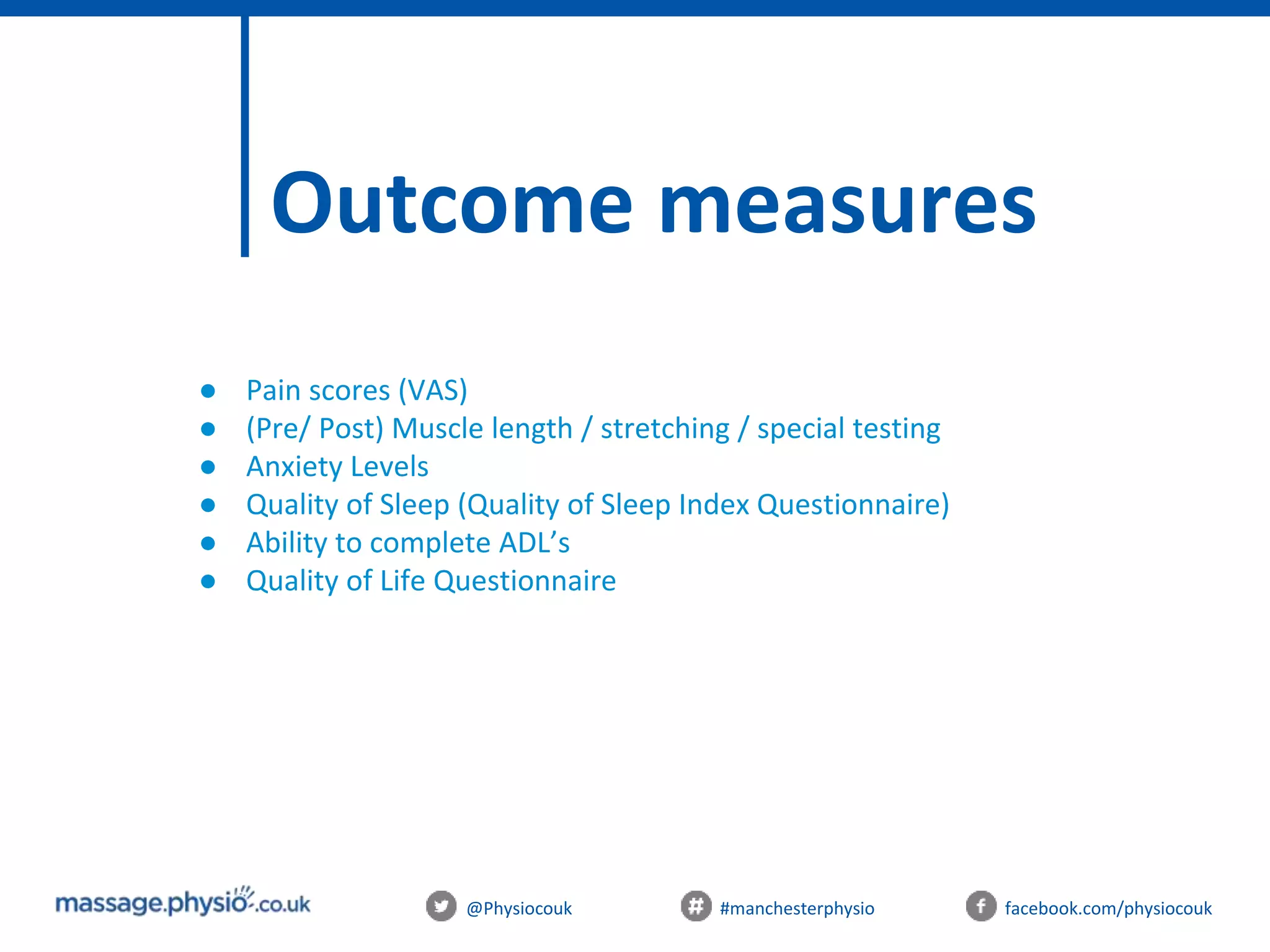
Outcome measures
● Pain scores (VAS)
● (Pre/ Post) Muscle length / stretching / special testing
● Anxiety Levels
● Quality of Sleep (Quality of Sleep Index Questionnaire)
● Ability to complete ADL’s
● Quality of Life Questionnaire
@Physiocouk #manchesterphysio facebook.com/physiocouk
Case study 1
Subjective:
40 year old male reports 4/10 dull ache pain into lower back. No neurological
symptoms or red flags. Aggs- desk based job. Eases- hot baths, lying down.
24hr- stiffness in AM.
Objective:
Anterior tilted pelvis
Excessive lumbar lordosis
Reduced range into lumbar flexion/ side flexion bilaterally
Positive modified thomas test
Tender to palpate on Lx paraspinals and quads.
Which myofascial release techniques could you use?
What outcome measures could be used to check it is
effective?
Any other treatments alongside MFR?
Case study 1
@Physiocouk #manchesterphysio facebook.com/physiocouk
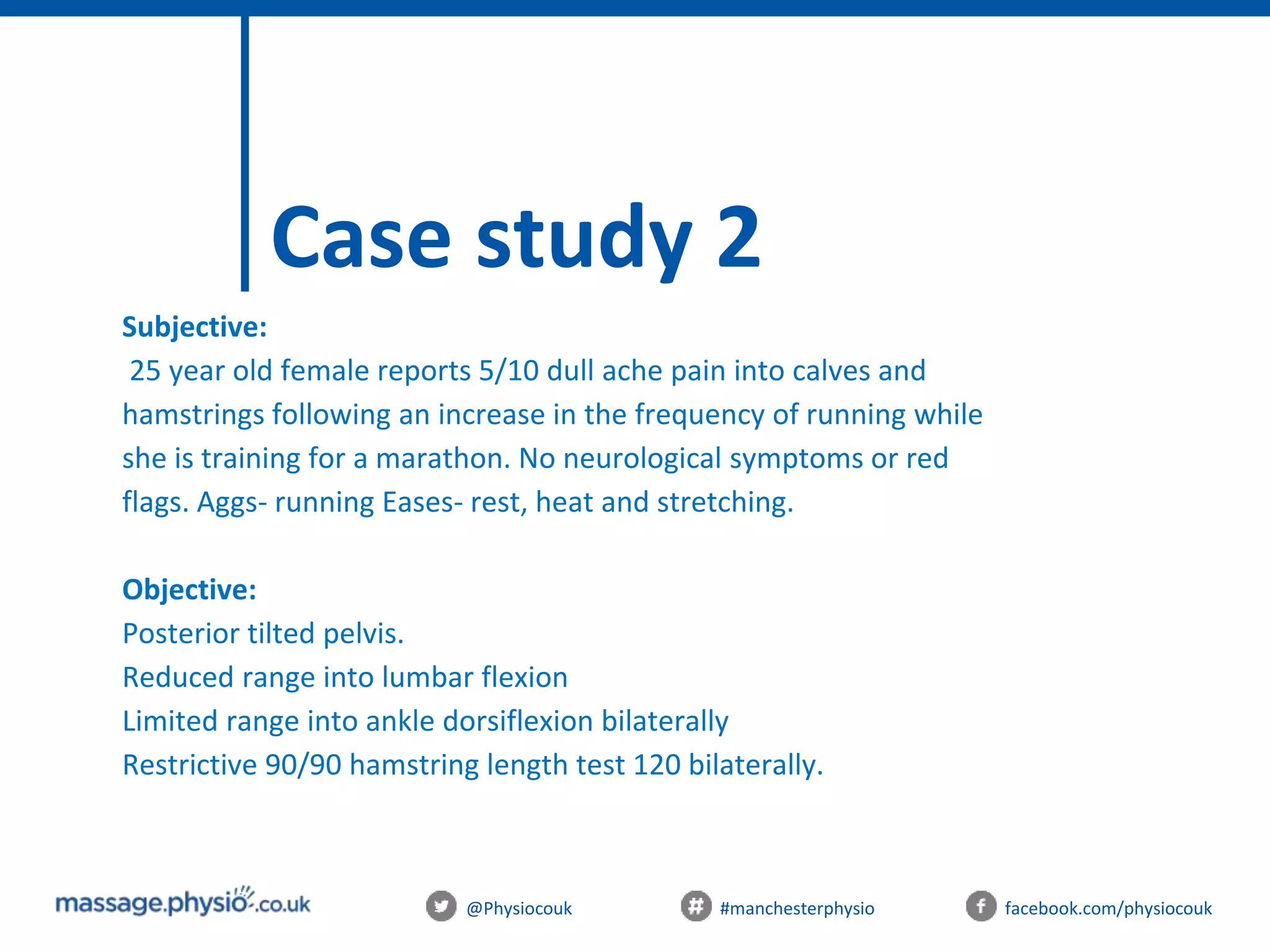
Case study 2
Subjective:
25 year old female reports 5/10 dull ache pain into calves and
hamstrings following an increase in the frequency of running while
she is training for a marathon. No neurological symptoms or red
flags. Aggs- running Eases- rest, heat and stretching.
Objective:
Posterior tilted pelvis.
Reduced range into lumbar flexion
Limited range into ankle dorsiflexion bilaterally
Restrictive 90/90 hamstring length test 120 bilaterally.
@Physiocouk #manchesterphysio facebook.com/physiocouk
Case study 2
Which myofascial release techniques could you
use?
What outcome measures could be used to check it
is effective?
Any other treatments alongside MFR?
Thanks for coming!
Don’t forget to follow us on Twitter: @physiocouk
@Physiocouk #manchesterphysio facebook.com/physiocouk

Myofascial Release Presentation