Maslow’s Theory of Hierarchy of Needs
PRESENTED BY- THE LEFTOVERS
AFIFA
B-1405007
WASIM
B-1405106
PROLOY
B-1405046
SHADMANMEHEDIMARUF
B-1405152B-1405149B-1405139
Motivation
The processes that account for an individual’s intensity,
direction, and persistence of effort toward attaining a goal.
Key Elements
1. Intensity: how hard a person tries
2. Direction: toward beneficial goal
3. Persistence: how long a person tries
Needs
 Something that is necessary for an organism to live a healthy life
 Deficiency would cause a clear negative outcome - deficiency or
death
 Can be Objective/Physical or Subjective
 Objective needs - food, shelter, sleep
 Subjective needs – affection, acceptance, self-esteem
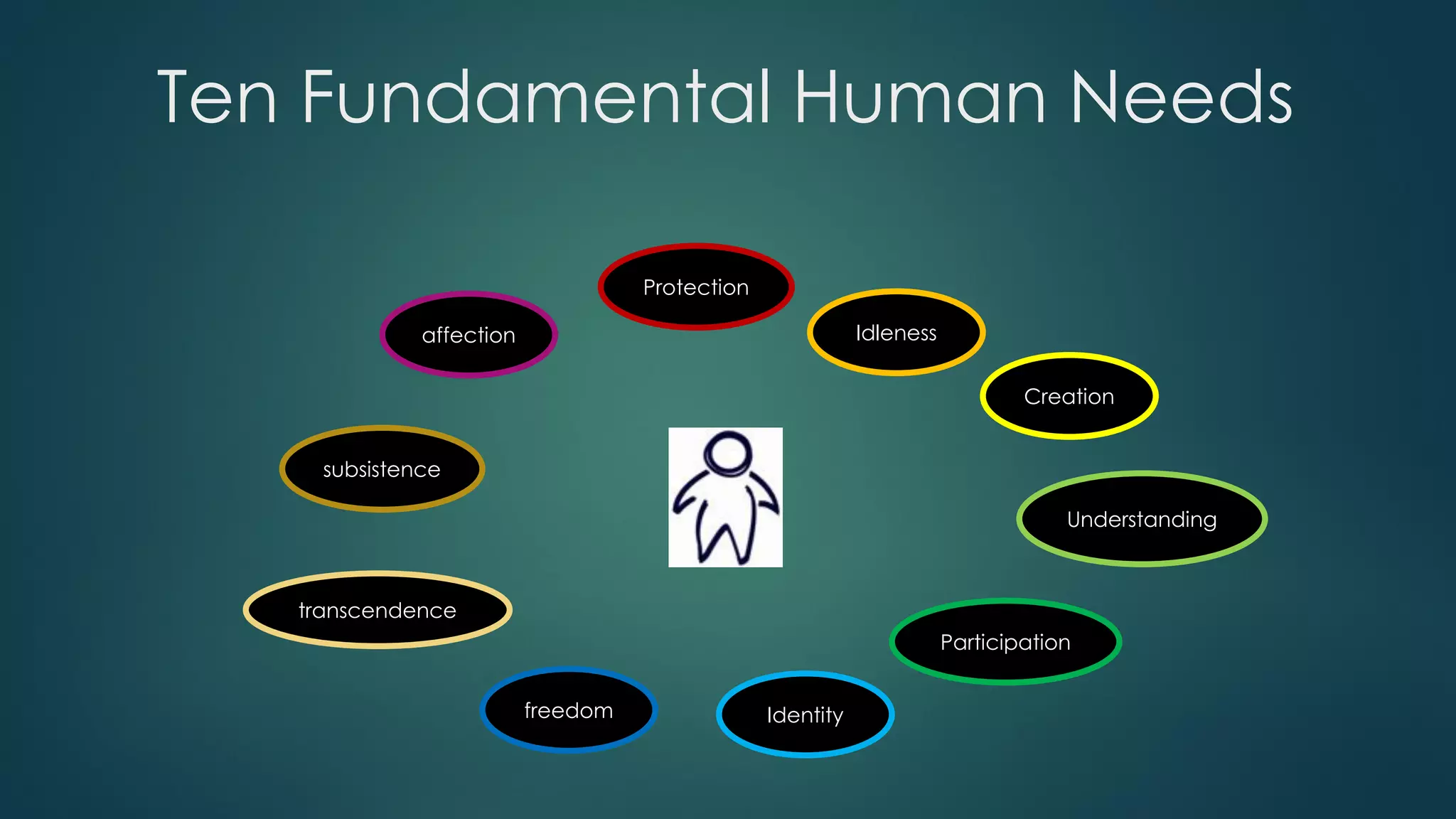
Ten Fundamental Human Needs
Protection
Idleness
Creation
Understanding
Participation
Identityfreedom
transcendence
subsistence
affection
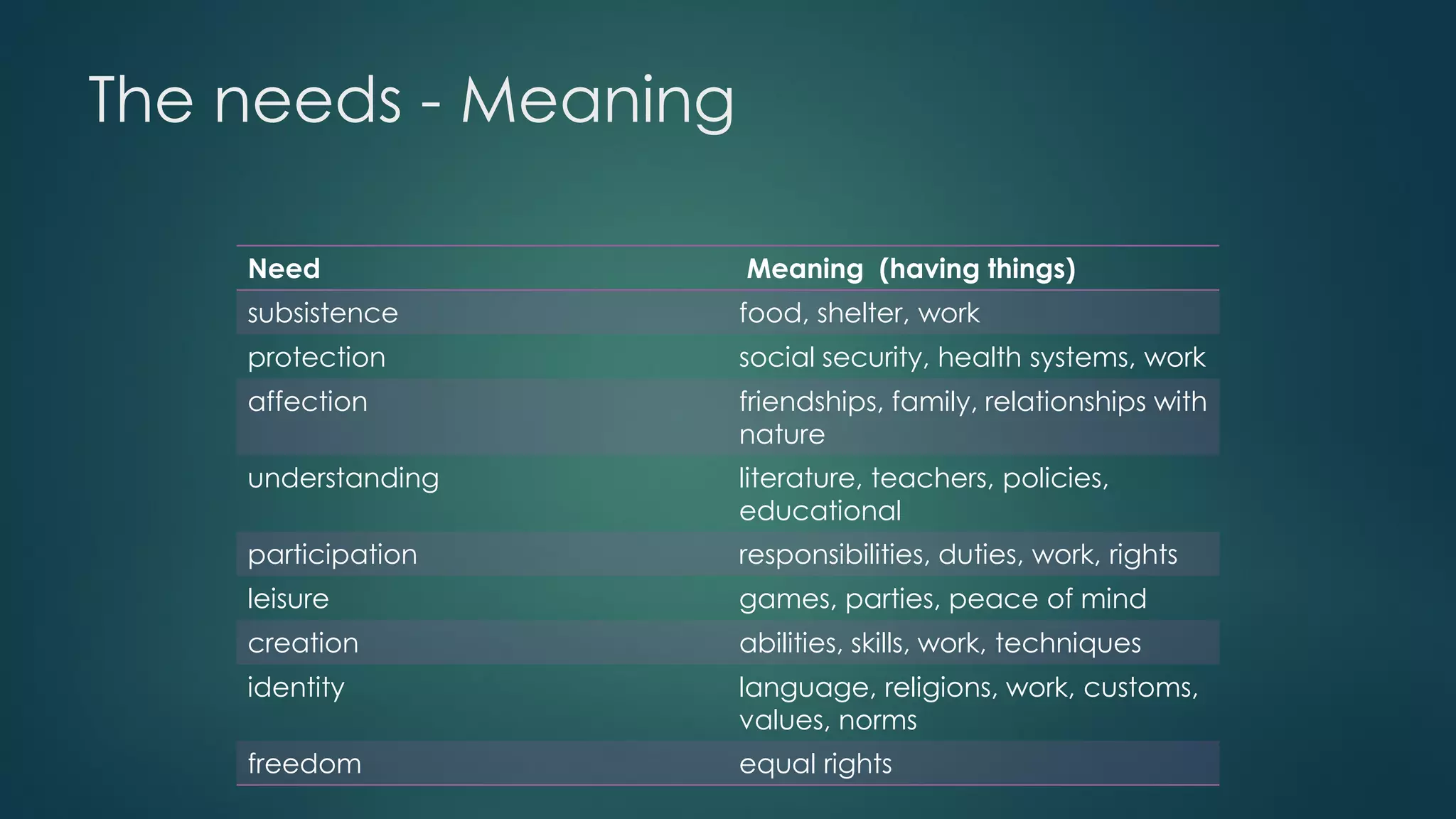
The needs - Meaning
Need Meaning (having things)
subsistence food, shelter, work
protection social security, health systems, work
affection friendships, family, relationships with
nature
understanding literature, teachers, policies,
educational
participation responsibilities, duties, work, rights
leisure games, parties, peace of mind
creation abilities, skills, work, techniques
identity language, religions, work, customs,
values, norms
freedom equal rights
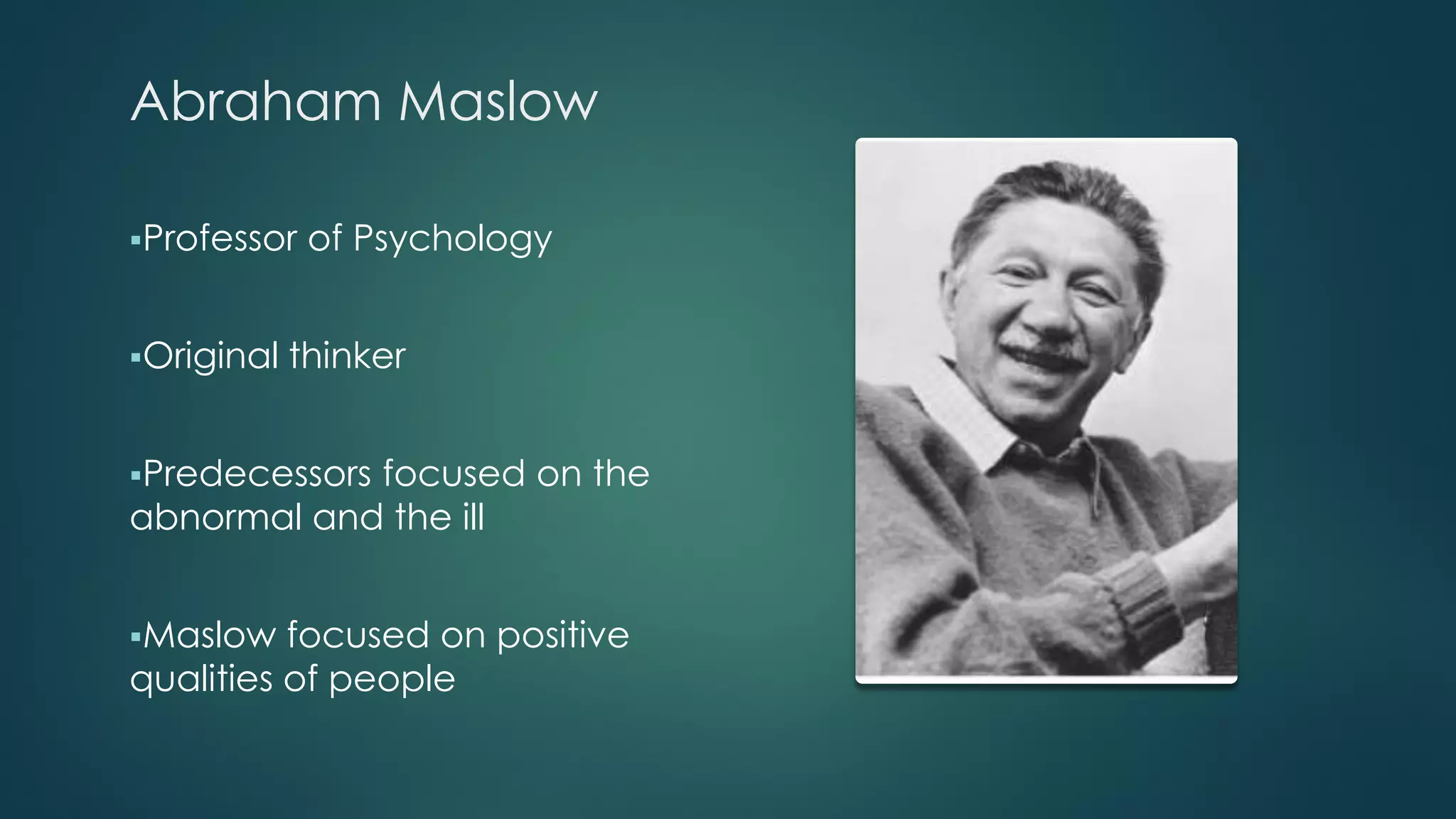
Abraham Maslow
Professor of Psychology
Original thinker
Predecessors focused on the
abnormal and the ill
Maslow focused on positive
qualities of people
Maslow’s Hierarchy of needs
 Proposed in his paper – A Theory of Human Motivation, in 1943
 Focuses on describing the stages of growth in humans
 He studied on exemplary people such as Albert Einstein, etc, rather
than mentally crippled or mentally ill
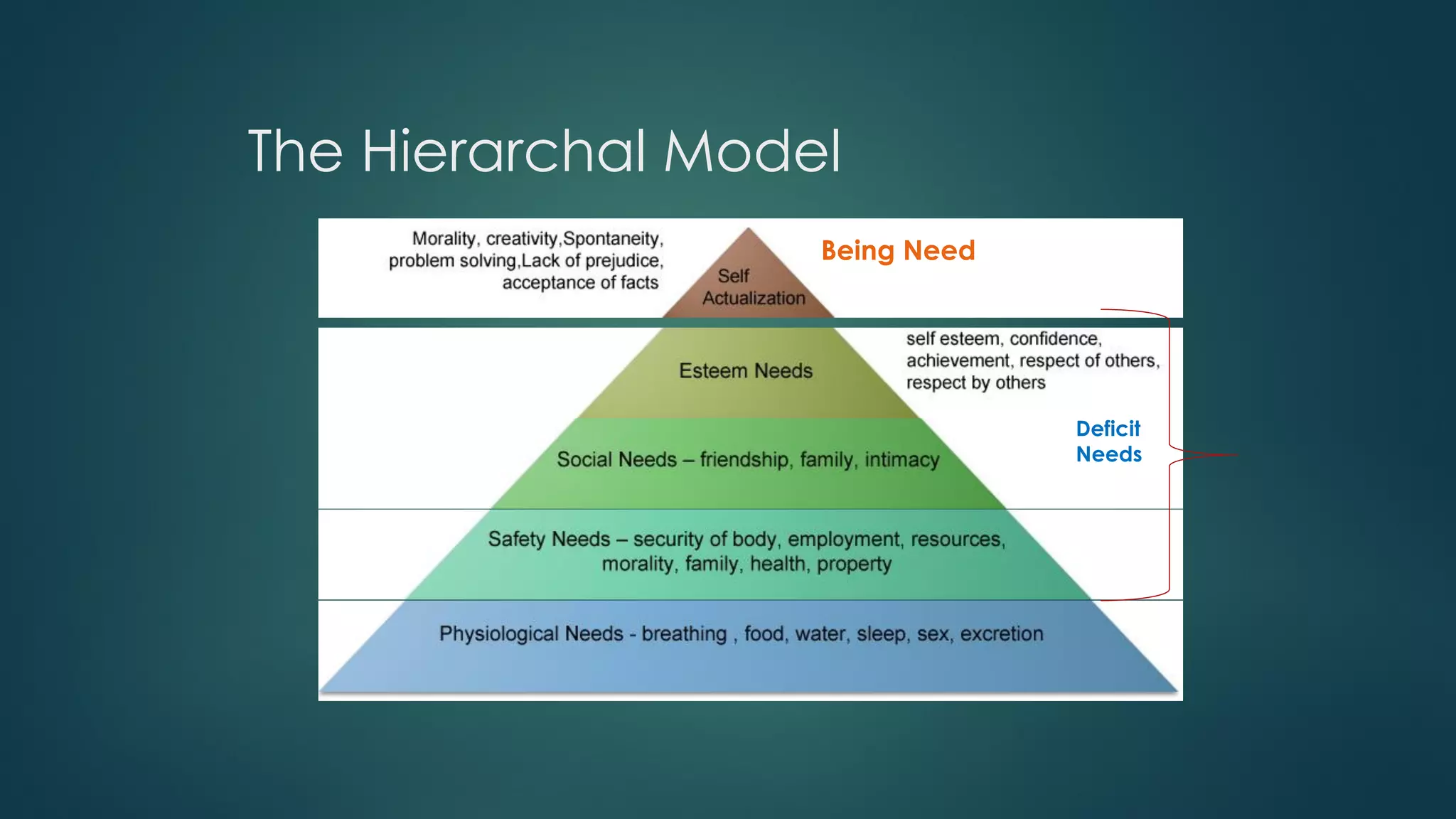
The Hierarchal Model
Being Need
Deficit
Needs
Physiological Needs
 Mostly, literal requirements for human survival
 If not met, the human body cannot function
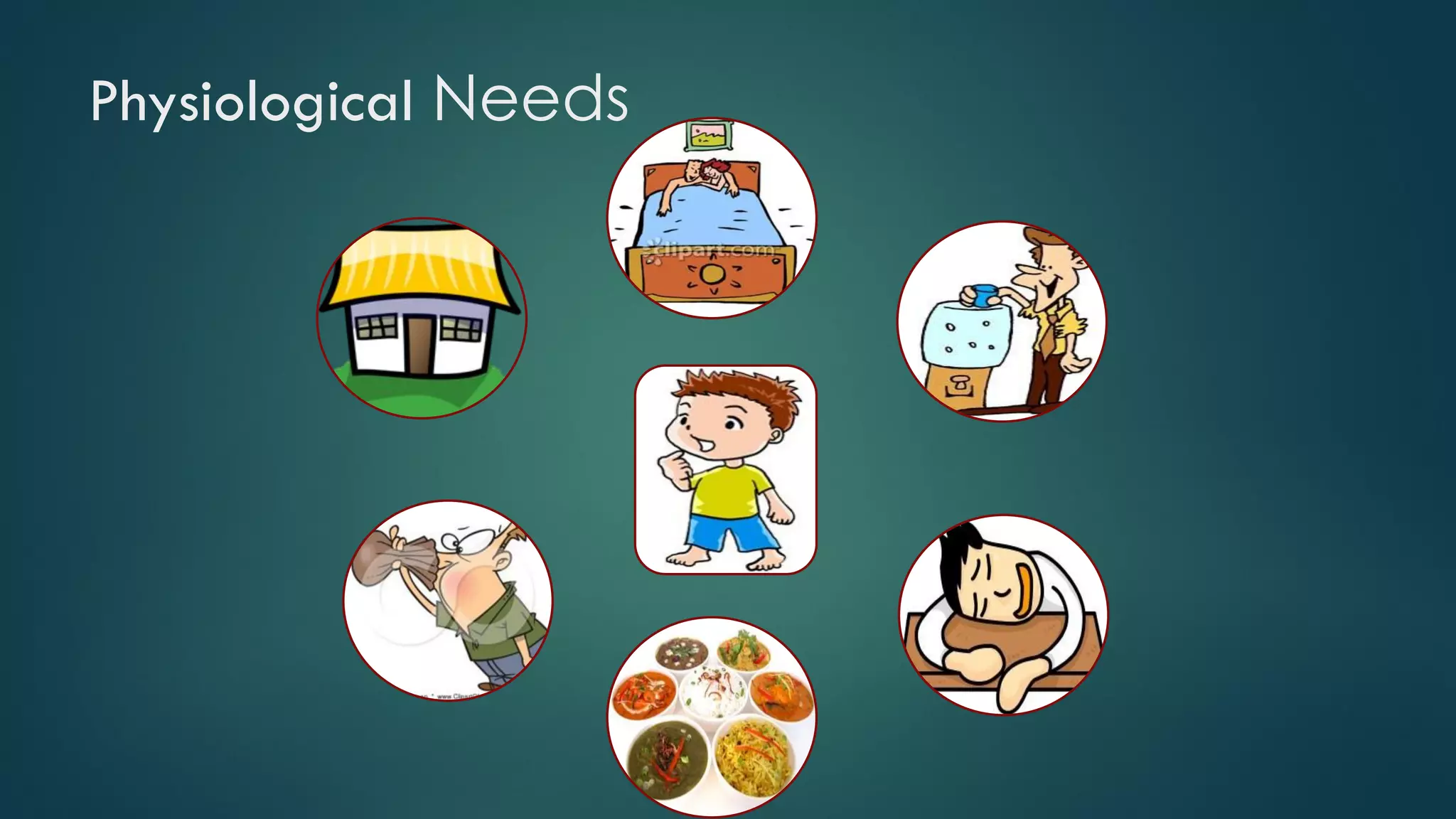
 Metabolic needs – air, water, food, rest
 Clothing, shelter – needed by even animals
 Could be classified as basic animal needs
Physiological Needs
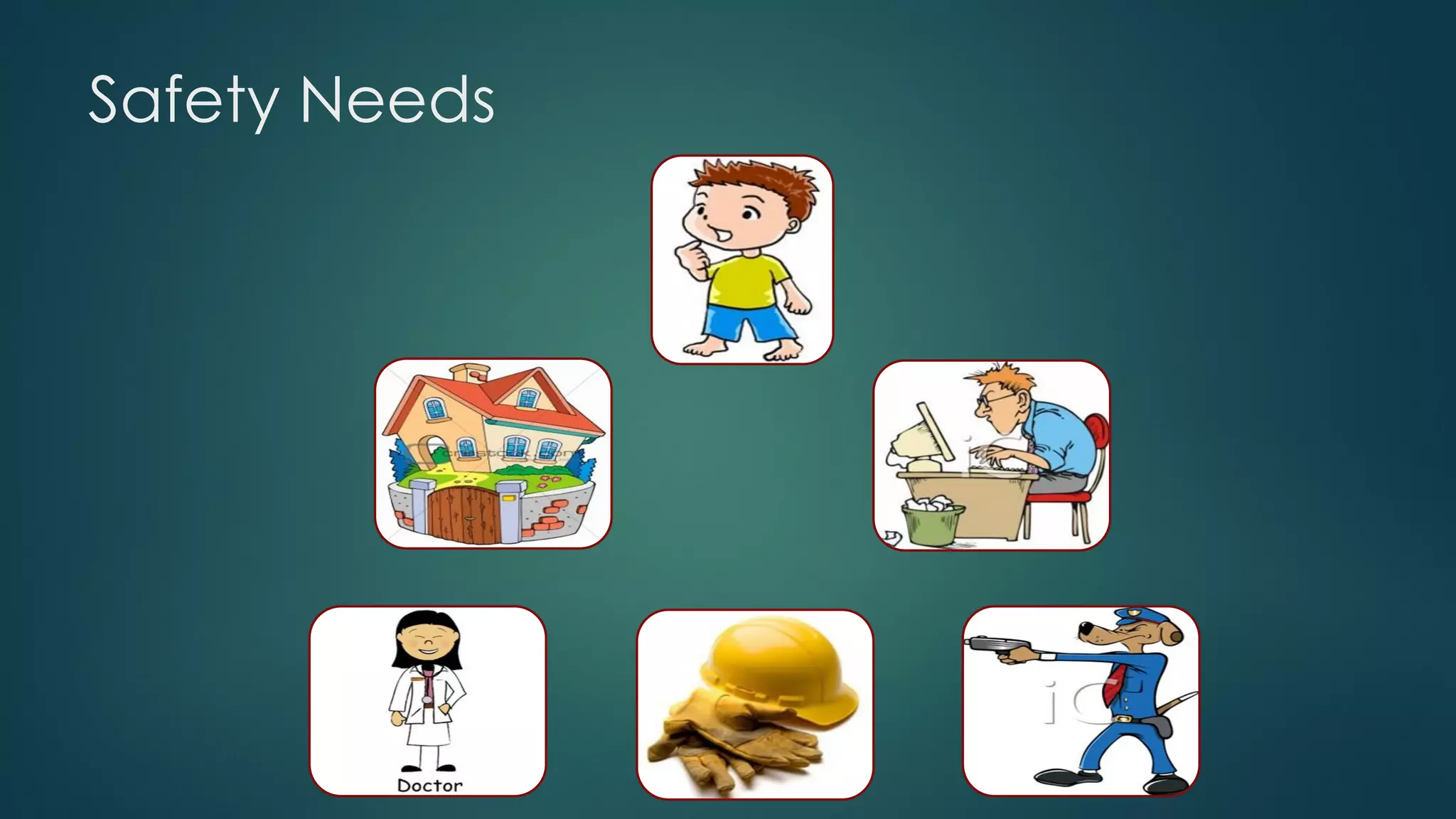
Safety Needs
 Once physical needs are met, safety needs take over
 Personal including emotional
 Health and well-being
 Financial, job security
 Safety of property against natural disasters, calamities,
wars, etc
 Law & order
Safety Needs
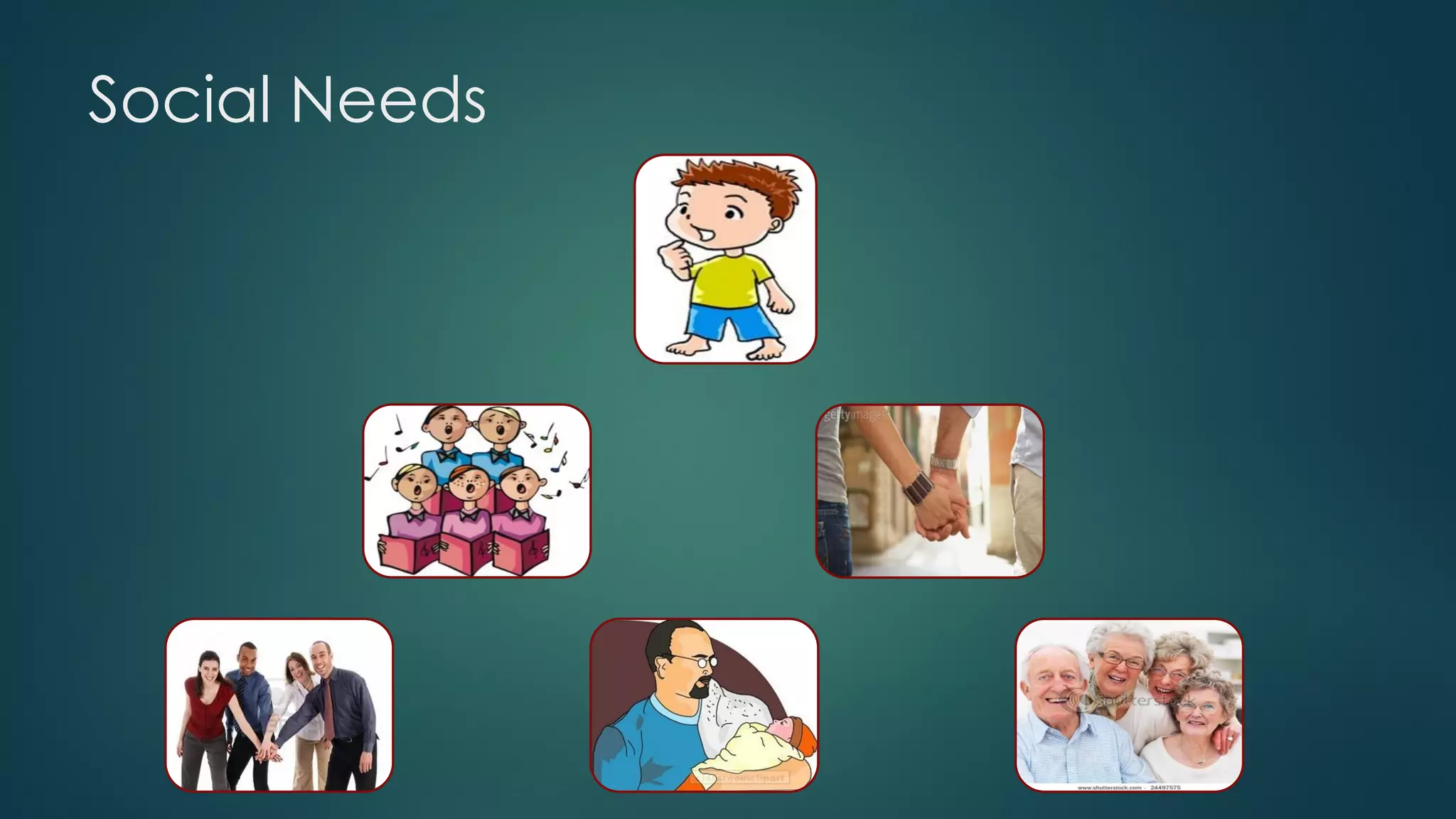
Social Needs
 Need to love and be loved
 Need to feel a sense of belonging and acceptance
 Small groups – clubs, office teams, school/college houses
 Large groups – political parties, Sports teams, facebook
Social Needs
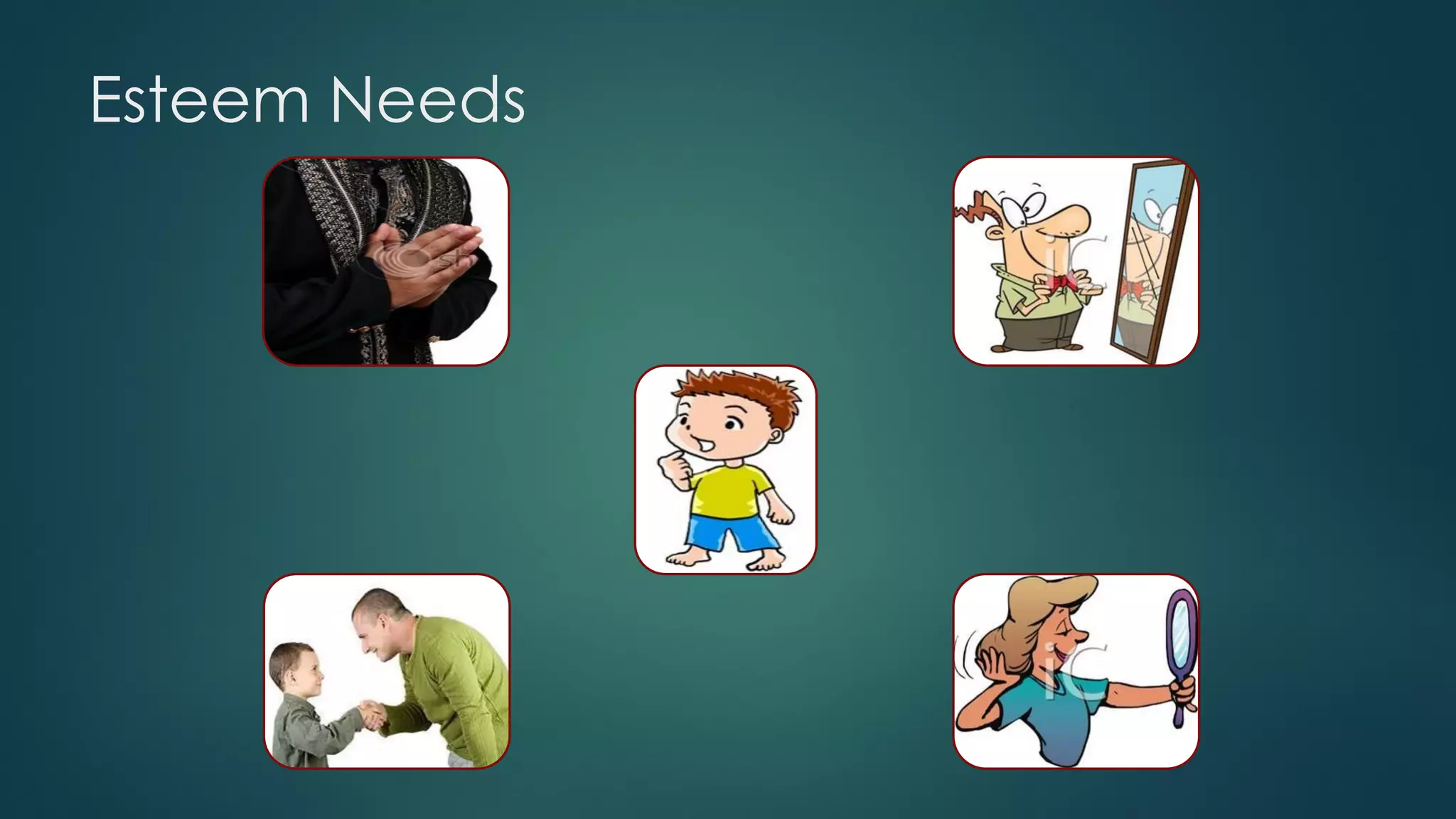
Esteem Needs
 Need to be respected by others and in turn respect them
 Sense of contribution, to feel self-valued, in profession or
hobby
 Lower - respect of others, the need for status, recognition,
fame, prestige, and attention
 Higher - self-respect, the need for strength, competence,
mastery, self-confidence, independence and freedom
Esteem Needs
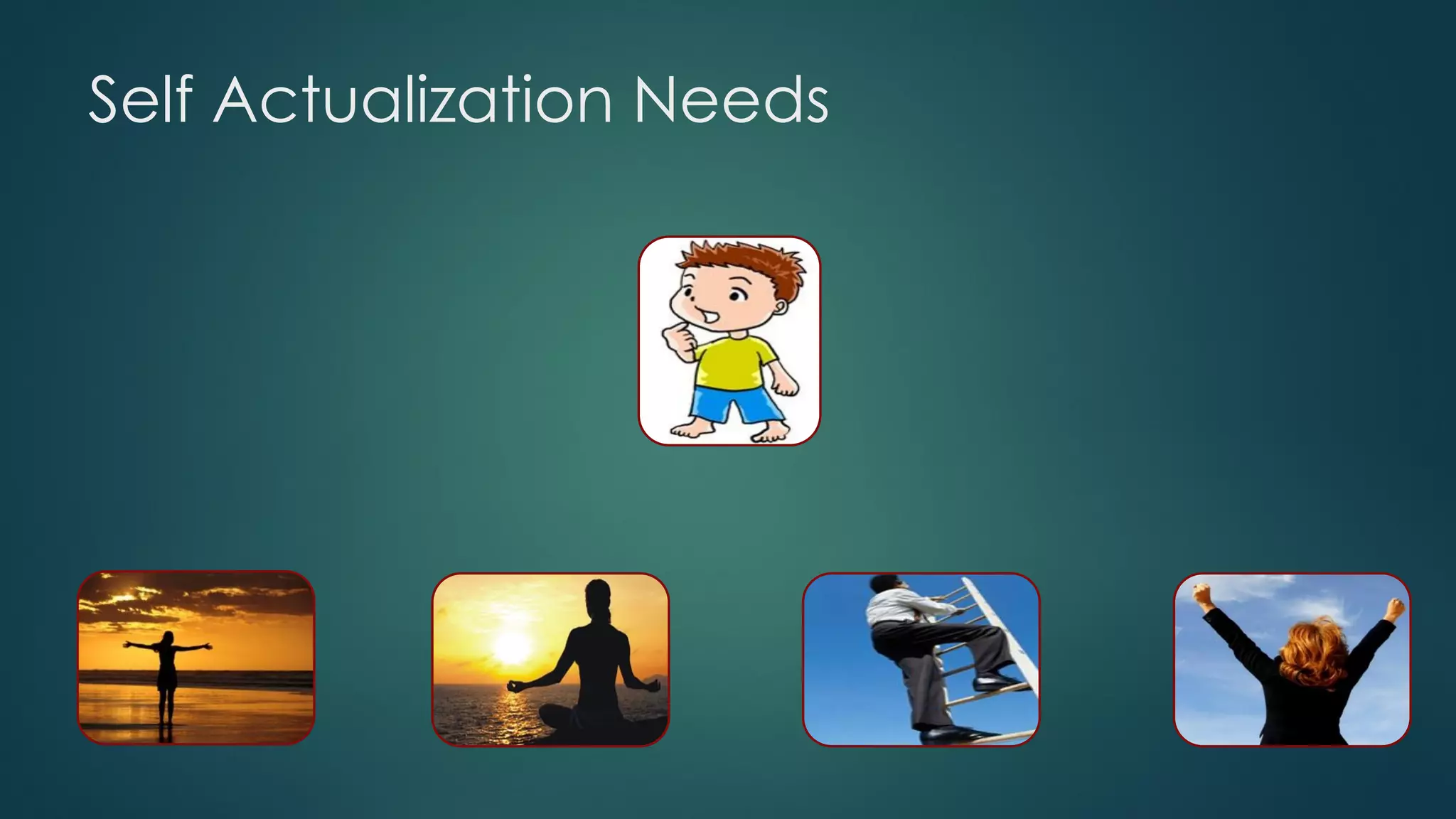
Self Actualization Needs
 What a man can be, he must be
 Intrinsic growth of what is already in a person
 Growth-motivated rather than deficiency-motivated
 Cannot normally be reached until other lower order needs
are met
 Rarely happens - < 1%
 Acceptance of facts, spontaneous, focused on problems
outside self, without prejudice
Self Actualization Needs
Maslow’s Theory in Marketing/Advertising
 PN - wife/child-abuse help-lines, social security benefits,
Samaritans, roadside recovery.
 SN- home security products, insurance, life assurance,
schools.
 EN- cosmetics, fast cars, home improvements, furniture,
fashion clothes, drinks, lifestyle products and services.
Criticisms of Maslow’s Hierarchy of Needs
 The needs may not follow a definite hierarchical order. For example, even
if safety need is not satisfied, the social need may emerge.
 The need priority model may not apply at all times in all places.
 The level of motivation may be permanently lower for some people. For
example, a person suffering from chronic unemployment may remain
satisfied for the rest of his life if only he get enough food.
Criticisms of Maslow’s Hierarchy of Needs
 Pamela B Rutledge while criticizing Maslow’s theory told, “None of these
needs — starting with basic survival are possible without social
connection and collaboration. Without collaboration, there is no survival.
It was not possible to defeat a Woolley Mammoth, build a secure
structure, or care for children while hunting without a team effort. It’s
more true now than then.
(Pamela B Rutledge(Phd) is a famous physiologist)
 Other criticisms of Maslow's theory note that his definition of self-
actualization is difficult to test scientifically.
Conclusion
 The basis of Maslow's motivation theory is that human beings
are motivated by unsatisfied needs, and that certain
lower factors need to be satisfied before higher needs can be
satisfied. According to Maslow, there are general types of
needs (physiological, survival, safety, love, and esteem) that
must be satisfied before a person can act unselfishly.
 He called these needs "deficiency needs." As long as we are
motivated to satisfy these cravings, we are moving towards
growth, toward self-actualization. Satisfying needs is healthy,
while preventing gratification makes us sick or act evilly.
Maslow's theory of hierarcy of needs with Criticism

Maslow's theory of hierarcy of needs with Criticism

  • 1.
    Maslow’s Theory ofHierarchy of Needs PRESENTED BY- THE LEFTOVERS
  • 2.
  • 3.
    Motivation The processes thataccount for an individual’s intensity, direction, and persistence of effort toward attaining a goal. Key Elements 1. Intensity: how hard a person tries 2. Direction: toward beneficial goal 3. Persistence: how long a person tries
  • 4.
    Needs  Something thatis necessary for an organism to live a healthy life  Deficiency would cause a clear negative outcome - deficiency or death  Can be Objective/Physical or Subjective  Objective needs - food, shelter, sleep  Subjective needs – affection, acceptance, self-esteem
  • 5.
    Ten Fundamental HumanNeeds Protection Idleness Creation Understanding Participation Identityfreedom transcendence subsistence affection
  • 6.
    The needs -Meaning Need Meaning (having things) subsistence food, shelter, work protection social security, health systems, work affection friendships, family, relationships with nature understanding literature, teachers, policies, educational participation responsibilities, duties, work, rights leisure games, parties, peace of mind creation abilities, skills, work, techniques identity language, religions, work, customs, values, norms freedom equal rights
  • 7.
    Abraham Maslow Professor ofPsychology Original thinker Predecessors focused on the abnormal and the ill Maslow focused on positive qualities of people
  • 8.
    Maslow’s Hierarchy ofneeds  Proposed in his paper – A Theory of Human Motivation, in 1943  Focuses on describing the stages of growth in humans  He studied on exemplary people such as Albert Einstein, etc, rather than mentally crippled or mentally ill
  • 9.
    The Hierarchal Model BeingNeed Deficit Needs
  • 10.
    Physiological Needs  Mostly,literal requirements for human survival  If not met, the human body cannot function  Metabolic needs – air, water, food, rest  Clothing, shelter – needed by even animals  Could be classified as basic animal needs
  • 11.
  • 12.
    Safety Needs  Oncephysical needs are met, safety needs take over  Personal including emotional  Health and well-being  Financial, job security  Safety of property against natural disasters, calamities, wars, etc  Law & order
  • 13.
  • 14.
    Social Needs  Needto love and be loved  Need to feel a sense of belonging and acceptance  Small groups – clubs, office teams, school/college houses  Large groups – political parties, Sports teams, facebook
  • 15.
  • 16.
    Esteem Needs  Needto be respected by others and in turn respect them  Sense of contribution, to feel self-valued, in profession or hobby  Lower - respect of others, the need for status, recognition, fame, prestige, and attention  Higher - self-respect, the need for strength, competence, mastery, self-confidence, independence and freedom
  • 17.
  • 18.
    Self Actualization Needs What a man can be, he must be  Intrinsic growth of what is already in a person  Growth-motivated rather than deficiency-motivated  Cannot normally be reached until other lower order needs are met  Rarely happens - < 1%  Acceptance of facts, spontaneous, focused on problems outside self, without prejudice
  • 19.
  • 20.
    Maslow’s Theory inMarketing/Advertising  PN - wife/child-abuse help-lines, social security benefits, Samaritans, roadside recovery.  SN- home security products, insurance, life assurance, schools.  EN- cosmetics, fast cars, home improvements, furniture, fashion clothes, drinks, lifestyle products and services.
  • 21.
    Criticisms of Maslow’sHierarchy of Needs  The needs may not follow a definite hierarchical order. For example, even if safety need is not satisfied, the social need may emerge.  The need priority model may not apply at all times in all places.  The level of motivation may be permanently lower for some people. For example, a person suffering from chronic unemployment may remain satisfied for the rest of his life if only he get enough food.
  • 22.
    Criticisms of Maslow’sHierarchy of Needs  Pamela B Rutledge while criticizing Maslow’s theory told, “None of these needs — starting with basic survival are possible without social connection and collaboration. Without collaboration, there is no survival. It was not possible to defeat a Woolley Mammoth, build a secure structure, or care for children while hunting without a team effort. It’s more true now than then. (Pamela B Rutledge(Phd) is a famous physiologist)  Other criticisms of Maslow's theory note that his definition of self- actualization is difficult to test scientifically.
  • 23.
    Conclusion  The basisof Maslow's motivation theory is that human beings are motivated by unsatisfied needs, and that certain lower factors need to be satisfied before higher needs can be satisfied. According to Maslow, there are general types of needs (physiological, survival, safety, love, and esteem) that must be satisfied before a person can act unselfishly.  He called these needs "deficiency needs." As long as we are motivated to satisfy these cravings, we are moving towards growth, toward self-actualization. Satisfying needs is healthy, while preventing gratification makes us sick or act evilly.