Presented by: Ankesh Gorkhali
Maslow’s Need Hierarchy
Theory
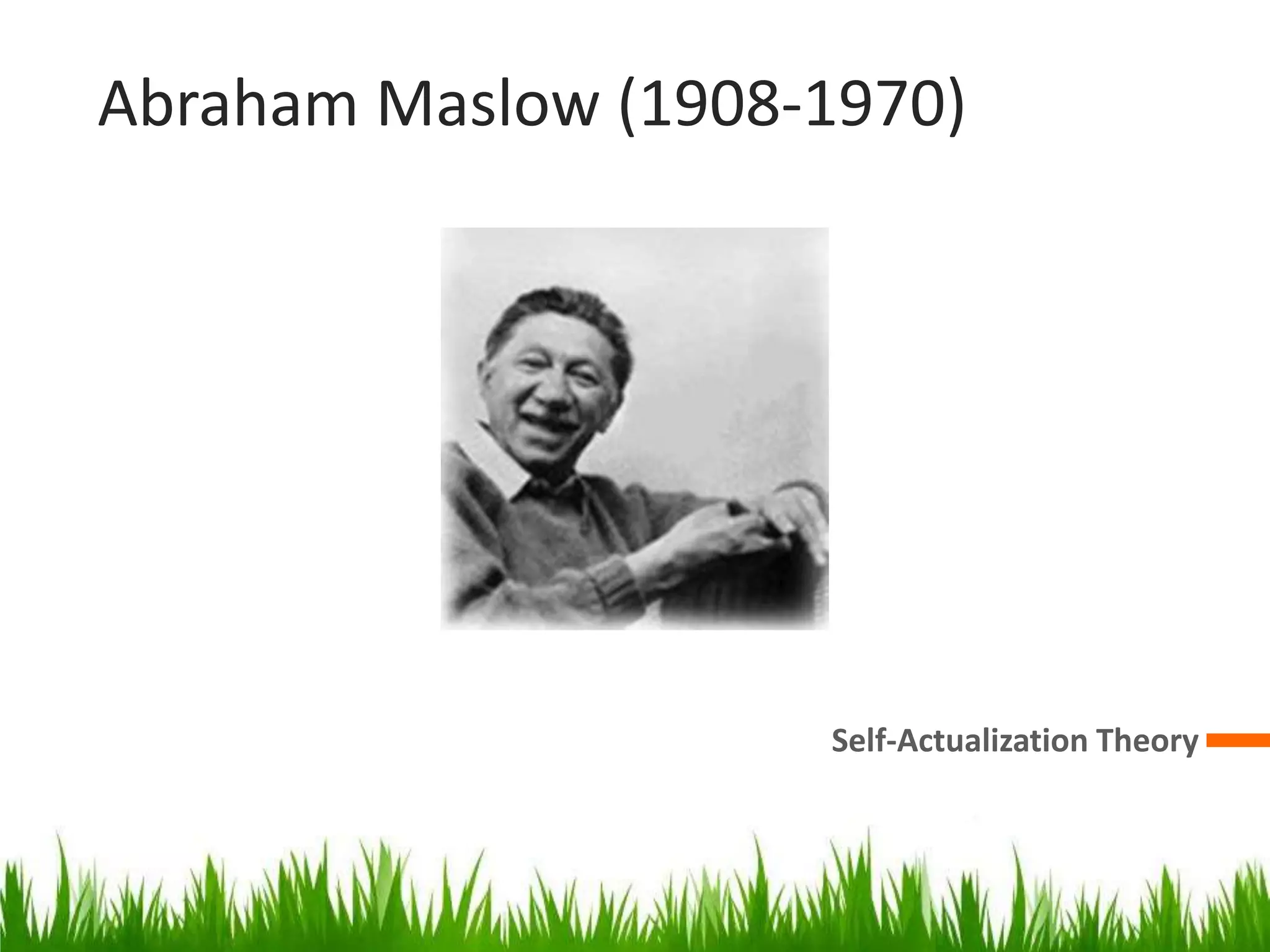
Abraham Maslow (1908-1970)
Self-Actualization Theory
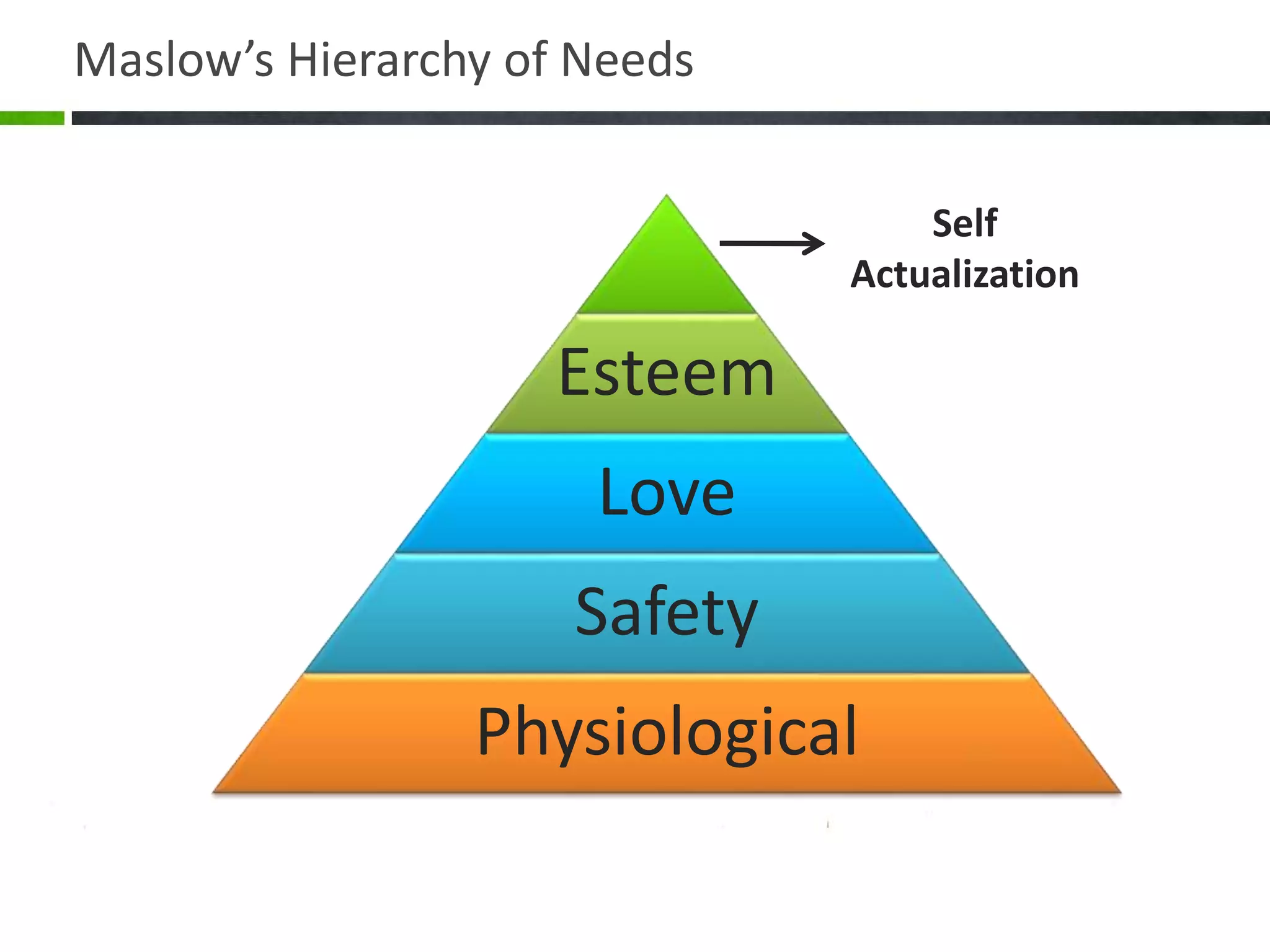
Maslow’s Hierarchy of Needs
Esteem
Love
Safety
Physiological
Self
Actualization
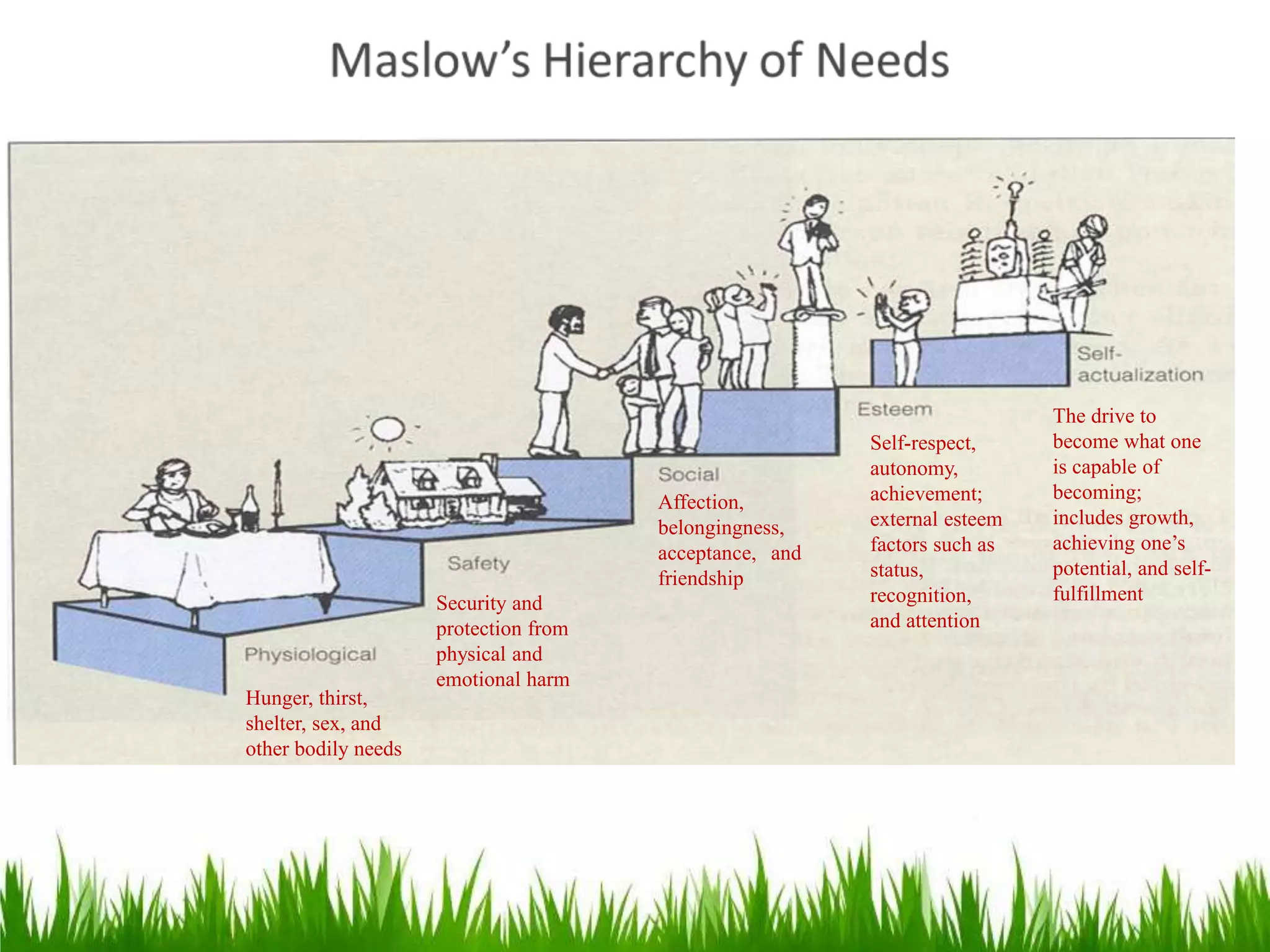
Hunger, thirst,
shelter, sex, and
other bodily needs
Security and
protection from
physical and
emotional harm
Affection,
belongingness,
acceptance, and
friendship
Self-respect,
autonomy,
achievement;
external esteem
factors such as
status,
recognition,
and attention
The drive to
become what one
is capable of
becoming;
includes growth,
achieving one’s
potential, and self-
fulfillment
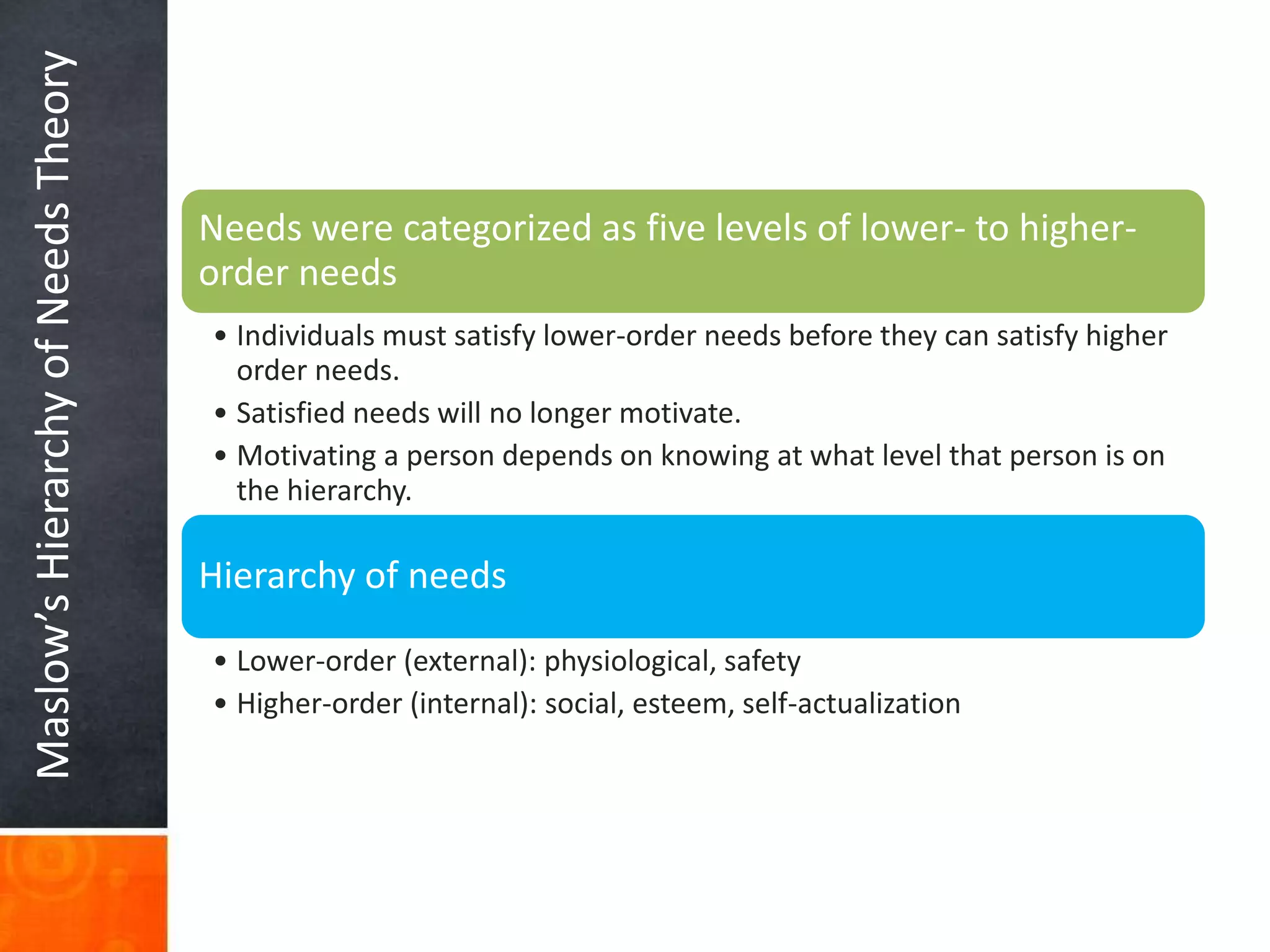
Maslow’sHierarchyofNeedsTheory
Needs were categorized as five levels of lower- to higher-
order needs
• Individuals must satisfy lower-order needs before they can satisfy higher
order needs.
• Satisfied needs will no longer motivate.
• Motivating a person depends on knowing at what level that person is on
the hierarchy.
Hierarchy of needs
• Lower-order (external): physiological, safety
• Higher-order (internal): social, esteem, self-actualization
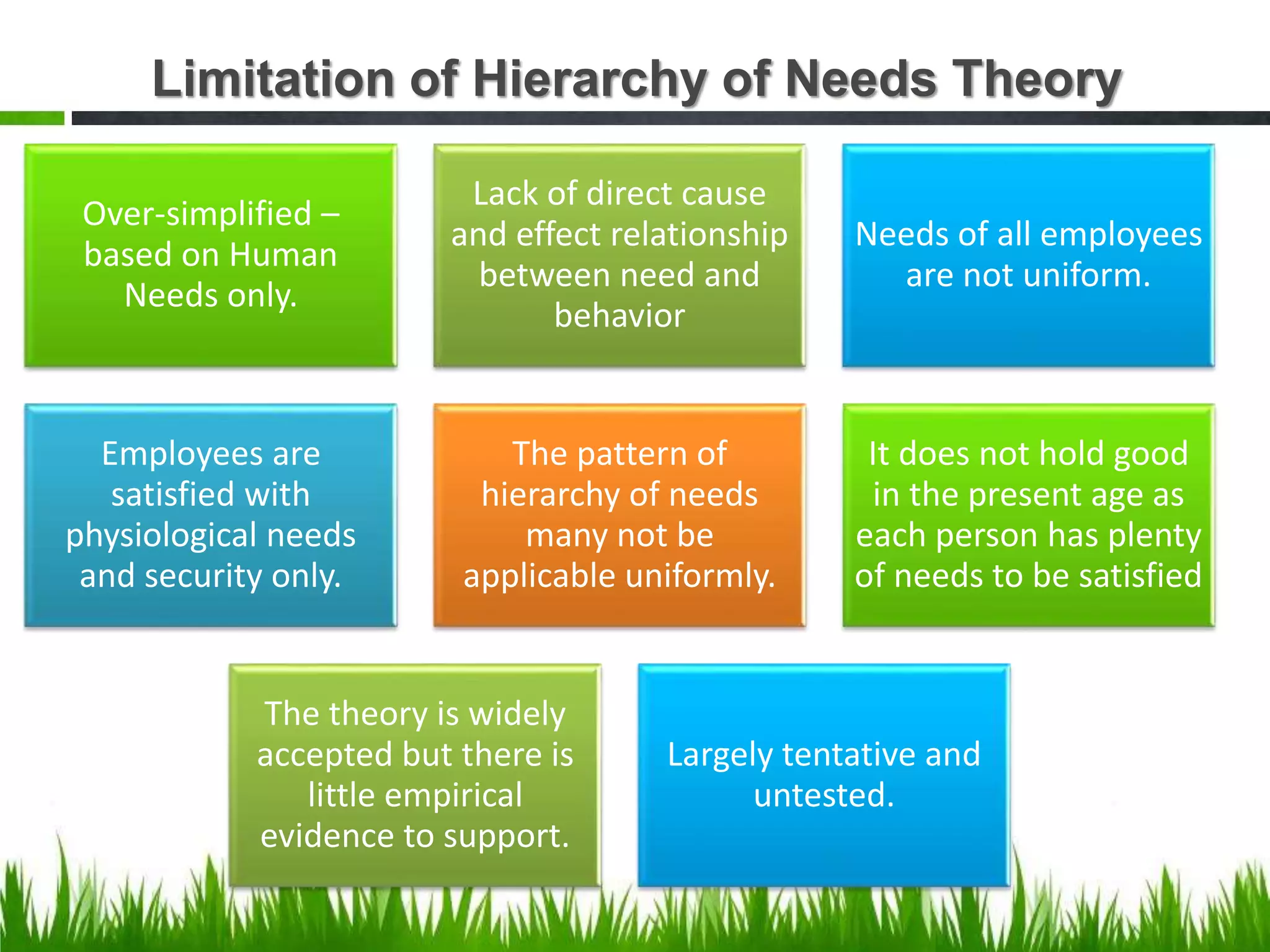
Limitation of Hierarchy of Needs Theory
Over-simplified –
based on Human
Needs only.
Lack of direct cause
and effect relationship
between need and
behavior
Needs of all employees
are not uniform.
Employees are
satisfied with
physiological needs
and security only.
The pattern of
hierarchy of needs
many not be
applicable uniformly.
It does not hold good
in the present age as
each person has plenty
of needs to be satisfied
The theory is widely
accepted but there is
little empirical
evidence to support.
Largely tentative and
untested.
Thank you

Maslow Hierarchy Needs Theory

  • 1.
    Presented by: AnkeshGorkhali Maslow’s Need Hierarchy Theory
  • 2.
  • 3.
    Maslow’s Hierarchy ofNeeds Esteem Love Safety Physiological Self Actualization
  • 4.
    Hunger, thirst, shelter, sex,and other bodily needs Security and protection from physical and emotional harm Affection, belongingness, acceptance, and friendship Self-respect, autonomy, achievement; external esteem factors such as status, recognition, and attention The drive to become what one is capable of becoming; includes growth, achieving one’s potential, and self- fulfillment
  • 5.
    Maslow’sHierarchyofNeedsTheory Needs were categorizedas five levels of lower- to higher- order needs • Individuals must satisfy lower-order needs before they can satisfy higher order needs. • Satisfied needs will no longer motivate. • Motivating a person depends on knowing at what level that person is on the hierarchy. Hierarchy of needs • Lower-order (external): physiological, safety • Higher-order (internal): social, esteem, self-actualization
  • 7.
    Limitation of Hierarchyof Needs Theory Over-simplified – based on Human Needs only. Lack of direct cause and effect relationship between need and behavior Needs of all employees are not uniform. Employees are satisfied with physiological needs and security only. The pattern of hierarchy of needs many not be applicable uniformly. It does not hold good in the present age as each person has plenty of needs to be satisfied The theory is widely accepted but there is little empirical evidence to support. Largely tentative and untested.
  • 8.

Editor's Notes

  • #2 This presentation demonstrates the new capabilities of PowerPoint and it is best viewed in Slide Show. These slides are designed to give you great ideas for the presentations you’ll create in PowerPoint 2010! For more sample templates, click the File tab, and then on the New tab, click Sample Templates.