

1
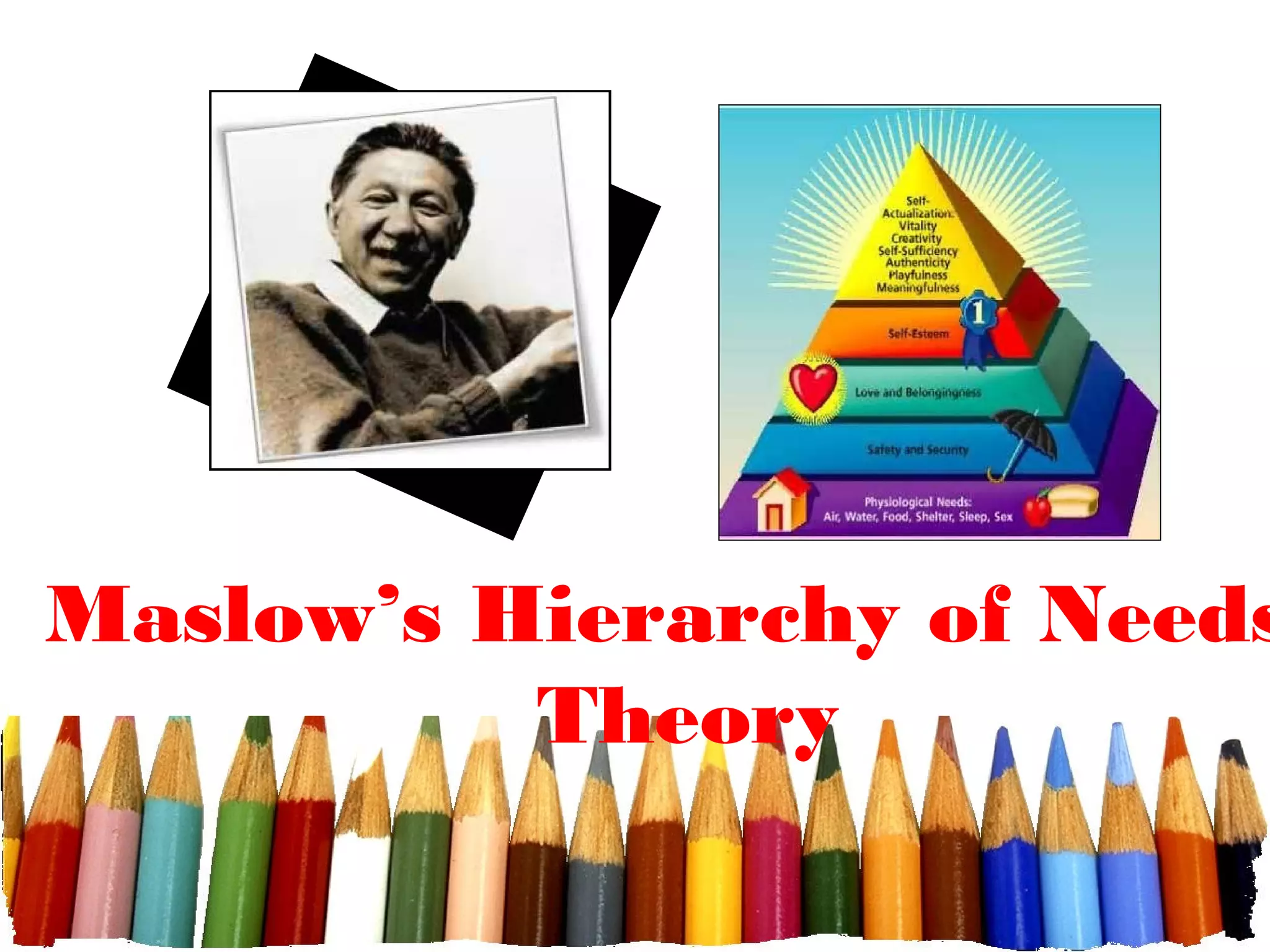
Maslow’s Hierarchy of Needs
Theory
Prepared by:
RUBY L. ARNALDO
3
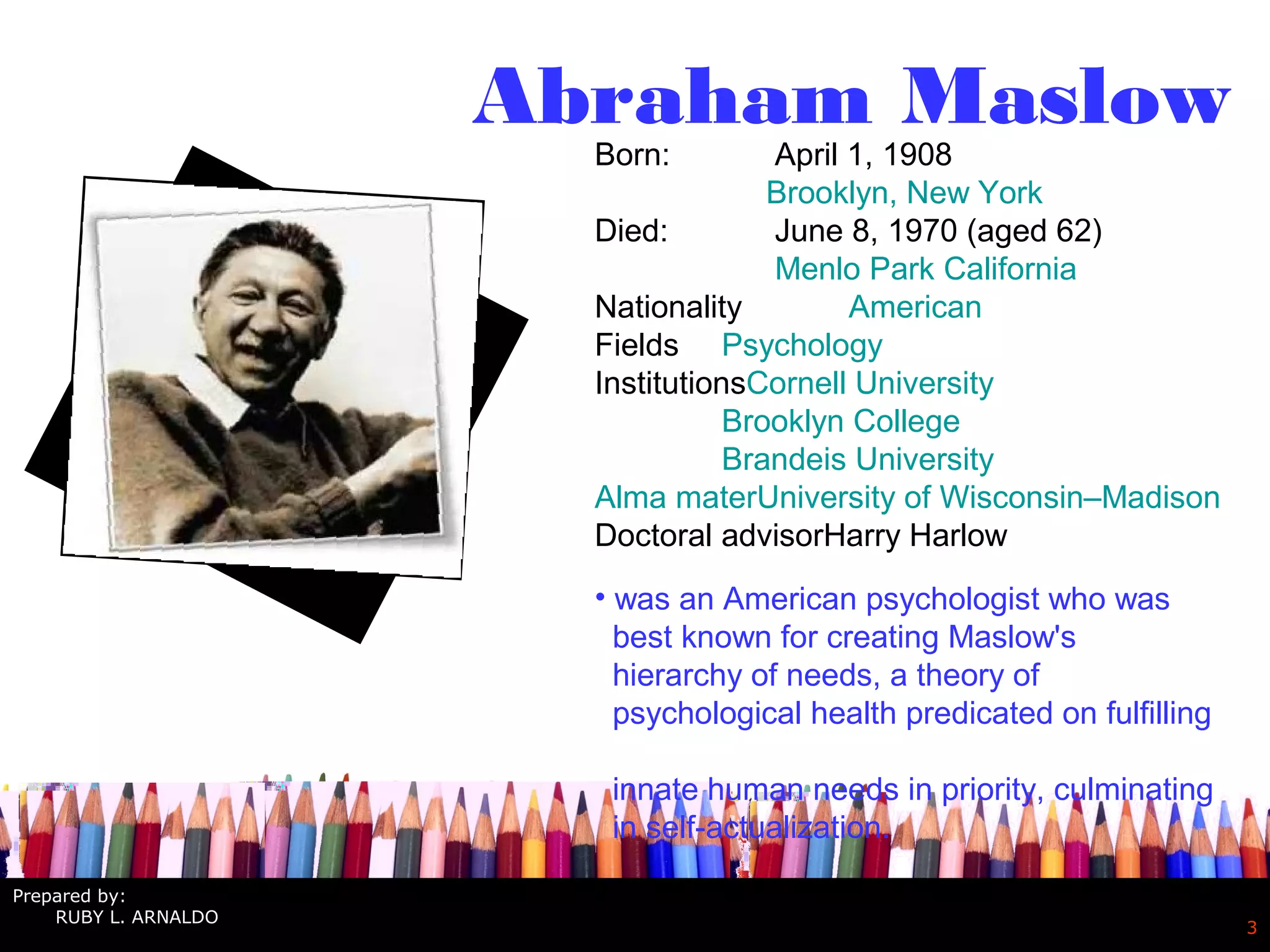
Born: April 1, 1908
Brooklyn, New York
Died: June 8, 1970 (aged 62)
Menlo Park California
Nationality American
Fields Psychology
InstitutionsCornell University
Brooklyn College
Brandeis University
Alma materUniversity of Wisconsin–Madison
Doctoral advisorHarry Harlow
Abraham Maslow
• was an American psychologist who was
best known for creating Maslow's
hierarchy of needs, a theory of
psychological health predicated on fulfilling
innate human needs in priority, culminating
in self-actualization.
Free powerpoint template: www.brainybetty.com
4
Maslow’s Hierarchy of Needs
5
Maslow’s Hierarchy of Needs
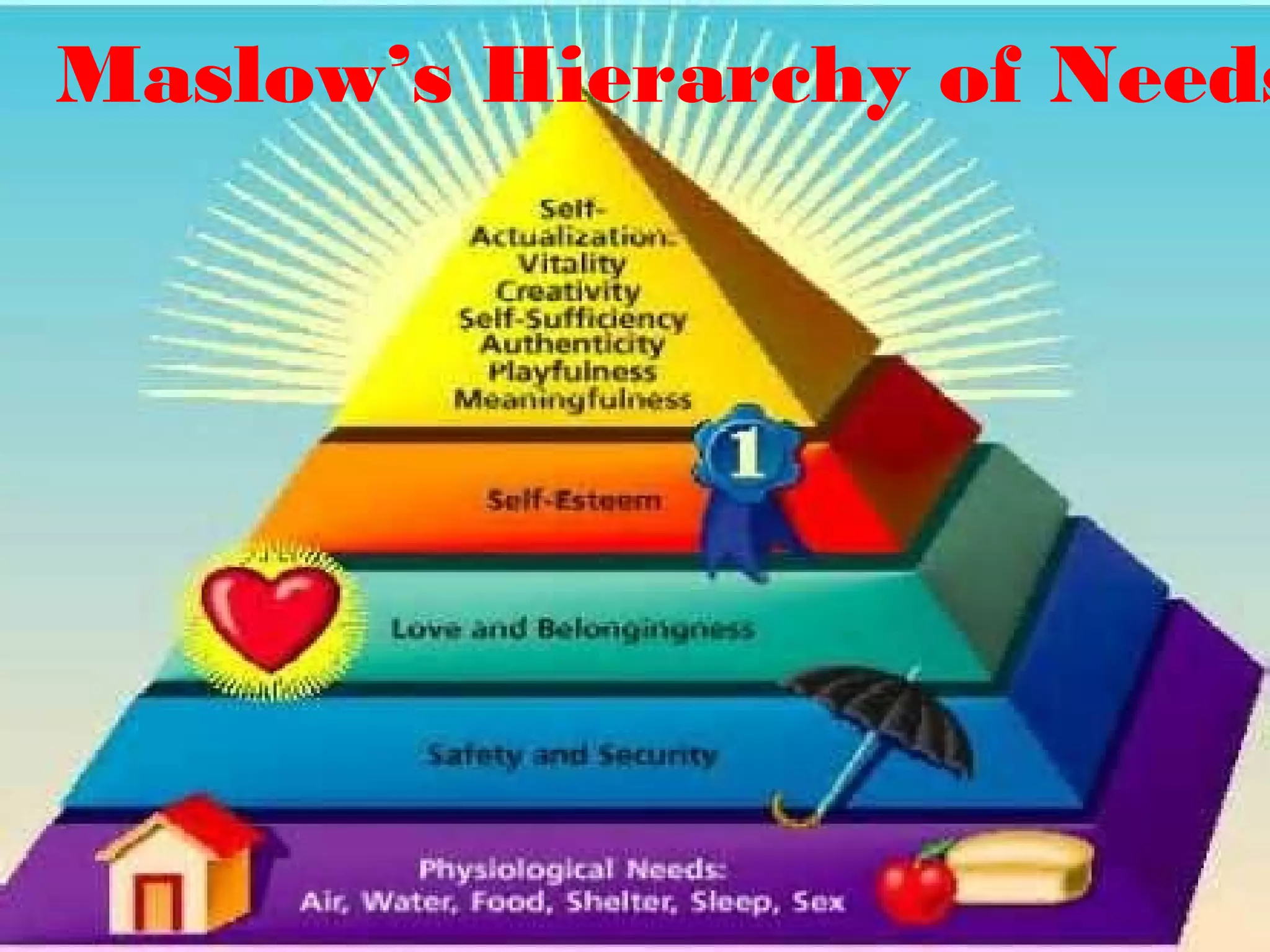
• Maslow's hierarchy of needs is a theory
in psychology proposed by Abraham
Maslow in his 1943 paper "A Theory of
Human Motivation".
• Maslow subsequently extended the idea to
include his observations of humans' innate
curiosity.
Prepared by:
RUBY L. ARNALDO
6
Maslow’s Hierarchy of Needs
• His theories parallel many other theories
of human developmental psychology,
some of which focus on describing the
stages of growth in humans. Maslow used
the terms Physiological, Safety,
Belongingness and Love, Esteem, Self-
Actualization and Self-Transcendence
needs to describe the pattern that human
motivations generally move through.
Prepared by:
RUBY L. ARNALDO
7
Maslow’s Hierarchy of Needs
• Each of us is motivated by needs. Our most
basic needs are inborn, having evolved over
tens of thousands of years. Abraham
Maslow's Hierarchy of Needs helps to explain
how these needs motivate us all.
• Maslow's Hierarchy of Needs states that we
must satisfy each need in turn, starting with
the first, which deals with the most obvious
needs for survival itself.
Prepared by:
RUBY L. ARNALDO
1. Physiological Needs
• food (water, nourishment)
• clothing
• shelter
• air
• sleep
• sex
8
-those required to sustain life, such as:
Prepared by:
RUBY L. ARNALDO
2. Safety Needs
• Living in a safe area
• Medical Insurance
• Job security
• Financial reserves
9
-protection from physical and
emotional harm
Prepared by:
RUBY L. ARNALDO
Workers express this desire in the form of
having a stable job, with medical,
unemployment, and retirement benefits.
Safety Needs
- desire to achieve a sense of
security, stability and
consistency in life
10
Prepared by:
RUBY L. ARNALDO
3. Social Needs/ Affiliation
• Affection
• Belongingness
• Acceptance
• Love
• friendship
 Need for friends
 Need for belonging
 Need to give and receive love
11
-the desire for
Prepared by:
RUBY L. ARNALDO
12
Social Needs
- desire to feel loved by
others and to be accepted
by and into wider social
networks
Prepared by:
RUBY L. ARNALDO
4. Esteem Needs
• Self-respect
• A sense of personal achievement
• Attention
• Recognition
• Reputation
13
-the desire for
Prepared by:
RUBY L. ARNALDO
To Satisfy esteem needs, people seek ….
Opportunities for achievement
Prestige
Promotion
Status to show their competence and
worth
14
Prepared by:
RUBY L. ARNALDO
15
Esteem Needs
- a personal sense of
achievement or the respect,
attention and recognition
of others
Prepared by:
RUBY L. ARNALDO
5. Self- Actualization
• Personal growth achieving one’s
potential
• Self-fulfillment
16
-the desire for:
-A person’s drive to become what he
is capable of becoming.
-Traits commonly exhibited include
initiative, spontaneity, and problem
solving ability.
Prepared by:
RUBY L. ARNALDO
Self-actualized people tend to have
needs such as :
Truth
Justice
Wisdom
Meaning
17
Prepared by:
RUBY L. ARNALDO
18
Self-Actualization Needs
- desire to become
everything that you can be
self and spiritual
fulfillment)
Prepared by:
RUBY L. ARNALDO
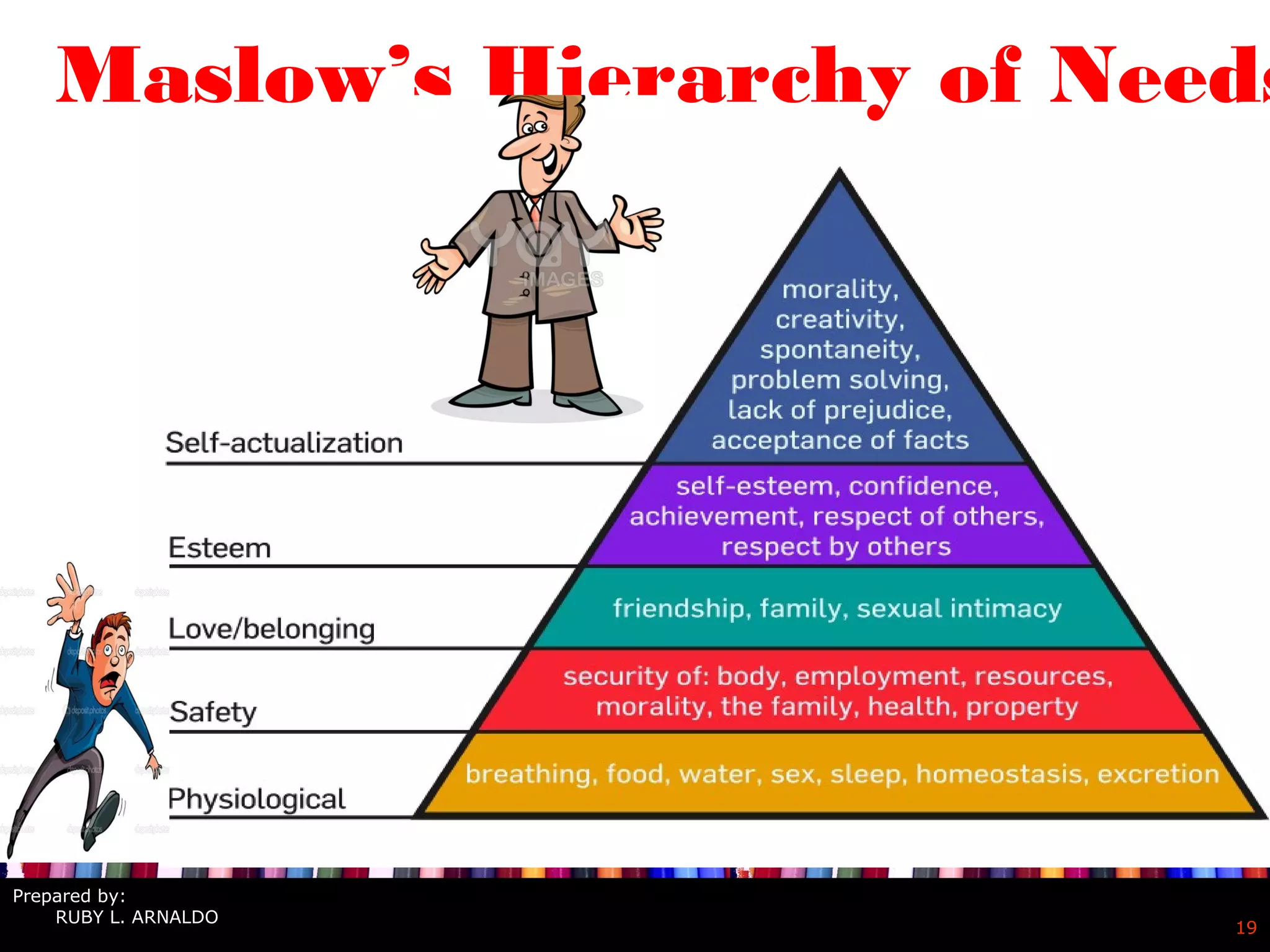
19
Maslow’s Hierarchy of Needs
Prepared by:
RUBY L. ARNALDO
Implications for Management
1. Physiological Needs
Provide lunch breaks, rest breaks, and
wages that are sufficient to purchase
the essentials of life.
2. Safety Needs
Provide a safe working environment,
retirement benefits, and job security.
20
Prepared by:
RUBY L. ARNALDO
Implications for Management
3. Social Needs
Create a sense of community via
team-based projects and social events.
4. Esteem Needs
Recognize achievements to make
employees feel appreciated and valued.
Offer job titles that convey the
importance of the position.
21
Prepared by:
RUBY L. ARNALDO
Implications for Management
5. Self-Actualization
Provide employees a challenge and
the opportunity to reach their full
career potential.
22
Prepared by:
RUBY L. ARNALDO
Limitations of Maslow’s
Hierarchy
• While Maslow’s Hierarchy makes
sense from an intuitive point,
there is little evidence to support
its hierarchical aspect.
23
Prepared by:
RUBY L. ARNALDO
Limitations of Maslow’s
Hierarchy
• There is evidence that contradicts the
order of needs specified by the model.
Example:
Some cultures appear to place social
needs before others.
“Starving artist” in which a person neglects
lower needs in pursuit of higher ones.
24
Prepared by:
RUBY L. ARNALDO
25
Thank You!!!
Prepared by:
RUBY L. ARNALDO
Prepared by:
RUBY L. ARNALDO

Hierarchy of needs final report

  • 1.
  • 2.
  • 3.
    Prepared by: RUBY L.ARNALDO 3 Born: April 1, 1908 Brooklyn, New York Died: June 8, 1970 (aged 62) Menlo Park California Nationality American Fields Psychology InstitutionsCornell University Brooklyn College Brandeis University Alma materUniversity of Wisconsin–Madison Doctoral advisorHarry Harlow Abraham Maslow • was an American psychologist who was best known for creating Maslow's hierarchy of needs, a theory of psychological health predicated on fulfilling innate human needs in priority, culminating in self-actualization.
  • 4.
    Free powerpoint template:www.brainybetty.com 4 Maslow’s Hierarchy of Needs
  • 5.
    5 Maslow’s Hierarchy ofNeeds • Maslow's hierarchy of needs is a theory in psychology proposed by Abraham Maslow in his 1943 paper "A Theory of Human Motivation". • Maslow subsequently extended the idea to include his observations of humans' innate curiosity. Prepared by: RUBY L. ARNALDO
  • 6.
    6 Maslow’s Hierarchy ofNeeds • His theories parallel many other theories of human developmental psychology, some of which focus on describing the stages of growth in humans. Maslow used the terms Physiological, Safety, Belongingness and Love, Esteem, Self- Actualization and Self-Transcendence needs to describe the pattern that human motivations generally move through. Prepared by: RUBY L. ARNALDO
  • 7.
    7 Maslow’s Hierarchy ofNeeds • Each of us is motivated by needs. Our most basic needs are inborn, having evolved over tens of thousands of years. Abraham Maslow's Hierarchy of Needs helps to explain how these needs motivate us all. • Maslow's Hierarchy of Needs states that we must satisfy each need in turn, starting with the first, which deals with the most obvious needs for survival itself. Prepared by: RUBY L. ARNALDO
  • 8.
    1. Physiological Needs •food (water, nourishment) • clothing • shelter • air • sleep • sex 8 -those required to sustain life, such as: Prepared by: RUBY L. ARNALDO
  • 9.
    2. Safety Needs •Living in a safe area • Medical Insurance • Job security • Financial reserves 9 -protection from physical and emotional harm Prepared by: RUBY L. ARNALDO Workers express this desire in the form of having a stable job, with medical, unemployment, and retirement benefits.
  • 10.
    Safety Needs - desireto achieve a sense of security, stability and consistency in life 10 Prepared by: RUBY L. ARNALDO
  • 11.
    3. Social Needs/Affiliation • Affection • Belongingness • Acceptance • Love • friendship  Need for friends  Need for belonging  Need to give and receive love 11 -the desire for Prepared by: RUBY L. ARNALDO
  • 12.
    12 Social Needs - desireto feel loved by others and to be accepted by and into wider social networks Prepared by: RUBY L. ARNALDO
  • 13.
    4. Esteem Needs •Self-respect • A sense of personal achievement • Attention • Recognition • Reputation 13 -the desire for Prepared by: RUBY L. ARNALDO
  • 14.
    To Satisfy esteemneeds, people seek …. Opportunities for achievement Prestige Promotion Status to show their competence and worth 14 Prepared by: RUBY L. ARNALDO
  • 15.
    15 Esteem Needs - apersonal sense of achievement or the respect, attention and recognition of others Prepared by: RUBY L. ARNALDO
  • 16.
    5. Self- Actualization •Personal growth achieving one’s potential • Self-fulfillment 16 -the desire for: -A person’s drive to become what he is capable of becoming. -Traits commonly exhibited include initiative, spontaneity, and problem solving ability. Prepared by: RUBY L. ARNALDO
  • 17.
    Self-actualized people tendto have needs such as : Truth Justice Wisdom Meaning 17 Prepared by: RUBY L. ARNALDO
  • 18.
    18 Self-Actualization Needs - desireto become everything that you can be self and spiritual fulfillment) Prepared by: RUBY L. ARNALDO
  • 19.
    19 Maslow’s Hierarchy ofNeeds Prepared by: RUBY L. ARNALDO
  • 20.
    Implications for Management 1.Physiological Needs Provide lunch breaks, rest breaks, and wages that are sufficient to purchase the essentials of life. 2. Safety Needs Provide a safe working environment, retirement benefits, and job security. 20 Prepared by: RUBY L. ARNALDO
  • 21.
    Implications for Management 3.Social Needs Create a sense of community via team-based projects and social events. 4. Esteem Needs Recognize achievements to make employees feel appreciated and valued. Offer job titles that convey the importance of the position. 21 Prepared by: RUBY L. ARNALDO
  • 22.
    Implications for Management 5.Self-Actualization Provide employees a challenge and the opportunity to reach their full career potential. 22 Prepared by: RUBY L. ARNALDO
  • 23.
    Limitations of Maslow’s Hierarchy •While Maslow’s Hierarchy makes sense from an intuitive point, there is little evidence to support its hierarchical aspect. 23 Prepared by: RUBY L. ARNALDO
  • 24.
    Limitations of Maslow’s Hierarchy •There is evidence that contradicts the order of needs specified by the model. Example: Some cultures appear to place social needs before others. “Starving artist” in which a person neglects lower needs in pursuit of higher ones. 24 Prepared by: RUBY L. ARNALDO
  • 25.
    25 Thank You!!! Prepared by: RUBYL. ARNALDO Prepared by: RUBY L. ARNALDO