Map Skills
Definitions and Examples
Globe
• ~a model of Earth.
Hemisphere
• ~one-half of the globe
• The Equator divides the Northern and
Southern hemispheres.
• The Prime Meridian divides the Eastern
and Western hemispheres.
Latitude
• ~locations north or south of the Equator
measured by imaginary lines.
• The Equator is at 0 degrees latitude; an
imaginary line that separates the northern
and southern hemispheres.
Longitude
• ~locations east or west of the Prime
Meridian, measured by imaginary lines.
• The Prime Meridian lies at 0 degrees
longitude.
Grid System
• ~the checkered board pattern on a map
that is created by crossing lines of latitude
and longitude.
• This grid system helps you find the
absolute location of a place.
Absolute Location
• ~the specific location of a place; the
longitude & latitude of a location or the
specific address of a location.
• For example;
MMS Currituck County
216 Survey Road 36.36 degrees N,
Moyock, NC 27958 75.94 degrees W
Projection
• ~how mapmakers draw the round earth on
a flat piece of paper.
• Mapmakers create many different map
projections, that have their own unique
characteristics.
Map Key
• ~ a code that explains lines, symbols, and
colors used on a map.
GIS
• ~a computer software program that
mapmakers use that can help them make
and change maps more quickly and easily
than before.
• G-geographic I-information S-systems
Cardinal Directions
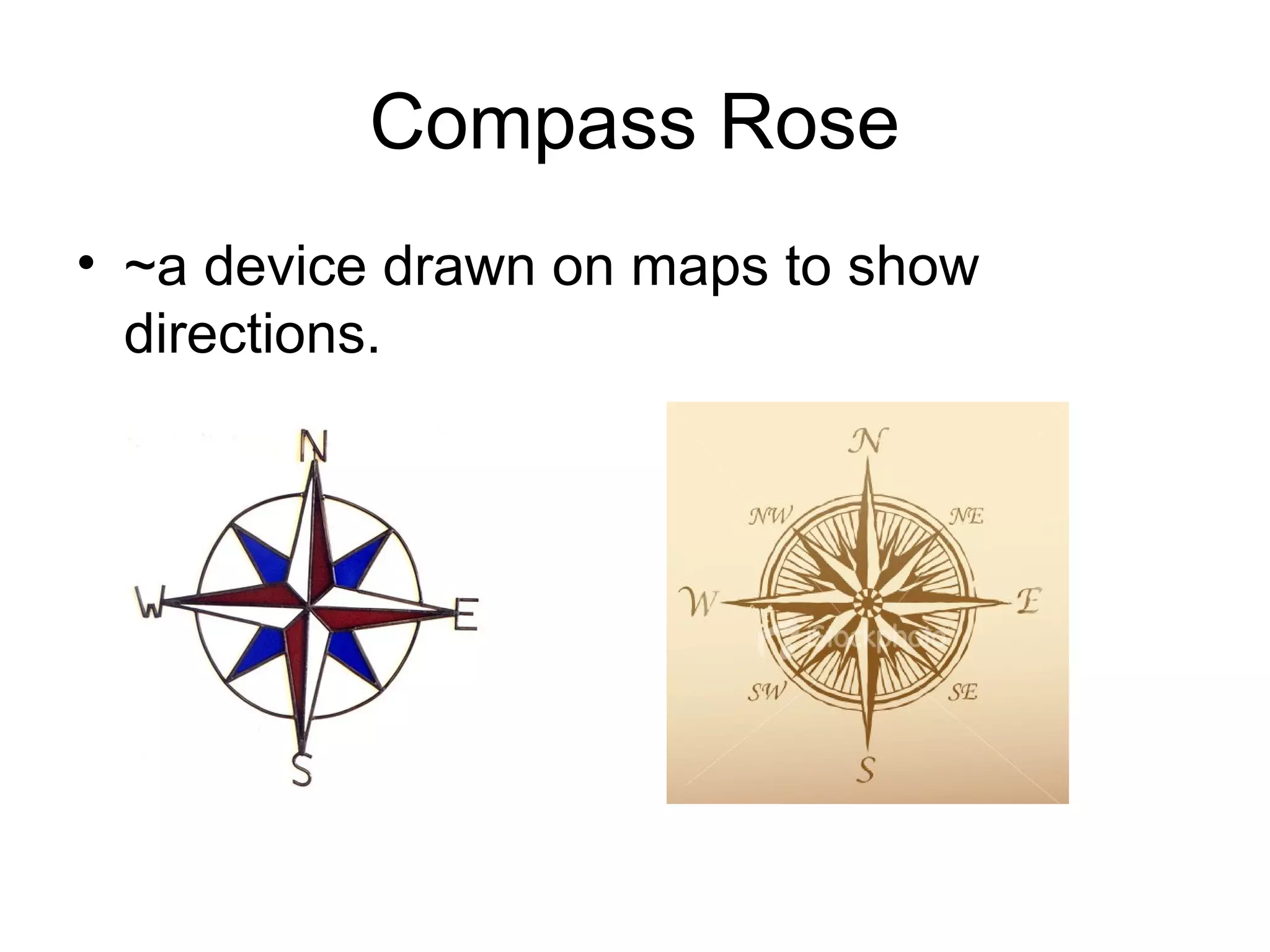
• ~ basic directions on a compass rose.
• N (north), E (east), S (south), W (west)
This compass rose only shows cardinal directions.
Compass Rose
• ~a device drawn on maps to show
directions.
Intermediate Directions
• ~any direction between the cardinal
directions.
• For example, NE (northeast) is between
north and east.
This example shows both cardinal and intermediate directions.
Scale bar
• ~a measuring line on a map that helps you
determine distances on a map.
Scale
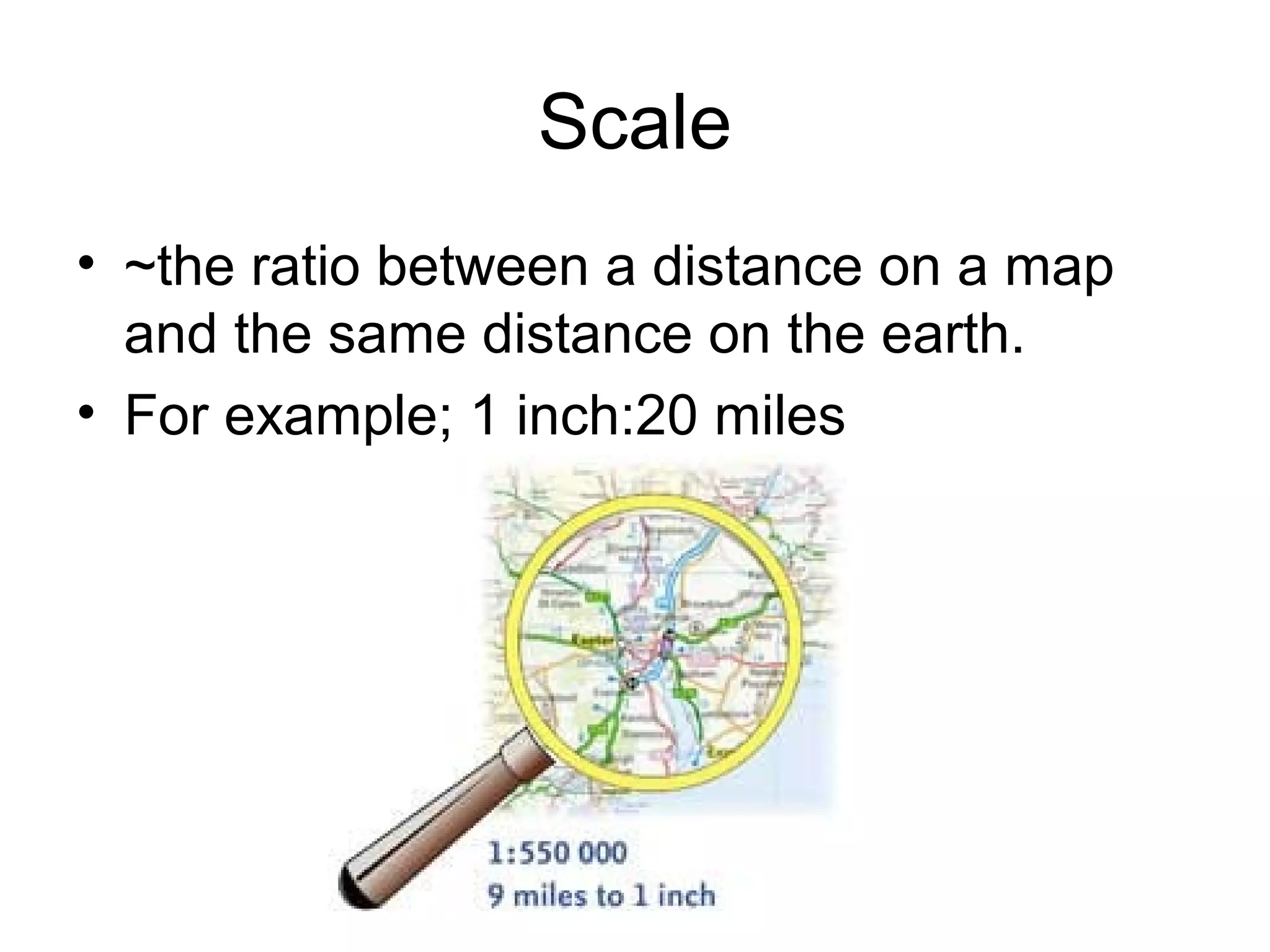
• ~the ratio between a distance on a map
and the same distance on the earth.
• For example; 1 inch:20 miles
Relief
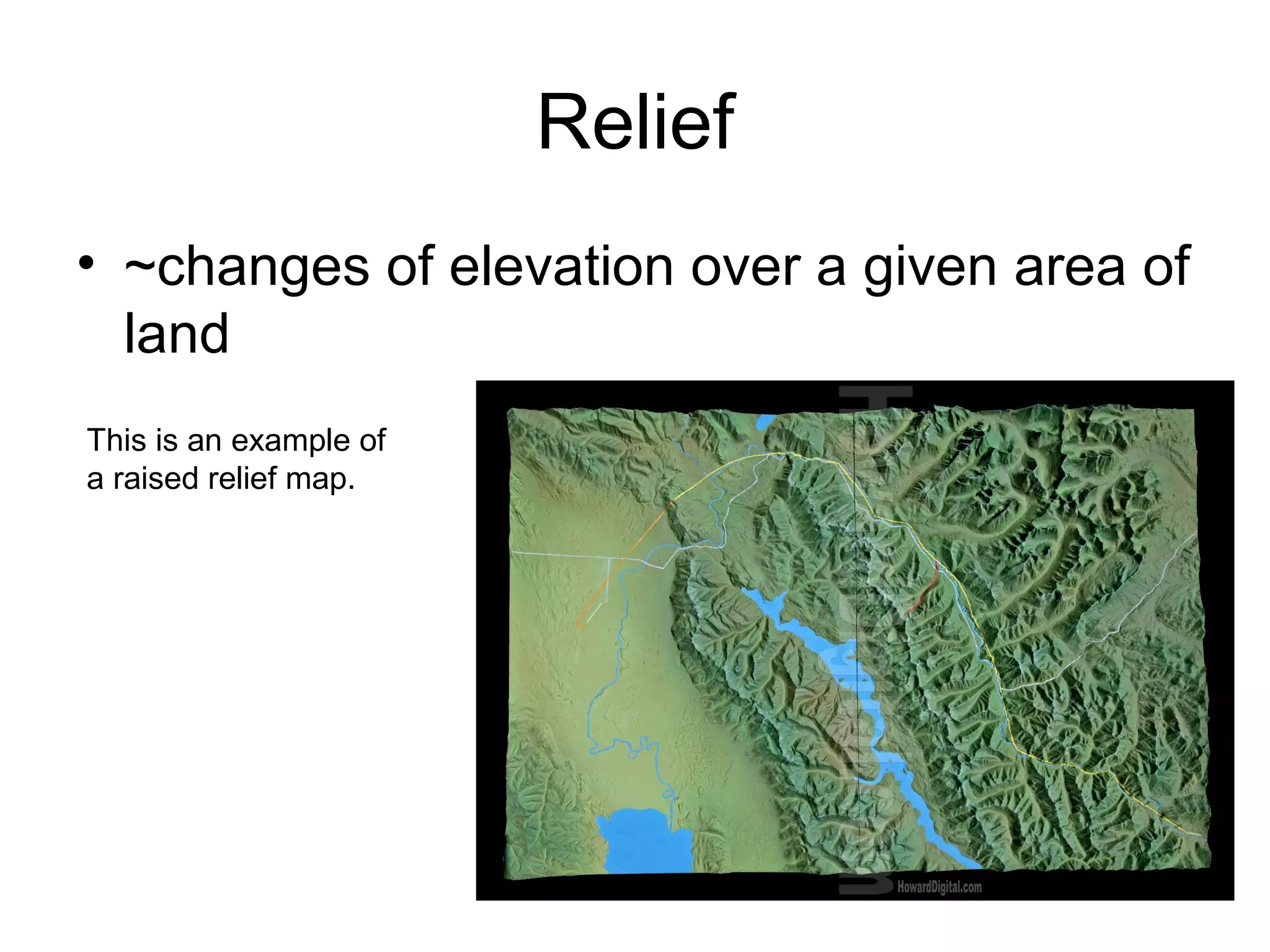
• ~changes of elevation over a given area of
land
This is an example of
a raised relief map.
Elevation
• ~the distance of an area above sea level.
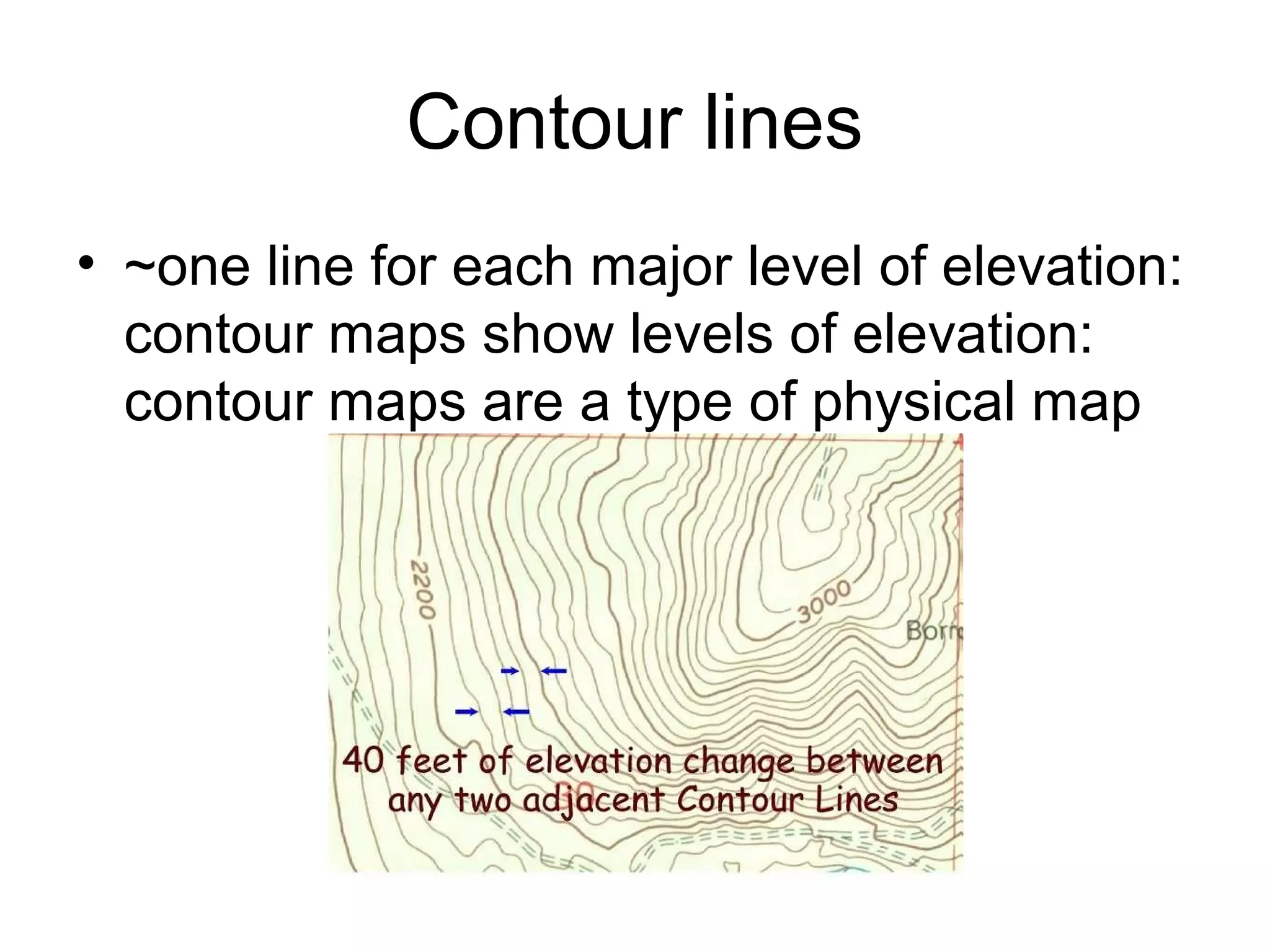
Contour lines
• ~one line for each major level of elevation:
contour maps show levels of elevation:
contour maps are a type of physical map
*Relative location*
• ~the location of a subject in relation to
another point.
• For example; Camden County is just west
of Currituck County.
*Review*
• How are political and physical maps
different from each other?
• Compare how they are the same…
Political Maps
• ~show the names and boundaries of
countries and often identify major physical
features
Physical Maps
• ~ identify landforms and water features
Physical maps often show relief
or elevation.
A contour and relief maps are
physical maps.

Map skills vocab and pictures

  • 1.
  • 2.
  • 3.
    Hemisphere • ~one-half ofthe globe • The Equator divides the Northern and Southern hemispheres. • The Prime Meridian divides the Eastern and Western hemispheres.
  • 4.
    Latitude • ~locations northor south of the Equator measured by imaginary lines. • The Equator is at 0 degrees latitude; an imaginary line that separates the northern and southern hemispheres.
  • 5.
    Longitude • ~locations eastor west of the Prime Meridian, measured by imaginary lines. • The Prime Meridian lies at 0 degrees longitude.
  • 6.
    Grid System • ~thecheckered board pattern on a map that is created by crossing lines of latitude and longitude. • This grid system helps you find the absolute location of a place.
  • 7.
    Absolute Location • ~thespecific location of a place; the longitude & latitude of a location or the specific address of a location. • For example; MMS Currituck County 216 Survey Road 36.36 degrees N, Moyock, NC 27958 75.94 degrees W
  • 8.
    Projection • ~how mapmakersdraw the round earth on a flat piece of paper. • Mapmakers create many different map projections, that have their own unique characteristics.
  • 9.
    Map Key • ~a code that explains lines, symbols, and colors used on a map.
  • 10.
    GIS • ~a computersoftware program that mapmakers use that can help them make and change maps more quickly and easily than before. • G-geographic I-information S-systems
  • 11.
    Cardinal Directions • ~basic directions on a compass rose. • N (north), E (east), S (south), W (west) This compass rose only shows cardinal directions.
  • 12.
    Compass Rose • ~adevice drawn on maps to show directions.
  • 13.
    Intermediate Directions • ~anydirection between the cardinal directions. • For example, NE (northeast) is between north and east. This example shows both cardinal and intermediate directions.
  • 14.
    Scale bar • ~ameasuring line on a map that helps you determine distances on a map.
  • 15.
    Scale • ~the ratiobetween a distance on a map and the same distance on the earth. • For example; 1 inch:20 miles
  • 16.
    Relief • ~changes ofelevation over a given area of land This is an example of a raised relief map.
  • 17.
    Elevation • ~the distanceof an area above sea level.
  • 18.
    Contour lines • ~oneline for each major level of elevation: contour maps show levels of elevation: contour maps are a type of physical map
  • 19.
    *Relative location* • ~thelocation of a subject in relation to another point. • For example; Camden County is just west of Currituck County.
  • 20.
    *Review* • How arepolitical and physical maps different from each other? • Compare how they are the same…
  • 21.
    Political Maps • ~showthe names and boundaries of countries and often identify major physical features
  • 22.
    Physical Maps • ~identify landforms and water features Physical maps often show relief or elevation. A contour and relief maps are physical maps.