A Lecture on
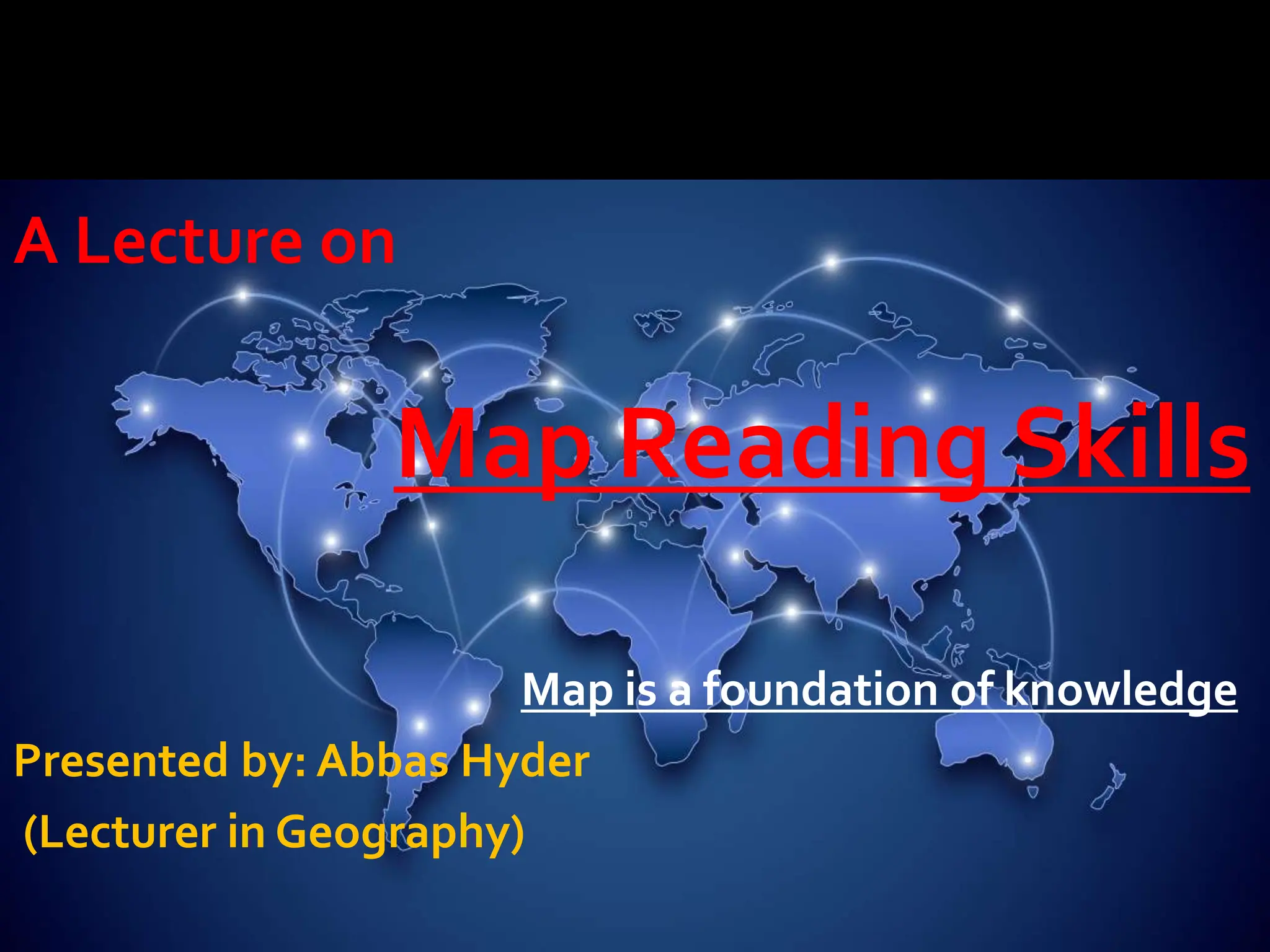
Map Reading Skills
Map is a foundation of knowledge
Presented by: Abbas Hyder
(Lecturer in Geography)
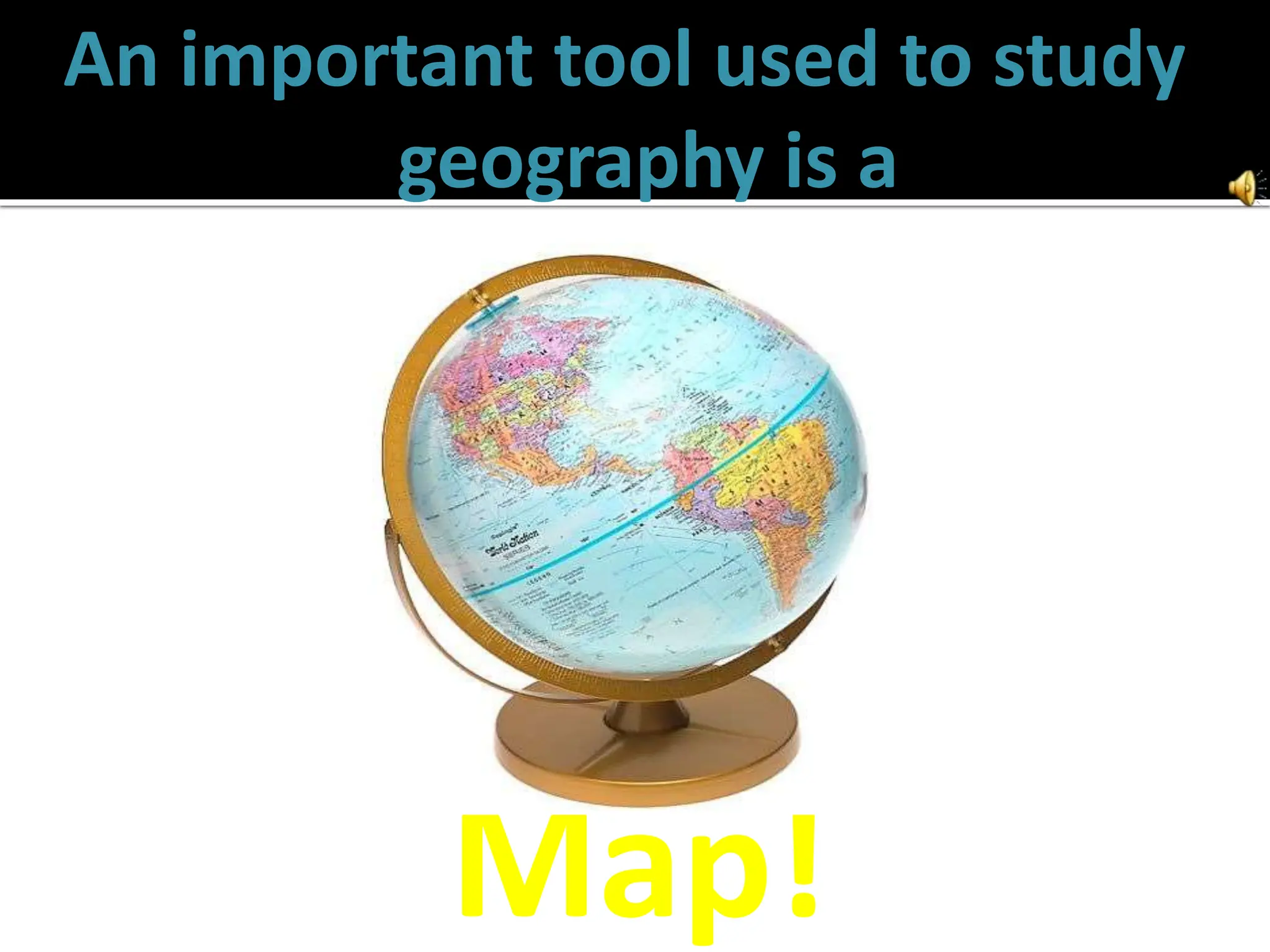
An important tool used to study
geography is a
Map!
 The art of map - making is called Cartography.
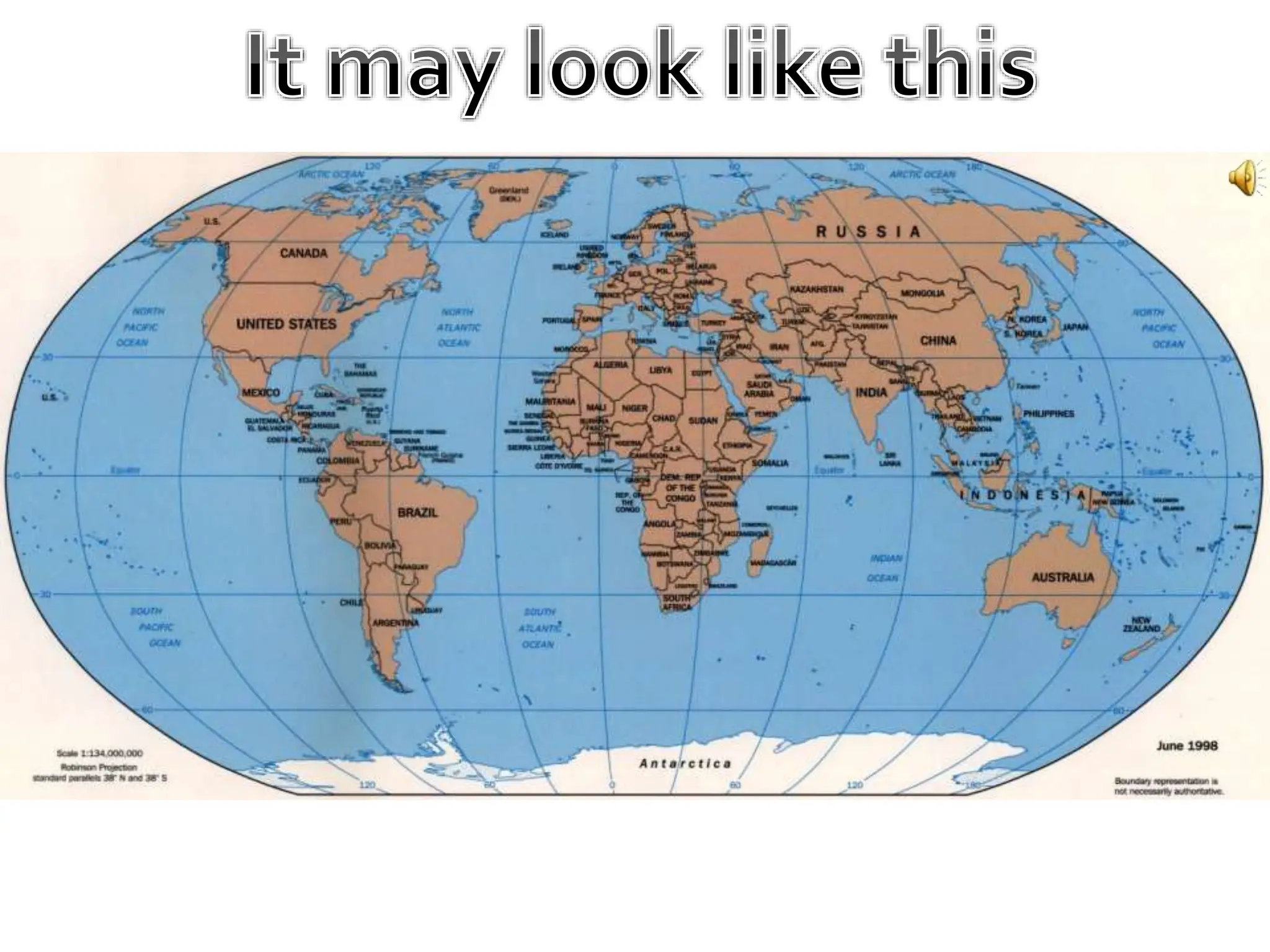
 A map is defined as a representation of the whole or
a part of an area. Maps are usually prepared on a flat
surface, but globes are also maps in that they
represent the entire earth.
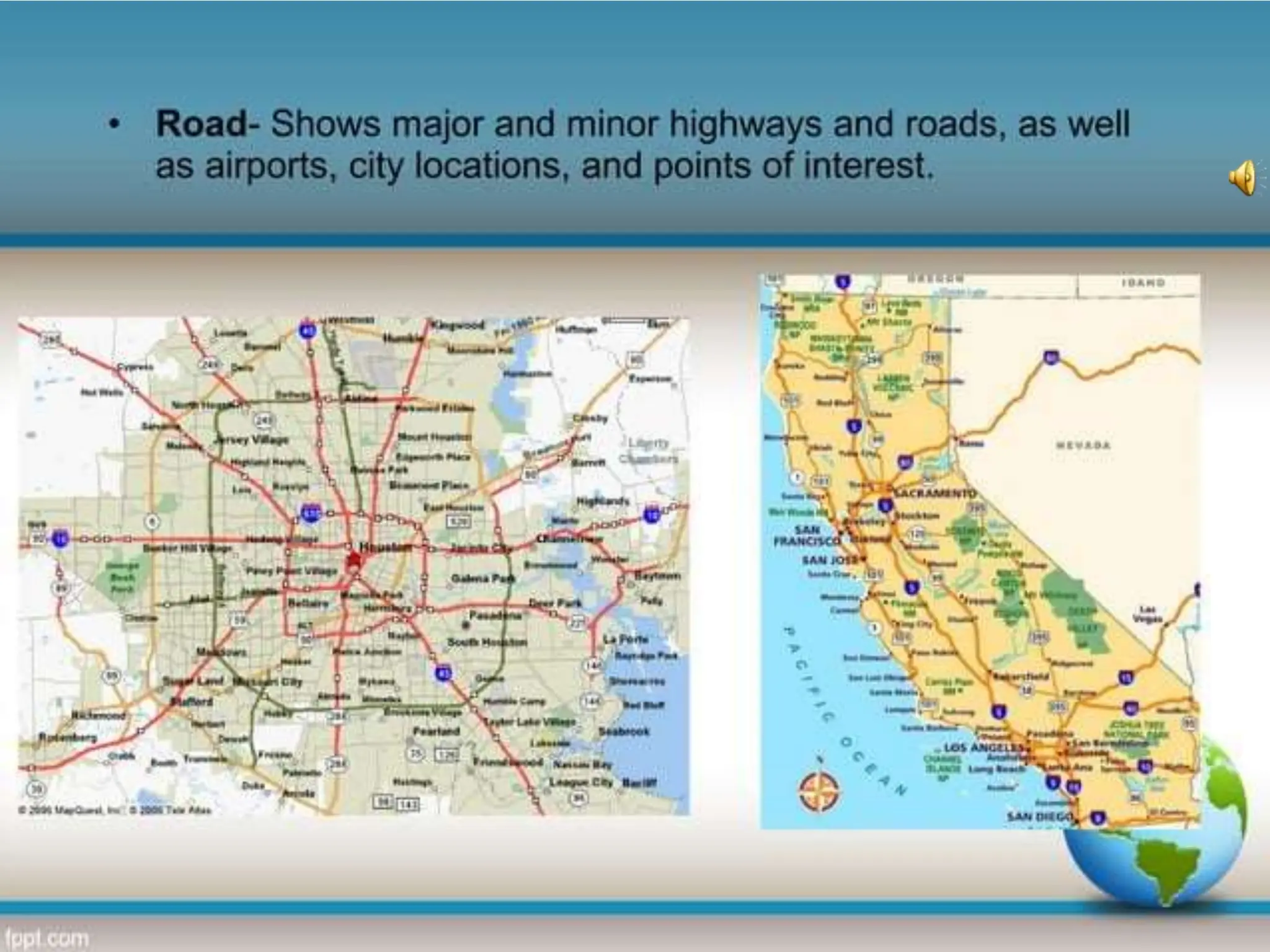
 We commonly use them to communicate graphic
information about places to others. Maps are used
for many purposes in daily life -- to help people
navigate from place to place.
 TITLEOF A MAP
 DIRECTION OF MAP
 SCALE OF MAP
 MAP PROJECTION
 LEGEND OR INDEX OF MAP
Map reading is a life skill,
with a vocabulary all its own!
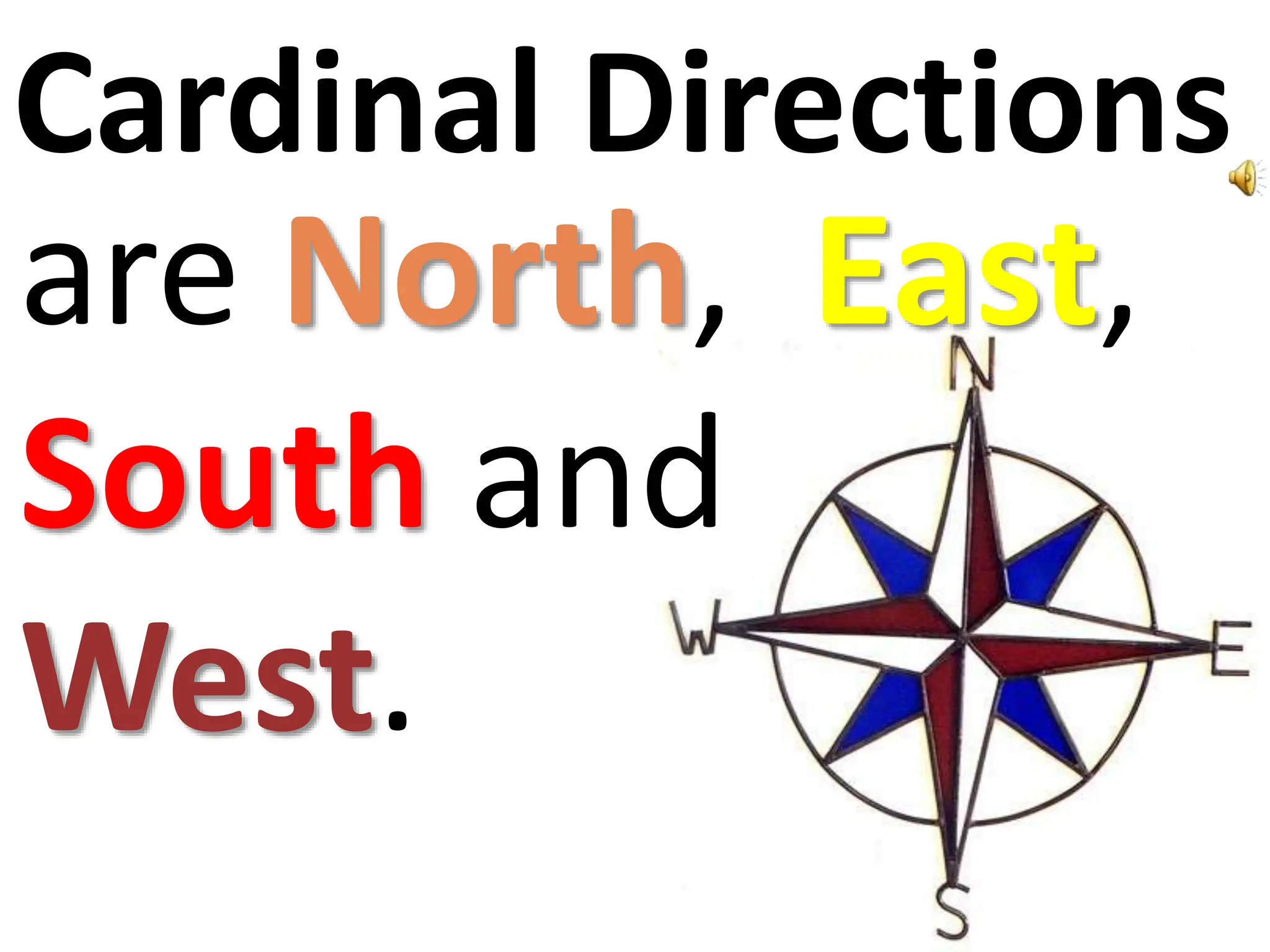
Cardinal Directions
are North, East,
South and
West.
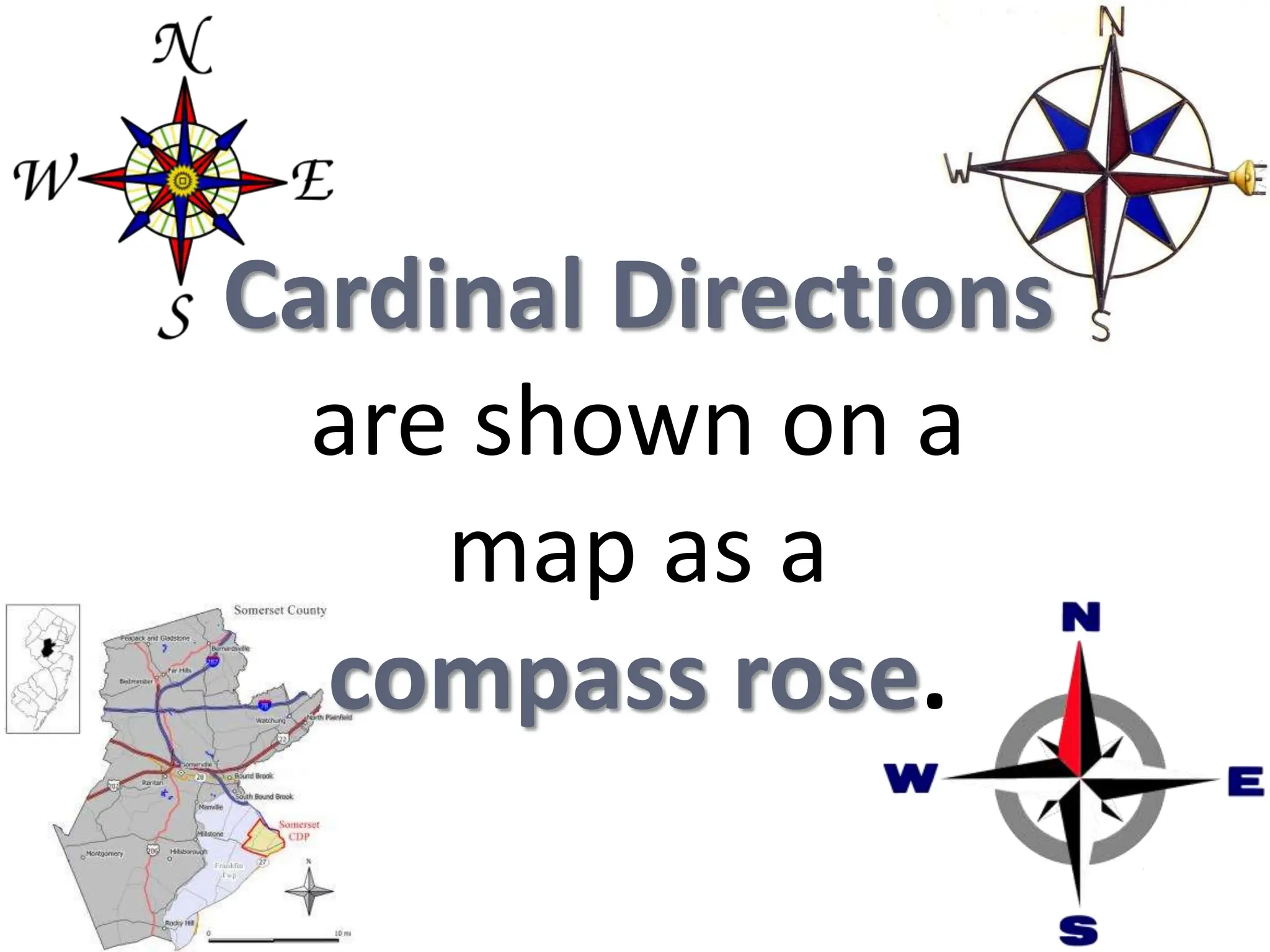
Cardinal Directions
are shown on a
map as a
compass rose.
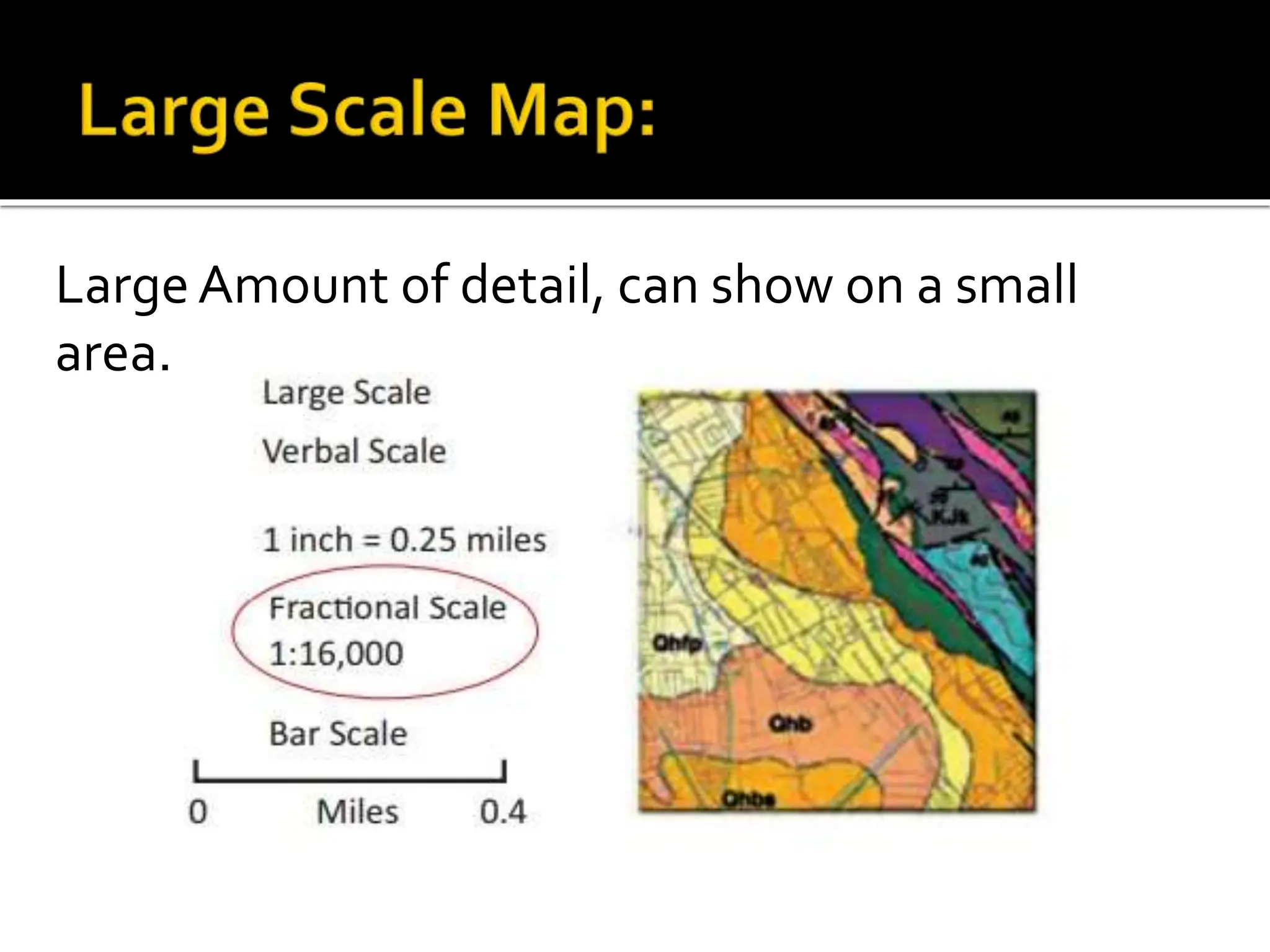
LargeAmount of detail, can show on a small
area.
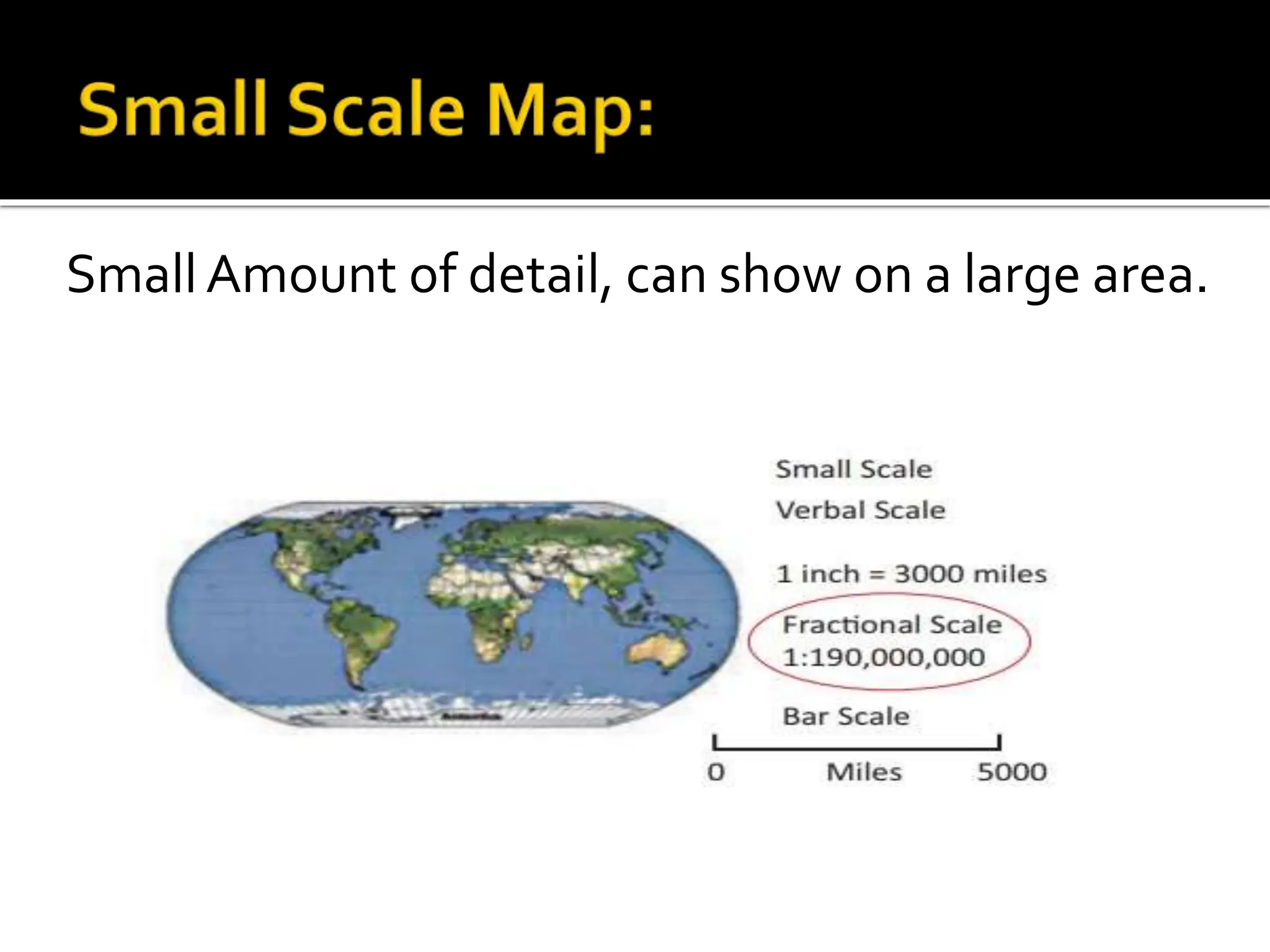
SmallAmount of detail, can show on a large area.
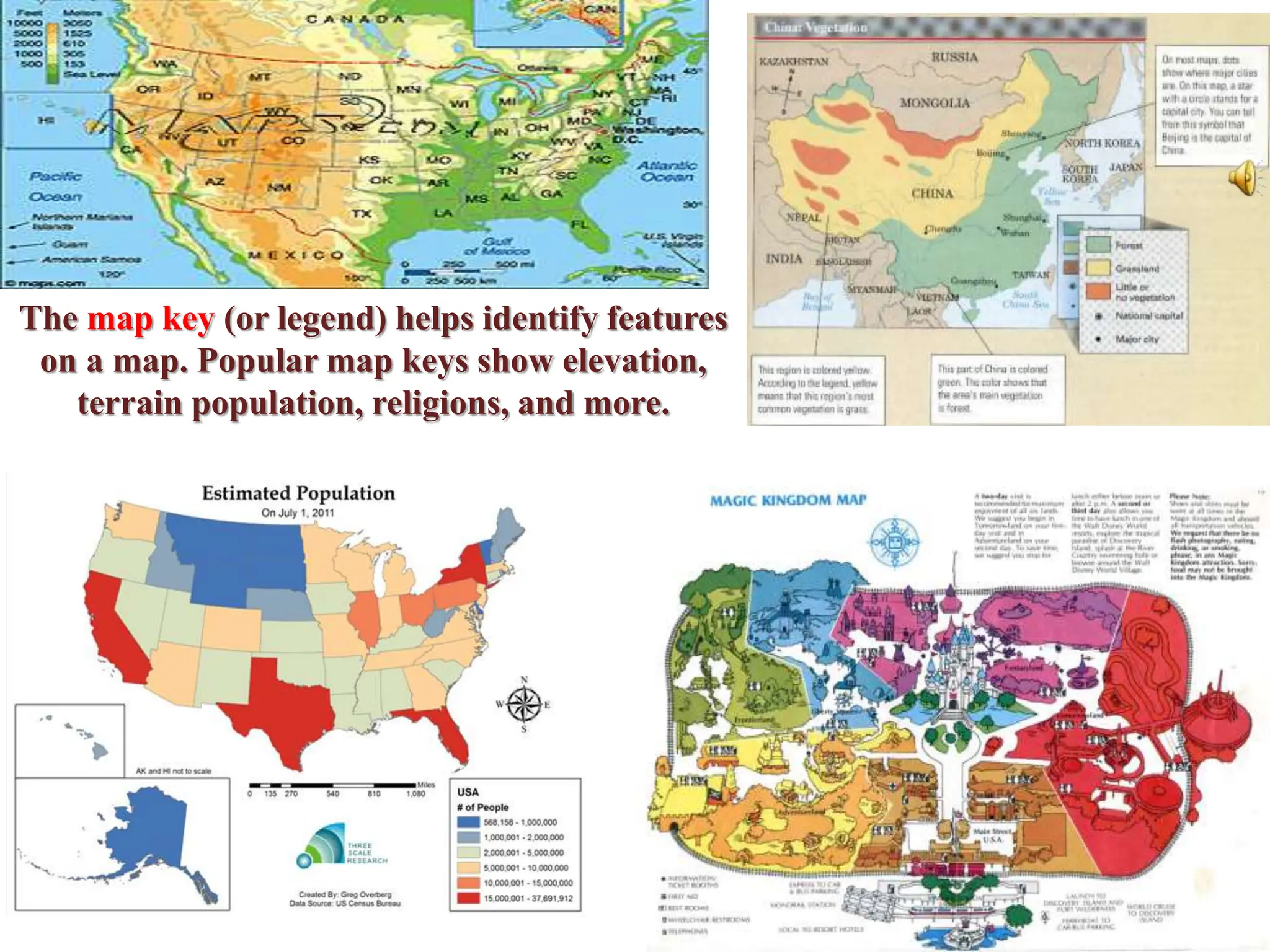
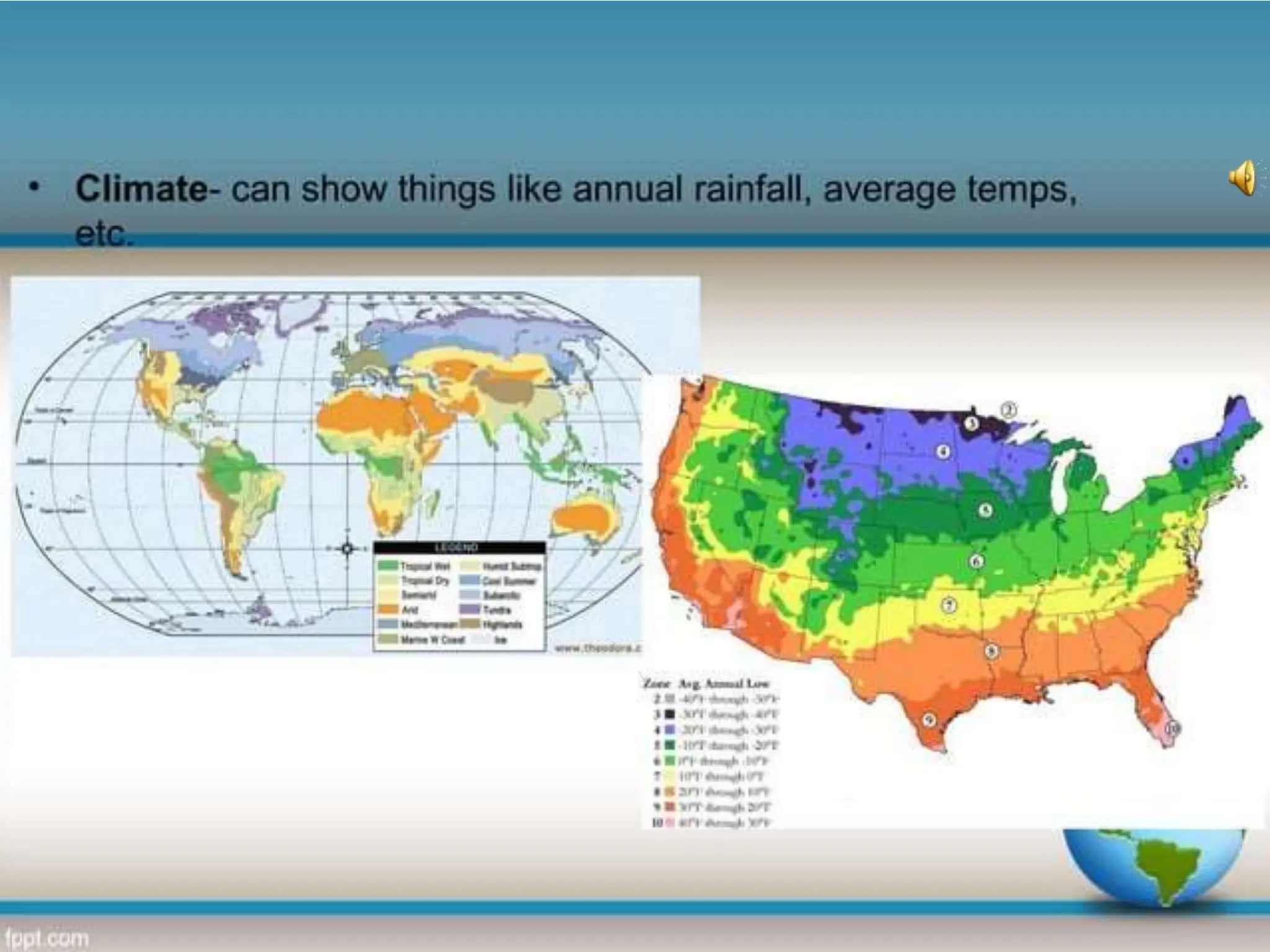
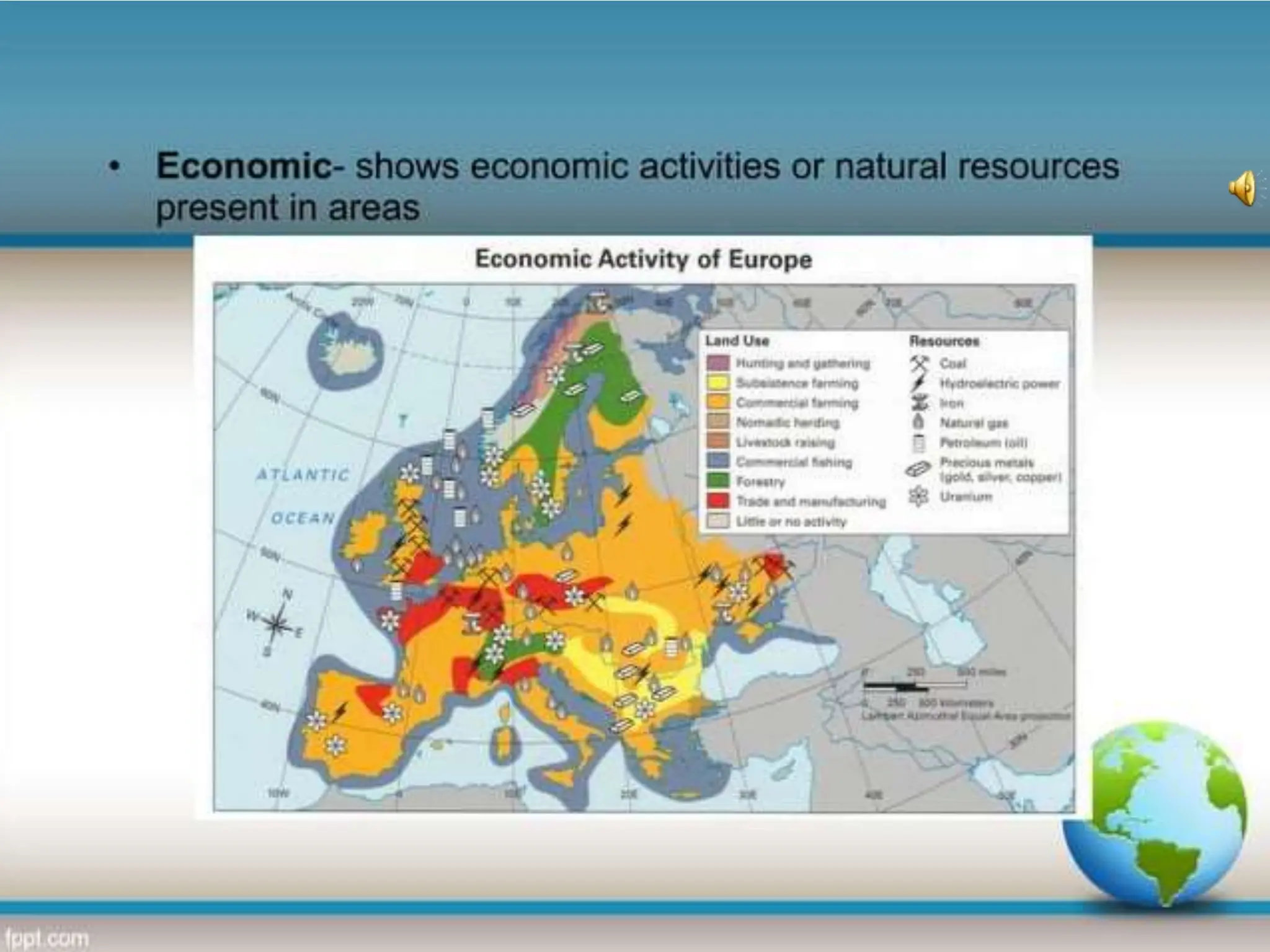
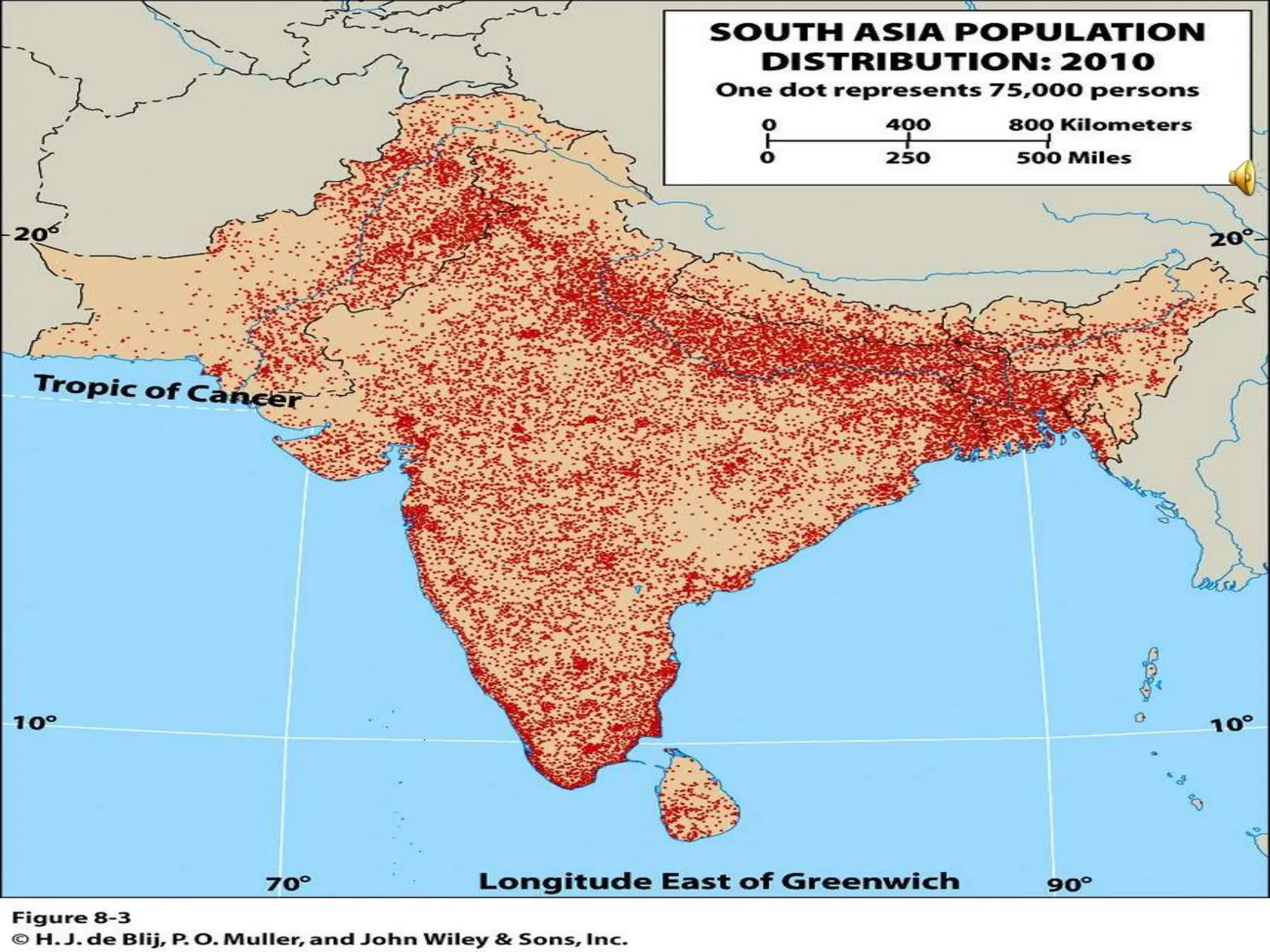
The map key (or legend) helps identify features
on a map. Popular map keys show elevation,
terrain population, religions, and more.
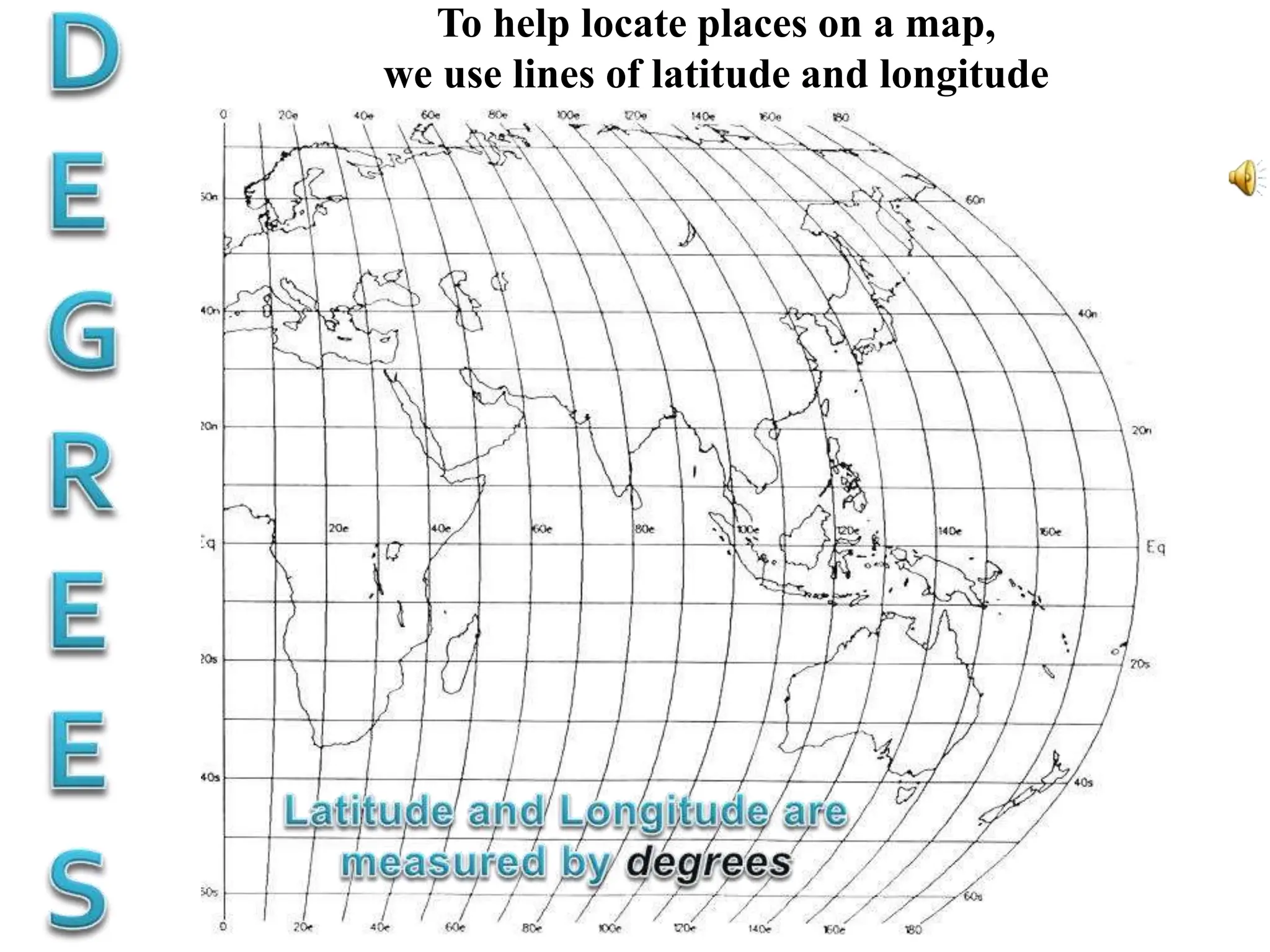
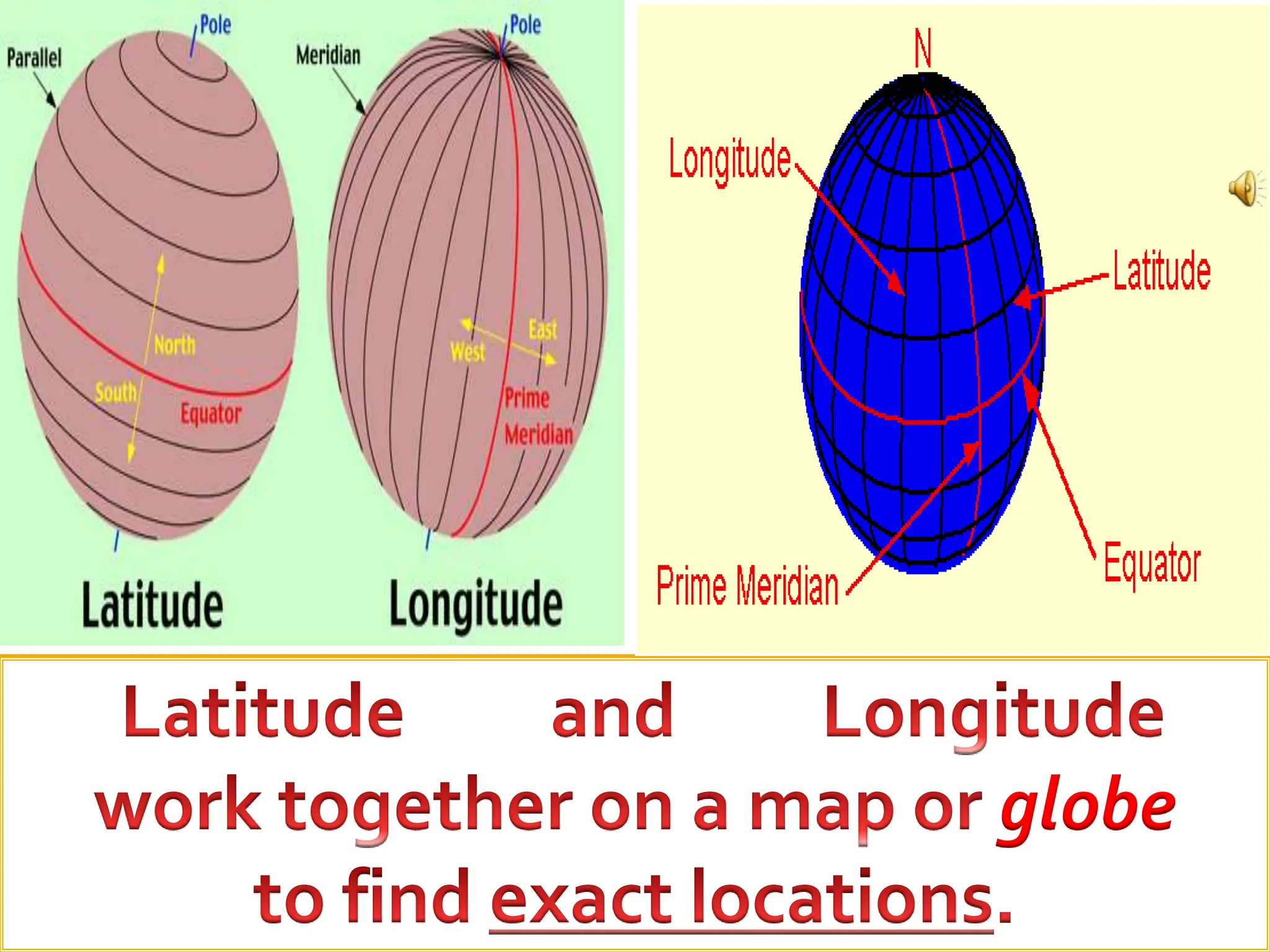
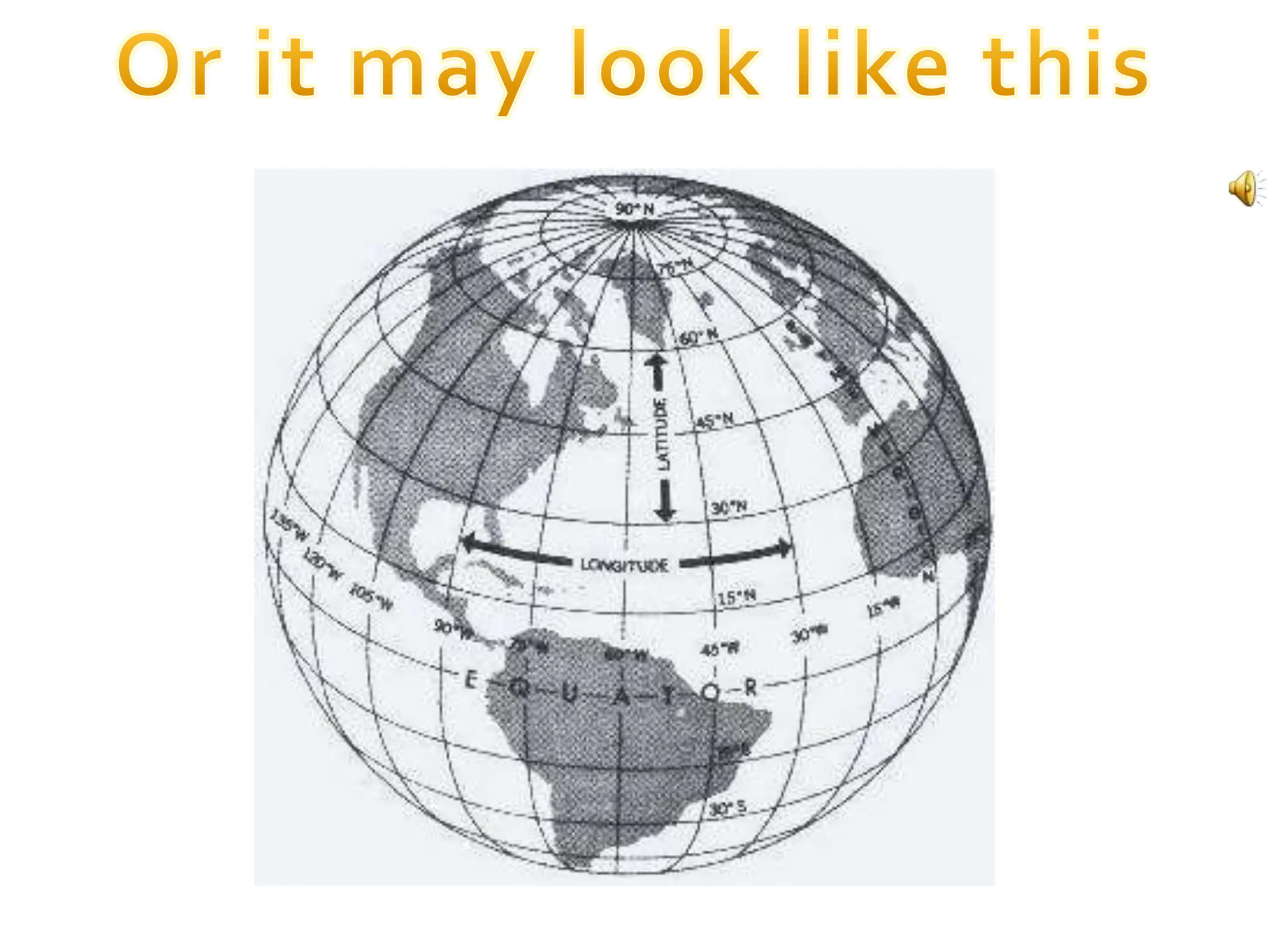
To help locate places on a map,
we use lines of latitude and longitude
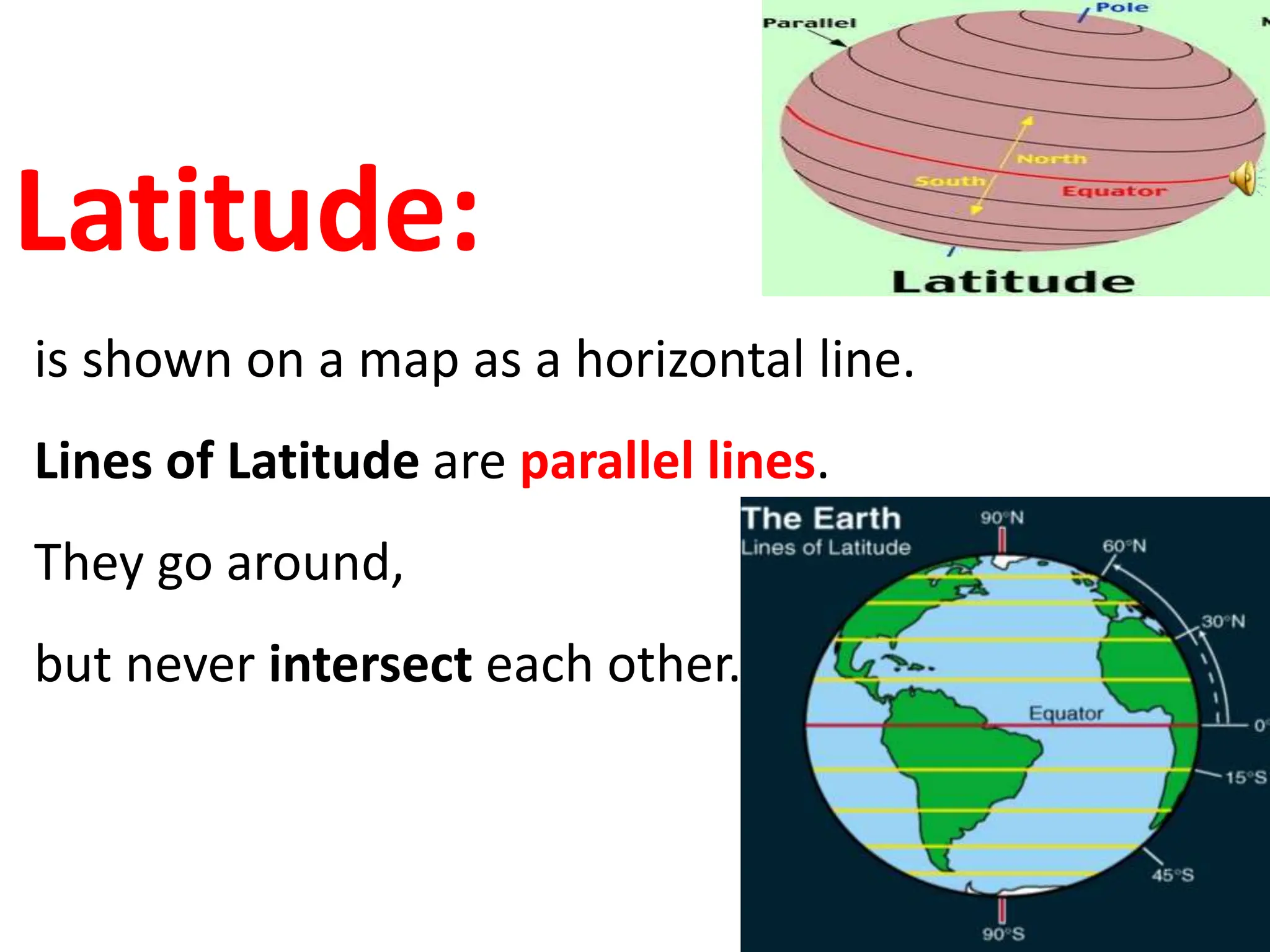
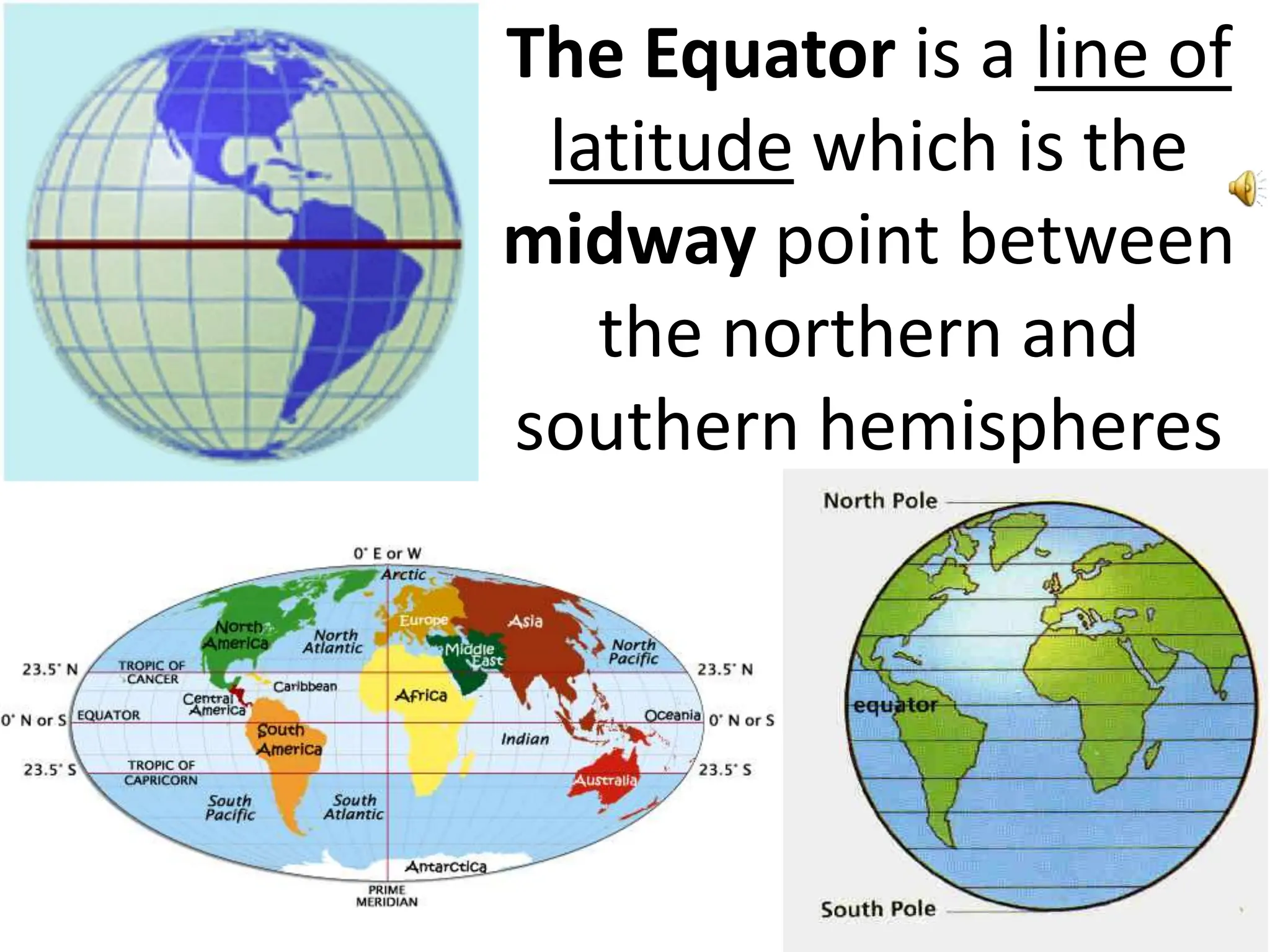
Latitude:
is shown on a map as a horizontal line.
Lines of Latitude are parallel lines.
They go around,
but never intersect each other.
The Equator is a line of
latitude which is the
midway point between
the northern and
southern hemispheres
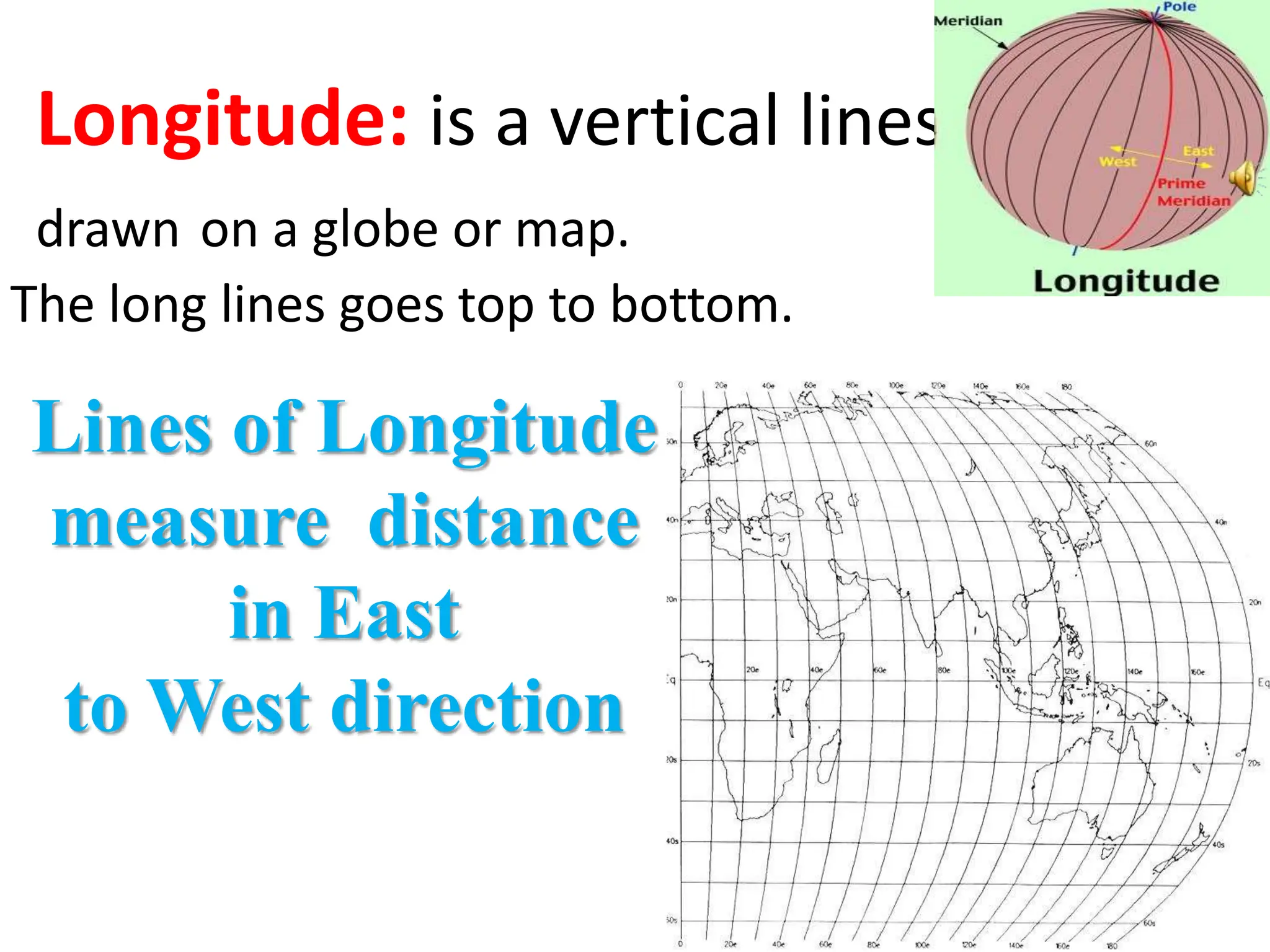
Longitude: is a vertical lines
drawn on a globe or map.
The long lines goes top to bottom.
Lines of Longitude
measure distance
in East
to West direction
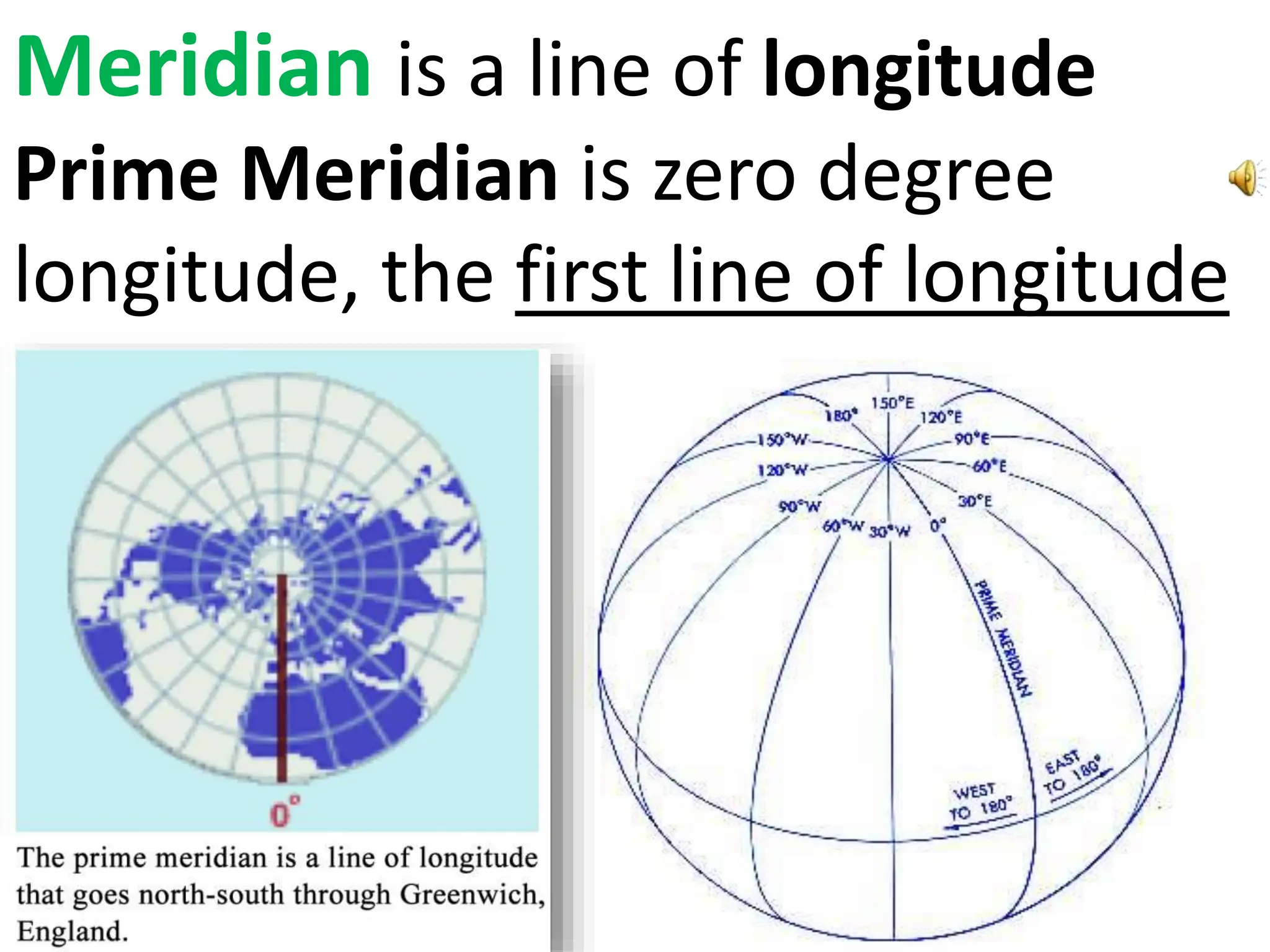
Meridian is a line of longitude
Prime Meridian is zero degree
longitude, the first line of longitude
globe
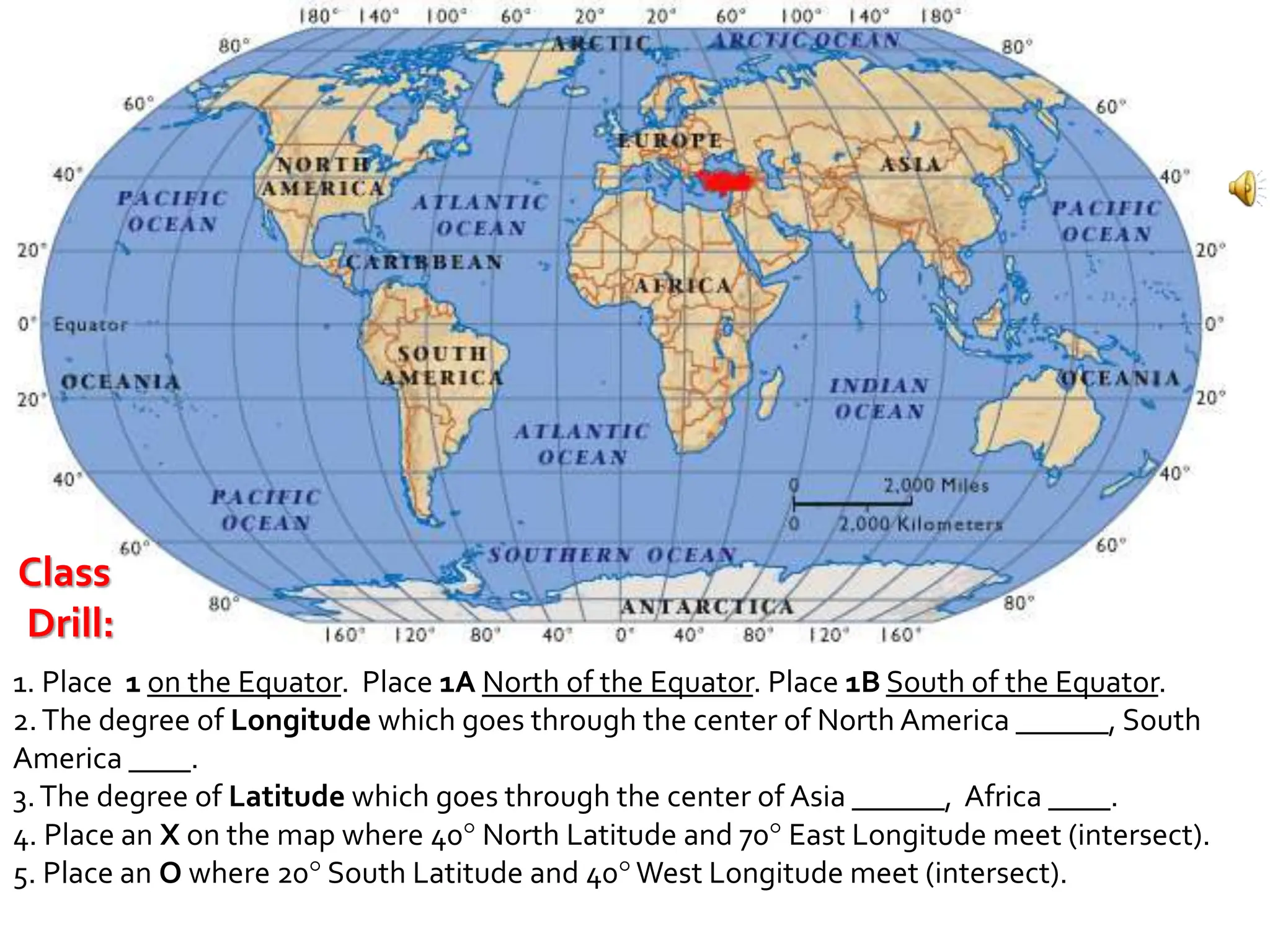
1. Place 1 on the Equator. Place 1A North of the Equator. Place 1B South of the Equator.
2.The degree of Longitude which goes through the center of North America ______, South
America ____.
3.The degree of Latitude which goes through the center of Asia ______, Africa ____.
4. Place an X on the map where 40 North Latitude and 70 East Longitude meet (intersect).
5. Place an O where 20 South Latitude and 40 West Longitude meet (intersect).
Class
Drill:
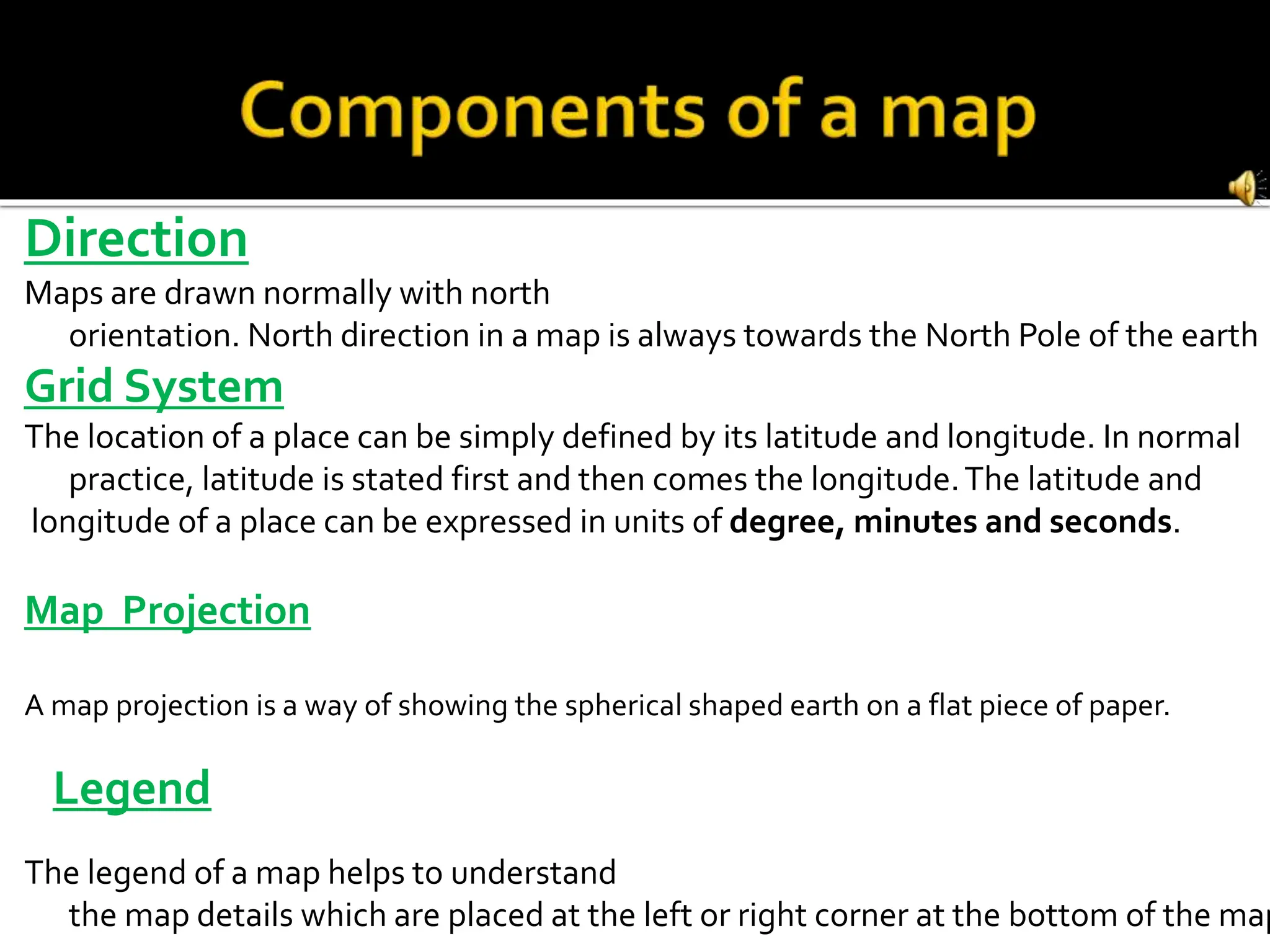
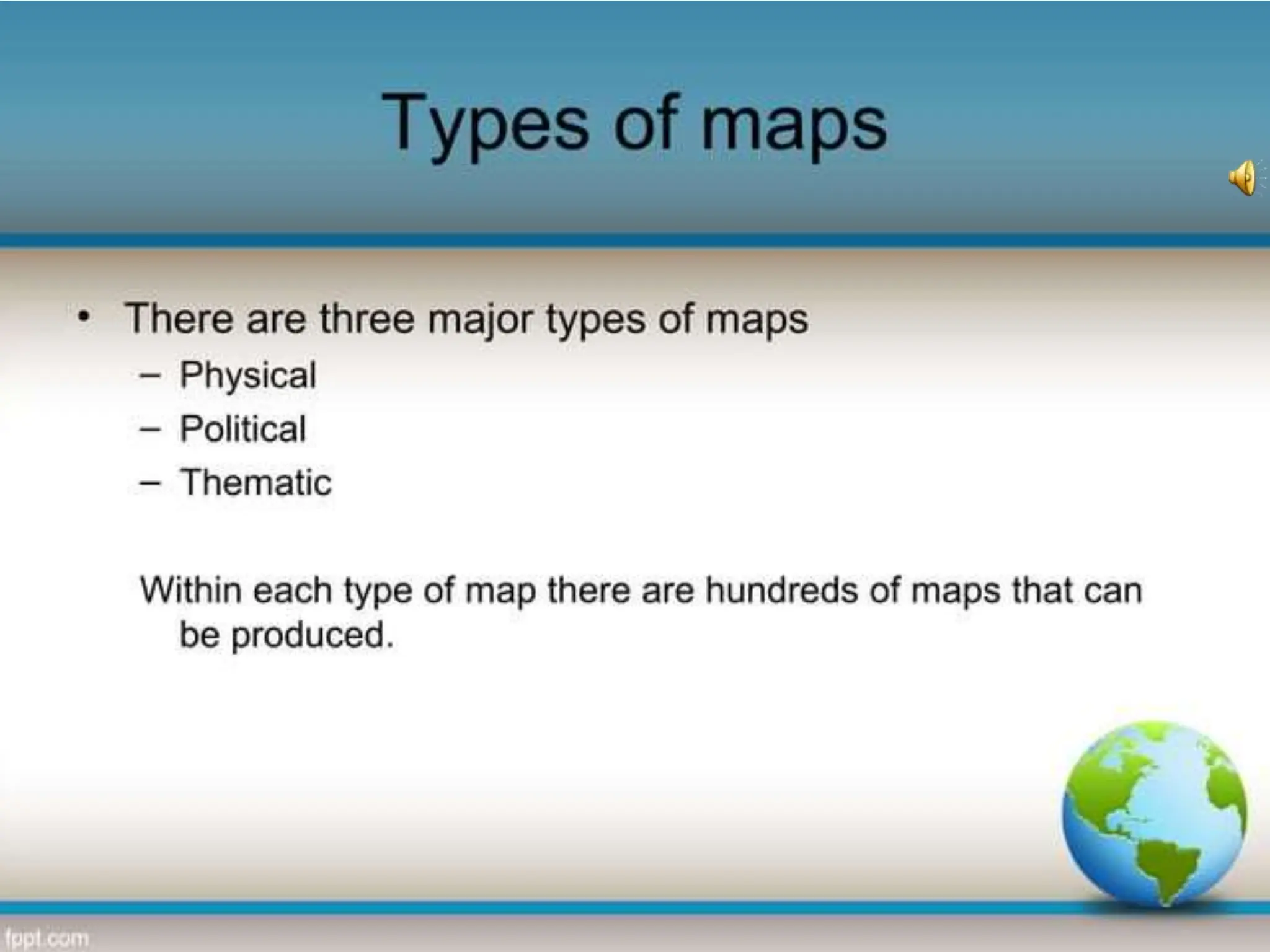
A map should include the following components namely,
the title, scale, direction, grid system, projection, legend,
conventional signs and symbols.
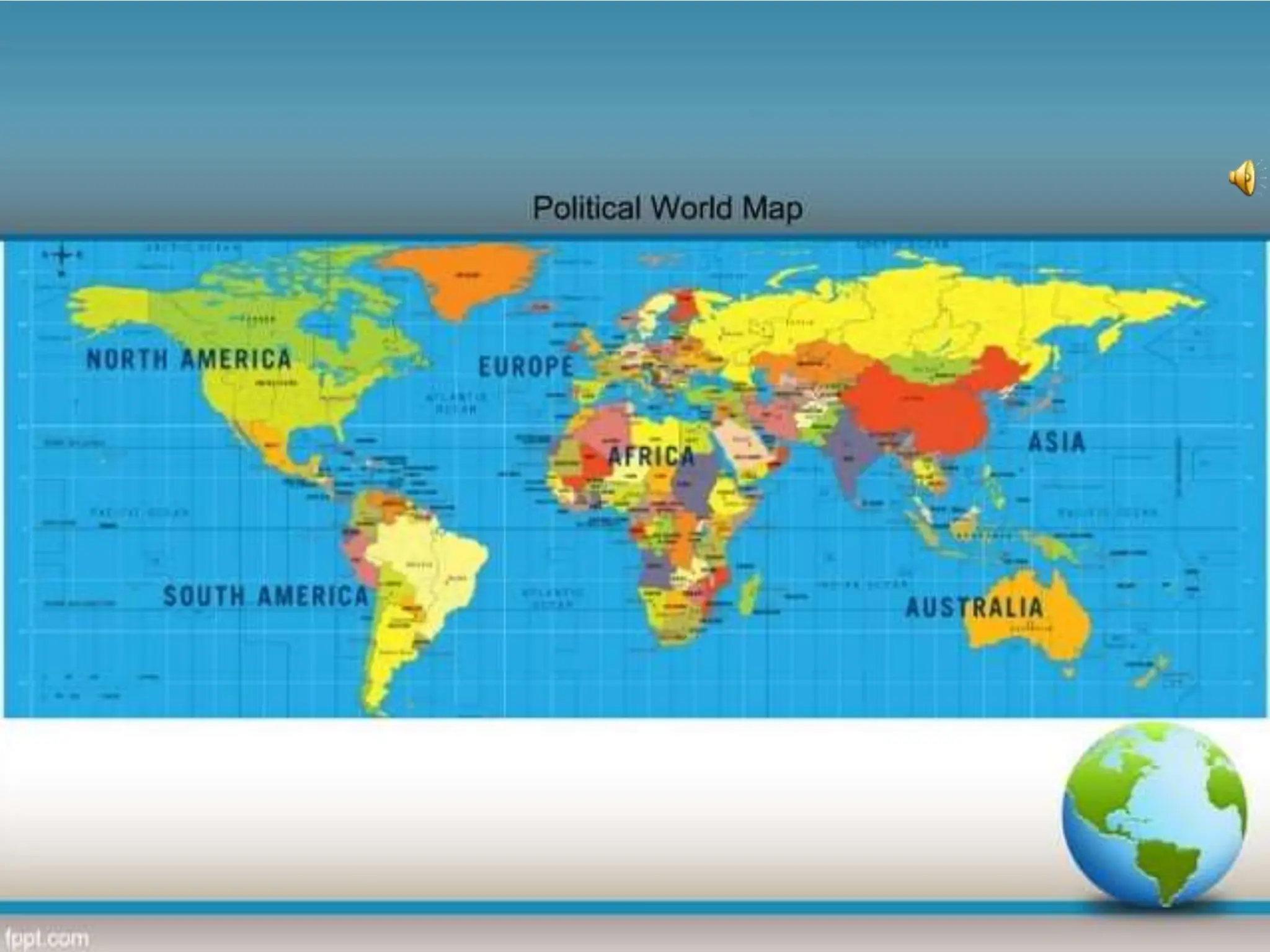
TITLE OF MAP
It indicates the purpose or theme of the map. Example: Pakistan
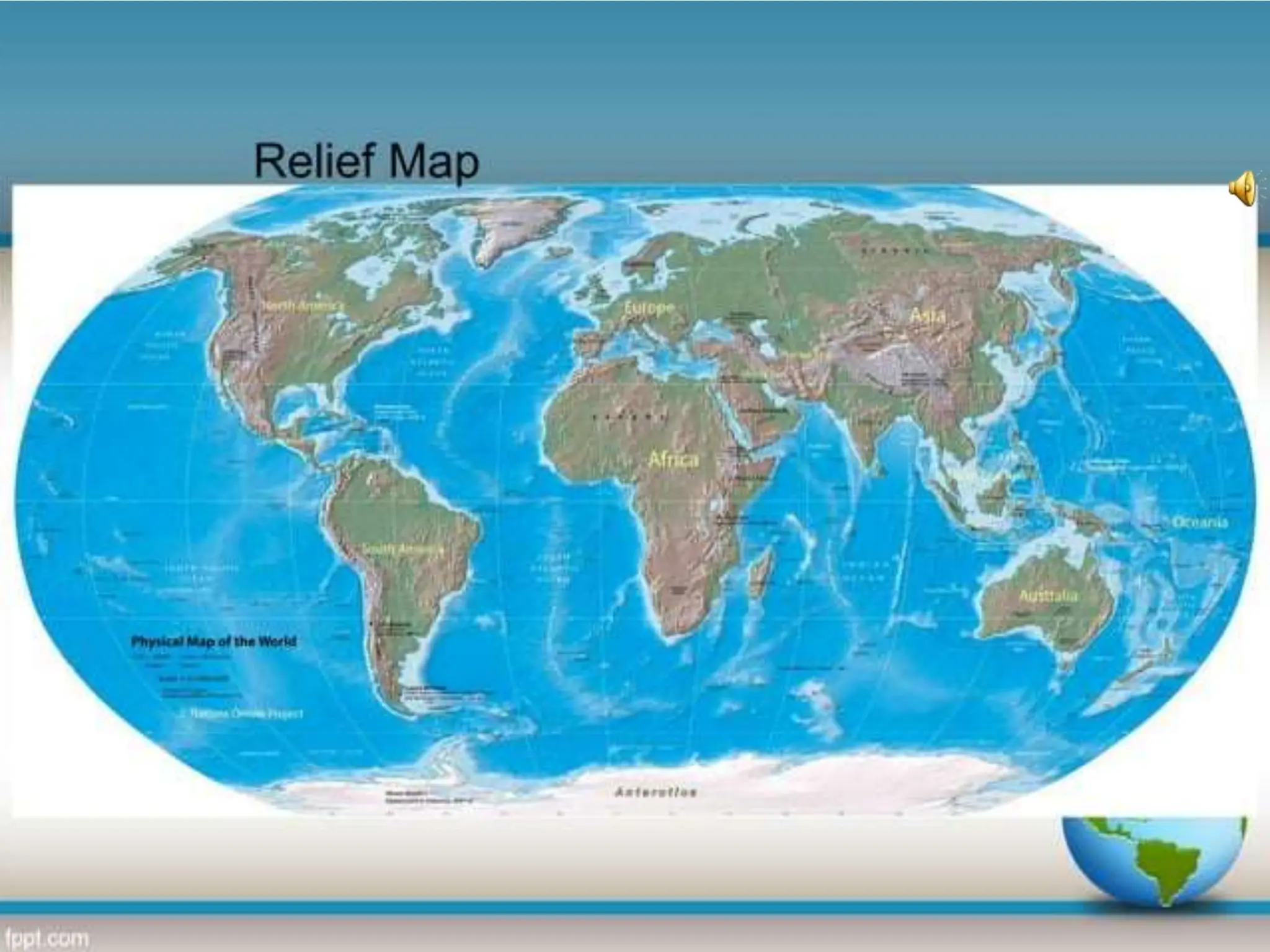
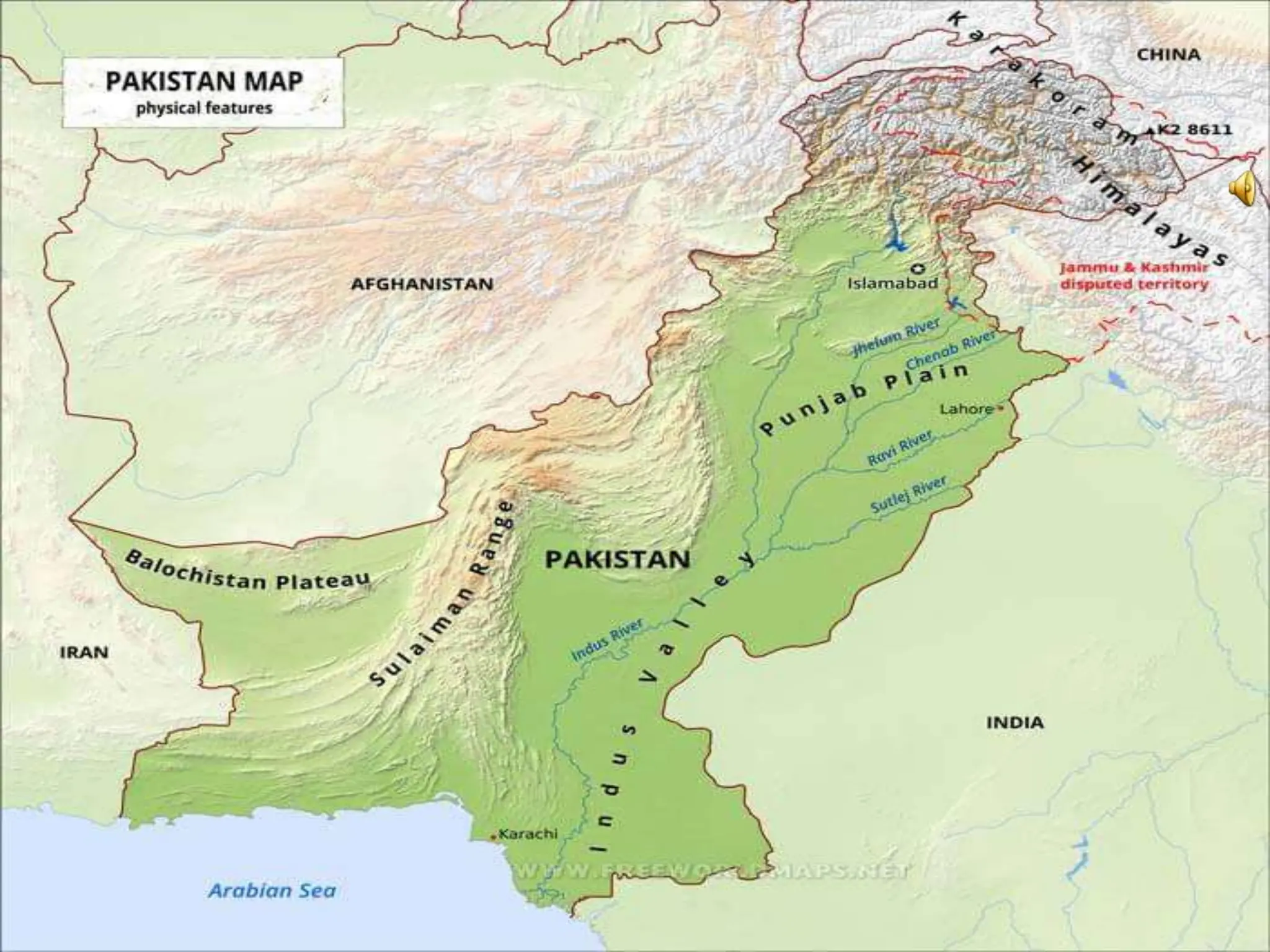
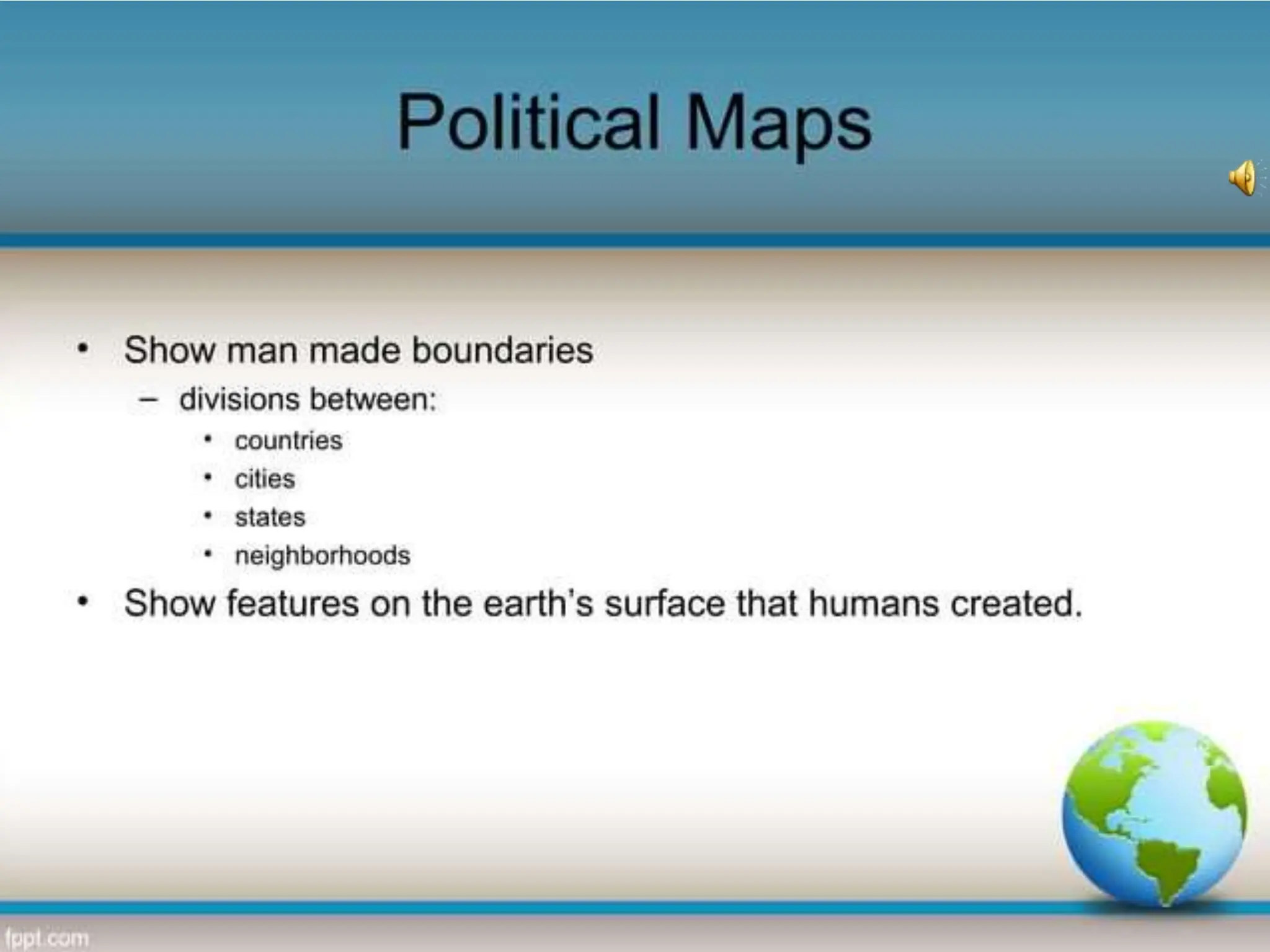
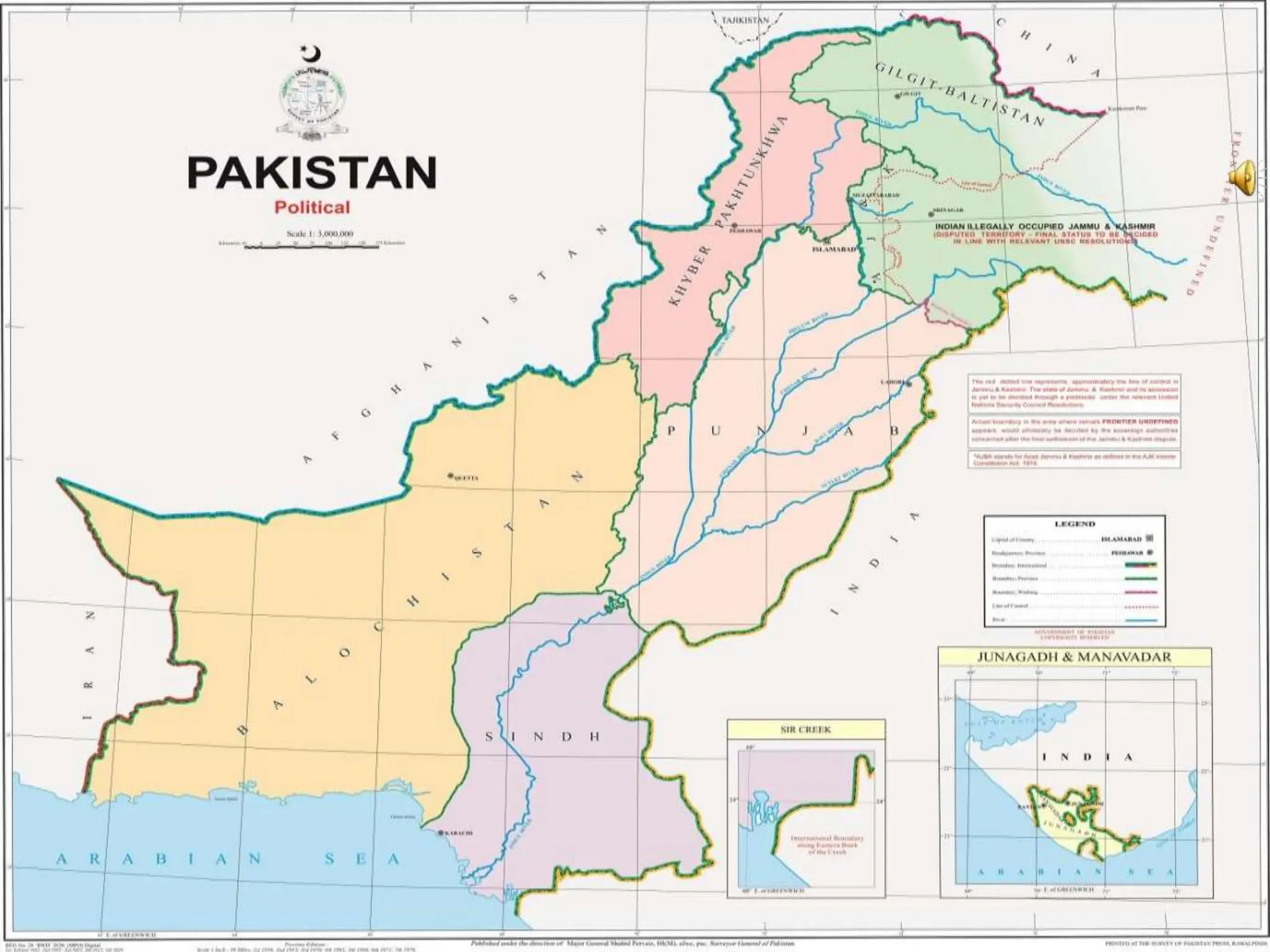
– Physical,World – Political, Islamabad –Transport.
Scale
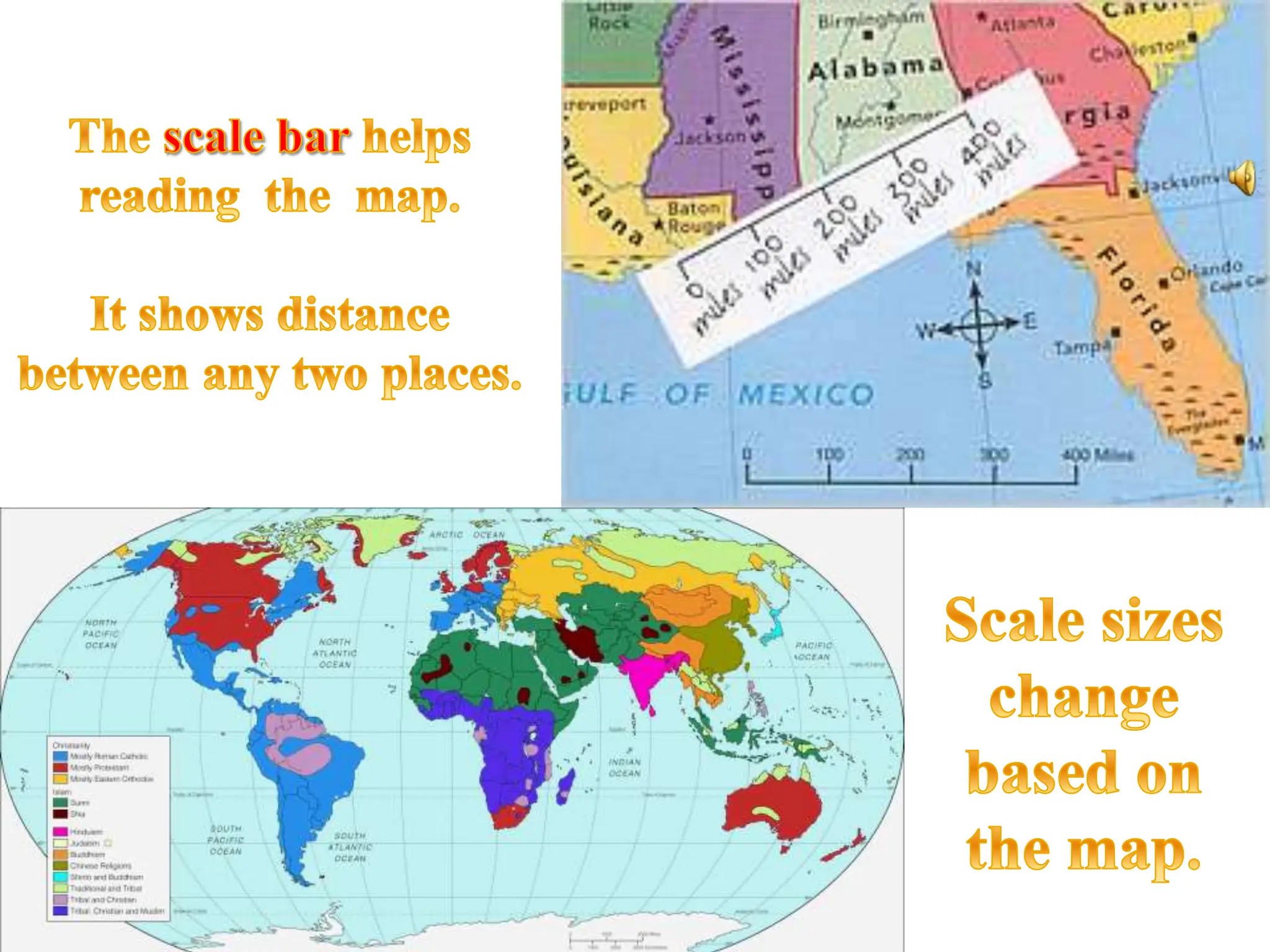
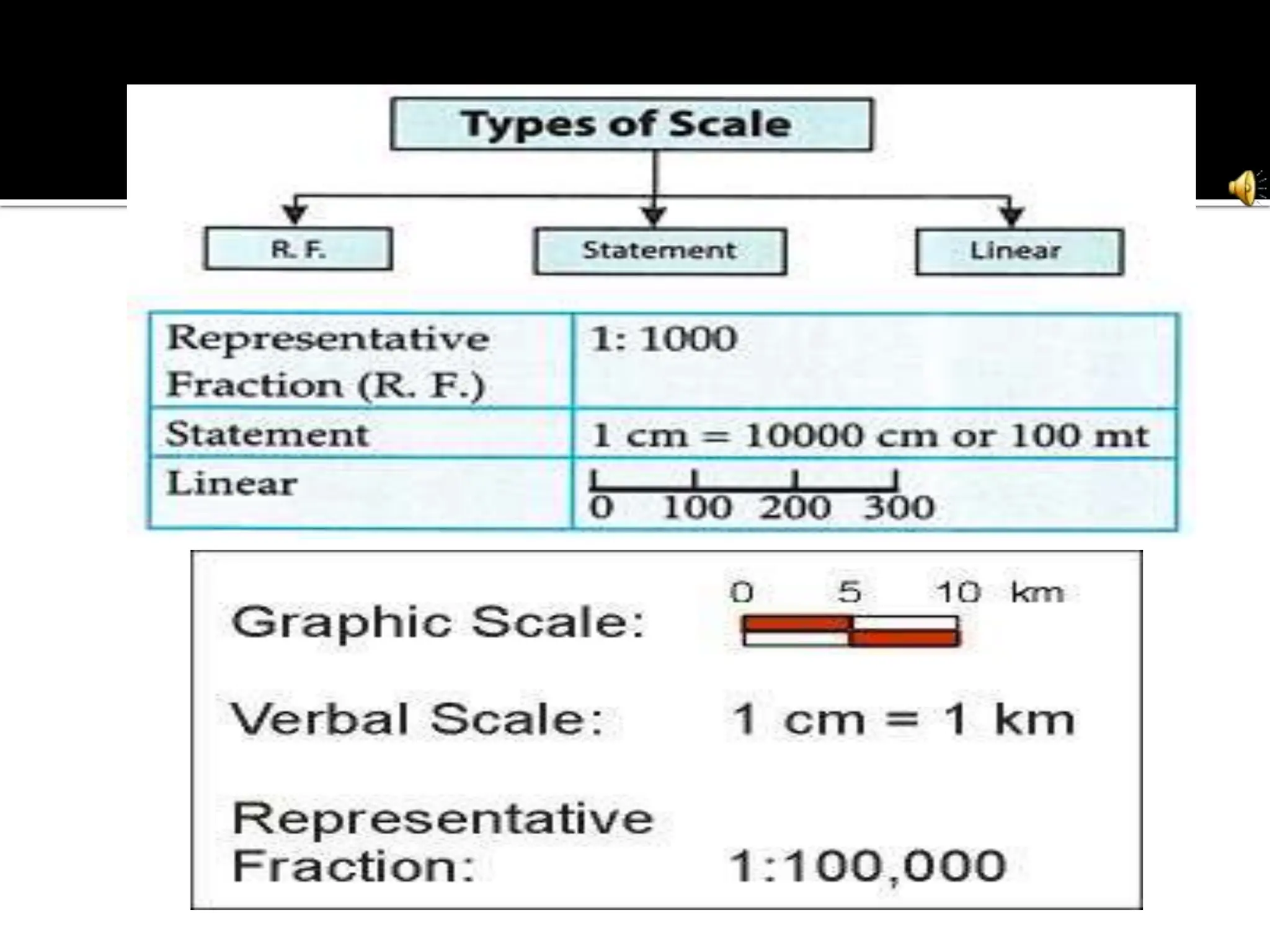
Scale makes it possible to reduce the size of the whole earth
to show it on a piece of paper.
A scale is a ratio between the actual distance on the map to
the actual distance on the ground.
Direction
Maps are drawn normally with north
orientation. North direction in a map is always towards the North Pole of the earth
Grid System
The location of a place can be simply defined by its latitude and longitude. In normal
practice, latitude is stated first and then comes the longitude.The latitude and
longitude of a place can be expressed in units of degree, minutes and seconds.
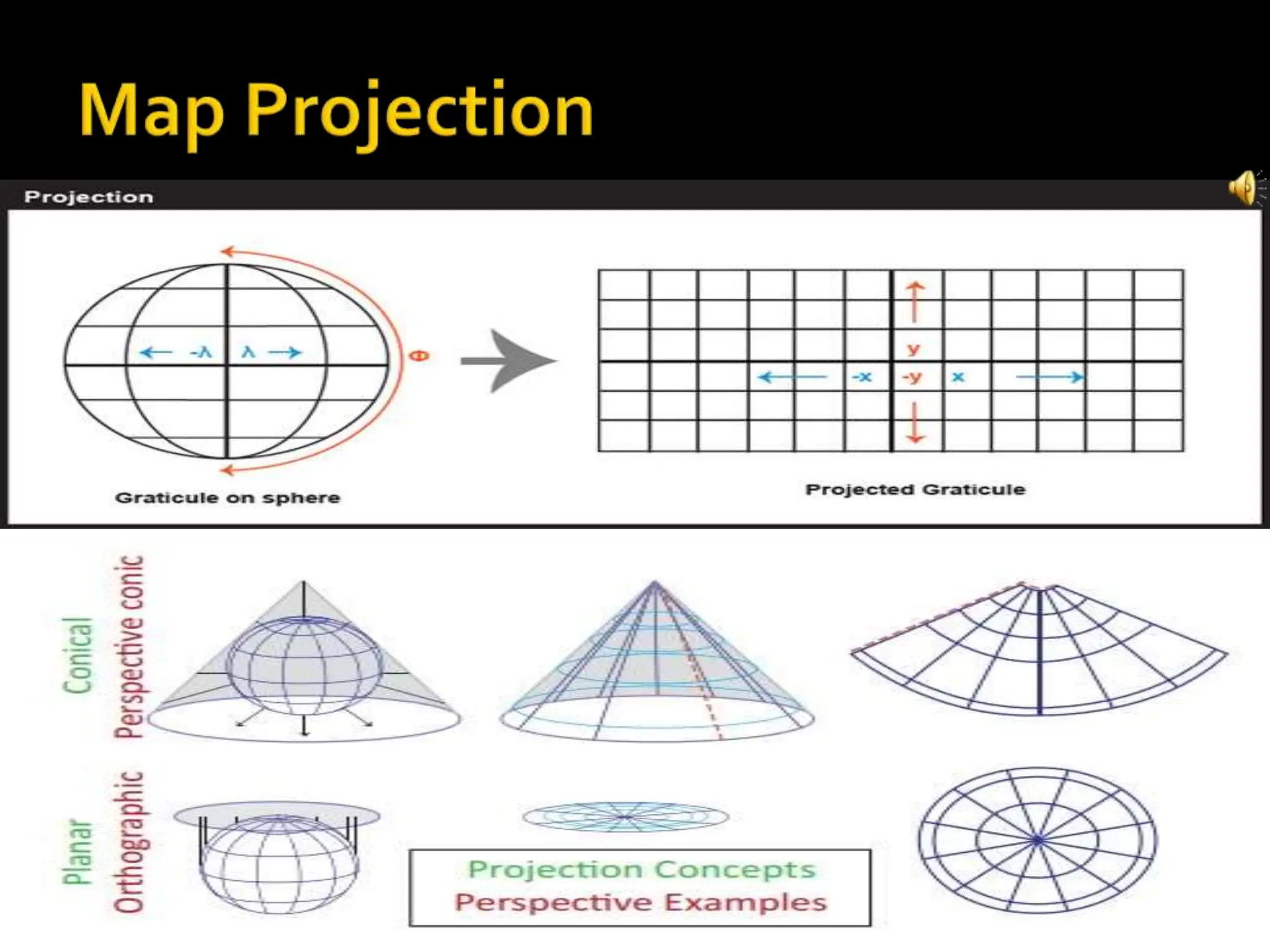
Map Projection
A map projection is a way of showing the spherical shaped earth on a flat piece of paper.
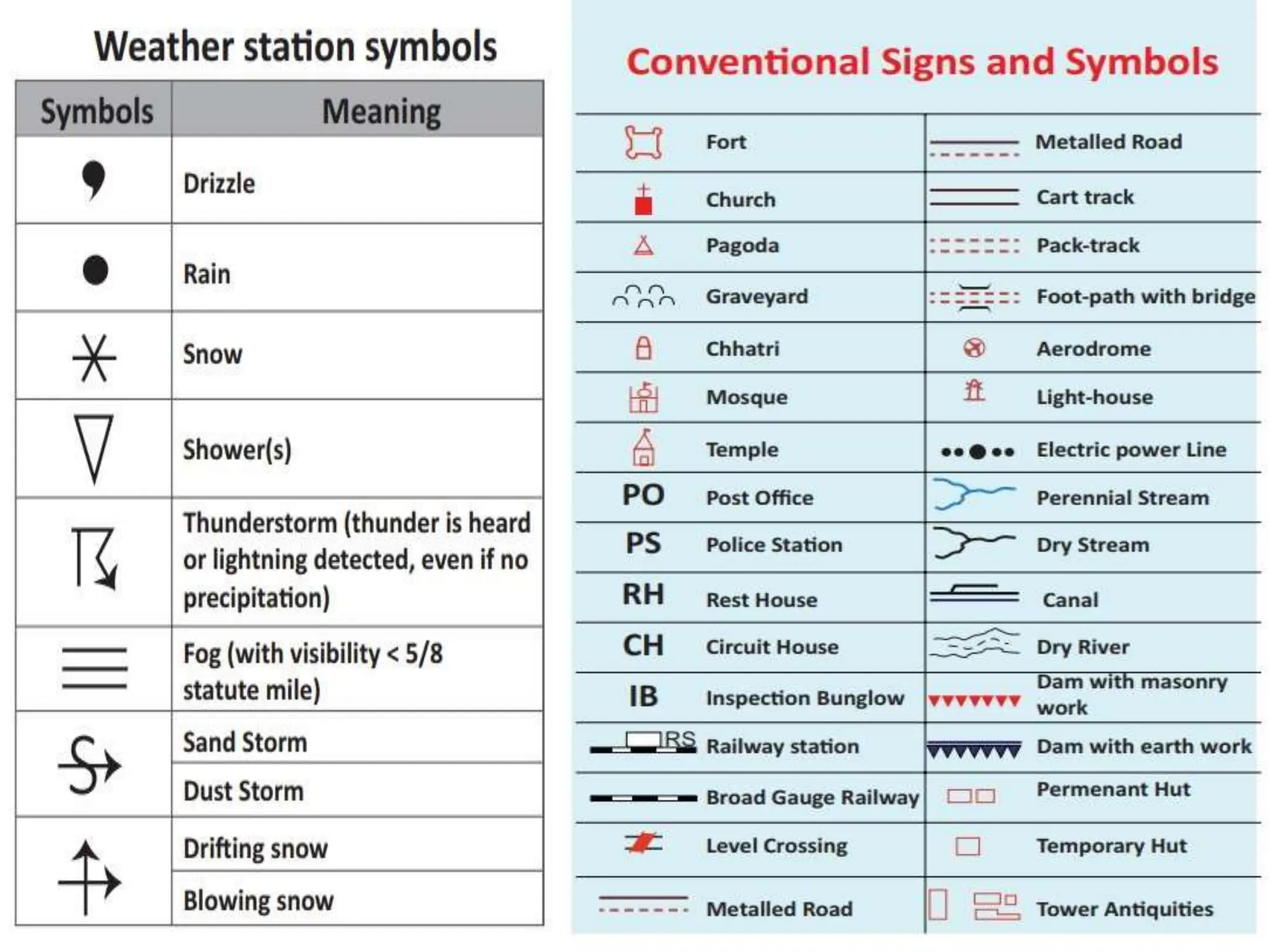
Legend
The legend of a map helps to understand
the map details which are placed at the left or right corner at the bottom of the map
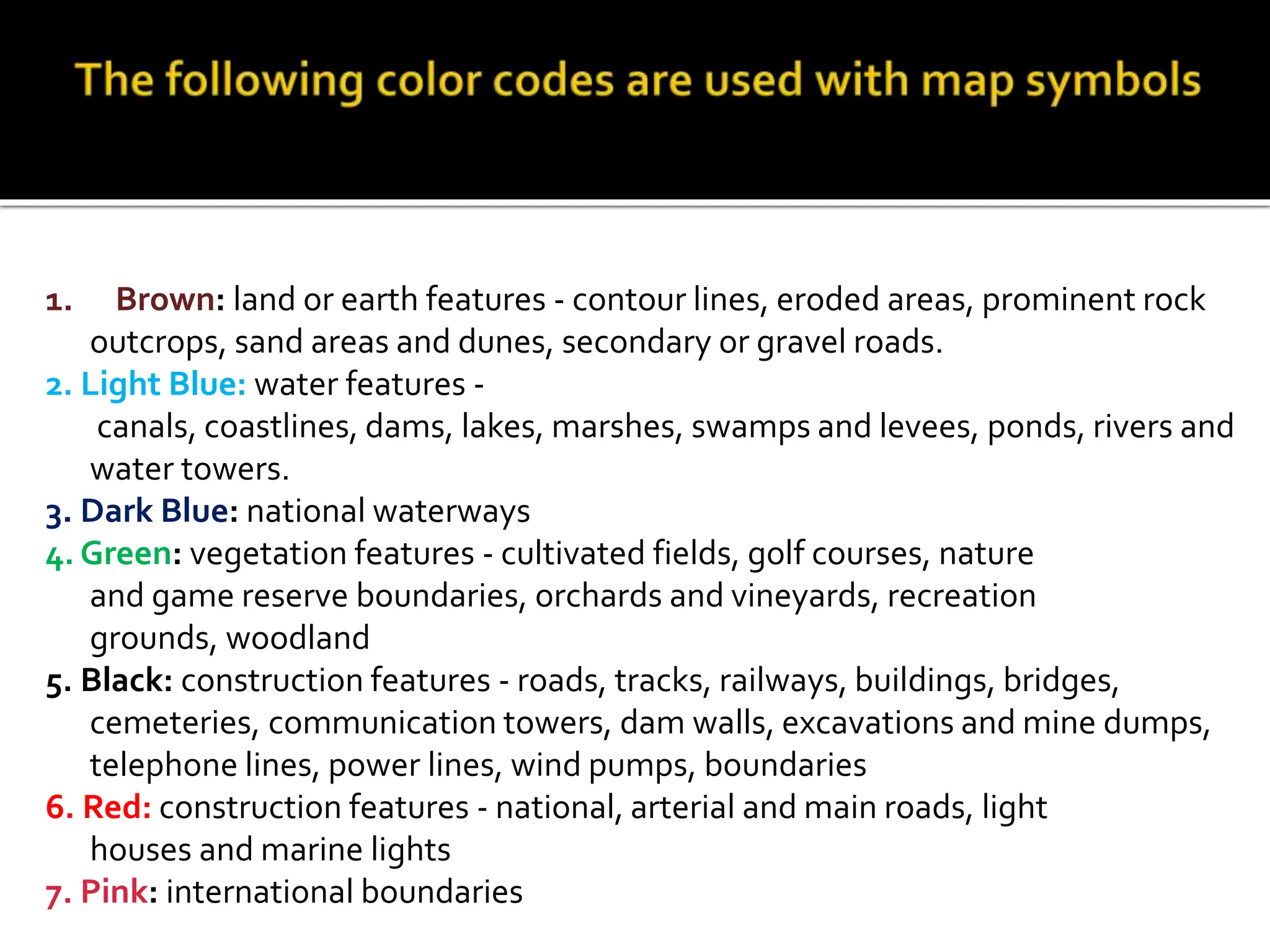
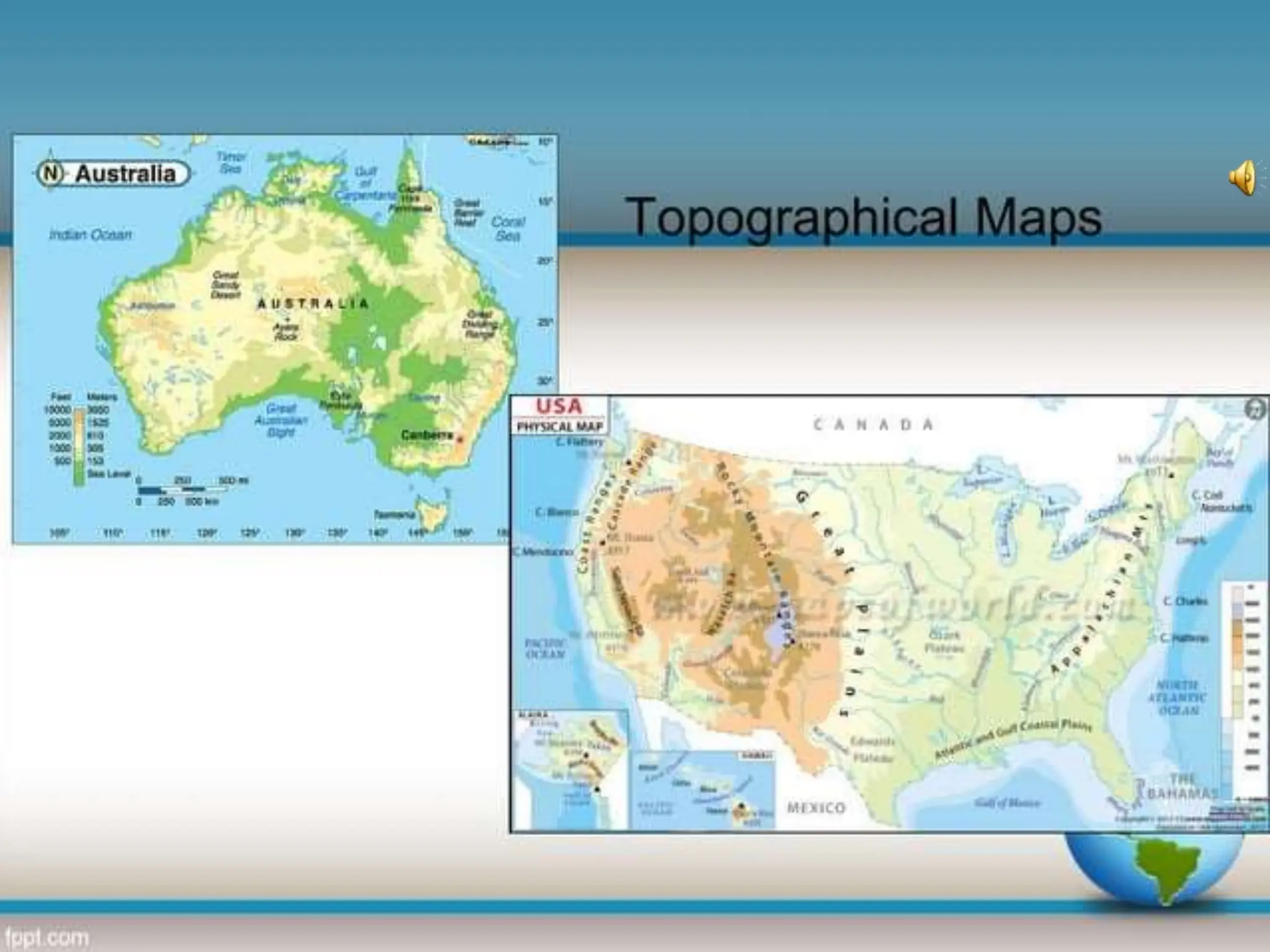
1. Brown: land or earth features - contour lines, eroded areas, prominent rock
outcrops, sand areas and dunes, secondary or gravel roads.
2. Light Blue: water features -
canals, coastlines, dams, lakes, marshes, swamps and levees, ponds, rivers and
water towers.
3. Dark Blue: national waterways
4. Green: vegetation features - cultivated fields, golf courses, nature
and game reserve boundaries, orchards and vineyards, recreation
grounds, woodland
5. Black: construction features - roads, tracks, railways, buildings, bridges,
cemeteries, communication towers, dam walls, excavations and mine dumps,
telephone lines, power lines, wind pumps, boundaries
6. Red: construction features - national, arterial and main roads, light
houses and marine lights
7. Pink: international boundaries
Map Reading Skills.pptx

Map Reading Skills.pptx

  • 1.
    A Lecture on MapReading Skills Map is a foundation of knowledge Presented by: Abbas Hyder (Lecturer in Geography)
  • 2.
    An important toolused to study geography is a Map!
  • 4.
     The artof map - making is called Cartography.  A map is defined as a representation of the whole or a part of an area. Maps are usually prepared on a flat surface, but globes are also maps in that they represent the entire earth.  We commonly use them to communicate graphic information about places to others. Maps are used for many purposes in daily life -- to help people navigate from place to place.
  • 5.
     TITLEOF AMAP  DIRECTION OF MAP  SCALE OF MAP  MAP PROJECTION  LEGEND OR INDEX OF MAP
  • 6.
    Map reading isa life skill, with a vocabulary all its own!
  • 7.
    Cardinal Directions are North,East, South and West.
  • 8.
    Cardinal Directions are shownon a map as a compass rose.
  • 11.
    LargeAmount of detail,can show on a small area.
  • 12.
    SmallAmount of detail,can show on a large area.
  • 13.
    The map key(or legend) helps identify features on a map. Popular map keys show elevation, terrain population, religions, and more.
  • 15.
    To help locateplaces on a map, we use lines of latitude and longitude
  • 16.
    Latitude: is shown ona map as a horizontal line. Lines of Latitude are parallel lines. They go around, but never intersect each other.
  • 17.
    The Equator isa line of latitude which is the midway point between the northern and southern hemispheres
  • 18.
    Longitude: is avertical lines drawn on a globe or map. The long lines goes top to bottom. Lines of Longitude measure distance in East to West direction
  • 19.
    Meridian is aline of longitude Prime Meridian is zero degree longitude, the first line of longitude
  • 20.
  • 23.
    1. Place 1on the Equator. Place 1A North of the Equator. Place 1B South of the Equator. 2.The degree of Longitude which goes through the center of North America ______, South America ____. 3.The degree of Latitude which goes through the center of Asia ______, Africa ____. 4. Place an X on the map where 40 North Latitude and 70 East Longitude meet (intersect). 5. Place an O where 20 South Latitude and 40 West Longitude meet (intersect). Class Drill:
  • 24.
    A map shouldinclude the following components namely, the title, scale, direction, grid system, projection, legend, conventional signs and symbols. TITLE OF MAP It indicates the purpose or theme of the map. Example: Pakistan – Physical,World – Political, Islamabad –Transport. Scale Scale makes it possible to reduce the size of the whole earth to show it on a piece of paper. A scale is a ratio between the actual distance on the map to the actual distance on the ground.
  • 25.
    Direction Maps are drawnnormally with north orientation. North direction in a map is always towards the North Pole of the earth Grid System The location of a place can be simply defined by its latitude and longitude. In normal practice, latitude is stated first and then comes the longitude.The latitude and longitude of a place can be expressed in units of degree, minutes and seconds. Map Projection A map projection is a way of showing the spherical shaped earth on a flat piece of paper. Legend The legend of a map helps to understand the map details which are placed at the left or right corner at the bottom of the map
  • 26.
    1. Brown: landor earth features - contour lines, eroded areas, prominent rock outcrops, sand areas and dunes, secondary or gravel roads. 2. Light Blue: water features - canals, coastlines, dams, lakes, marshes, swamps and levees, ponds, rivers and water towers. 3. Dark Blue: national waterways 4. Green: vegetation features - cultivated fields, golf courses, nature and game reserve boundaries, orchards and vineyards, recreation grounds, woodland 5. Black: construction features - roads, tracks, railways, buildings, bridges, cemeteries, communication towers, dam walls, excavations and mine dumps, telephone lines, power lines, wind pumps, boundaries 6. Red: construction features - national, arterial and main roads, light houses and marine lights 7. Pink: international boundaries