MAJOR PHARMACOLOGICAL GROUPS OF PLANT
DRUGS AND THEIR USES
A Presentation by
Dr. Nandadulal Sannigrahi,
Associate Professor of Botany,
Nistarini College, Purulia,
(W.B) 723101, INDIA.
INTRODUCTION
 Pharmacognosy is the study of medicines or crude drugs produced from
natural sources such as plants, microbes, and animals. It includes analysis of
their biological, chemical, biochemical, and physical properties.
 Pharmacognosy deals with the natural drugs obtained from organisms such
as most plants, microbes, and animals. Up to date, many important drugs
including morphine, atropine, galanthamine, etc. have originated from
natural sources which continue to be good model molecules in drug
discovery. Traditional medicine is also a part of pharmacognosy and most of
the third world countries still depend on the use of herbal medicines.
Consequently, pharmacognosy always keeps its popularity in
pharmaceutical sciences and plays a critical role in drug discovery.
 Plants have been always used as medicine by mankind to treat health-
threatening diseases and still popular to obtain new drug candidates as it is
the oldest medical practice for humans. The use of botanical natural health
products are on the increase all over the world. It is known that almost 80%
of the populations in developing countries rely on the traditional medicine,
mainly composing herbal prescriptions.
CLASSIFICATION OF PLANT DRUGS
 Crude drugs may be obtained from the different natural sources and these
sources are to be optimized from the different purposes.
 Plant drugs can be classified using the different approaches as follows:
 Alphabetical Classification,
 Morphological Classification,
 Taxonomical Pharmacological
 Chemical Classification
 Chemo-taxonomical classification
 Although, each systems of classification has number of merits and demerits
but the classification depends upon the requirement of uses.
ALPHABETICAL CLASSIFICATION
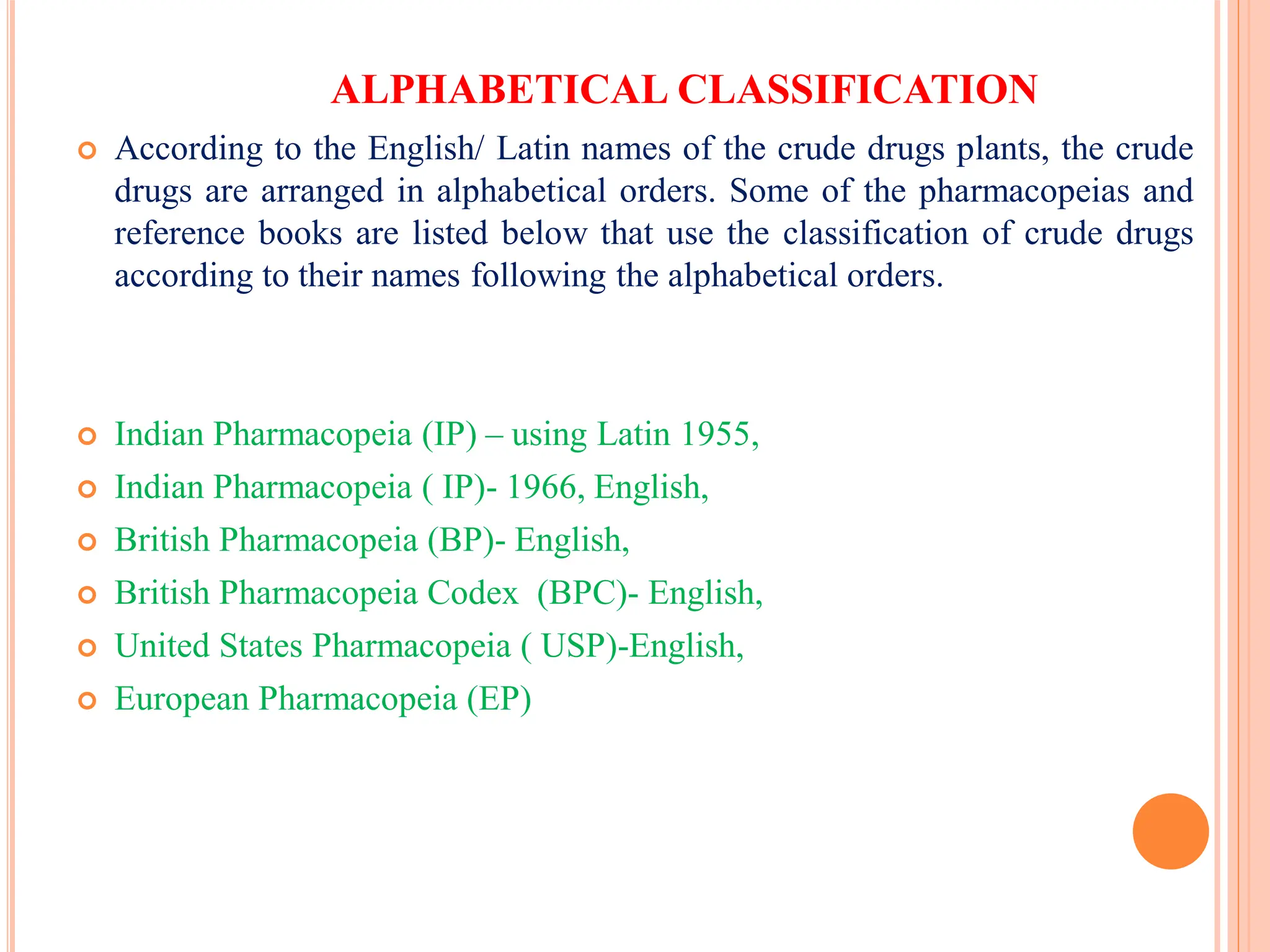
 According to the English/ Latin names of the crude drugs plants, the crude
drugs are arranged in alphabetical orders. Some of the pharmacopeias and
reference books are listed below that use the classification of crude drugs
according to their names following the alphabetical orders.
 Indian Pharmacopeia (IP) – using Latin 1955,
 Indian Pharmacopeia ( IP)- 1966, English,
 British Pharmacopeia (BP)- English,
 British Pharmacopeia Codex (BPC)- English,
 United States Pharmacopeia ( USP)-English,
 European Pharmacopeia (EP)
MORPHOLOGICAL CLASSIFICATION
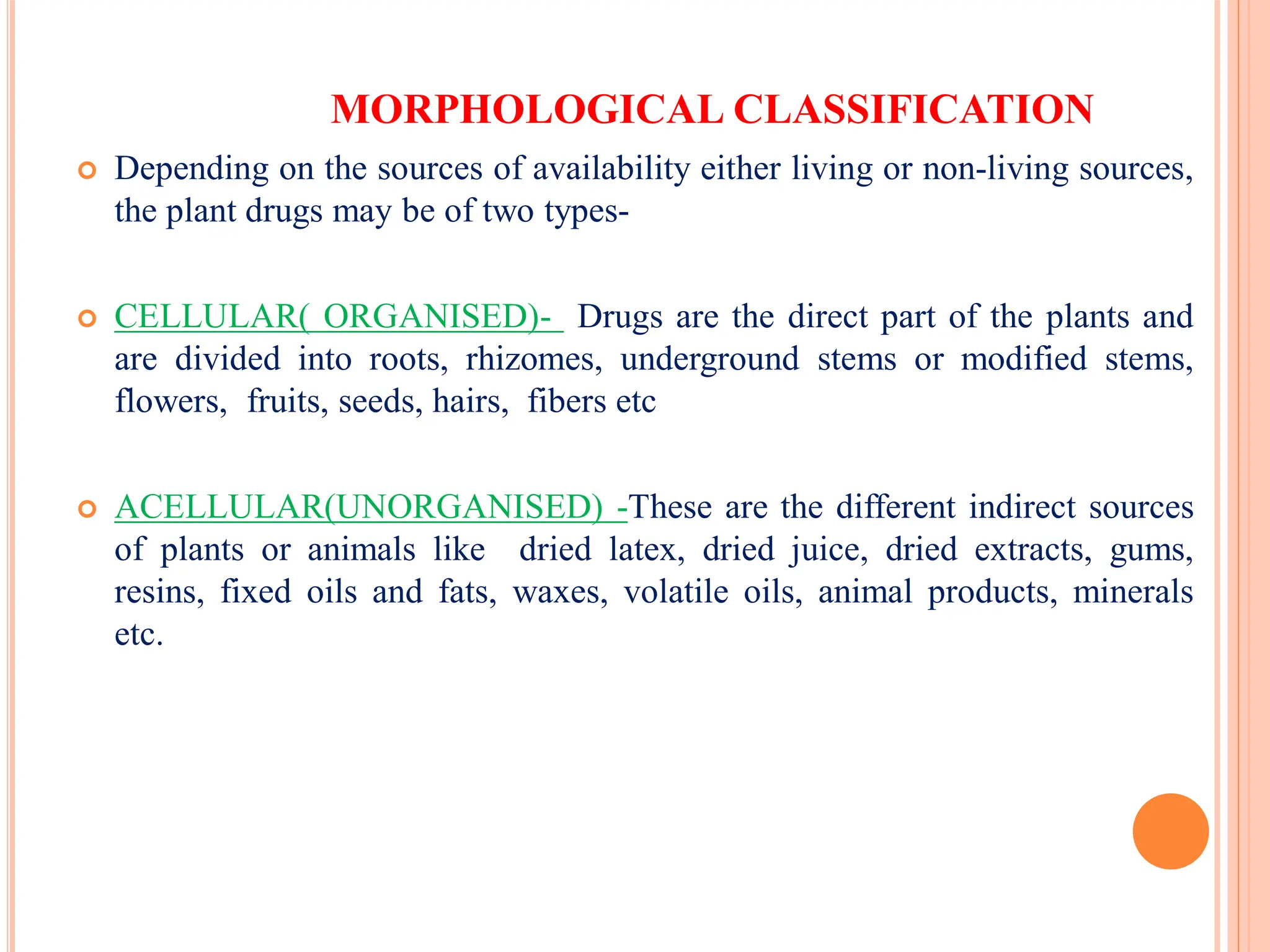
 Depending on the sources of availability either living or non-living sources,
the plant drugs may be of two types-
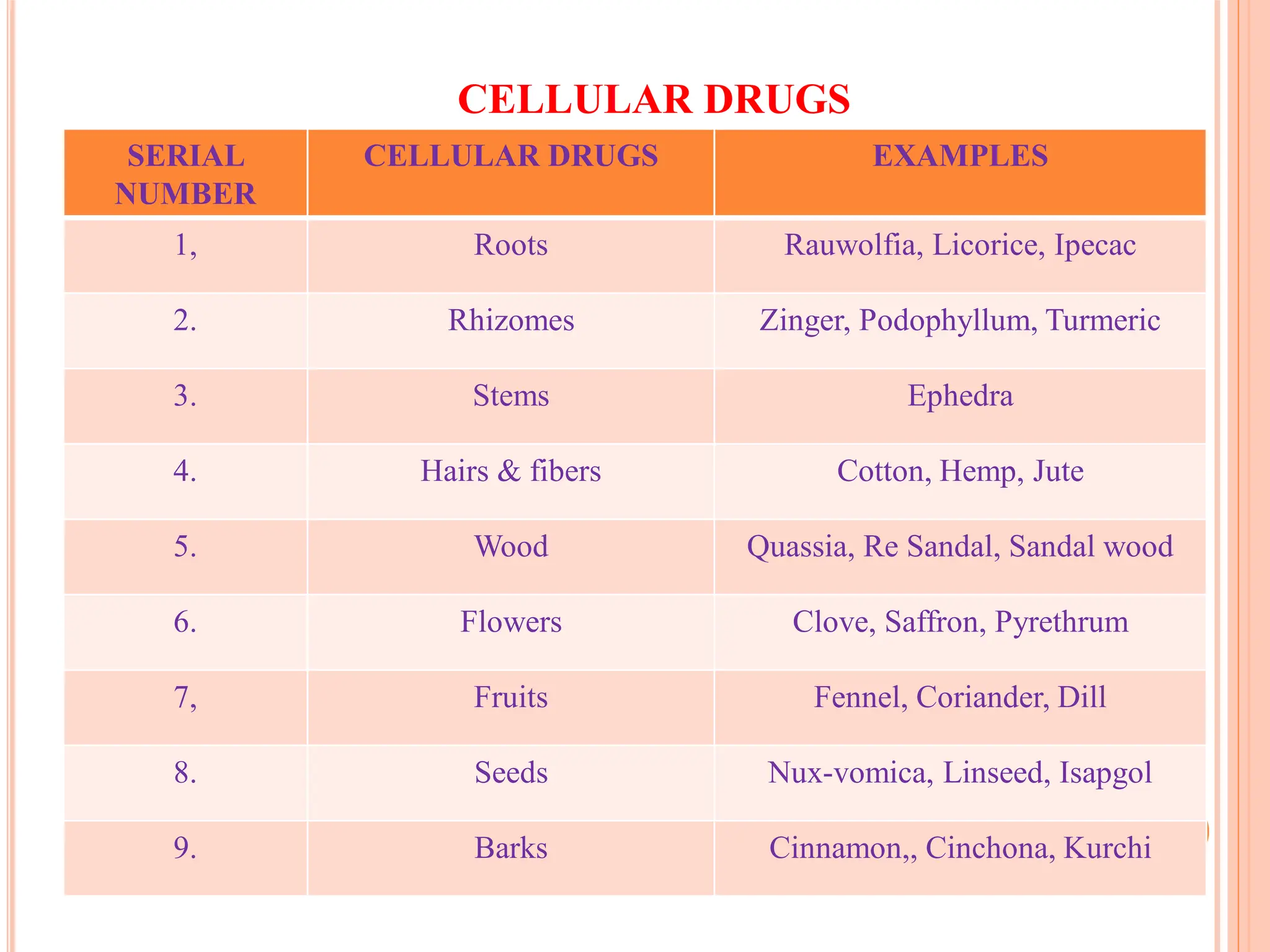
 CELLULAR( ORGANISED)- Drugs are the direct part of the plants and
are divided into roots, rhizomes, underground stems or modified stems,
flowers, fruits, seeds, hairs, fibers etc
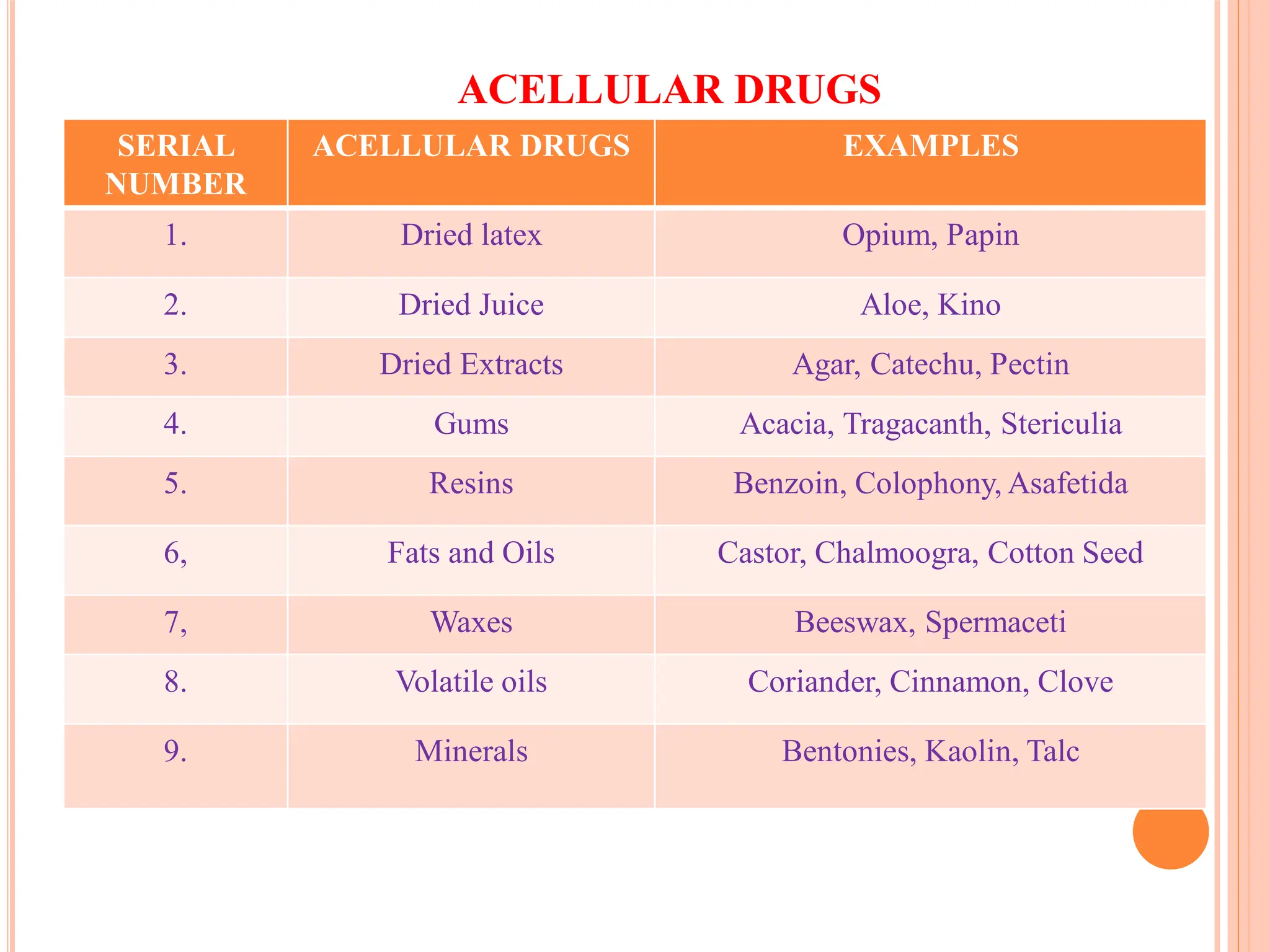
 ACELLULAR(UNORGANISED) -These are the different indirect sources
of plants or animals like dried latex, dried juice, dried extracts, gums,
resins, fixed oils and fats, waxes, volatile oils, animal products, minerals
etc.
CELLULAR DRUGS
SERIAL
NUMBER
CELLULAR DRUGS EXAMPLES
1, Roots Rauwolfia, Licorice, Ipecac
2. Rhizomes Zinger, Podophyllum, Turmeric
3. Stems Ephedra
4. Hairs & fibers Cotton, Hemp, Jute
5. Wood Quassia, Re Sandal, Sandal wood
6. Flowers Clove, Saffron, Pyrethrum
7, Fruits Fennel, Coriander, Dill
8. Seeds Nux-vomica, Linseed, Isapgol
9. Barks Cinnamon,, Cinchona, Kurchi
ACELLULAR DRUGS
SERIAL
NUMBER
ACELLULAR DRUGS EXAMPLES
1. Dried latex Opium, Papin
2. Dried Juice Aloe, Kino
3. Dried Extracts Agar, Catechu, Pectin
4. Gums Acacia, Tragacanth, Stericulia
5. Resins Benzoin, Colophony, Asafetida
6, Fats and Oils Castor, Chalmoogra, Cotton Seed
7, Waxes Beeswax, Spermaceti
8. Volatile oils Coriander, Cinnamon, Clove
9. Minerals Bentonies, Kaolin, Talc
CLASSIFICATION ON THE BASIS OF SOURCE
 Plants are the source of diversity,
 Different plants parts irrespective of nature contains a unique properties,
 Each part is the treasure of the diverse compounds,
 Different compounds are synthesized on the basis of their diverse metabolic
process,
 Different factors of the soil contributes a lot ,
 Different stress factors enable to produce a set of diverse compounds for the
same,
 The plant phenological cycle plays an important role in this regard,
 The different environmental conditions lead to the production of different
set of chemicals,
 List of plants parts and their bioactive nature stated below.
CLASSIFICATION OF PLANT DRUGS
Serial no. Basis of Source Examples
1. Root drug Atropa belladonna Linn.
2. Underground stem drug Curcuma longa Linn.
3. Bark drug Cinchona officinalis Linn.
4. Stem and Wood drug Acacia catechu Willd.
5. Leaf drug Adhatoda vesica Nees.
6. Fruit drug Papaver somnifera Linn.
7. Seed drug Strychnos nux-vomica Linn.
8. Flower drug Crocus sativus Linn.
9. Drug obtained from all
parts
Andrographis paniculata Wall.ex.
Linn.
CRUDE DRUGS CLASSIFICATION ON THE BASIS OF
CHEMICAL COMPOUNDS
 Plant metabolism produces two kind of metabolites- Primary and Secondary
 Primary metabolites are the ingredients for plant primary metabolism for the
growth and development of plant body,
 Secondary metabolites are the derivatives produced by the plants to perform
diverse metabolic compounds to respond to the different stress factors at the
cost of the exposure to the environments,
 Secondary metabolites possess a lot of bioactive compounds,
 These compounds are classified on the basis of their chemical nature,
CRUDE DRUGS CLASSIFICATION ON THE BASIS OF
CHEMICAL COMPOUNDS
Serial No. Chemical Compounds Examples of drugs
1. Carbohydrate
2. Glycosides Starch, Agar-agar, Pectin
3. Tannins Digitoxin, Salicine
4. Lipid or fat derivatives Galotonic acid, Catechine
5. Resin Clove oil, Peppermint oil
6. Alkaloids Hinge, Gumbos
7. Hormones Insulin. Quinine
8. Enzymes Papaine, Pepsin
9. Proteins Gelatin, Gluten
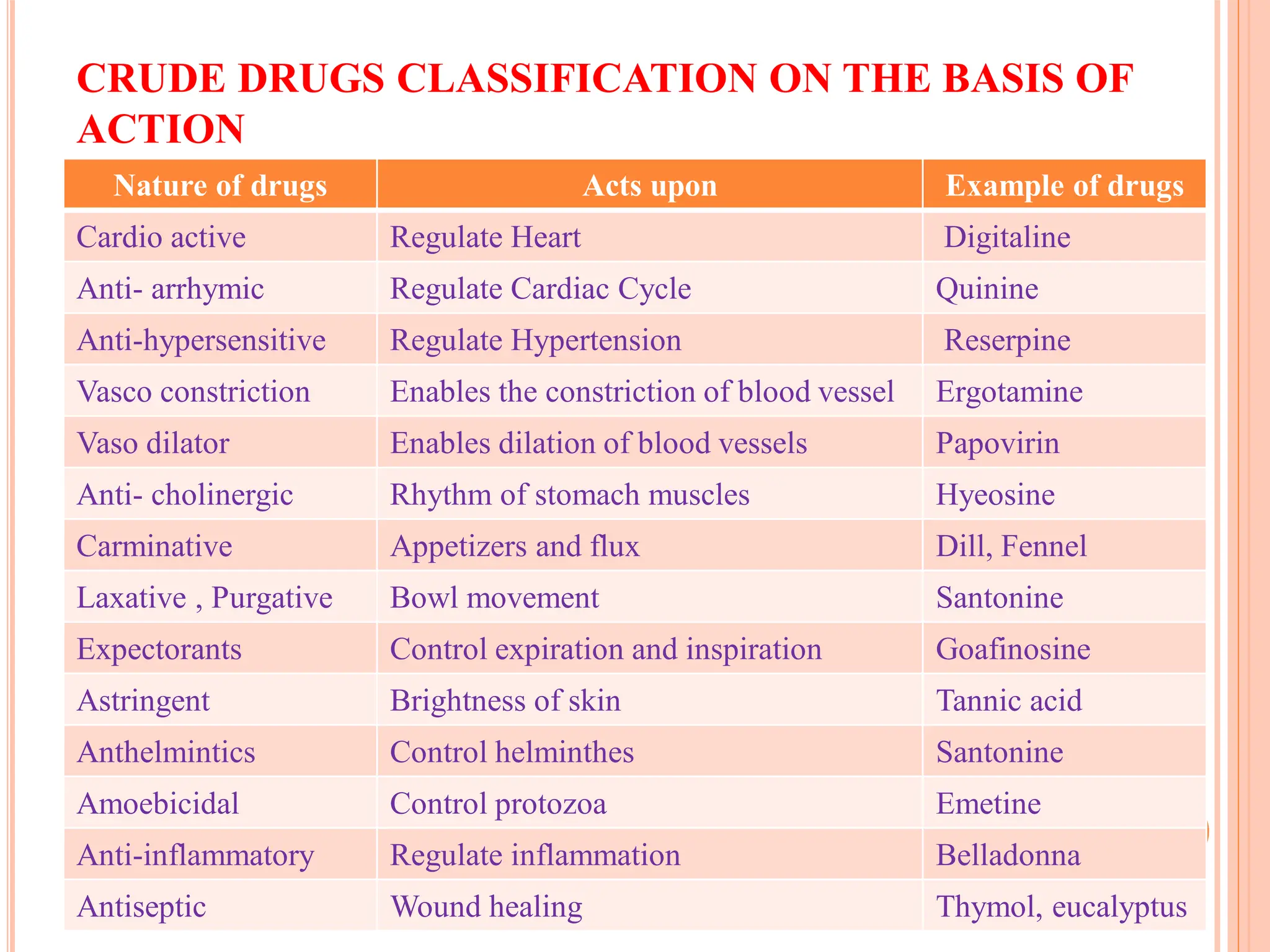
CRUDE DRUGS CLASSIFICATION ON THE BASIS OF
ACTION
 “A disorder of structure or function in a human, animal, or plant, especially
one that has a known cause and a distinctive group of symptoms, signs, or
anatomical changes.”
 Diseases are of different types and each disease is the outcome of some of
the reasons behind it.
 The disease either infectious or non-infectious may be caused by the
different types of pathogens, imbalance of the normal metabolic pathway or
anything else.
 The diseases are of different types as stated below. For each of them, the
different medicines are precise or anything else and a good number of
bioactive compounds having therapeutic values obtained from plants.
 The diseases may be Asthma, amoebiosis, arthritis, acne, allergy, sepsis,
bronchitis, cataract, cancer, cirrhosis. Cardiac disease, diarrhea, eczema,
epilepsy, gallstone, gastroentitis, meningitis, obesity, miscarriage etc.
CRUDE DRUGS CLASSIFICATION ON THE BASIS OF
ACTION
Nature of drugs Acts upon Example of drugs
Cardio active Regulate Heart Digitaline
Anti- arrhymic Regulate Cardiac Cycle Quinine
Anti-hypersensitive Regulate Hypertension Reserpine
Vasco constriction Enables the constriction of blood vessel Ergotamine
Vaso dilator Enables dilation of blood vessels Papovirin
Anti- cholinergic Rhythm of stomach muscles Hyeosine
Carminative Appetizers and flux Dill, Fennel
Laxative , Purgative Bowl movement Santonine
Expectorants Control expiration and inspiration Goafinosine
Astringent Brightness of skin Tannic acid
Anthelmintics Control helminthes Santonine
Amoebicidal Control protozoa Emetine
Anti-inflammatory Regulate inflammation Belladonna
Antiseptic Wound healing Thymol, eucalyptus
TAXONOMICAL CLASSIFICATION OF CRUDE DRUGS
 Taxonomy is the branch of science that deals of the identification,
nomenclature and the classification of plants,
 The classification of the plants is an old age practice,
 The plants can be classified on the basis of the availability of the crude
drugs with therapeutic values,
 The taxonomical classification of crude drugs play a very significant role in
the field of the plant sciences,
 The drugs are arranged according to their phylum, order, family, genus and
species,
 It is purely a type of botanical classification related to the source of crude
drugs.
 The highlight of this classification as stated below.
TAXONOMICAL CLASSIFICATION OF CRUDE DRUGS
ORDER FAMILY DRUGS
Liliflorae Liliaceae Colchicine, Aspergine
Microspermae Dioscoriaceae Dioscorea, Vanilla
Papavarles Papaveraceae Opium
Rosales Rosaceae, Leguminosae Rose oil, Almond oil
Rutales Rutaceae Bael, Lemon, Orange
Rhmnales Rhmnaceae Cascara
Malvales Malvaceae Cotton
Umbelliflorae Apiaceae Coriander, Fennel,
Caraway
Gentianiales Gentianaceae, Loganiaceae,
Apocynaceae
Chirata, Nux-vomica,
Kurchi, Strophanthus
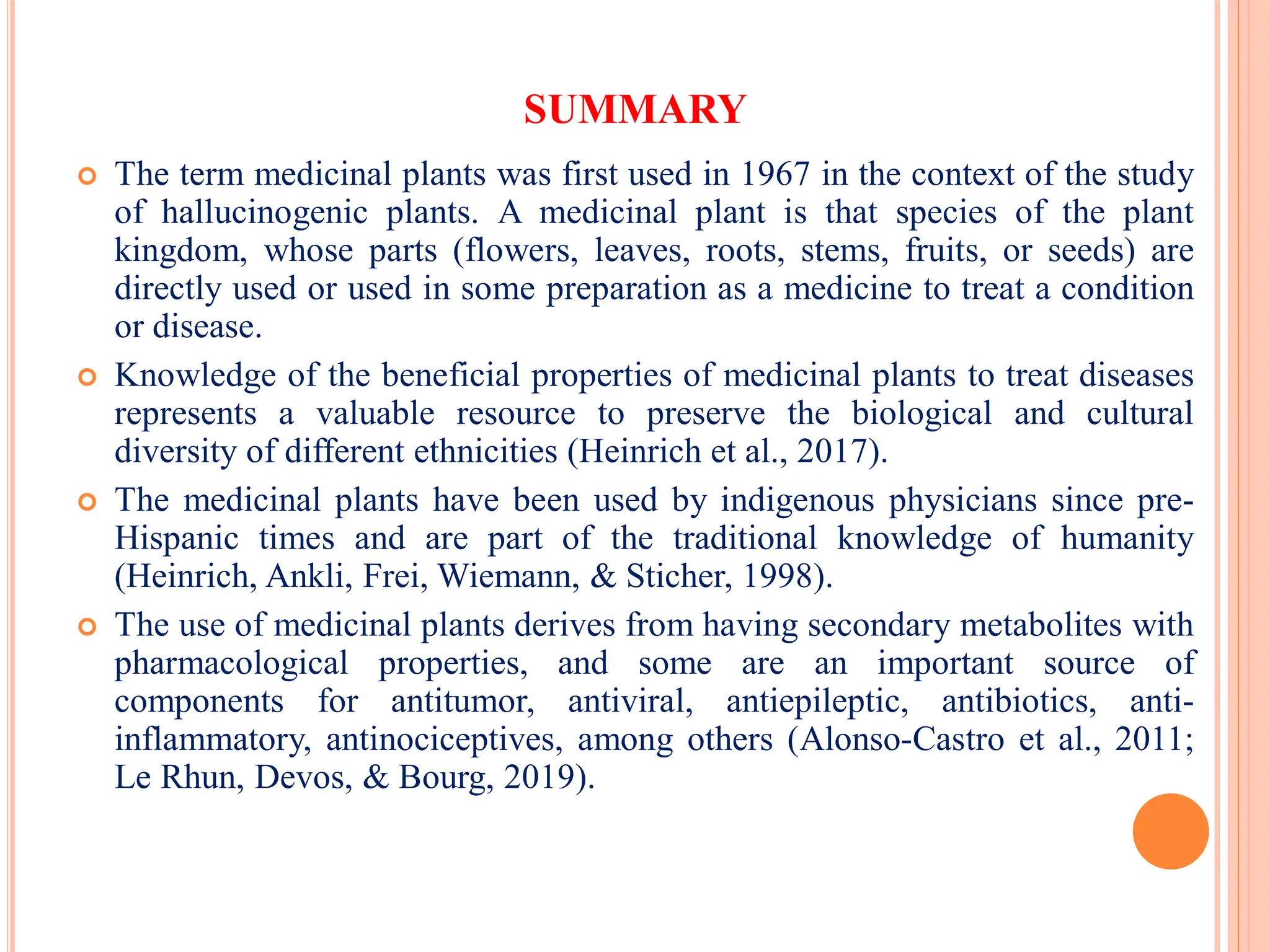
SUMMARY
 The term medicinal plants was first used in 1967 in the context of the study
of hallucinogenic plants. A medicinal plant is that species of the plant
kingdom, whose parts (flowers, leaves, roots, stems, fruits, or seeds) are
directly used or used in some preparation as a medicine to treat a condition
or disease.
 Knowledge of the beneficial properties of medicinal plants to treat diseases
represents a valuable resource to preserve the biological and cultural
diversity of different ethnicities (Heinrich et al., 2017).
 The medicinal plants have been used by indigenous physicians since pre-
Hispanic times and are part of the traditional knowledge of humanity
(Heinrich, Ankli, Frei, Wiemann, & Sticher, 1998).
 The use of medicinal plants derives from having secondary metabolites with
pharmacological properties, and some are an important source of
components for antitumor, antiviral, antiepileptic, antibiotics, anti-
inflammatory, antinociceptives, among others (Alonso-Castro et al., 2011;
Le Rhun, Devos, & Bourg, 2019).
THANKS FOR YOUR VISIT
 References:
 Google for different images incorporated into this PPT,
 Different WebPages for reference and content,
 A textbook of Botany (Vol : II) Bhattacharya, Hait & Ghosh.
 https://www.sciencedirect.com/science/article/pii/S2666719323000948
 Disclaimer:
 This presentation has been made and designed as the free open source of
study materials intended for the academic fraternity. The presenter does not
claim any kind of financial interest for this work. It is completely free for
use.

Major Pharmacological Groups of Plant Drugs and their.pdf

  • 1.
    MAJOR PHARMACOLOGICAL GROUPSOF PLANT DRUGS AND THEIR USES A Presentation by Dr. Nandadulal Sannigrahi, Associate Professor of Botany, Nistarini College, Purulia, (W.B) 723101, INDIA.
  • 2.
    INTRODUCTION  Pharmacognosy isthe study of medicines or crude drugs produced from natural sources such as plants, microbes, and animals. It includes analysis of their biological, chemical, biochemical, and physical properties.  Pharmacognosy deals with the natural drugs obtained from organisms such as most plants, microbes, and animals. Up to date, many important drugs including morphine, atropine, galanthamine, etc. have originated from natural sources which continue to be good model molecules in drug discovery. Traditional medicine is also a part of pharmacognosy and most of the third world countries still depend on the use of herbal medicines. Consequently, pharmacognosy always keeps its popularity in pharmaceutical sciences and plays a critical role in drug discovery.  Plants have been always used as medicine by mankind to treat health- threatening diseases and still popular to obtain new drug candidates as it is the oldest medical practice for humans. The use of botanical natural health products are on the increase all over the world. It is known that almost 80% of the populations in developing countries rely on the traditional medicine, mainly composing herbal prescriptions.
  • 3.
    CLASSIFICATION OF PLANTDRUGS  Crude drugs may be obtained from the different natural sources and these sources are to be optimized from the different purposes.  Plant drugs can be classified using the different approaches as follows:  Alphabetical Classification,  Morphological Classification,  Taxonomical Pharmacological  Chemical Classification  Chemo-taxonomical classification  Although, each systems of classification has number of merits and demerits but the classification depends upon the requirement of uses.
  • 4.
    ALPHABETICAL CLASSIFICATION  Accordingto the English/ Latin names of the crude drugs plants, the crude drugs are arranged in alphabetical orders. Some of the pharmacopeias and reference books are listed below that use the classification of crude drugs according to their names following the alphabetical orders.  Indian Pharmacopeia (IP) – using Latin 1955,  Indian Pharmacopeia ( IP)- 1966, English,  British Pharmacopeia (BP)- English,  British Pharmacopeia Codex (BPC)- English,  United States Pharmacopeia ( USP)-English,  European Pharmacopeia (EP)
  • 5.
    MORPHOLOGICAL CLASSIFICATION  Dependingon the sources of availability either living or non-living sources, the plant drugs may be of two types-  CELLULAR( ORGANISED)- Drugs are the direct part of the plants and are divided into roots, rhizomes, underground stems or modified stems, flowers, fruits, seeds, hairs, fibers etc  ACELLULAR(UNORGANISED) -These are the different indirect sources of plants or animals like dried latex, dried juice, dried extracts, gums, resins, fixed oils and fats, waxes, volatile oils, animal products, minerals etc.
  • 6.
    CELLULAR DRUGS SERIAL NUMBER CELLULAR DRUGSEXAMPLES 1, Roots Rauwolfia, Licorice, Ipecac 2. Rhizomes Zinger, Podophyllum, Turmeric 3. Stems Ephedra 4. Hairs & fibers Cotton, Hemp, Jute 5. Wood Quassia, Re Sandal, Sandal wood 6. Flowers Clove, Saffron, Pyrethrum 7, Fruits Fennel, Coriander, Dill 8. Seeds Nux-vomica, Linseed, Isapgol 9. Barks Cinnamon,, Cinchona, Kurchi
  • 7.
    ACELLULAR DRUGS SERIAL NUMBER ACELLULAR DRUGSEXAMPLES 1. Dried latex Opium, Papin 2. Dried Juice Aloe, Kino 3. Dried Extracts Agar, Catechu, Pectin 4. Gums Acacia, Tragacanth, Stericulia 5. Resins Benzoin, Colophony, Asafetida 6, Fats and Oils Castor, Chalmoogra, Cotton Seed 7, Waxes Beeswax, Spermaceti 8. Volatile oils Coriander, Cinnamon, Clove 9. Minerals Bentonies, Kaolin, Talc
  • 8.
    CLASSIFICATION ON THEBASIS OF SOURCE  Plants are the source of diversity,  Different plants parts irrespective of nature contains a unique properties,  Each part is the treasure of the diverse compounds,  Different compounds are synthesized on the basis of their diverse metabolic process,  Different factors of the soil contributes a lot ,  Different stress factors enable to produce a set of diverse compounds for the same,  The plant phenological cycle plays an important role in this regard,  The different environmental conditions lead to the production of different set of chemicals,  List of plants parts and their bioactive nature stated below.
  • 9.
    CLASSIFICATION OF PLANTDRUGS Serial no. Basis of Source Examples 1. Root drug Atropa belladonna Linn. 2. Underground stem drug Curcuma longa Linn. 3. Bark drug Cinchona officinalis Linn. 4. Stem and Wood drug Acacia catechu Willd. 5. Leaf drug Adhatoda vesica Nees. 6. Fruit drug Papaver somnifera Linn. 7. Seed drug Strychnos nux-vomica Linn. 8. Flower drug Crocus sativus Linn. 9. Drug obtained from all parts Andrographis paniculata Wall.ex. Linn.
  • 10.
    CRUDE DRUGS CLASSIFICATIONON THE BASIS OF CHEMICAL COMPOUNDS  Plant metabolism produces two kind of metabolites- Primary and Secondary  Primary metabolites are the ingredients for plant primary metabolism for the growth and development of plant body,  Secondary metabolites are the derivatives produced by the plants to perform diverse metabolic compounds to respond to the different stress factors at the cost of the exposure to the environments,  Secondary metabolites possess a lot of bioactive compounds,  These compounds are classified on the basis of their chemical nature,
  • 11.
    CRUDE DRUGS CLASSIFICATIONON THE BASIS OF CHEMICAL COMPOUNDS Serial No. Chemical Compounds Examples of drugs 1. Carbohydrate 2. Glycosides Starch, Agar-agar, Pectin 3. Tannins Digitoxin, Salicine 4. Lipid or fat derivatives Galotonic acid, Catechine 5. Resin Clove oil, Peppermint oil 6. Alkaloids Hinge, Gumbos 7. Hormones Insulin. Quinine 8. Enzymes Papaine, Pepsin 9. Proteins Gelatin, Gluten
  • 12.
    CRUDE DRUGS CLASSIFICATIONON THE BASIS OF ACTION  “A disorder of structure or function in a human, animal, or plant, especially one that has a known cause and a distinctive group of symptoms, signs, or anatomical changes.”  Diseases are of different types and each disease is the outcome of some of the reasons behind it.  The disease either infectious or non-infectious may be caused by the different types of pathogens, imbalance of the normal metabolic pathway or anything else.  The diseases are of different types as stated below. For each of them, the different medicines are precise or anything else and a good number of bioactive compounds having therapeutic values obtained from plants.  The diseases may be Asthma, amoebiosis, arthritis, acne, allergy, sepsis, bronchitis, cataract, cancer, cirrhosis. Cardiac disease, diarrhea, eczema, epilepsy, gallstone, gastroentitis, meningitis, obesity, miscarriage etc.
  • 13.
    CRUDE DRUGS CLASSIFICATIONON THE BASIS OF ACTION Nature of drugs Acts upon Example of drugs Cardio active Regulate Heart Digitaline Anti- arrhymic Regulate Cardiac Cycle Quinine Anti-hypersensitive Regulate Hypertension Reserpine Vasco constriction Enables the constriction of blood vessel Ergotamine Vaso dilator Enables dilation of blood vessels Papovirin Anti- cholinergic Rhythm of stomach muscles Hyeosine Carminative Appetizers and flux Dill, Fennel Laxative , Purgative Bowl movement Santonine Expectorants Control expiration and inspiration Goafinosine Astringent Brightness of skin Tannic acid Anthelmintics Control helminthes Santonine Amoebicidal Control protozoa Emetine Anti-inflammatory Regulate inflammation Belladonna Antiseptic Wound healing Thymol, eucalyptus
  • 14.
    TAXONOMICAL CLASSIFICATION OFCRUDE DRUGS  Taxonomy is the branch of science that deals of the identification, nomenclature and the classification of plants,  The classification of the plants is an old age practice,  The plants can be classified on the basis of the availability of the crude drugs with therapeutic values,  The taxonomical classification of crude drugs play a very significant role in the field of the plant sciences,  The drugs are arranged according to their phylum, order, family, genus and species,  It is purely a type of botanical classification related to the source of crude drugs.  The highlight of this classification as stated below.
  • 15.
    TAXONOMICAL CLASSIFICATION OFCRUDE DRUGS ORDER FAMILY DRUGS Liliflorae Liliaceae Colchicine, Aspergine Microspermae Dioscoriaceae Dioscorea, Vanilla Papavarles Papaveraceae Opium Rosales Rosaceae, Leguminosae Rose oil, Almond oil Rutales Rutaceae Bael, Lemon, Orange Rhmnales Rhmnaceae Cascara Malvales Malvaceae Cotton Umbelliflorae Apiaceae Coriander, Fennel, Caraway Gentianiales Gentianaceae, Loganiaceae, Apocynaceae Chirata, Nux-vomica, Kurchi, Strophanthus
  • 16.
    SUMMARY  The termmedicinal plants was first used in 1967 in the context of the study of hallucinogenic plants. A medicinal plant is that species of the plant kingdom, whose parts (flowers, leaves, roots, stems, fruits, or seeds) are directly used or used in some preparation as a medicine to treat a condition or disease.  Knowledge of the beneficial properties of medicinal plants to treat diseases represents a valuable resource to preserve the biological and cultural diversity of different ethnicities (Heinrich et al., 2017).  The medicinal plants have been used by indigenous physicians since pre- Hispanic times and are part of the traditional knowledge of humanity (Heinrich, Ankli, Frei, Wiemann, & Sticher, 1998).  The use of medicinal plants derives from having secondary metabolites with pharmacological properties, and some are an important source of components for antitumor, antiviral, antiepileptic, antibiotics, anti- inflammatory, antinociceptives, among others (Alonso-Castro et al., 2011; Le Rhun, Devos, & Bourg, 2019).
  • 17.
    THANKS FOR YOURVISIT  References:  Google for different images incorporated into this PPT,  Different WebPages for reference and content,  A textbook of Botany (Vol : II) Bhattacharya, Hait & Ghosh.  https://www.sciencedirect.com/science/article/pii/S2666719323000948  Disclaimer:  This presentation has been made and designed as the free open source of study materials intended for the academic fraternity. The presenter does not claim any kind of financial interest for this work. It is completely free for use.