Submitted To:
Mr Abdullah Farooq
Submitted By:
Hassan Tariq
𝕴𝖓𝖙𝖗𝖔𝖉𝖚𝖈𝖙𝖎𝖔𝖓:
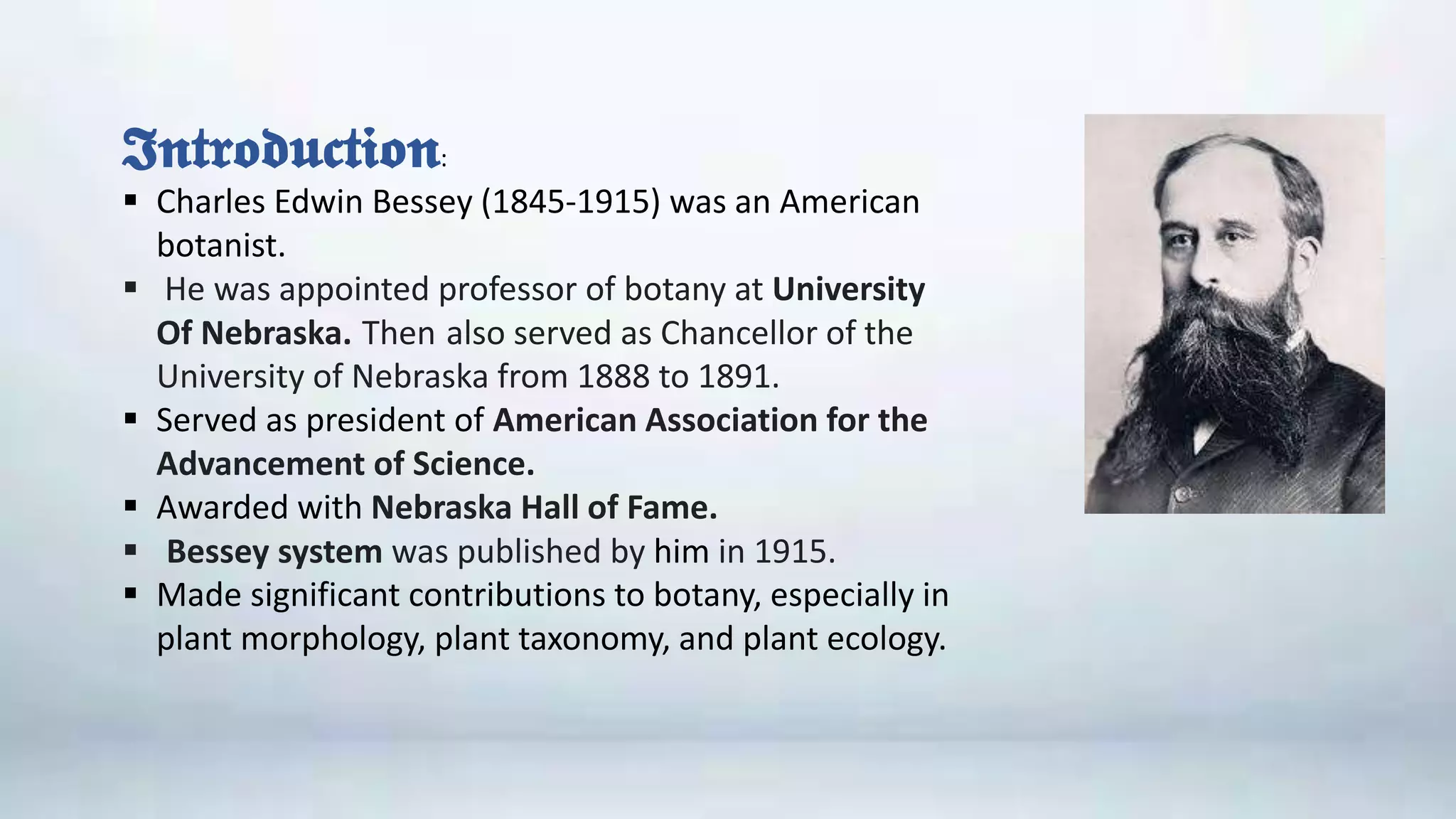
 Charles Edwin Bessey (1845-1915) was an American
botanist.
 He was appointed professor of botany at University
Of Nebraska. Then also served as Chancellor of the
University of Nebraska from 1888 to 1891.
 Served as president of American Association for the
Advancement of Science.
 Awarded with Nebraska Hall of Fame.
 Bessey system was published by him in 1915.
 Made significant contributions to botany, especially in
plant morphology, plant taxonomy, and plant ecology.
𝕮𝖑𝖆𝖘𝖘𝖎𝖋𝖎𝖈𝖆𝖙𝖎𝖔𝖓 𝕺𝖋 𝕻𝖆𝖑𝖓𝖙𝖘:
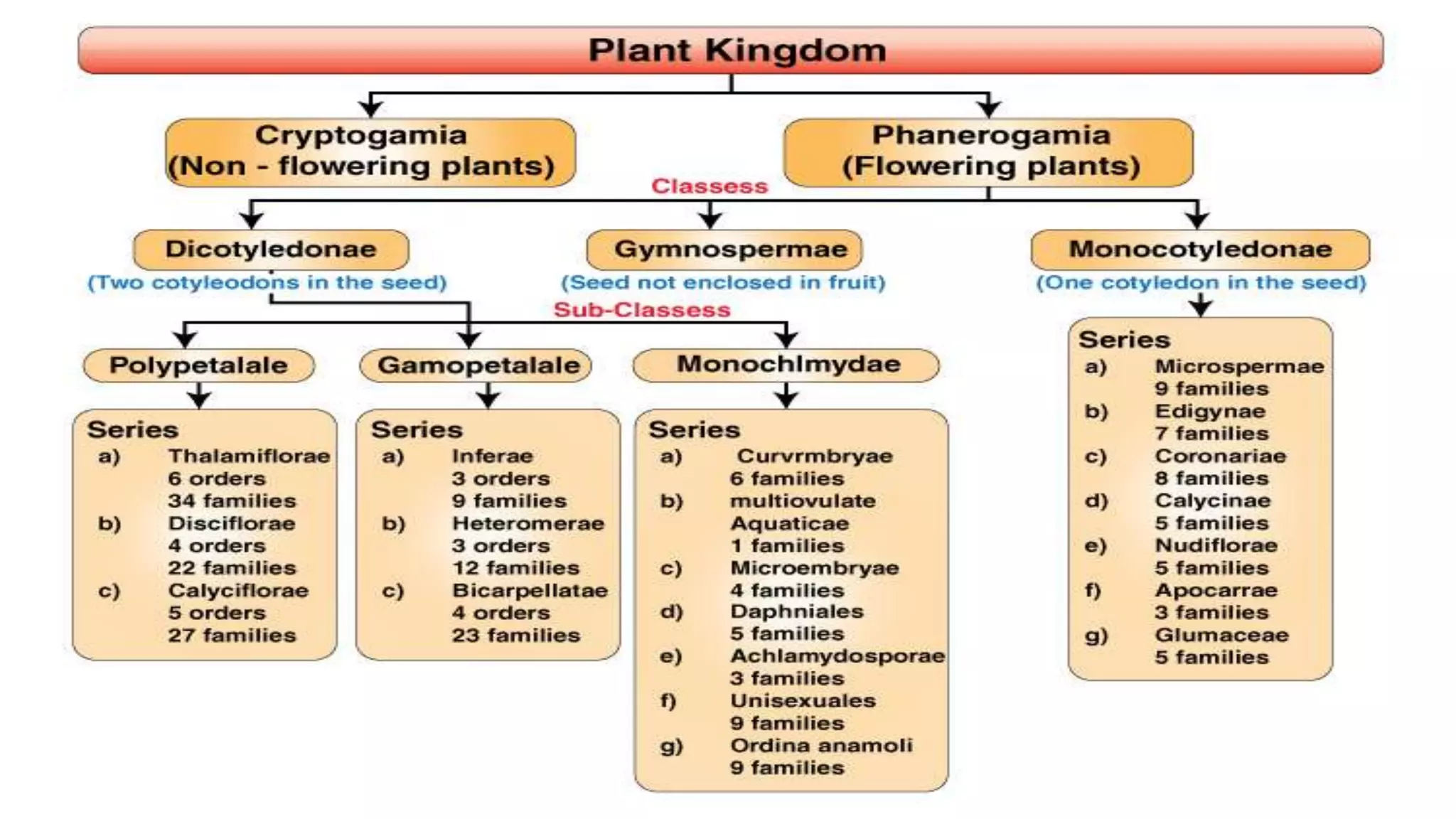
 Charles E. Bessey (1845-1915) proposed a modified system of classification of
Bentham and Hooker. He separated the gymnosperms from angiosperms. His
system known as Besseyan system.
 Bessey’s system was based on primitiveness and evolutionary
advancement of plant groups.
 The following are the important features of Bessey's classification:
1.Seed plants were polyphyletic in origin and consisted of three phyla, one of
which alone he described, namely the Angiosperms
2. Angiosperms were divided into Dicots and Monocots.
3.Bessy accepted the strobilobed theory of origin of the angiosperm flower
(According to this theory flower is a modified system of laterals or phyllomers).
4.Bessey divided the monocots into 8 orders, among which were distributed 45
families. The dicots were placed under 24 orders and 255 families.
𝕮𝖔𝖓𝖙𝖗𝖎𝖇𝖚𝖙𝖎𝖔𝖓 :
 Phytography: Bessey introduced the concept of phytography, which focused on
the description and identification of plants through the use of detailed
illustrations and photographs.
 Classification systems: Bessey proposed several classification systems for plants,
including his own "phylogenetic taxonomy," which attempted to classify plants
based on their evolutionary relationships.
 Plant ecology: Bessey studied plant ecology, including topics such as plant
growth and the distribution and adaptation of plants to various environmental
conditions.
 Agricultural education: Bessey was an advocate for agricultural education and
worked to promote the importance of scientific research in the field of
agriculture. He helped to establish the Iowa State College of Agriculture and
Mechanic Arts and served as its president from 1891 to 1900.
Charles Edwin Bessy | Bessy System of Classification

Charles Edwin Bessy | Bessy System of Classification

  • 1.
    Submitted To: Mr AbdullahFarooq Submitted By: Hassan Tariq
  • 2.
    𝕴𝖓𝖙𝖗𝖔𝖉𝖚𝖈𝖙𝖎𝖔𝖓:  Charles EdwinBessey (1845-1915) was an American botanist.  He was appointed professor of botany at University Of Nebraska. Then also served as Chancellor of the University of Nebraska from 1888 to 1891.  Served as president of American Association for the Advancement of Science.  Awarded with Nebraska Hall of Fame.  Bessey system was published by him in 1915.  Made significant contributions to botany, especially in plant morphology, plant taxonomy, and plant ecology.
  • 3.
    𝕮𝖑𝖆𝖘𝖘𝖎𝖋𝖎𝖈𝖆𝖙𝖎𝖔𝖓 𝕺𝖋 𝕻𝖆𝖑𝖓𝖙𝖘: Charles E. Bessey (1845-1915) proposed a modified system of classification of Bentham and Hooker. He separated the gymnosperms from angiosperms. His system known as Besseyan system.  Bessey’s system was based on primitiveness and evolutionary advancement of plant groups.  The following are the important features of Bessey's classification: 1.Seed plants were polyphyletic in origin and consisted of three phyla, one of which alone he described, namely the Angiosperms 2. Angiosperms were divided into Dicots and Monocots. 3.Bessy accepted the strobilobed theory of origin of the angiosperm flower (According to this theory flower is a modified system of laterals or phyllomers). 4.Bessey divided the monocots into 8 orders, among which were distributed 45 families. The dicots were placed under 24 orders and 255 families.
  • 5.
    𝕮𝖔𝖓𝖙𝖗𝖎𝖇𝖚𝖙𝖎𝖔𝖓 :  Phytography:Bessey introduced the concept of phytography, which focused on the description and identification of plants through the use of detailed illustrations and photographs.  Classification systems: Bessey proposed several classification systems for plants, including his own "phylogenetic taxonomy," which attempted to classify plants based on their evolutionary relationships.  Plant ecology: Bessey studied plant ecology, including topics such as plant growth and the distribution and adaptation of plants to various environmental conditions.  Agricultural education: Bessey was an advocate for agricultural education and worked to promote the importance of scientific research in the field of agriculture. He helped to establish the Iowa State College of Agriculture and Mechanic Arts and served as its president from 1891 to 1900.