Lungs
Lesson 3
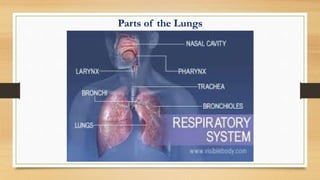
Parts of the Lungs
Ribcage
the bony frame formed by the ribs
around the chest.
Cover and protect the lungs
Pleura
The pleura consists of a two-
layered membrane that covers
each lung.
Diaphragm
 The diaphragm is the primary
muscle used in respiration,
which is the process of
breathing.
 This dome-shaped muscle is
located just below the lungs
and heart.
 It contracts continually as you
breathe in and out.
Diseases that affect the Lungs
Asthma
Chronic and long-lasting
Occurs regularly and requires continuous treatment
Characterizes by shortness of breath, wheezing, and coughing.
It is triggered by a substance that is eaten or breathed in.
It results in a narrowing or spasm of the smooth muscle in the bronchial
tubes.
A swelling of the mucous membrane also occurs.
Taking prescribed drugs that relax the bronchial muscles and open up air
passages relieve asthma attacks.
Diseases that affect the Lungs
Bronchitis
 This is an inflammation of the mucous membrane of the bronchi caused by bacteria,
viruses, or irritants.
 Those who are at risk in contracting bronchitis are the smokers and those exposed to
harmful substances in the air.
 Bronchitis may develop during severe cold and flu. Fluid gathers in the bronchi, resulting
in a thick mucus bulld-up. It starts out like a cold. Coughing and hoarseness are the
common signs of bronchitis. It may last only a few days to a week. A person afflicted with
bronchitis has fever and cough.
 Antibiotics are used to treat bronchitis.
 Infection of bronchitis can severely weaken the body and lower one's resistance to other
infections.
- Once the infection is developed, bronchitis is very difficult to treat
Diseases that affect the Lungs
Pneumonia.
 This is an acute inflammation of the lungs caused by bacterial infection.
 a highly communicable disease that mostly develops as a complication of
other respiratory infections such as flu.
 Fluid collects in the lungs, making breathing difficult
 Symptoms of pneumonia
-Fever, chilling
-difficulty in breathing
-chest pains
 Prevention or treatment depends on the type of infection present.
-drinking plenty of fluids,
-taking prescribed antibiotics, and
-having enough rest.
Diseases that affect the Lungs
Tuberculosis (TB)
 a common lung disease cause by tubercle bacilli. These germs get into the
lungs and may also affect other parts of the body such as kidneys, bones, and
brain. It can easily be transferred either by direct contact or by airborne
viruses and bacteria.
 Symptoms: Dry and sometimes severe coughing, palpitation, loss of appetite
and weight, fatigue, sweating in the evening, fever in the afternoon or
evening, chest pains, and in severe cases, having blood in the sputum are
some symptoms of TB.
 Treatment: Plenty of rest, good diet, plenty of fresh air and sunlight, and
regular medical check-up are effective preventions or treatments for
contracting TB. it may now be properly treated with the discovery of vaccines
and the development of more effective drugs. Treatment lasts for at least six
months.
Diseases that affect the Lungs
Emphysema.
 This is a serious lung disease characterized by the destruction of the walls
of the air sacs and a serious shortness of breath.
 a chronic lung disease more common in middle-aged or older people.
 A person afflicted with emphysema experiences difficulty in exhaling.The
air sacs of the lungs are stretched thin and gradually destroyed, causing
the lung tissue to lose its elasticity. The exchange of gases is hampered.
 Smoking is the main cause of emphysema.
 Symptoms: general weakness, shortness of breath, and decline in body
efficiency are experienced by a person afflicted with emphysema.
 Treatment of emphysema is very limited because of permanent lung
damage.
 Disability and death may be the results of this disease.
Diseases that affect the Lungs
Lung Cancer
 This is a deadly disease in which cells grow wildly and lumps are
developed.
 Smoking is also the main cause of lung cancer.
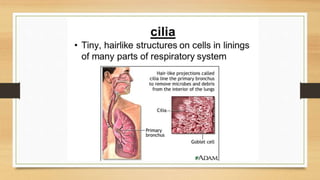
The sticky tar containing carcinogens accumulates in the air passages,
making the cilia and the mucous membrane paralyzed and unable to do their
normal functions.
 Preventions or treatments of lung cancer includes regular check-up and
taking in prescribed medicines
Proper Care for the Lungs
You should make sure your lungs are working well because it
takes care of your breathing. If you take good care of your lungs,
common colds and other lung diseases can be avoided.
Below are some healthy practices to maintain the smooth
functioning of the lungs.
1. Avoid going to crowded areas and places with polluted air
where you may contract lung diseases.
2. Always cover your mouth and nose when passing by dusty and
polluted areas. You may also wear a mask so as not to inhale dirt
and dust.
Proper Care for the Lungs
3. Using clean, soft cloth or tissue paper regularly clean your
nose.
4. Stay away from smokers. You may inhale carbon monoxide of
their cigarettes.
5. Avoid direct contact with people afflicted with lung diseases.
You may get infected, too. Boil utensils of afflicted persons.
6. Always keep your surroundings clean and pollution-free.
Dispose of garbage properly.
7. Exercise deep breathing once in a while to allow all the carbon
dioxide in the body to be breathed out.
Proper Care for the Lungs
8. Change wet clothes after work or play so as not to catch lung
diseases.
9. Eat a well-balanced diet with plenty of fruits and vegetables
rich in vitamins A and C to build up body resistance against lung
diseases.
10. Have enough rest and sleep. All bodily voluntary activities are
suspended by rest and sleep. This gives your body the time to
repair damaged and worn-out tissues.
Proper Care for the Lungs
11. Drink plenty of water and fruit juice for the smooth
functioning of the lungs and prevention against catching colds.
Inhale and exhale properly.
12. Use drugs and medications only upon proper
recommendations from the doctor. Taking them may lead to
further and serious lung complications,
13. Have a regular physical check-up. Consult a doctor right away
at the first sign of lung infection.
Lungs

Lungs

  • 1.
  • 3.
  • 4.
    Ribcage the bony frameformed by the ribs around the chest. Cover and protect the lungs
  • 6.
    Pleura The pleura consistsof a two- layered membrane that covers each lung.
  • 7.
    Diaphragm  The diaphragmis the primary muscle used in respiration, which is the process of breathing.  This dome-shaped muscle is located just below the lungs and heart.  It contracts continually as you breathe in and out.
  • 8.
    Diseases that affectthe Lungs Asthma Chronic and long-lasting Occurs regularly and requires continuous treatment Characterizes by shortness of breath, wheezing, and coughing. It is triggered by a substance that is eaten or breathed in. It results in a narrowing or spasm of the smooth muscle in the bronchial tubes. A swelling of the mucous membrane also occurs. Taking prescribed drugs that relax the bronchial muscles and open up air passages relieve asthma attacks.
  • 9.
    Diseases that affectthe Lungs Bronchitis  This is an inflammation of the mucous membrane of the bronchi caused by bacteria, viruses, or irritants.  Those who are at risk in contracting bronchitis are the smokers and those exposed to harmful substances in the air.  Bronchitis may develop during severe cold and flu. Fluid gathers in the bronchi, resulting in a thick mucus bulld-up. It starts out like a cold. Coughing and hoarseness are the common signs of bronchitis. It may last only a few days to a week. A person afflicted with bronchitis has fever and cough.  Antibiotics are used to treat bronchitis.  Infection of bronchitis can severely weaken the body and lower one's resistance to other infections. - Once the infection is developed, bronchitis is very difficult to treat
  • 10.
    Diseases that affectthe Lungs Pneumonia.  This is an acute inflammation of the lungs caused by bacterial infection.  a highly communicable disease that mostly develops as a complication of other respiratory infections such as flu.  Fluid collects in the lungs, making breathing difficult  Symptoms of pneumonia -Fever, chilling -difficulty in breathing -chest pains  Prevention or treatment depends on the type of infection present. -drinking plenty of fluids, -taking prescribed antibiotics, and -having enough rest.
  • 11.
    Diseases that affectthe Lungs Tuberculosis (TB)  a common lung disease cause by tubercle bacilli. These germs get into the lungs and may also affect other parts of the body such as kidneys, bones, and brain. It can easily be transferred either by direct contact or by airborne viruses and bacteria.  Symptoms: Dry and sometimes severe coughing, palpitation, loss of appetite and weight, fatigue, sweating in the evening, fever in the afternoon or evening, chest pains, and in severe cases, having blood in the sputum are some symptoms of TB.  Treatment: Plenty of rest, good diet, plenty of fresh air and sunlight, and regular medical check-up are effective preventions or treatments for contracting TB. it may now be properly treated with the discovery of vaccines and the development of more effective drugs. Treatment lasts for at least six months.
  • 12.
    Diseases that affectthe Lungs Emphysema.  This is a serious lung disease characterized by the destruction of the walls of the air sacs and a serious shortness of breath.  a chronic lung disease more common in middle-aged or older people.  A person afflicted with emphysema experiences difficulty in exhaling.The air sacs of the lungs are stretched thin and gradually destroyed, causing the lung tissue to lose its elasticity. The exchange of gases is hampered.  Smoking is the main cause of emphysema.  Symptoms: general weakness, shortness of breath, and decline in body efficiency are experienced by a person afflicted with emphysema.  Treatment of emphysema is very limited because of permanent lung damage.  Disability and death may be the results of this disease.
  • 13.
    Diseases that affectthe Lungs Lung Cancer  This is a deadly disease in which cells grow wildly and lumps are developed.  Smoking is also the main cause of lung cancer. The sticky tar containing carcinogens accumulates in the air passages, making the cilia and the mucous membrane paralyzed and unable to do their normal functions.  Preventions or treatments of lung cancer includes regular check-up and taking in prescribed medicines
  • 14.
    Proper Care forthe Lungs You should make sure your lungs are working well because it takes care of your breathing. If you take good care of your lungs, common colds and other lung diseases can be avoided. Below are some healthy practices to maintain the smooth functioning of the lungs. 1. Avoid going to crowded areas and places with polluted air where you may contract lung diseases. 2. Always cover your mouth and nose when passing by dusty and polluted areas. You may also wear a mask so as not to inhale dirt and dust.
  • 15.
    Proper Care forthe Lungs 3. Using clean, soft cloth or tissue paper regularly clean your nose. 4. Stay away from smokers. You may inhale carbon monoxide of their cigarettes. 5. Avoid direct contact with people afflicted with lung diseases. You may get infected, too. Boil utensils of afflicted persons. 6. Always keep your surroundings clean and pollution-free. Dispose of garbage properly. 7. Exercise deep breathing once in a while to allow all the carbon dioxide in the body to be breathed out.
  • 16.
    Proper Care forthe Lungs 8. Change wet clothes after work or play so as not to catch lung diseases. 9. Eat a well-balanced diet with plenty of fruits and vegetables rich in vitamins A and C to build up body resistance against lung diseases. 10. Have enough rest and sleep. All bodily voluntary activities are suspended by rest and sleep. This gives your body the time to repair damaged and worn-out tissues.
  • 17.
    Proper Care forthe Lungs 11. Drink plenty of water and fruit juice for the smooth functioning of the lungs and prevention against catching colds. Inhale and exhale properly. 12. Use drugs and medications only upon proper recommendations from the doctor. Taking them may lead to further and serious lung complications, 13. Have a regular physical check-up. Consult a doctor right away at the first sign of lung infection.

Editor's Notes

  • #13 The cells living in the air passages get irritated by smoking, causing them to obtain abnormal growth, which starts to block the bronchial tubes inside the lungs. Carbon dioxide is trapped inside the alveoli, causing difficulty in breathing. The walls of the aveoli expand and break. The other air sacs expand even more. Cigarette smoke and tar irritation cause the stretched walls of the air sacs to become brittle,
  • #14 The cells living in the air passages get irritated by smoking, causing them to obtain abnormal growth, which starts to block the bronchial tubes inside the lungs. Carbon dioxide is trapped inside the alveoli, causing difficulty in breathing. The walls of the aveoli expand and break. The other air sacs expand even more. Cigarette smoke and tar irritation cause the stretched walls of the air sacs to become brittle,