LESSON 1.3
AFFECTING THE RESPIRATORY
AND CIRCULATORY SYSTEM
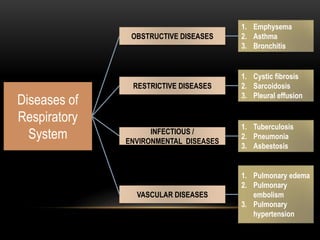
Diseases of
Respiratory
System
OBSTRUCTIVE DISEASES
RESTRICTIVE DISEASES
INFECTIOUS /
ENVIRONMENTAL DISEASES
VASCULAR DISEASES
1. Emphysema
2. Asthma
3. Bronchitis
1. Cystic fibrosis
2. Sarcoidosis
3. Pleural effusion
1. Tuberculosis
2. Pneumonia
3. Asbestosis
1. Pulmonary edema
2. Pulmonary
embolism
3. Pulmonary
hypertension
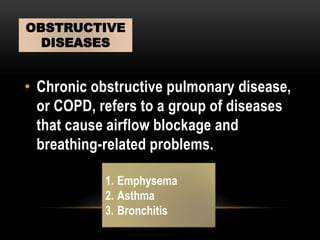
• Chronic obstructive pulmonary disease,
or COPD, refers to a group of diseases
that cause airflow blockage and
breathing-related problems.
OBSTRUCTIVE
DISEASES
1. Emphysema
2. Asthma
3. Bronchitis
1. EMPHYSEMA
• Is a condition in which a person has trouble breathing.
• Emphysema occurs when certain air sacs in the lungs
have been damaged and the alveolar membrane that
assists in the exchange of oxygen and carbon dioxide
has depleted.
• As a result, carbon dioxide is not expelled properly from
the lungs.
• This respiratory condition is a common problem for
heavy smokers.
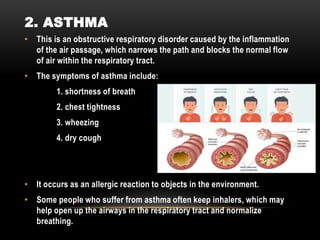
• This is an obstructive respiratory disorder caused by the inflammation
of the air passage, which narrows the path and blocks the normal flow
of air within the respiratory tract.
• The symptoms of asthma include:
1. shortness of breath
2. chest tightness
3. wheezing
4. dry cough
• It occurs as an allergic reaction to objects in the environment.
• Some people who suffer from asthma often keep inhalers, which may
help open up the airways in the respiratory tract and normalize
breathing.
2. ASTHMA
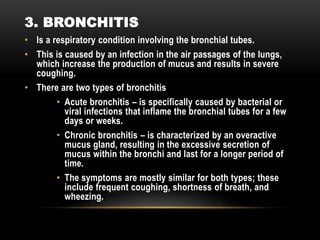
• Is a respiratory condition involving the bronchial tubes.
• This is caused by an infection in the air passages of the lungs,
which increase the production of mucus and results in severe
coughing.
• There are two types of bronchitis
• Acute bronchitis – is specifically caused by bacterial or
viral infections that inflame the bronchial tubes for a few
days or weeks.
• Chronic bronchitis – is characterized by an overactive
mucus gland, resulting in the excessive secretion of
mucus within the bronchi and last for a longer period of
time.
• The symptoms are mostly similar for both types; these
include frequent coughing, shortness of breath, and
wheezing.
3. BRONCHITIS
• Restrictive diseases stop the lungs from
fully expanding. This limits the volume
of air and amount of oxygen that a
person breathes in.
RESTRICTIVE
DISEASES
1.Cystic fibrosis
2.Sarcoidosis
3.Pleural effusion
• Is a genetic respiratory disorder that results from a
malfunction gene that causes excessive mucus build-
up in the air passages.
• The accumulation of mucus blocks the airways and
results in an infection
• Cystic fibrosis also affects other organs of the body,
such as the pancreas.
• Symptoms of cystic fibrosis include frequent breathing
problems, salty skin, excessive coughing and
occurrence of other respiratory diseases.
1. CYSTIC FIBROSIS
• Is a condition in which immune cells grow granulomas,
cellular lumps in any organ of the body that affect
mostly the lungs and the lymph nodes in the chest.
• Genetic malfunction, infection, environmental factors,
and harmful substances are some of the things that can
cause inflammation and the growth of granulomas in
the lungs and affected organs.
• Fatigue and fever are some of the most common
symptoms of sarcoidosis.
2. SARCOIDOSIS
• Occurs when excess liquid around the pleural layers
surrounding the lungs and the chest cavity.
• The condition is characterized chest pain, dry cough,
shortness of breath or inability to breathe normally.
• The pleural effusion may be caused by a viral infection
or other lung conditions like pneumonia.
• Pleural effusion may signify that one is suffering from a
more serious illness, such as cirrhosis, kidney disease,
heart failure or cancer..
3. PLEURAL EFFUSION
• Infectious diseases are disorders
caused by organisms — such as
bacteria, viruses, fungi or parasites.
INFECTIOUS /
ENVIRONMENTAL
DISEASES
1. Tuberculosis
2. Pneumonia
3. Asbestosis
• Is one of the most well-known respiratory diseases.
• It pertains to the inflammation of tissues in the alveoli that
is due to the build-up of fluid in the air sacs.
• The fluid builds up because of viruses or bacteria.
• Pneumonia is a serious condition that is usually
accompanied by another disease.
• It may be a side effect of a flu virus or it may be result of a
bacterial infection in the respiratory system.
• The common symptoms of pneumonia include excessive
coughing, coughing up blood, breathing difficulties, fever,
sweating, shivering, chest pain, and nausea.
1. PNEUMONIA
• Is an infectious disease acquired by inhaling the particles from the coughs
of sneezes of a person with tuberculosis.
• It is caused by a bacterium that primarily damages the lungs, but may
affect other parts of the body such as the abdomen, bones or the nervous
system.
• The common symptoms of TB infection include prolonged coughing,
unwanted weight loss, fatigue, fever, and swelling in the neck.
• Mycobacterium tuberculosis is a primary cause of TB among the infected.
• This is also known as latent tuberculosis. This type of tuberculosis is not
contagious.
• Active tuberculosis if the immune system is not capable of killing the
bacteria or preventing it from spreading.
2. TUBERCULOSIS (TB)
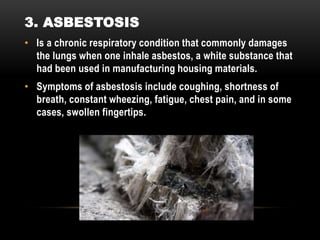
• Is a chronic respiratory condition that commonly damages
the lungs when one inhale asbestos, a white substance that
had been used in manufacturing housing materials.
• Symptoms of asbestosis include coughing, shortness of
breath, constant wheezing, fatigue, chest pain, and in some
cases, swollen fingertips.
3. ASBESTOSIS
• Vascular diseases are problems related to the flow
of blood. These blood supply or vascular diseases
are less common in the upper extremities (arms)
than in the lower extremities (legs).
VASCULAR
DISEASES
1. Pulmonary edema
2. Pulmonary embolism
3. Pulmonary
hypertension
• Is a condition which fluid accumulates in the air
sacs of the lungs, causing difficulty in breathing.
• In this condition, the fluid in the lungs intervenes
with the transportation of oxygen into the
bloodstream.
• The symptoms include prolonged coughing,
breathing difficulties, and chest pain.
1. PULMONARY EDEMA
• Occurs when a blood clot forms in an artery in the lungs
and obstructs the blood flow.
• Pulmonary embolism may be caused by a heart attack or
vice versa.
• Symptoms include sudden difficulty in breathing, intense
chest pain, and a foamy cough.
2. PULMONARY EMBOLISM
• Occurs when the blood vessels in the lungs
experience high blood pressure, which can damage
the vessels.
• Symptoms include shortness of breath, fatigue,
chest pain and lightheadedness.
3. PULMONARY HYPERTENSION

L3-The Respiratory System.pptx

  • 1.
    LESSON 1.3 AFFECTING THERESPIRATORY AND CIRCULATORY SYSTEM
  • 2.
    Diseases of Respiratory System OBSTRUCTIVE DISEASES RESTRICTIVEDISEASES INFECTIOUS / ENVIRONMENTAL DISEASES VASCULAR DISEASES 1. Emphysema 2. Asthma 3. Bronchitis 1. Cystic fibrosis 2. Sarcoidosis 3. Pleural effusion 1. Tuberculosis 2. Pneumonia 3. Asbestosis 1. Pulmonary edema 2. Pulmonary embolism 3. Pulmonary hypertension
  • 3.
    • Chronic obstructivepulmonary disease, or COPD, refers to a group of diseases that cause airflow blockage and breathing-related problems. OBSTRUCTIVE DISEASES 1. Emphysema 2. Asthma 3. Bronchitis
  • 4.
    1. EMPHYSEMA • Isa condition in which a person has trouble breathing. • Emphysema occurs when certain air sacs in the lungs have been damaged and the alveolar membrane that assists in the exchange of oxygen and carbon dioxide has depleted. • As a result, carbon dioxide is not expelled properly from the lungs. • This respiratory condition is a common problem for heavy smokers.
  • 5.
    • This isan obstructive respiratory disorder caused by the inflammation of the air passage, which narrows the path and blocks the normal flow of air within the respiratory tract. • The symptoms of asthma include: 1. shortness of breath 2. chest tightness 3. wheezing 4. dry cough • It occurs as an allergic reaction to objects in the environment. • Some people who suffer from asthma often keep inhalers, which may help open up the airways in the respiratory tract and normalize breathing. 2. ASTHMA
  • 6.
    • Is arespiratory condition involving the bronchial tubes. • This is caused by an infection in the air passages of the lungs, which increase the production of mucus and results in severe coughing. • There are two types of bronchitis • Acute bronchitis – is specifically caused by bacterial or viral infections that inflame the bronchial tubes for a few days or weeks. • Chronic bronchitis – is characterized by an overactive mucus gland, resulting in the excessive secretion of mucus within the bronchi and last for a longer period of time. • The symptoms are mostly similar for both types; these include frequent coughing, shortness of breath, and wheezing. 3. BRONCHITIS
  • 7.
    • Restrictive diseasesstop the lungs from fully expanding. This limits the volume of air and amount of oxygen that a person breathes in. RESTRICTIVE DISEASES 1.Cystic fibrosis 2.Sarcoidosis 3.Pleural effusion
  • 8.
    • Is agenetic respiratory disorder that results from a malfunction gene that causes excessive mucus build- up in the air passages. • The accumulation of mucus blocks the airways and results in an infection • Cystic fibrosis also affects other organs of the body, such as the pancreas. • Symptoms of cystic fibrosis include frequent breathing problems, salty skin, excessive coughing and occurrence of other respiratory diseases. 1. CYSTIC FIBROSIS
  • 9.
    • Is acondition in which immune cells grow granulomas, cellular lumps in any organ of the body that affect mostly the lungs and the lymph nodes in the chest. • Genetic malfunction, infection, environmental factors, and harmful substances are some of the things that can cause inflammation and the growth of granulomas in the lungs and affected organs. • Fatigue and fever are some of the most common symptoms of sarcoidosis. 2. SARCOIDOSIS
  • 10.
    • Occurs whenexcess liquid around the pleural layers surrounding the lungs and the chest cavity. • The condition is characterized chest pain, dry cough, shortness of breath or inability to breathe normally. • The pleural effusion may be caused by a viral infection or other lung conditions like pneumonia. • Pleural effusion may signify that one is suffering from a more serious illness, such as cirrhosis, kidney disease, heart failure or cancer.. 3. PLEURAL EFFUSION
  • 11.
    • Infectious diseasesare disorders caused by organisms — such as bacteria, viruses, fungi or parasites. INFECTIOUS / ENVIRONMENTAL DISEASES 1. Tuberculosis 2. Pneumonia 3. Asbestosis
  • 12.
    • Is oneof the most well-known respiratory diseases. • It pertains to the inflammation of tissues in the alveoli that is due to the build-up of fluid in the air sacs. • The fluid builds up because of viruses or bacteria. • Pneumonia is a serious condition that is usually accompanied by another disease. • It may be a side effect of a flu virus or it may be result of a bacterial infection in the respiratory system. • The common symptoms of pneumonia include excessive coughing, coughing up blood, breathing difficulties, fever, sweating, shivering, chest pain, and nausea. 1. PNEUMONIA
  • 13.
    • Is aninfectious disease acquired by inhaling the particles from the coughs of sneezes of a person with tuberculosis. • It is caused by a bacterium that primarily damages the lungs, but may affect other parts of the body such as the abdomen, bones or the nervous system. • The common symptoms of TB infection include prolonged coughing, unwanted weight loss, fatigue, fever, and swelling in the neck. • Mycobacterium tuberculosis is a primary cause of TB among the infected. • This is also known as latent tuberculosis. This type of tuberculosis is not contagious. • Active tuberculosis if the immune system is not capable of killing the bacteria or preventing it from spreading. 2. TUBERCULOSIS (TB)
  • 14.
    • Is achronic respiratory condition that commonly damages the lungs when one inhale asbestos, a white substance that had been used in manufacturing housing materials. • Symptoms of asbestosis include coughing, shortness of breath, constant wheezing, fatigue, chest pain, and in some cases, swollen fingertips. 3. ASBESTOSIS
  • 15.
    • Vascular diseasesare problems related to the flow of blood. These blood supply or vascular diseases are less common in the upper extremities (arms) than in the lower extremities (legs). VASCULAR DISEASES 1. Pulmonary edema 2. Pulmonary embolism 3. Pulmonary hypertension
  • 16.
    • Is acondition which fluid accumulates in the air sacs of the lungs, causing difficulty in breathing. • In this condition, the fluid in the lungs intervenes with the transportation of oxygen into the bloodstream. • The symptoms include prolonged coughing, breathing difficulties, and chest pain. 1. PULMONARY EDEMA
  • 17.
    • Occurs whena blood clot forms in an artery in the lungs and obstructs the blood flow. • Pulmonary embolism may be caused by a heart attack or vice versa. • Symptoms include sudden difficulty in breathing, intense chest pain, and a foamy cough. 2. PULMONARY EMBOLISM
  • 18.
    • Occurs whenthe blood vessels in the lungs experience high blood pressure, which can damage the vessels. • Symptoms include shortness of breath, fatigue, chest pain and lightheadedness. 3. PULMONARY HYPERTENSION