Carbohydrate metabolism
CHO Digestion
• Carbohydrate: polyhydroxy aldehyde or
ketone
• Carbohydrate classification
– Monosaccharide (glucose, fructose, galactose
mannose)
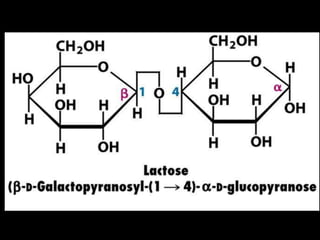
– Di saccharides (maltose, lactose, sucrose,
isomaltose)
– Polysaccharides (cellulose, starch, glycogen)
Introduction
DIETARY CARBOHYDRATES
• Normal diet contains 200-300 g
(50% of caloric intake)
• Serves an energy and carbon source
• Digestion includes a luminal phase and
a brush border phase
• Only monosaccharaides are appreciably
absorbed
Introduction
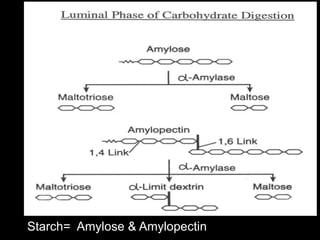
Starch= Amylose & Amylopectin
• alpha-Amylase (pH optima 7)
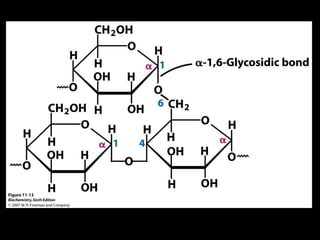
cleaves interior α1-4 linkages
but not α1-6
• End product is a mixture of maltose,
maltotriose and limit dextrin
• Acarbose (anti diabetic drug) –
Amylase inhibitor
Introduction
Introduction
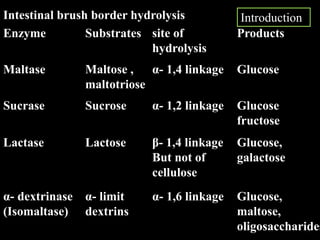
Intestinal brush border hydrolysis
Products
site of
hydrolysis
Substrates
Enzyme
Glucose
α- 1,4 linkage
Maltose ,
maltotriose
Maltase
Glucose
fructose
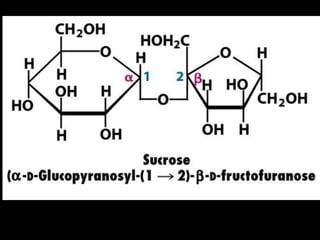
α- 1,2 linkage
Sucrose
Sucrase
Glucose,
galactose
β- 1,4 linkage
But not of
cellulose
Lactose
Lactase
Glucose,
maltose,
oligosaccharides
α- 1,6 linkage
α- limit
dextrins
α- dextrinase
(Isomaltase)
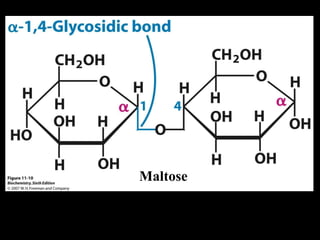
Maltose
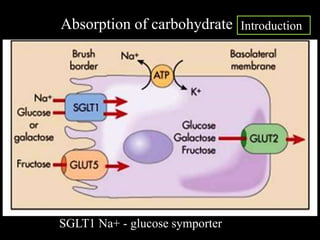
SGLT1 Na+ - glucose symporter
Absorption of carbohydrate Introduction
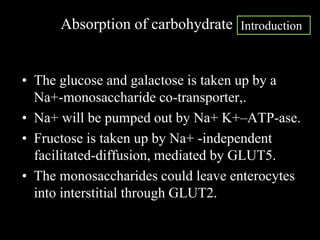
• The glucose and galactose is taken up by a
Na+-monosaccharide co-transporter,.
• Na+ will be pumped out by Na+ K+–ATP-ase.
• Fructose is taken up by Na+ -independent
facilitated-diffusion, mediated by GLUT5.
• The monosaccharides could leave enterocytes
into interstitial through GLUT2.
Absorption of carbohydrate Introduction
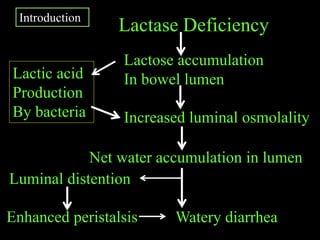
Lactase Deficiency
Lactose accumulation
In bowel lumen
Increased luminal osmolality
Watery diarrhea
Lactic acid
Production
By bacteria
Net water accumulation in lumen
Luminal distention
Enhanced peristalsis
Introduction
Lactase is present in infancy and
disappears to a variable extent during
childhood in most humans.
Exception is Northern Europeans and
European Americans-commonly retain
lactase into adulthood.
Introduction
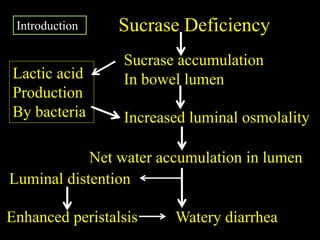
Sucrase Deficiency
Sucrase accumulation
In bowel lumen
Increased luminal osmolality
Watery diarrhea
Lactic acid
Production
By bacteria
Net water accumulation in lumen
Luminal distention
Enhanced peristalsis
Introduction
• Blood Transport: (portal vein to liver):
• 1. Release monosaccharides into
bloodstream
• 2. Deliver sugars for storage as
glycogen (liver, muscle tissue ) or fat
(adipose tissue)
Blood transport Introduction
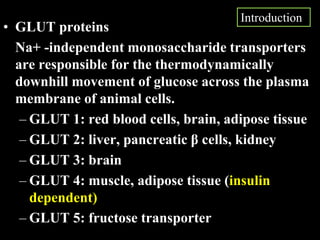
• GLUT proteins
Na+ -independent monosaccharide transporters
are responsible for the thermodynamically
downhill movement of glucose across the plasma
membrane of animal cells.
– GLUT 1: red blood cells, brain, adipose tissue
– GLUT 2: liver, pancreatic β cells, kidney
– GLUT 3: brain
– GLUT 4: muscle, adipose tissue (insulin
dependent)
– GLUT 5: fructose transporter
Introduction
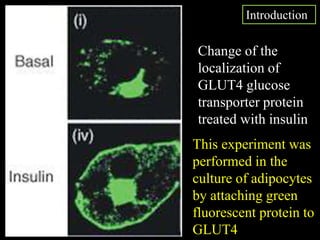
This experiment was
performed in the
culture of adipocytes
by attaching green
fluorescent protein to
GLUT4
Change of the
localization of
GLUT4 glucose
transporter protein
treated with insulin
Introduction
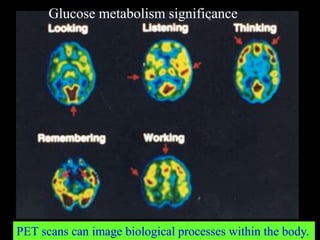
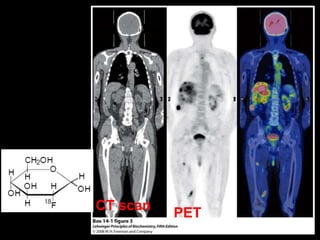
PET scans can image biological processes within the body.
Glucose metabolism significance
Positron emission tomography (PET)
:Injection with 18fluorodeoxyglucose
(short-lived radioactive element: fluorine-18
and glucose) to track
glucose metabolism
and therefore brain
activity – glucose is virtually the only energy
source in the brain in normal.
Introduction
Glucose metabolism significance
Diabetes
• related to blood glucose concentration
• altered ability to regulate glucose metabolism
• normally: when [glucose] high, insulin is released
• T1DM lack the ability to secrete insulin
•T2DM insulin resistance and decrease to secrete
insulin
Cancer
• glucose uptake/glycolysis ~ 10x faster
in cancer cells
• some glycolytic enzymes are
overproduced
Introduction
CT scan
PET
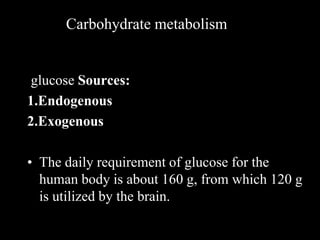
glucose Sources:
1.Endogenous
2.Exogenous
• The daily requirement of glucose for the
human body is about 160 g, from which 120 g
is utilized by the brain.
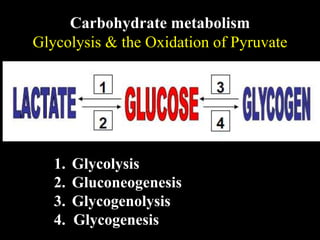
Carbohydrate metabolism
Glycolysis & the Oxidation of Pyruvate
1. Glycolysis
2. Gluconeogenesis
3. Glycogenolysis
4. Glycogenesis
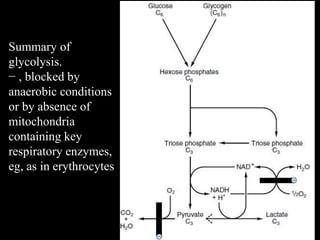
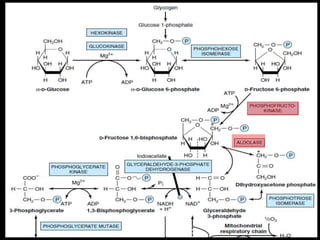
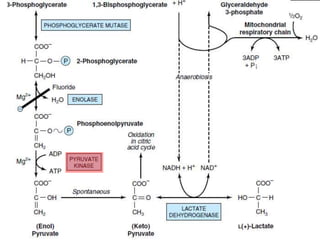
Summary of
glycolysis.
− , blocked by
anaerobic conditions
or by absence of
mitochondria
containing key
respiratory enzymes,
eg, as in erythrocytes
Glycolysis
Glycolysis cont.
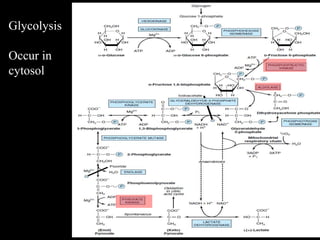
Glycolysis
Occur in
cytosol
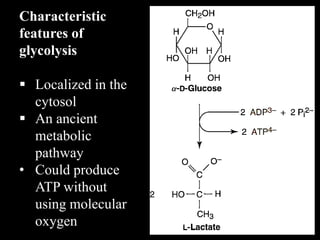
Characteristic
features of
glycolysis
 Localized in the
cytosol
 An ancient
metabolic
pathway
• Could produce
ATP without
using molecular
oxygen
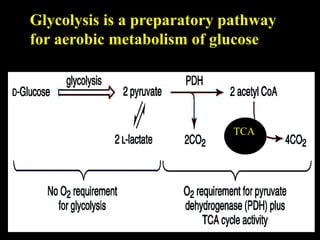
Glycolysis is a preparatory pathway
for aerobic metabolism of glucose
TCA
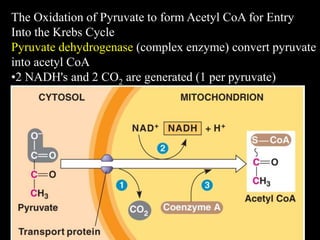
The Oxidation of Pyruvate to form Acetyl CoA for Entry
Into the Krebs Cycle
Pyruvate dehydrogenase (complex enzyme) convert pyruvate
into acetyl CoA
•2 NADH's and 2 CO2 are generated (1 per pyruvate)
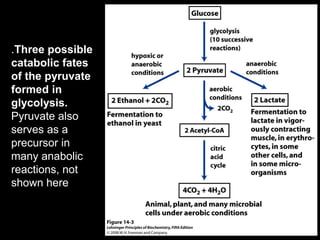
.Three possible
catabolic fates
of the pyruvate
formed in
glycolysis.
Pyruvate also
serves as a
precursor in
many anabolic
reactions, not
shown here
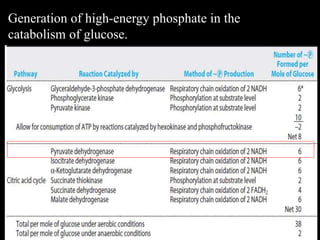
Generation of high-energy phosphate in the
catabolism of glucose.
CLINICAL ASPECTS
• Inhibition of Pyruvate Metabolism Leads
to Lactic Acidosis
• 1- Arsenite and mercuric ions inhibit
pyruvate dehydrogenase
• 2- Dietary deficiency of thiamin (cofactor of
pyruvate dehydrogenase,), allowing pyruvate
to accumulate.
• 3- Inherited pyruvate dehydrogenase
deficiency - causes lactic acidosis, particularly
after a glucose load.
– neurologic disturbances because Brain is
dependences on glucose as a fuel
CLINICAL ASPECTS
• Inherited aldolase A deficiency and
pyruvate kinase deficiency in
erythrocytes cause hemolytic anemia.
CLINICAL ASPECTS
Pphosphofructokinase deficiency
The exercise capacity of muscle is low,
particularly on high carbohydrate diets.
The capacity is improved By providing lipid
fuel, eg, during starvation, when blood free
fatty acids and ketone bodies are increased.

CHO lec1.ppt

  • 1.
    Carbohydrate metabolism CHO Digestion •Carbohydrate: polyhydroxy aldehyde or ketone • Carbohydrate classification – Monosaccharide (glucose, fructose, galactose mannose) – Di saccharides (maltose, lactose, sucrose, isomaltose) – Polysaccharides (cellulose, starch, glycogen) Introduction
  • 2.
    DIETARY CARBOHYDRATES • Normaldiet contains 200-300 g (50% of caloric intake) • Serves an energy and carbon source • Digestion includes a luminal phase and a brush border phase • Only monosaccharaides are appreciably absorbed Introduction
  • 3.
    Starch= Amylose &Amylopectin
  • 4.
    • alpha-Amylase (pHoptima 7) cleaves interior α1-4 linkages but not α1-6 • End product is a mixture of maltose, maltotriose and limit dextrin • Acarbose (anti diabetic drug) – Amylase inhibitor Introduction
  • 5.
    Introduction Intestinal brush borderhydrolysis Products site of hydrolysis Substrates Enzyme Glucose α- 1,4 linkage Maltose , maltotriose Maltase Glucose fructose α- 1,2 linkage Sucrose Sucrase Glucose, galactose β- 1,4 linkage But not of cellulose Lactose Lactase Glucose, maltose, oligosaccharides α- 1,6 linkage α- limit dextrins α- dextrinase (Isomaltase)
  • 6.
  • 10.
    SGLT1 Na+ -glucose symporter Absorption of carbohydrate Introduction
  • 11.
    • The glucoseand galactose is taken up by a Na+-monosaccharide co-transporter,. • Na+ will be pumped out by Na+ K+–ATP-ase. • Fructose is taken up by Na+ -independent facilitated-diffusion, mediated by GLUT5. • The monosaccharides could leave enterocytes into interstitial through GLUT2. Absorption of carbohydrate Introduction
  • 12.
    Lactase Deficiency Lactose accumulation Inbowel lumen Increased luminal osmolality Watery diarrhea Lactic acid Production By bacteria Net water accumulation in lumen Luminal distention Enhanced peristalsis Introduction
  • 13.
    Lactase is presentin infancy and disappears to a variable extent during childhood in most humans. Exception is Northern Europeans and European Americans-commonly retain lactase into adulthood. Introduction
  • 14.
    Sucrase Deficiency Sucrase accumulation Inbowel lumen Increased luminal osmolality Watery diarrhea Lactic acid Production By bacteria Net water accumulation in lumen Luminal distention Enhanced peristalsis Introduction
  • 15.
    • Blood Transport:(portal vein to liver): • 1. Release monosaccharides into bloodstream • 2. Deliver sugars for storage as glycogen (liver, muscle tissue ) or fat (adipose tissue) Blood transport Introduction
  • 16.
    • GLUT proteins Na+-independent monosaccharide transporters are responsible for the thermodynamically downhill movement of glucose across the plasma membrane of animal cells. – GLUT 1: red blood cells, brain, adipose tissue – GLUT 2: liver, pancreatic β cells, kidney – GLUT 3: brain – GLUT 4: muscle, adipose tissue (insulin dependent) – GLUT 5: fructose transporter Introduction
  • 17.
    This experiment was performedin the culture of adipocytes by attaching green fluorescent protein to GLUT4 Change of the localization of GLUT4 glucose transporter protein treated with insulin Introduction
  • 18.
    PET scans canimage biological processes within the body. Glucose metabolism significance
  • 19.
    Glucose metabolism significance Positronemission tomography (PET) :Injection with 18fluorodeoxyglucose (short-lived radioactive element: fluorine-18 and glucose) to track glucose metabolism and therefore brain activity – glucose is virtually the only energy source in the brain in normal. Introduction
  • 20.
    Glucose metabolism significance Diabetes •related to blood glucose concentration • altered ability to regulate glucose metabolism • normally: when [glucose] high, insulin is released • T1DM lack the ability to secrete insulin •T2DM insulin resistance and decrease to secrete insulin Cancer • glucose uptake/glycolysis ~ 10x faster in cancer cells • some glycolytic enzymes are overproduced Introduction
  • 21.
  • 22.
    glucose Sources: 1.Endogenous 2.Exogenous • Thedaily requirement of glucose for the human body is about 160 g, from which 120 g is utilized by the brain. Carbohydrate metabolism
  • 23.
    Carbohydrate metabolism Glycolysis &the Oxidation of Pyruvate 1. Glycolysis 2. Gluconeogenesis 3. Glycogenolysis 4. Glycogenesis
  • 24.
    Summary of glycolysis. − ,blocked by anaerobic conditions or by absence of mitochondria containing key respiratory enzymes, eg, as in erythrocytes
  • 25.
  • 26.
  • 27.
  • 28.
    Characteristic features of glycolysis  Localizedin the cytosol  An ancient metabolic pathway • Could produce ATP without using molecular oxygen
  • 29.
    Glycolysis is apreparatory pathway for aerobic metabolism of glucose TCA
  • 30.
    The Oxidation ofPyruvate to form Acetyl CoA for Entry Into the Krebs Cycle Pyruvate dehydrogenase (complex enzyme) convert pyruvate into acetyl CoA •2 NADH's and 2 CO2 are generated (1 per pyruvate)
  • 31.
    .Three possible catabolic fates ofthe pyruvate formed in glycolysis. Pyruvate also serves as a precursor in many anabolic reactions, not shown here
  • 32.
    Generation of high-energyphosphate in the catabolism of glucose.
  • 33.
    CLINICAL ASPECTS • Inhibitionof Pyruvate Metabolism Leads to Lactic Acidosis • 1- Arsenite and mercuric ions inhibit pyruvate dehydrogenase • 2- Dietary deficiency of thiamin (cofactor of pyruvate dehydrogenase,), allowing pyruvate to accumulate.
  • 34.
    • 3- Inheritedpyruvate dehydrogenase deficiency - causes lactic acidosis, particularly after a glucose load. – neurologic disturbances because Brain is dependences on glucose as a fuel CLINICAL ASPECTS
  • 35.
    • Inherited aldolaseA deficiency and pyruvate kinase deficiency in erythrocytes cause hemolytic anemia. CLINICAL ASPECTS Pphosphofructokinase deficiency The exercise capacity of muscle is low, particularly on high carbohydrate diets. The capacity is improved By providing lipid fuel, eg, during starvation, when blood free fatty acids and ketone bodies are increased.