
-By Dr. Rima Jani PT
(B.P.T., M.P.T. Pediatric Science)
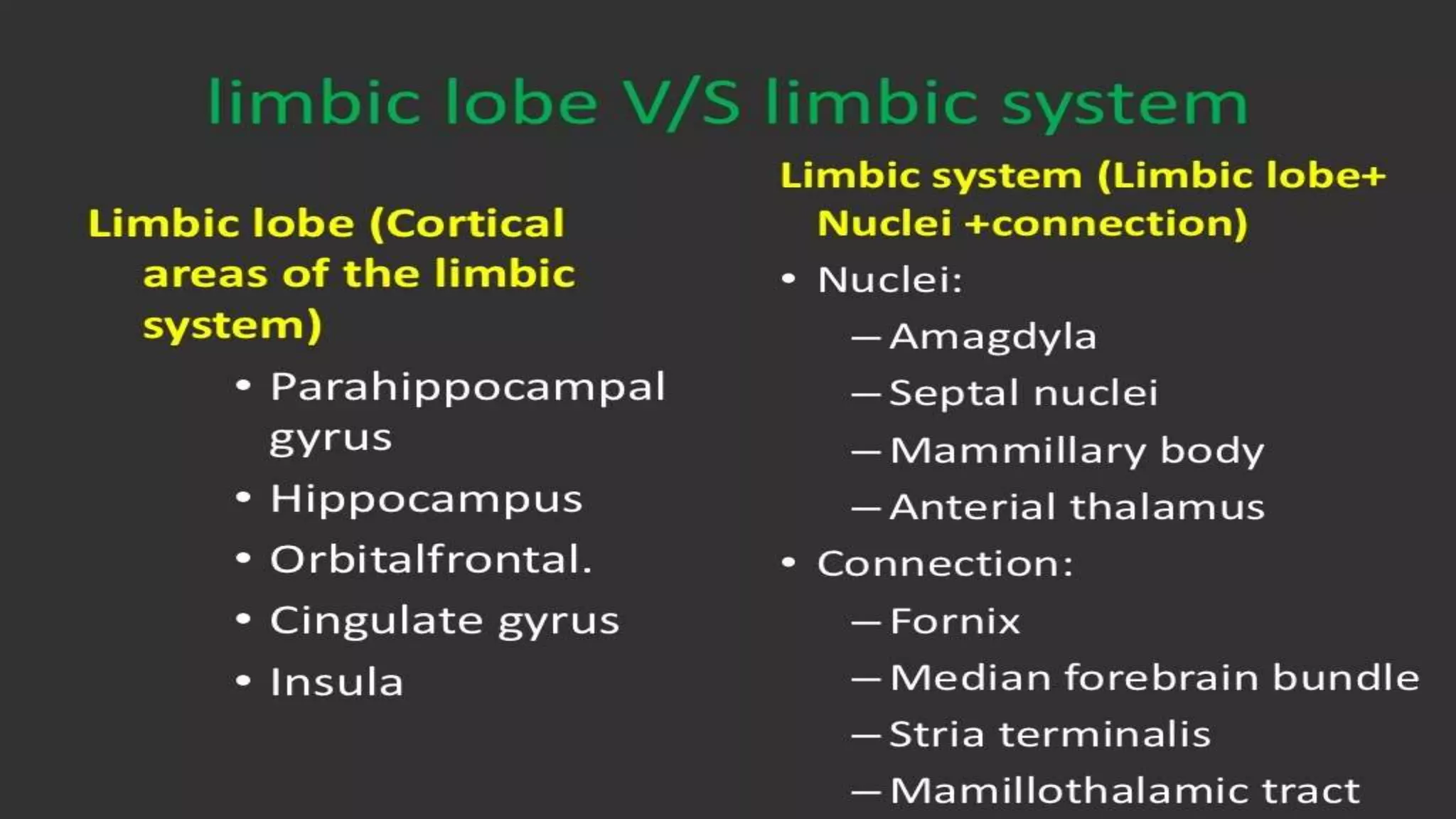
 Limbus means ring. It is also known as limbic lobe. Earlier, it was
called rhinencephalon.
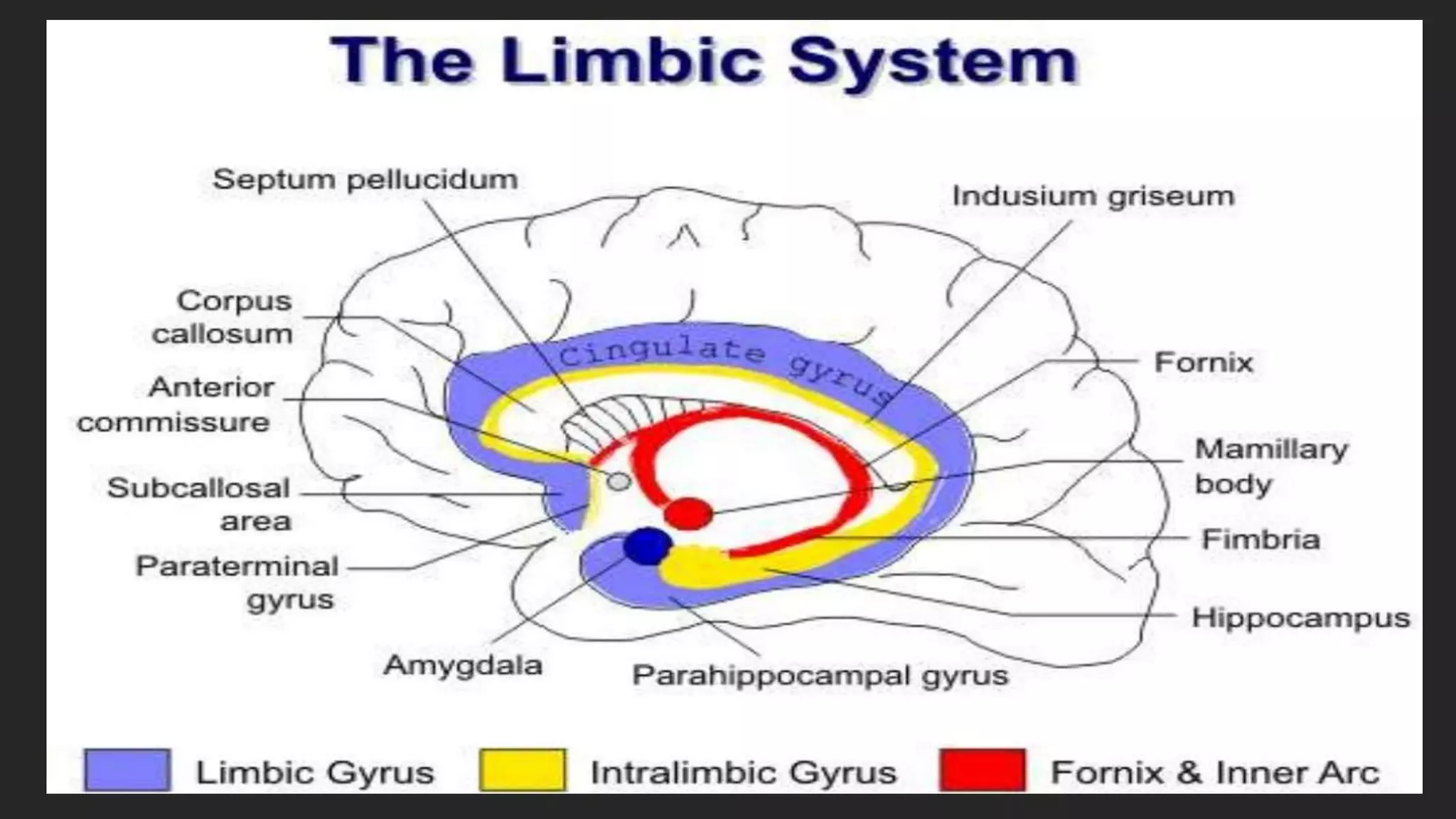
 Limbic system is a complex system of cortical and subcortical
structures that form a ring around the hilus of cerebral hemisphere.
 Limbic system is one of the oldest parts of the brain and it is
related to olfactory lobe.
 Limbic system is primarily related to emotional part of our life and is
extensively concerned with memory.
Introduction
 The piriform cortex is the largest cortical
recipient of direct olfactory bulb
projections.
 The relationship between the piriform
cortex and the orbitofrontal cortex is
similarly complex.
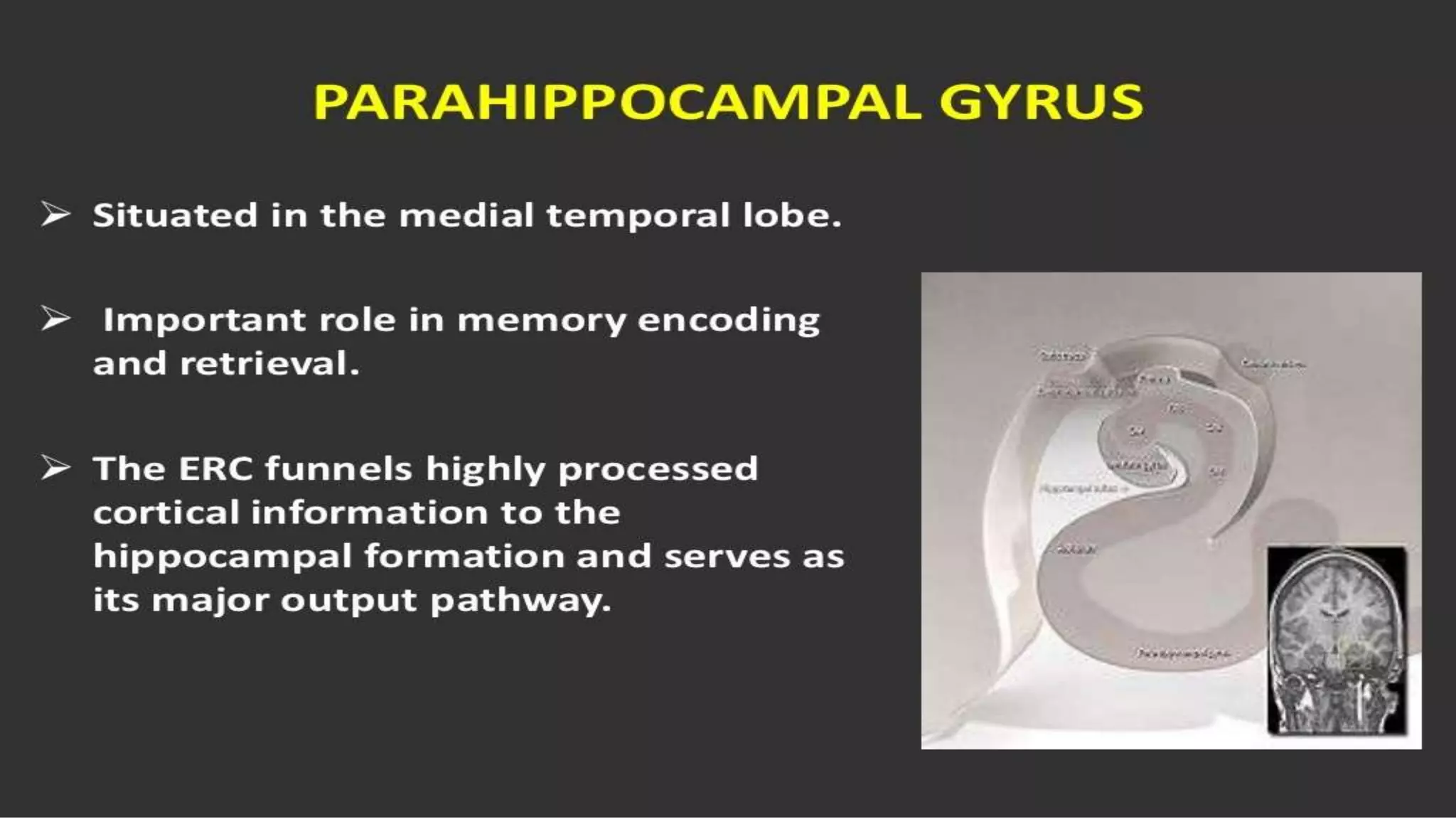
 The entorhinal cortex, typically seen as
the gateway into the hippocampus, also
sends a strong projection back to the
piriform cortex, and modulates fine odor
discrimination.
PIRIFORM CORTEX
 Compensatory changes in
brain regions, including the
piriform cortex and
Orbitofrontal Cortex (OFC),
may allow the olfactory
system to experience
prolonged periods of
deprivation without marked
changes in odor perception.
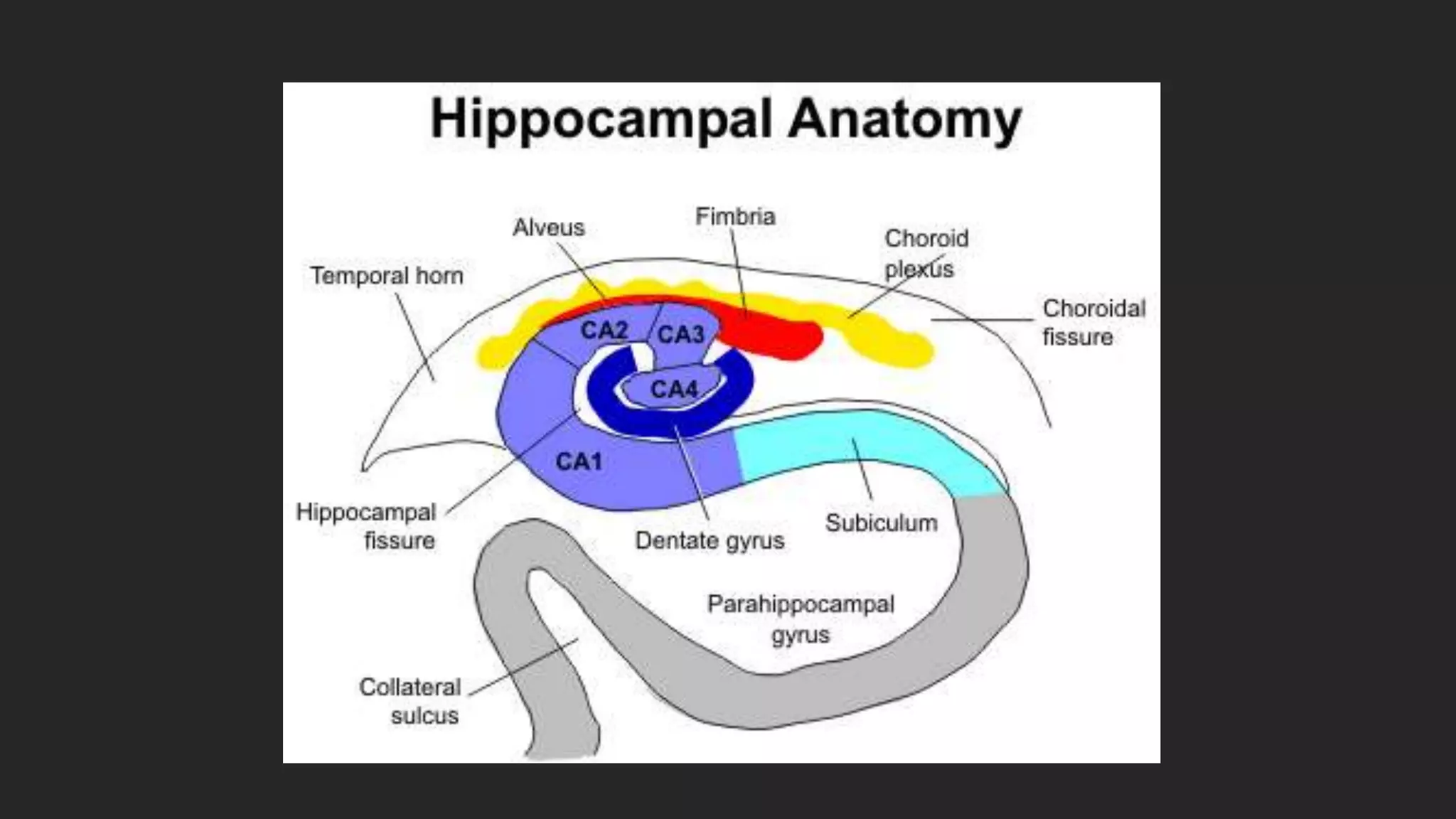
1. Fornix: It includes fibers connecting:
 Hippocampus and septal nuclei with the mamillary body
 Hippocampus with hypothalamic nuclei.
2. Lateral hypothalamus receives afferent fibers from:
 Hippocampus
 Septal nuclei
 Olfactory tubercle
 Head of caudate nucleus
 Piriform area
 Periamygdaloid area.
CONNECTIONS OF LIMBIC SYSTEM
3. Caudate nucleus receives fibers from:
 Cingulate gyrus
 Intralaminar nuclei of thalamus.
4. Brainstem reticular formation receives fibers from:
 Hippocampus
 Cingulate gyrus.
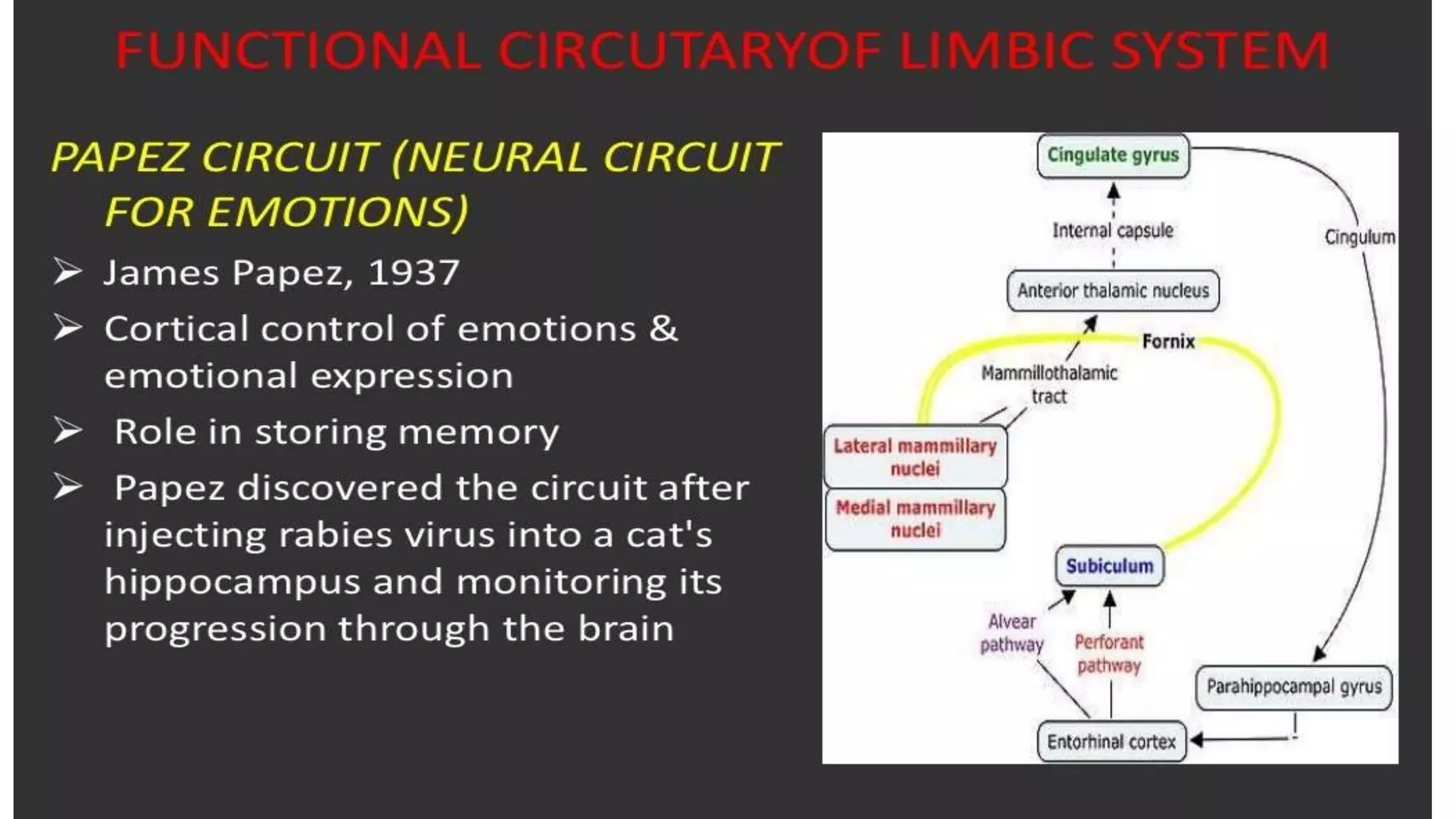
5. Papez circuit.
CONNECTIONS OF LIMBIC SYSTEM
Clinical Syndromes
Hypo limbic
 Depression
 Apathy
 Utilization behaviour
 Amnesia (hippocampus)
 Social Dysdecorum
 Kluver-Bucy Syndrome
(Amygdala)
 Anxiety/Panic
 Psychosis
Limbic Epilepsy
Limbic encephalitis
Rage (Hypothalamus & Amygdala)
Hyper limbic
 Mania
 OCD
Limbic System
Limbic System

Limbic System

  • 1.
    -By Dr. RimaJani PT (B.P.T., M.P.T. Pediatric Science)
  • 3.
     Limbus meansring. It is also known as limbic lobe. Earlier, it was called rhinencephalon.  Limbic system is a complex system of cortical and subcortical structures that form a ring around the hilus of cerebral hemisphere.  Limbic system is one of the oldest parts of the brain and it is related to olfactory lobe.  Limbic system is primarily related to emotional part of our life and is extensively concerned with memory. Introduction
  • 24.
     The piriformcortex is the largest cortical recipient of direct olfactory bulb projections.  The relationship between the piriform cortex and the orbitofrontal cortex is similarly complex.  The entorhinal cortex, typically seen as the gateway into the hippocampus, also sends a strong projection back to the piriform cortex, and modulates fine odor discrimination. PIRIFORM CORTEX
  • 25.
     Compensatory changesin brain regions, including the piriform cortex and Orbitofrontal Cortex (OFC), may allow the olfactory system to experience prolonged periods of deprivation without marked changes in odor perception.
  • 26.
    1. Fornix: Itincludes fibers connecting:  Hippocampus and septal nuclei with the mamillary body  Hippocampus with hypothalamic nuclei. 2. Lateral hypothalamus receives afferent fibers from:  Hippocampus  Septal nuclei  Olfactory tubercle  Head of caudate nucleus  Piriform area  Periamygdaloid area. CONNECTIONS OF LIMBIC SYSTEM
  • 27.
    3. Caudate nucleusreceives fibers from:  Cingulate gyrus  Intralaminar nuclei of thalamus. 4. Brainstem reticular formation receives fibers from:  Hippocampus  Cingulate gyrus. 5. Papez circuit. CONNECTIONS OF LIMBIC SYSTEM
  • 32.
    Clinical Syndromes Hypo limbic Depression  Apathy  Utilization behaviour  Amnesia (hippocampus)  Social Dysdecorum  Kluver-Bucy Syndrome (Amygdala)  Anxiety/Panic  Psychosis Limbic Epilepsy Limbic encephalitis Rage (Hypothalamus & Amygdala) Hyper limbic  Mania  OCD

Editor's Notes

  • #19 ERC: Etorhinal cortex