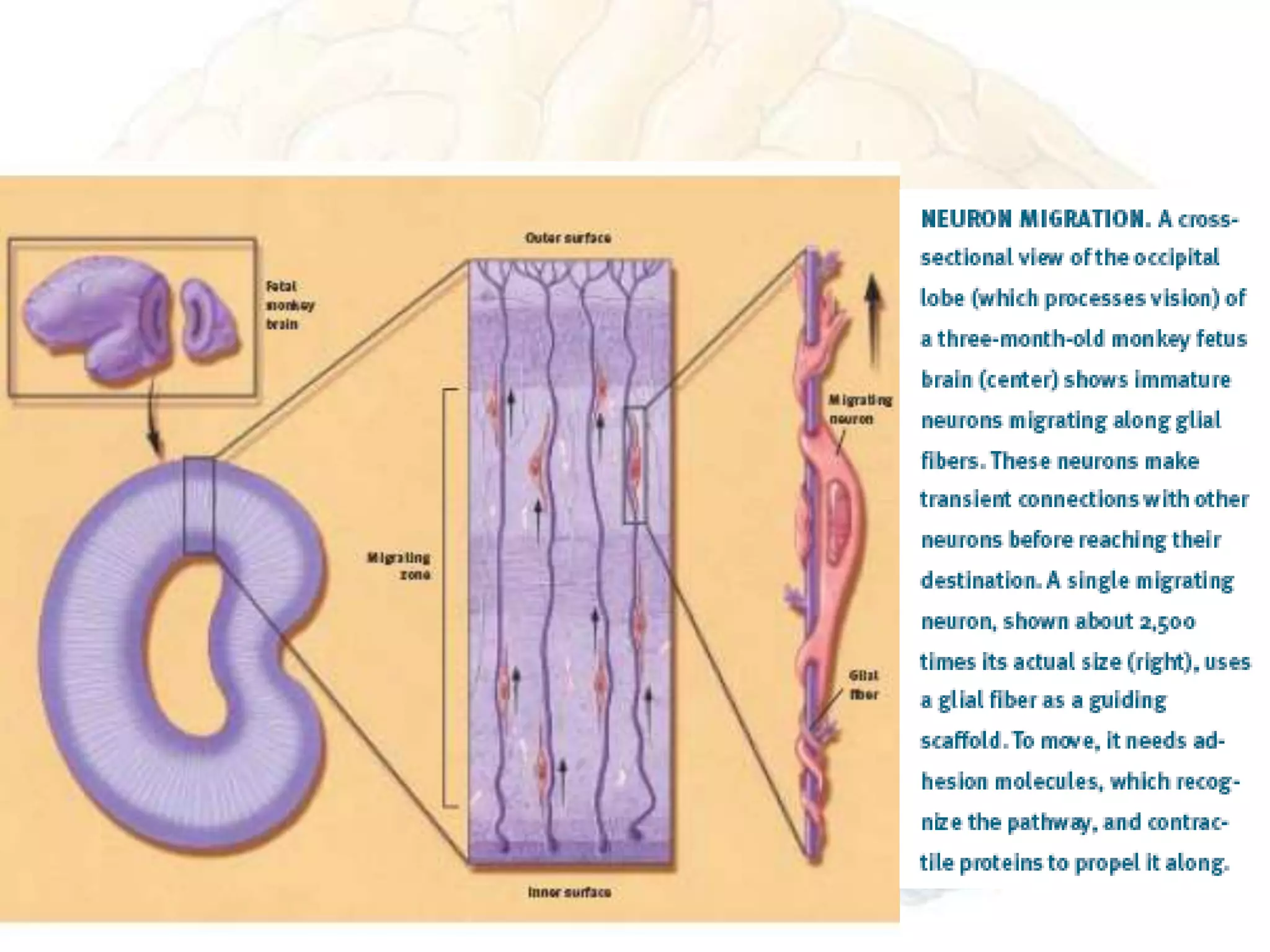
saRavanan
The human brain is the most complex
 mass of protoplasm on earth-perhaps
What’s on your mind?
           even in our galaxy.
-Marian C. Diamond and Arnold B. Scheibel
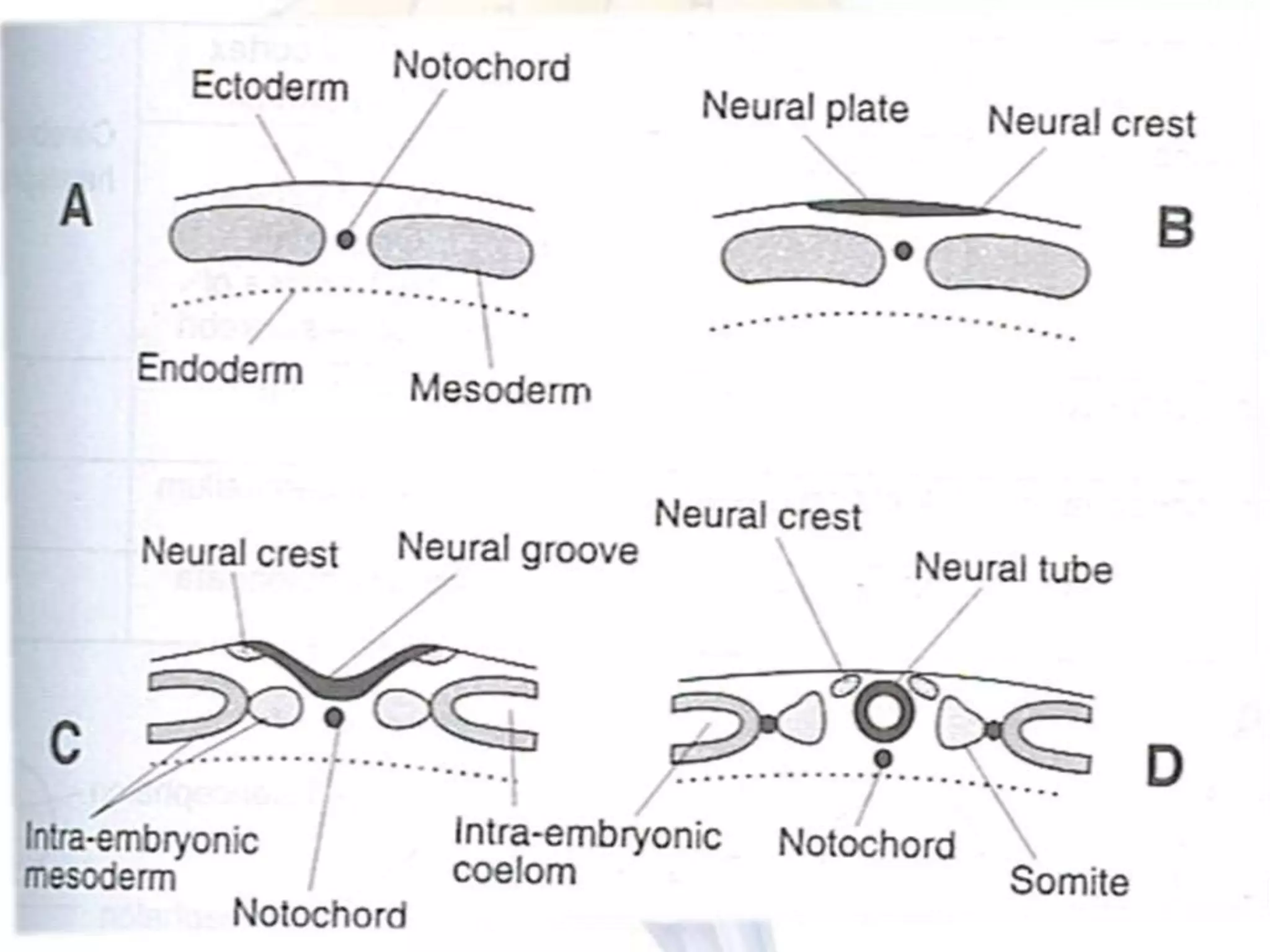
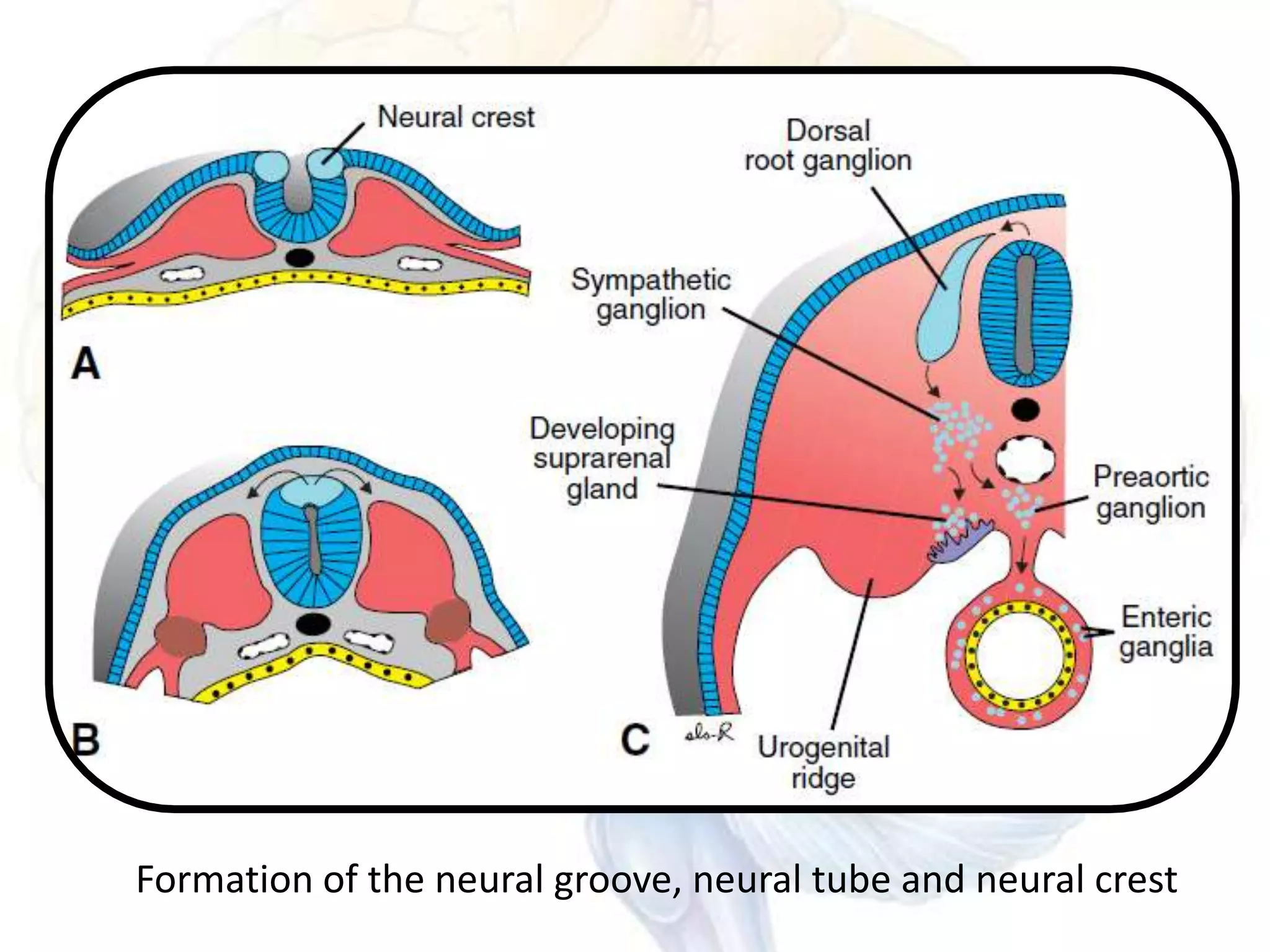
FORMATION OF NEURAL TUBE
Formation of the neural groove, neural tube and neural crest
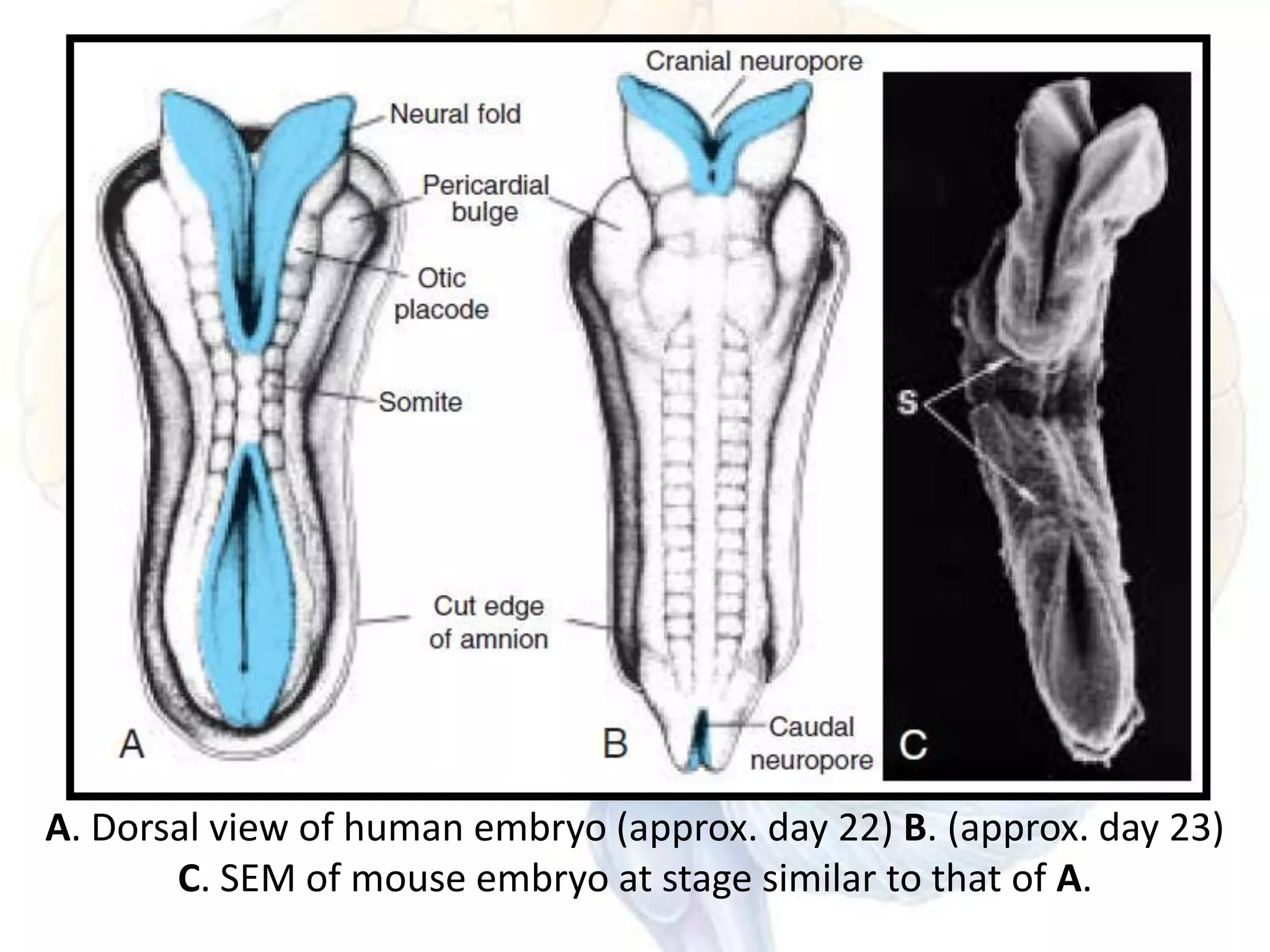
A. Dorsal view of human embryo (approx. day 22) B. (approx. day 23)
       C. SEM of mouse embryo at stage similar to that of A.
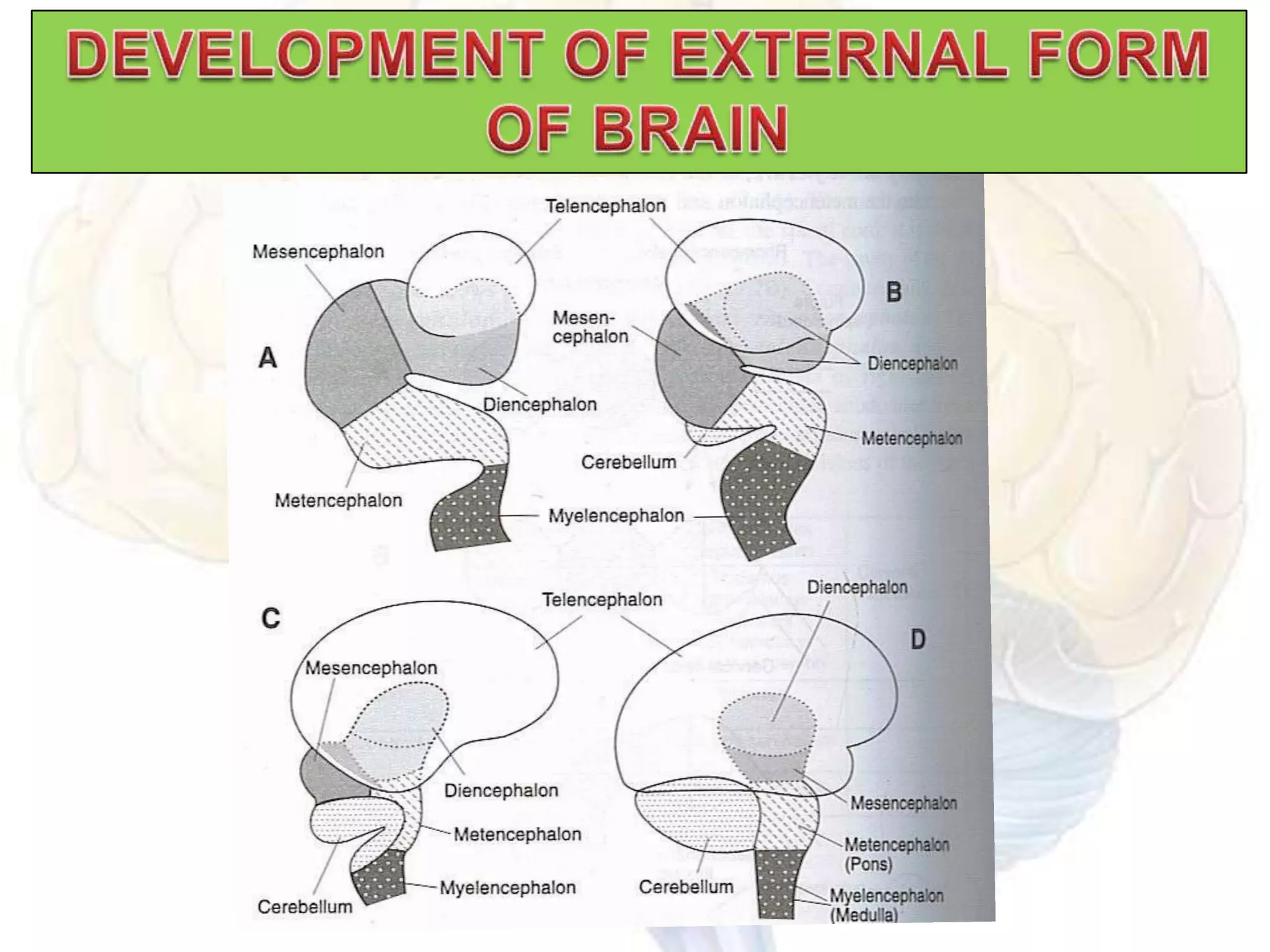
Lateral views of the fetal brain, from 10 to 40
           weeks of gestational age.
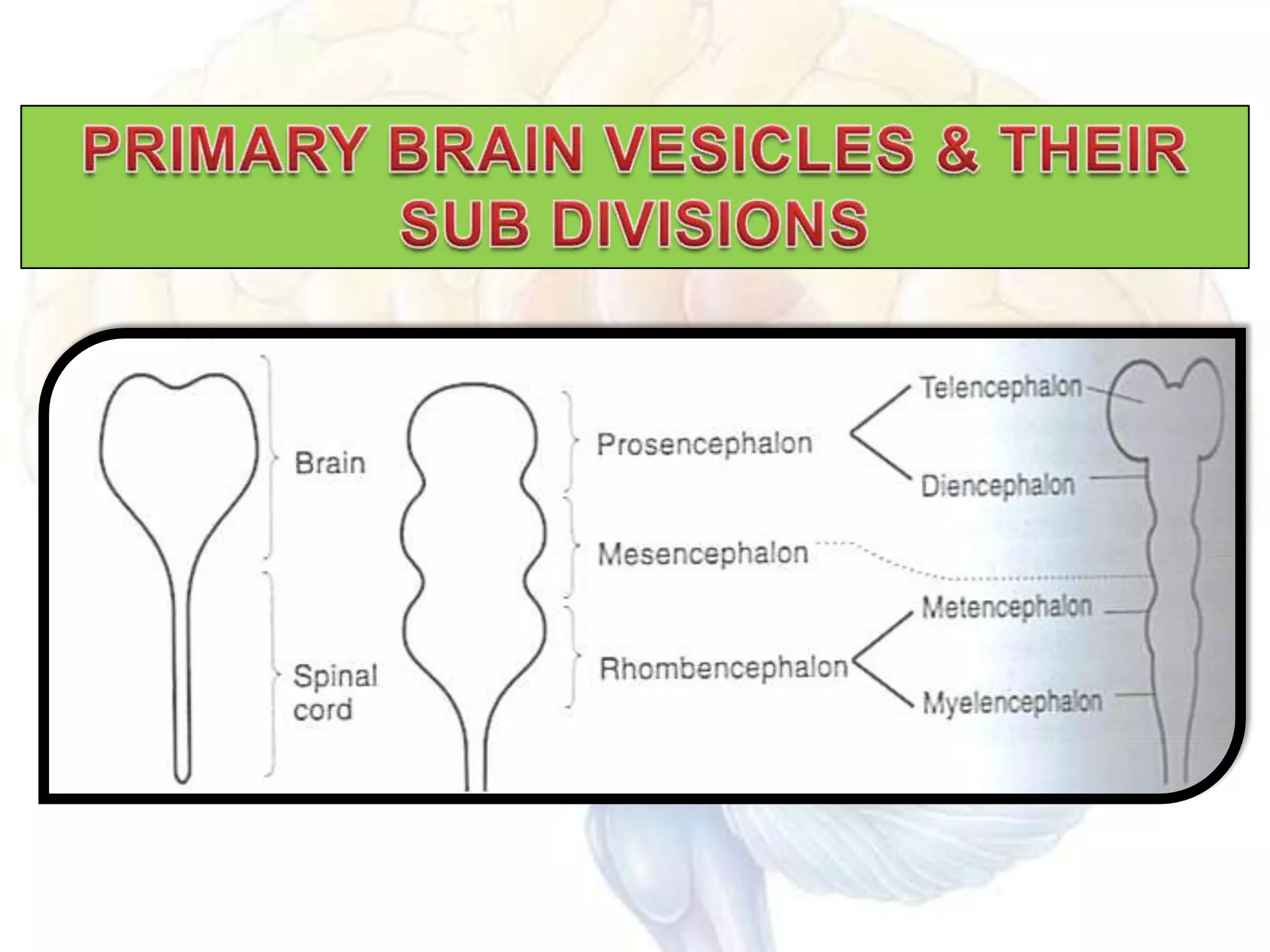
RHOMBENCEPHALON
• Consists of the myelencephalon, the most
  caudal of the brain vesicles, and the
  metencephalon, which extends from the
  pontine flexure to the rhombencephalic
  isthmus
Myelencephalon
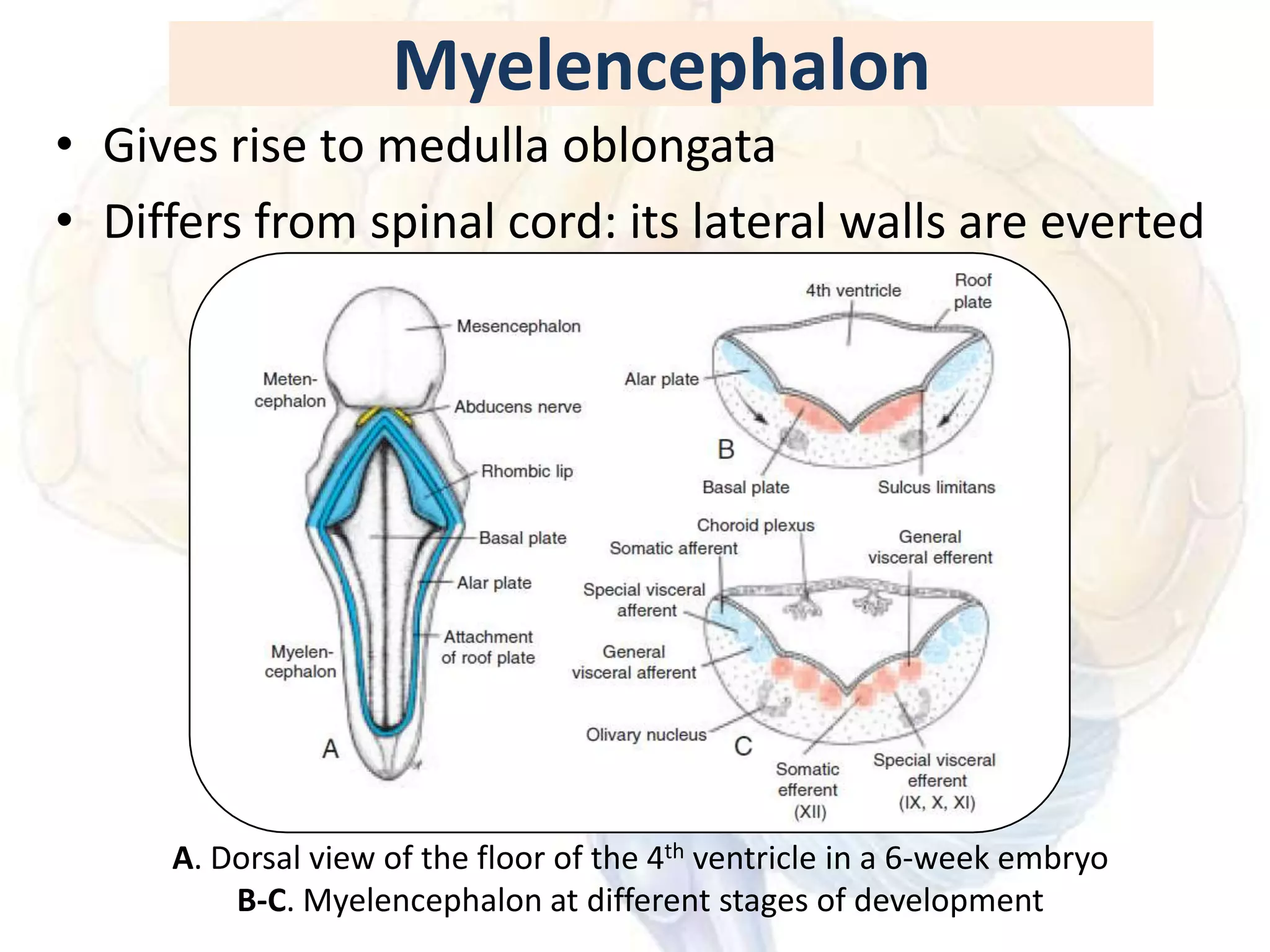
• Gives rise to medulla oblongata
• Differs from spinal cord: its lateral walls are everted


     A. Dorsal view of the floor of the 4th ventricle in a 6-week embryo
         B-C. Myelencephalon at different stages of development
Lateral view of the brain vesicles in an 8-week embryo
Metencephalon

• The metencephalon, similar to the
  myelencephalon, is characterized by basal and
  alar plates.
• Two new components form:
  – (a) the cerebellum, a coordination center for
    posture and movement,
  – (b) the pons, the pathway for nerve fibers
    between the spinal cord and the cerebral and
    cerebellar cortices.
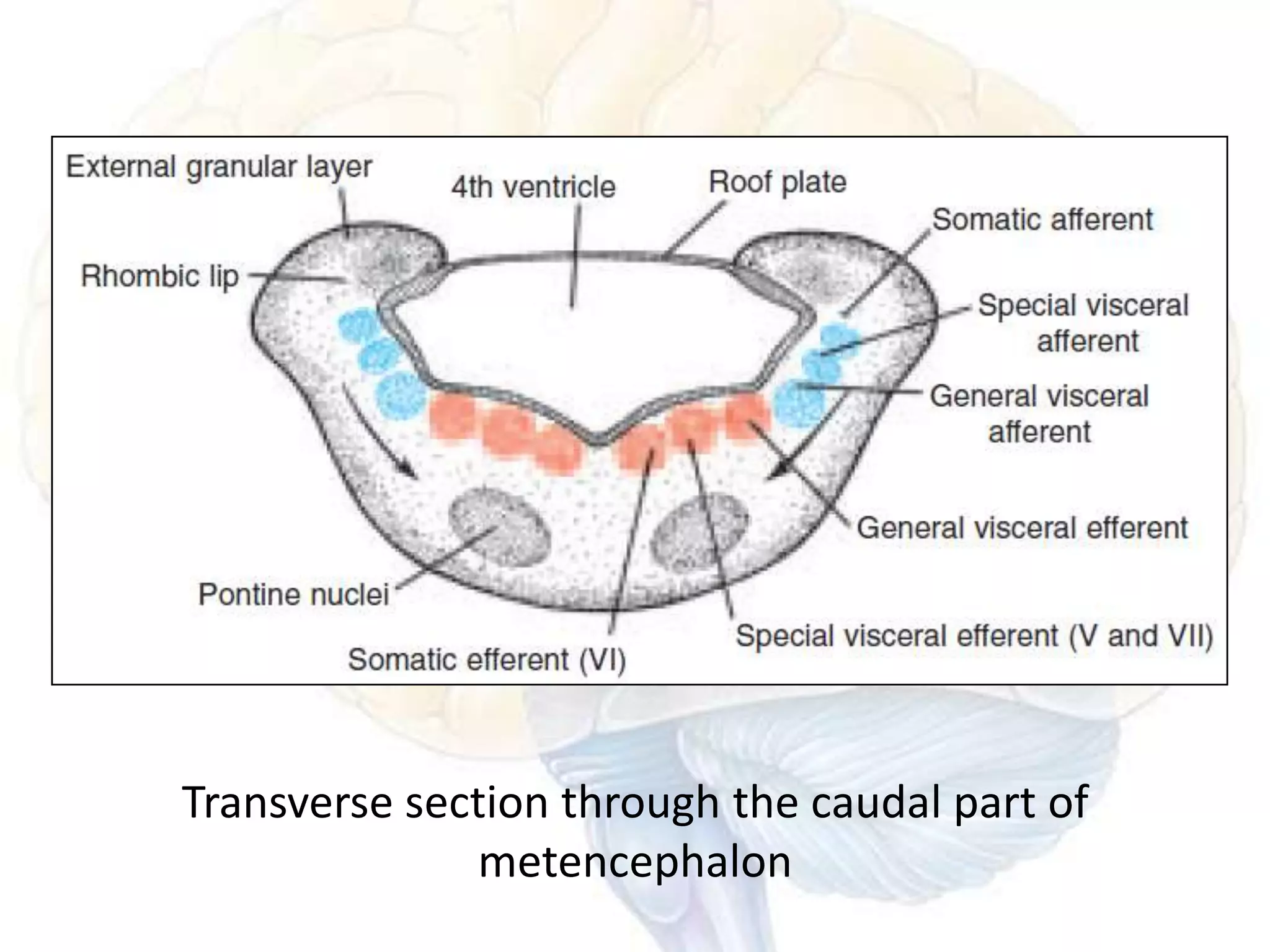
Transverse section through the caudal part of
              metencephalon
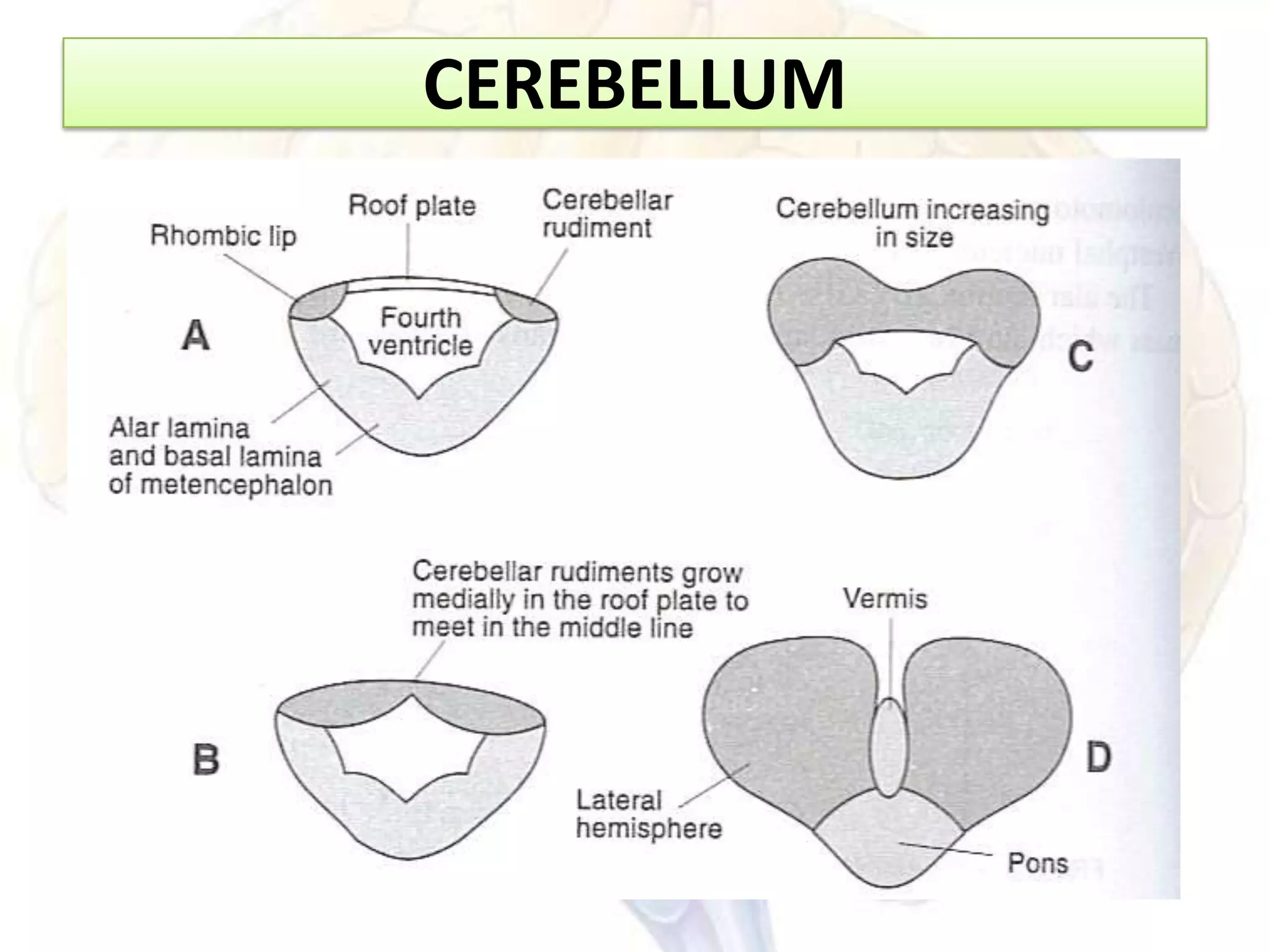
CEREBELLUM
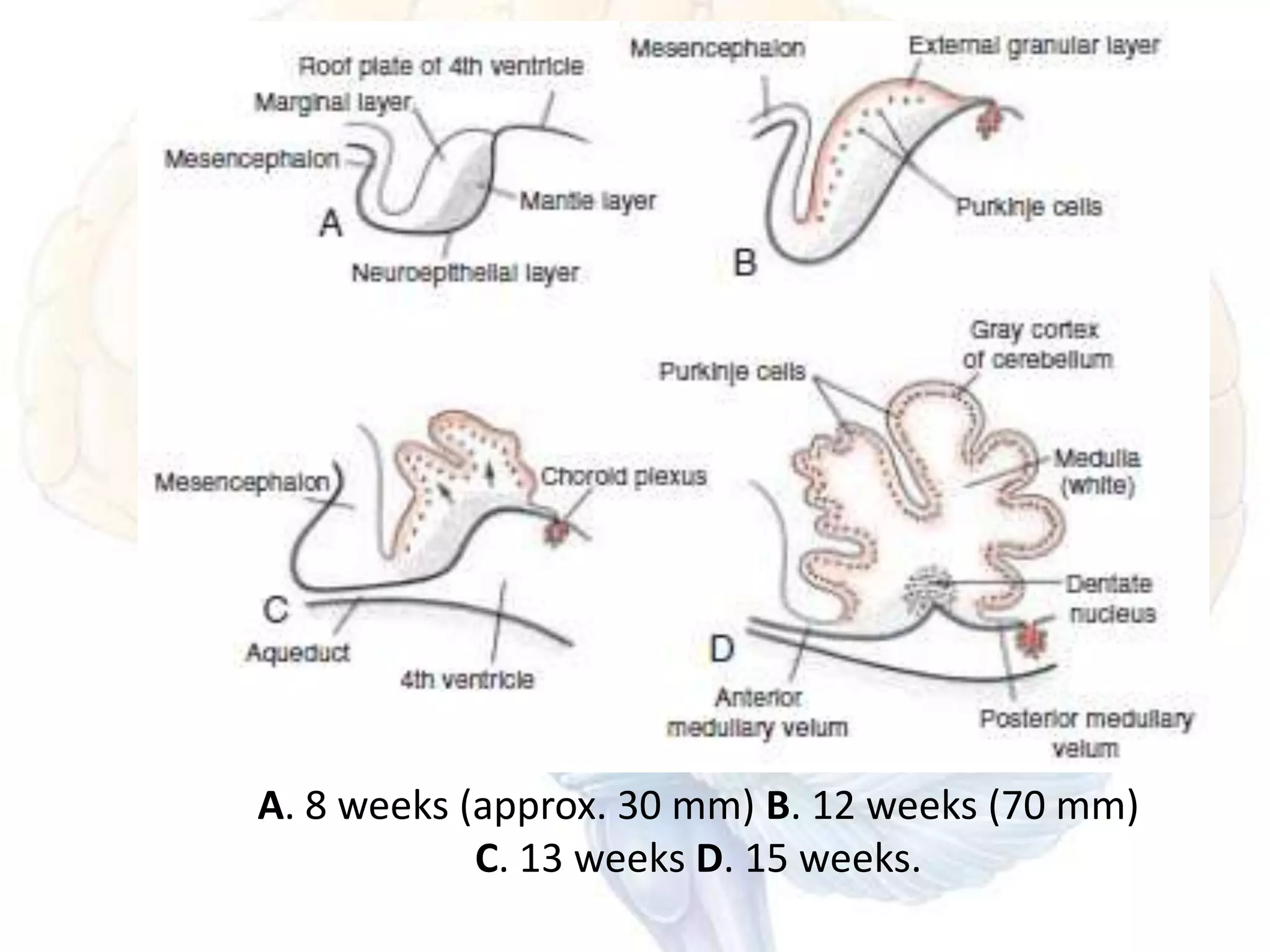
A. 8 weeks (approx. 30 mm) B. 12 weeks (70 mm)
            C. 13 weeks D. 15 weeks.
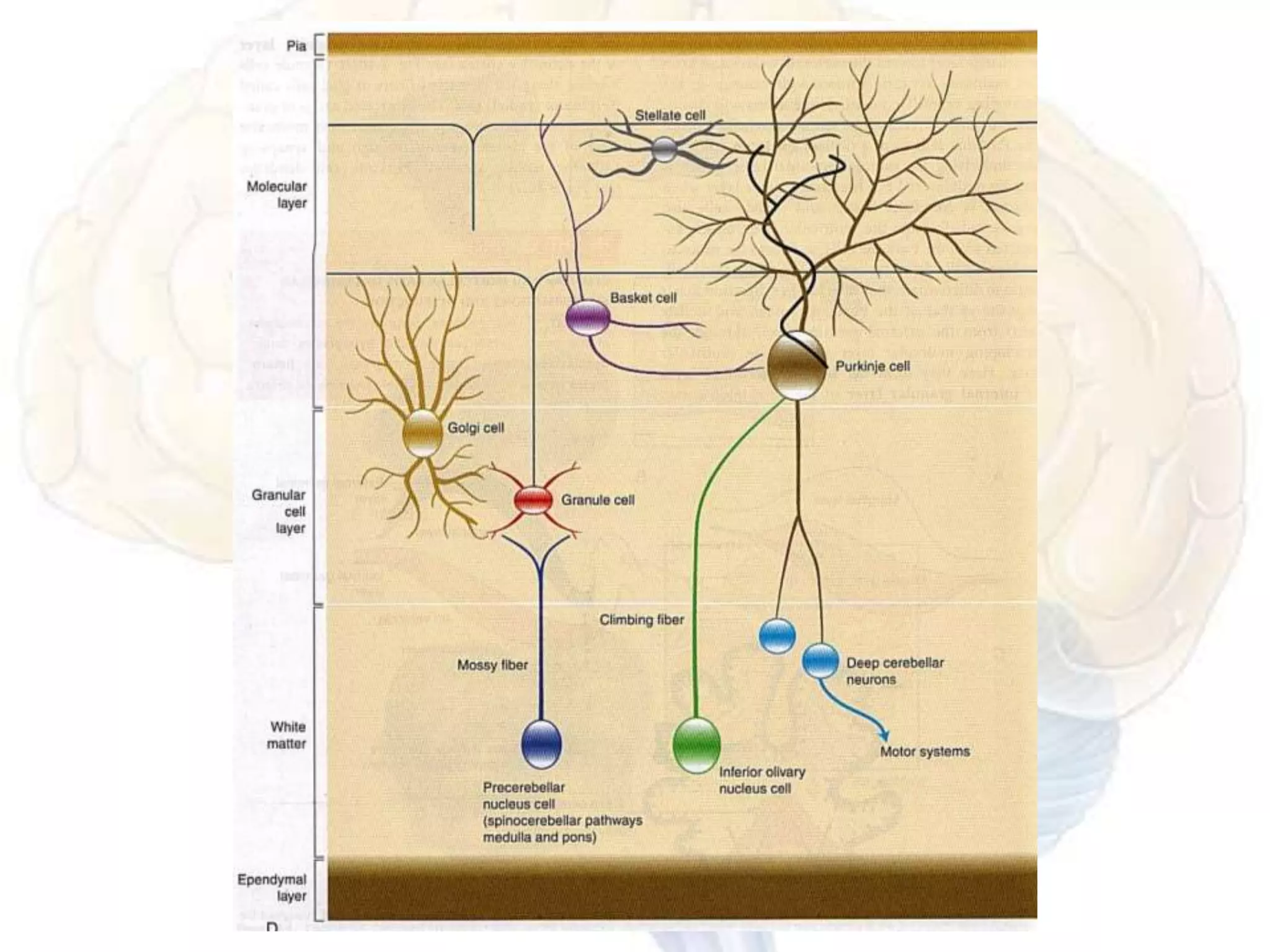
• In the sixth month of development, the external
  granular layer gives rise to various cell types.
• These cells migrate toward the differentiating
  Purkinje cells and give rise to granule cells.
• Basket and stellate cells are produced by
  proliferating cells in the cerebellar white matter.
CEREBELLAR MALFORMATIONS
        AND MALFUNCTIONS
• Hypoplasias- under development
• Dysplasias- abnormal tissue development
• Heterotopias- misplaced cells
• Schizophrenia- related to early defects in
  neuronal migration, the expression of
  neurotransmitter receptors, or myelination
• Ataxia- disruption of coordination; result from
  degeneration of cerebellum
• Trisomy 13- vermis is hypoplastic and neurons
  are heterotopically located in the white matter
• Cerebellar dysplasia- usually of the vermis;
  characteristic of Trisomy 18
• Trisomy 21 (Down Syndrome)- may involve
  abnormalities of the Purkinje and granule cell
  layers
• Chromosome deletion syndromes:
  – 5p-(cri du chat), 13q-, 4p-
• Friedriech ataxia- autosomal recessive; affects
  the dorsal root ganglia, spinal cord, cerebellum;
  progressive disorder
• Other autosomal recessive cerebellar ataxia
  syndromes: Ataxia- telanglectasia, Marinesco-
  Sjogren syndrome, Gillespie syndrome, Joubert
  syndrome, congenital disorders of glycosylation
• Olivopontocerebellar atophy- caused by
  deficiency in the excitatory neurotransmitter
  glutamate, resulting from deficiency in
  glutamate hydrogenase
• Cerebrospinal ataxia syndromes:
  – Many are caused by unstable CAG trinucleotide
    repeat tracts within the coding region of genes
  – CAG codes for glutamine; polyglutamine disorders
    occur when tract of glutamine residues reaches
    the disease-causing threshold.
  – Genetic anticipation can cause the worsening of
    the disease in successive generations
PONS   Pons is formed by proliferation of
       cell and fiber tracts on ventral side
       of metencephalon
MESENCEPHALON
proSENCEPHALON
• The prosencephalon consists of the:
   – telencephalon, which forms the cerebral
     hemispheres, and the
   – diencephalon, which forms the optic cup
     and stalk, pituitary, thalamus,
     hypothalamus, and epiphysis.
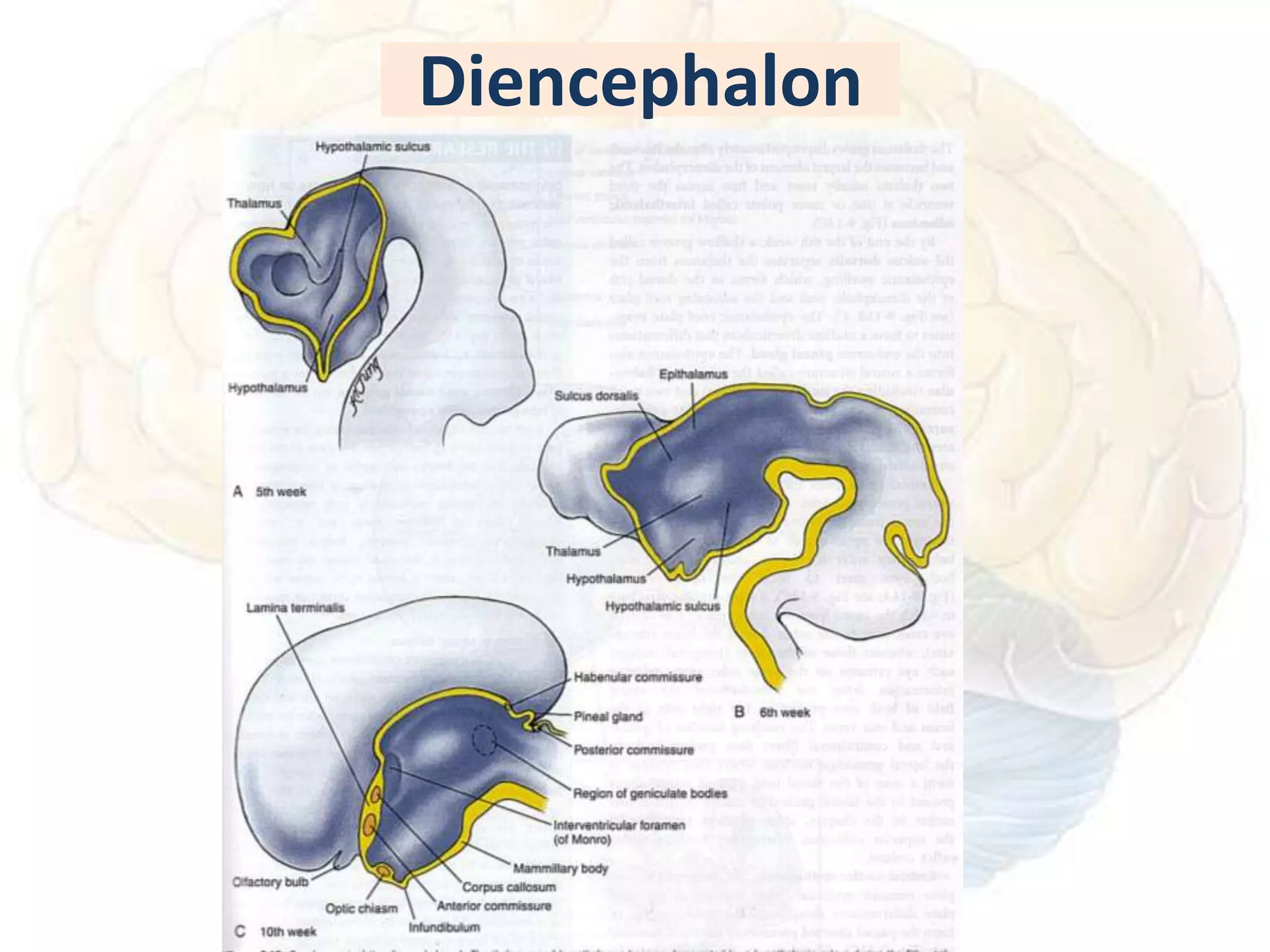
Diencephalon
Roof Plate and Epiphysis
Alar Plate, Thalamus, and Hypothalamus
Hypophysis or Pituitary Gland
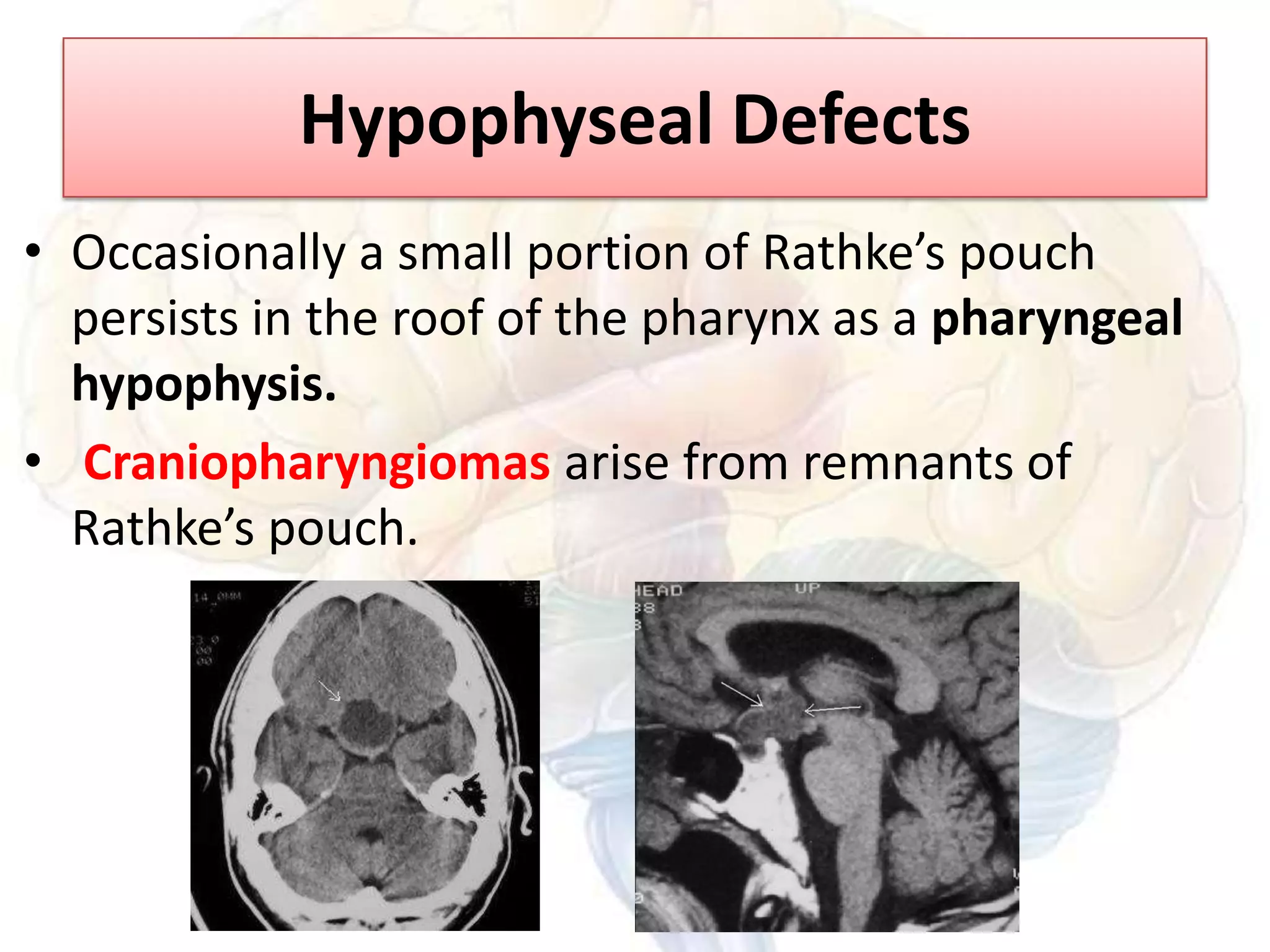
Hypophyseal Defects
• Occasionally a small portion of Rathke’s pouch
  persists in the roof of the pharynx as a pharyngeal
  hypophysis.
• Craniopharyngiomas arise from remnants of
  Rathke’s pouch.
Telencephalon
Cerebral Hemispheres
• Development of gyri and sulci on the lateral
  surface of the cerebral hemisphere.
• A. 7 months. B. 9 months.
Cortex Development
• The cerebral cortex develops from the pallium
  which has two regions:
  – (a) the paleopallium, or archipallium
  – (b) the neopallium
Commissures
Congenital Malformations of
            Cerebral Cortex
• Classical lissencephaly (incidence:   1/100,000 live births)
– Results from incomplete neuronal migration to the
  cerebral cortex during the 3rd and 4th months of gestation
– Pachygyria (broad, thick gyri), Agyria (lack of gyri),
  heterotopia (cells in aberrant positions), enlarged
  ventricles, corpus callosum malformations
– Newborns appear normal but sometimes have apnea,
  poor feeding, or abnormal muscle tone
– Patients later develop seizures, profound mental
  retardation, mild spastic quadriplegia
• Subcortical Band Heterotopia
– Believed to result from aberrant migration
  of differentiating neuroepithelial cells
– Patients have bilateral circumferential and symmetric
  ribbons of gray matter located just beneath the
  cortex and separated from it by thin band of white
  matter -> double cortex syndrome
– Seizures, mild mental retardation, behavioral
  anomalies often present in infancy
– Intelligence can be normal and seizures may begin
  later in life
– X-linked lissencephaly and SBH
Genes related to lissencephaly and SBH

• LIS1- encodes a protein that functions as a
  regulatory subunit of platelet activating factor
  acetylhydrolase, which degrades platelet
  activating factor and involved in microtubule
  dynamics
• Doublecortin- highly expressed in fetal
  neurons and their precursors during cortical
  development; protein associated with
  microtubules
• Kallman syndrome
  – characterized by anosmia (loss of sense of smell) or
    hyposmia (diminished sense of smell) and
    hypogonadism.
  – X-linked form caused by KAL1, which encodes an
    extracellular matrix glycoprotein called ANOSMIN-1
MOLECULAR REGULATION OF
   BRAIN DEVELOPMENT
“Biology gives you a brain.
Life turns it into a mind.”
 ― Jeffrey Eugenides, Middlesex

Embryology of brain

  • 1.
  • 2.
    The human brainis the most complex mass of protoplasm on earth-perhaps What’s on your mind? even in our galaxy. -Marian C. Diamond and Arnold B. Scheibel
  • 5.
  • 6.
    Formation of theneural groove, neural tube and neural crest
  • 7.
    A. Dorsal viewof human embryo (approx. day 22) B. (approx. day 23) C. SEM of mouse embryo at stage similar to that of A.
  • 11.
    Lateral views ofthe fetal brain, from 10 to 40 weeks of gestational age.
  • 15.
    RHOMBENCEPHALON • Consists ofthe myelencephalon, the most caudal of the brain vesicles, and the metencephalon, which extends from the pontine flexure to the rhombencephalic isthmus
  • 16.
    Myelencephalon • Gives riseto medulla oblongata • Differs from spinal cord: its lateral walls are everted A. Dorsal view of the floor of the 4th ventricle in a 6-week embryo B-C. Myelencephalon at different stages of development
  • 17.
    Lateral view ofthe brain vesicles in an 8-week embryo
  • 18.
    Metencephalon • The metencephalon,similar to the myelencephalon, is characterized by basal and alar plates. • Two new components form: – (a) the cerebellum, a coordination center for posture and movement, – (b) the pons, the pathway for nerve fibers between the spinal cord and the cerebral and cerebellar cortices.
  • 19.
    Transverse section throughthe caudal part of metencephalon
  • 20.
  • 23.
    A. 8 weeks(approx. 30 mm) B. 12 weeks (70 mm) C. 13 weeks D. 15 weeks.
  • 24.
    • In thesixth month of development, the external granular layer gives rise to various cell types. • These cells migrate toward the differentiating Purkinje cells and give rise to granule cells. • Basket and stellate cells are produced by proliferating cells in the cerebellar white matter.
  • 26.
    CEREBELLAR MALFORMATIONS AND MALFUNCTIONS • Hypoplasias- under development • Dysplasias- abnormal tissue development • Heterotopias- misplaced cells • Schizophrenia- related to early defects in neuronal migration, the expression of neurotransmitter receptors, or myelination • Ataxia- disruption of coordination; result from degeneration of cerebellum
  • 27.
    • Trisomy 13-vermis is hypoplastic and neurons are heterotopically located in the white matter • Cerebellar dysplasia- usually of the vermis; characteristic of Trisomy 18 • Trisomy 21 (Down Syndrome)- may involve abnormalities of the Purkinje and granule cell layers • Chromosome deletion syndromes: – 5p-(cri du chat), 13q-, 4p-
  • 28.
    • Friedriech ataxia-autosomal recessive; affects the dorsal root ganglia, spinal cord, cerebellum; progressive disorder • Other autosomal recessive cerebellar ataxia syndromes: Ataxia- telanglectasia, Marinesco- Sjogren syndrome, Gillespie syndrome, Joubert syndrome, congenital disorders of glycosylation • Olivopontocerebellar atophy- caused by deficiency in the excitatory neurotransmitter glutamate, resulting from deficiency in glutamate hydrogenase
  • 29.
    • Cerebrospinal ataxiasyndromes: – Many are caused by unstable CAG trinucleotide repeat tracts within the coding region of genes – CAG codes for glutamine; polyglutamine disorders occur when tract of glutamine residues reaches the disease-causing threshold. – Genetic anticipation can cause the worsening of the disease in successive generations
  • 30.
    PONS Pons is formed by proliferation of cell and fiber tracts on ventral side of metencephalon
  • 31.
  • 33.
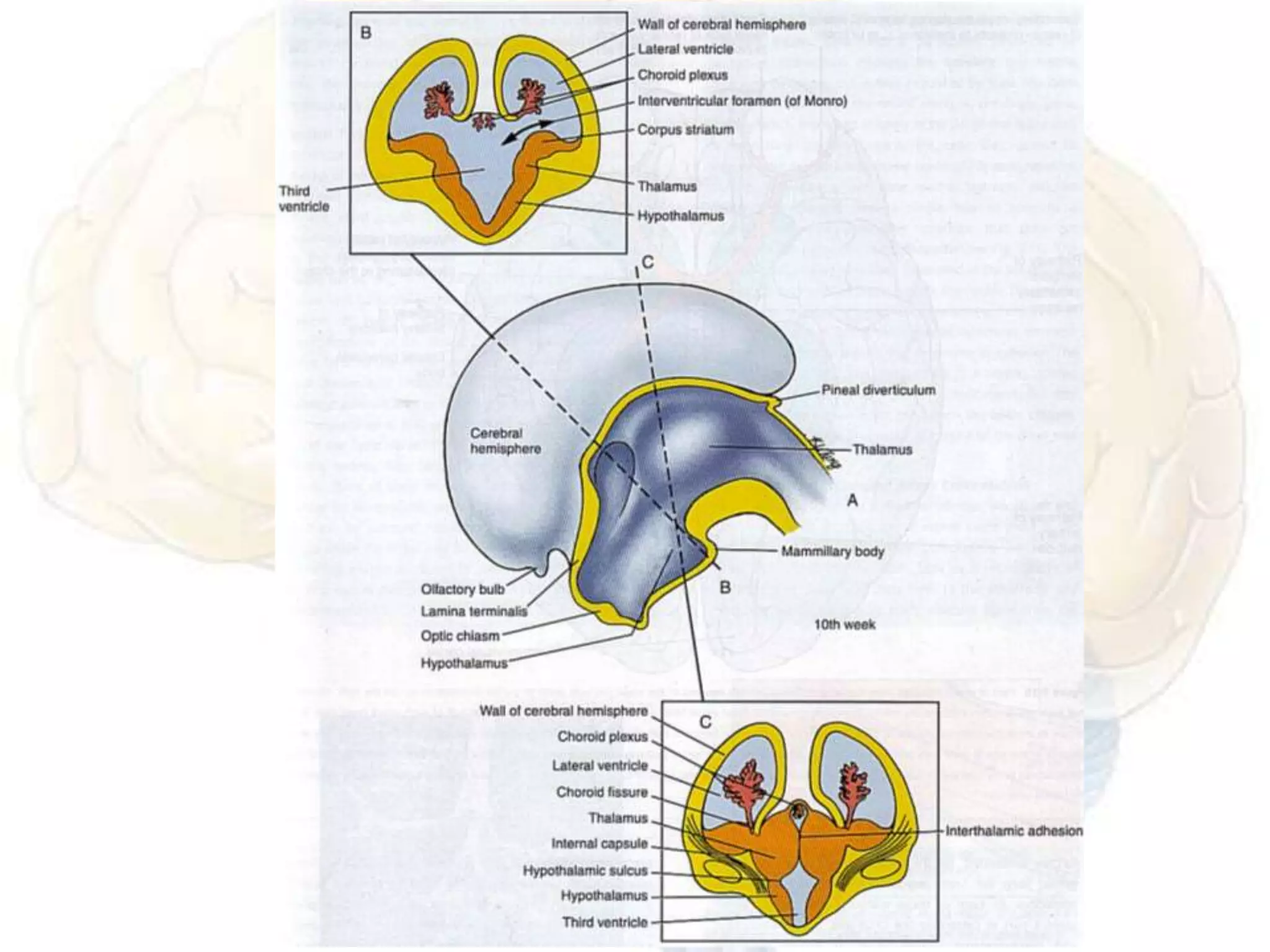
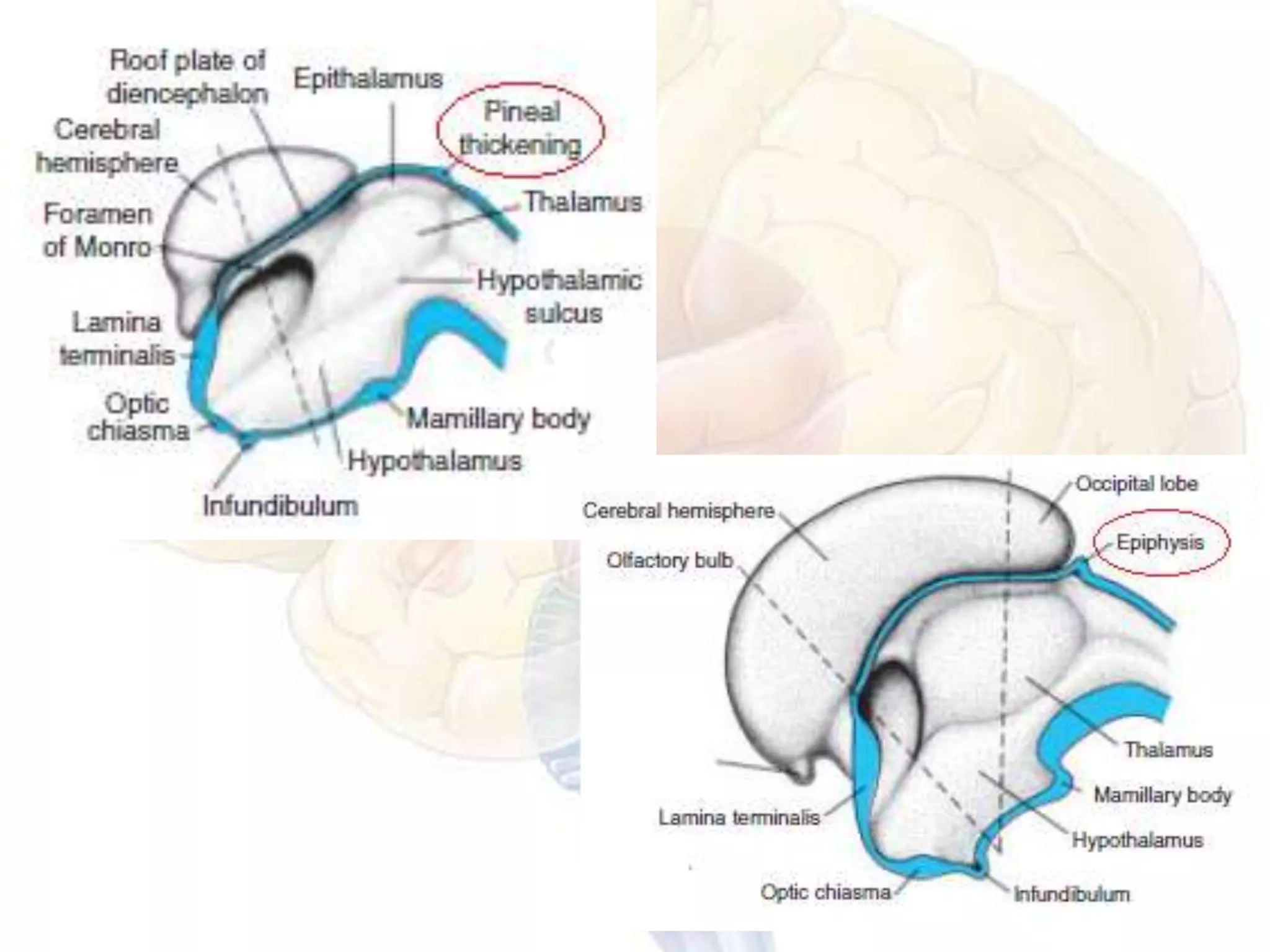
    proSENCEPHALON • The prosencephalonconsists of the: – telencephalon, which forms the cerebral hemispheres, and the – diencephalon, which forms the optic cup and stalk, pituitary, thalamus, hypothalamus, and epiphysis.
  • 34.
  • 35.
    Roof Plate andEpiphysis
  • 37.
    Alar Plate, Thalamus,and Hypothalamus
  • 40.
  • 41.
    Hypophyseal Defects • Occasionallya small portion of Rathke’s pouch persists in the roof of the pharynx as a pharyngeal hypophysis. • Craniopharyngiomas arise from remnants of Rathke’s pouch.
  • 42.
  • 43.
  • 46.
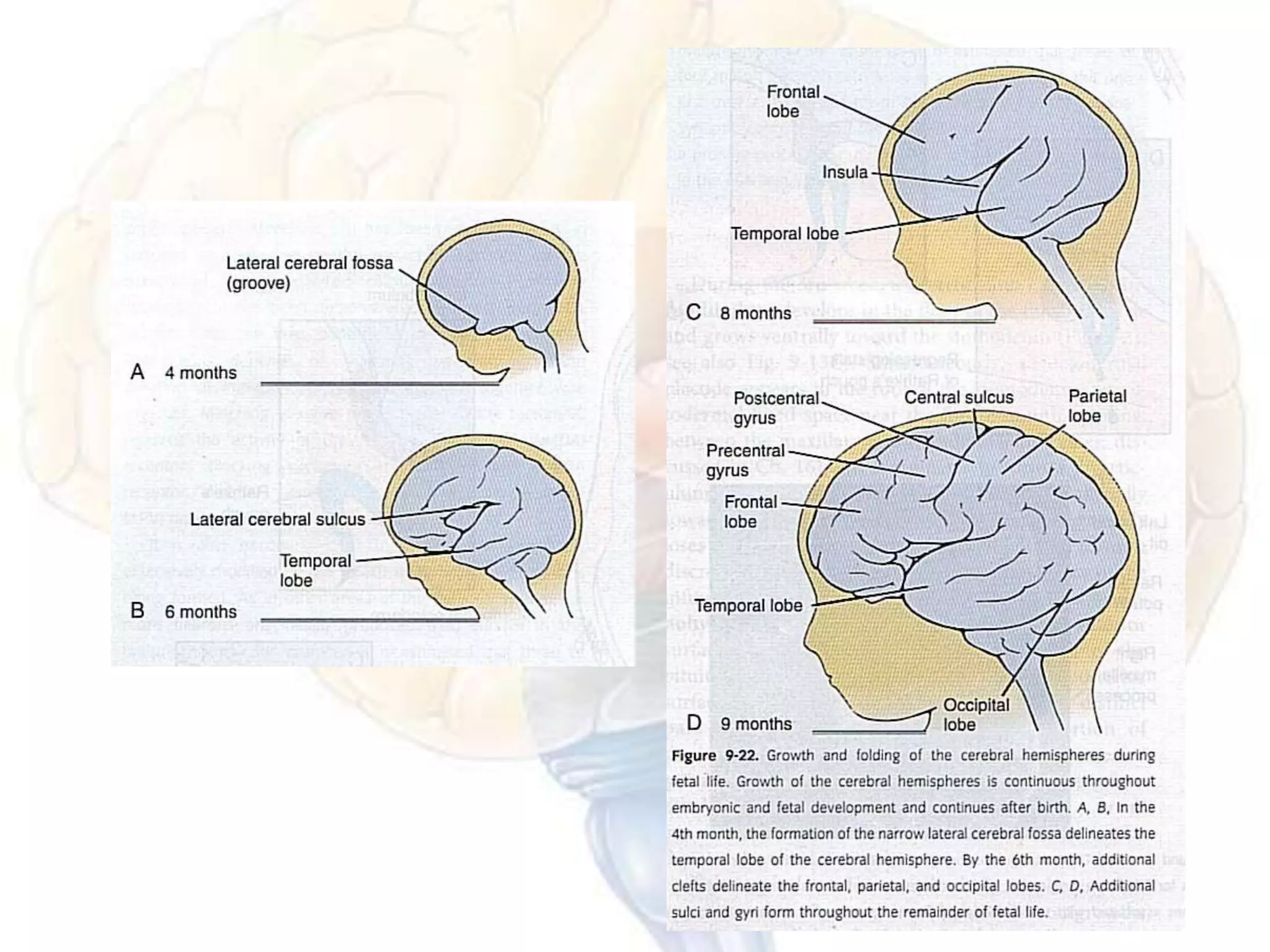
    • Development ofgyri and sulci on the lateral surface of the cerebral hemisphere. • A. 7 months. B. 9 months.
  • 50.
    Cortex Development • Thecerebral cortex develops from the pallium which has two regions: – (a) the paleopallium, or archipallium – (b) the neopallium
  • 52.
  • 54.
    Congenital Malformations of Cerebral Cortex • Classical lissencephaly (incidence: 1/100,000 live births) – Results from incomplete neuronal migration to the cerebral cortex during the 3rd and 4th months of gestation – Pachygyria (broad, thick gyri), Agyria (lack of gyri), heterotopia (cells in aberrant positions), enlarged ventricles, corpus callosum malformations – Newborns appear normal but sometimes have apnea, poor feeding, or abnormal muscle tone – Patients later develop seizures, profound mental retardation, mild spastic quadriplegia
  • 55.
    • Subcortical BandHeterotopia – Believed to result from aberrant migration of differentiating neuroepithelial cells – Patients have bilateral circumferential and symmetric ribbons of gray matter located just beneath the cortex and separated from it by thin band of white matter -> double cortex syndrome – Seizures, mild mental retardation, behavioral anomalies often present in infancy – Intelligence can be normal and seizures may begin later in life – X-linked lissencephaly and SBH
  • 56.
    Genes related tolissencephaly and SBH • LIS1- encodes a protein that functions as a regulatory subunit of platelet activating factor acetylhydrolase, which degrades platelet activating factor and involved in microtubule dynamics • Doublecortin- highly expressed in fetal neurons and their precursors during cortical development; protein associated with microtubules
  • 57.
    • Kallman syndrome – characterized by anosmia (loss of sense of smell) or hyposmia (diminished sense of smell) and hypogonadism. – X-linked form caused by KAL1, which encodes an extracellular matrix glycoprotein called ANOSMIN-1
  • 58.
    MOLECULAR REGULATION OF BRAIN DEVELOPMENT
  • 62.
    “Biology gives youa brain. Life turns it into a mind.” ― Jeffrey Eugenides, Middlesex

Editor's Notes

  • #5 The CNS appears at the beginning of the third week as a slipper-shaped plate of thickened ectoderm, the neural plate, in the middorsal region in front of the primitive node. Its lateral edges soon elevate to form the neural folds.
  • #6 With further development, the neural folds continue to elevate, approach each other in the midline, and finally fuse, forming the neural tube.
  • #8 Fusion begins in the cervical region and proceeds in cephalic and caudal directions. Closure of cranial neuroporeproceeds cranially from the initial closure site in the cervical region and from a site in the forebrain that forms later. This later site proceeds cranially, close to the rostral most region of the neural tube, and caudally to meet advancing closure from the cervical site. Final closure of cranial neuroporeoccurs at 18-20 somite stage (25th day). Closure of caudal neuroporeoccurs approx. 2 days later (day 27)
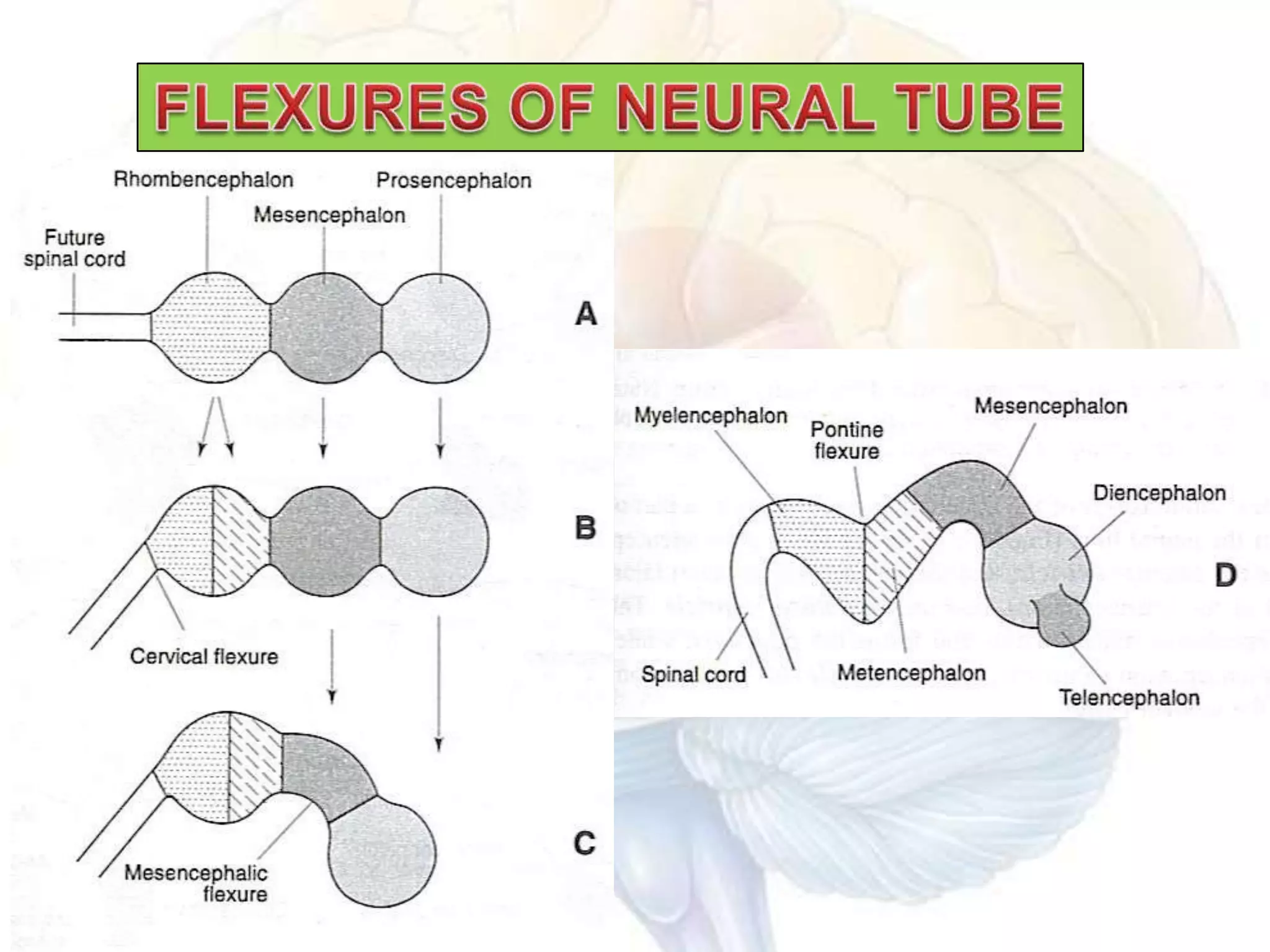
  • #9 Primary brain vesicles (prosenephalon, mesencephalon, rhombencephalon) are formed during the 4th week of development. Secondary brain vesicles (telencephalon, diencephalon, mesencephalon, metencephalon, myelenephalon) are formed during the 5th week of development. Mesencephalon is considered as the most primitive brain vesicle
  • #10 At the cervical and mesencephalic (cranial) flexures, the bends are ventrally directed while that of the pontine flexure is dorsally directed.
  • #13 Cerebral aqueduct may become very narrowed and otherwise known as the aqueduct of Sylvius
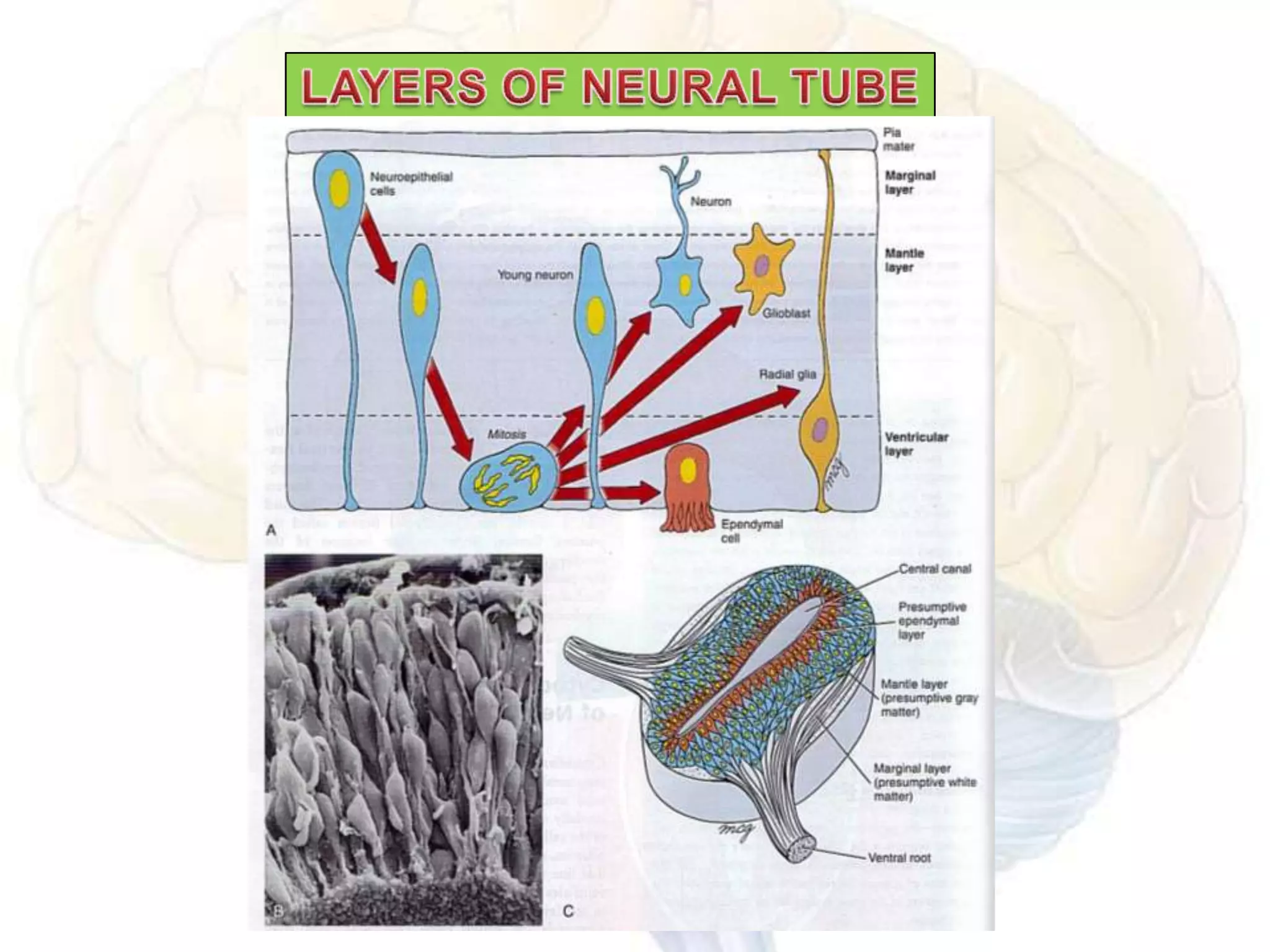
  • #14 Matrix layer/ependymal/germinal layer- nerve cells, glial cells & more germinal cells producedMantle layer- developing nerve cells & glial cellsMarginal layer- no nerve cells; reticulum of glial cells into which developing nerve cells grow
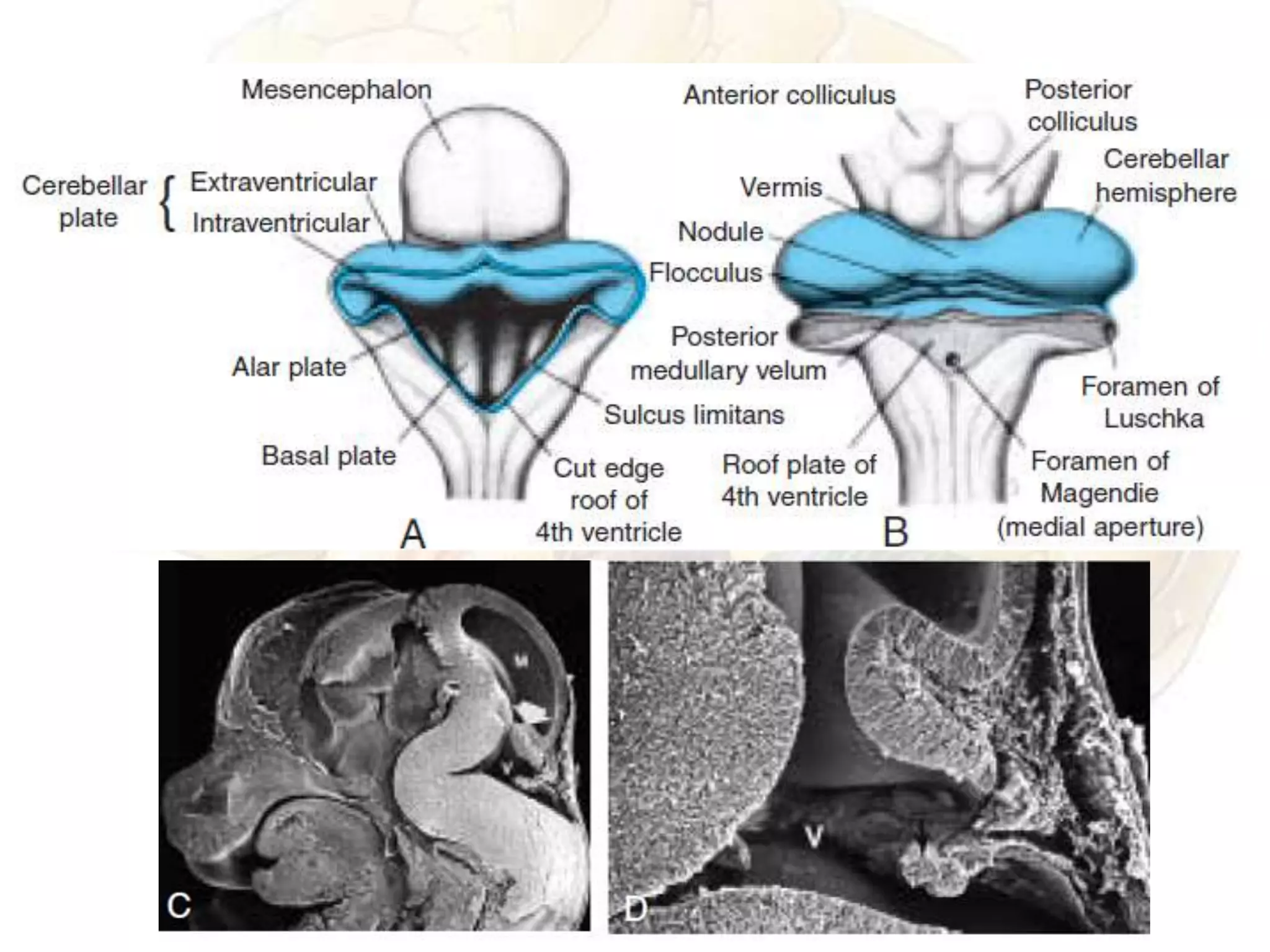
  • #21 Dorsal view of mesencephalon and rhombencephalon (8-week embryo) (4-month embryo)SEM of mouse embryo at slightly younger stage than A, showing the cerebellarprimordium (arrow) extending to the 4th ventricle (V); Mesencephalon (M)High magnification of the cerebellar region in C
  • #22 Dorsal view of mesencephalon and rhombencephalon (8-week embryo) (4-month embryo)SEM of mouse embryo at slightly younger stage than A, showing the cerebellarprimordium (arrow) extending to the 4th ventricle (V); Mesencephalon (M)High magnification of the cerebellar region in C
  • #24 During further development, a number of cells formed by the neuroepithelium migrate to the surface of the cerebellum to form the external granular layer. Cells of this layer retain their ability to divide and form a proliferative zone on the surface of the cerebellum
  • #31 Dorsal view of mesencephalon and rhombencephalon (8-week embryo) (4-month embryo)SEM of mouse embryo at slightly younger stage than A, showing the cerebellarprimordium (arrow) extending to the 4th ventricle (V); Mesencephalon (M)High magnification of the cerebellar region in C
  • #32 Red nucleus= nucleus ruber- receives fibers from cerebellum