Department Of Physiology
Topic – Limbic System and It’s Parts
Name – Rajat Kumar Mishra
PSIT,KANPUR
CONTENTS
1. Introduction
2. Location
3. Functionalanatomyofthelimbicsystem
4. Hippocampus
5. Afferentandefferent connectionsofhippocampus
6. Amygdala
7. Reward andpunishmentcentres
8. Limbiccortex
9. Disordersoflimbicsystem
10. Bibliography
INTRODUCTION
Limbic System
I. The word “limbic” means “border”.
II. The term limbic system mean the entire neuronal circuitry that
controls enotional behavior and motivational drives.
III. The limbic system is a set of brain structures located on both sides
of thalamus, immediately beneath the cerebrum.
IV. It is not a separate system but a collection of structures from the
telencephalon, diencephalon, and mesencephalon.
Location
I. Medial aspect
II. Both Cortical and Subcortical structures
III. Involves parts of Frontal, Parietal and Temporal
lobes
IV. Highly interconnected
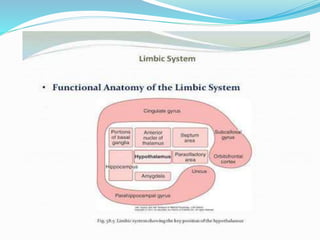
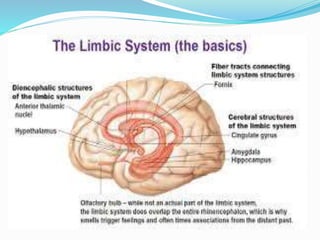
Functional Anatomy ofthe Limbic System
 These are interconnected complex of basal brain elements.
 In the middle, hypothalamus is located which is the central
elements of the limbic system.
 Subcortical components of limbic system includes;
• Septum
• Paraolfactory area
• Anterior nucleus of thalamus
• Portions of basal ganglia
• Amygdala
• Hippocampus
Surrounding the subcortical limbic areas is the
limbic cortex, composed of a ring of cerebral cortex on
each side of the brain
1. Orbitofrontal area- ventral surface of the frontal lobe
2. Subcallosal gyrus
3. Cingulate gyrus- medial aspect of cerebral hemisphere
4. Parahippocampal gyrus and uncus – ventromedial surface of
temporal lobe.
 On the medial and ventral surfaces of each cerebral
hemisphere is a ring of mostly paleocortex that surrounds
a group of deep structures associated with overall
behaviour and emotions.
 Ring of limbic cortex function as a two-way
communication and association linkage between the
neocortex and the lower limbic structures.
 Many of the behavioural function of the limbic system
are also mediated through the reticular nuclei in the
brainstem and their associated nuclei.
• An important route of communication between the
limbic system and the brainstem is the medial
forebrain bundle.
This bundle carries fibres in both directions,
forming a trunk line communication system.
 A second route of communication is through short
pathways among the reticular formation of the
brainstem, thalamus, hypothalamus, and other
contiguous areas of the basal brain.
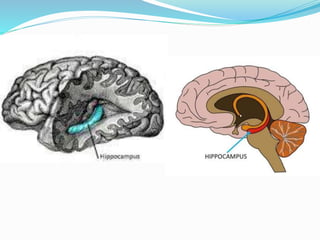
Hippocampus
 The hippocampus is the elongated portion of the cerebral
cortex that fold inward to form the ventral surface of
lateral ventricle.
 The hippocampus has numerous but mainly indirect
connections with many portion of the cerebral cortex ,
basal structure of the limbic system
 Continous with fornix- the output network
 Fornix moves posterosuperiorly, and at the spenium it
curves forwards suspended by the septum pellucidum.
 Involves in conversion of short to long term memory.
Afferent and efferent connections of
hippocampus
 Afferentconnections
1. Cingulate gyrus
2. Septal nuclei
3. Other hippocampus
4. Indusium griseum
5. Entorhinal cortex
6. Dentate and parahippocampal gyri
 Efferentconnections
1. Mamillary body
2. Anterior thalamic nuclei
3. Midbrain tegmentum
4. Septal nuclei
5. Hebenular nuclei
6. Hypothalamus
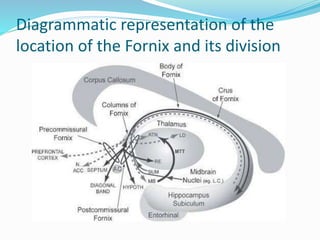
Diagrammatic representation of the
location of the Fornix and its division
AMYGDALA
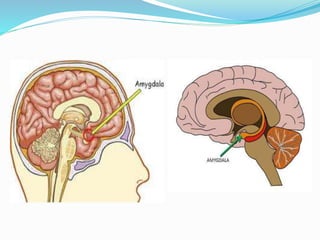
 The amygdala is a complex of multiple small nuclei
located immediately beneath the cerebral cortex of the
medial anterior pole of each temporal lobe.
 It has abundant bidirectional connections with the
hypothalamus, as well as with other areas of limbic
system.
 It terminates in the hypothalamus and septal nuclei.
 The amygdala recieves neuronal signals from all
portions of the limbic cotex.
 It also recieves from neocortex of the temporal,
parietal and occipital lobes- especially from the
auditory and visual association areas.
 Because of these multiple connections, the amygdala
has been called the “window” through which the
limbic system sees the place of the person in the
world.
 In turn, the amygdala transmits signals;
1. back into the same cortical areas
2. Septum
3. Thalamus
4. Especially in hypothalamus.
Reward And Punishment
 Limbic structures are particularly concerned with the
affective nature of sensory sensations-
 pleasant
 unpleasant
• These affective qualities are also called reward or
punishment, or satisfaction or aversion.
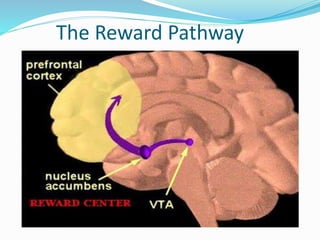
Reward Centres
 Reward are things that an individual works for. They
make the behaviour that leads to them occur more
often.
 The major reward centres have been found to be
located along the course of the medial forebrain bundle,
especially in the lateral and ventromedial nuclei of the
hypothalamus.
 Less potent once are located in hypothalamus, septum,
amygdala, certain areas of thalamus and basal ganglia.
The Reward Pathway
PunishmentCentres
 Punishments are the opposite to rewards and are
associated with avoidance that leads to behaviours in
which an individual tries to escape from a painful or
life threatening situations.
 Most potent areas have been found in the central gray
area surrounding the aqueduct of Sylvius in the
mesencephalon and extending upward into the
periventricular zones of the hypothalamus.
 Less potent areas have been found in the amygdala and
hippocampus.
Limbic Cortex
 The most poorly understood portion of the limbic
system is the ring of cerebral cortex called the limbic
cortex that surrounds the subcortical limbic
structures.
 This cortex function as a transtional zone through
which signals are transmitted from the remainder of
the brain cortex into the limbic system and also in the
opposite direction.
Limbic System Disorders
Amnesia
Alzheimer
Poor
learning
Social
problems
Depression
BIBLIOGRAPHY
 Textbook of Medical Physiology- Guyton and Hall.
 Ganong’s Review of Medical Physiology.
Limbic System and It's parts

Limbic System and It's parts

  • 1.
    Department Of Physiology Topic– Limbic System and It’s Parts Name – Rajat Kumar Mishra PSIT,KANPUR
  • 2.
    CONTENTS 1. Introduction 2. Location 3.Functionalanatomyofthelimbicsystem 4. Hippocampus 5. Afferentandefferent connectionsofhippocampus 6. Amygdala 7. Reward andpunishmentcentres 8. Limbiccortex 9. Disordersoflimbicsystem 10. Bibliography
  • 3.
    INTRODUCTION Limbic System I. Theword “limbic” means “border”. II. The term limbic system mean the entire neuronal circuitry that controls enotional behavior and motivational drives. III. The limbic system is a set of brain structures located on both sides of thalamus, immediately beneath the cerebrum. IV. It is not a separate system but a collection of structures from the telencephalon, diencephalon, and mesencephalon.
  • 4.
    Location I. Medial aspect II.Both Cortical and Subcortical structures III. Involves parts of Frontal, Parietal and Temporal lobes IV. Highly interconnected
  • 5.
    Functional Anatomy oftheLimbic System  These are interconnected complex of basal brain elements.  In the middle, hypothalamus is located which is the central elements of the limbic system.  Subcortical components of limbic system includes; • Septum • Paraolfactory area • Anterior nucleus of thalamus • Portions of basal ganglia • Amygdala • Hippocampus
  • 6.
    Surrounding the subcorticallimbic areas is the limbic cortex, composed of a ring of cerebral cortex on each side of the brain 1. Orbitofrontal area- ventral surface of the frontal lobe 2. Subcallosal gyrus 3. Cingulate gyrus- medial aspect of cerebral hemisphere 4. Parahippocampal gyrus and uncus – ventromedial surface of temporal lobe.
  • 8.
     On themedial and ventral surfaces of each cerebral hemisphere is a ring of mostly paleocortex that surrounds a group of deep structures associated with overall behaviour and emotions.  Ring of limbic cortex function as a two-way communication and association linkage between the neocortex and the lower limbic structures.  Many of the behavioural function of the limbic system are also mediated through the reticular nuclei in the brainstem and their associated nuclei.
  • 9.
    • An importantroute of communication between the limbic system and the brainstem is the medial forebrain bundle. This bundle carries fibres in both directions, forming a trunk line communication system.  A second route of communication is through short pathways among the reticular formation of the brainstem, thalamus, hypothalamus, and other contiguous areas of the basal brain.
  • 11.
    Hippocampus  The hippocampusis the elongated portion of the cerebral cortex that fold inward to form the ventral surface of lateral ventricle.  The hippocampus has numerous but mainly indirect connections with many portion of the cerebral cortex , basal structure of the limbic system  Continous with fornix- the output network  Fornix moves posterosuperiorly, and at the spenium it curves forwards suspended by the septum pellucidum.  Involves in conversion of short to long term memory.
  • 13.
    Afferent and efferentconnections of hippocampus  Afferentconnections 1. Cingulate gyrus 2. Septal nuclei 3. Other hippocampus 4. Indusium griseum 5. Entorhinal cortex 6. Dentate and parahippocampal gyri
  • 14.
     Efferentconnections 1. Mamillarybody 2. Anterior thalamic nuclei 3. Midbrain tegmentum 4. Septal nuclei 5. Hebenular nuclei 6. Hypothalamus
  • 15.
    Diagrammatic representation ofthe location of the Fornix and its division
  • 16.
    AMYGDALA  The amygdalais a complex of multiple small nuclei located immediately beneath the cerebral cortex of the medial anterior pole of each temporal lobe.  It has abundant bidirectional connections with the hypothalamus, as well as with other areas of limbic system.  It terminates in the hypothalamus and septal nuclei.
  • 18.
     The amygdalarecieves neuronal signals from all portions of the limbic cotex.  It also recieves from neocortex of the temporal, parietal and occipital lobes- especially from the auditory and visual association areas.  Because of these multiple connections, the amygdala has been called the “window” through which the limbic system sees the place of the person in the world.
  • 19.
     In turn,the amygdala transmits signals; 1. back into the same cortical areas 2. Septum 3. Thalamus 4. Especially in hypothalamus.
  • 20.
    Reward And Punishment Limbic structures are particularly concerned with the affective nature of sensory sensations-  pleasant  unpleasant • These affective qualities are also called reward or punishment, or satisfaction or aversion.
  • 21.
    Reward Centres  Rewardare things that an individual works for. They make the behaviour that leads to them occur more often.  The major reward centres have been found to be located along the course of the medial forebrain bundle, especially in the lateral and ventromedial nuclei of the hypothalamus.  Less potent once are located in hypothalamus, septum, amygdala, certain areas of thalamus and basal ganglia.
  • 22.
  • 23.
    PunishmentCentres  Punishments arethe opposite to rewards and are associated with avoidance that leads to behaviours in which an individual tries to escape from a painful or life threatening situations.  Most potent areas have been found in the central gray area surrounding the aqueduct of Sylvius in the mesencephalon and extending upward into the periventricular zones of the hypothalamus.  Less potent areas have been found in the amygdala and hippocampus.
  • 24.
    Limbic Cortex  Themost poorly understood portion of the limbic system is the ring of cerebral cortex called the limbic cortex that surrounds the subcortical limbic structures.  This cortex function as a transtional zone through which signals are transmitted from the remainder of the brain cortex into the limbic system and also in the opposite direction.
  • 25.
  • 26.
    BIBLIOGRAPHY  Textbook ofMedical Physiology- Guyton and Hall.  Ganong’s Review of Medical Physiology.