Sound Energy
Made by Dr. Soha Bedair
What is sound?
 Sound is
– A form of energy made by vibrations.
– When an object vibrates it causes the air particles
around it to move.
– These particles bump into particles close to them
and this continues until they run out of energy.
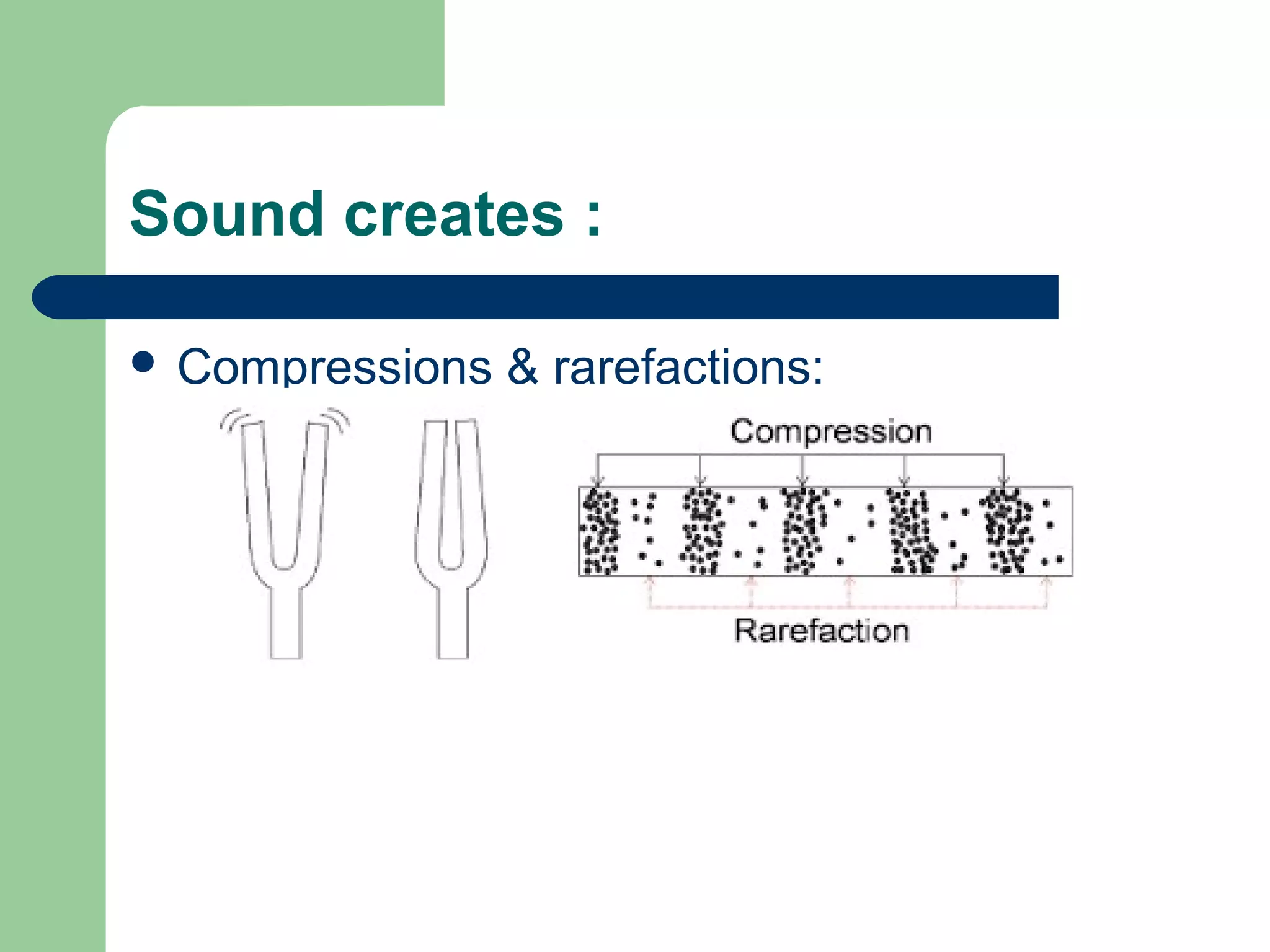
Sound creates :
 Compressions & rarefactions:
Try this:
 Put your finger on your neck and say “aah”
as loud as you can.
 Now say it as soft as you can.
 You can not only hear the sound, but you can
feel the vibration inside your throat.
How does sound travel?
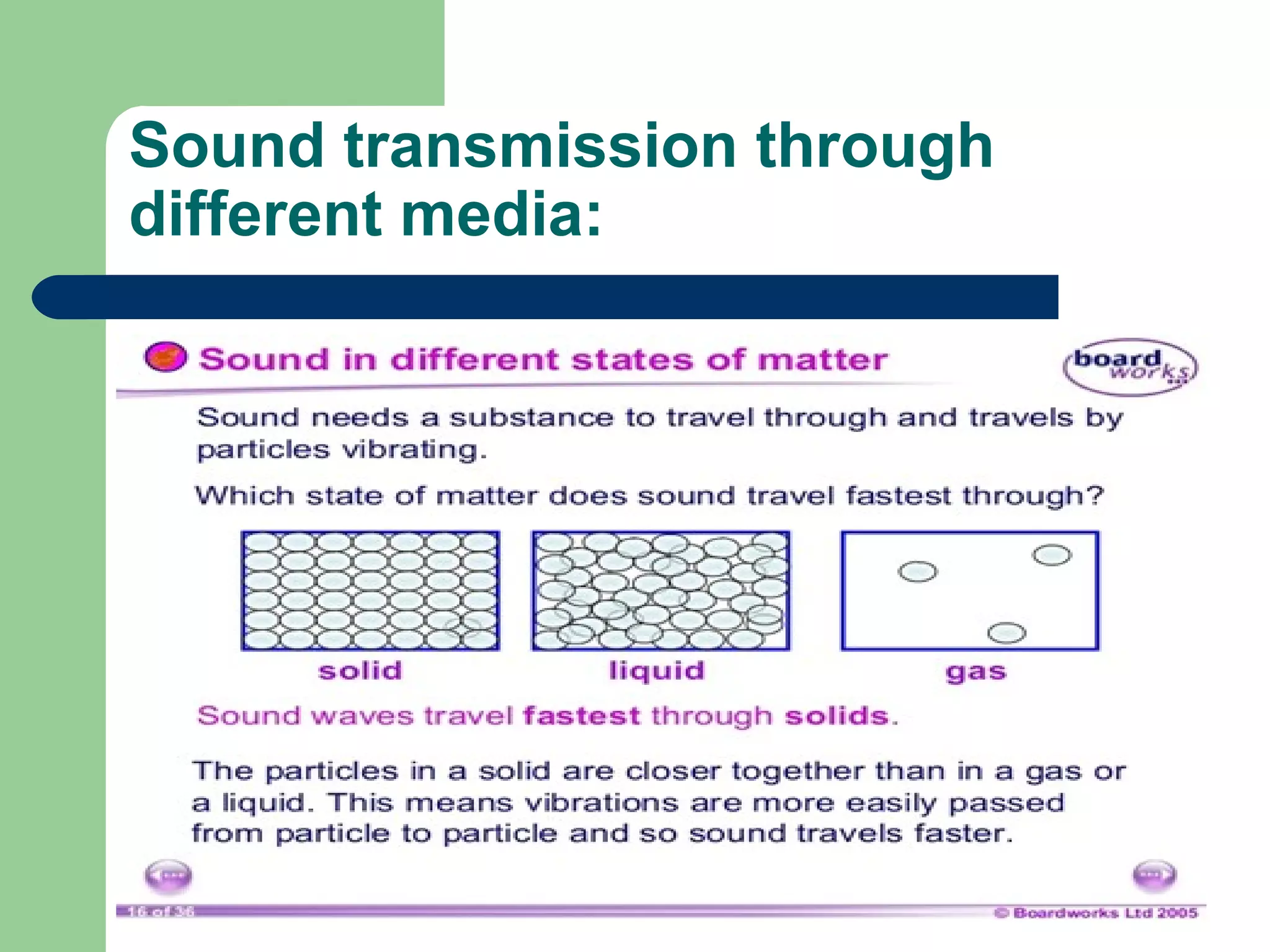
 Sound travels through all forms of matter—
gases, liquids and solid.
 These are called the medium.
 Sound cannot travel through a vacuum.
Volume:
 It is measured using sound level meter
 The unit for measuring the volume is
decibels(dB)
How does sound travel?
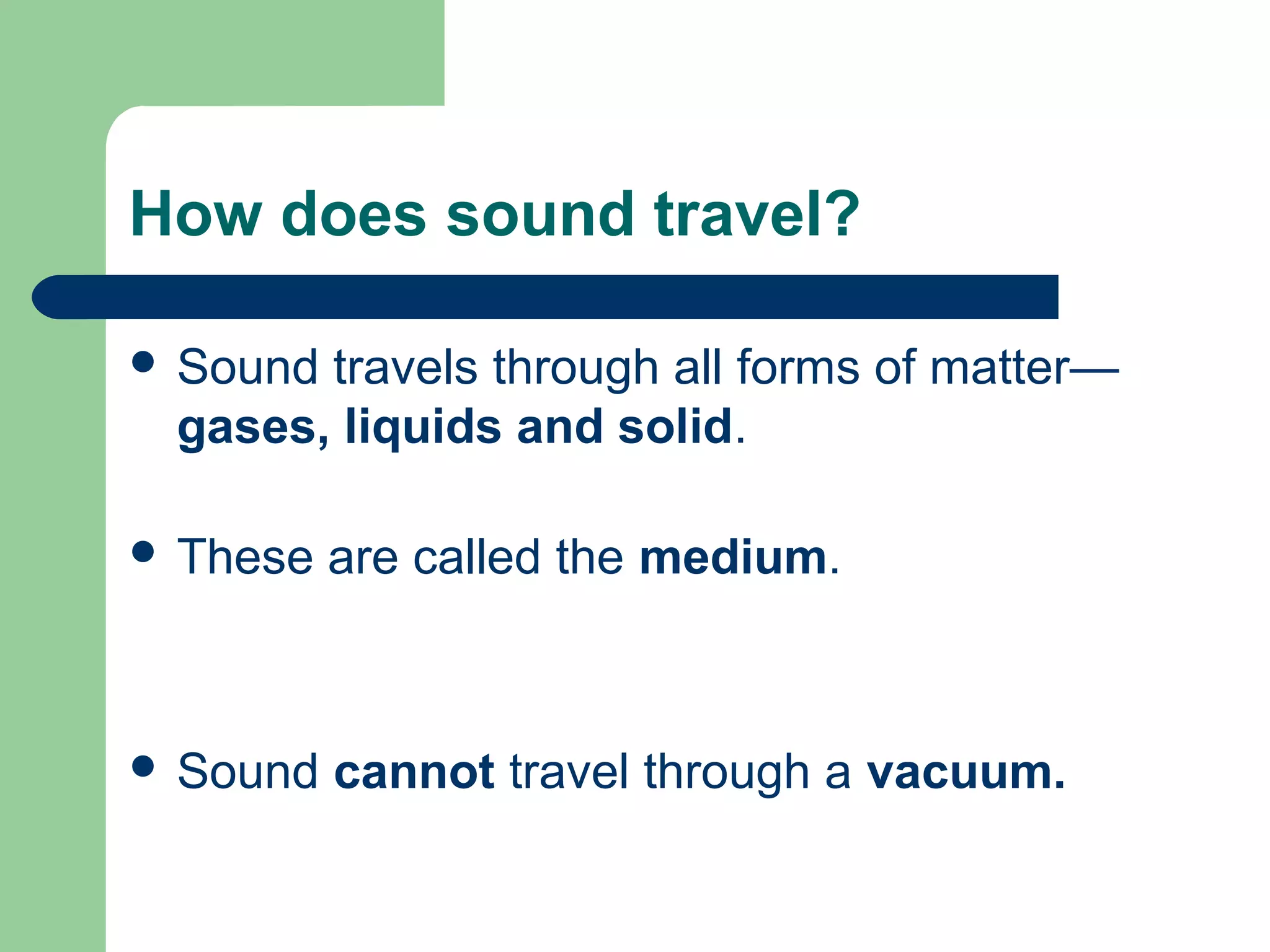
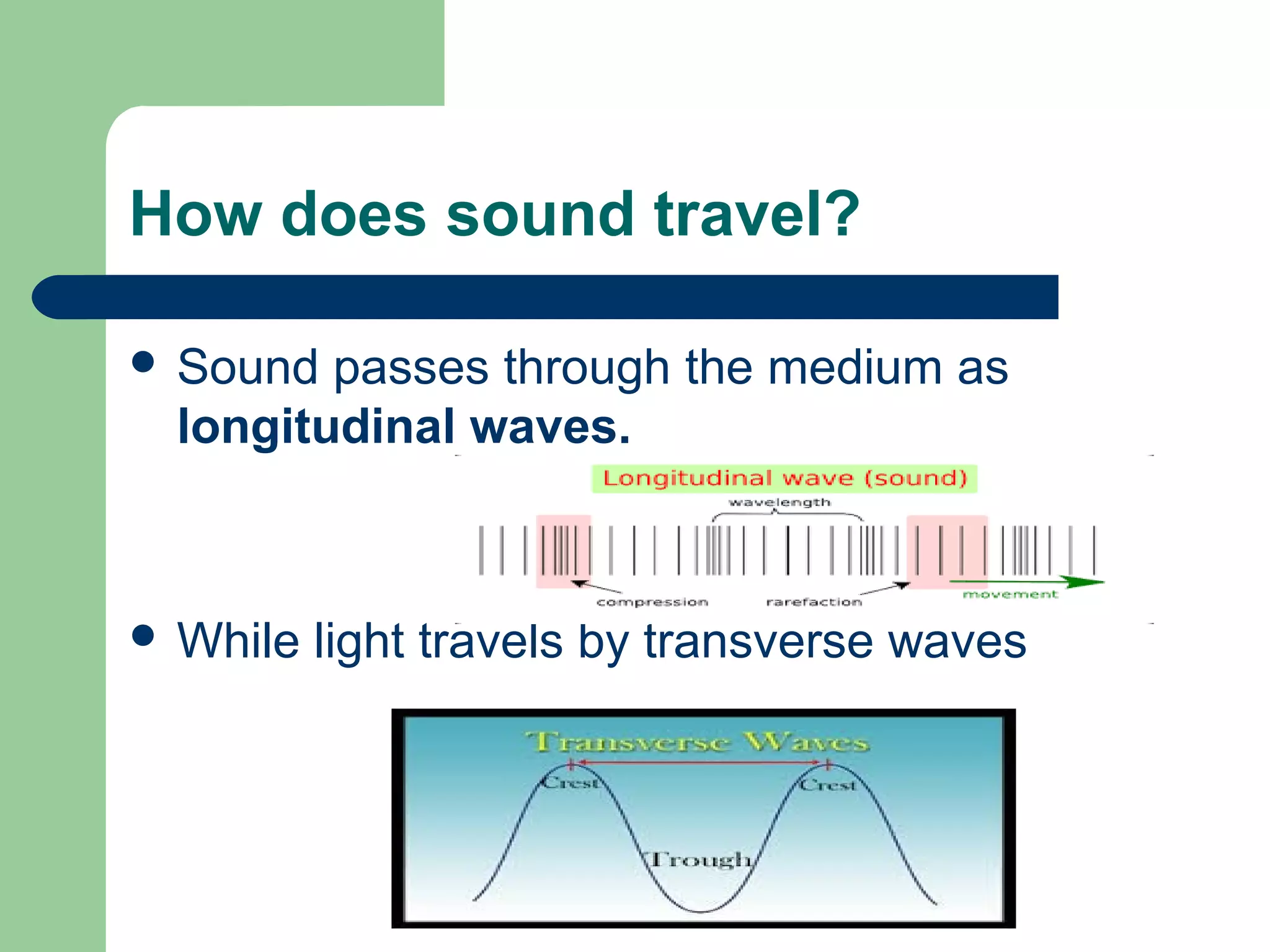
 Sound passes through the medium as
longitudinal waves.
 While light travels by transverse waves
How do musical instruments create
sound?
 It depends on the type of instrument. There
are four types.
– Woodwind
– String
– Percussion
Woodwinds Instruments
 Woodwinds make music by blowing on the
top of the instrument or on a reed.
Flute
Oboe
Clarinet
Bassoon
Piccolo
Percussion Instruments
 Percussion instruments make music by
striking, shaking or scraping them.
Drum
Cymbals
Tambourine
Xylophone
Piano
Maracas
String Instruments
 Strings make music by plucking or
strumming the strings.
Violin
Cello
Electric
Guitar
Guitar Harp
Pitch, frequency and amplitude:
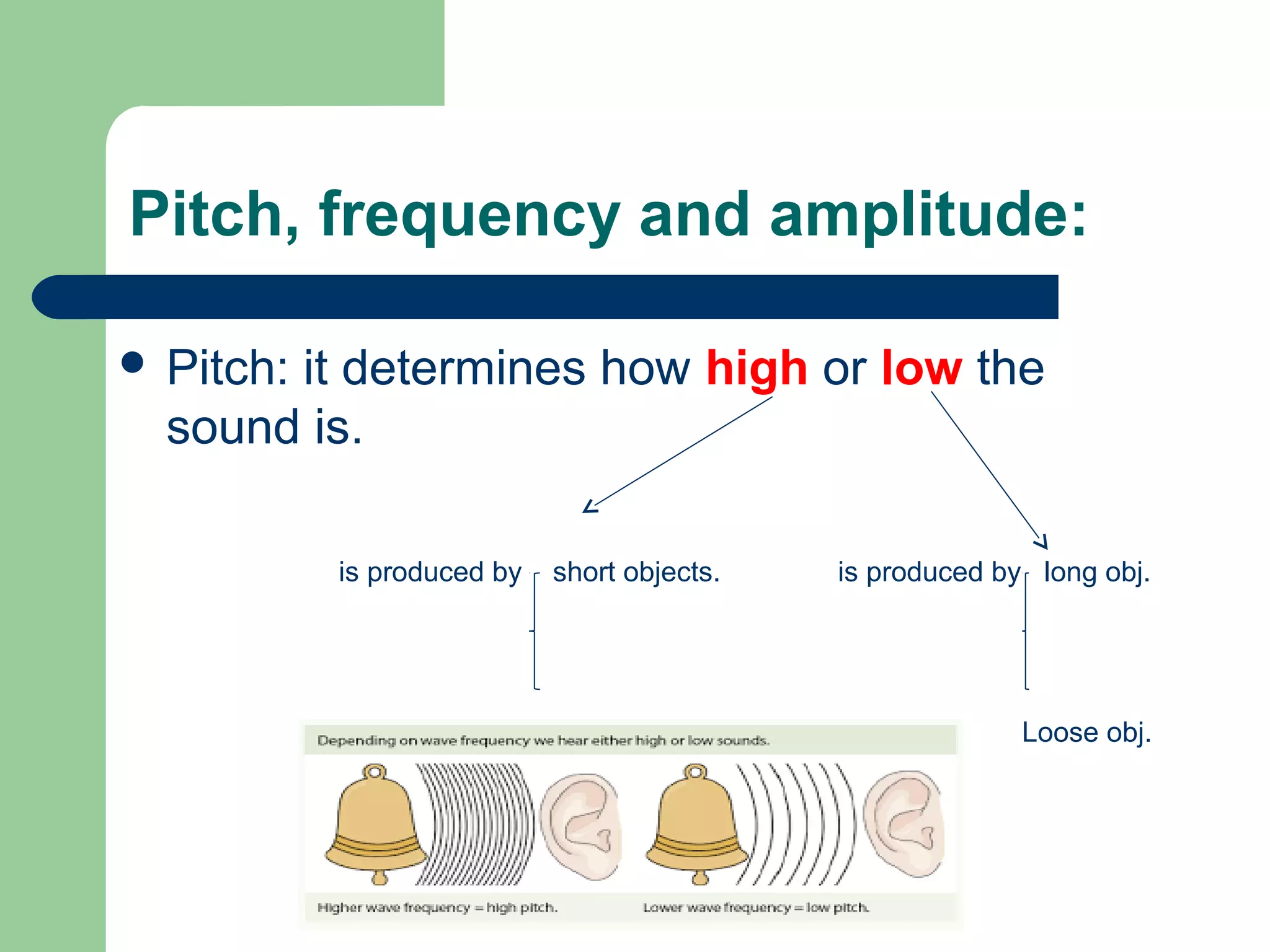
 Pitch: it determines how high or low the
sound is.
is produced by short objects. is produced by long obj.
tight( stretched)objects. Loose obj.
Frequency:
 It is number of vibrations in one second.
 As the number of vibrations increases the
frequency and pitch increases.
Louder
Softer
How else can we change sound?
 We can make it louder or softer by changing
the amplitude of the height of the wave.
 The higher the amplitude, the louder the
sound. The lower the amplitude the softer
the sound.
Echo & how the sound energy is
absorbed:
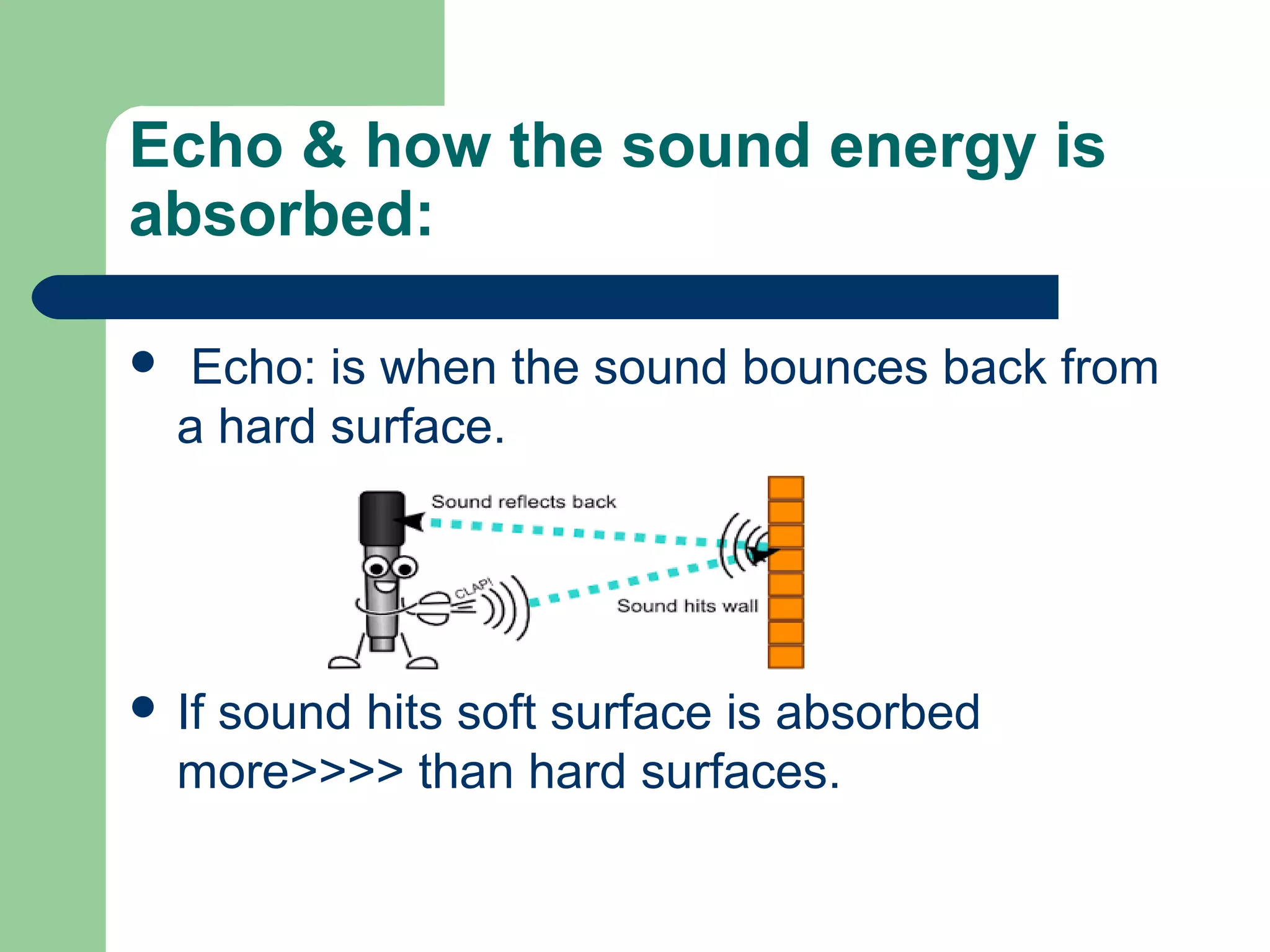
 Echo: is when the sound bounces back from
a hard surface.
 If sound hits soft surface is absorbed
more>>>> than hard surfaces.
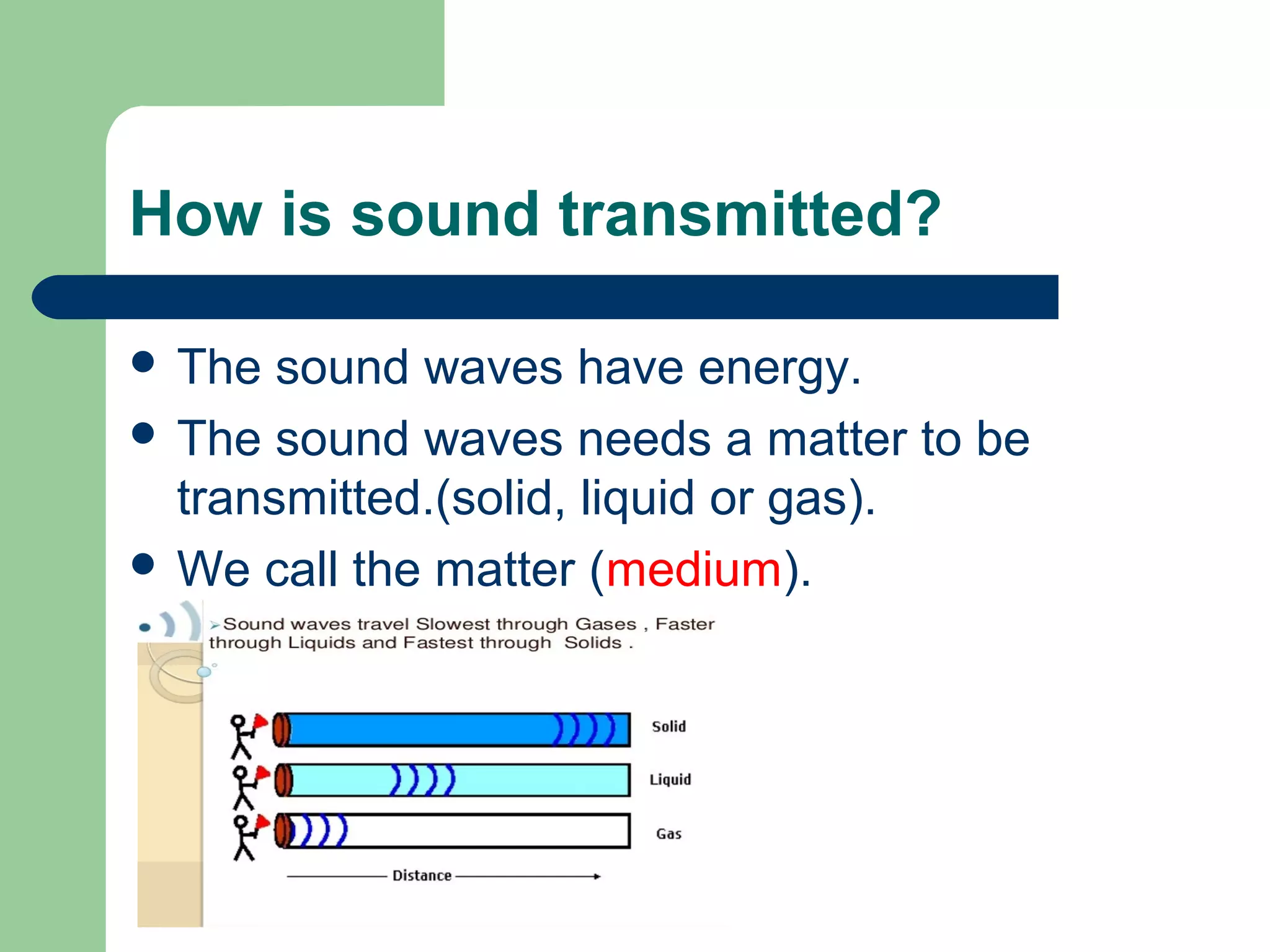
How is sound transmitted?
 The sound waves have energy.
 The sound waves needs a matter to be
transmitted.(solid, liquid or gas).
 We call the matter (medium).
Sound transmission through
different media:
Parts of the ear:
cochlea
How we hear a sound?
 When the sound wave reaches our ear drum, it hits it
and our ear drum starts to vibrate.
 Then the three bones attached to the ear drum starts
to vibrate.
 The cochlea then translates these vibrations into
signals.
 The brain receives those signals by nerves.
 Then the brain translates these signals into sound.
Sound energy

Sound energy

  • 1.
    Sound Energy Made byDr. Soha Bedair
  • 2.
    What is sound? Sound is – A form of energy made by vibrations. – When an object vibrates it causes the air particles around it to move. – These particles bump into particles close to them and this continues until they run out of energy.
  • 3.
    Sound creates : Compressions & rarefactions:
  • 4.
    Try this:  Putyour finger on your neck and say “aah” as loud as you can.  Now say it as soft as you can.  You can not only hear the sound, but you can feel the vibration inside your throat.
  • 5.
    How does soundtravel?  Sound travels through all forms of matter— gases, liquids and solid.  These are called the medium.  Sound cannot travel through a vacuum.
  • 6.
    Volume:  It ismeasured using sound level meter  The unit for measuring the volume is decibels(dB)
  • 7.
    How does soundtravel?  Sound passes through the medium as longitudinal waves.  While light travels by transverse waves
  • 8.
    How do musicalinstruments create sound?  It depends on the type of instrument. There are four types. – Woodwind – String – Percussion
  • 9.
    Woodwinds Instruments  Woodwindsmake music by blowing on the top of the instrument or on a reed. Flute Oboe Clarinet Bassoon Piccolo
  • 10.
    Percussion Instruments  Percussioninstruments make music by striking, shaking or scraping them. Drum Cymbals Tambourine Xylophone Piano Maracas
  • 11.
    String Instruments  Stringsmake music by plucking or strumming the strings. Violin Cello Electric Guitar Guitar Harp
  • 12.
    Pitch, frequency andamplitude:  Pitch: it determines how high or low the sound is. is produced by short objects. is produced by long obj. tight( stretched)objects. Loose obj.
  • 13.
    Frequency:  It isnumber of vibrations in one second.  As the number of vibrations increases the frequency and pitch increases.
  • 14.
    Louder Softer How else canwe change sound?  We can make it louder or softer by changing the amplitude of the height of the wave.  The higher the amplitude, the louder the sound. The lower the amplitude the softer the sound.
  • 15.
    Echo & howthe sound energy is absorbed:  Echo: is when the sound bounces back from a hard surface.  If sound hits soft surface is absorbed more>>>> than hard surfaces.
  • 16.
    How is soundtransmitted?  The sound waves have energy.  The sound waves needs a matter to be transmitted.(solid, liquid or gas).  We call the matter (medium).
  • 17.
  • 18.
    Parts of theear: cochlea
  • 19.
    How we heara sound?  When the sound wave reaches our ear drum, it hits it and our ear drum starts to vibrate.  Then the three bones attached to the ear drum starts to vibrate.  The cochlea then translates these vibrations into signals.  The brain receives those signals by nerves.  Then the brain translates these signals into sound.